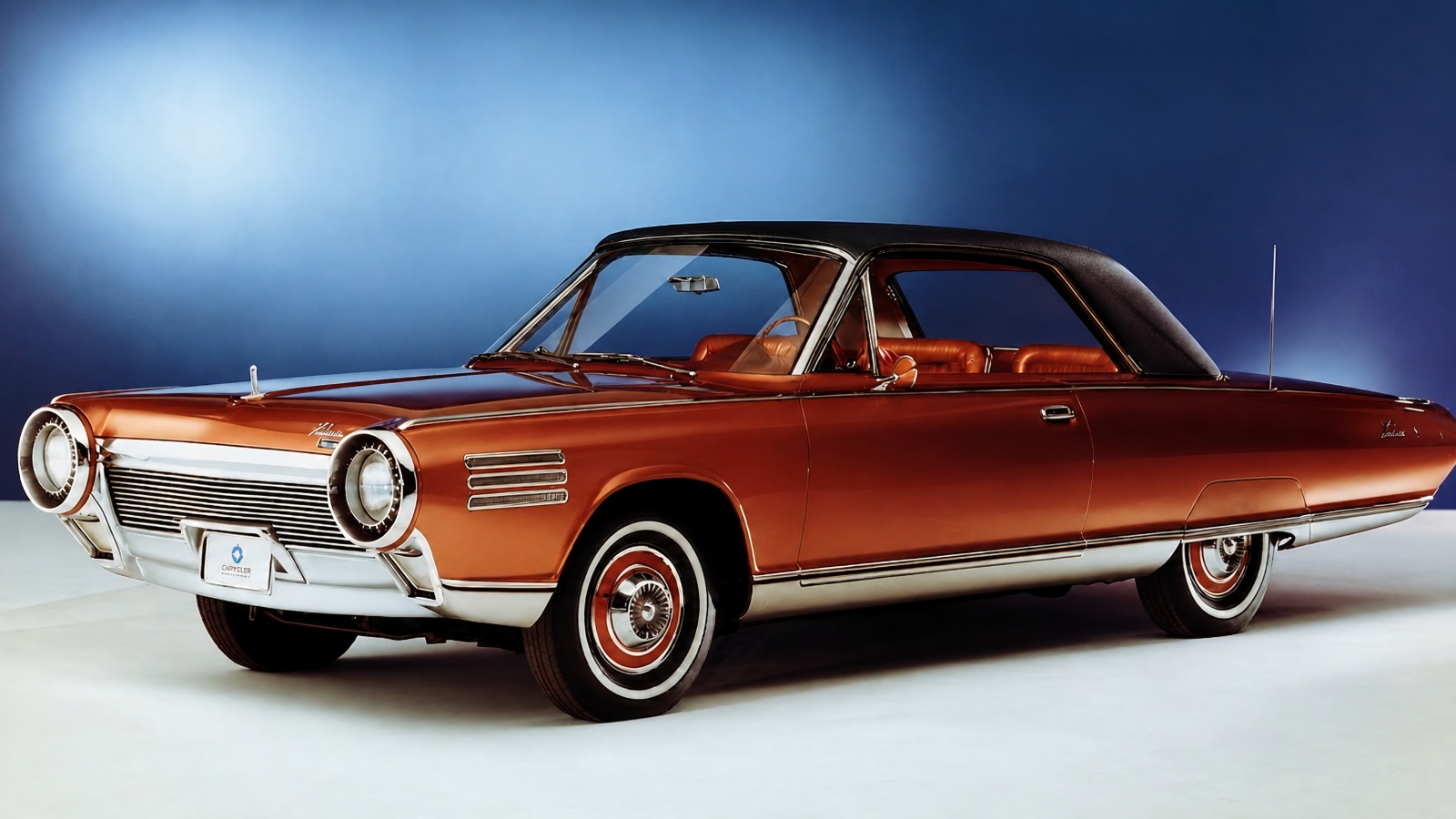
Imagine spending years developing one of the most revolutionary American cars ever built, handing the keys to ordinary families across the country, proving it could run on everything from diesel fuel to perfume, and then crushing almost every example you made.
That’s exactly what Chrysler did. Out of just 55 Chrysler Turbine Cars produced in the early 1960s, 46 were deliberately destroyed, leaving only a handful to tell one of the automotive industry’s greatest “what if” stories.
More than six decades later, the copper-colored coupe remains a symbol of fearless engineering, futuristic thinking, and a project that may simply have arrived decades before the world was ready.
The Car That Promised a Different Future
Long before electric vehicles and hydrogen technology became major automotive talking points, Chrysler was experimenting with gas turbine power. Inspired by aircraft jet engines, engineers began developing turbine-powered automobiles in the early 1950s with the goal of fundamentally rethinking vehicle propulsion.
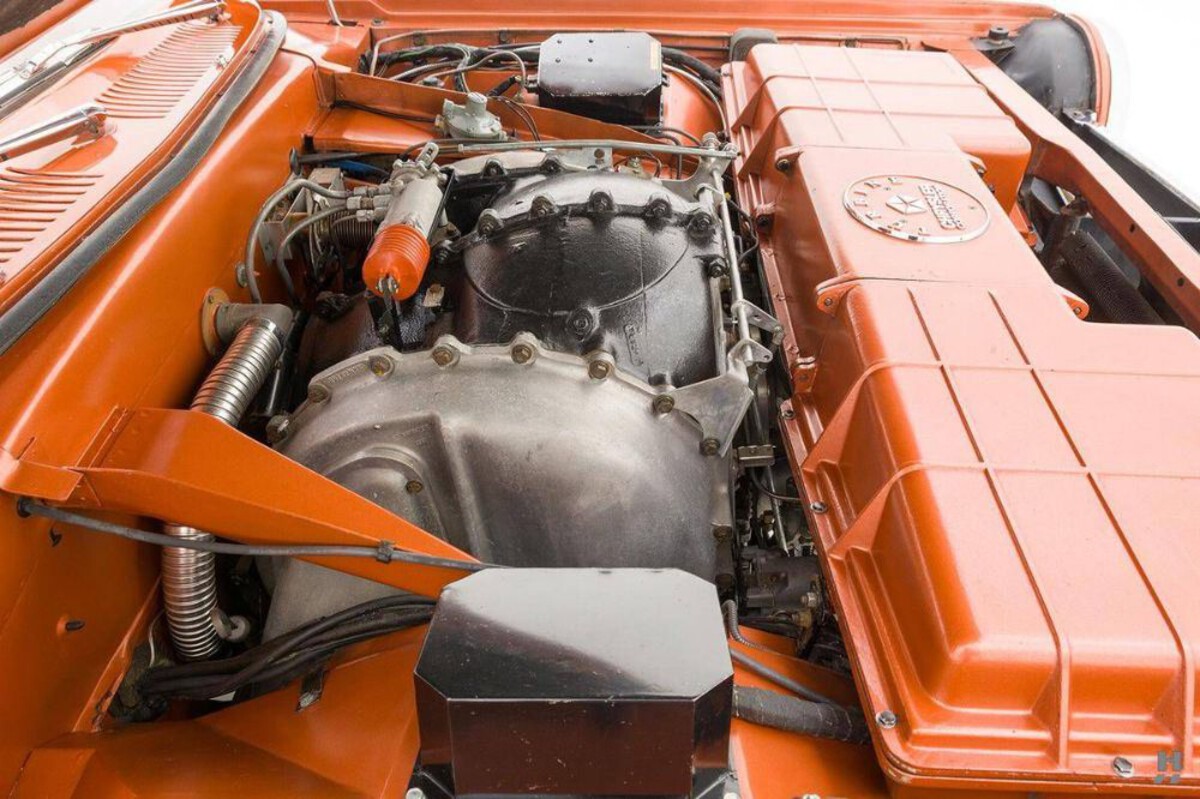
The turbine engine offered several theoretical advantages, including fewer major moving components than a conventional V8. Chrysler believed this could reduce vibration and wear while delivering smoother operation and potentially lowering maintenance demands.
Another major advantage was fuel flexibility. The turbine could run on a wide range of combustible liquids with relatively few adjustments, an appealing feature during the Cold War era when fuel availability was considered an important strategic concern. Chrysler invested millions of dollars into turbine research and developed several experimental engines before creating a version suitable for public testing.
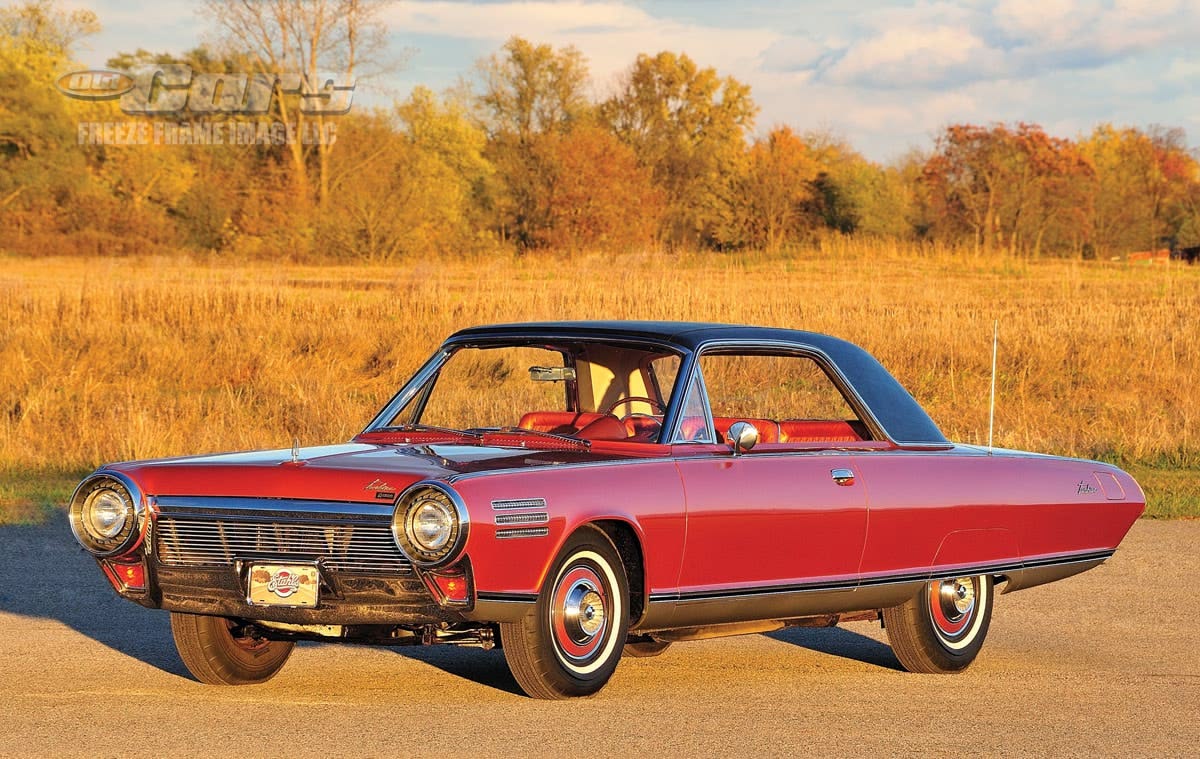
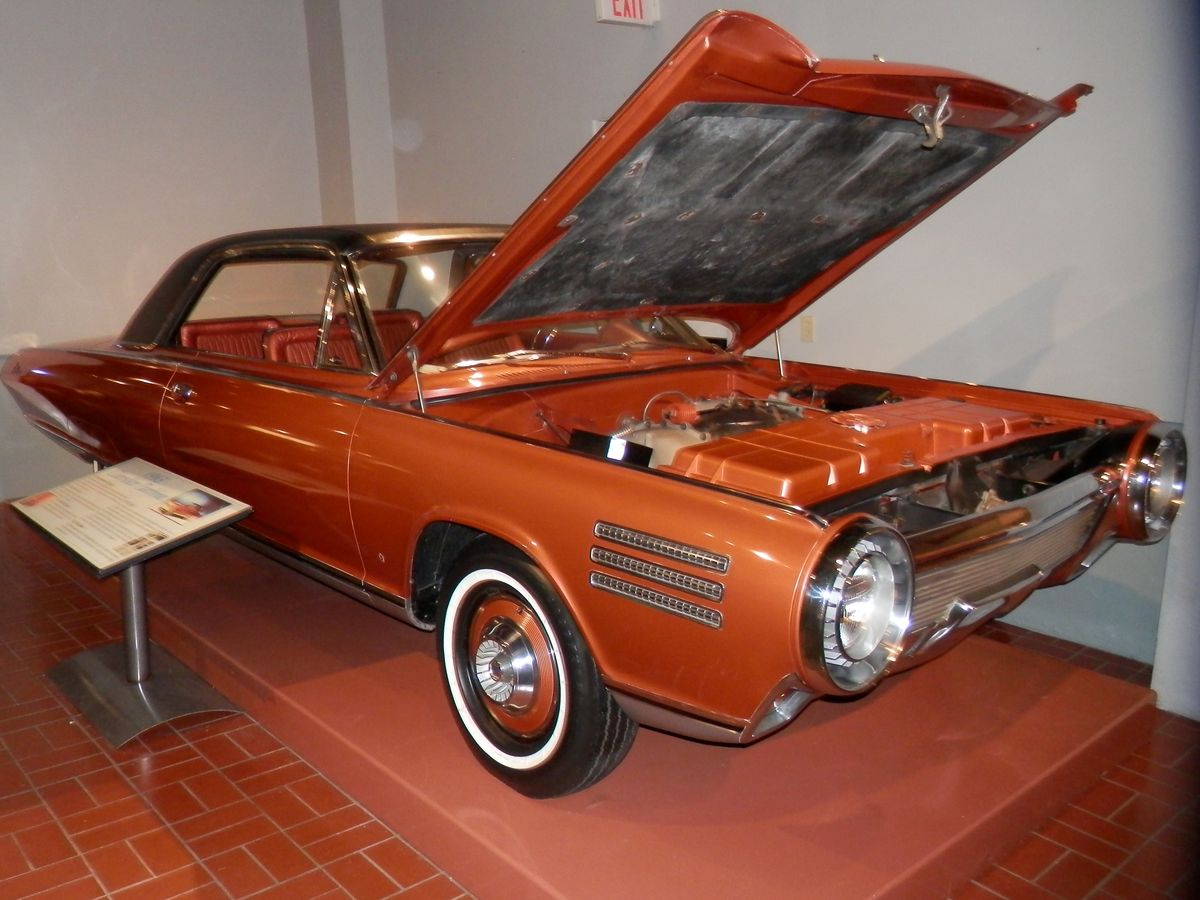
That effort produced the 1963 Chrysler Turbine Car, a fully road-legal coupe that ordinary Americans were allowed to drive. Chrysler partnered with Italian coachbuilder Ghia to hand-build the cars. Their bodies were constructed in Italy before being shipped to Detroit, where Chrysler installed the turbine powertrain and completed final assembly.
The Turbine Car looked as futuristic as its technology. Every example featured a distinctive Turbine Bronze metallic finish, along with chrome bumpers, sculpted fenders, subtle tail fins, and aviation-inspired details. The interior continued the aircraft theme with bronze accents, refined gauges, premium upholstery, and a clean dashboard.
Rather than focusing solely on speed, Chrysler designed the car to demonstrate smoothness, refinement, and effortless cruising. The project represented one of the company’s boldest attempts to imagine a radically different future for the automobile.
Key Specifications
- Model Year: 1963
- Production: 55 hand-built cars
- Engine: Fourth-generation regenerative gas turbine engine
- Horsepower: Approximately 130 hp
- Torque: Approximately 425 lb-ft
- Length: 209.8 inches (5,329 mm)
- Width: 78.8 inches (2,002 mm)
ALSO READ: 10 Hybrid Cars Ranked by Battery Replacement Cost
On paper, 130 horsepower doesn’t sound particularly exciting. However, turbine engines deliver torque differently from piston engines. Chrysler’s turbine produced roughly 425 lb-ft of torque, providing smooth acceleration without the vibration typically associated with large V8s.
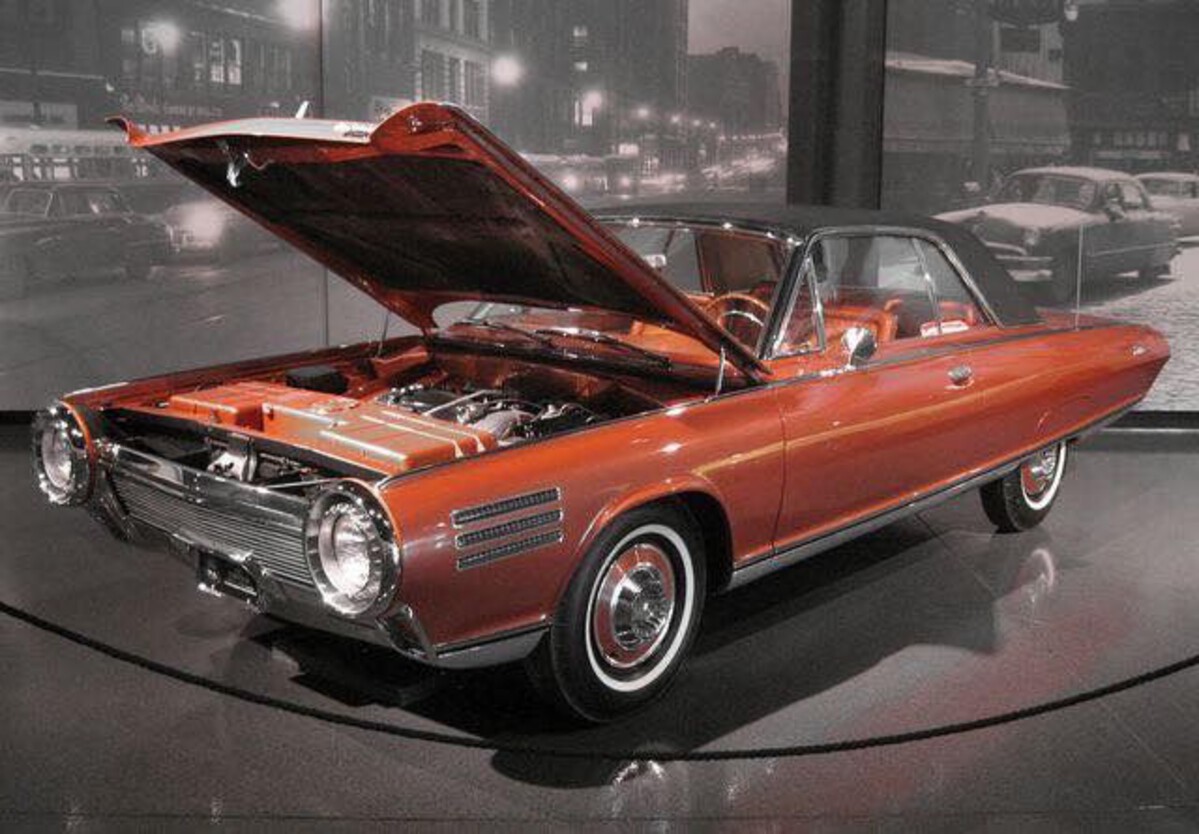
The car’s most striking trait was not its speed but its remarkably quiet operation. Instead of the familiar rumble of a piston engine, drivers often heard a soft, high-pitched whistle as the car accelerated. Even while sitting at a stop, the turbine produced an unusual sound that was more reminiscent of an aircraft preparing for takeoff than a traditional American coupe.
Rather than selling the cars, Chrysler launched one of the most ambitious public automotive experiments ever attempted. Beginning in late 1963, the company selected approximately 200 families from across the United States to drive the Turbine Car for several months before passing it to the next participant.
Each driver used the vehicle exactly as they would any family car. They commuted to work, went grocery shopping, took vacations, and accumulated thousands of real-world miles. Chrysler engineers then collected detailed feedback about reliability, drivability, comfort, and maintenance.
The program generated an enormous amount of publicity. Newspapers covered the futuristic experiment extensively, while curious neighbors often gathered whenever a Turbine Car appeared in a driveway. For many Americans, it was their first close encounter with what seemed like science fiction brought to life.
The feedback surprised even Chrysler. Most participants loved the smooth power delivery and remarkable reliability. Many reported that the engine started easily in cold weather and required little maintenance during their evaluation period. The turbine’s simplicity appeared to validate years of engineering work. Of course, there were compromises.
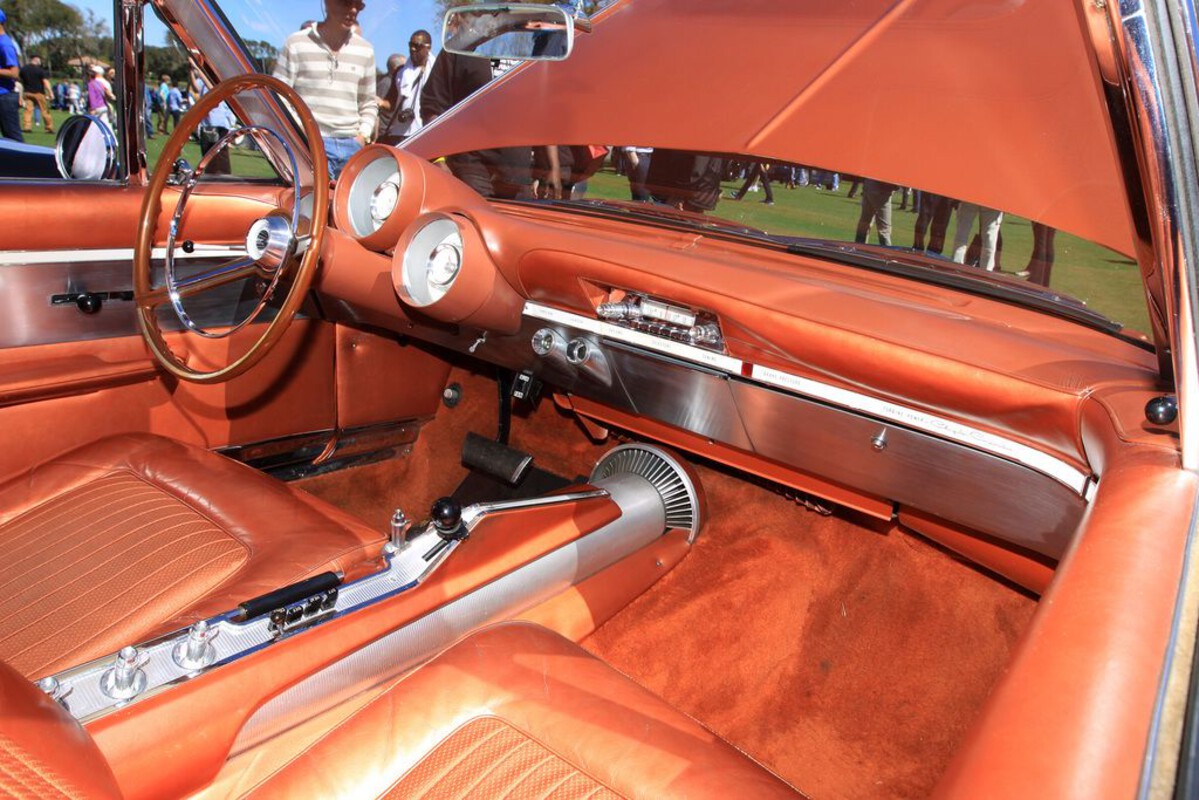
Throttle response wasn’t as immediate as drivers expected. Unlike a piston engine, which reacts almost instantly when the accelerator is pressed, the turbine needed time to build rotational speed. This slight hesitation became one of its biggest criticisms, particularly in stop-and-go traffic.
Fuel economy also failed to meet expectations. Although regenerative heat exchangers significantly improved efficiency over earlier turbine designs, real-world consumption still couldn’t consistently compete with increasingly sophisticated piston engines.
Then there was the famous fuel flexibility.
One of the Turbine Car’s biggest talking points was its ability to operate on an astonishing range of fuels. Chrysler demonstrated the engine running on diesel fuel, kerosene, home heating oil, jet fuel, and conventional gasoline. Engineers even experimented with unusual combustible liquids to showcase the engine’s versatility.
Among the most famous demonstrations involved tequila.
The story has become part of automotive folklore, but it’s rooted in reality. Chrysler publicly showed that the engine could burn tequila because turbine combustion depended more on a fuel’s ability to burn than on its precise chemical composition. The demonstration wasn’t intended to suggest owners should routinely fill their tanks with expensive liquor. Instead, it highlighted just how adaptable the combustion system really was.
ALSO READ: 10 Cars With Cabin Filters That Clog Before 8,000 Miles
Other documented demonstrations included perfume and certain vegetable-based oils, emphasizing the turbine’s remarkable tolerance for different fuels.
This flexibility was possible because the combustion process differed fundamentally from a piston engine. Instead of thousands of controlled explosions occurring inside cylinders, fuel burned continuously inside a combustion chamber while spinning turbine blades. That continuous combustion made the engine less sensitive to fuel octane ratings and composition.
As impressive as that sounded, everyday buyers ultimately cared more about purchase price, fuel costs, and driving characteristics than engineering novelty. By the mid-1960s, Chrysler engineers recognized that several obstacles stood between the Turbine Car and mass production.
Manufacturing costs ranked near the top of the list. Building turbine engines required expensive high-temperature materials and precision manufacturing techniques far more complex than producing conventional V8s. Scaling production to hundreds of thousands of cars annually would have demanded enormous investment.
Emissions became another challenge. Although turbines burned fuel differently, controlling nitrogen oxide (NOx) emissions proved increasingly difficult as environmental regulations tightened later in the decade. The exhaust itself created additional engineering headaches. Turbine engines generated extremely hot exhaust gases, requiring careful routing and insulation to ensure safety. Meanwhile, traditional piston engines kept getting better.
Detroit manufacturers introduced more efficient carburetors, stronger automatic transmissions, improved reliability, and increasingly refined V8 designs. The performance gap that once favored turbine technology gradually disappeared while conventional engines remained cheaper to manufacture and easier to service. Simply put, Chrysler’s revolutionary engine had become an answer to a problem the rest of the industry was solving through steady evolution.
The Chrysler Turbine Car experiment ended on a disappointing note for many of the people who had participated in the public testing program. After driving the cars, some participants hoped they would have the opportunity to buy them.
Chrysler instead collected the vehicles, eventually destroying 46 of the 55 examples that had been built. Several factors influenced the decision, including complicated agreements surrounding the Ghia-built bodies, the expense of maintaining specialized parts, liability concerns, and the lack of long-term factory support for experimental vehicles.
Nine Turbine Cars were spared and remain preserved in museums, corporate collections, and carefully managed private collections. Their extreme rarity has made them especially significant to automotive enthusiasts. When surviving examples appear at exhibitions or concours events, they continue to attract attention more than six decades after Chrysler introduced the unusual cars to the public.
The turbine program never delivered the transportation revolution Chrysler had envisioned. It did not replace piston engines or create a new generation of turbine-powered automobiles.
Even so, the project produced valuable engineering information and demonstrated that a car could operate on multiple types of fuel. More importantly, it showed the possibilities that emerge when automakers are willing to pursue unconventional engineering ideas.
The Turbine Car also provides an interesting connection to today’s automotive industry. Manufacturers are once again investing heavily in technologies such as electric powertrains, hydrogen fuel cells, and synthetic fuels. Chrysler’s turbine experiment ultimately failed to become the future of the automobile, but it remains an important reminder of an era when Detroit was willing to put radical ideas into the hands of ordinary drivers.