
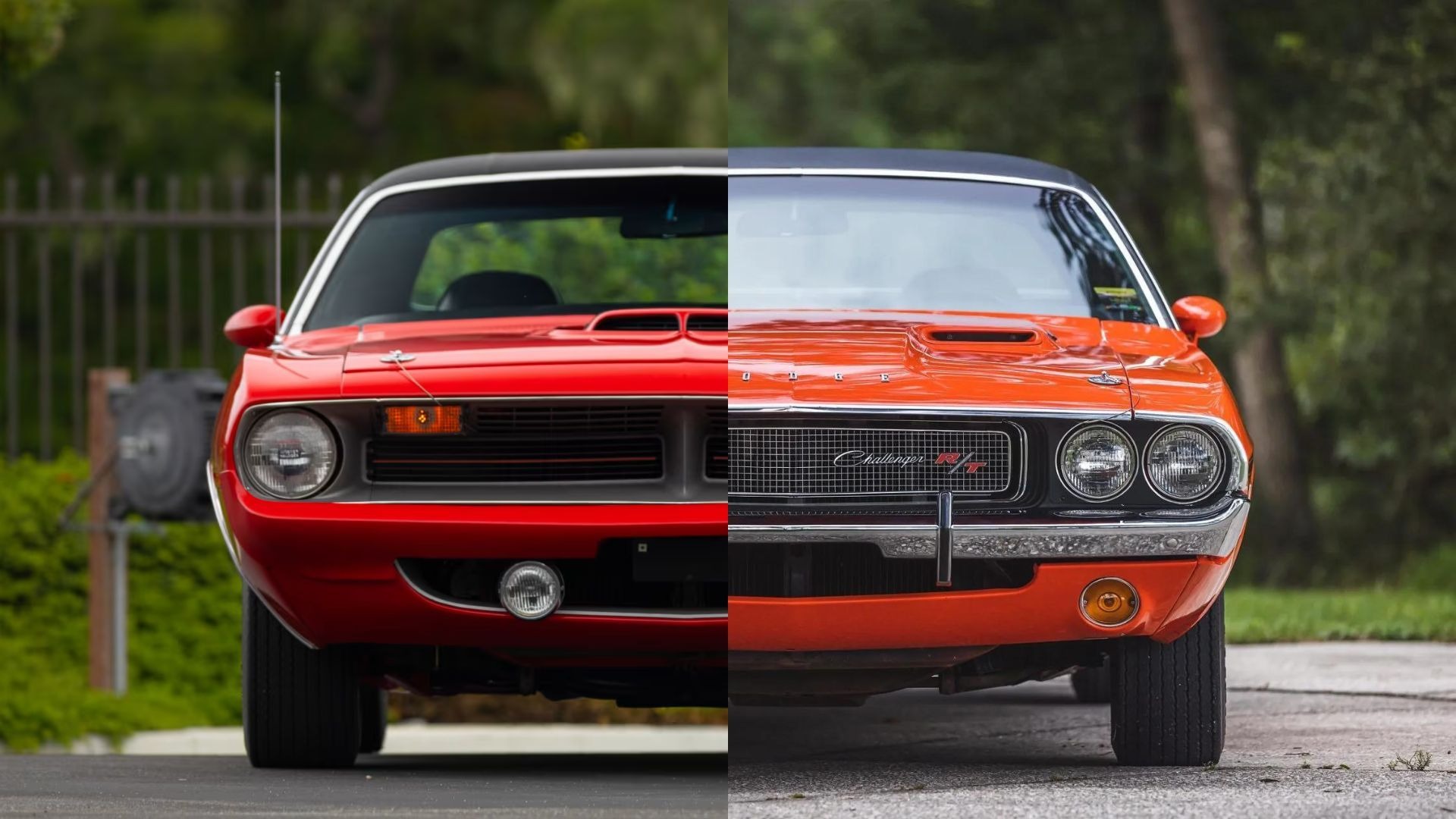
Ask almost anyone to name the first pony car in American history, and you’ll get the same answer every time: the Ford Mustang. It’s a fair guess, and it’s wrong. Sixteen days before Ford rolled its icon into the New York World’s Fair, Plymouth quietly put a fastback fish on dealer lots and let it sit there, mostly ignored.
That car was the Barracuda, and it holds a technical claim that most car buyers have never heard: first to market, first to disappear from memory. This is the story of how a company beat its biggest rival to the starting line and still finished the race looking like it arrived late.
The April Fool’s Day Launch Nobody Remembers
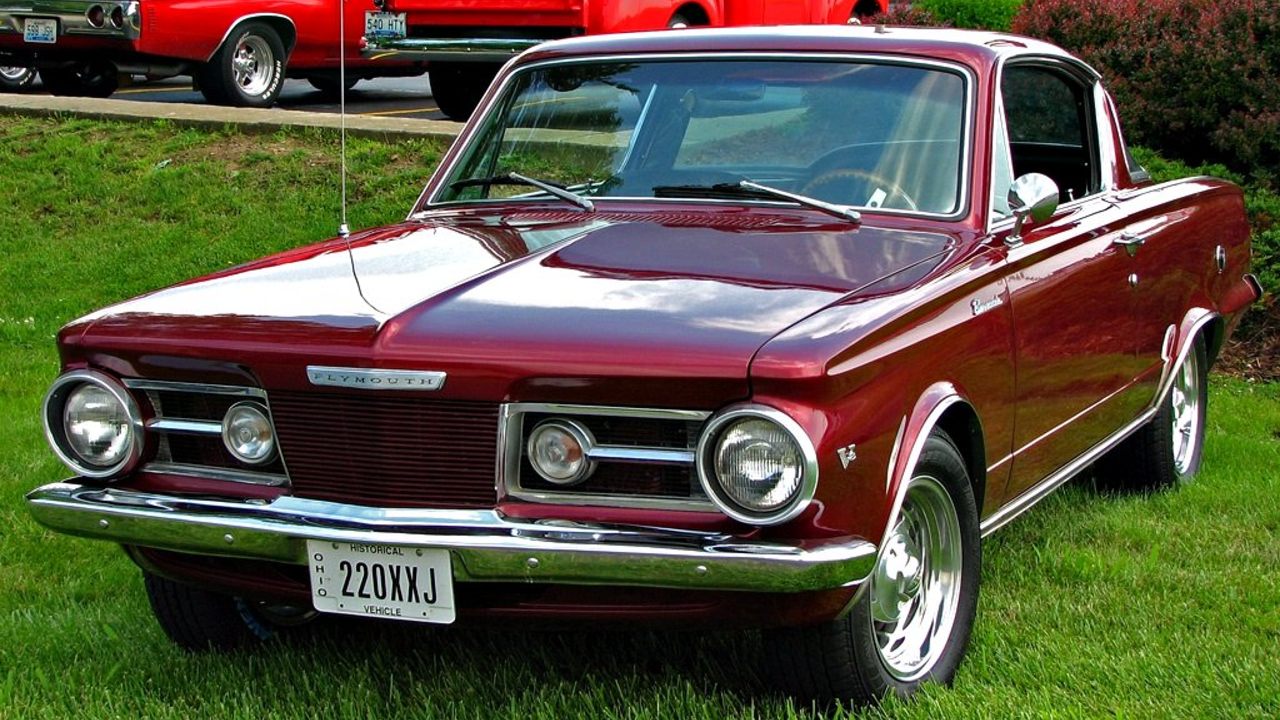
Plymouth introduced the Barracuda on April 1, 1964, and the date wasn’t lost on anyone who noticed it happened at all. Seeking to steal Ford’s thunder, Plymouth launched the Barracuda 16 days before the wraps came off the Mustang.
The Barracuda arrived on the market a few weeks before the Ford Mustang, though history rarely gives the car credit for it. Compare that quiet rollout to what Ford did just over two weeks later.
Ford officially introduced the Mustang on April 17, 1964, at the New York World’s Fair, and the launch became one of the most successful new car rollouts in Motor City history, selling more than 121,000 units in its first few months and establishing an entirely new vehicle category among American buyers.
Plymouth’s timing wasn’t accidental. According to reporting on the Barracuda’s launch, Ford had shown several Mustang concept cars publicly before the official release, and that lack of secrecy gave Plymouth enough runway to rush the Barracuda out first and claim some bragging rights.
Chrysler’s engineers knew what was coming and moved fast enough to slip their car onto dealer lots first, betting that being first would matter to buyers the way it mattered to their own pride. It didn’t work the way they hoped.
The Barracuda’s debut came and went with barely a ripple, while Ford’s event two and a half weeks later became the kind of moment car companies dream about. Being first, it turns out, counts for very little if nobody’s watching.
Two Weeks, Sixteen Days: The Math That Actually Matters
Here’s where the story gets a little messy, because different sources round the gap differently, and it’s worth settling the number for good. Some outlets describe the head start as roughly two weeks. Others are precise down to the day.
The Barracuda did indeed beat the Mustang to showrooms, though only by 16 days, bowing on April Fool’s Day 1964. That precision matters because it’s the whole basis of Plymouth’s claim to history.
The Ford Mustang is generally credited as being the first pony car, and as far as the pony car concept itself goes, that credit holds, but the Barracuda was actually released on April 1, 1964, a full 16 days before the Mustang followed.
The distinction between “pony car” and “first to market” is doing a lot of work in that sentence, and it’s the exact loophole car historians still argue about decades later. Sixteen days isn’t a long window in the grand scope of automotive history, but in 1964 it was long enough to matter legally and symbolically.
Despite Ford’s claims that the Mustang was the first pony car to market, technically Chrysler could rightfully dispute that claim, since the Barracuda beat the Mustang by a mere 16 days. Whether you call it two weeks or sixteen days, the outcome reads the same either way.
Plymouth got there first. Ford got there better remembered. Numbers on a calendar don’t always translate into numbers on a sales chart, and nowhere is that gap more obvious than in this particular footnote of Detroit history.
Also Read: 10 American Coupes Discontinued Before They Could Become Classics
Built on a Valiant, Wearing a Fastback’s Clothes
Underneath the fish-shaped badge, the Barracuda wasn’t really its own car in the way people assume a “first pony car” ought to be. It borrowed its bones from something far less glamorous, and that borrowed foundation shaped nearly every part of the experience buyers actually got behind the wheel.
The Barracuda was based on the successful Plymouth Valiant line, and viewed straight from the front, it was difficult to tell one from the other. What separated the two cars wasn’t the chassis, the engine bay, or even most of the sheet metal. It was one dramatic styling choice stacked onto an otherwise ordinary compact.
That defining feature was the enormous, curved rear window, measuring 14.4 square feet, the largest piece of glass ever installed on a production car up to that point. It gave the Barracuda its unmistakable fastback profile and flooded the cabin with light, though anyone who’s sat under a greenhouse on a July afternoon can guess the tradeoff that came with it.
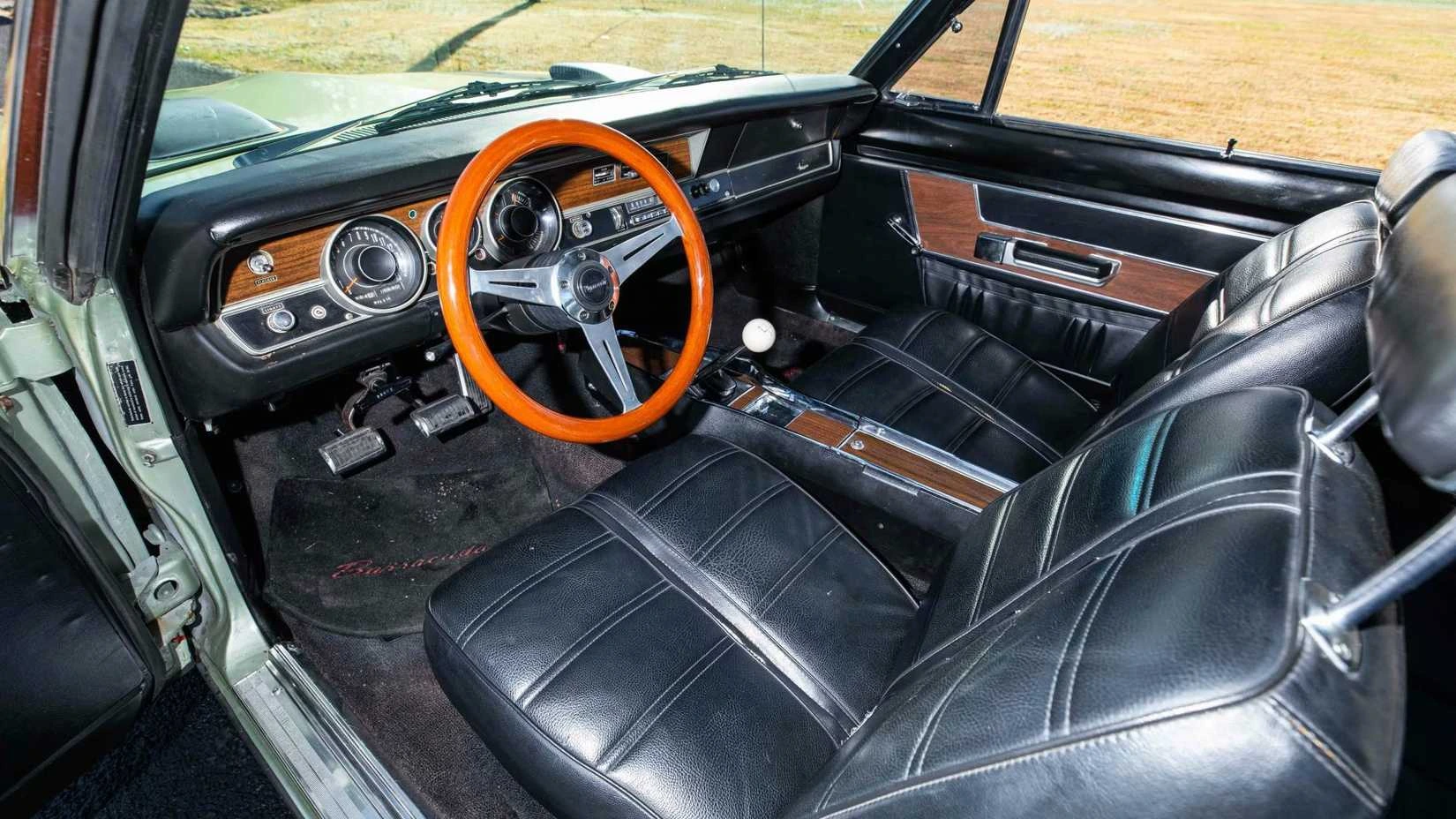
Inside, Plymouth leaned on practicality rather than flash. The cabin came trimmed in deluxe vinyl available in black, blue, gold, or red, with bucket seats up front and a folding rear seat that could carry three passengers in a pinch, creating what Plymouth marketed as a “seven-feet anything space” once the seat was folded flat. It was clever packaging built on a budget frame, dressed up just enough to look like something new.
Why the Mustang Won the War Anyway
Being first didn’t buy Plymouth much loyalty once the sales numbers started rolling in, and the gap between the two cars only widened as 1964 turned into 1965. In their first full year on the market, the Mustang outsold the Barracuda by a margin of nine to one.
Even the shortened first model year told the same story before the full sales figures came in. More than 100,000 additional Mustangs were produced compared to Barracudas during that inaugural stretch, giving Ford roughly an eight-to-one sales advantage right out of the gate.
Part of the problem was choice, or the lack of it. Ford let buyers build a Mustang that felt personal, while Plymouth offered a much narrower path. Extra-cost options on the Barracuda included a wood-rimmed steering wheel, simulated mag wheel covers, and a pushbutton radio, a modest lineup that fell far short of the extensive customization list that let Mustang buyers essentially design their own car.
Marketing told the rest of the story. Ford turned a car launch into a cultural event at a World’s Fair. Plymouth put a fish badge on a Valiant and hoped word would spread on its own. One company understood it was selling an image. The other believed the engineering timeline would speak for itself, and in the marketplace of 1964, that turned out to be a losing bet.
Also Read: 8 American Muscle Cars Enthusiasts Consider Severely Underrated
One Detail People Still Remember
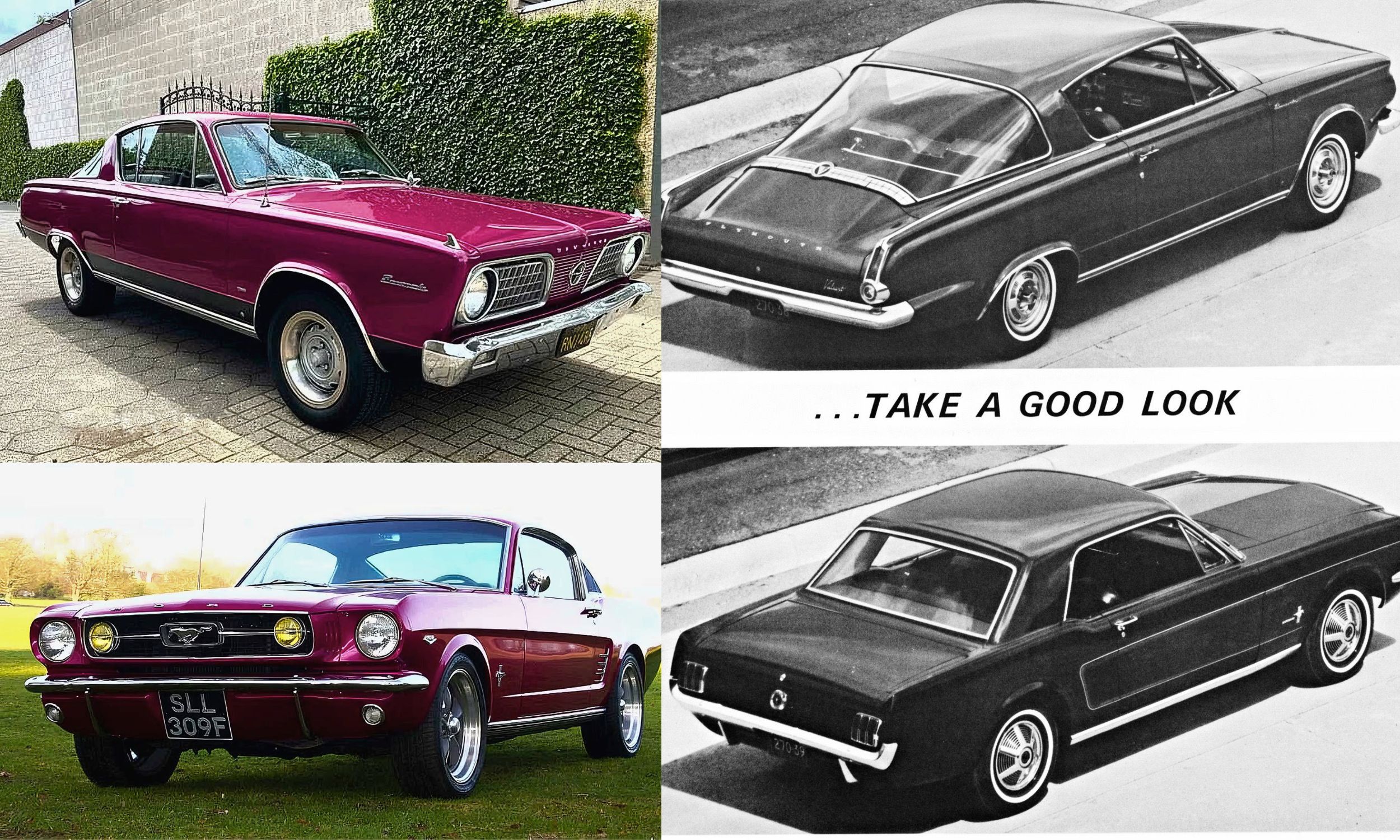
The Barracuda never got the crown, but it never fully vanished from the conversation either, which is its own quiet kind of victory. Car enthusiasts, historians, and the occasional trivia night still bring up those 16 days as proof that “first” and “famous” aren’t always the same word.
Plymouth kept building on the Barracuda name for a full decade after that overlooked spring release, eventually evolving it into a genuine muscle car on its own platform by the end of the 1960s. The Mustang got the headline.
The Barracuda got the receipt. And more than sixty years later, that receipt is still being passed around by anyone who wants to win an argument about which car actually came first.
