
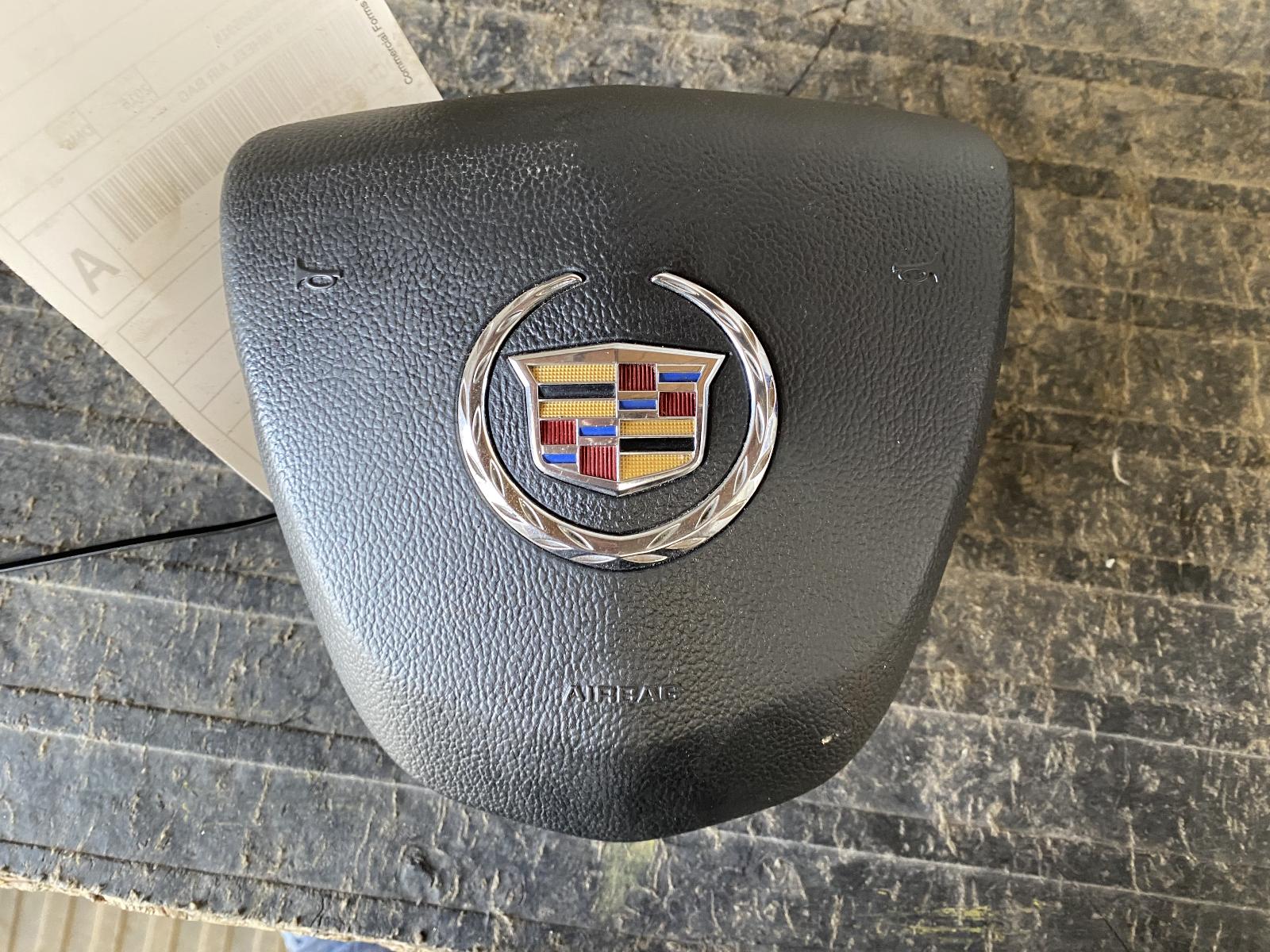
Picture a Cadillac showroom in 1974, years before “airbag” became a household word. Quietly, on the order sheet, sat an option most shoppers scrolled right past: the Air Cushion Restraint System. For $225, a buyer could drive home in a Calais, De Ville, or Fleetwood Brougham with dual front airbags tucked behind the dash, a full fifteen years ahead of the federal mandate that eventually made them standard.
Few people took Cadillac up on the offer. Fewer still remember it happened. This is the story of how one of the boldest safety bets in automotive history arrived early, struggled to find buyers, and vanished almost as quietly as it appeared, only to return decades later as one of the most trusted features in any car.
A Rare Option Hidden in Plain Sight
Long before Cadillac put airbags on a price sheet, engineers had been chasing the idea for two decades. Patents for inflatable safety cushions date back to the early 1950s, when inventors on both sides of the Atlantic filed competing designs built around compressed air. Those early systems inflated too slowly to matter in a real crash, so the concept sat mostly on paper.
General Motors changed that. After running a 1973 field trial with 1,000 specially fitted Chevrolet Impalas, GM pushed its Air Cushion Restraint System into production in late November 1973. Buyers could order it starting in January 1974, and it reached certain Oldsmobile, Buick, and Cadillac models built on the full-size platform.
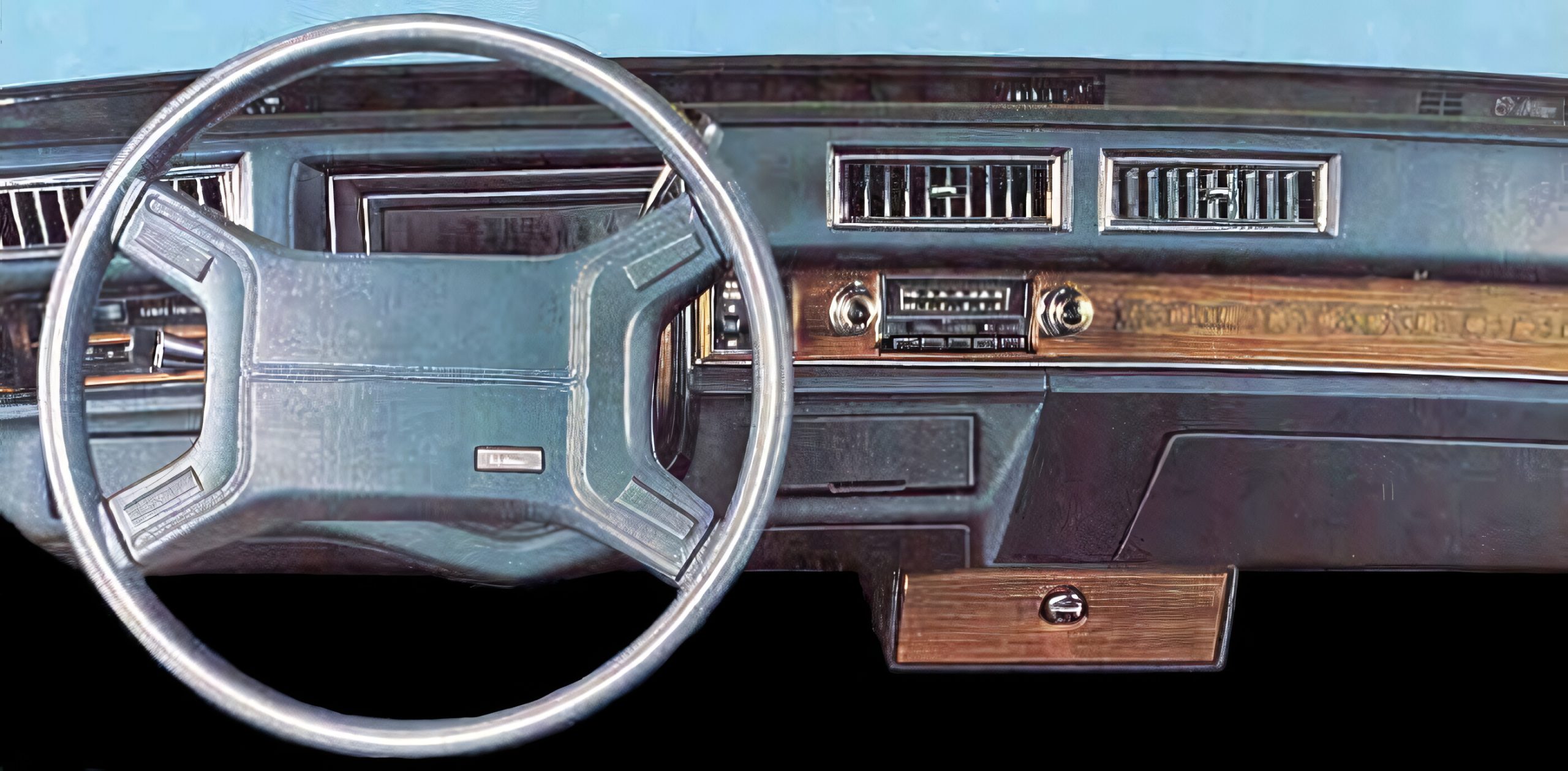
Cadillac’s version covered the Calais, De Ville, Fleetwood Brougham, and Eldorado coupe. The convertible and limousines were left out entirely, since the airbag hardware simply didn’t fit those platforms. A driver could spot an ACRS-equipped Cadillac by its unusual four-spoke steering wheel, complete with a horn button on every spoke, and a small warning lamp on the dash that read “AIR CUSHION.” Nothing else on the car gave away that a genuine safety milestone sat under that padded panel.
Why Cadillac Built Airbags Before the Law Demanded Them
General Motors did not start the push for airbags on its own. The first move came from federal regulators in 1969 when they proposed a rule requiring new vehicles to include passive safety systems. These systems were expected to protect occupants automatically without the driver doing anything.
The regulation was scheduled to begin in July 1973. Vehicle manufacturers strongly opposed the proposal, but GM still invested in airbag development because there was a chance the rule would become law. A large part of that decision came from Edward N. Cole, who became GM’s president in 1967.
He had little confidence in seatbelts and believed airbags offered a better safety option. His support for the project went beyond routine business planning. Cole treated the program as something worth proving and approved about $60 million for research and development to show the technology could work in everyday vehicles.
Despite spending heavily on airbags, GM did not support the proposed government requirement. Company executives kept asking regulators to postpone the rule, saying voluntary safety programs such as ACRS were enough.
Years after leaving the company, Cole admitted passive safety systems would only become common if lawmakers required them, though he avoided making that statement while leading GM.
Also Read: 10 Vehicles Stolen Most Often for Their Airbags
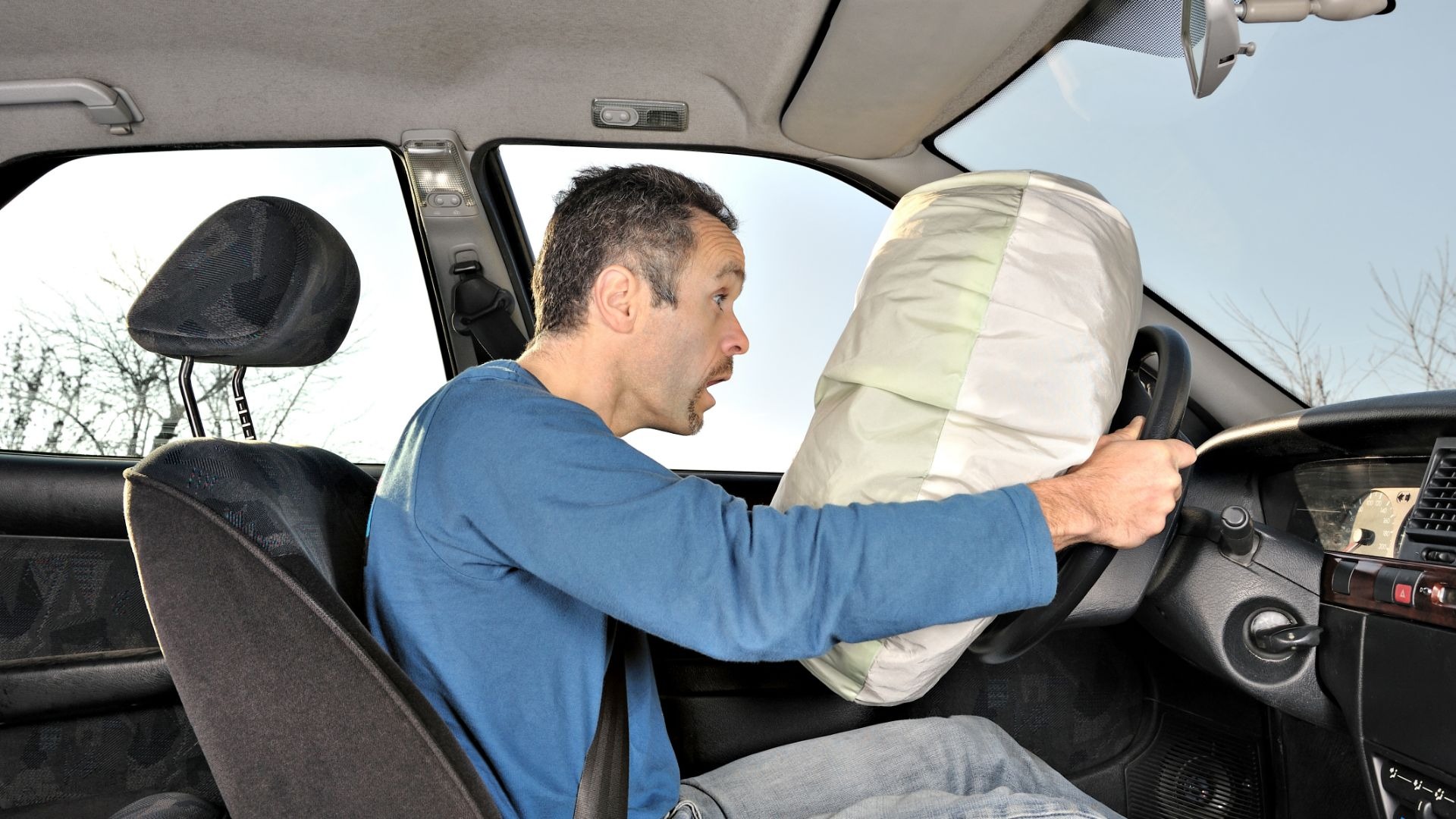
How the Air Cushion Restraint System Actually Worked
Strip away the marketing, and the engineering underneath was genuinely clever for its era. Crash sensors sat in two places: one in the front bumper, another behind the firewall. A frontal impact strong enough to trigger the bumper sensor, roughly equivalent to an 11 mph barrier hit, would fully inflate the driver’s airbag and begin filling the passenger side.
A harder hit, around 18 mph, triggered a second stage that fully inflated both passenger-side cushions. That passenger side actually held two bags in one. A smaller inner cushion acted like a knee brace, while a larger outer bag cradled the torso and head.
Pyrotechnic inflators, filled with argon rather than the nitrogen used in modern systems, produced the burst of gas needed to fill each bag in about 40 milliseconds, faster than a blink. Front lap belts came standard on ACRS cars, though shoulder belts did not. GM designed the whole system to work as a true passive restraint, meaning it needed to protect an unbelted occupant on its own.
That single design choice would later prove to be both the system’s biggest selling point and its most serious flaw, since unbelted passengers, especially small children, faced real risk from the force of deployment.
Why So Few Buyers Said Yes
Despite the huge investment in development, GM’s Air Cushion Restraint System failed to gain public acceptance. Between 1974 and 1976, only about 11,000 vehicles fitted with the system were produced across Oldsmobile, Buick, and Cadillac.
Cadillac accounted for roughly 2,300 of those vehicles, a very small number compared with GM’s total production during that period. Poor promotion played a major part in the disappointing result. Dealers could not even order the option until February 1974, although the vehicles had already reached the market.
GM released just one national print advertisement, and sales were already falling short soon afterward. Many brochures gave little attention to the feature, placing it beside minor equipment. Buyers also considered the price too high, rising from $225 to $315 within two years.
Dealers could not properly answer questions about replacement costs after deployment, leaving many customers uncertain and unwilling to spend extra money on the system.
Also Read: 8 Cars With Knee Airbags for Both Front Passengers
The Long Road to Mandatory Airbags
After GM discontinued the airbag option in 1976, progress slowed for several years. Arguments about passive safety requirements continued through the late 1970s and reached the Reagan administration, which attempted to cancel the rule.
The dispute reached the Supreme Court, and in 1983 the justices decided that removing the requirement was not lawful. Things changed quickly after that decision. Transportation Secretary Elizabeth Dole introduced a new regulation in 1984, requiring passive restraint systems in all new passenger cars by September 1989.
Before that deadline arrived, Mercedes-Benz and Chrysler helped improve public confidence in airbags by making them available in more vehicles. Federal law later required dual front airbags and three-point seatbelts in every new passenger car sold in the United States for the 1998 model year, with light trucks following a year later.
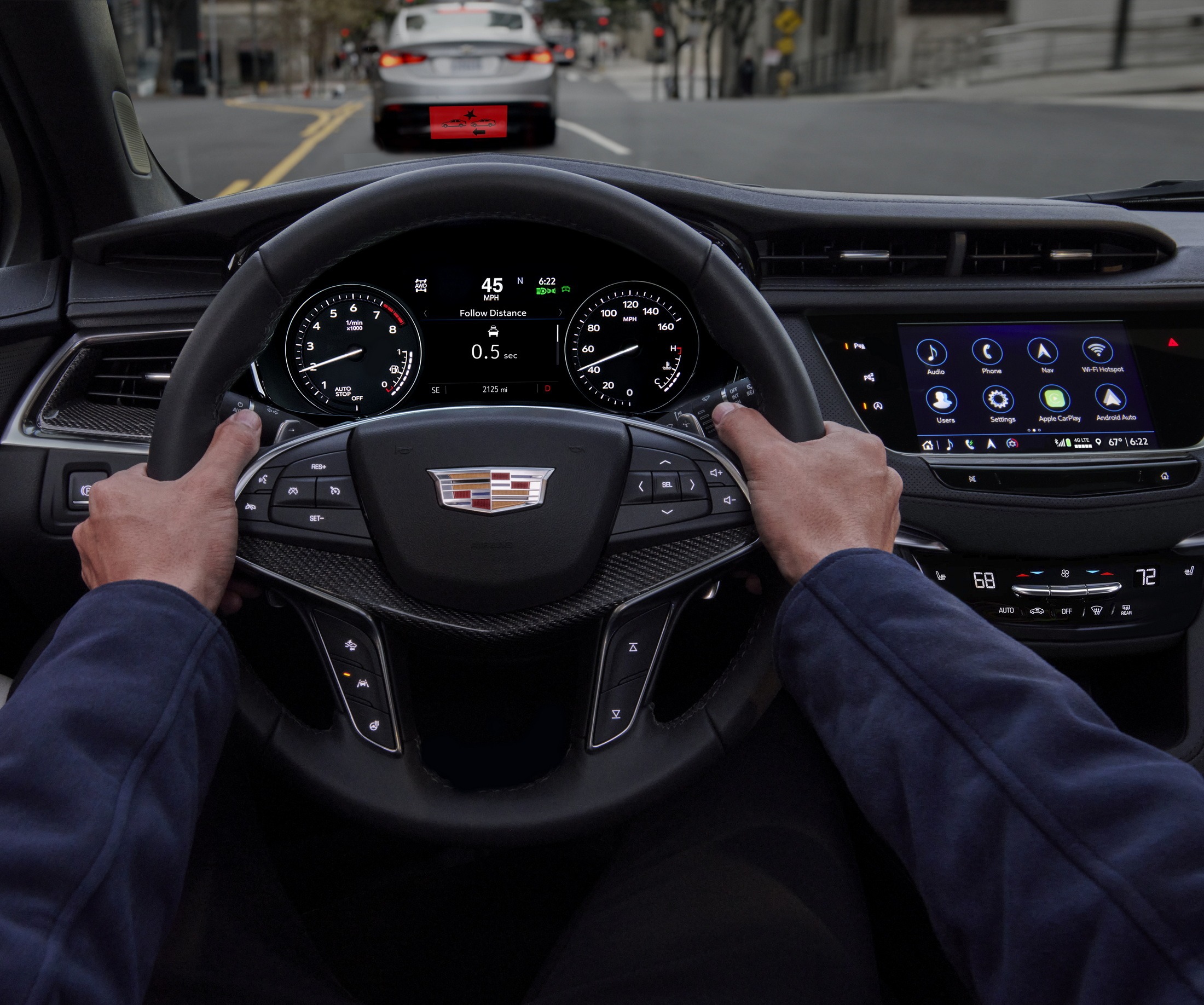
Cadillac had already returned dual airbags to selected models in 1993. What many buyers once ignored later became a life-saving safety feature used across the industry.
