
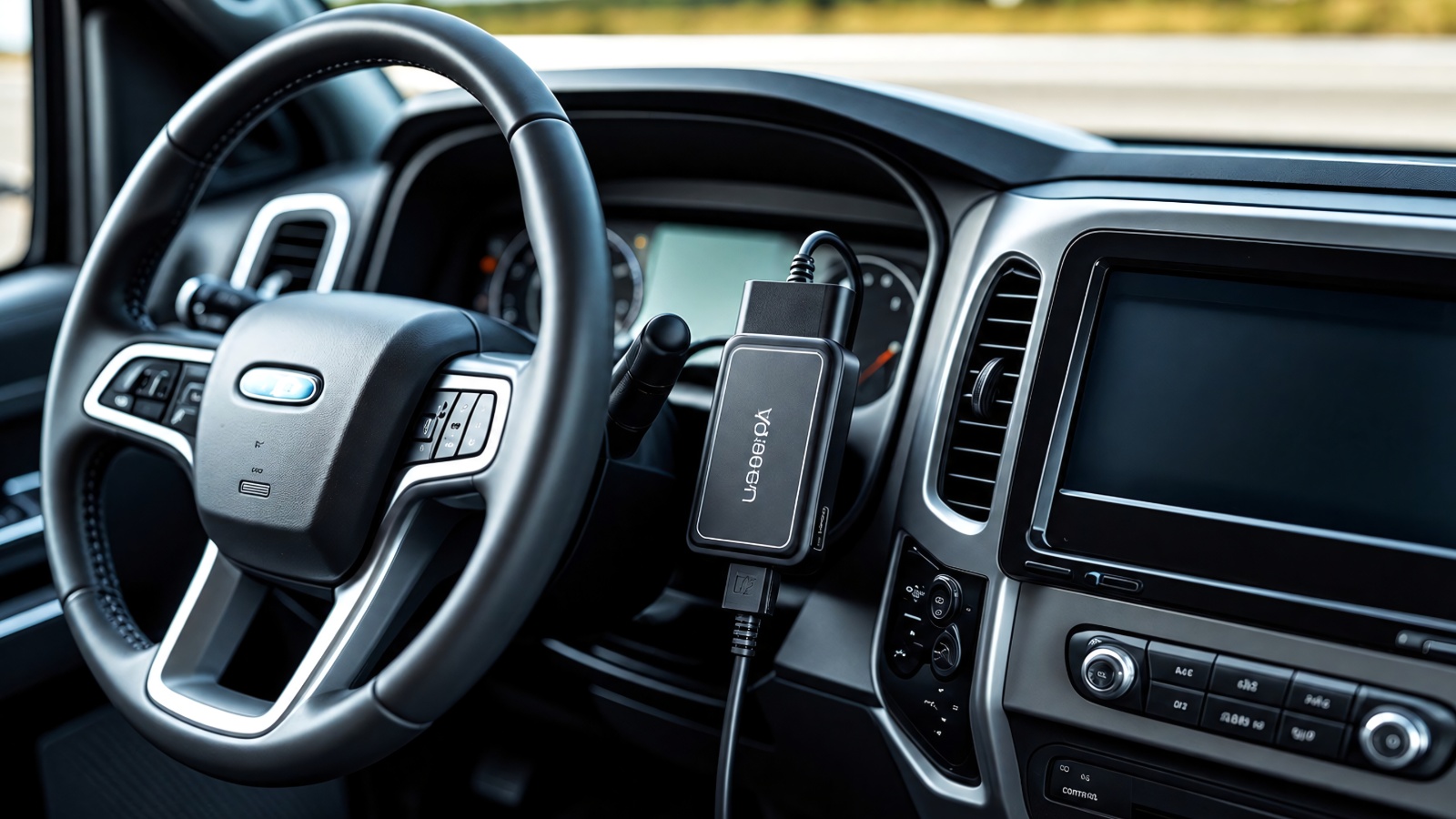
Subprime auto lending has quietly become one of the most tech-heavy corners of consumer finance. Millions of borrowers with weak or no credit histories drive vehicles equipped with small black boxes wired into the ignition. These are called starter-interrupt devices, or SIDs. They let a lender remotely disable a car’s starter if a payment is missed.
The devices often pair with GPS trackers. This gives lenders both a kill switch and a locator beacon rolled into one unit. The New York Times and CBS News both reported that roughly 2 million vehicles carry these devices nationwide.
Below are eight major finance companies operating in this space. Each has been named in industry reporting, regulatory filings, or lawsuits connected to payment-assurance technology, GPS tracking, or starter-interrupt practices. Details include company specifics rather than car specs, since that’s what’s actually relevant to understanding how these lenders operate.
1. Credit Acceptance Corporation
Credit Acceptance is one of the largest and oldest names in subprime auto finance. It works through dealers rather than lending to consumers directly.
The company was named specifically in a 2017 matter. Credit Acceptance Corporation and DriveTime Automotive Group reported in securities filings that the FTC issued civil investigative demands regarding their use of GPS starter-interrupter devices.
That FTC inquiry looked at whether the devices crossed a legal line. Regulators wanted to know whether these devices illegally harass borrowers or unfairly violate their privacy.
Credit Acceptance has also faced broader legal scrutiny beyond device use. The CFPB and the New York Attorney General sued the company for misrepresenting the cost of credit and tricking customers into high-cost loans on used cars.
That case had a notable turn in 2025. The CFPB filed an unopposed motion to withdraw from the lawsuit it had jointly filed with the New York Attorney General.
The takeaway is simple. Credit Acceptance’s scale means its device policies get outsized regulatory attention. Subprime lending models rely heavily on mitigating financial risk, especially when issuing loans to buyers with low credit scores or limited credit histories.
Starter-interrupt and GPS tracking technology provide lenders with immediate leverage in the event of missed payments, transforming the vehicle itself into an active compliance tool.
However, critics and consumer advocacy groups argue that remote immobilization devices create dangerous safety hazards. When a car is disabled remotely while parked on a busy highway, parked in an unsafe neighborhood, or used by a family member unaware of the loan status, the human cost can be severe.
Regulatory pressure continues to mount as lawmakers question whether automated remote shutoffs violate consumer protection laws and standard privacy expectations regarding personal property.
2. DriveTime Automotive Group
DriveTime is both a used-car retailer and its own financing arm. It sells cars and lends the money to buy them in one package. The company was co-named in the same FTC action as Credit Acceptance. DriveTime Automotive Group reported that the FTC issued civil investigative demands regarding the use of GPS starter-interrupter devices.
Its history traces back further than most competitors realize. DriveTime Automotive Group is an American used car retailer and finance company based in Tempe, Arizona, formerly known as Ugly Duckling before being renamed in 2002.
The company’s footprint has grown substantially since then. DriveTime ranked 3,793 on the Inc. 5000 list after posting $2 billion in revenue in a single recent year.
Loan servicing today largely runs through its affiliate. DriveTime’s financing is often managed by its affiliate, Bridgecrest, which handles the ongoing loan relationship.
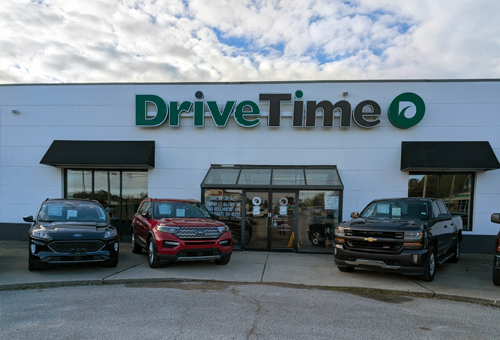
Because DriveTime both sells and finances the car, it has unusually tight control over the vehicle’s technology from day one. This integrated business model allows the company to install tracking hardware and starter-disabling tech before the keys are even handed over to the buyer.
While it streamlines the sales process for high-risk consumers who might otherwise be denied auto loans, it also embeds digital oversight directly into the daily lives of vehicle owners.
The operational synergy between DriveTime and its servicing arm, Bridgecrest, means that payment delinquencies trigger automated digital warnings and remote immobilization protocols with minimal human intervention.
For many low-income borrowers, a single missed paycheck can result in a disabled vehicle, cutting off their ability to commute to work, transport children, or handle medical emergencies. This tight grip on vehicle mobility highlights the ethical challenges embedded within modern subprime financing structures.
3. Westlake Financial Services
Westlake bills itself as the largest privately held auto finance company in the country. It operates deep in the non-prime and subprime tiers. Its footprint is substantial by employee count alone. Westlake Financial operates with an employee range of 1,000 to 5,000 individuals, reflecting considerable operational scale.
Revenue figures back up that scale. The company reported revenue of $312.5 million and secured a $249.6 million private equity round in 2011. Westlake also competes directly for the biggest dealer partnerships in the industry.
Westlake Financial Services is one of the financing partners for CarMax’s used-car buyers, alongside Ally Bank, American Credit Acceptance, and others.
Market share data has consistently placed it near the top tier. Westlake Financial Services has held roughly 6.4 percent of finance-company market share, ranking among the top five nationally.

Westlake’s size means device and tracking policies affect a very large borrower base compared to smaller competitors. Operating at this magnitude requires sophisticated risk-management tools to protect capital when lending to consumers who lack pristine credit profiles.
For major independent lenders, utilizing GPS tracking modules and remote starter-interrupt technology offers a predictable mechanism to curb default rates and prompt timely communications from distressed borrowers.
However, the widespread deployment of these digital chokeholds on vehicles raises significant questions regarding consumer autonomy and financial surveillance.
When private equity-backed lenders control thousands of active immobilizers across the country, a minor processing error or delayed bank transfer can leave an innocent driver stranded without warning.
The reliance on automated technology over traditional human collections practices underscores a broader industry trend toward impersonal, software-driven asset control in the subprime market.
4. Santander Consumer USA (RoadLoans)
Santander Consumer USA is the U.S. auto lending arm of the Spanish banking giant Santander Group. It operates both direct-to-consumer and dealer channels.
Its direct-to-consumer brand has deep roots. RoadLoans is a direct-to-consumer auto lender established in 2000, based in Dallas, Texas, specializing in subprime auto loans.
Ownership shifted through a few hands before settling. RoadLoans was originally established by Triad Financial Corp., owned by Ford Motor Credit, before being purchased by Santander Consumer USA Holdings in 2009.
Santander also dominates the finance-company rankings outright. Santander Consumer USA held the top spot in finance-company market share, at 16.8 percent.

The company runs multiple financing brands under one roof. Chrysler Capital, which finances FCA US vehicles, operates as a subsidiary of Santander Consumer USA.
Santander’s sheer volume of subprime originations puts it at the center of most industry discussions on payment-assurance technology. As a titan in the automotive lending world, the institution influences credit standards and collection strategies adopted by smaller competitors nationwide.
Through its extensive dealer network and digital lending portals like RoadLoans, thousands of consumers sign contracts that tie vehicle ignition privileges directly to financial compliance.
The integration of payment-assurance technology within such a massive corporate banking structure highlights how mainstream financial institutions have embraced tools once restricted to predatory, fly-by-night buy-here-pay-here lots.
While these measures are legally framed as security against high-risk lending, they effectively shift the burden of debt collection entirely onto the vehicle’s hardware interface.
Consequently, borrowers facing temporary financial hardship find themselves subjected to immediate digital immobilization, illustrating the profound power large lenders hold over personal mobility.
Also Read: What Public Fast Charging Costs per Mile vs Gasoline
5. Exeter Finance
Exeter Finance is a Blackstone-backed lender that grew quickly through partnerships with major used-car retailers. It leans heavily on one specific sales channel.
Its origin story is tied closely to private equity. Exeter Finance Corp, majority owned by The Blackstone Group, was founded in 2006 and had 11 outstanding securitizations by 2016.
One retailer accounts for a huge slice of its business. Exeter is largely fed by its CarMax new and late-model used-car origination channel, accounting for roughly 30 percent of volume, while maintaining ties to 9,000 dealerships nationwide.
Growth came with real financial strain early on. The company reported several consecutive years of net losses before turning a modest profit in 2015, growing to $3.175 billion in managed portfolio assets across 2 million loans.

Analysts flagged concerns even as the book expanded. S&P noted that this growth may have come at the expense of credit quality and adequate infrastructure.
Exeter’s rapid, private-equity-fueled growth is a common pattern among lenders that later adopt aggressive collection technology. Backed by institutional capital, subprime lenders face relentless pressure to maximize recovery rates and minimize delinquencies across millions of high-risk accounts.
When profit margins depend heavily on managing default exposure among financially vulnerable borrowers, lenders frequently turn to technological safeguards like GPS tracking and remote starter interrupts to enforce timely repayments.
However, scaling these collection tactics across a multi-billion-dollar portfolio introduces systemic risks for consumers. If automated immobilization systems misfire or trigger due to administrative processing delays, thousands of drivers can be left stranded without recourse.
The reliance on private equity backing to fuel rapid portfolio expansion underscores how corporate financing models directly shape the day-to-day enforcement mechanisms experienced by everyday vehicle owners on the road.
6. American Credit Acceptance
American Credit Acceptance is a mid-size but well-established subprime lender. It holds a meaningful, if smaller, slice of the national market. Its market share has held steady over the years. American Credit Acceptance has held about 2.3 percent of the finance-company market share nationally.
The company also participates in major retail financing networks. American Credit Acceptance is one of the financing companies serving CarMax’s used-car buyers, alongside Ally Bank, Capital One Auto Finance, and Santander Consumer USA.
This dual role, national lender plus retail financing partner, is common among mid-tier subprime shops. It lets smaller lenders punch above their weight in loan volume.

Being embedded in a major retailer’s financing panel also raises the stakes for compliance. Any device-related complaint tends to draw attention to the whole panel, not just one lender.
American Credit Acceptance illustrates how mid-tier lenders still carry real influence through retailer partnerships. Operating within structured dealership networks allows these firms to distribute subprime loans efficiently while leveraging the consumer trust associated with large nationwide retail brands.
At the same time, it places them under closer scrutiny from consumer protection advocates who monitor how finance companies utilize digital tracking and vehicle disablement tools.
The intersection of retail automotive sales and automated loan servicing highlights a growing digital divide in modern vehicle ownership. While prime buyers enjoy complete autonomy over their purchased assets, subprime borrowers frequently go through a world where every ignition cycle is conditioned on real-time financial compliance.
As mid-tier lenders continue to balance aggressive risk mitigation with regulatory oversight, the debate over the ethics of remote vehicle shutdown technology remains a central issue in consumer finance.
7. Regional Acceptance Corporation
Regional Acceptance is another mid-tier subprime auto finance company with a long operating history. It has carved out a stable, if modest, share of the market.
Industry rankings place it just behind the largest players. Regional Acceptance held roughly 2.5 percent of the finance-company market share, placing it among the top ten nationally.
That consistent ranking matters in a volatile industry. Subprime lenders frequently shrink, merge, or exit the market during credit downturns. Regional Acceptance has remained a recognizable name through multiple credit cycles.

Longevity in this space usually reflects tighter underwriting or more conservative growth than fast-scaling rivals. Smaller, steadier lenders like this typically rely on the same device vendors as their larger peers. Payment-assurance hardware is largely outsourced rather than built in-house.
Regional Acceptance shows that not every lender in this space is chasing rapid expansion. Operating with a steady approach allows these institutions to maintain predictable servicing standards while minimizing extreme credit blowups.
However, managing deep-subprime and non-prime portfolios still necessitates strict asset protection frameworks. When loans carry higher default probabilities, even conservative lenders rely on structured technological safety nets.
Integrating GPS tracking and remote ignition control ensures that if a borrower’s financial situation collapses, the lender retains immediate leverage to locate and immobilize the vehicle. This balance between steady operational growth and hard risk mitigation defines the reality of mid-tier auto finance.
8. Consumer Portfolio Services
Consumer Portfolio Services is one of the longest-tenured issuers in the subprime auto asset-backed securities market. It has weathered more credit cycles than most competitors on this list.
Its track record in capital markets is notable. Consumer Portfolio Services has been a regular issuer in the asset-backed market since 1994, completing 22 deals since the financial crisis.
The company also recovered financially well before many peers. Consumer Portfolio Services returned to profitability in the fourth quarter of 2011 and has remained in the black since then.
That kind of staying power is rare in subprime auto lending. Many competitors from the same era have since been acquired, shut down, or absorbed into larger platforms.

Consumer Portfolio Services also ranks solidly in national market share data. The company has held about 2.1 percent of finance-company market share nationally.
Consumer Portfolio Services’ longevity suggests a more conservative approach to risk than some of the faster-growing names above. Surviving decades of economic fluctuations requires rigorous portfolio management and disciplined underwriting standards that adapt to shifting regulatory environments.
Yet, even among seasoned market veterans, utilizing payment-assurance mechanisms remains a standard practice for managing high-risk consumer contracts.
By relying on automated tracking and remote disablement tools, long-standing lenders protect their investors against severe loss during economic downturns.
While public and regulatory scrutiny surrounding digital vehicle immobilization continues to evolve, these technological safeguards remain deeply embedded in the mechanics of subprime lending. They serve as the ultimate corporate backstop for keeping delinquency-heavy portfolios solvent over the long term.
Also Read: 10 Trims That Depreciate Slower Than the Base Model
