A 6-foot-8-inch clearance equals 80 inches, which is a common benchmark for older or tighter parking structures, although garage heights are not universally standardized. Most sedans, crossovers, and ordinary pickups have no problem fitting beneath that mark. The trouble begins with high-roof commercial vans, heavy-duty off-road trucks, and lifted pickups whose factory height can already exceed 80 inches before roof racks, antennas, lights, larger tires, or suspension modifications are added.
These vehicles illustrate how quickly height becomes a real ownership issue. Some are obviously too tall, while others exceed the benchmark by only an inch or two and can therefore catch drivers by surprise. Posted garage clearances should always be treated as absolute limits, and owners should measure the actual height of their specific vehicle rather than relying only on brochure specifications. Small modifications can make a truck or van noticeably taller than stock.
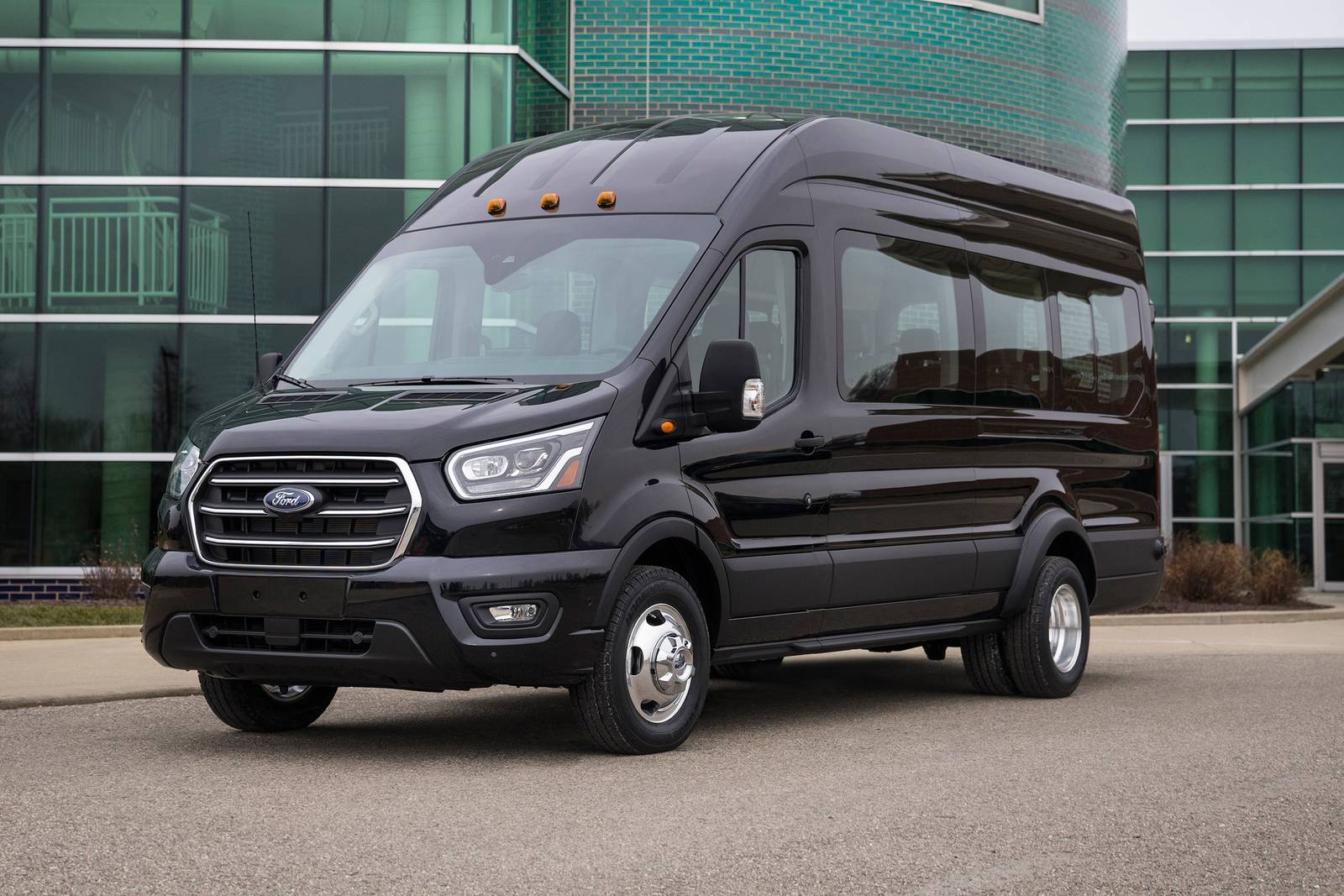
1. Ford Transit High Roof
The Ford Transit High Roof is one of the clearest examples of a vehicle that simply does not belong in a standard 6-foot-8 parking structure. Depending on configuration, a high-roof Transit stands at roughly 108 to 110 inches tall, meaning the roof is more than two feet higher than an 80-inch entrance.
That extra height is intentional. Commercial buyers want enough room to stand upright inside the cargo area, install shelving, carry tall equipment, or convert the van into a camper or mobile workshop. The high-roof Transit can provide close to 77 inches of interior cargo height, which makes it extremely practical for business use but completely unsuitable for low-clearance garages.
Even the low-roof Transit can be problematic. Some configurations sit a little above 82 inches, which still exceeds a true 80-inch clearance. Medium-roof versions are significantly taller again.
The Transit is available with naturally aspirated and turbocharged gasoline engines. The 3.5-liter naturally aspirated V6 provides a useful baseline for the standard powertrain.
- Engine type: 3.5-liter naturally aspirated PFDi V6
- Torque: Approximately 260 lb-ft
- Horsepower: Approximately 275 hp
- Length: Approximately 235.5 inches in long-wheelbase form
- Width: Approximately 81.3 inches without mirrors
- Overall height: Approximately 108.6 inches, high roof
The Transit therefore needs outdoor parking, commercial-height structures, loading areas, or dedicated van facilities.
For owners converting one into a camper, the height problem can become even greater. Solar panels, roof vents, awnings, antennas, and air-conditioning systems can easily add several more inches.
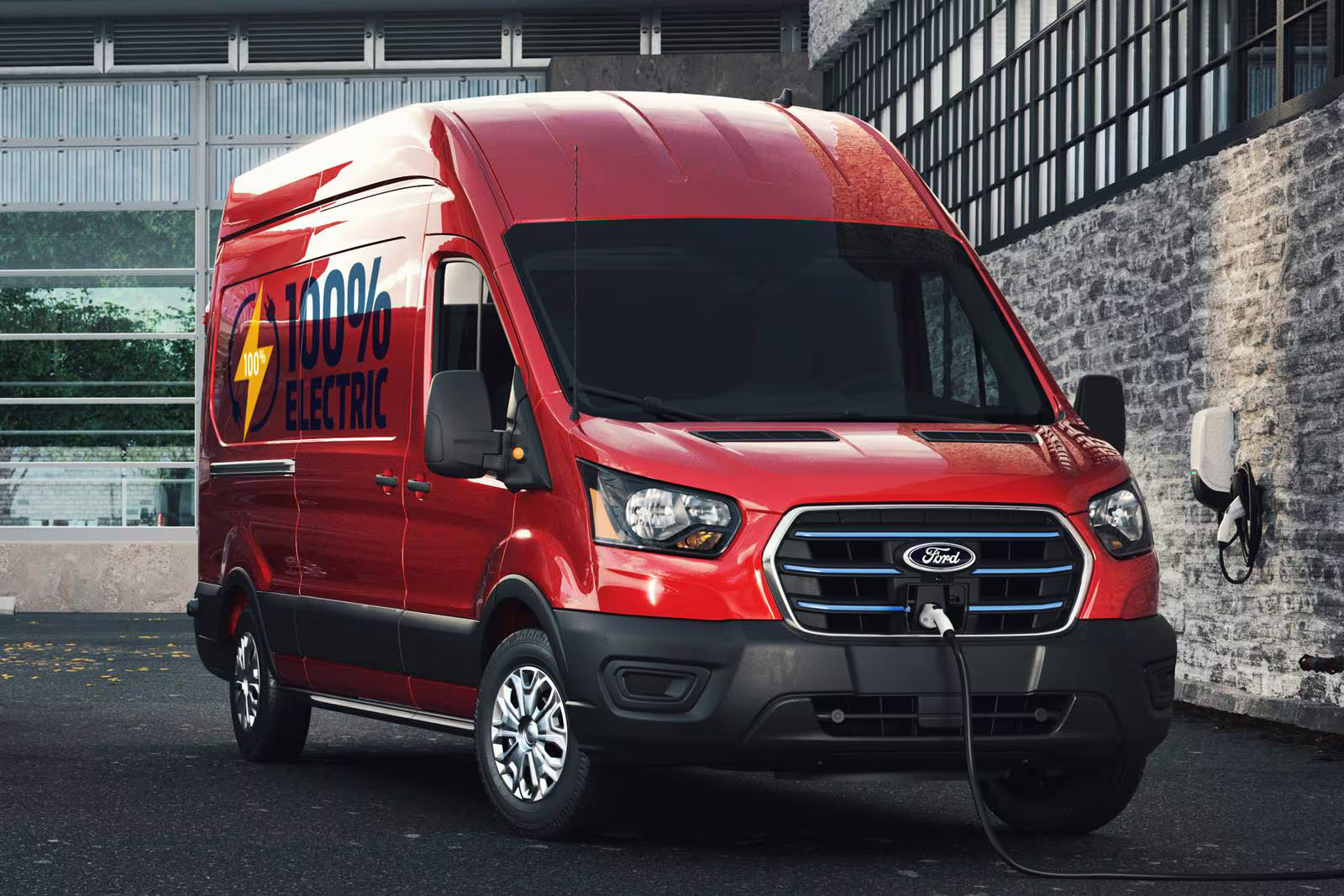
2. Ford E-Transit High Roof
The Ford E-Transit proves that switching from gasoline to electric power does not solve the problem of oversized commercial-van height. The battery may sit low in the floor, but the body still needs to provide enough interior space for delivery work, tools, shelving, and standing room.
A high-roof E-Transit can measure roughly nine feet tall, putting it around 28 to 30 inches beyond the 6-foot-8 benchmark. That is far too much difference to treat as a close call.
The issue is particularly important because the E-Transit is designed heavily around urban business use. Electric propulsion works well for stop-and-go delivery routes, but urban centers are exactly where low underground and multi-level garages are common. Businesses therefore need to plan delivery zones and parking areas carefully.
The E-Transit uses a rear-mounted electric motor and, in newer configurations, a larger battery than earlier versions. It offers strong low-speed torque, which suits commercial duty extremely well.
- Engine type: Single rear-mounted electric motor
- Torque: Approximately 317 lb-ft
- Horsepower: Approximately 266 hp
- Length: Approximately 235.5 inches in long-body form
- Width: Approximately 81 inches without mirrors
- Overall height: Roughly 109 inches in high-roof form
The electric drivetrain may make the van smoother and quieter, but the physical body remains enormous.
Businesses also need to consider roof-mounted refrigeration systems, HVAC units, ladders, and other equipment. Those additions can make an already tall E-Transit several inches higher, further limiting where it can travel safely.
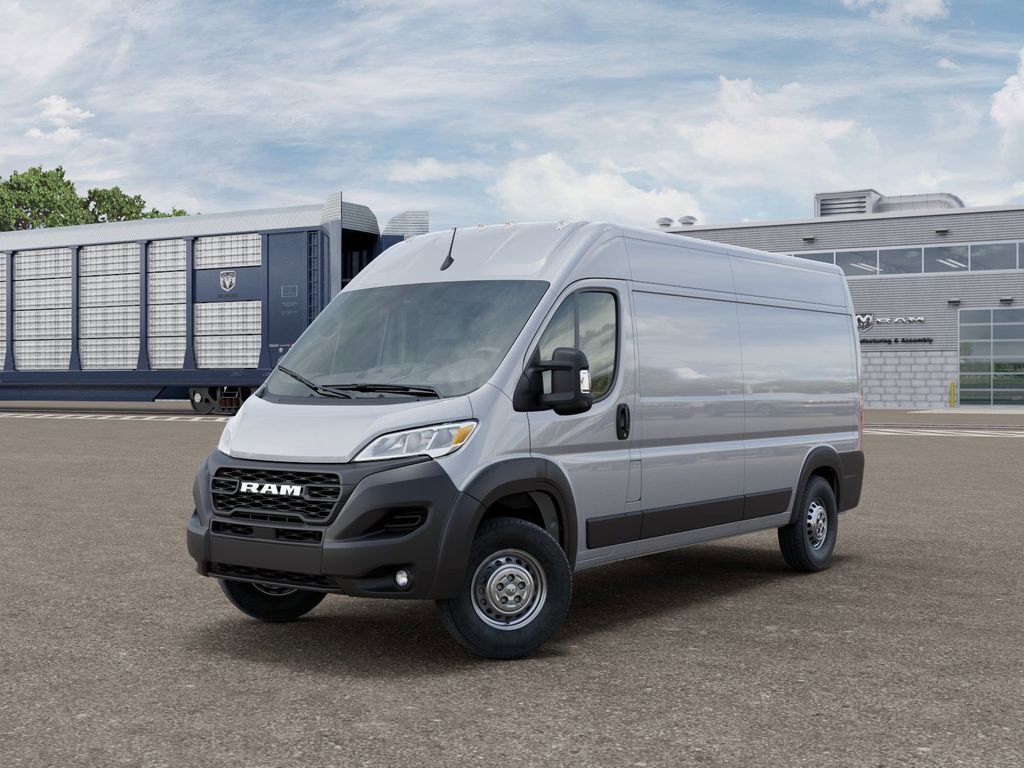
3. Ram ProMaster 2500 High Roof
The Ram ProMaster 2500 High Roof is another vehicle that should never attempt to enter an 80-inch garage. A representative high-roof configuration measures approximately 103.6 inches tall, which works out to roughly 8 feet 7.6 inches. That puts the ProMaster nearly two full feet beyond the assumed clearance limit.
Unlike many competing full-size vans, the ProMaster uses front-wheel drive. That layout allows Ram to keep the cargo floor relatively low, making loading easier while still preserving impressive standing room inside. Contractors and delivery drivers benefit from that packaging, especially when climbing in and out of the van repeatedly.
The downside is obvious in city environments. The front wheels may fit comfortably between parking-garage walls, but the roof will hit the clearance barrier long before the vehicle reaches the ticket machine.
The ProMaster uses Stellantis’ familiar 3.6-liter Pentastar V6. It is paired with an automatic transmission and provides adequate power for commercial use.
- Engine type: 3.6-liter naturally aspirated Pentastar V6
- Torque: Approximately 250 lb-ft
- Horsepower: Approximately 276 hp
- Length: Approximately 213.2 inches in 136-inch-wheelbase High Roof form
- Width: Approximately 80 inches without mirrors
- Overall height: Approximately 103.6 inches
The engine is not exotic, but that simplicity is useful for fleets because parts and service are widely available.
Owners should also remember that commercial upfits can make matters worse. Roof ladders, vent fans, air-conditioning systems, communications equipment, or storage racks can increase total height well beyond the factory specification.
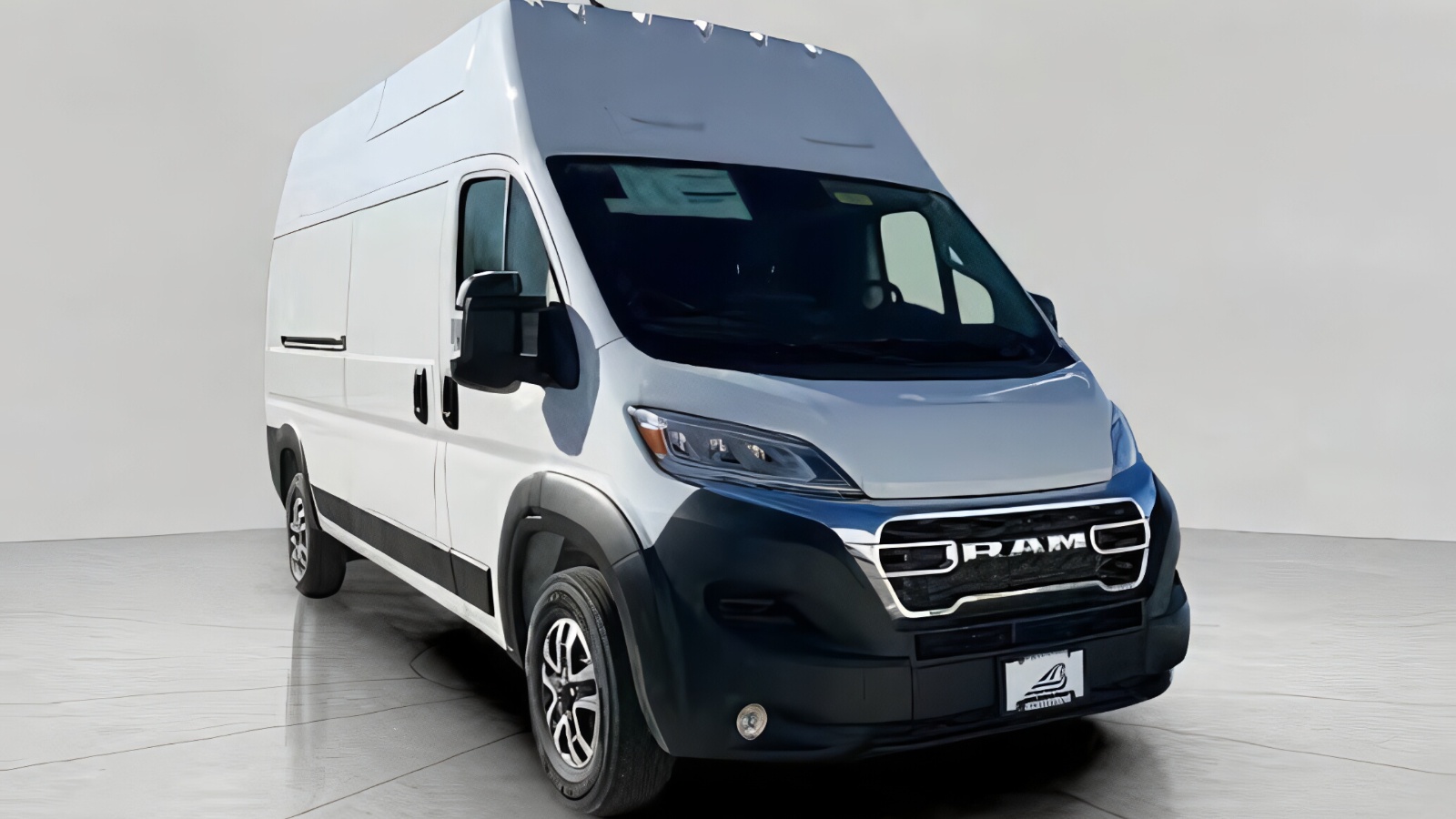
4. Ram ProMaster 3500 Super High Roof
The Ram ProMaster 3500 Super High Roof takes the already tall ProMaster design and pushes it further. This is one of the largest factory cargo-van bodies available in the United States and is intended for buyers who care much more about interior volume than garage access.
The Super High Roof version offers well over 500 cubic feet of cargo capacity in extended form. That gives businesses enough space for parcel delivery, mobile workshops, specialist equipment, shelving systems, or camper conversions.
Against a 6-foot-8 garage, there is essentially no calculation to make. The roof is far beyond the 80-inch mark, so the vehicle requires outdoor parking or commercial facilities with significantly greater clearance.
Mechanically, the 3500 Super High Roof retains the same 3.6-liter Pentastar V6 found in other ProMaster models. That means the giant body does not require a unique engine or complicated fleet-support network.
- Engine type: 3.6-liter naturally aspirated Pentastar V6
- Torque: Approximately 250 lb-ft
- Horsepower: Approximately 276 hp
- Length: Approximately 250 inches in extended form
- Width: Approximately 80 inches without mirrors
- Overall height: Well above 100 inches in Super High Roof configuration
The biggest risk with a van like this is driver habit. Someone who normally operates a pickup or standard van may forget just how far the body extends above the windshield. That is why many commercial fleets place height-warning stickers directly in the driver’s line of sight.
With a Super High Roof ProMaster, even relatively generous passenger-car garages should be treated as off-limits unless the posted clearance clearly accommodates a vehicle well above eight feet tall.
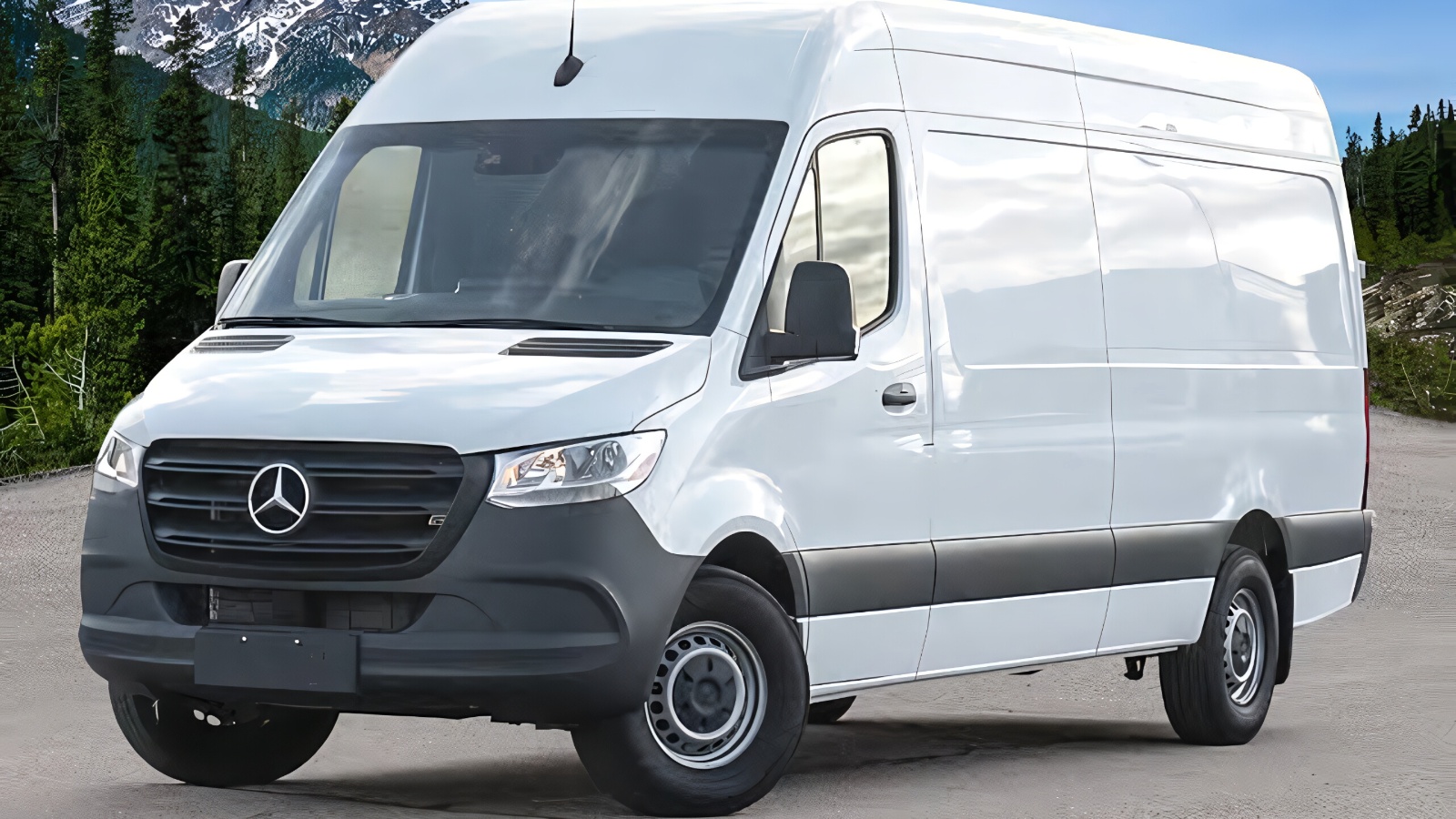
5. Mercedes-Benz Sprinter Cargo Van High Roof
The Mercedes-Benz Sprinter has become one of the most recognizable high-roof vans in North America, and its dimensions make it easy to understand why. Depending on configuration, a high-roof Sprinter can stand around 100 to 111 inches tall. That means even the lower end of the range exceeds a 6-foot-8 structure by roughly 20 inches.
For commercial users, that height is a major advantage. Many Sprinter configurations provide close to 79 inches of interior standing height, allowing workers to move through the cargo area without crouching. That is particularly valuable for delivery fleets, tradespeople, mobile-service companies, camper conversions, and shuttle operations.
The downside is that traditional parking structures become impossible. A representative Sprinter uses Mercedes-Benz’s 2.0-liter turbocharged diesel four-cylinder. Standard-output versions deliver strong low-end torque, while higher-output versions provide even more pulling power.
- Engine type: 2.0-liter turbocharged four-cylinder diesel
- Torque: Approximately 295 lb-ft in standard-output form
- Horsepower: Approximately 170 hp in standard-output form
- Length: Approximately 234 inches with a 144-inch wheelbase
- Width: Approximately 80 inches body width
- Overall height: Approximately 107 inches in representative high-roof form
Camper conversions need special attention. A factory high-roof Sprinter may already be around nine feet tall before a single accessory is installed. Solar panels, roof fans, satellite equipment, cargo boxes, and air conditioners can add several more inches.
For this reason, experienced Sprinter owners often keep a written record of the vehicle’s actual measured height and avoid any parking structure without clearly posted commercial-vehicle clearance.
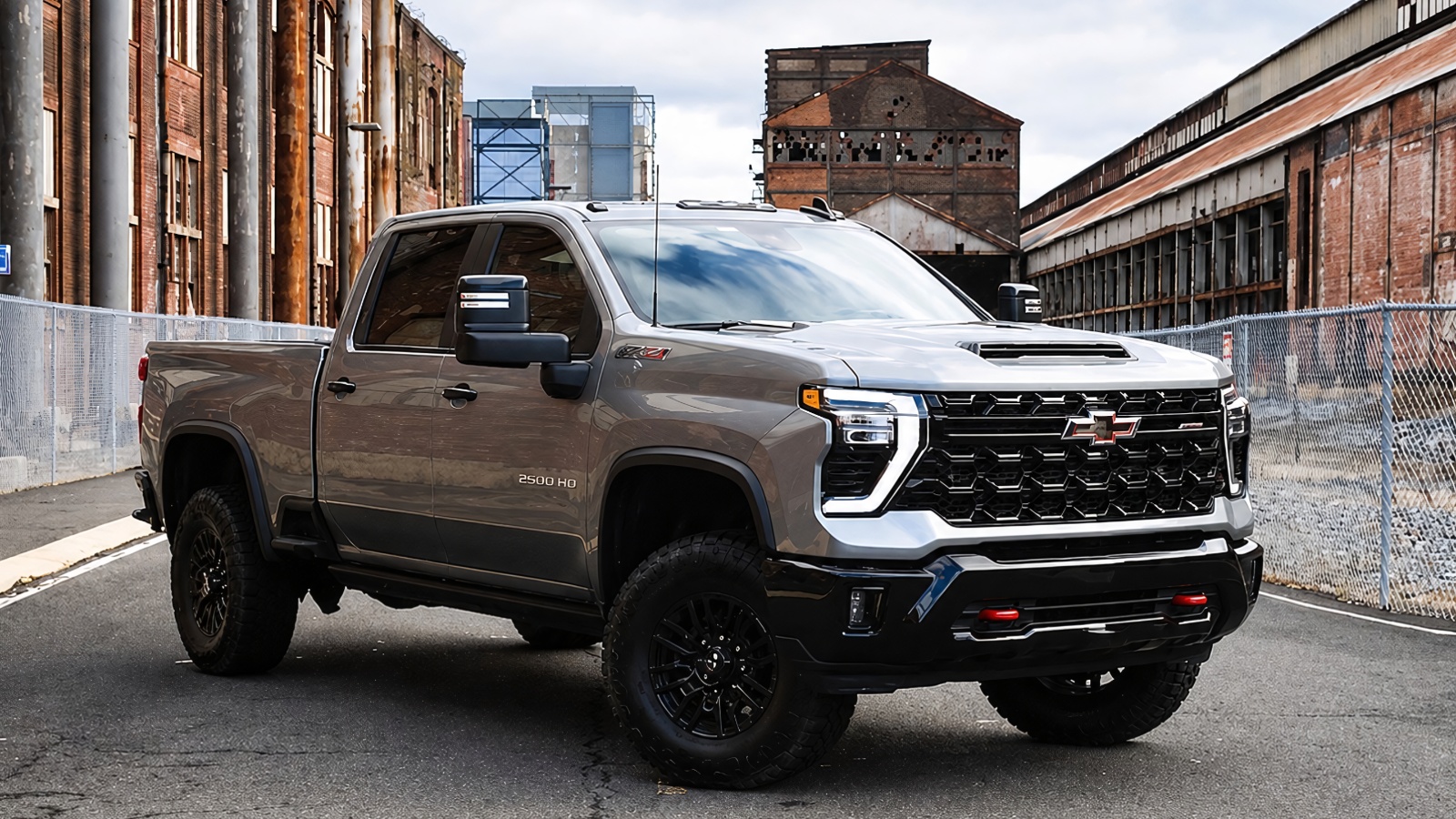
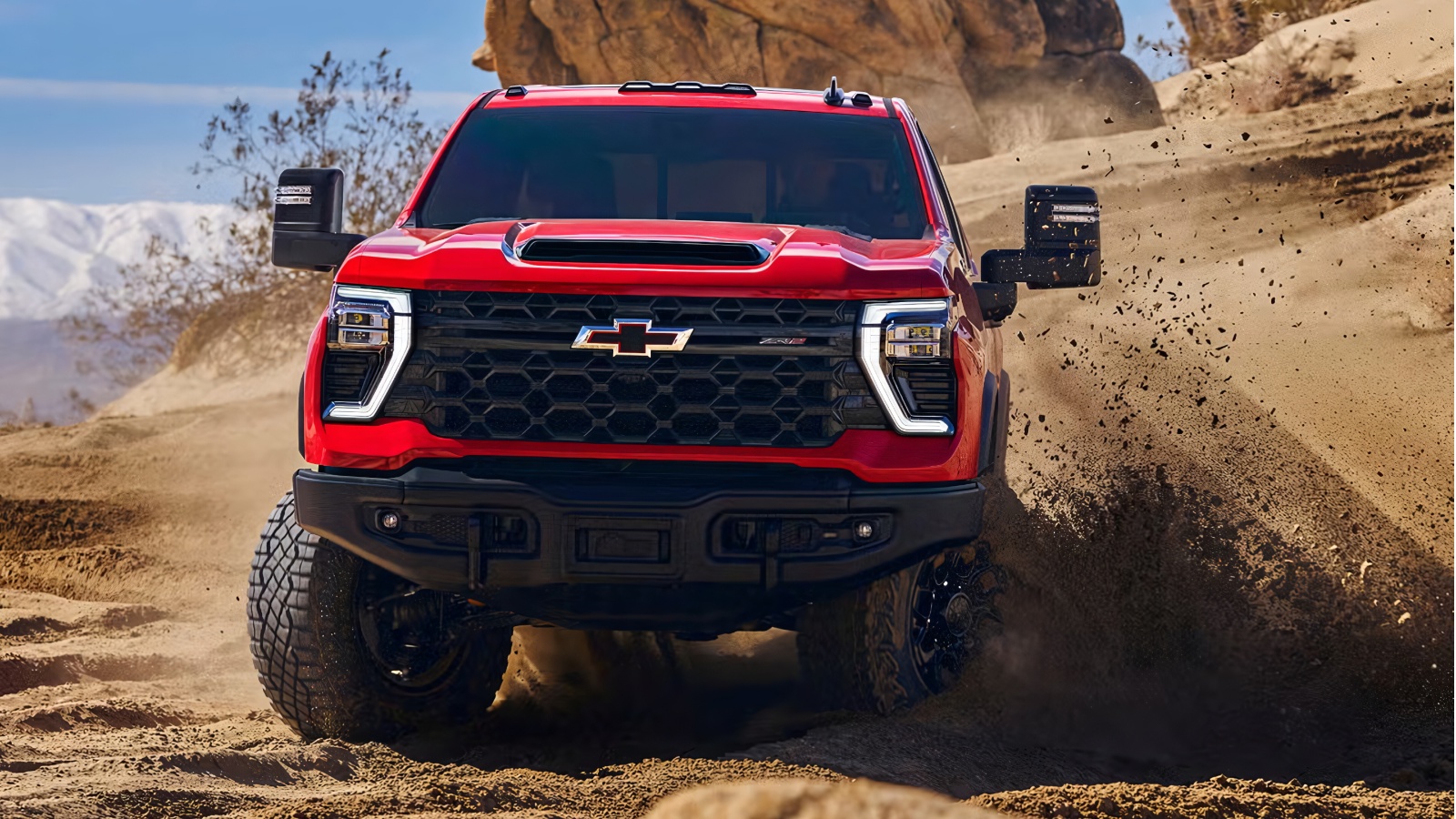
6. Chevrolet Silverado 2500 HD ZR2
The Chevrolet Silverado 2500 HD ZR2 is more deceptive than a commercial van because it still looks like a conventional pickup. In reality, its factory height can reach approximately 82.6 inches, making it too tall for a genuine 6-foot-8, or 80-inch, garage. The difference is only about 2.6 inches, but that is more than enough to cause expensive damage.
The ZR2’s extra height comes from its off-road hardware. Chevrolet equips the truck with large all-terrain tires, specialized dampers, additional ground clearance, skid protection, and suspension tuning designed for serious trail use. Those upgrades make the truck much more capable away from pavement but less convenient in dense urban areas.
A standard Silverado HD may fit some parking structures that the ZR2 cannot, which means buyers should not assume all versions of the same truck have identical clearance. The standard gasoline engine is GM’s 6.6-liter V8.
- Engine type: 6.6-liter naturally aspirated gasoline V8
- Torque: Approximately 464 lb-ft
- Horsepower: Approximately 401 hp
- Length: Approximately 250 inches
- Width: Approximately 81.9 inches without mirrors
- Overall height: Approximately 82.6 inches
An available Duramax diesel offers much more torque, but engine choice does not change the fundamental height issue.
Owners should also consider aftermarket modifications. Larger tires, leveling kits, bed racks, light bars, camper shells, and rooftop accessories can raise the effective height even further. The Silverado HD ZR2 is exactly the type of truck that can surprise someone because it exceeds the garage limit by only a few inches rather than several feet.
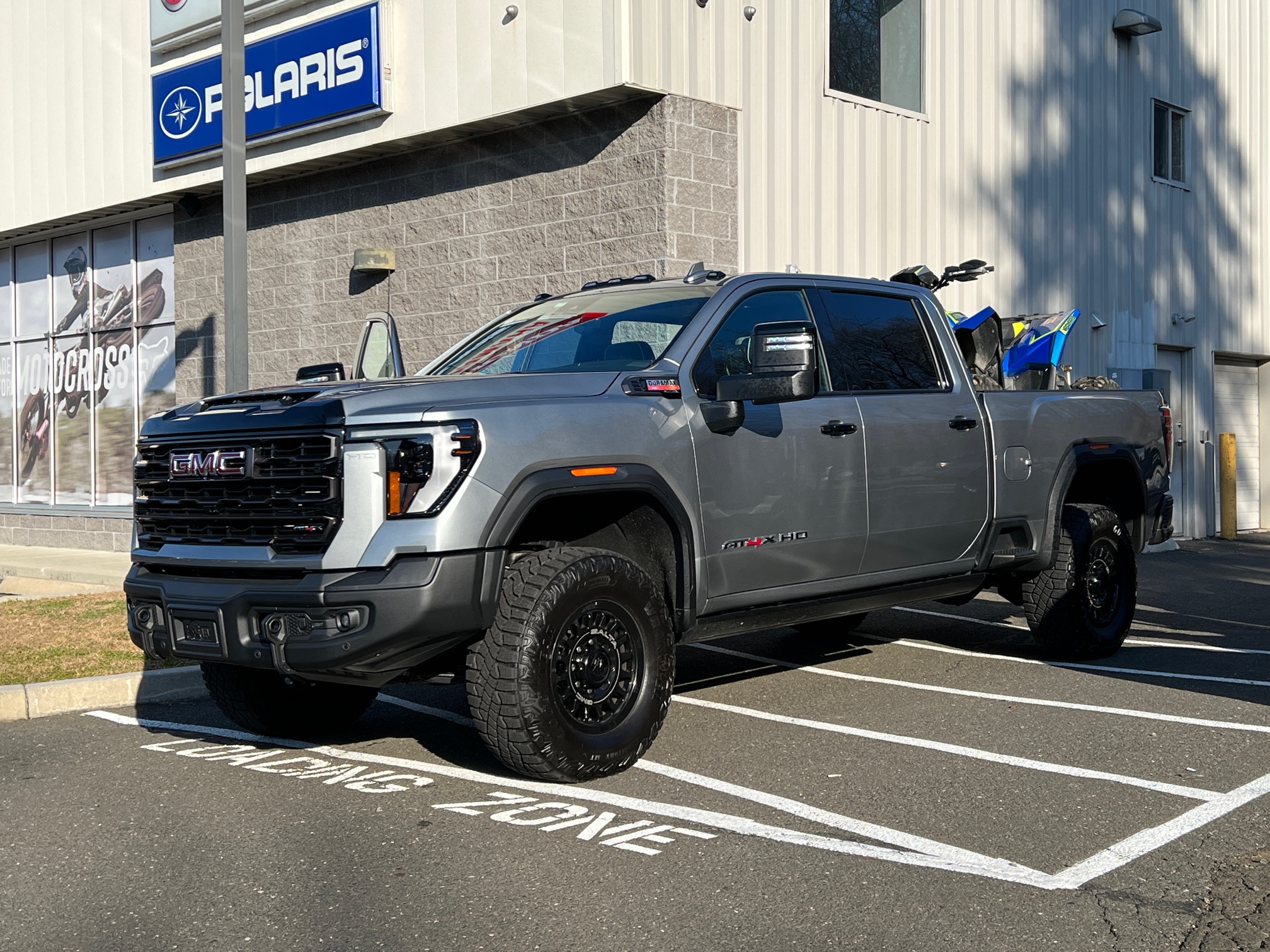
7. GMC Sierra 2500 HD AT4X
The GMC Sierra 2500 HD AT4X is closely related to the Silverado HD ZR2 and suffers from the same parking problem. Its factory height is approximately 82.6 inches, putting it above an 80-inch garage before any aftermarket accessories are installed. That extra height is part of what makes the AT4X special.
GMC designed it as a premium heavy-duty off-road truck, combining luxury equipment with large tires, specialized suspension hardware, and increased ground clearance. The truck can handle terrain that would challenge a normal heavy-duty pickup, but that capability comes with a real urban penalty.
From the driver’s seat, an extra 2.6 inches does not look dramatic. In a parking garage, however, it makes the difference between fitting and hitting the clearance beam. The standard gasoline engine is GM’s 6.6-liter V8. Buyers can also choose the Duramax turbodiesel for significantly more torque.
- Engine type: 6.6-liter naturally aspirated gasoline V8
- Torque: Approximately 464 lb-ft
- Horsepower: Approximately 401 hp
- Length: Approximately 250.8 inches
- Width: Approximately 81.9 inches without mirrors
- Overall height: Approximately 82.6 inches
The Sierra AT4X also presents challenges beyond height. It is extremely long and wide, so even a garage with enough vertical clearance may have tight ramps, narrow lanes, or parking spaces that are difficult to use.
Roof racks, bed racks, antennas, and larger aftermarket tires can increase the total height further. For buyers who frequently park downtown, the standard Sierra HD may be significantly easier to live with than the AT4X even though both share the same basic platform.
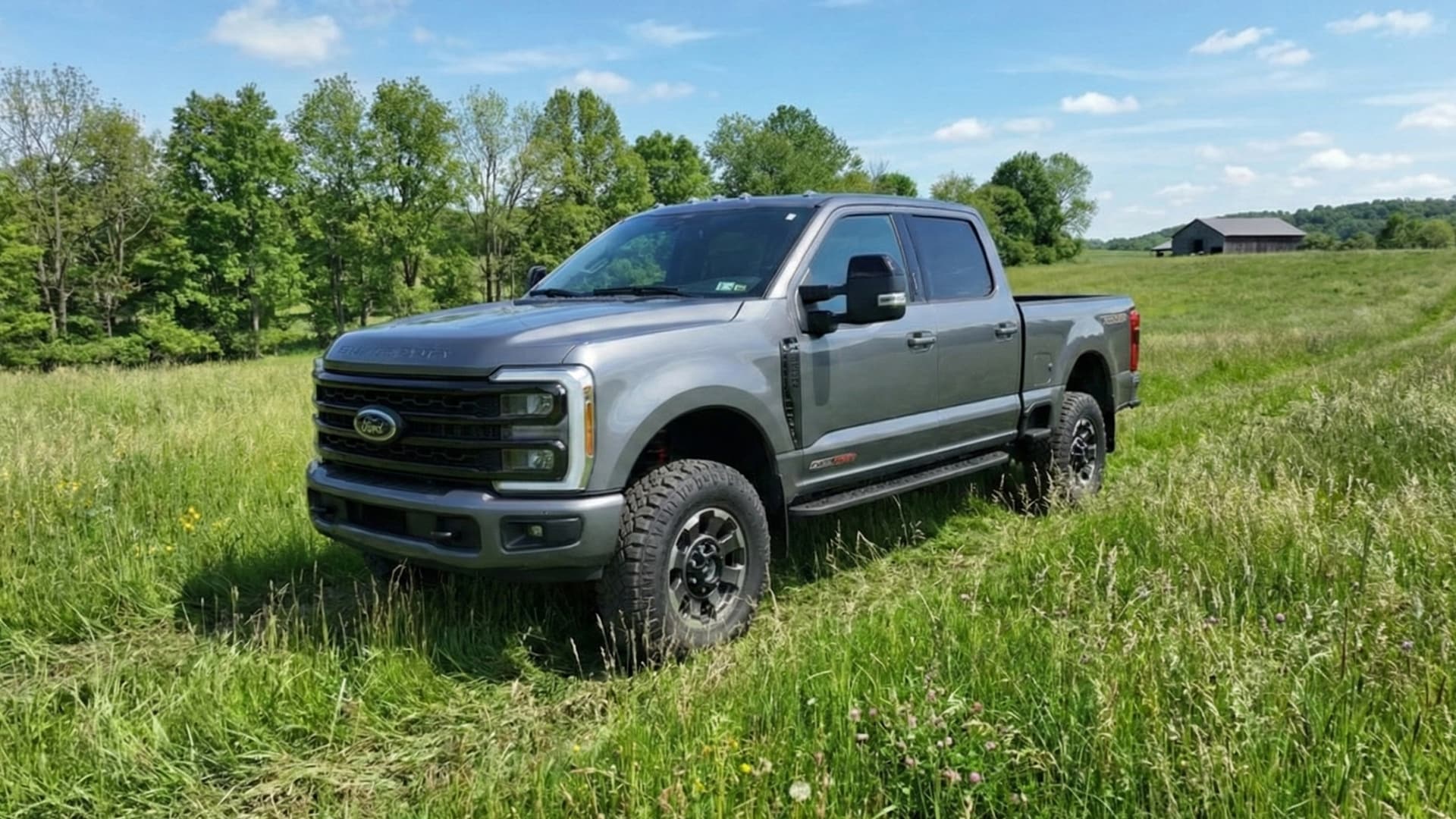
8. Ford F-250 Super Duty Tremor
The Ford F-250 Super Duty Tremor is another truck that can exceed the 6-foot-8 benchmark without looking dramatically taller than a normal pickup. Depending on cab, bed, tires, and configuration, certain Tremor-equipped trucks stand around 81.5 inches tall.
That is only about 1.5 inches above the 80-inch threshold, making this one of the most deceptive vehicles on the list.
The Tremor package includes 35-inch all-terrain tires, specialized suspension tuning, increased ground clearance, and off-road electronics. Those features improve capability on farms, worksites, trails, and rough access roads but raise the truck enough to create parking-garage problems.
An owner accustomed to driving an F-150 into a particular garage should never assume an F-250 Tremor will fit just because the trucks appear similar from a distance. Ford offers several engines in the Super Duty range. The 7.3-liter gasoline V8 provides a useful representative example.
- Engine type: 7.3-liter naturally aspirated OHV gasoline V8
- Torque: Approximately 485 lb-ft
- Horsepower: Approximately 430 hp
- Length: Approximately 250 inches in representative Crew Cab form
- Width: Approximately 80 inches without mirrors
- Overall height: Approximately 81.5 inches, configuration dependent
Diesel versions can produce dramatically more torque, but they remain subject to the same clearance issue.
The biggest concern comes after modification. A leveling kit, suspension lift, larger tires, or roof-mounted lights can quickly turn a marginally too-tall truck into one that exceeds the garage limit by several inches.
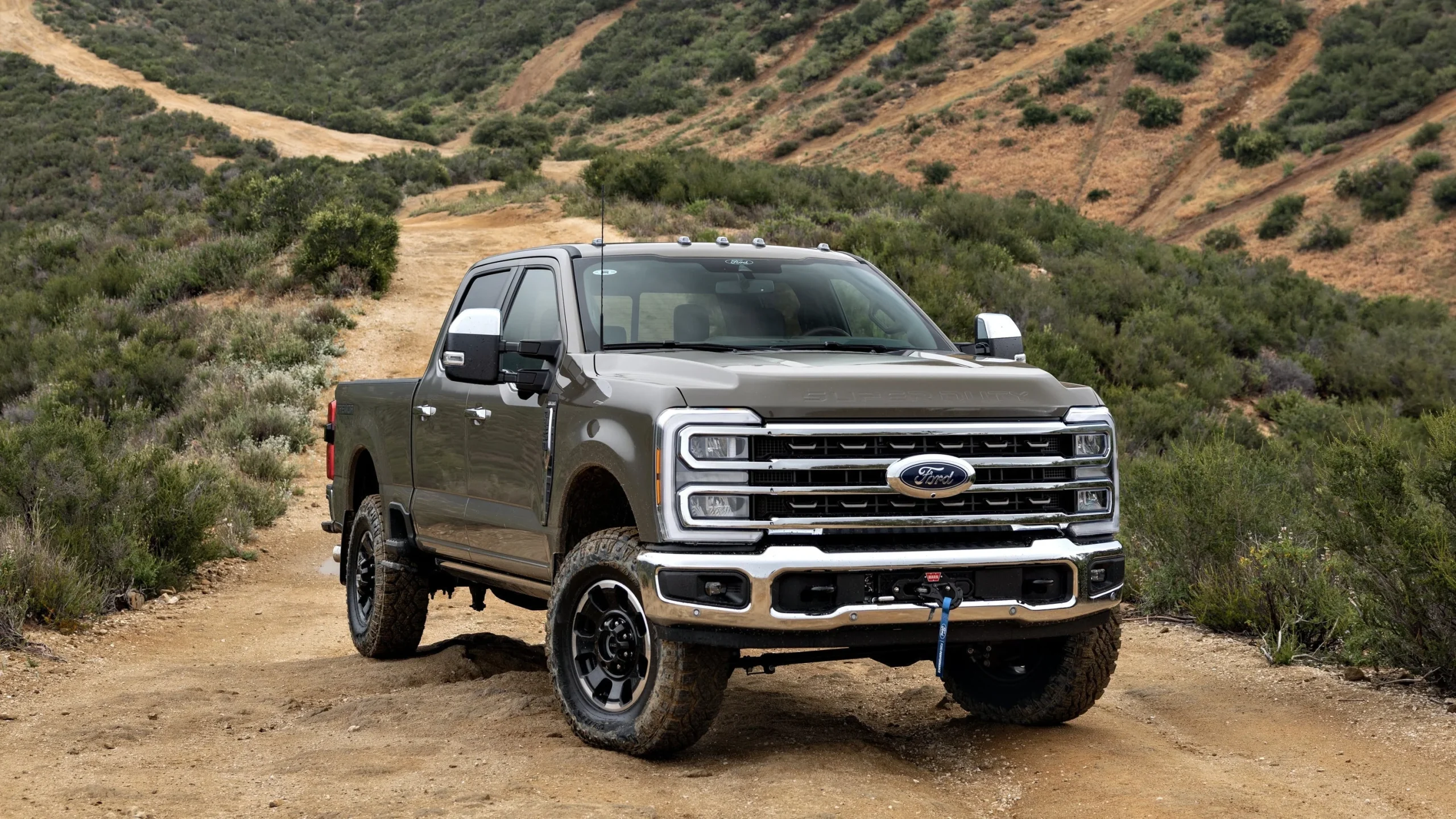
9. Ford F-350 Super Duty Tremor
The Ford F-350 Super Duty Tremor takes the same off-road philosophy into an even heavier-duty package. Certain single-rear-wheel configurations can measure around 81.3 to 81.4 inches tall, while other F-350 versions can be wider and even more difficult to maneuver.
That puts the truck slightly above a 6-foot-8 garage before modifications. The F-350 is already a massive vehicle by ordinary passenger-car standards. Crew Cab and long-bed versions can stretch well beyond 20 feet, while dual-rear-wheel configurations can be extremely wide.
Vertical clearance therefore becomes only one part of the parking problem. Even if a garage is tall enough, tight ramps, low pipes, narrow corners, and compact spaces may make the structure impractical.
The Tremor package adds large tires and off-road suspension hardware intended to improve capability on rough terrain. Ford’s 7.3-liter gasoline V8 is again a useful representative powertrain.
- Engine type: 7.3-liter naturally aspirated OHV gasoline V8
- Torque: Approximately 485 lb-ft
- Horsepower: Approximately 430 hp
- Length: Approximately 250 to 266 inches depending on bed
- Width: Approximately 80 inches for single-rear-wheel versions
- Overall height: Approximately 81.3–81.4 inches in taller configurations
High-output Power Stroke diesel versions offer substantially more power and torque, but drivetrain choice does not solve the physical dimensions.
An F-350 equipped with a camper, ladder rack, roof lights, or larger aftermarket tires can become much taller than factory specification. Owners should measure the truck after every major modification rather than assuming the original brochure height still applies.
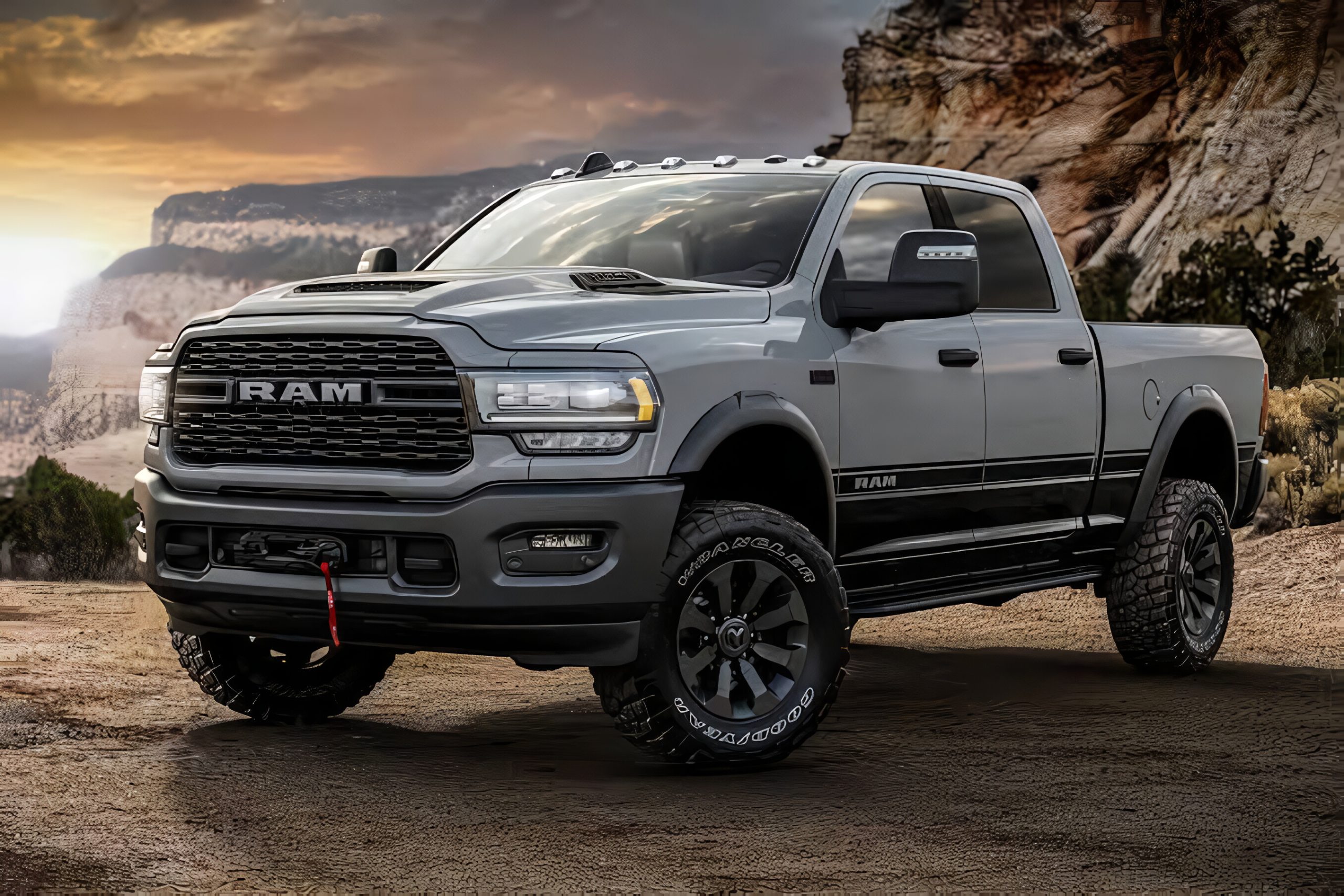
10. Ram 2500 Power Wagon
The Ram 2500 Power Wagon sits right on the boundary between a normal heavy-duty pickup and a truck too tall for a strict 6-foot-8 parking structure. Certain configurations measure approximately 80.2 inches tall, putting them just above the 80-inch threshold.
That difference may look insignificant on paper, but garage clearances are not approximate.
The Power Wagon is one of the most off-road-focused heavy-duty pickups sold from the factory. It uses large tires, specialized suspension, locking differentials, underbody protection, and other hardware designed for difficult terrain.
All of that raises the truck’s stance.
Because the factory height is so close to the assumed limit, even small modifications can create a major problem. A leveling kit, larger tire package, roof light, antenna, rack, or camper accessory can add enough height to make the truck clearly incompatible with a low structure. Ram equips the Power Wagon with its 6.4-liter HEMI gasoline V8.
- Engine type: 6.4-liter naturally aspirated HEMI V8
- Torque: Approximately 429 lb-ft
- Horsepower: Approximately 405 hp
- Length: Approximately 238.8 inches
- Width: Approximately 80-plus inches without mirrors
- Overall height: Approximately 80.2 inches, configuration dependent
The Power Wagon highlights the most important rule for oversized vehicles: if the roof is within an inch or two of the posted limit, do not attempt to squeeze through.
Vehicle load, tire pressure, pavement angle, suspension changes, roof accessories, and hanging garage equipment can all reduce the margin. A truck that theoretically clears one entrance may still encounter lower pipes or signs deeper inside the structure.
Also read: 5 Cars With Cheap Window Regulators and 5 Over $600