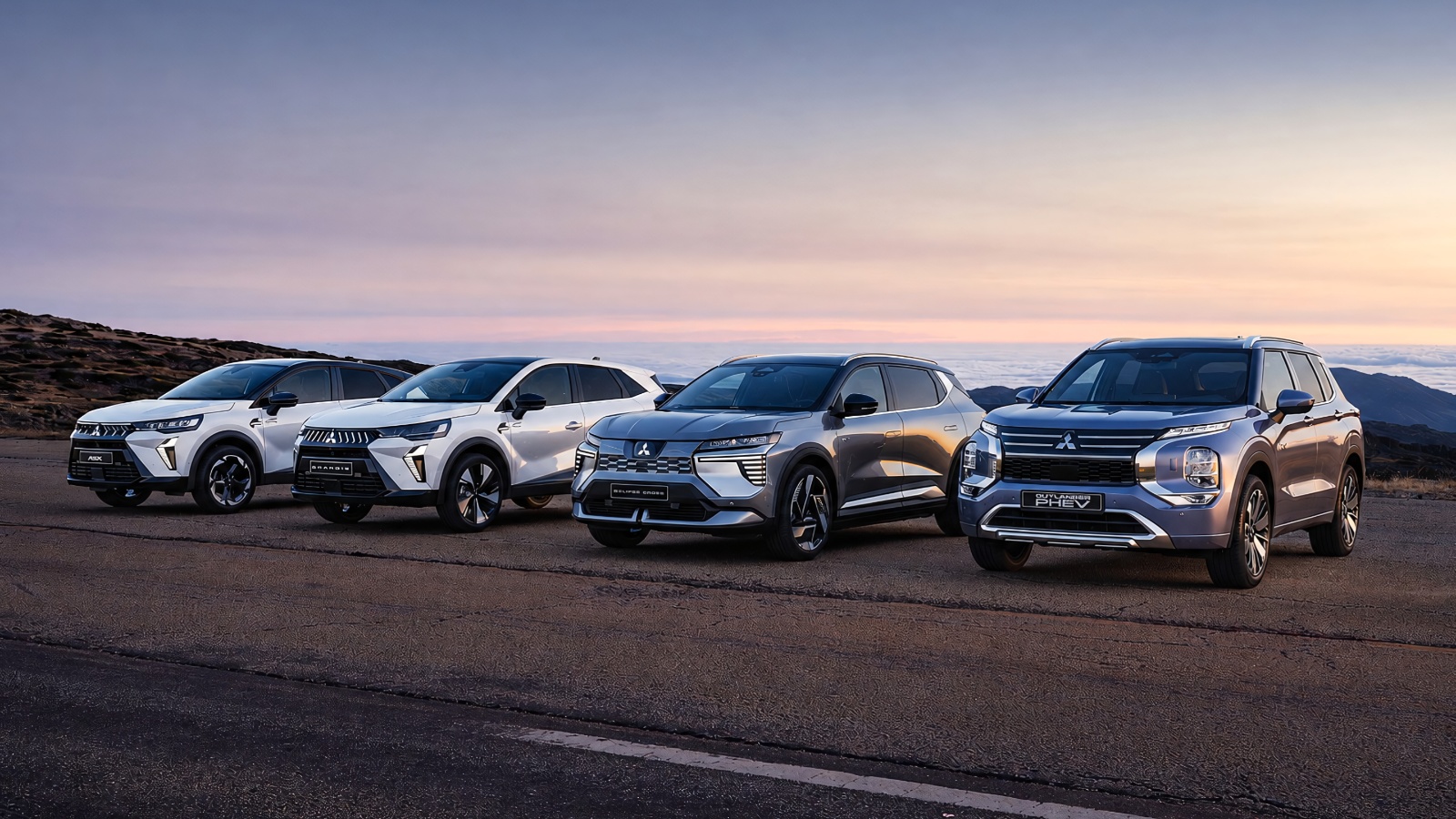
Mitsubishi has long occupied an unusual position in the automotive market. The brand has produced everything from rally-bred performance cars to affordable economy hatchbacks and increasingly sophisticated electrified SUVs.
Today, Mitsubishi’s U.S. lineup is much smaller than those of Toyota, Honda, or Nissan, but several models still offer compelling value, particularly when warranty coverage, all-wheel-drive capability, practicality, and purchase price are considered.
Not every Mitsubishi model makes a strong case for buyers. Some offer modern designs, capable performance, and useful features, while others are held back by aging platforms, underpowered engines, or shortcomings that are harder to overlook when compared with newer competitors.
For this comparison, the “worth buying” models stand out for their practicality, capability, performance, and value. The “skip” selections are vehicles where the drawbacks are likely to outweigh the benefits for most shoppers. Since several discontinued Mitsubishi models remain widely available as used vehicles, the list covers both current offerings and recently discontinued models.
4 Mitsubishi Models Worth Buying
1. 2026 Mitsubishi Outlander
The 2026 Mitsubishi Outlander is probably the easiest Mitsubishi to recommend to a mainstream family buyer. It represents a considerably more modern product than Mitsubishi’s older crossovers, combining three-row seating, a refined cabin, useful technology, available Super All-Wheel Control, and an exterior design that gives it considerably more presence than its price might suggest.
Mitsubishi lists seating for seven, although the third row is better suited to children or occasional use than regular adult transportation.
A major change for 2026 is under the hood. Mitsubishi replaced the previous naturally aspirated 2.5-liter engine with a 1.5-liter turbocharged mild-hybrid powertrain producing 174 horsepower and a considerably healthier 206 lb-ft of torque. That extra low- and midrange torque should make the Outlander feel less strained during ordinary acceleration than its predecessor, which generated 181 horsepower and 181 lb-ft.
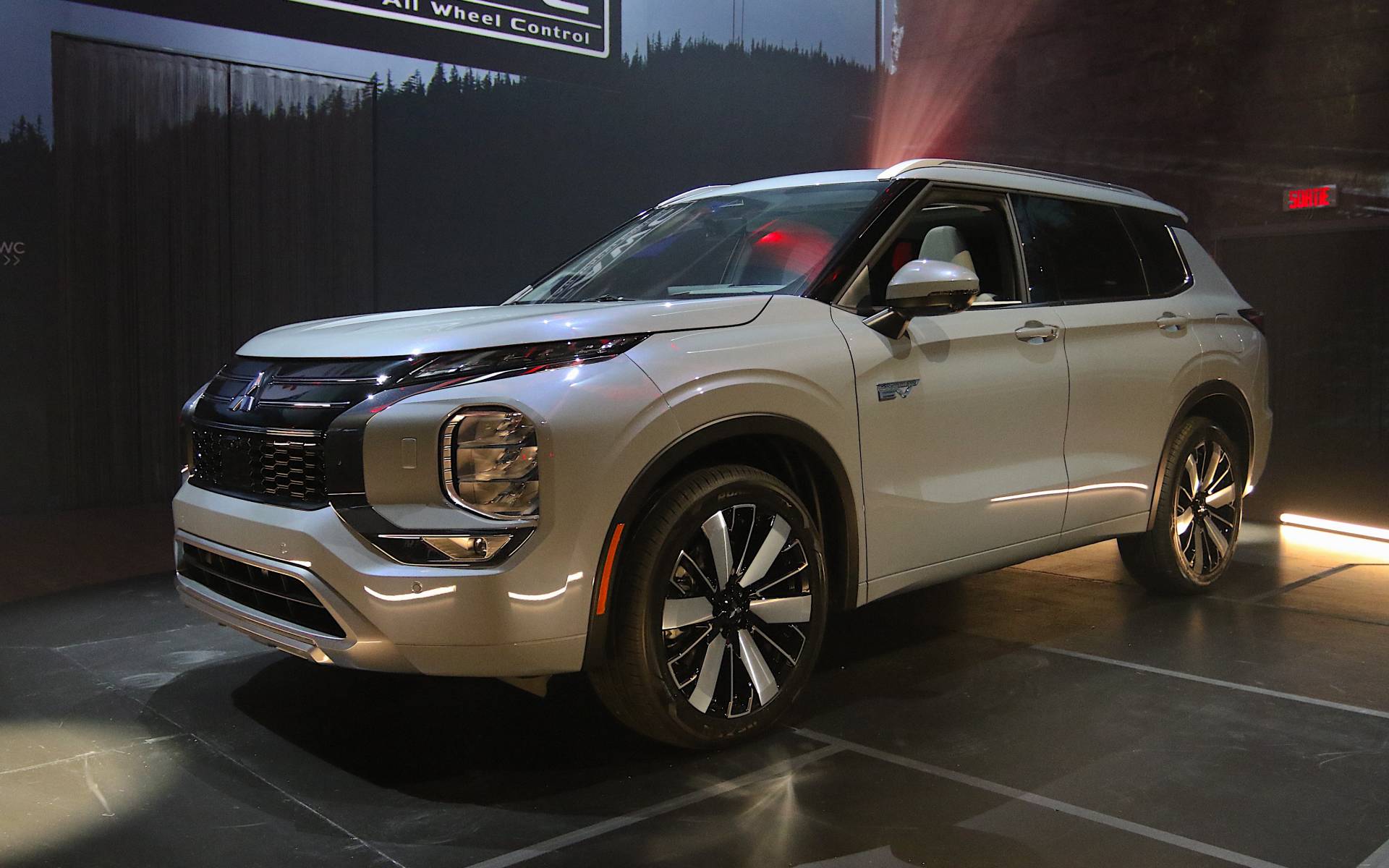
The Outlander is also one of Mitsubishi’s strongest choices because it does not depend entirely on a bargain-basement price. The interior, available equipment, passenger capacity, and drivetrain technology give buyers legitimate reasons to choose it. At 185.8 inches long and 74.7 inches wide, it remains reasonably manageable while offering the dimensions expected of a modern compact-to-midsize family crossover.
There are more powerful SUVs available, and the small third row is not a substitute for a true midsize three-row vehicle. Nevertheless, among current Mitsubishis, the 2026 Outlander provides one of the most complete combinations of versatility and value.
- Engine: 1.5-liter turbocharged MIVEC mild-hybrid inline-four
- Horsepower: 174 hp
- Torque: 206 lb-ft
- Length: 185.8 inches
- Width: 74.7 inches
2. 2026 Mitsubishi Outlander PHEV
Drivers who can regularly charge at home should pay particularly close attention to the Mitsubishi Outlander PHEV. Rather than simply converting an existing gasoline crossover into a mild electrified model, Mitsubishi has spent years developing plug-in-hybrid versions of the Outlander. The result is one of the company’s most distinctive products and arguably the model that best demonstrates what modern Mitsubishi engineering can accomplish.
Its plug-in-hybrid configuration combines a gasoline engine, traction battery, and electric motors while retaining Mitsubishi’s Super All-Wheel Control philosophy. This provides an appealing compromise for drivers who want electric operation for shorter trips without accepting the long-distance charging dependency of a battery-electric vehicle.
The Outlander PHEV also maintains crossover practicality and three-row seating, although, as with the gasoline Outlander, the rear-most seats are relatively compact.
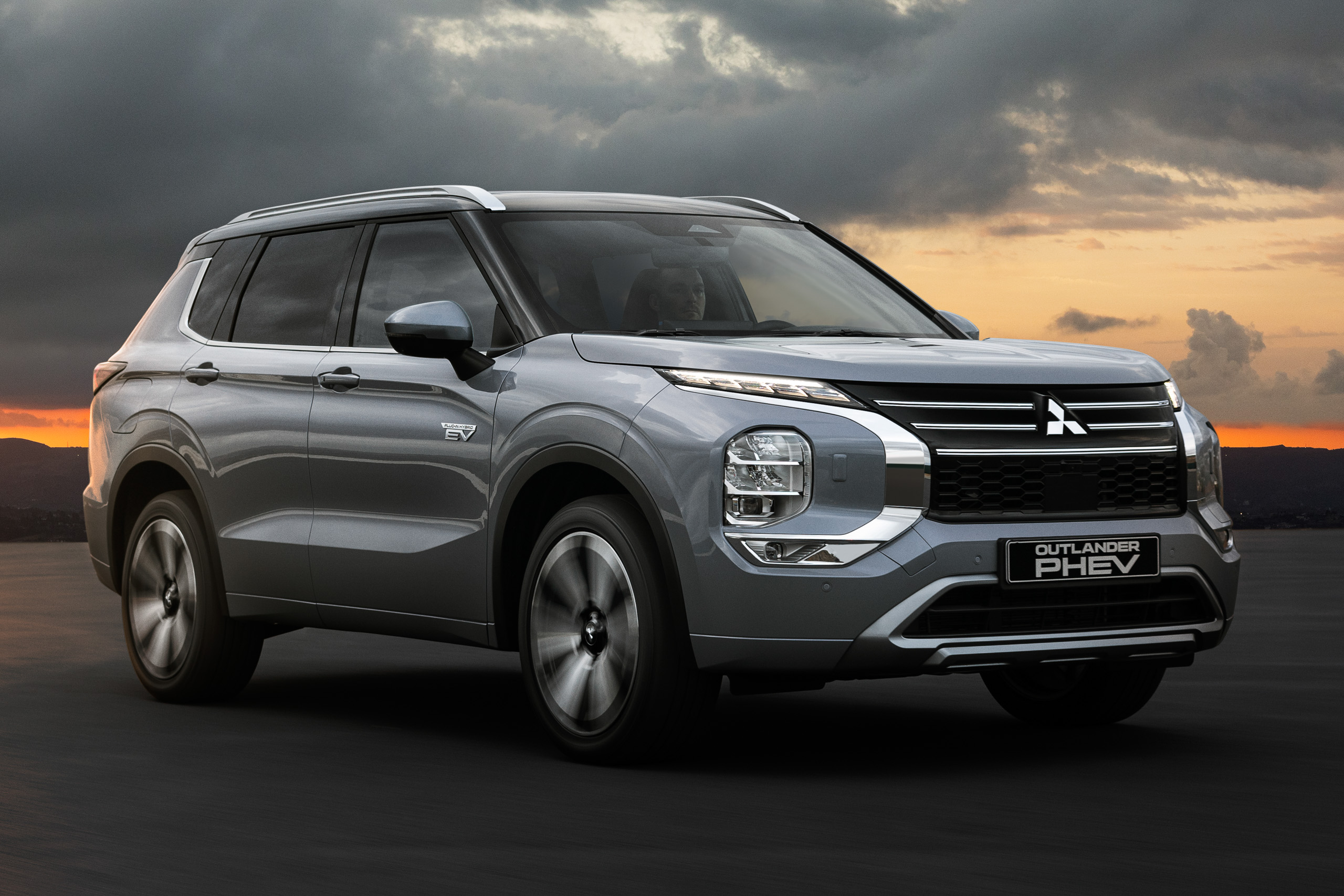
Another reason it is worth considering is that Mitsubishi has substantial history with this drivetrain concept. Earlier Outlander PHEVs already used separate front and rear electric drive systems rather than simply adding a small electric motor to a conventional transmission.
The main objection is price. A buyer who cannot conveniently recharge may struggle to justify paying the premium over the gasoline Outlander. But when charging fits the owner’s routine, the PHEV provides a combination of electric commuting, gasoline flexibility, and all-wheel-drive capability that is difficult to duplicate with a conventional Mitsubishi.
For buyers specifically seeking an electrified family SUV rather than simply the cheapest transportation possible, this is one of the strongest vehicles carrying the Mitsubishi badge.
- Engine: 2.4-liter MIVEC inline-four with plug-in-hybrid electric system
- Horsepower: Approximately 248 hp combined
- Torque: Electric-motor-assisted drivetrain; output varies by motor
- Length: 185.4 inches
- Width: Approximately 84.4 inches including mirrors
3. 2026 Mitsubishi Eclipse Cross
The Eclipse Cross is not the revival of Mitsubishi’s beloved Eclipse sports coupe that enthusiasts once hoped for. Evaluated strictly as a compact crossover, however, the 2026 Eclipse Cross makes considerably more sense. It offers standard Super All-Wheel Control on the U.S. model, a turbocharged engine, useful ground clearance, and straightforward dimensions that make it easier to maneuver than larger crossovers.
Power comes from Mitsubishi’s familiar 1.5-liter direct-injected turbocharged four-cylinder engine. The engine produces 152 horsepower and 184 lb-ft of torque, paired with a continuously variable transmission. Those figures are not particularly exciting, but the relatively strong torque output arrives low in the rev range and suits ordinary urban and suburban driving reasonably well.
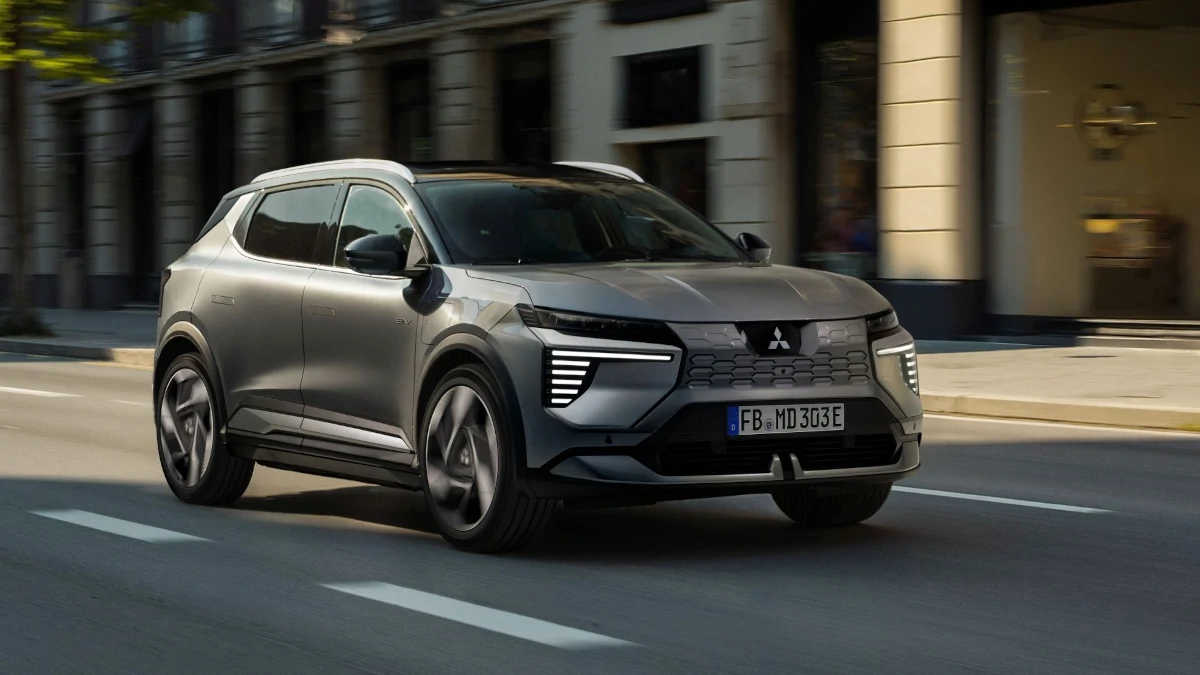
Where the Eclipse Cross becomes attractive is capability rather than raw acceleration. Standard all-wheel drive is increasingly uncommon among low-priced compact crossovers, many of which reserve AWD for an extra-cost option. Its 8.5 inches of ground clearance also provides useful margin for snow, rough driveways, and unpaved roads. It measures 179 inches long and 71.1 inches wide, making it noticeably smaller than the Outlander.
The interior and CVT can feel dated beside the newest competitors, and buyers looking for sporty handling may be disappointed by the Eclipse name. Yet for someone prioritizing AWD capability, manageable size, simple controls, and Mitsubishi’s value proposition, the Eclipse Cross remains one of the brand’s more sensible purchases.
- Engine: 1.5-liter MIVEC direct-injection turbocharged inline-four
- Horsepower: 152 hp
- Torque: 184 lb-ft
- Length: 179.0 inches
- Width: 71.1 inches
4. 2017 Mitsubishi Lancer
The Mitsubishi Lancer disappeared from the U.S. new-car market years ago, but surviving examples can still make surprisingly sensible, inexpensive used cars provided the buyer performs a thorough pre-purchase inspection.
The regular Lancer should not be confused with the far more powerful Lancer Evolution. Most 2017 models used either a 2.0-liter or 2.4-liter four-cylinder engine and prioritized straightforward transportation rather than extreme performance.
In base 2.0-liter form, Mitsubishi rated the 2017 Lancer at 148 horsepower and 145 lb-ft of torque. Higher versions equipped with the 2.4-liter engine produced more torque, reaching 167 lb-ft. The car measures 182.1 inches long and 69.4 inches wide, giving it conventional compact-sedan proportions without the bulky dimensions of a crossover.
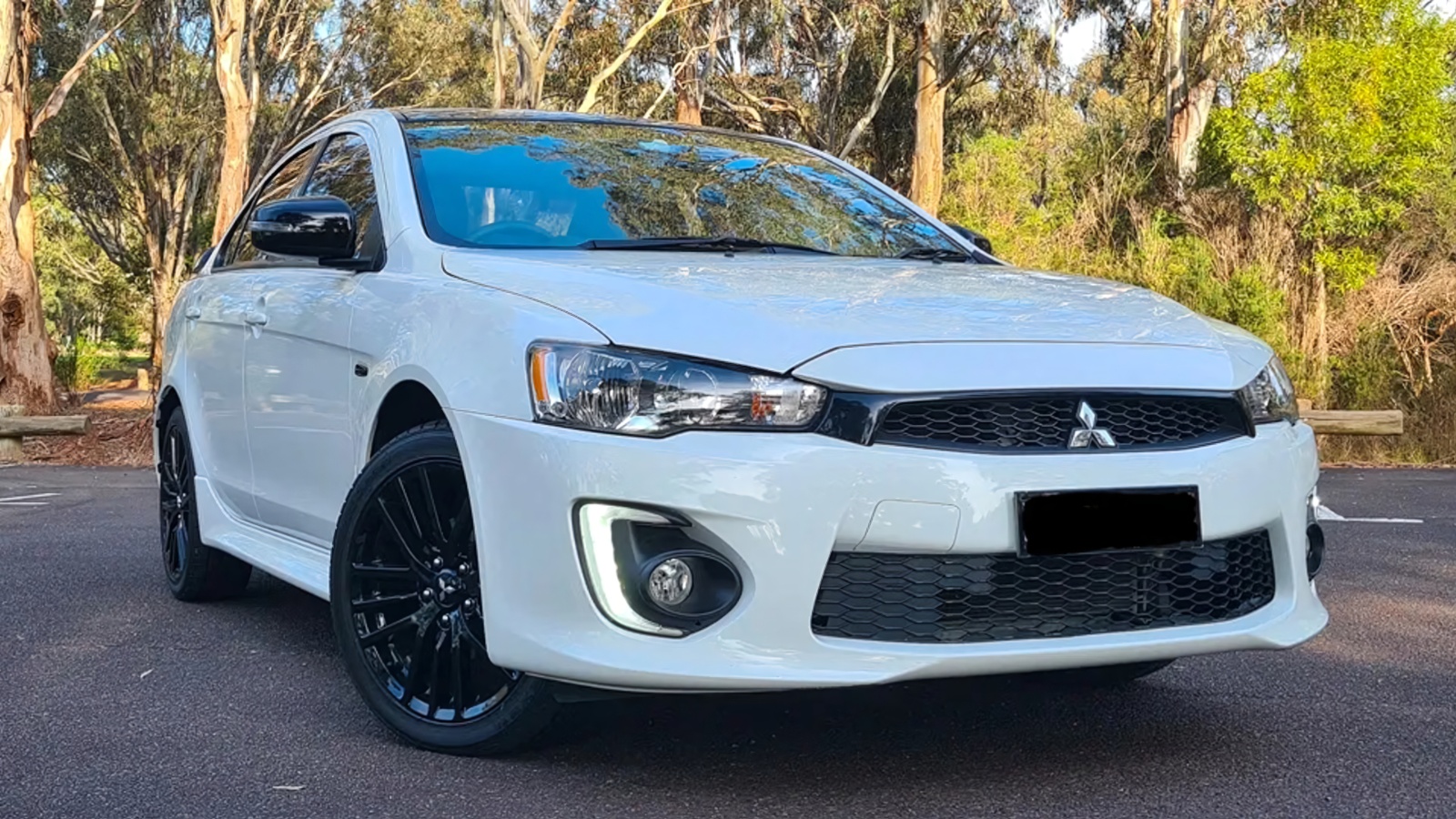
Why buy one now? Primarily simplicity and value. The Lancer comes from an era before every affordable vehicle needed turbocharging, large touchscreens, and extensive integrated electronics. Its naturally aspirated engines are relatively straightforward, visibility is decent, and some versions offered Mitsubishi’s all-wheel-drive technology.
A clean, well-maintained Lancer can therefore serve as basic commuter transportation without forcing the buyer into the higher purchase prices associated with many newer used Hondas or Toyotas.
The important qualification is condition. These cars are now approaching a decade old, and deferred maintenance matters more than the badge on the trunk. CVT-equipped examples deserve careful inspection and a documented maintenance history. Modified cars should also be approached cautiously.
Find an unmodified example with service records, however, and the final-generation Lancer can still be a practical low-cost used Mitsubishi.
- Engine: 2.0-liter MIVEC inline-four
- Horsepower: 148 hp
- Torque: 145 lb-ft
- Length: 182.1 inches
- Width: 69.4 inches
Also read: 4 Cars That Weigh More Than 5,500 Pounds and 4 Under 3,000
4 Mitsubishi Models to Skip
1. 2026 Mitsubishi Outlander Sport
The Outlander Sport’s biggest weakness is not that it is fundamentally unusable. The problem is that the automotive market has evolved dramatically while this Mitsubishi has changed relatively little underneath. The current Outlander Sport retains dimensions and basic mechanical architecture familiar from versions sold many years earlier.
Its standard 2.0-liter naturally aspirated four-cylinder makes 148 horsepower and 145 lb-ft of torque. Mitsubishi has also historically offered a 2.4-liter engine producing 168 horsepower and 167 lb-ft. Those numbers are adequate for basic commuting, but they are difficult to get excited about when competitors offer more responsive turbocharged engines, better fuel economy, fresher cabin technology, and newer platforms.
To Mitsubishi’s credit, the Outlander Sport does provide standard All-Wheel Control on the current U.S. version, and its 8.5 inches of ground clearance can be useful in poor weather or on rough surfaces. The problem is value relative to newer alternatives. Buyers are effectively paying modern-car money for one of Mitsubishi’s oldest remaining vehicle concepts.
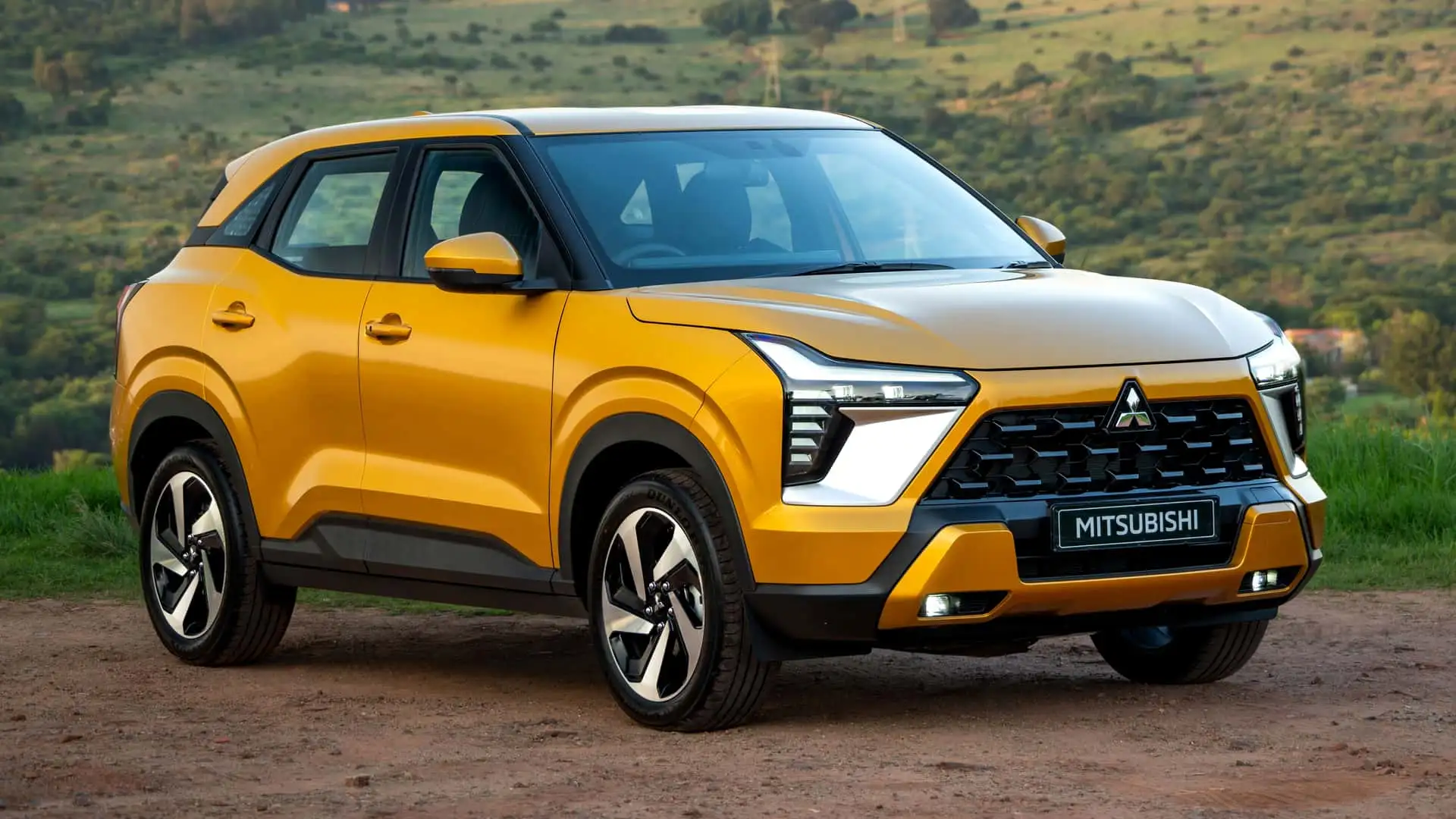
The cabin is also showing its age. Materials, dashboard design, infotainment integration, and general refinement lag behind many newer subcompact crossovers. While Mitsubishi’s warranty coverage helps reduce some ownership concerns, a long warranty does not completely compensate for an outdated driving experience.
If a dealer offers a substantial discount, the equation changes. As transportation, it remains perfectly functional. But at ordinary new-car pricing, the newer Outlander or Eclipse Cross is a more convincing Mitsubishi purchase.
- Engine: 2.0-liter MIVEC inline-four
- Horsepower: 148 hp
- Torque: 145 lb-ft
- Length: 171.9 inches
- Width: 71.3 inches
2. Mitsubishi Mirage
Few modern cars pursued low running costs as aggressively as the Mitsubishi Mirage. Its tiny three-cylinder engine, lightweight body, and compact dimensions made it inexpensive to operate and exceptionally easy to maneuver.
Those qualities earned the Mirage a legitimate niche. Nevertheless, for most buyers shopping the used market today, its compromises are substantial enough that spending slightly more on a stronger subcompact or compact car will usually produce a more satisfying ownership experience.
The Mirage’s 1.2-liter MIVEC three-cylinder produces only 78 horsepower and 74 lb-ft of torque. Even during the later years of production, those figures remained essentially unchanged. Its narrow dimensions make it one of the easiest modern cars to maneuver in tight urban areas.
Low horsepower alone does not make a bad car. In urban traffic, the Mirage’s compact dimensions and efficiency can be advantageous. But highway merging, passing, steep grades, and fully loaded driving expose the limitations of the 1.2-liter engine quickly. The narrow body and lightweight construction also produce a driving experience that feels less substantial than many similarly priced used alternatives.
The other problem is that the Mirage’s greatest strength when new was its low purchase price. Once you’re shopping used vehicles, the pricing gap between a Mirage and more capable vehicles such as a Corolla, Civic, Mazda3, or even Mitsubishi Lancer can shrink considerably.
A Mirage can still make sense for someone who primarily drives around a dense city and values operating economy above virtually everything else. For mixed city-and-highway driving, however, there are more versatile choices.
- Engine: 1.2-liter MIVEC DOHC three-cylinder
- Horsepower: 78 hp
- Torque: 74 lb-ft
- Length: 151.4 inches
- Width: 65.6 inches
3. Mitsubishi Mirage G4
The Mirage G4 takes essentially the same mechanical package as the Mirage hatchback and stretches it into a four-door sedan. That gives the G4 a proper trunk and additional sedan-style practicality, but it does nothing to solve the fundamental weakness of the platform: there simply is not much engine available for the size of the job.
Mitsubishi’s 1.2-liter three-cylinder produces 78 horsepower at 6,000 rpm and only 74 lb-ft of torque at 4,000 rpm. The G4 is considerably longer than the Mirage hatchback despite using the same modest powerplant, so its acceleration remains similarly leisurely.
For low-speed commuting, those figures may not be a deal breaker. The narrow body helps in crowded streets and tight parking spaces, while the simple engine can deliver the economy-minded character expected from an entry-level sedan.
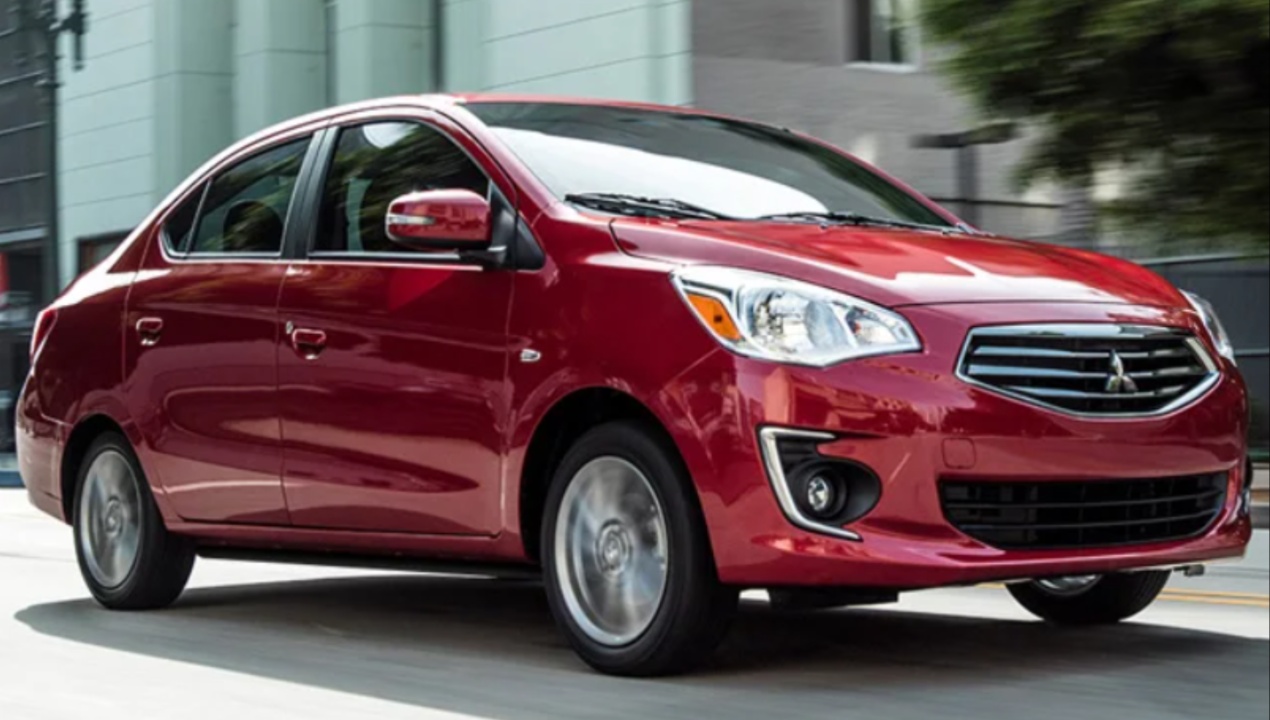
Where the G4 becomes harder to recommend is outside that narrow use case. Highway acceleration requires patience, passing performance is limited, and additional passengers make the modest power output even more apparent.
Used-car economics create another problem. Buyers purchasing an inexpensive sedan have a huge pool of alternatives, ranging from older Toyota Corollas and Honda Civics to Hyundai Accents, Kia Rios, and Nissan Versas. A Mirage G4 therefore needs to be meaningfully cheaper than those vehicles to compensate for its performance and refinement disadvantages.
If the priority is maximum affordability and the car will rarely leave city streets, a clean Mirage G4 can perform the job. But as an all-purpose car expected to handle highways, passengers, and long-distance travel regularly, Mitsubishi’s smallest sedan asks buyers to tolerate too many compromises.
- Engine: 1.2-liter MIVEC DOHC three-cylinder
- Horsepower: 78 hp
- Torque: 74 lb-ft
- Length: 169.5 inches
- Width: 65.7 inches
4. Mitsubishi i-MiEV
The Mitsubishi i-MiEV deserves historical credit. It was one of the earliest mass-produced modern battery-electric vehicles offered to American consumers and demonstrated that a fully electric commuter car could exist long before today’s enormous EV market developed. As an interesting piece of electric-car history, it has plenty of character. As practical transportation today, however, most buyers should look elsewhere.
The i-MiEV was designed around very different expectations from today’s EVs. Its compact battery pack and modest electric motor were sufficient for short urban commutes, but range and charging capability are far behind modern electric vehicles.
Battery age adds another concern because surviving examples are now many years old. An EV battery does not need to fail completely to become inconvenient; enough capacity degradation can reduce an already limited driving range substantially.
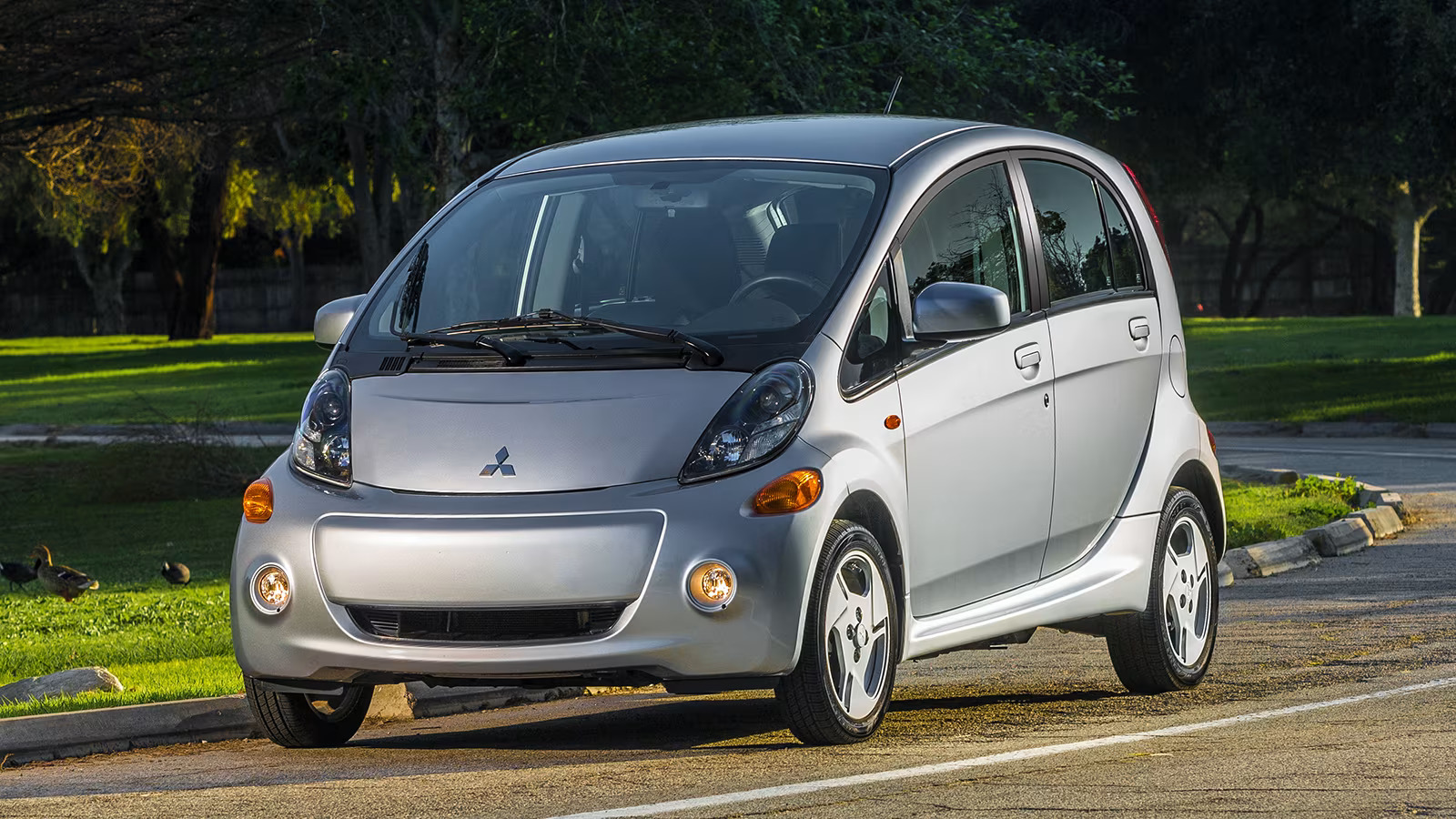
Performance was equally modest. The rear-mounted permanent-magnet electric motor developed about 66 horsepower but approximately 145 lb-ft of torque. Thanks to instantaneous electric torque and the vehicle’s light weight, urban acceleration was more usable than the horsepower figure might suggest. Highway operation, however, was never its strongest environment.
The i-MiEV is also unusually narrow and short by modern standards. That makes it fantastic for crowded cities but limits passenger comfort, cargo flexibility, and the planted highway feel offered by newer EVs.
Collectors, EV enthusiasts, or drivers needing a very inexpensive second vehicle for predictable short trips may still find one appealing. Everyone else should resist a cheap purchase price. Newer used EVs offer vastly better range, charging capability, and everyday versatility.
- Engine: Permanent-magnet synchronous electric motor
- Horsepower: Approximately 66 hp
- Torque: Approximately 145 lb-ft
- Length: Approximately 144.7 inches
- Width: Approximately 62.4 inches
Also read: 5 Cars With the Highest Theft Rates in New Mexico, 5 With the Lowest