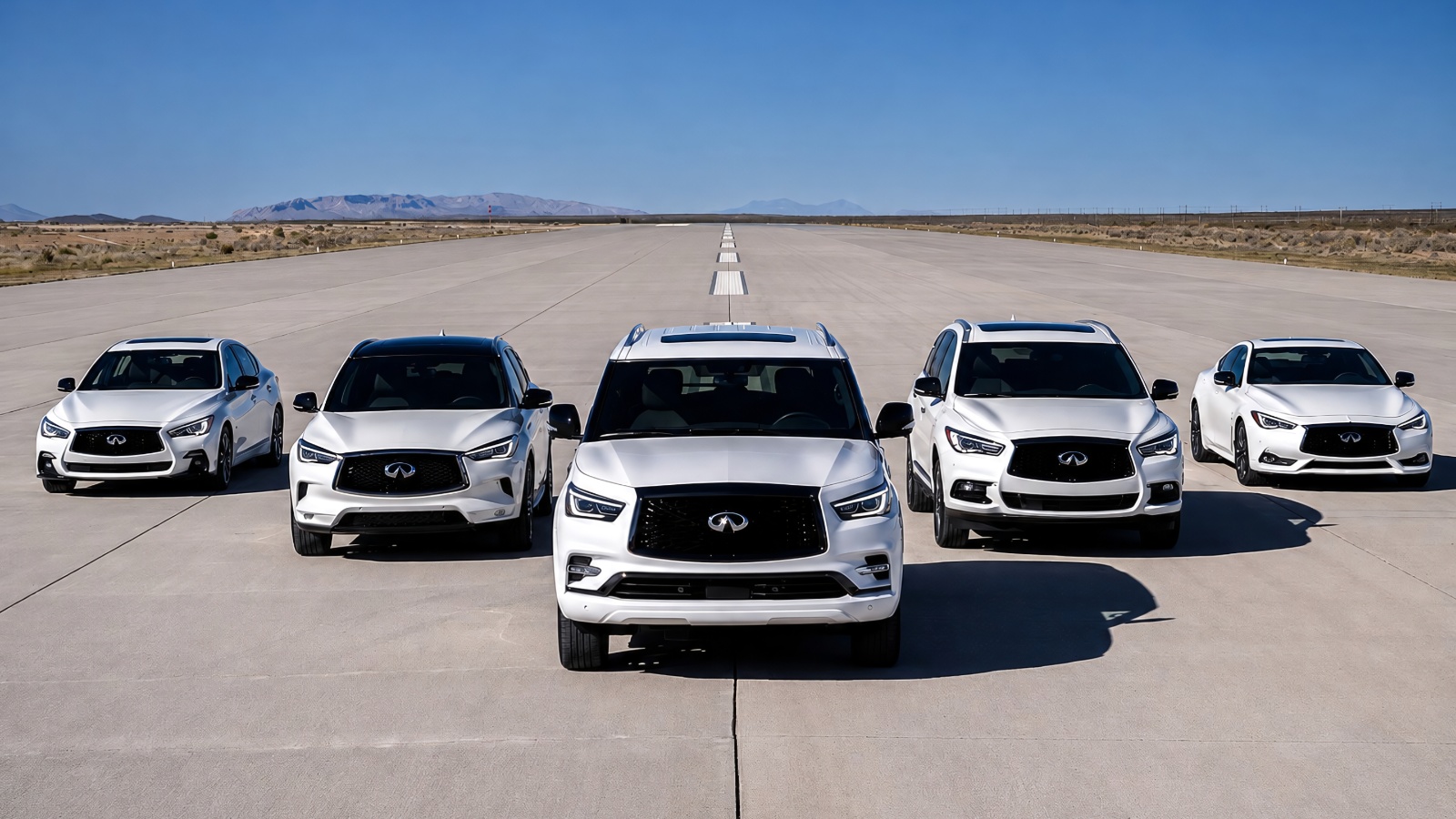
Infiniti has produced some genuinely appealing luxury vehicles over the years, particularly for buyers who value strong engines and comfortable interiors without paying German luxury-car prices. Many older Infiniti models used Nissan’s proven naturally aspirated V6 and V8 engines, rear-wheel-drive platforms, and conventional automatic transmissions.
Those combinations have made certain used Infinitis particularly attractive today. At the same time, Infiniti has experimented with CVTs, variable-compression engines, and twin-turbo powertrains that have produced a more complicated ownership picture.
That makes choosing the right model year especially important. Two Infinitis carrying the same badge can have dramatically different engines, transmissions, and long-term ownership considerations. This list therefore focuses on specific generations and years rather than simply declaring an entire nameplate good or bad.
The strongest choices emphasize durable powertrain designs, performance, practicality, and used-market value, while the vehicles to avoid have significant mechanical concerns or represent less appealing versions of otherwise good Infiniti models.
5 Infiniti Models Worth Buying
1. 2015 Infiniti Q50 3.7
The 2015 Infiniti Q50 3.7 is one of the strongest choices for someone looking for an affordable used luxury sports sedan. The key is the engine. Before Infiniti switched the Q50 primarily to turbocharged power, the 2015 version could be equipped with Nissan’s naturally aspirated VQ37VHR 3.7-liter V6. It produces 328 horsepower and 269 lb-ft of torque and is connected to a seven-speed automatic transmission.
That combination gives the Q50 plenty of performance without relying on turbochargers. Acceleration remains strong by modern standards, and the naturally aspirated engine delivers smooth, predictable power as the revs rise. Rear-wheel drive is standard, while all-wheel drive was available, making it possible to choose between traditional sport-sedan dynamics and additional bad-weather traction.
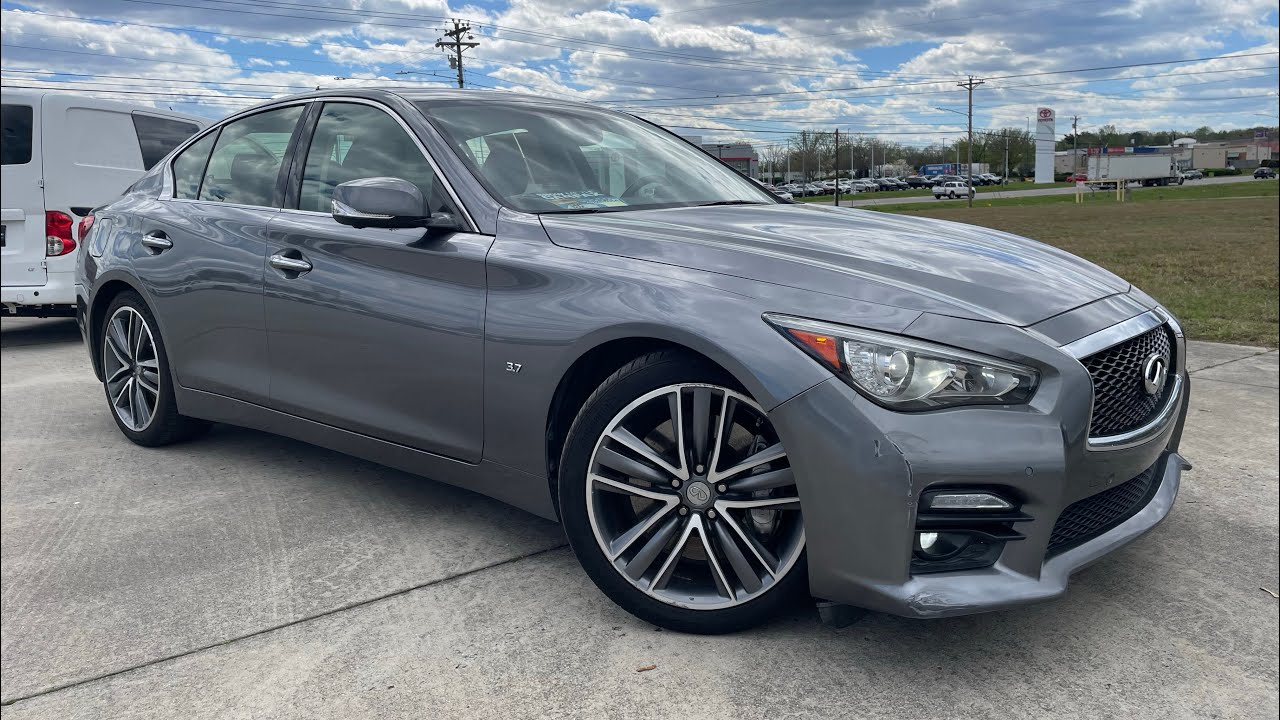
The Q50’s chassis is another reason to consider it. Its basic proportions and rear-drive architecture give it a different personality from front-wheel-drive luxury sedans. It feels more like a traditional performance-oriented Infiniti, carrying some of the character that made the earlier G35 and G37 popular.
There are disadvantages. Infiniti’s dual-screen infotainment system feels dated today, and some controls are less intuitive than newer systems. Fuel economy is also not a major strength of the 3.7-liter V6. Buyers should still inspect any used example carefully for accident history, maintenance records, suspension wear, and evidence of modifications.
Nevertheless, the 2015 Q50 3.7 avoids some of the additional complexity associated with the later turbocharged versions. For shoppers who want a fast, comfortable, and relatively straightforward Infiniti sedan, it remains one of the better used choices.
- Engine: 3.7-liter naturally aspirated V6
- Horsepower: 328 hp
- Torque: 269 lb-ft
- Length: Approximately 189.1 inches
- Width: Approximately 71.8 inches
2. 2015–2019 Infiniti Q70 3.7
The Infiniti Q70 has become something of a forgotten luxury sedan, which is exactly why it can be appealing on the used market. While buyers often concentrate on the BMW 5 Series, Mercedes-Benz E-Class, and Lexus GS, the Q70 offers strong naturally aspirated power, rear-wheel-drive architecture, and traditional luxury-car proportions for potentially much less money.
The standard 3.7-liter V6 produces 330 horsepower and 270 lb-ft of torque. Infiniti paired it with a seven-speed automatic transmission, with rear-wheel drive standard and all-wheel drive available. Infiniti also offered a considerably more powerful 5.6-liter V8 making 420 horsepower and 417 lb-ft, although the V6 is generally the more sensible option for buyers trying to balance performance with operating costs.
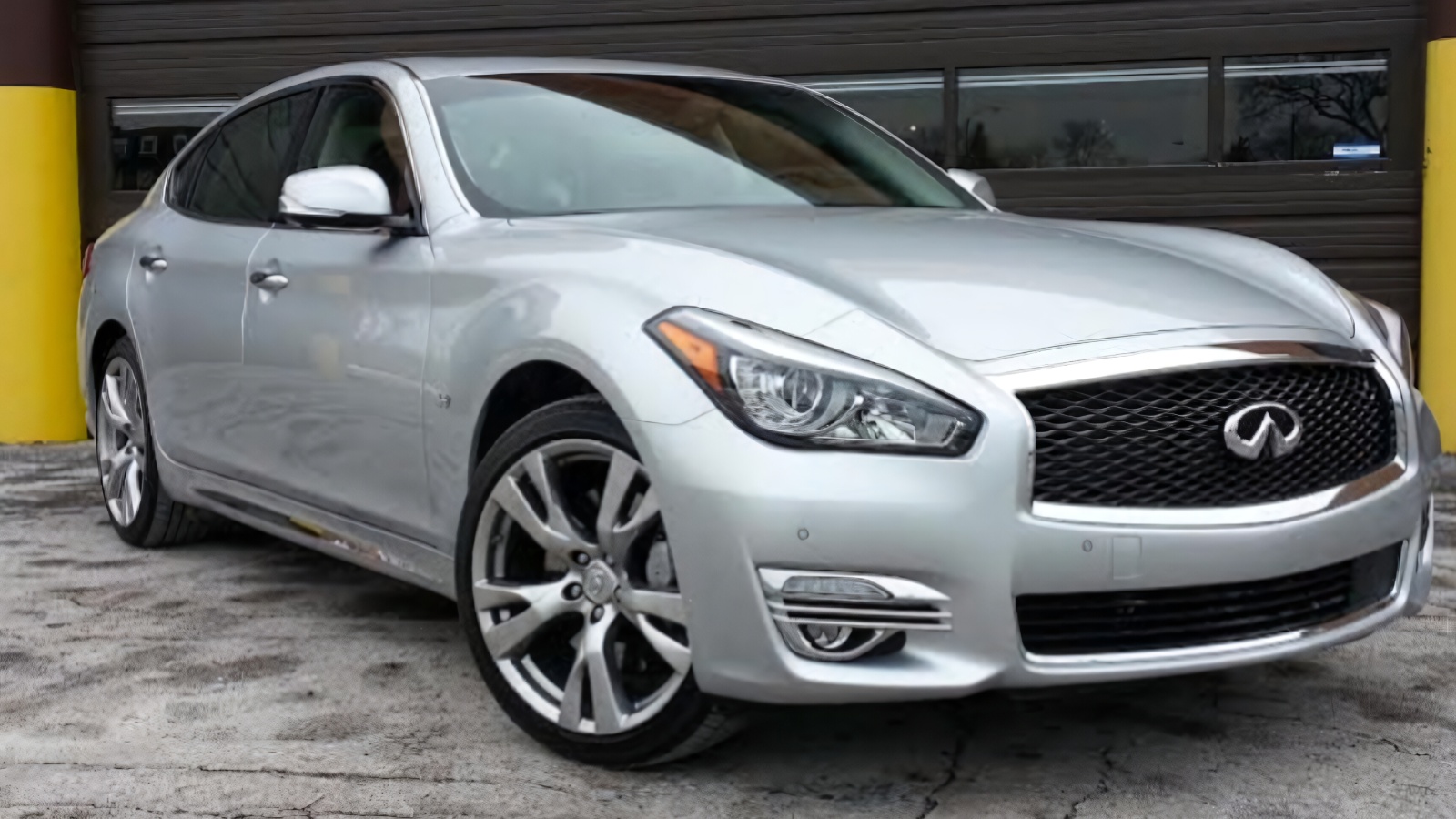
The Q70 is especially attractive because it comes from Infiniti’s more traditional mechanical era. Rather than using a four-cylinder turbo engine and continuously variable transmission, the Q70 relies on a large-displacement naturally aspirated engine and conventional automatic. The result is smooth, immediate throttle response and a driving character that feels increasingly uncommon among newer luxury sedans.
Interior technology is one area where the Q70 shows its age. The dashboard and infotainment system were already behind some competitors near the end of production. Fuel economy is mediocre as well, particularly if you choose the V8.
Still, used luxury cars should often be evaluated differently from new ones. A somewhat outdated infotainment screen becomes easier to forgive once depreciation has removed a substantial amount from the purchase price.
For buyers wanting a comfortable highway cruiser with strong V6 performance, a spacious interior, and relatively conventional mechanical components, the Q70 3.7 deserves far more attention than it usually receives.
- Engine: 3.7-liter naturally aspirated V6
- Horsepower: 330 hp
- Torque: 270 lb-ft
- Length: 194.7 inches
- Width: 72.6 inches
3. 2014–2017 Infiniti QX70 3.7
The QX70 existed before today’s flood of coupe-like performance SUVs, and its formula still feels surprisingly relevant. Originally sold as the Infiniti FX, it combines a low roofline, aggressive styling, and a rear-wheel-drive-based chassis with the higher seating position of a crossover. For drivers who prioritize handling and performance over maximum cargo space, a well-maintained QX70 remains an interesting used luxury SUV.
Under the hood is Infiniti’s familiar 3.7-liter naturally aspirated V6 producing 325 horsepower and 267 lb-ft of torque. A seven-speed automatic handles shifting, while buyers could choose rear-wheel drive or all-wheel drive depending on configuration. The QX70 measures roughly 191.3 inches long and 75.9 inches wide.
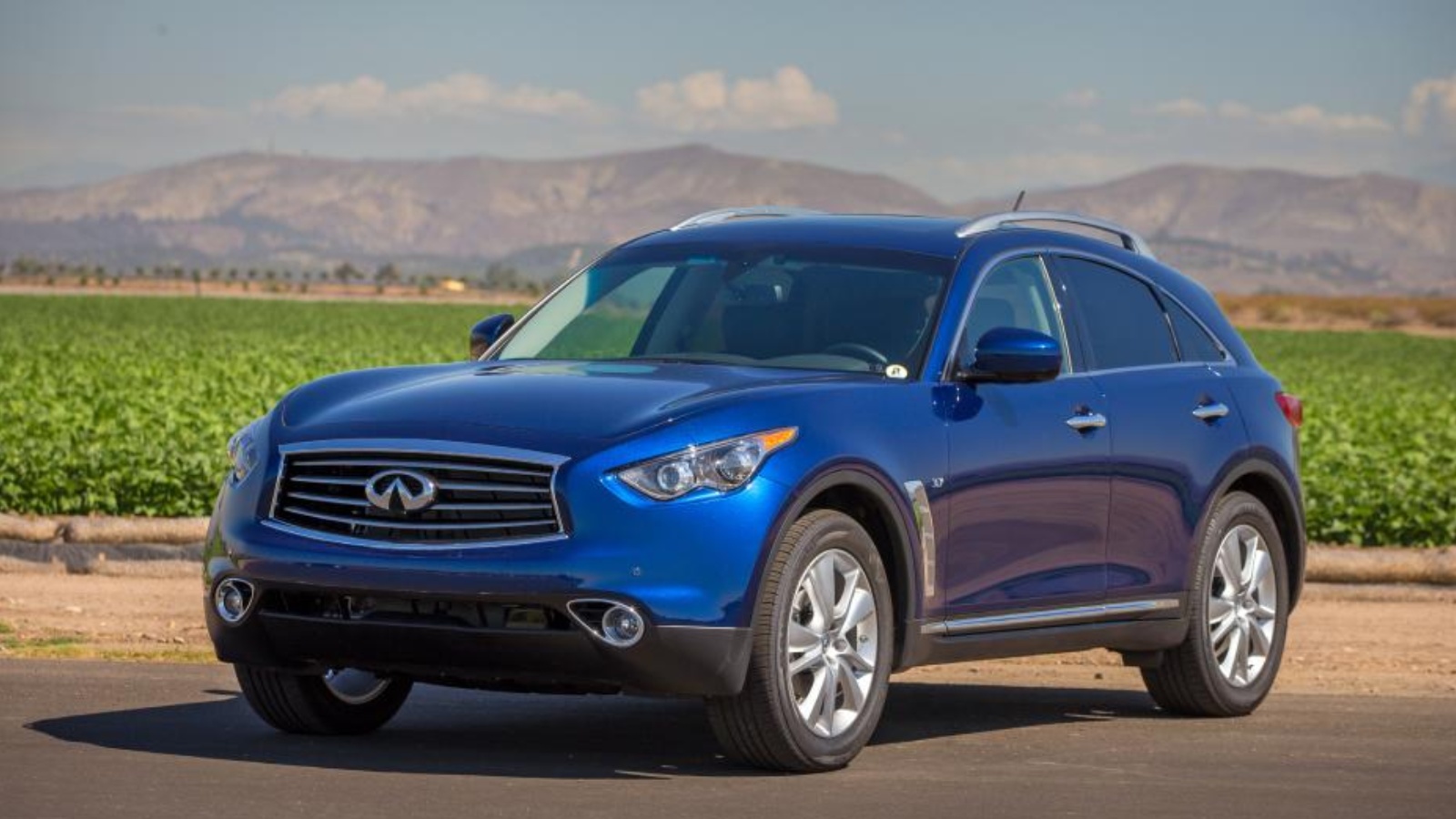
The engine is a major part of the QX70’s appeal. Unlike many modern luxury crossovers, there is no small turbocharged four-cylinder, variable-compression mechanism, or CVT involved. Press the accelerator and the V6 builds power naturally as engine speed rises. Its rear-drive-based platform also makes the QX70 feel more athletic than many mainstream crossovers.
Practicality is where compromises appear. The sloping roof sacrifices some cargo capacity, rear-seat space is not outstanding for a vehicle of this exterior size, and fuel economy can be expensive if you drive extensively. The suspension can also feel firm compared with softer luxury crossovers.
Those shortcomings are easier to accept when buying used, particularly because the QX70 now offers considerable performance for the money.
Finding a clean example matters. Look for maintenance records and avoid heavily modified vehicles. With those precautions, the QX70 3.7 is one of Infiniti’s most distinctive and appealing older crossovers.
- Engine: 3.7-liter naturally aspirated V6
- Horsepower: 325 hp
- Torque: 267 lb-ft
- Length: 191.3 inches
- Width: 75.9 inches
4. 2022–2024 Infiniti QX60
If you want a newer Infiniti family SUV, the 2022 through 2024 QX60 deserves serious consideration. These years are particularly interesting because Infiniti completely redesigned the QX60 while retaining a naturally aspirated 3.5-liter V6. More importantly, the previous generation’s continuously variable transmission was replaced by a conventional nine-speed automatic.
The 2024 QX60’s V6 develops 295 horsepower and 270 lb-ft of torque. It could be ordered with front-wheel drive or all-wheel drive, giving families a useful combination of luxury, three-row seating, and reasonably strong performance.
That transmission change is significant when shopping for a used QX60. Early QX60 models had well-documented CVT concerns, with Infiniti eventually extending warranty coverage on certain 2014–2018 vehicles. The second-generation SUV therefore represents a substantially different proposition mechanically.
The newer QX60 also feels considerably more like a genuine luxury crossover. Interior materials improved, styling became more upscale, and the cabin delivers the quiet, comfortable character expected in this segment. Its three rows make it far more practical than Infiniti’s smaller crossovers, and properly equipped versions can handle family-road-trip duty comfortably.
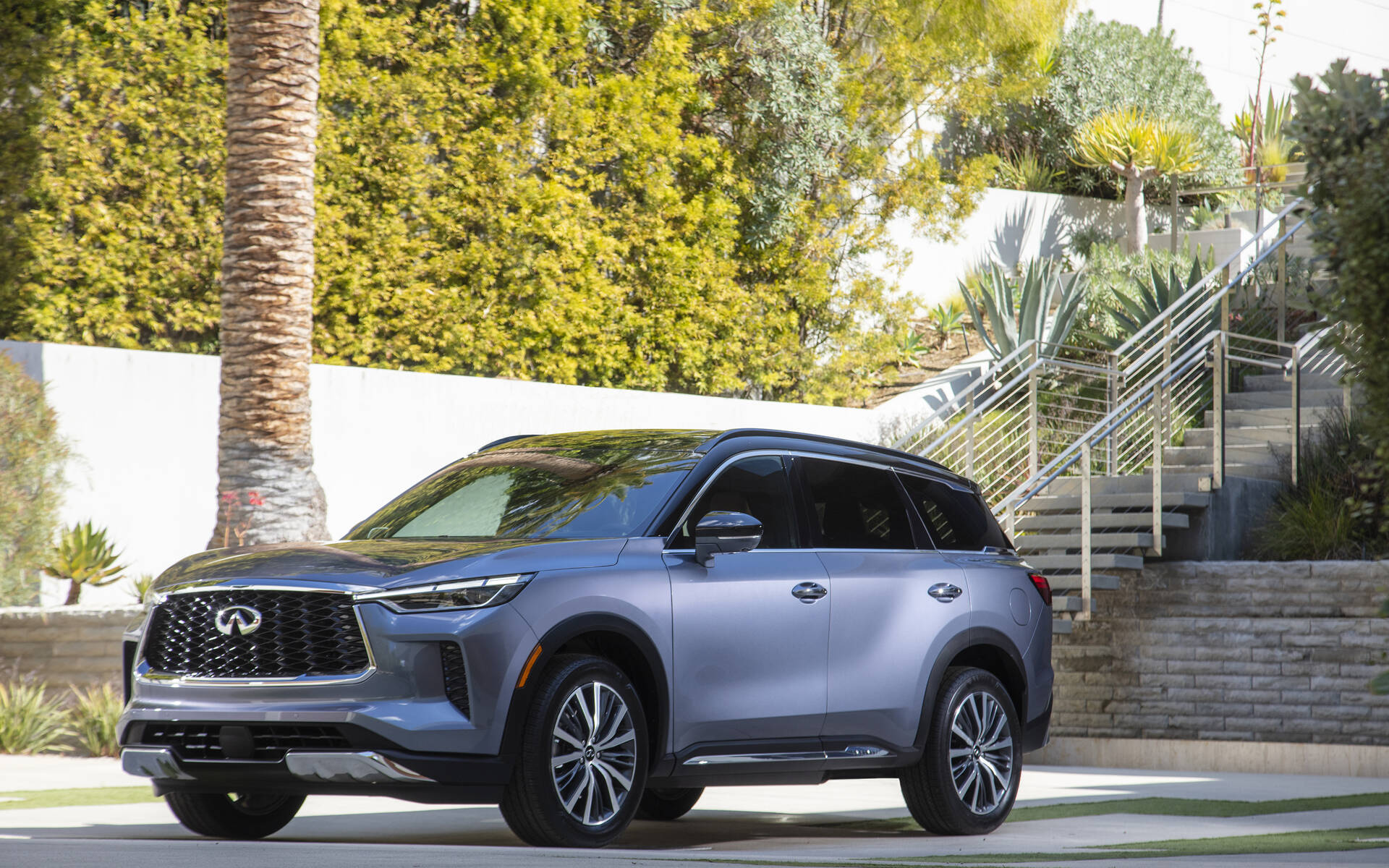
It is not a performance SUV. The naturally aspirated V6 provides adequate rather than explosive acceleration, and the QX60 prioritizes comfort over aggressive handling. But that is appropriate for its intended mission.
The sweet spot is a 2022–2024 model with documented maintenance and the equipment you actually want. For families considering a used Acura MDX, Lexus RX-based alternative, or premium three-row crossover, this generation of QX60 deserves a place on the shopping list.
- Engine: 3.5-liter naturally aspirated V6
- Horsepower: 295 hp
- Torque: 270 lb-ft
- Length: Approximately 198.2 inches
- Width: Approximately 78.0 inches
5. 2021–2024 Infiniti QX80
The previous-generation Infiniti QX80 represents old-school luxury SUV engineering. It is large, heavy, thirsty, and unapologetically powered by a naturally aspirated V8. Those qualities make it expensive to operate, but they are also part of what makes a late-production QX80 attractive for buyers who specifically want a traditional full-size SUV.
The 2024 QX80 uses a 5.6-liter V8 producing 400 horsepower and 413 lb-ft of torque. A seven-speed automatic transmission handles the power, while rear-wheel drive or four-wheel drive was available depending on configuration. Maximum towing capacity reached approximately 8,500 pounds when properly equipped.
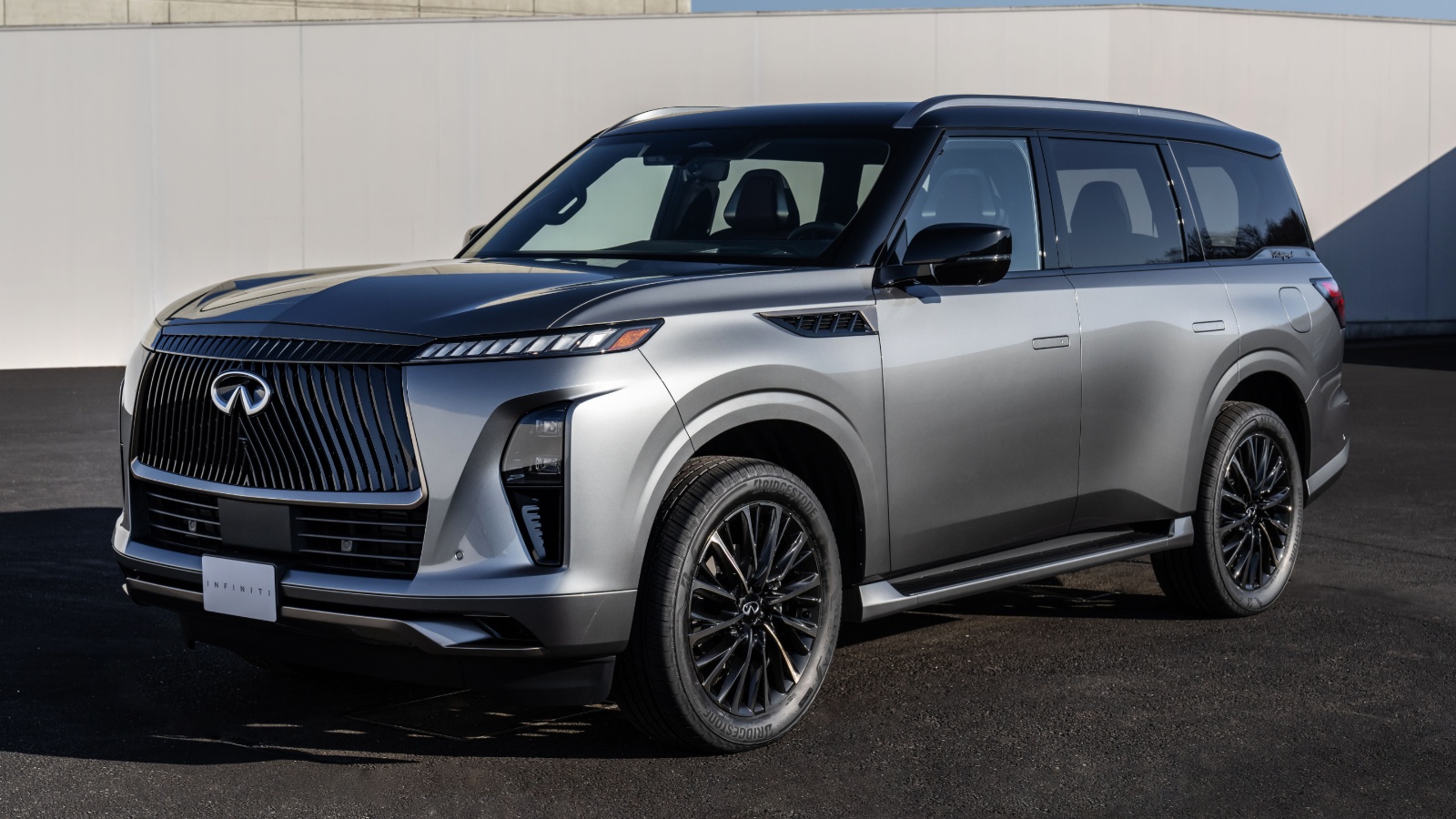
Compared with many modern luxury SUVs, the QX80’s mechanical formula is straightforward. There is no hybrid system or small turbocharged engine attempting to move a nearly three-ton vehicle. Instead, the large V8 provides effortless low-speed response and the kind of smooth power delivery that suits a full-size SUV.
The QX80 is particularly attractive after depreciation. New examples were expensive, but the used market can place them closer to mainstream full-size SUV prices. Buyers get three-row seating, a commanding driving position, substantial towing ability, and an interior filled with luxury equipment.
There are obvious drawbacks. Fuel economy is poor, its size makes parking difficult, and the platform’s age can be felt in its handling and packaging. Maintenance on a large luxury SUV will also never resemble economy-car ownership costs.
Still, buyers shopping specifically for a used traditional V8 SUV may see those compromises as acceptable. A well-maintained 2021–2024 QX80 offers significant vehicle for the money, especially for families who tow or simply prefer naturally aspirated V8 power.
- Engine: 5.6-liter naturally aspirated V8
- Horsepower: 400 hp
- Torque: 413 lb-ft
- Length: Approximately 210.2 inches
- Width: Approximately 79.9 inches
Also read: 5 Cars With Cheap Window Regulators and 5 Over $600
5 Infiniti Models to Avoid
1. 2014–2018 Infiniti QX60
The first-generation Infiniti QX60 can look extremely attractive on the used market. It is spacious, comfortable, reasonably luxurious, and often far less expensive than newer three-row luxury SUVs. Unfortunately, certain early examples come with a major reason for caution: the continuously variable transmission.
Infiniti’s own service documentation shows that CVT concerns were substantial enough to result in campaigns and extended warranty coverage. Certain 2013 JX35 and 2014 QX60 vehicles were subject to a service campaign involving transmission-control-module reprogramming and, where necessary, inspection or replacement of the CVT or its control valve. Warranty coverage on the CVT was later extended for certain 2015–2018 QX60 models.
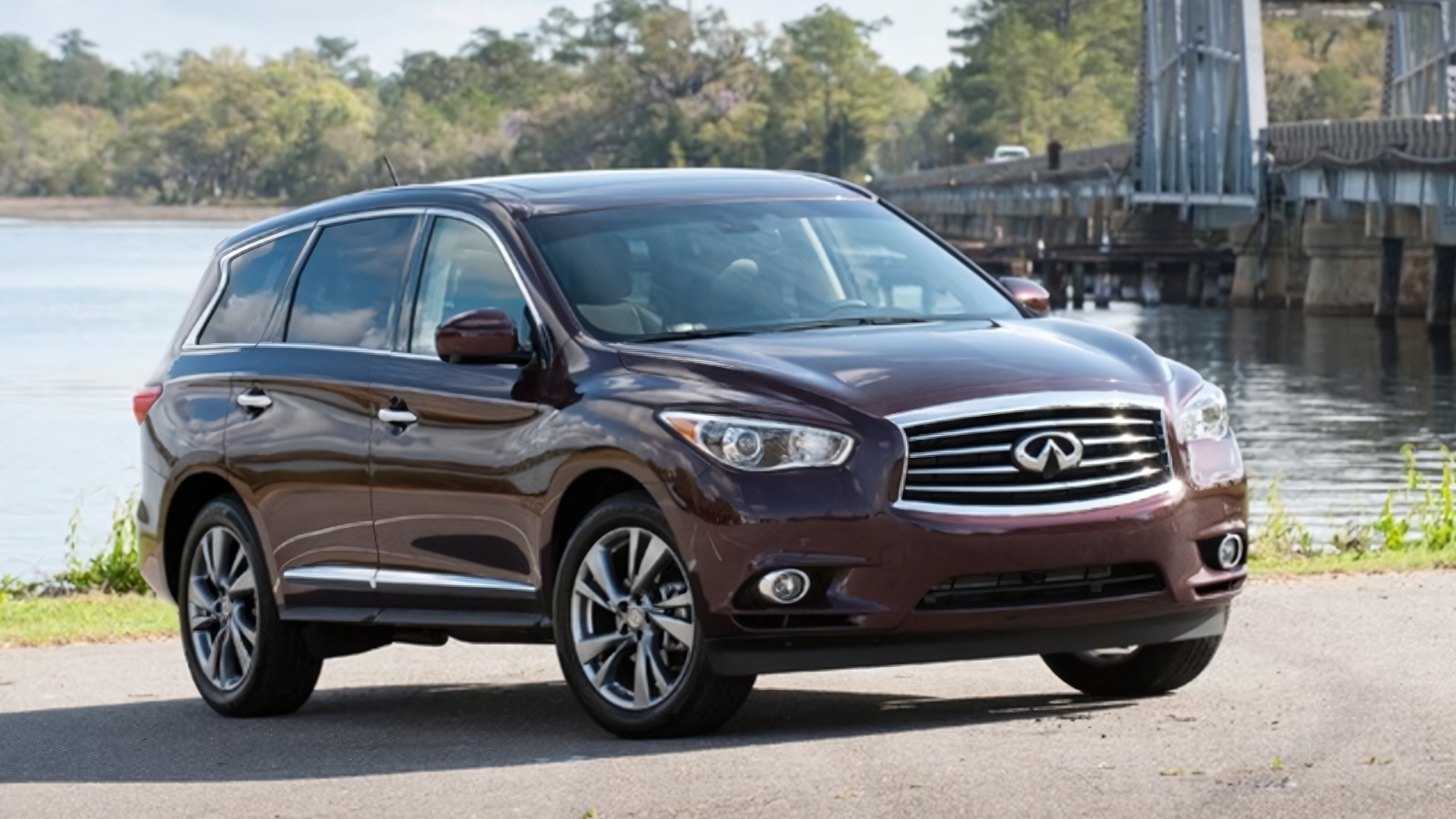
Additional Infiniti service documentation covering V6-powered QX60 models also outlined procedures for dealing with debris that could remain in the transmission-fluid cooler when CVT, control-valve, or torque-converter replacement became necessary.
That does not mean every first-generation QX60 will suffer a transmission failure. Many have accumulated significant mileage without catastrophic problems. The concern is simply that an inexpensive used luxury SUV can quickly become expensive when one of its most complex components requires major work.
The QX60’s 3.5-liter V6 itself provides decent power, producing roughly 265 horsepower and 248 lb-ft in early examples. But the CVT is the part that changes the buying equation.
If you find one with complete documentation proving that the transmission has been serviced or replaced appropriately, it may be worth investigating. Otherwise, the 2022–2024 QX60 with its nine-speed automatic is a safer target for buyers who can afford the newer generation.
- Engine: 3.5-liter naturally aspirated V6
- Horsepower: Approximately 265 hp
- Torque: Approximately 248 lb-ft
- Length: Approximately 196.4 inches
- Width: Approximately 77.2 inches
2. 2016–2018 Infiniti Q50 3.0t
The 3.0t Infiniti Q50 is tempting because it offers serious performance for remarkably little money on the used market. The standard twin-turbocharged 3.0-liter V6 produces 300 horsepower and 295 lb-ft of torque, while the Red Sport version raises output to 400 horsepower and 350 lb-ft. Those figures still make the Q50 quick.
The problem with early examples is turbocharger-related risk. Infiniti issued warranty-extension information covering certain 2016–2018 Q50 vehicles because premature turbocharger-bearing wear could allow engine oil to leak internally. Possible symptoms can include exhaust smoke, a malfunction indicator light, reduced power, and, in severe cases, internal turbocharger damage.
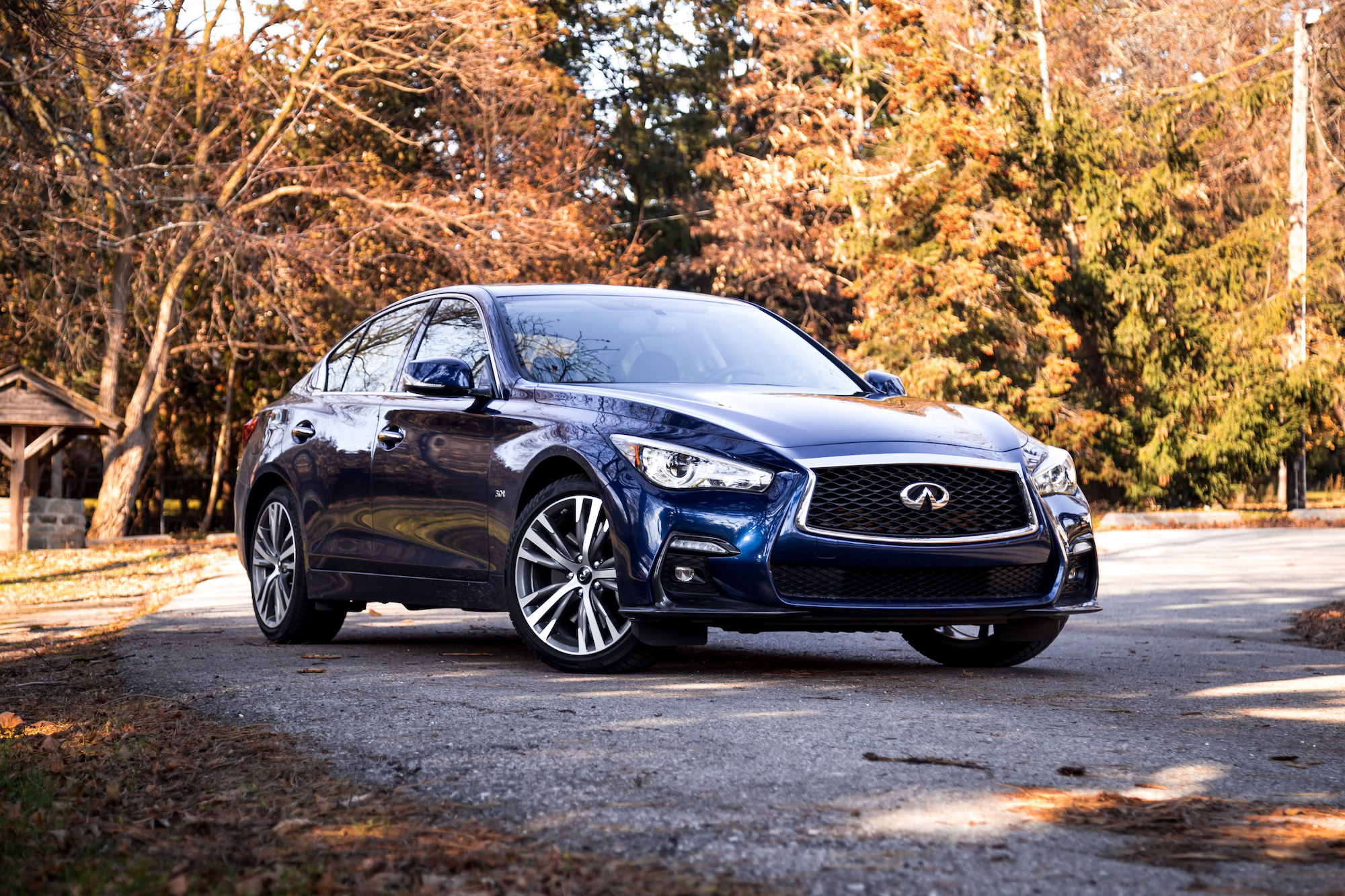
There were also additional recalls and service campaigns affecting some Q50 variants from this period, which makes checking the exact engine, model year, service history, and VIN especially important.
That makes the model year and engine extremely important when shopping for a Q50. The car itself remains attractive. It has rear-wheel-drive proportions, excellent straight-line speed, and plenty of tuning potential. Unfortunately, that last characteristic creates another used-car concern. Many Q50s have been modified, tuned, or driven hard.
A cheap early Q50 3.0t can therefore become much less affordable if the turbochargers need replacement or previous modifications have caused additional problems.
This does not mean all 3.0t Q50s should automatically be rejected. Later, well-maintained cars deserve consideration. However, if choosing between an early 3.0t and a clean 2015 Q50 3.7, the naturally aspirated model is the one to prioritize for a lower-complexity used purchase.
- Engine: 3.0-liter twin-turbocharged V6
- Horsepower: 300 hp
- Torque: 295 lb-ft
- Length: Approximately 189.1 inches
- Width: Approximately 71.8 inches
3. 2017–2018 Infiniti Q60 3.0t
The second-generation Infiniti Q60 remains one of the best-looking luxury coupes from its period. With a low roof, flowing bodywork, and available 400-horsepower Red Sport engine, it delivers the styling and performance that buyers expect from a premium two-door. Yet the earliest 3.0t examples deserve caution for essentially the same reason as the Q50.
Infiniti’s twin-turbo 3.0-liter V6 was available in 300-horsepower form and a high-output 400-horsepower version. Maximum torque rises from 295 lb-ft in the standard engine to 350 lb-ft in the Red Sport.
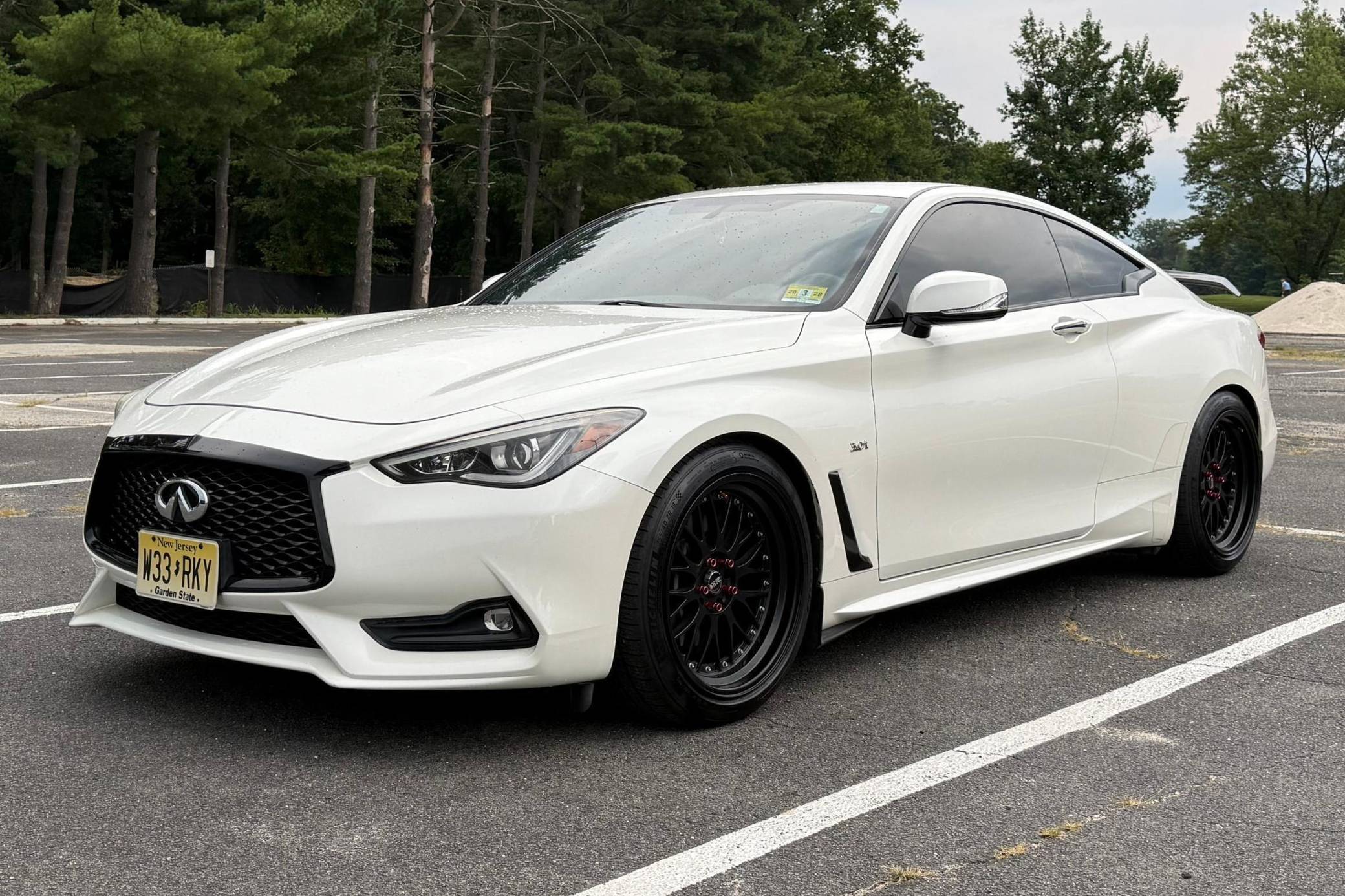
However, certain 2017–2018 Q60 vehicles were included in warranty-extension coverage related to premature turbocharger-bearing wear and possible internal oil leakage. That concern is important because turbocharger replacement on a used luxury performance coupe can quickly eliminate any savings achieved through a low purchase price.
The risk becomes more complicated because Q60s attract enthusiasts. Modified exhausts, aftermarket intakes, ECU tunes, and increased boost are common. None of those modifications automatically ruins a vehicle, but they make it more difficult to determine how a used example has been treated.
If you want a Q60, service history should matter more than mileage alone. A later stock example with inspection records is preferable to an inexpensive early car with unknown modifications.
Alternatively, the 2014–2015 Q60 with its naturally aspirated 3.7-liter V6 is worth considering. That older configuration produces around 330 horsepower and 270 lb-ft, offering plenty of performance without twin turbochargers.
The early 3.0t Q60 remains exciting and attractive, but buyers should approach bargain-priced examples carefully.
- Engine: 3.0-liter twin-turbocharged V6
- Horsepower: 300 hp
- Torque: 295 lb-ft
- Length: Approximately 184.4 inches
- Width: Approximately 72.8 inches
4. 2019–2020 Infiniti QX50
The second-generation QX50 was technologically ambitious when it appeared. Its 2.0-liter VC-Turbo engine can physically alter its compression ratio while operating, attempting to provide both strong performance and improved efficiency. Infiniti rates the engine at 268 horsepower and 280 lb-ft of torque, connected to a continuously variable transmission.
The QX50 itself is appealing in several ways. It has a roomy interior, attractive exterior styling, and substantially more cargo usefulness than the previous rear-wheel-drive QX50. But early examples are harder to recommend today because the innovative engine introduces complexity that does not exist in Infiniti’s older naturally aspirated V6 models.
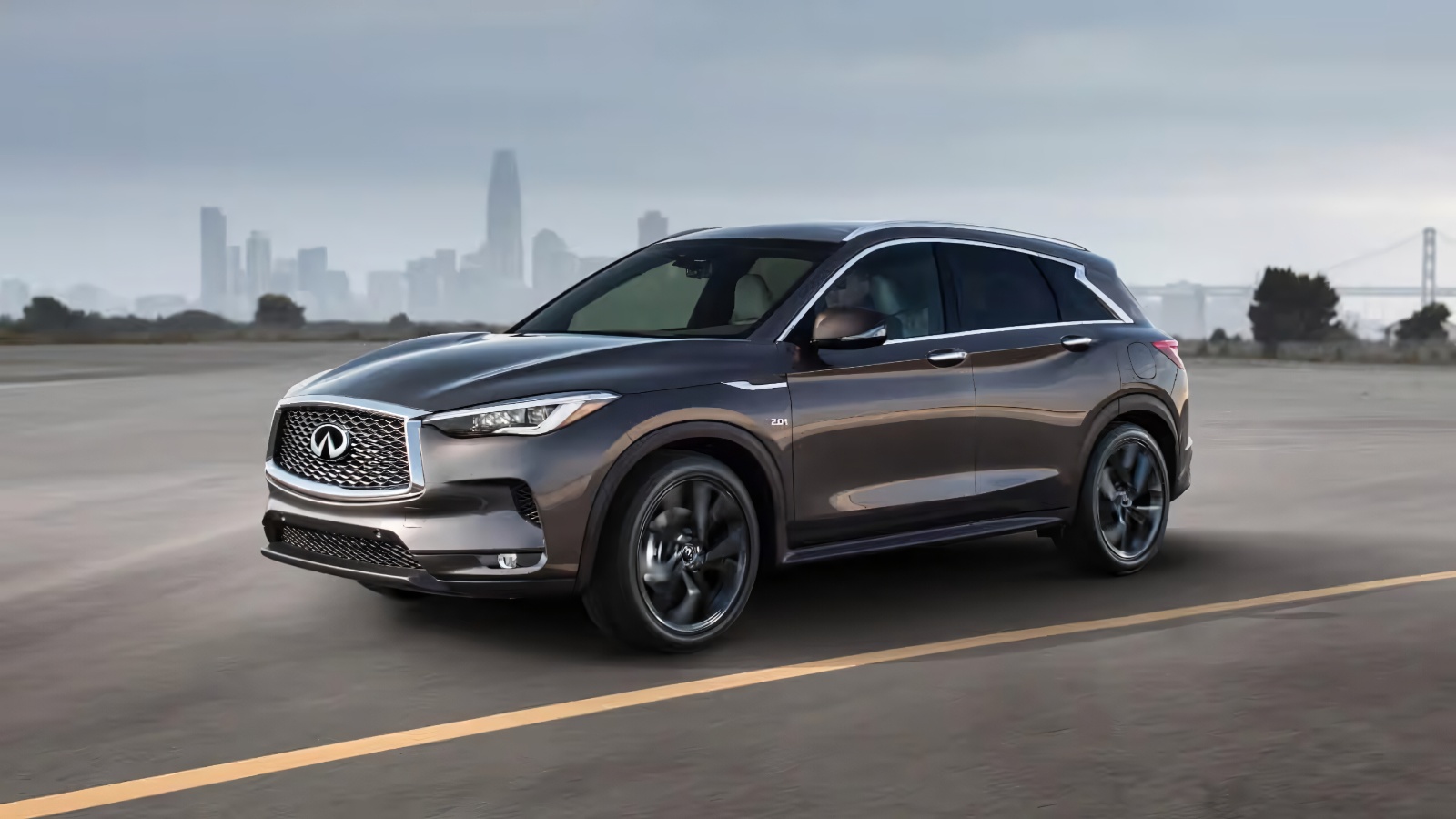
More importantly, certain Infiniti vehicles using the KR20DDET variable-compression turbo engine have been included in recall action related to possible engine-bearing problems. Some QX50 production falls within the affected population, making VIN verification especially important for anyone considering an early example.
This does not mean every 2019 or 2020 QX50 contains a defective engine. Recalls involve specific production populations, and individual vehicle history matters. However, when buying used, there are enough alternatives to make an early VC-Turbo QX50 less attractive unless its history and recall status have been thoroughly verified.
The CVT also reduces some of the sporty character expected from the Infiniti badge. Acceleration is respectable, but the driving experience is less engaging than that of older rear-drive Infiniti crossovers.
Buyers considering one should check for completed recall work and demand comprehensive service records. Without that documentation, the combination of an early variable-compression engine and CVT makes these years easy to pass over.
- Engine: 2.0-liter VC-Turbo four-cylinder
- Horsepower: 268 hp
- Torque: 280 lb-ft
- Length: 184.7 inches
- Width: 74.9 inches
5. 2022 Infiniti QX55
The Infiniti QX55 essentially transforms the QX50 formula into a more aggressively styled crossover coupe. The sloping roof, bold grille, and standard all-wheel drive give it more visual presence than Infiniti’s conventional compact crossover. Unfortunately, the earliest QX55 combines style with the same complicated variable-compression powertrain that makes certain QX50s worthy of additional caution.
Every QX55 uses Infiniti’s 2.0-liter VC-Turbo four-cylinder. It generates 268 horsepower and approximately 280 lb-ft of torque and works through a continuously variable transmission. From a performance standpoint, those numbers are perfectly respectable for a compact luxury crossover.
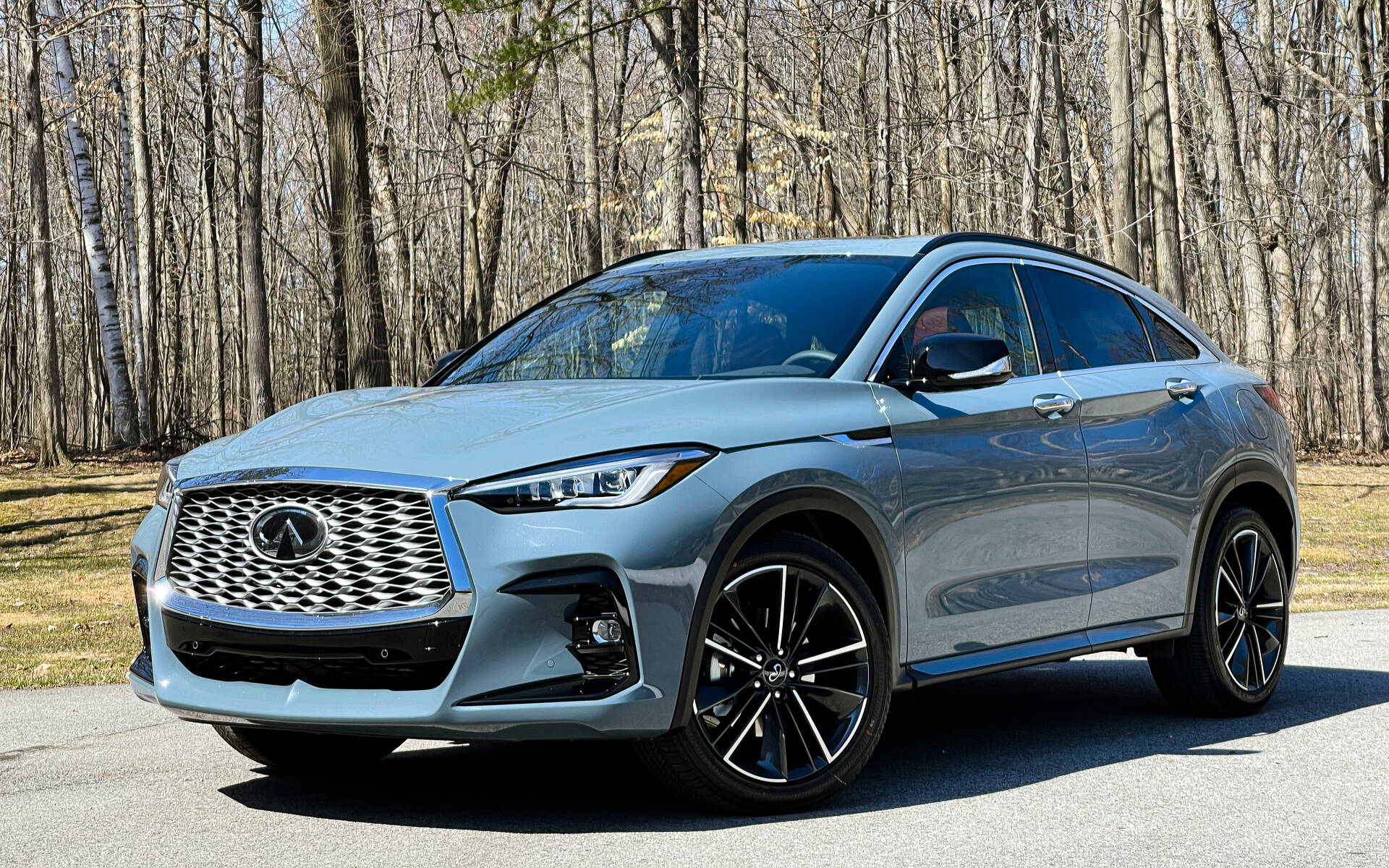
The reason the 2022 model lands in the avoid category is more specific. Certain 2022 Infiniti QX55 vehicles have been included in recall action involving the variable-compression engine and possible bearing problems. This makes checking the exact VIN and confirming that all required recall work has been completed especially important.
Again, that does not mean every QX55 will experience an engine failure. Many examples may never develop major problems. However, used-car buyers have enough alternatives that an early vehicle with an innovative powertrain and uncertain service history deserves additional caution.
Beyond that issue, the QX55 asks buyers to accept reduced rear cargo practicality for styling while providing little additional performance over the QX50. Its coupe-like roofline may look more distinctive, but it also sacrifices some of the versatility buyers normally expect from a crossover.
A heavily depreciated example with documented recall completion and complete service records could still become an attractive purchase. Without those assurances, however, there are simpler and more proven Infiniti alternatives on the used market.
- Engine: 2.0-liter VC-Turbo four-cylinder
- Horsepower: 268 hp
- Torque: Approximately 280 lb-ft
- Length: Approximately 186.3 inches
- Width: Approximately 74.9 inches
Also read: 10 Cars Holding Location History No Owner Can Erase