
Your nose might be the best diagnostic tool you never knew you had. Long before a dashboard warning light flickers on, a strange smell drifting through your vents or lingering under the hood is often the first clue something has gone wrong. The tricky part is knowing what each odor actually means, because guessing wrong can cost you time, money, and in some cases, your safety on the road.
From sweet coolant leaks to musty air conditioning vents, every smell tells a different story about a different system under your hood or inside your cabin. Let’s break down eight common car smells, what causes them, and why paying attention now could save you from a much bigger repair bill later.

1. Sweet or Syrupy Smell
Picture rolling down the highway and catching a faint whiff of something almost like maple syrup drifting through the vents. That sugary scent is not coming from a spilled drink under the seat. It is coolant, and it usually means trouble brewing in the cooling system.
Outside the cabin, this smell often points to coolant escaping from the radiator, a cracked hose, or a failing water pump. These components work together to keep engine temperatures stable, and once one of them starts leaking, the coolant can drip onto hot surfaces and produce that unmistakable sweet aroma near the front of the vehicle.
Inside the cabin, the story gets more concerning. A strong syrupy odor filling the car, paired with foggy windows or a damp patch on the passenger-side carpet, usually signals a leaking heater core. This small radiator-like component sits behind the dashboard and circulates hot coolant to warm the cabin during colder months. When it fails, coolant can seep directly into the interior.
Ignoring this smell rarely ends well. Coolant loss leads to overheating, and overheating leads to engine damage that costs far more to fix than catching the leak early ever would.

2. Rotten Eggs or Sulfur Smell
Nobody wants their car to smell like a science experiment gone wrong, yet that is exactly what a sulfur odor feels like the first time you notice it. This smell is distinctive, unpleasant, and impossible to mistake for anything else once you have experienced it firsthand.
The most common cause traces back to hydrogen sulfide gas that builds up in the exhaust system. Under normal circumstances, the catalytic converter processes this gas efficiently, converting it into less offensive compounds before it exits through the tailpipe. When the catalytic converter starts failing, that conversion process breaks down, and the rotten egg smell escapes largely untreated.
A failing catalytic converter rarely happens in isolation. It often signals a deeper emissions-system problem, sometimes tied to fuel mixture issues or a malfunctioning oxygen sensor feeding incorrect data to the engine computer. Left unaddressed, the situation typically worsens, and repair costs climb along with it.
There is a second, less common possibility worth mentioning. A damaged or leaking battery can occasionally produce a similar sulfur-like smell, particularly in older lead-acid batteries under stress. It happens less frequently than catalytic converter issues, but if you notice the odor concentrated near the engine bay rather than the exhaust, a quick battery inspection is worth adding to your checklist.
Also Read: 5 Cars That Keep Cabin Smells Out vs. 5 Cars That Are Exhaust Whiffs

3. Burning Rubber Smell
A burning rubber smell from your car usually means something is making unwanted contact or creating too much friction. Finding the exact source may require checking several parts, especially around the engine bay.
One of the first areas to inspect is the accessory belt system. These belts power parts such as the alternator, air conditioning compressor, and power steering pump. When a belt becomes worn, loose, or starts slipping, it creates friction and heat.
That heat can produce a strong rubber smell, which may become easier to notice when starting the engine or pressing the accelerator. Another possible source is a rubber hose near the engine.
A coolant or other rubber hose can move from its proper position and touch a hot component, including the exhaust manifold. Continued contact can damage the hose and create a burning smell. This may happen because of a loose bracket, poor routing, or an incorrect installation during earlier repairs.
For vehicles with manual transmissions, the clutch should also be considered. A worn clutch that slips can create a strong burning smell because the clutch disc and flywheel generate excessive friction. Drivers may also notice that the clutch pedal feels unusual or that the vehicle struggles to respond properly when accelerating.
Leaving a burning rubber smell unchecked is not a good idea. Continued friction can damage belts, hoses, or clutch components and may leave you with a more expensive repair. Having the vehicle inspected early can help prevent further damage and keep it safe to drive.

4. Burnt Carpet or Acrid Smell
There is a sharp, almost chemical quality to this smell that makes it stand apart from the others on this list. It tends to hit hardest after a long drive down a steep grade or heavy stop-and-go traffic, and it points directly to one system: your brakes.
Excessive heat is the root cause. Brake pads and rotors are designed to handle high temperatures during normal use, but certain conditions push them past their limits. Riding the brakes down a mountain road, hauling a heavy load, or simply driving aggressively can generate more heat than the system can dissipate efficiently.
A sticking brake caliper deserves particular attention here. When a caliper fails to release properly, the brake pad stays in constant contact with the rotor even when your foot is off the pedal. This continuous friction generates sustained heat, producing that acrid burning smell along with uneven tire wear and reduced fuel efficiency as time goes on.
Human error plays a role too, and it is worth checking before assuming a mechanical failure. Driving any distance with the parking brake partially engaged creates the exact same friction and heat buildup, mimicking a genuine brake problem. Always double-check that lever or pedal before heading to a mechanic, since it could save you an unnecessary repair bill.
5. Thick, Acrid Burning Oil Smell
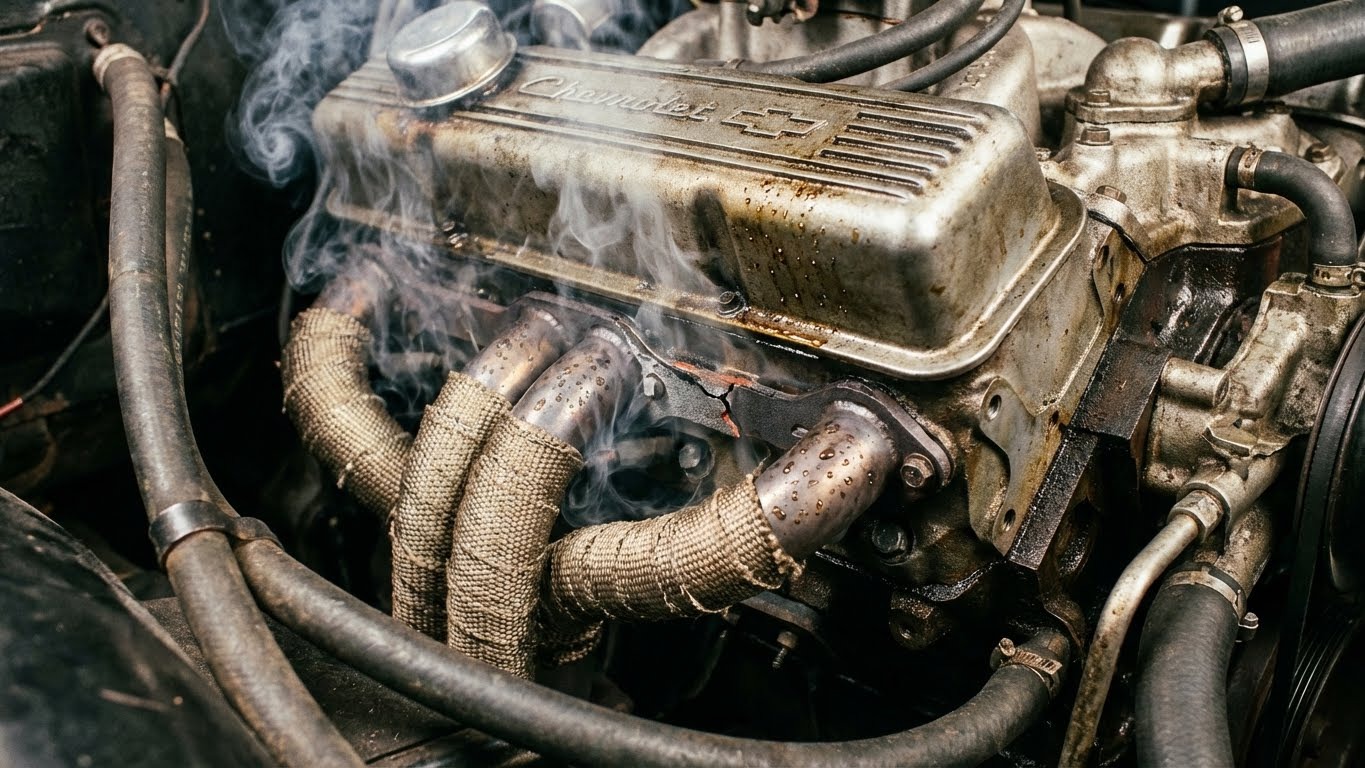
A strong burning oil smell from a vehicle should never be ignored. The odor is usually sharp and heavy, and in some cases, you may notice a little smoke or haze coming from beneath the bonnet. Engine oil is meant to remain inside the lubrication system, where it protects moving parts from excessive friction.
However, worn valve cover gaskets, seals, or other damaged components can allow oil to leak. When the leaking oil reaches a hot engine or exhaust part, it starts to burn and produces the smell. The odor can become more obvious after you park because the engine remains hot for some time.
It is also important to understand that low engine oil and burning oil are not exactly the same problem. When the oil level becomes too low, engine parts may not receive enough lubrication. This can increase friction and cause serious internal damage.
However, a low oil level does not automatically create a burning smell. That smell usually happens when leaked oil touches a hot surface. If you notice the odor, check the oil level with the dipstick and look around the engine for fresh oil, wet areas, or signs of leakage.
Do not ignore either problem. A small leak can become worse, reduce the oil level, and eventually lead to costly engine damage. Getting the vehicle inspected early is a much better option than waiting until the problem becomes serious. A mechanic can identify the source quickly and recommend repairs before more components are affected.

6. Raw Gasoline Smell
There is something instinctively alarming about smelling raw gasoline near your vehicle, and that instinct is not wrong. Fuel is flammable, and any strong gasoline odor deserves prompt attention rather than a shrug and a rolled-down window.
The fuel system carries gasoline under pressure from the tank to the engine, running through lines, injectors, and various seals along the way. A crack or loose connection anywhere in this system can allow liquid fuel or fuel vapors to escape, producing that sharp, distinctive smell that seems to hang in the air around the vehicle.
Before assuming the worst, check something simple first. A loose or damaged gas cap is a surprisingly common culprit, since it breaks the seal that normally traps fuel vapors inside the tank. Tightening or replacing the cap sometimes solves the problem entirely, and it costs far less than a full fuel system inspection.
That said, do not let the simple explanation lull you into skipping further checks if the smell persists. A continuing gasoline odor after ruling out the gas cap warrants prompt inspection by a professional, since fuel leaks near hot engine components create genuine fire risk. This is one smell where waiting it out is never the right call.
7. Burnt Toast or Acrid Plastic Smell
Imagine leaving toast in the toaster a little too long, then multiply that smell by a factor of concern, and you have a decent sense of what this particular odor signals. It typically points straight to your electrical system, and it deserves your full attention the moment you notice it.
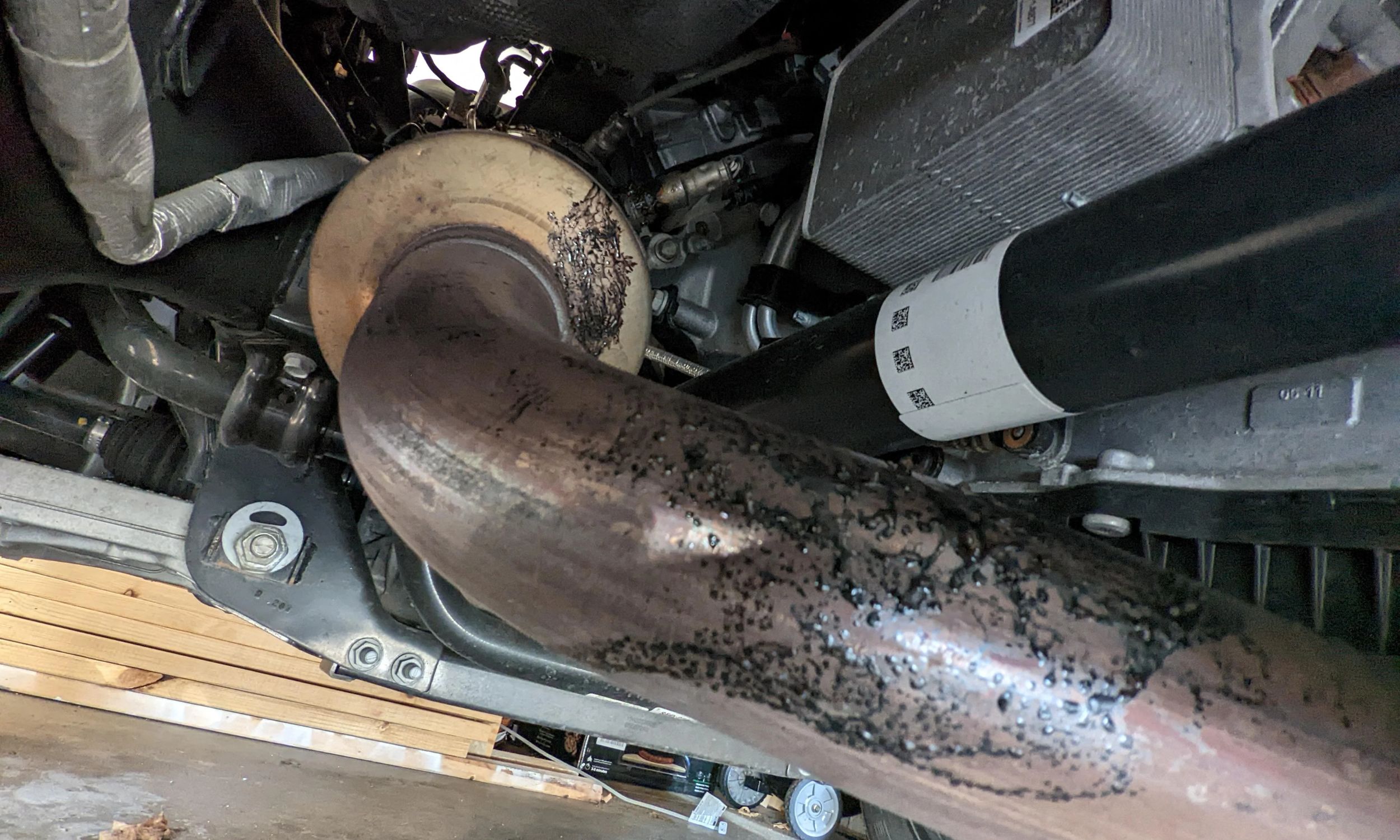
Wire insulation is designed to protect the copper wiring running throughout your vehicle, but when that insulation overheats or melts due to a short circuit or electrical overload, it releases a sharp, acrid smell often compared to burnt toast or scorched plastic. This can happen anywhere electrical components exist, from the dashboard wiring harness to components under the hood.
Electrical shorts rarely stay contained to one small area. A failing component can draw excessive current, heat up surrounding wiring, and potentially create a fire hazard if left unaddressed. This is precisely why professionals treat this smell with more urgency than most others on this list.
Your response matters here more than with almost any other odor. If you catch a whiff of burnt toast or plastic while driving, pay close attention to whether it intensifies or if you notice any smoke. Should either happen, pull over safely, turn off the engine, and seek professional assistance immediately rather than continuing your drive and hoping the smell fades on its own.
Also Read: Top 10 Odor Neutralizing Sprays for Pet Smells in Your Car
8. Musty or Dirty Gym Clothes Smell
Ever climbed into your car after it sat closed up for a few days, only to be greeted by a smell reminiscent of a gym bag left in the trunk too long? That damp, musty odor is not your imagination, and it usually comes down to one part of your vehicle you rarely think about: the HVAC system.
Moisture is the root cause behind nearly every version of this smell. Your air conditioning system naturally produces condensation as it cools cabin air, and that moisture is supposed to drain away through a small tube leading outside the vehicle.
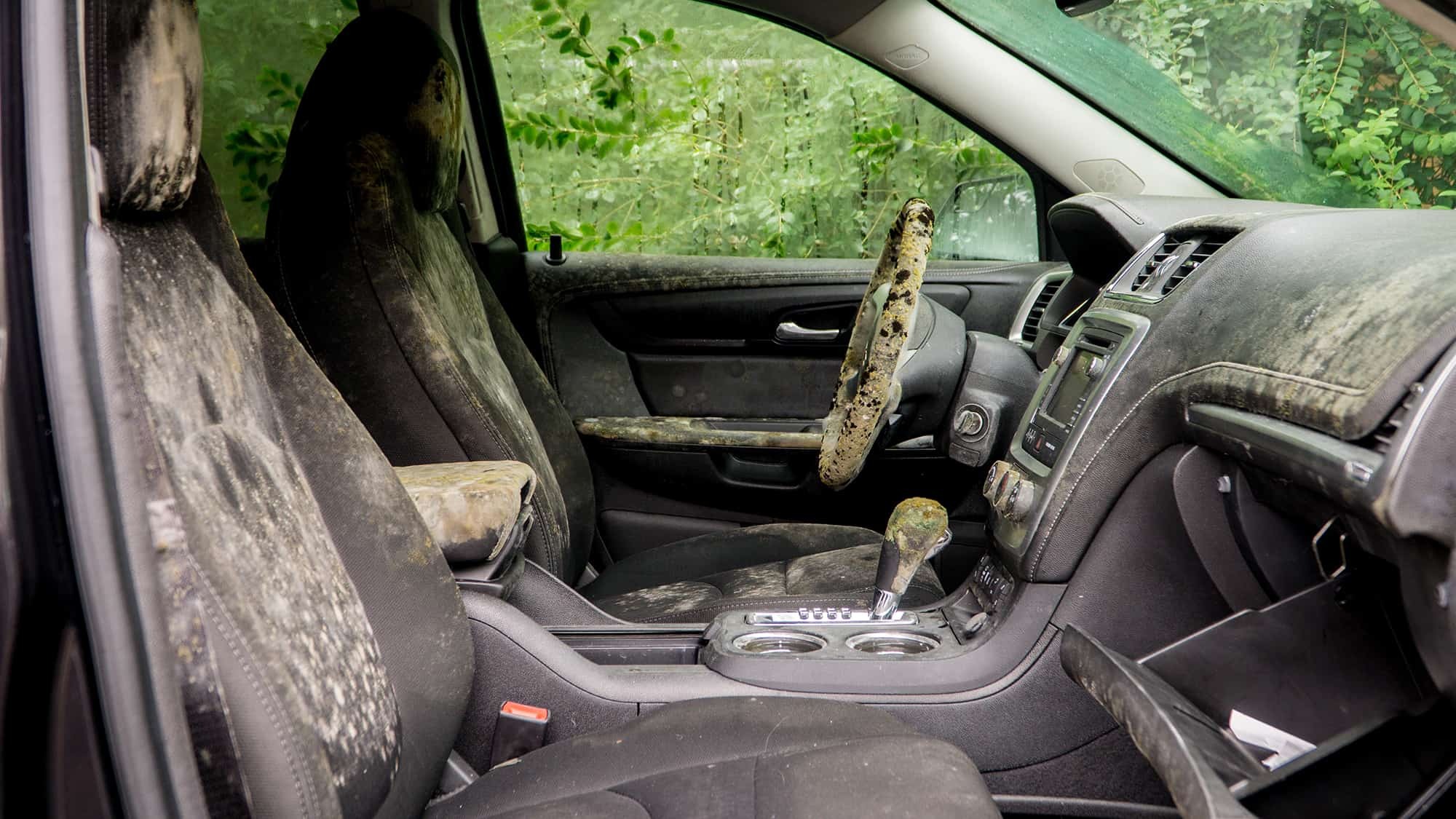
When that drain becomes clogged with debris, water backs up and collects inside the system instead, creating the perfect environment for mold and mildew to grow. Mold thrives in dark, damp spaces, and the evaporator core inside your HVAC system fits that description perfectly.
Once mold establishes itself there, every time you turn on the air conditioning or heater, it pushes that musty smell directly into your cabin, sometimes hitting hardest in the first few seconds after you switch the system on.
Wet carpets and hidden interior leaks can produce a similar smell, so it helps to check for damp spots under floor mats or along door seals if the odor persists even with the HVAC system off. Either way, ignoring this smell rarely makes it disappear.
It tends to worsen with continued moisture exposure, and addressing the drain or leak early keeps both your air quality and your car’s interior in better shape for the long run. Getting your HVAC system inspected and cleaned can resolve this issue quickly, restoring fresher air every time you start your engine.