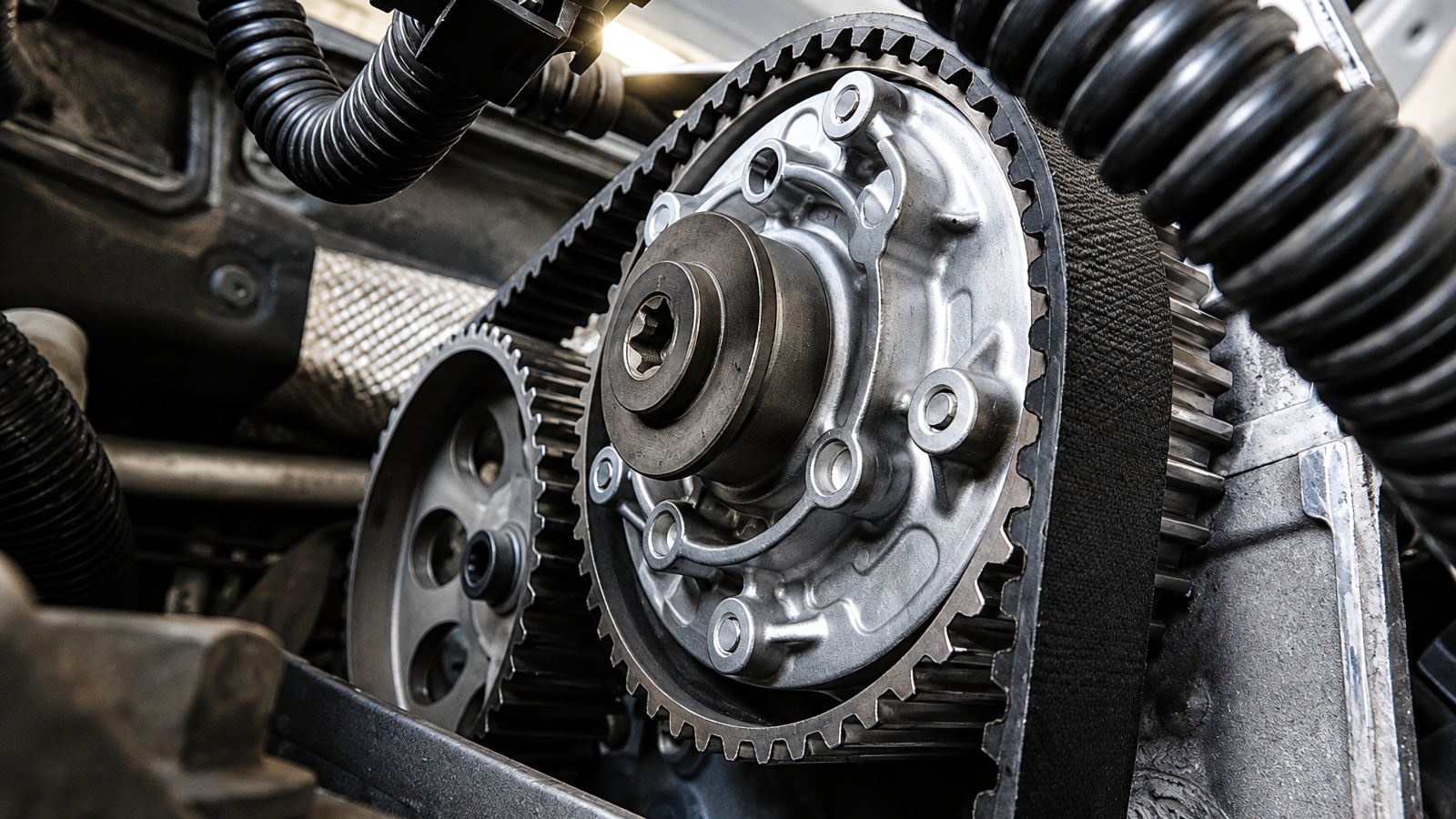
A timing-belt replacement is supposed to eliminate one of the biggest mechanical risks on an interference engine, but the belt itself is only part of the system. Water pumps, tensioners, idler pulleys, seals, accessory belts, and other components often sit behind the same covers or require much of the same labor to access. If those aging parts are reused during a belt replacement, one of them can fail months later and force the engine apart again.
That does not mean these components automatically break after a timing-belt job. The problem is age and shared labor. When a vehicle reaches the mileage where its timing belt needs replacement, surrounding components have usually accumulated the same number of heat cycles and operating hours. A cheap timing-belt-only job can therefore become expensive the following year. These are 10 components worth considering while the engine is already apart.
1. Water Pump
The water pump is probably the most frustrating component to fail shortly after a timing-belt replacement because on many engines, accessing it requires removing much of the timing hardware again.
Some engines actually use the timing belt to drive the water pump. Others simply position the pump behind the timing covers, making replacement labor closely overlap with the belt job. For that reason, timing-belt kits frequently include a new pump even when the old one is not yet leaking.
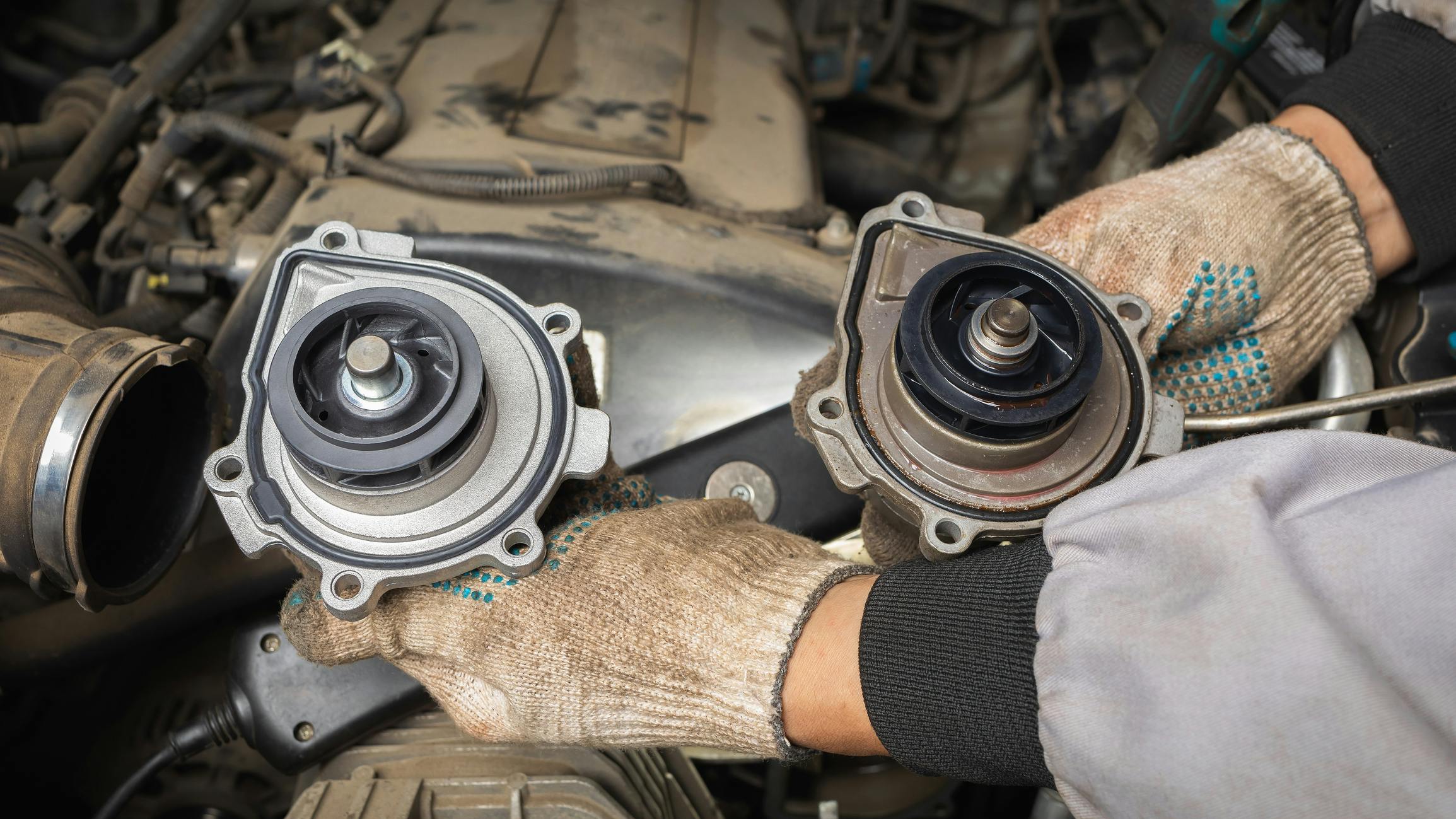
A water pump can fail in several ways. Its shaft seal may begin leaking coolant, the bearing may become noisy, or the impeller can deteriorate and reduce circulation. Early warning signs include dried coolant residue near the timing cover, a sweet smell after driving, unexplained coolant loss, or a grinding or whining noise from the belt area.
The financial problem comes from labor duplication. A pump that might add only a modest parts cost during the original timing-belt service can become a much larger repair if the technician has to disassemble the timing system again six months later.
There are exceptions. Some engines use externally mounted pumps that are easy to replace independently, so automatically replacing a perfectly healthy pump may not always make financial sense.
But when the manufacturer or established service procedure recommends replacing the water pump with the timing belt, skipping it to save money can be a false economy. A severe pump failure can also cause overheating, potentially creating far more expensive engine damage than the timing-belt service itself.
2. Timing-Belt Tensioner
A brand-new belt cannot stay correctly tensioned if the tensioner controlling it is worn. That makes the tensioner one of the most important components to replace during a complete timing-belt service.
Depending on engine design, tension is maintained through a spring-loaded, mechanical, or hydraulic mechanism. The component keeps the belt tight enough that it cannot jump teeth while still allowing for normal changes caused by temperature and belt movement.
An old tensioner can survive the initial repair and then begin failing months later. Symptoms may include rattling from behind the timing cover, unusual belt noise, vibration, or visible belt movement. In the worst case, tension drops far enough for the timing belt to skip teeth.
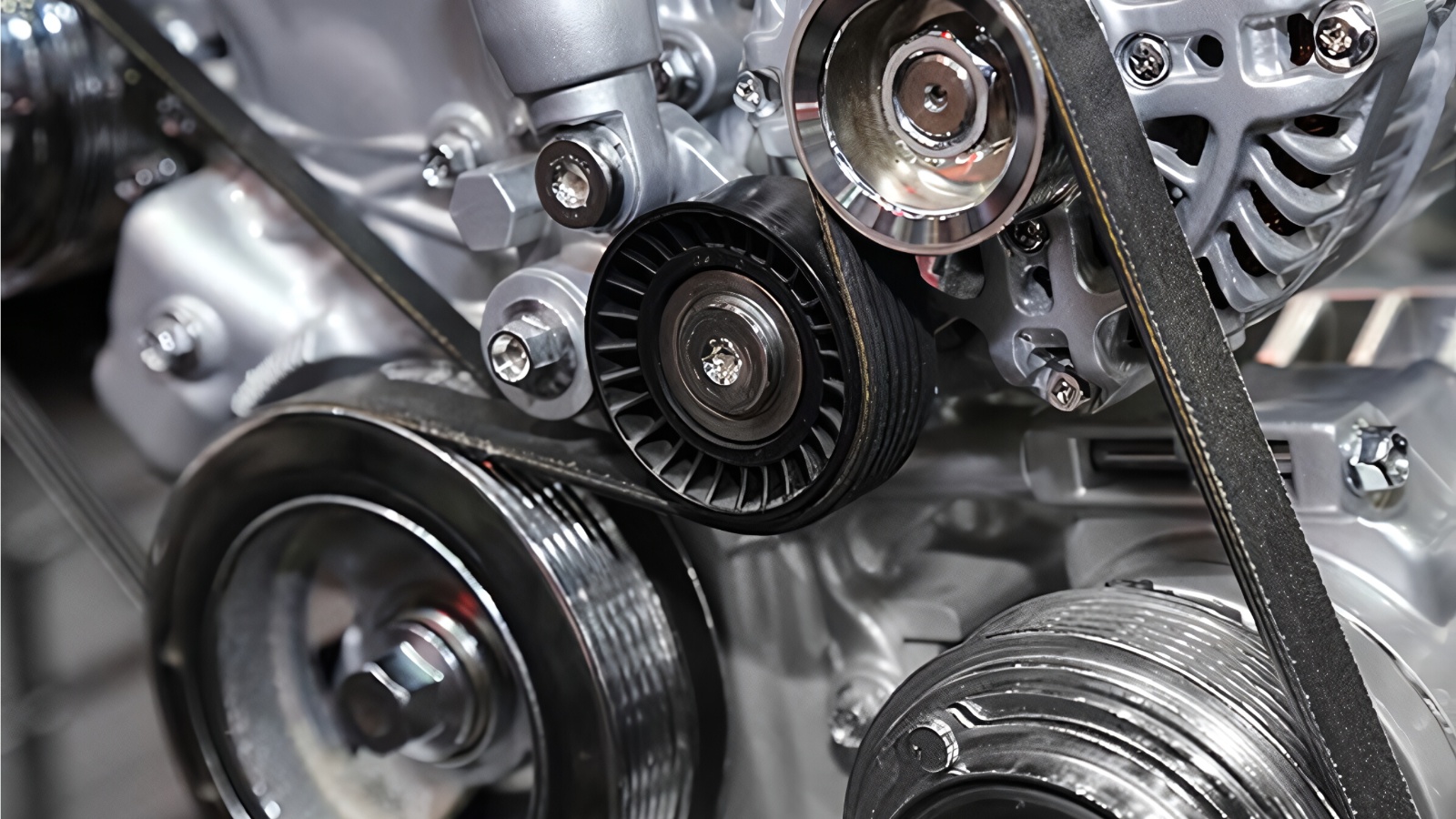
On an interference engine, that can be catastrophic. If camshaft timing moves significantly out of synchronization with the crankshaft, pistons can strike open valves. Bent valves, damaged pistons, or cylinder-head repairs can turn a relatively inexpensive tensioner into a several-thousand-dollar engine failure.
The frustrating part is that tensioners are normally already exposed during timing-belt replacement. The major expense is getting to the timing system, not necessarily purchasing the tensioner itself.
That is why reputable timing-belt kits often contain the belt, tensioner, idler pulleys, and sometimes the water pump as one package.
If an invoice lists only “timing belt” with no mention of the tensioner, ask whether it was actually replaced. Reusing an original high-mileage tensioner can leave the engine depending on one of the oldest parts in an otherwise refreshed timing system.
3. Idler Pulleys
Timing-belt idler pulleys appear simple, but they can destroy an engine just as effectively as a broken belt. Their job is to guide the timing belt through the correct path while allowing it to move smoothly at engine speed.
Inside each pulley is a bearing that has accumulated the same mileage as the old belt. That bearing can feel acceptable when turned by hand during a repair and still develop noise or play several months later.
As the bearing deteriorates, drivers may hear chirping, whining, grinding, or scraping from the timing-cover area. Eventually, the pulley can wobble, seize, or separate.
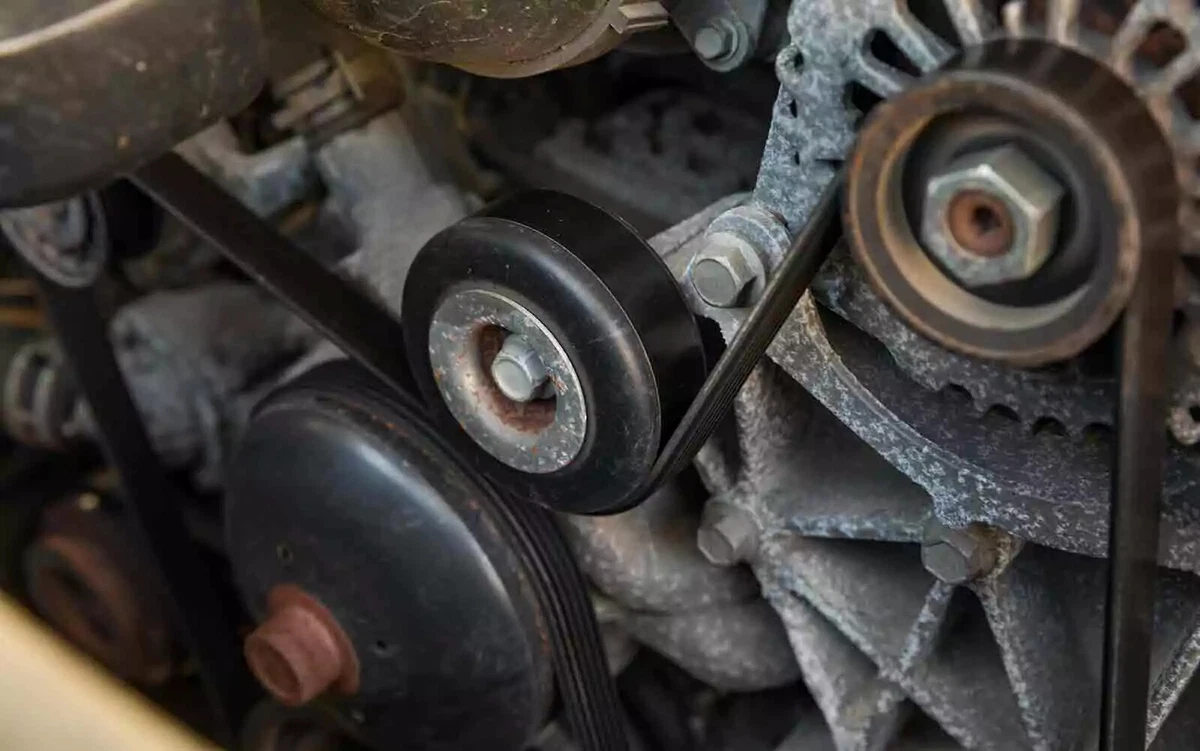
A seized pulley creates enormous friction. Instead of rolling smoothly, the timing belt begins dragging across a stationary surface. Heat quickly builds, potentially damaging the belt’s backing or teeth.
A wobbling pulley creates a different problem. The belt may start tracking sideways and rubbing against timing covers or flanges. If it walks far enough off the pulley, engine timing can be lost.
Again, the part itself is usually inexpensive compared with the labor involved in reaching it. That makes reusing an old idler during a belt replacement difficult to justify when the manufacturer or timing-belt kit calls for new pulleys.
Some engines contain multiple idlers, so make sure the invoice identifies what was replaced rather than assuming every pulley was included.
A complete timing service is designed to reset the life of the entire belt-driving system, not simply install fresh rubber around bearings that may already have 100,000 miles of wear.
4. Hydraulic Timing-Belt Tensioner
Some engines use a separate hydraulic tensioner or tensioner damper in addition to an idler or tensioner pulley. This small component can be overlooked because it may not resemble a conventional belt pulley.
The hydraulic unit applies controlled pressure to the tensioner mechanism. It helps maintain stable belt tension during rapid changes in engine speed and reduces excessive belt movement.
Internally, however, seals and hydraulic components age. A unit can begin leaking fluid, lose pressure, or fail to extend correctly. When that happens, the timing belt may become loose even though the belt and pulleys were recently replaced.
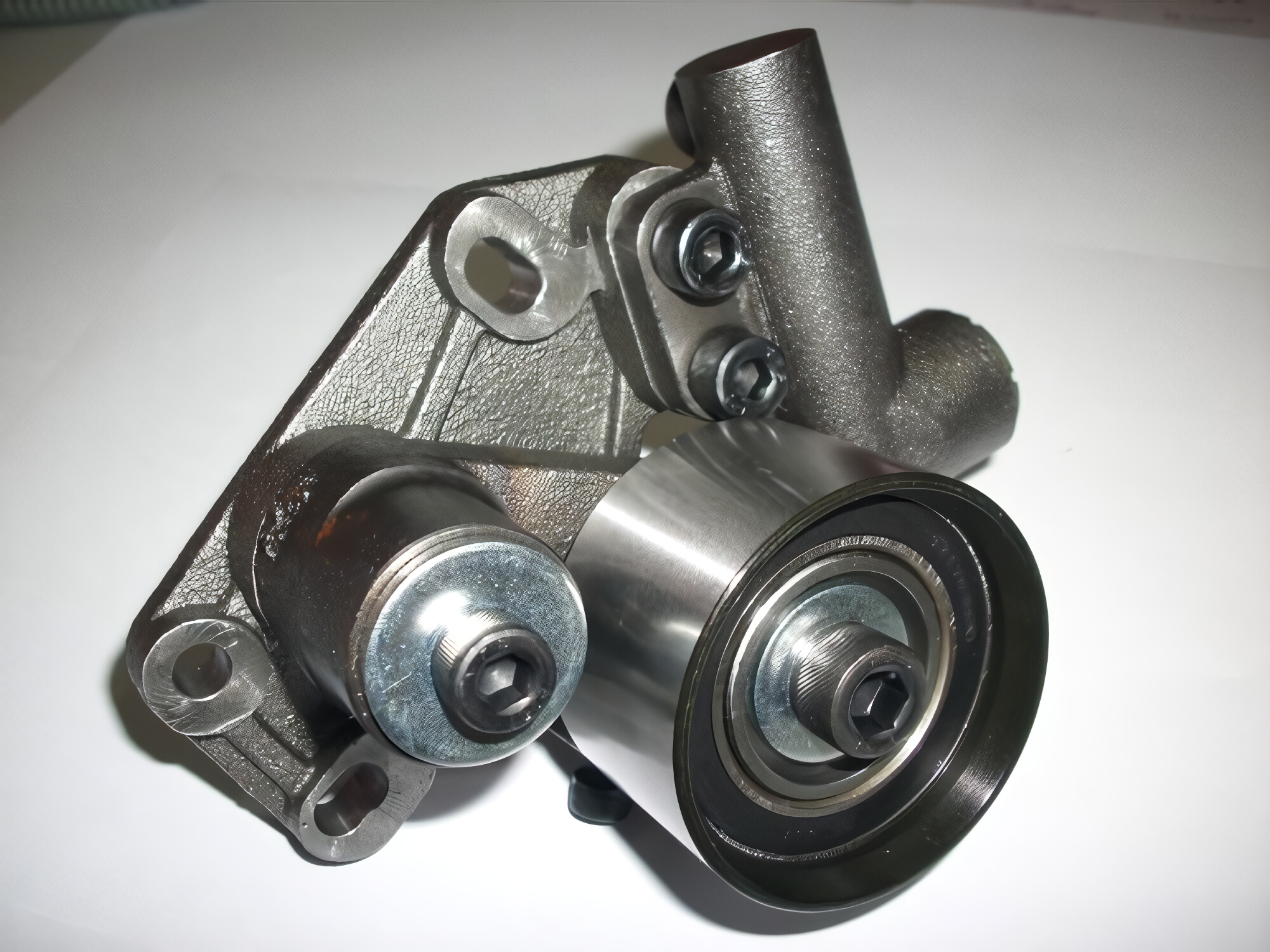
A failing hydraulic tensioner can sometimes produce a tapping or rattling noise during startup. The sound may disappear as engine speed increases, leading owners to ignore it.
That can be dangerous. Excessive belt slack can allow the belt to jump a camshaft tooth when the engine starts or abruptly changes speed.
Some hydraulic tensioners also require specific installation procedures. They may need to be compressed slowly in a vise and pinned before installation. Compressing one too quickly can damage the internal mechanism.
This means a failure shortly after a timing service is not always caused by the age of an original part. Incorrect installation of a new tensioner can produce similar consequences.
If the engine design uses a hydraulic timing tensioner, verify that it was included in the service. Replacing the belt and pulleys while leaving behind an old high-mileage hydraulic unit can preserve one of the timing system’s most important remaining failure points.
5. Camshaft Seals
The timing belt often runs directly in front of the camshaft seals, making timing-belt replacement an ideal opportunity to inspect them.
These seals keep engine oil from escaping where the camshafts pass through the cylinder head. As rubber ages and hardens, a seal may begin sweating oil before eventually developing a more significant leak.
The timing-belt job can reveal early leakage that was previously hidden behind plastic covers. If a technician ignores it, the seal may worsen during the following year.
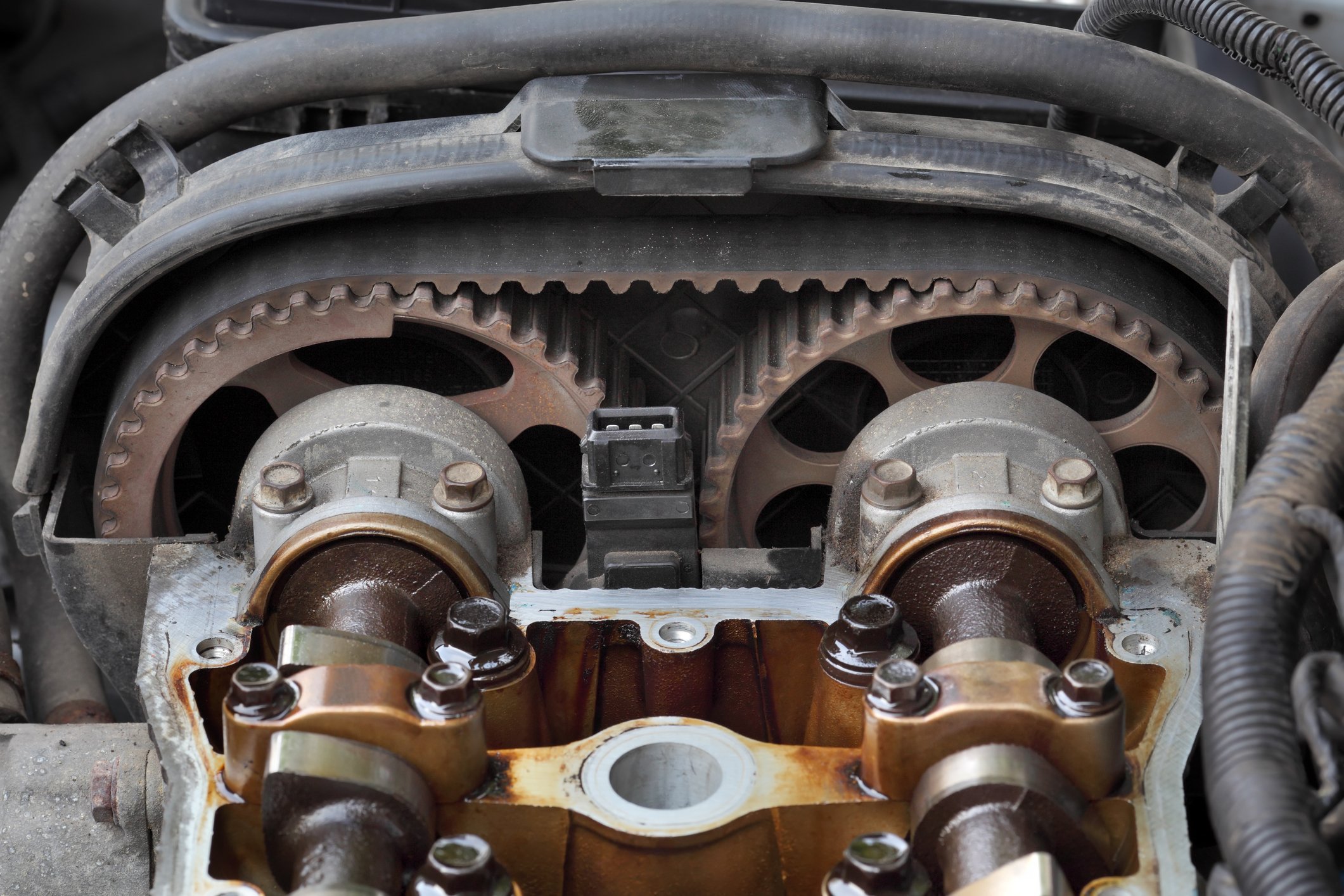
Oil leakage in this area is more than a cleanliness problem. Engine oil can contaminate the timing belt. Rubber compounds used in timing belts are designed to operate dry, and prolonged exposure to oil can weaken the belt or cause deterioration.
The unfortunate scenario is easy to imagine: an owner spends substantial money on a new timing belt, but an original camshaft seal begins leaking months later and coats that new belt with oil. The timing system may have to be opened again, and replacing the contaminated belt may be recommended.
Seal replacement can add labor to the original service because the camshaft sprockets may need to be removed. That is why some shops do not automatically replace dry seals.
Replacing every seal regardless of condition is not always necessary. A quality technician should inspect the engine design, mileage, leakage history, and manufacturer recommendations before deciding.
However, evidence of active oil leakage should not be ignored simply because the customer’s original complaint was “replace timing belt.” Fixing a questionable seal while the area is already disassembled can prevent another major labor bill later.
6. Front Crankshaft Seal
The front crankshaft seal is another inexpensive component located in an expensive place. It sits behind the crankshaft pulley and timing hardware on many engines, sealing the point where the crankshaft exits the front of the engine.
After years of heat and rotation, the seal’s lip can harden and wear. A small oil seep may initially be easy to ignore, but it can gradually become a significant leak.
Like camshaft-seal leakage, crankshaft-seal leakage can contaminate the timing belt. Depending on engine design, oil may spread across the lower timing cover before being distributed by the rotating crank sprocket.
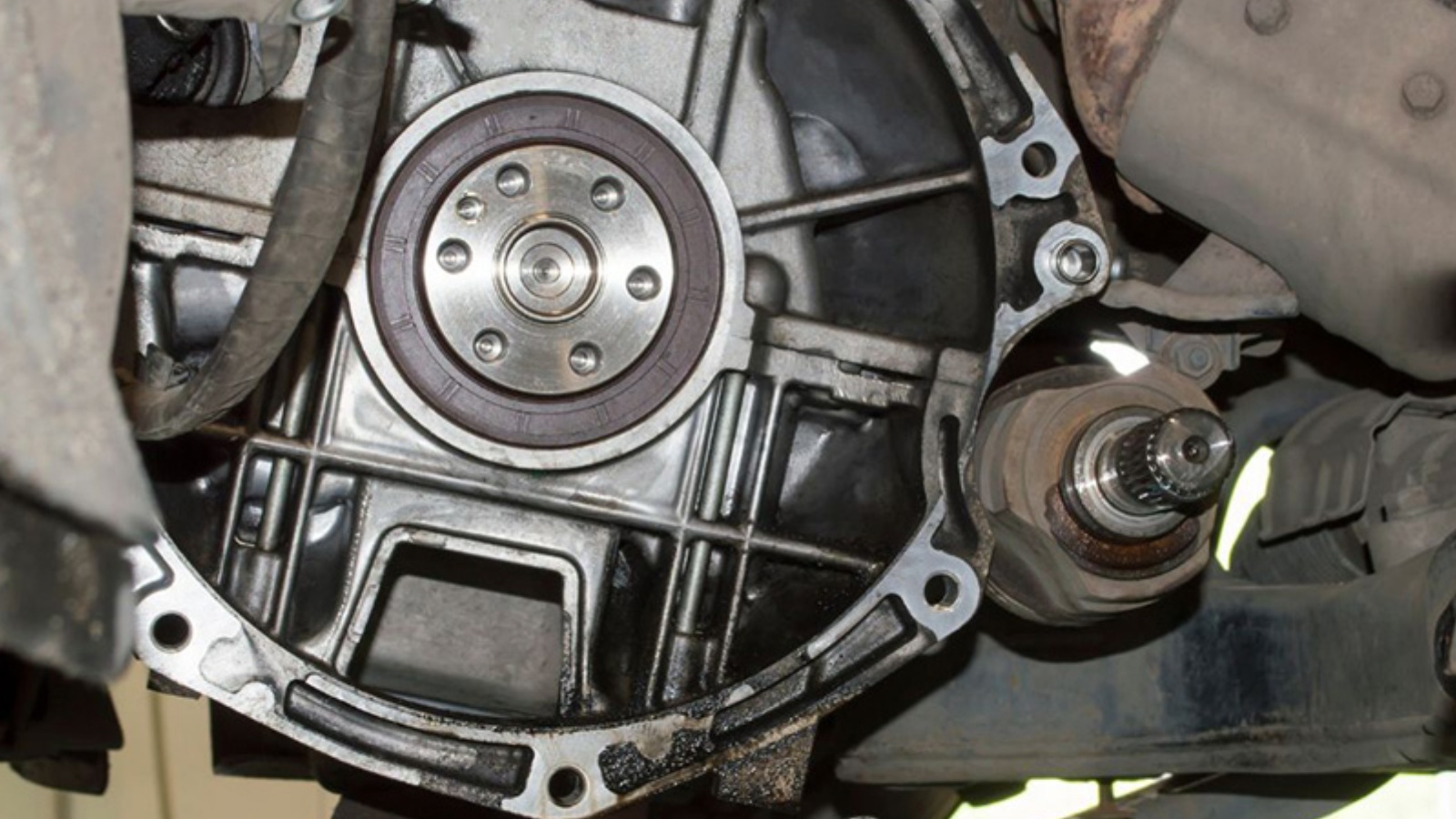
A leak can also be mistaken for an oil-pan or valve-cover problem because airflow carries oil downward and rearward while the vehicle is moving.
Replacing the front crank seal during timing-belt service requires judgment. If it is completely dry and the manufacturer does not recommend preventive replacement, disturbing an original seal unnecessarily can occasionally create problems of its own.
But if the seal is already wet, the timing-belt service is usually the best time to address it. Much of the access work has already been completed.
Installation quality matters. The new seal must enter the bore squarely and reach the specified depth. Damaging the sealing lip or scratching the crankshaft surface can produce a leak almost immediately.
An oil leak appearing shortly after timing-belt work therefore deserves investigation. It may be an original seal that was left in place, but it could also result from a new seal that was installed incorrectly. Either way, fixing it may require reopening much of the same area.
7. Accessory Belt and Tensioner
The accessory drive system is separate from the timing belt, but technicians often have to remove the serpentine belt and sometimes its tensioner to reach the timing covers.
That makes an aging accessory belt one of the easiest components to deal with during the main repair.
The serpentine belt drives equipment such as the alternator, air-conditioning compressor, power-steering pump on older vehicles, and sometimes the water pump. After thousands of miles, the belt can develop cracks, glazing, hardened ribs, or reduced grip.
The tensioner and idler bearings also wear.
If these old parts are simply reinstalled after the timing-belt service, they may become the next failure point. A slipping belt can create squealing, poor charging, reduced air-conditioning performance, or overheating if the accessory belt drives the water pump.
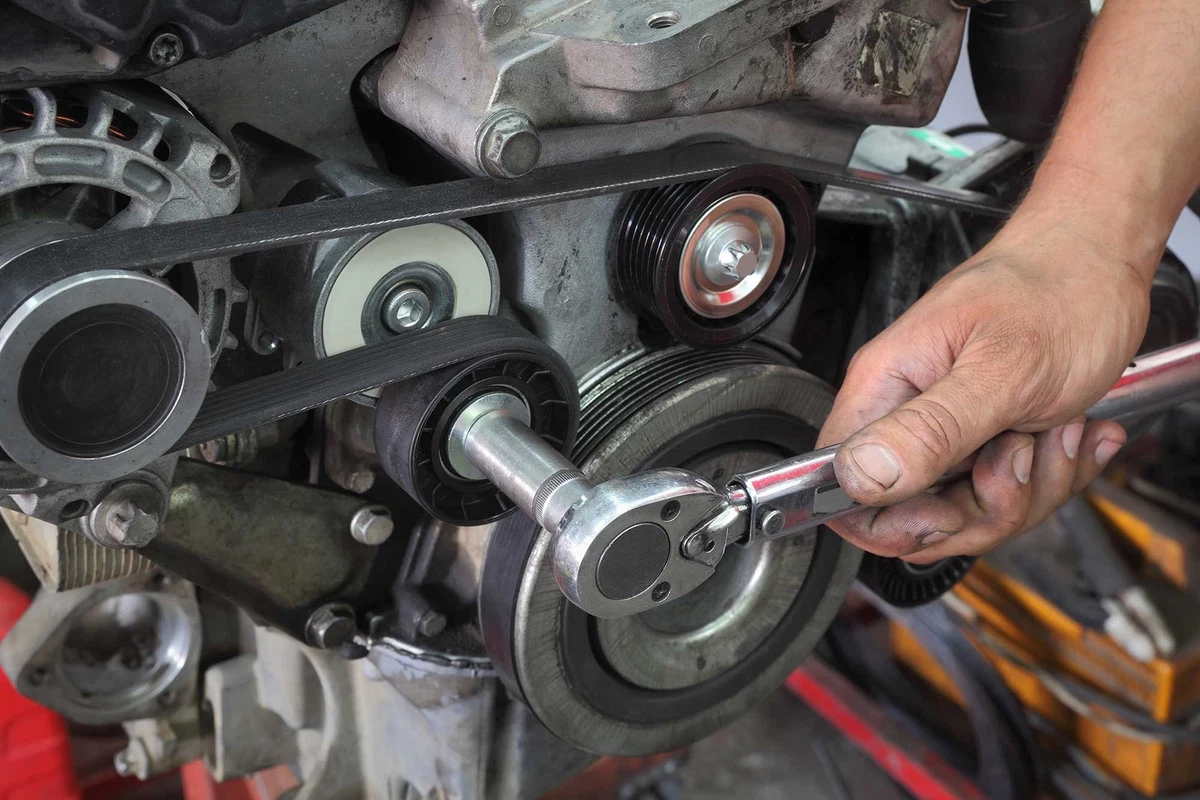
In certain engines, shredded accessory-belt material can create an even more serious problem. Pieces of belt may become trapped around the crank pulley or enter the timing-cover area. Although this is highly engine-specific, the possibility gives owners another reason to keep the external belt system in good condition.
The good news is that replacing the accessory belt while it is already removed usually adds little labor.
The tensioner requires more consideration because the part costs more, but excessive pulley play, weak spring pressure, bearing noise, or visible movement are strong reasons for replacement.
A new timing belt does not make the rest of the belt-driven systems new. If the accessory belt is almost the same age as the timing belt that just came off, reinstalling it simply delays an inexpensive maintenance item until another visit.
8. Thermostat and Cooling-System Components
A timing-belt service that includes water-pump replacement requires draining a significant portion of the engine coolant. That makes the repair a natural time to evaluate the thermostat and surrounding cooling-system components.
An old thermostat can continue working perfectly after the belt job, but it has accumulated the same years of heat cycles as the water pump. If it begins sticking afterward, the owner may initially suspect that something went wrong with the recent timing service.
A thermostat stuck closed restricts coolant circulation and can rapidly cause overheating. One stuck open may prevent the engine from reaching normal operating temperature, leading to weak cabin heat and reduced efficiency.
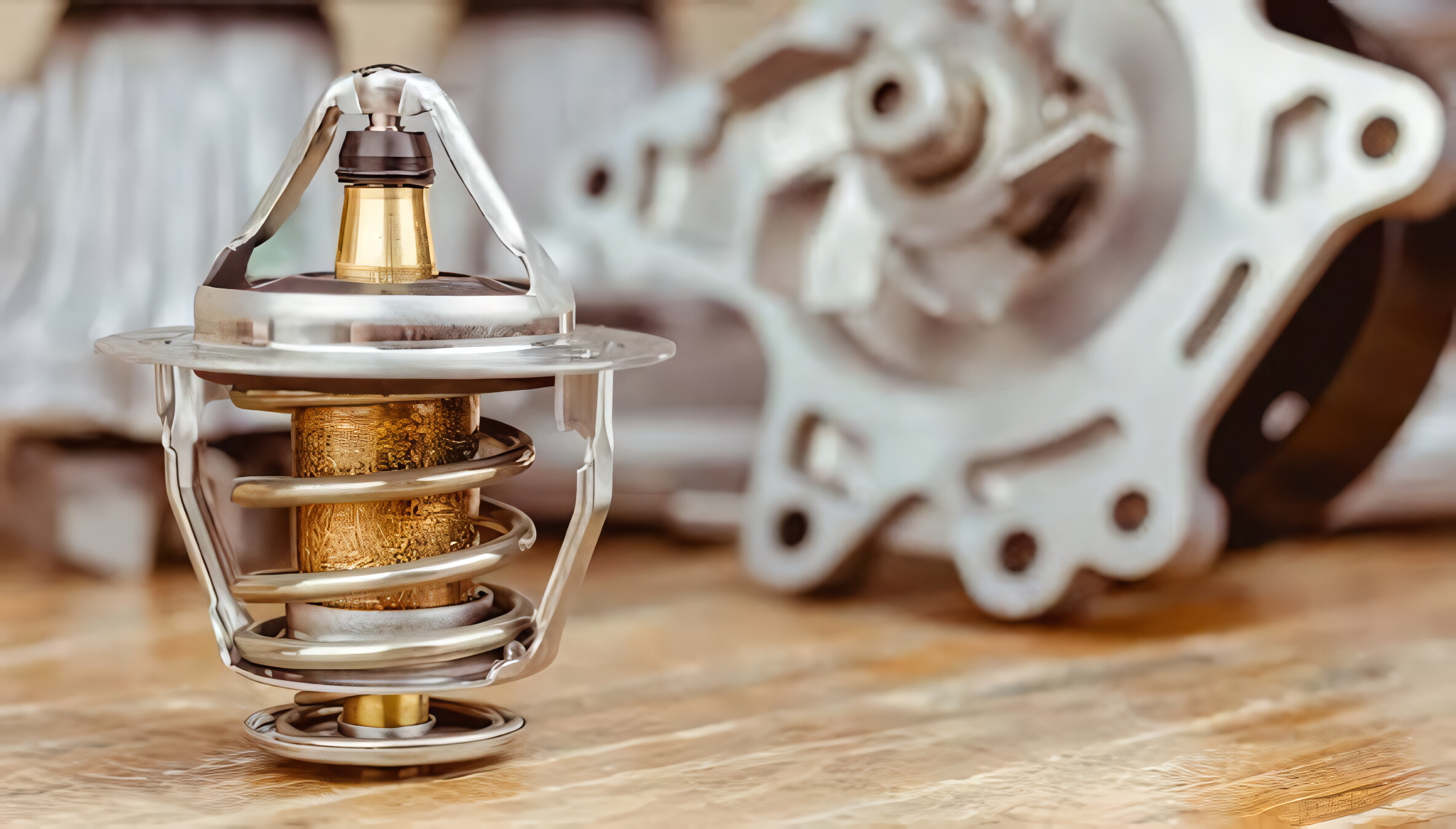
Cooling hoses, plastic fittings, expansion tanks, and radiator caps can also become brittle with age. Disturbing hoses during water-pump or timing-belt work may reveal cracking that was previously hidden.
Proper bleeding is equally important. Some cooling systems can trap air after being drained. An air pocket may cause fluctuating temperature readings, poor heater performance, or overheating shortly after the repair even though no new component has failed.
This is why a professional timing-belt job involving the cooling system should include correct coolant refill and bleeding procedures.
Replacing every cooling-system component preventively is unnecessary. The sensible approach is inspection.
If the thermostat is difficult to access independently and is already approaching its scheduled service life, replacing it during overlapping labor can make financial sense. The same applies to obviously swollen or cracked hoses.
Ignoring deteriorated cooling components can be particularly expensive because overheating is capable of damaging the cylinder head and head gasket, the very kind of repair that makes a timing belt seem cheap by comparison.
9. Engine Mount
Timing-belt access on many transverse-engine vehicles requires removal of at least one engine mount. The engine may need to be supported while the mount and bracket are taken out so technicians can reach the timing cover.
That creates an excellent opportunity to inspect the mount closely.
Engine mounts contain rubber or, in some designs, hydraulic fluid. Their job is to support the powertrain while isolating vibration from the passenger compartment.
By the time a timing belt is due, the original mount may have endured a decade or more of heat, torque movement, and road vibration. Rubber can crack or separate, while hydraulic mounts may begin leaking.
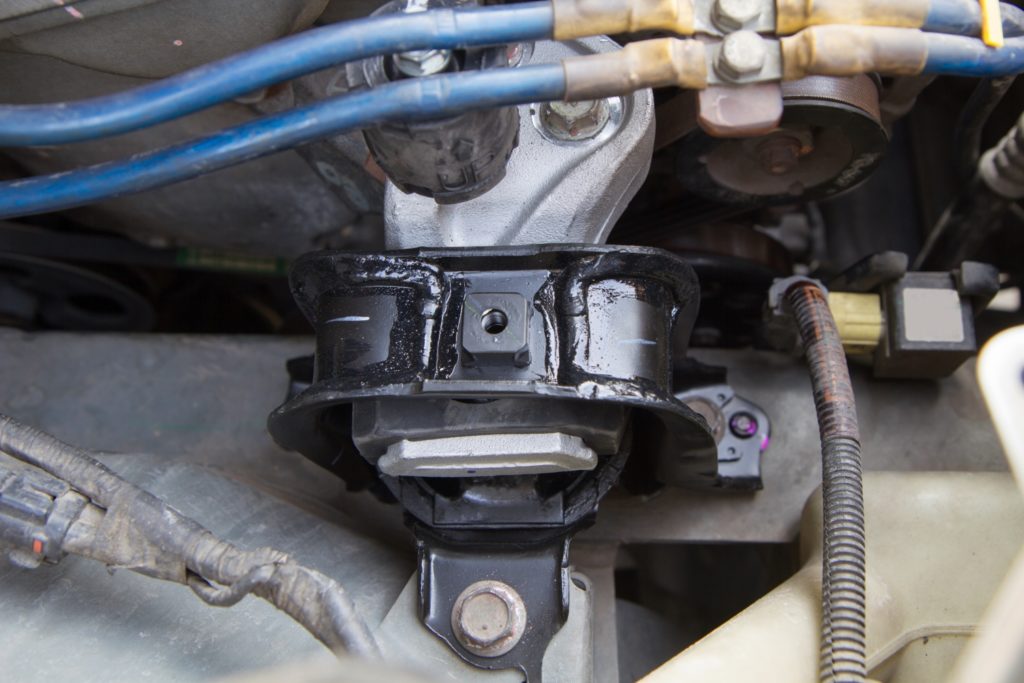
An aging mount can survive being removed and reinstalled yet fail not long afterward. Drivers may then notice additional vibration at idle, clunks when shifting between Drive and Reverse, or excessive engine movement during acceleration.
Installation technique matters too. Mount bolts need to be tightened correctly, and some fasteners are designed for one-time use. If a mount is installed under unusual preload or its hardware is not torqued properly, new vibration or noise can appear after the service.
Not every timing-belt job requires replacing an engine mount. Unlike tensioners and idlers, mounts normally are not considered automatic components of a timing-belt kit.
But the technician should inspect any mount that has to come off.
Replacing a visibly cracked mount while access is already available can save labor later. At minimum, documenting the mount’s condition gives the owner advance warning that another age-related repair may be approaching.
10. Crankshaft Pulley or Harmonic Balancer
The crankshaft pulley, often incorporated into a harmonic balancer, frequently has to be removed before the lower timing cover and timing belt can be accessed.
On many engines, the harmonic balancer consists of an inner metal hub and an outer pulley ring bonded together with a rubber isolator. That rubber absorbs crankshaft vibration and helps protect the accessory drive.
After years of heat and chemical exposure, the rubber can crack, swell, or separate.
A worn balancer might look acceptable during a quick inspection but begin wobbling after the timing service. Drivers may notice accessory-belt movement, squealing, unusual vibration, or a knocking sound near the crankshaft pulley.
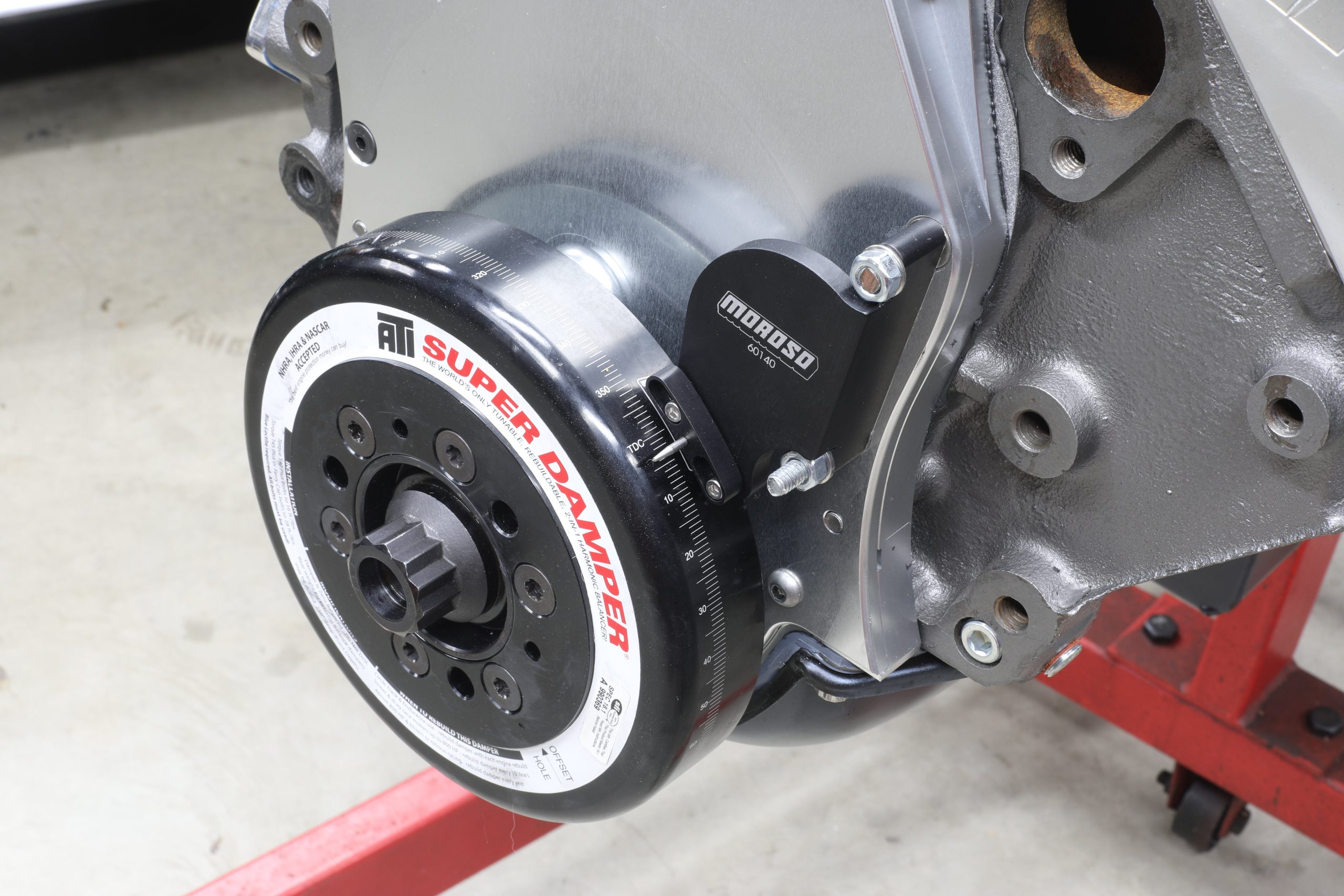
Severe separation can allow the outer ring to shift relative to the inner hub. That can throw off timing marks used for service, damage accessory belts, or allow the pulley to contact nearby components.
The crankshaft bolt is another critical detail. Many engines specify very high torque, special tightening sequences, or replacement of a torque-to-yield crank bolt after removal. Incorrect tightening can create serious problems ranging from pulley movement to damaged crankshaft components.
A crank pulley should therefore receive more attention than simply being removed and thrown back on the engine.
If the rubber isolator shows cracking, separation, or visible distortion, the timing-belt job may be the most economical time to replace it. The technician already has the pulley removed, eliminating much of the future labor.
A timing-belt service should ideally leave the front of the engine ready for another full belt interval, not surrounded by original components already approaching failure.
Also read: 10 Cars That Outsold Every Rival for a Full Decade