Truck advertisements love maximum towing numbers, but those figures rarely tell the whole story. The biggest rating usually applies to one carefully configured combination of engine, axle ratio, drivetrain, cab, bed, tires, and towing package.
Load the truck with passengers, choose an off-road trim, or climb a steep mountain, and the usable capability can look considerably different. Independent towing tests expose factors that a single brochure number cannot show.
That does not mean manufacturers are necessarily publishing false ratings. The trucks below can legally tow their specified loads when properly configured. The difference appears when real examples are subjected to steep grades, altitude, braking tests, payload limits, and heavy trailers.
TFLtruck’s Ike Gauntlet is especially revealing: an eight-mile, 7-percent interstate grade climbing to 11,158 feet. These ten trucks demonstrate why serious buyers should look beyond the biggest towing number printed in an advertisement.
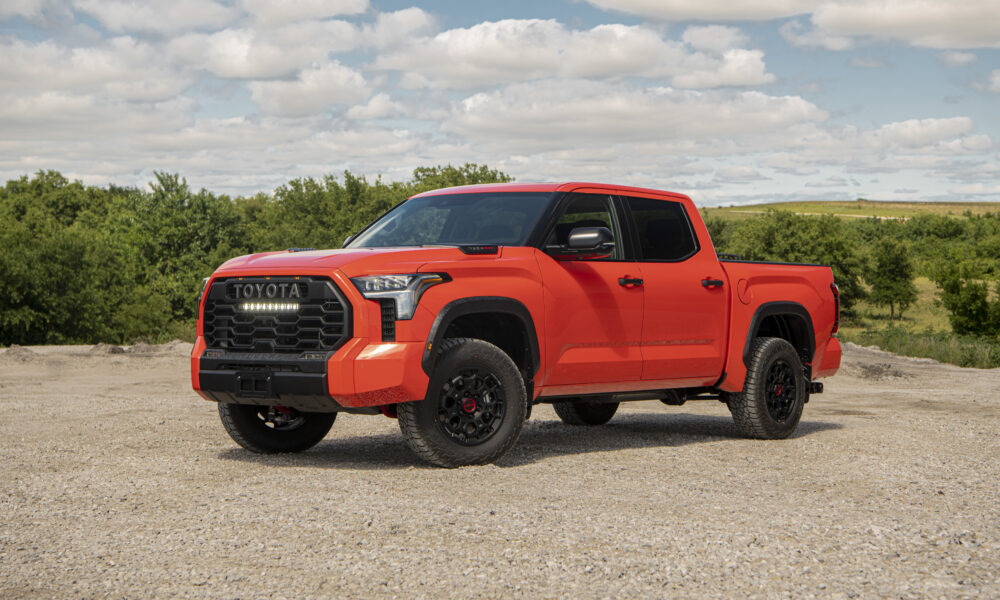
1. Toyota Tundra i-FORCE MAX
The Toyota Tundra’s hybrid powertrain looks ideal for towing on paper. In the 2026 comparison tested by TFLtruck, the Tundra produced 437 horsepower and 583 lb-ft of torque, while that specific crew-cab 4×4 carried an 11,020-pound tow rating. Instead of testing it empty or with a lightweight recreational trailer, the reviewers attached approximately 9,500 pounds and headed for the Ike Gauntlet.
The engine was not the biggest problem. The Tundra completed the uphill section in 8:03 and maintained the target speed remarkably well. What stood out was everything surrounding the headline tow number.
The truck required 13 brake applications downhill, squatted four inches under the trailer, and returned only 3.5 mpg during the climb. Its as-tested payload rating was also just 1,290 pounds, the lowest of the four full-size pickups in that comparison.
That payload figure is important because trailer tongue weight, passengers, tools, and cargo all consume payload before the trailer reaches the advertised maximum. A heavy travel trailer could therefore push the truck against its payload limit while remaining below its theoretical tow rating.
The Tundra proved it could move serious weight. The test also showed why an 11,000-pound rating should not automatically be interpreted as an ideal everyday trailer weight. In mountain towing, braking, payload, and fuel consumption become just as important as horsepower.
- Engine: 3.4L Twin-Turbo V6 i-FORCE MAX Hybrid
- Horsepower: 437 hp
- Torque: 583 lb-ft
- Length: 233.6 inches (CrewMax, 5.5-ft bed)
- Width: 80.2 inches
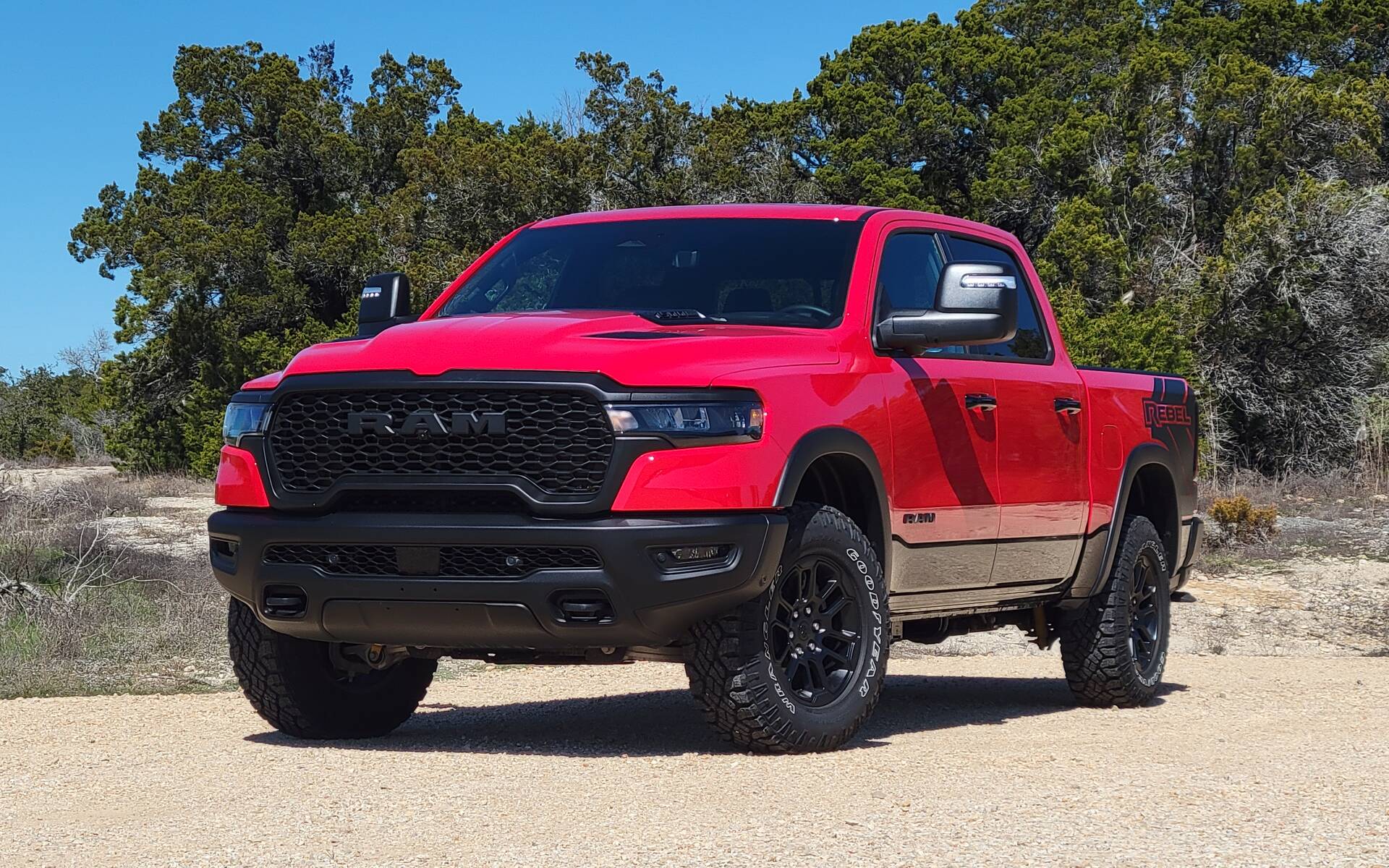
2. Ram 1500 Hurricane
Ram’s twin-turbocharged 3.0-liter Hurricane inline-six brings huge performance to the half-ton class. The version included in TFLtruck’s 2026 comparison produced 420 horsepower and 469 lb-ft of torque. Its specific configuration carried an 11,200-pound tow rating, considerably more than the 9,500-pound trailer used during the mountain test.
Going uphill, there was little evidence that the engine was intimidated. The Ram produced the fastest run of the four trucks at 7:50 and recorded 3.9 mpg. Its straight-line pulling ability was therefore impressive. The downhill numbers told a different story. Reviewers recorded 15 brake applications, the highest total in the comparison, while suspension squat reached four inches.
That distinction matters to buyers who judge towing capability mainly by torque and maximum trailer weight. Getting a trailer moving is only one part of towing. The truck must also control that weight on descending grades, remain stable, accommodate tongue weight, and deal with heat over long distances.
The tested Ram had 1,757 pounds of payload, giving it more breathing room than some rivals, but a large trailer can consume much of that capacity quickly once passengers and cargo are added.
So the Hurricane Ram does not lack muscle. If anything, its engine is one of its strengths. The real-world test simply demonstrates that an 11,200-pound number cannot describe how the complete truck behaves when thousands of pounds are pushing it downhill.
- Engine: 3.0L Twin-Turbo Hurricane Inline-Six
- Horsepower: 420 hp
- Torque: 469 lb-ft
- Length: 232.9 inches (Crew Cab, 5-ft 7-in bed)
- Width: 82.1 inches
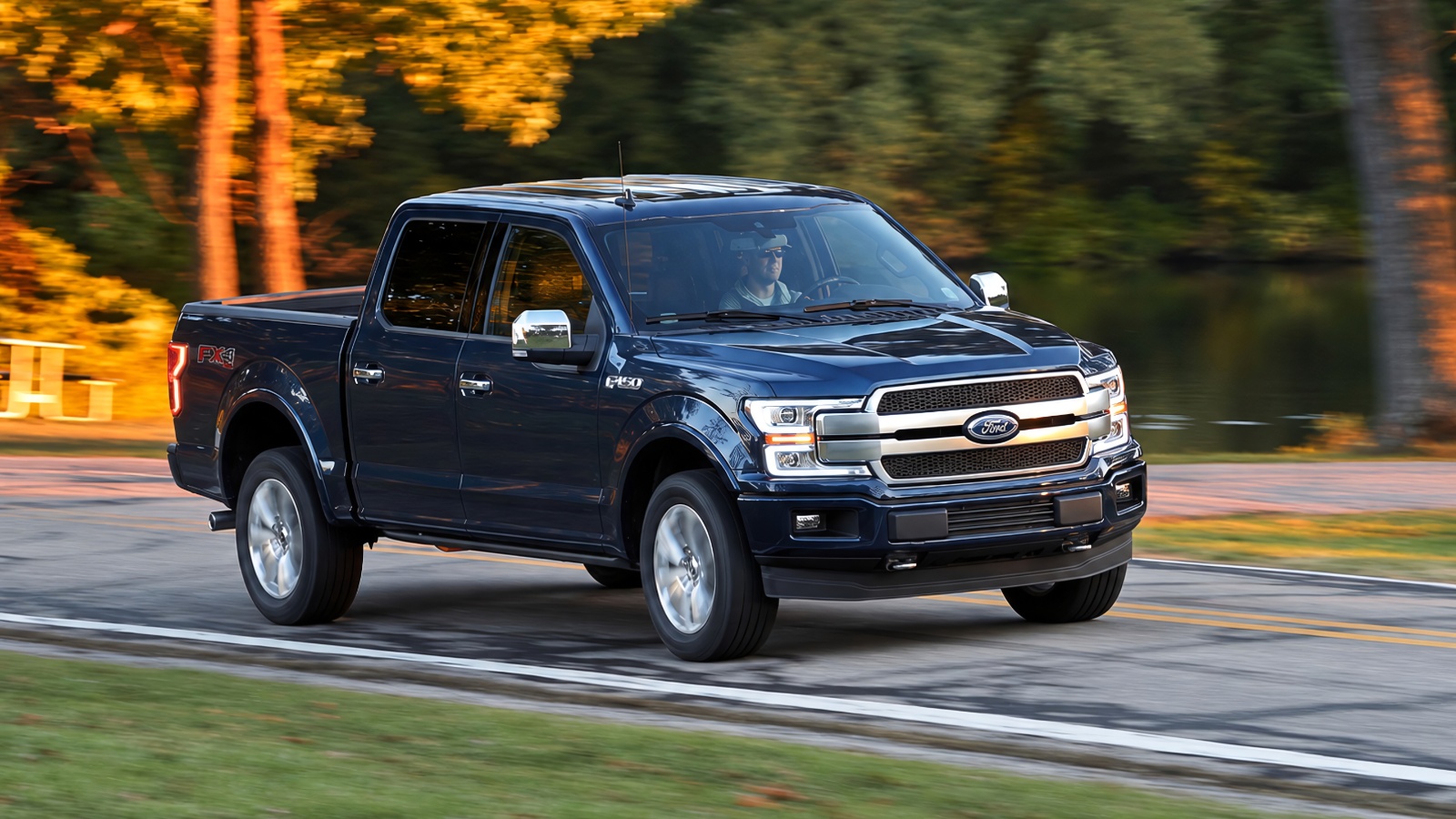
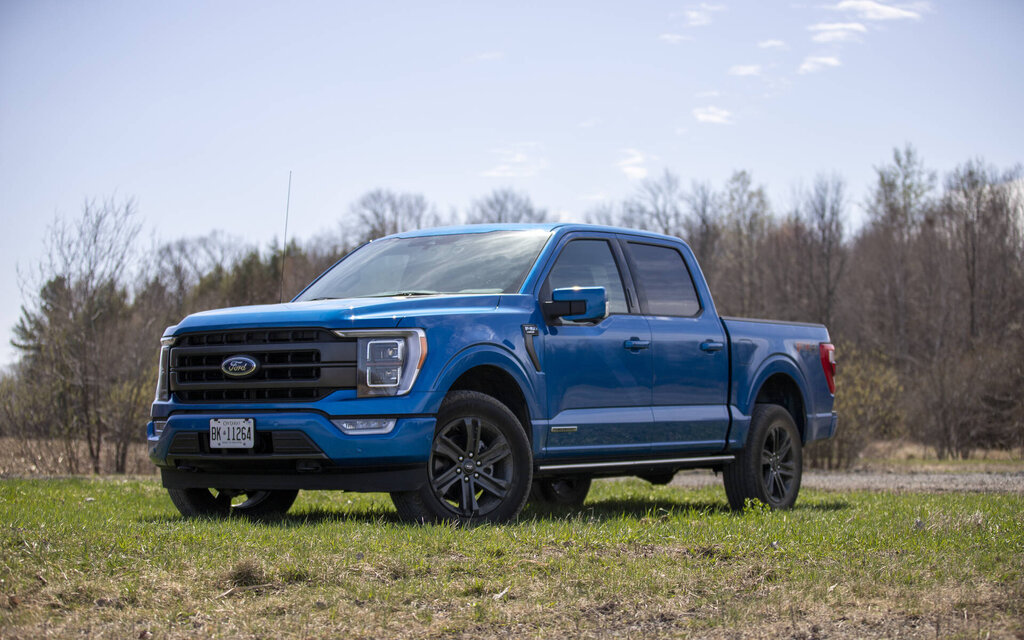
3. Ford F-150 PowerBoost
Few half-ton trucks combine power and efficiency technology quite like the Ford F-150 PowerBoost hybrid. In TFLtruck’s 2026 heavy-trailer comparison, the PowerBoost produced 430 horsepower and 570 lb-ft of torque. The specific four-wheel-drive truck used in the test was rated to pull 10,800 pounds, while the test trailer weighed about 9,500 pounds.
The F-150 handled the uphill portion convincingly. It reached the top in 7:59 and accelerated from 35 to 60 mph in 12 seconds, the quickest acceleration result of the four trucks. Those numbers support Ford’s reputation for strong towing performance.
Real-world compromises appeared elsewhere. The truck required 14 brake applications while descending, squatted 3.75 inches under load, and its computer reported only 3.5 mpg during the uphill run. Its payload rating in the tested configuration was 1,430 pounds.
That last figure can become the hidden limitation. A trailer approaching 10,000 pounds could place roughly four figures of tongue weight on the hitch depending on trailer type and loading. Add several adults, luggage, accessories, and bed cargo, and available payload disappears rapidly.
The F-150 did not fail the towing test; it remained stable and maintained highway speed. Instead, the test illustrates the difference between being capable of pulling a rated trailer and having large reserves while doing it. Buyers regularly towing near five figures should calculate payload and actual configuration ratings rather than relying on Ford’s biggest advertised F-150 number.
- Engine: 3.5L Twin-Turbo PowerBoost Full Hybrid V6
- Horsepower: 430 hp
- Torque: 570 lb-ft
- Length: 232.0 inches (SuperCrew, 5.5-ft bed)
- Width: 79.9 inches
4. Chevrolet Silverado 1500 TurboMax
The Chevrolet Silverado 1500 is unusual because buyers can tow substantial weight using its 2.7-liter turbocharged four-cylinder TurboMax engine. In a 2026 TFLtruck test, a Silverado 1500 RST equipped with the engine produced 310 horsepower and 430 lb-ft of torque. That particular truck carried a 9,000-pound tow rating, and reviewers hooked up an 8,000-pound trailer.
That is roughly the type of combination that makes the Silverado’s specifications look impressive. A four-cylinder pickup pulling several tons would have sounded improbable not long ago. Yet mountain testing highlighted where displacement and vehicle control still matter.
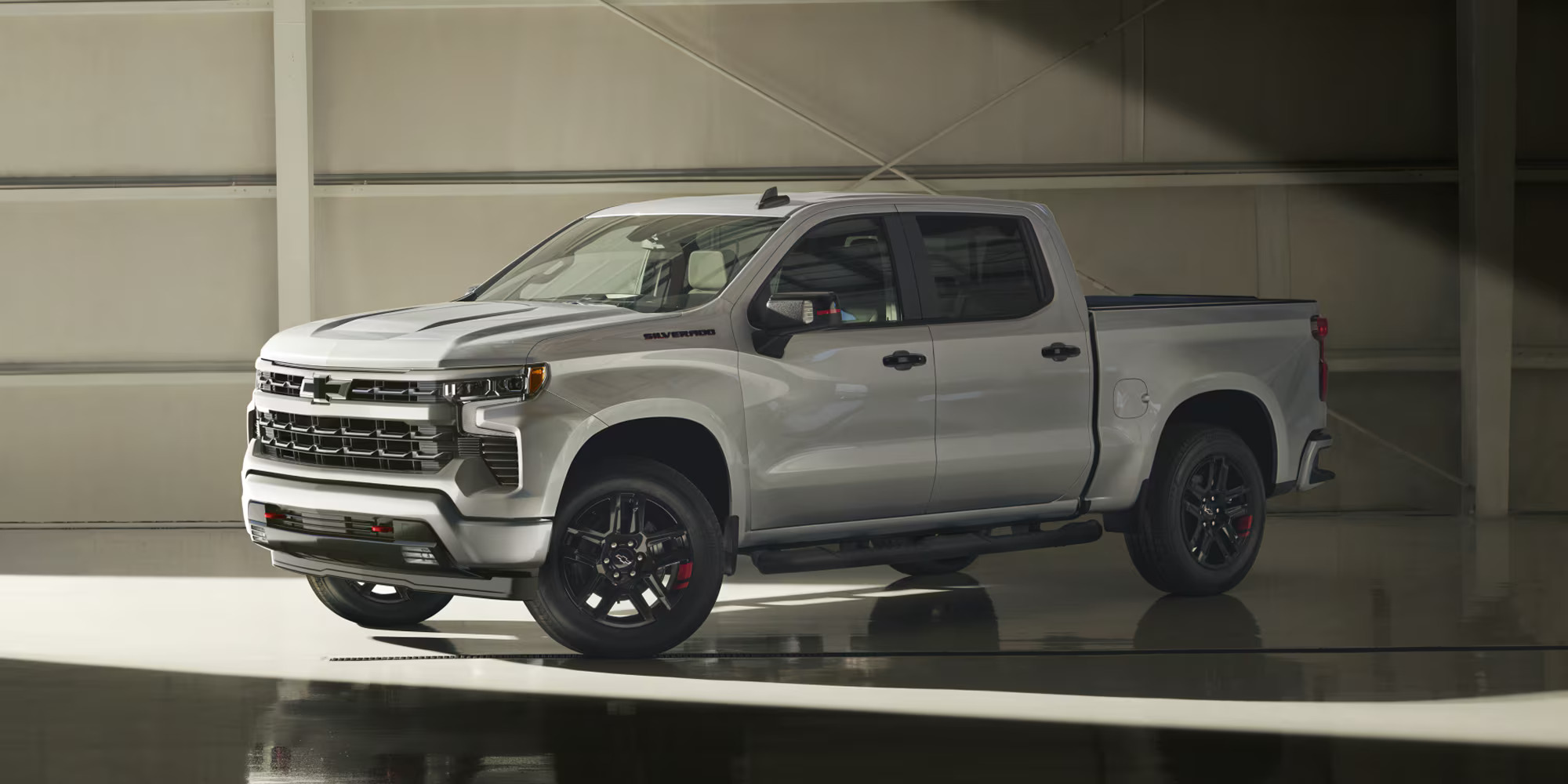
During the downhill portion of the Ike Gauntlet, the Silverado required 13 brake applications. TFLtruck described that result as less impressive than its benchmark for a strong half-ton downhill performance. After comparing it with a Ford F-150 V8, the reviewers concluded that the TurboMax was not as capable as the larger V8 for mountain towing, even though both trucks could pull the trailer confidently.
That is an important distinction. Maximum towing capacity establishes what a properly configured truck is rated to handle; it does not guarantee that every engine will feel equally relaxed doing it.
For occasional flat-land towing, the TurboMax’s torque can be perfectly useful. For repeated mountain trips near the upper end of its rating, the real-world test suggests buyers should consider additional performance margin rather than simply asking whether the trailer weighs less than 9,000 pounds.
- Engine: 2.7L TurboMax Turbocharged Inline-Four
- Horsepower: 310 hp
- Torque: 430 lb-ft
- Length: 232.9 inches (Crew Cab, Short Bed)
- Width: 81.2 inches excluding mirrors
5. GMC Canyon AT4X
The GMC Canyon has one of the strongest gasoline engines in the midsize class. Its 2.7-liter TurboMax four-cylinder produces 310 horsepower, and GMC offers substantial towing capability in appropriately configured versions. The off-road-oriented Canyon AT4X, however, illustrates why trim selection can dramatically change what a headline towing figure means.
During TFLtruck’s 2026 midsize Ike Gauntlet comparison, the AT4X joined the Honda Ridgeline and Jeep Gladiator while pulling approximately 5,000 pounds. The Canyon completed the uphill section in 7:59.30 and showed 6 mpg on its trip computer, so power was not an issue. But it needed eight brake applications on the downhill portion. By comparison, both the Ridgeline and Gladiator required only three.
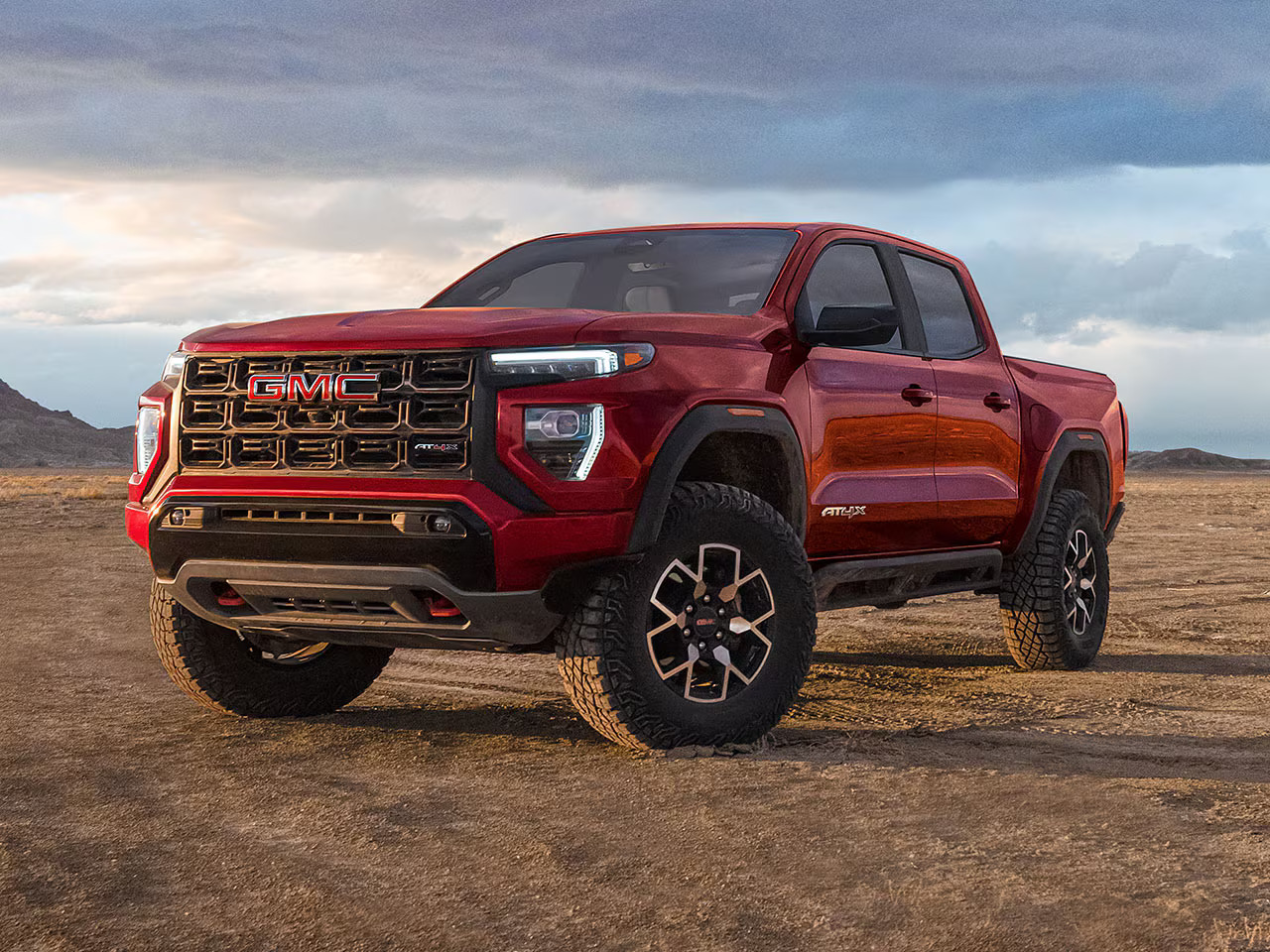
The AT4X is built partly around off-road capability, and that specialization matters. Tires, suspension tuning, ground clearance, vehicle weight, and configuration can all change how a truck feels with a large trailer.
TFLtruck still named the Canyon AT4X the strongest towing option of the three, pointing to its torque, ride quality, and greater towing capability. The comparison therefore reflects different priorities rather than a clear failure by the other models.
A buyer seeing the highest Canyon towing figure might assume every version performs identically. It does not. The real truck sitting at the dealership has its own payload and tow limits, and an off-road trim may sacrifice some capacity or control compared with a configuration optimized specifically for towing.
- Engine: 2.7L TurboMax Turbocharged Inline-Four
- Horsepower: 310 hp
- Torque: 430 lb-ft
- Length: 213.2 inches
- Width: 72.4 inches
6. Jeep Gladiator
The Jeep Gladiator looks like a traditional body-on-frame pickup, and certain versions carry impressive midsize towing ratings. But the Gladiator lineup varies significantly by trim. In TFLtruck’s 2026 test, the Willys ’41 version was rated for a maximum of roughly 6,000 pounds rather than the higher figures available elsewhere in the lineup. Reviewers attached a trailer weighing approximately 5,000 pounds.
Its 3.6-liter Pentastar V6 produced 285 horsepower and 260 lb-ft of torque. On the downhill section, the Gladiator performed well, needing only three brake applications. Once the road pointed uphill, however, the powertrain’s limitations became much easier to see.
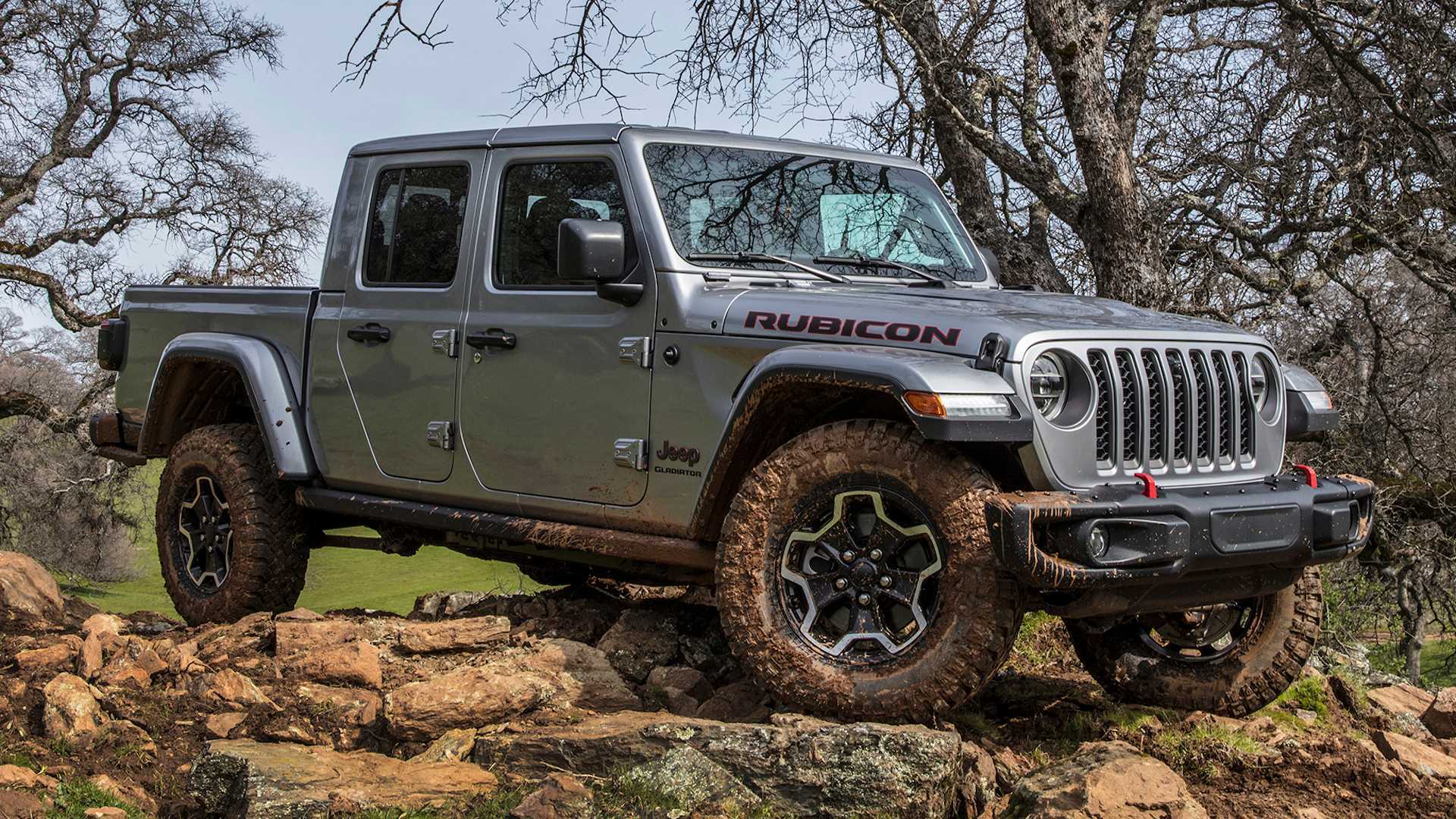
The Jeep required 8:57.78 to complete the uphill section, almost a full minute slower than the Honda Ridgeline and GMC Canyon. Reported economy fell to 5.2 mpg. TFLtruck specifically noted that the Gladiator struggled during the climb.
Nothing in that result means the truck exceeded its legal rating. The trailer was still below the tested Gladiator’s maximum. It demonstrates instead how a vehicle can meet a published towing specification yet feel much closer to its performance ceiling on steep grades.
The naturally aspirated V6 does not receive the high-altitude boost compensation of a turbocharged engine. For owners towing boats or campers near sea level, that may matter less. Buyers regularly crossing mountain passes should recognize that being rated for 6,000 pounds and maintaining effortless performance with 5,000 pounds are two different standards.
- Engine: 3.6L Naturally Aspirated Pentastar V6
- Horsepower: 285 hp
- Torque: 260 lb-ft
- Length: 218.0 inches
- Width: 73.8 inches
7. Ford Ranger EcoBoost
Ford rates properly equipped Ranger pickups to tow as much as 7,500 pounds, a number that puts the midsize truck remarkably close to older full-size pickups. Both the 2.3-liter four-cylinder and available 2.7-liter V6 versions have been offered with that maximum when equipped with the appropriate Class IV towing hardware.
The rating does not mean a heavy trailer suddenly feels light. During a real-world towing evaluation of the previous 2.3-liter EcoBoost Ranger in Colorado, TFLtruck tested the truck under load at roughly a mile above sea level. The Ranger had around 1,400 pounds of payload, while its maximum trailer rating was 7,500 pounds. The best towing 0-to-60-mph result recorded in the test was 18.92 seconds.
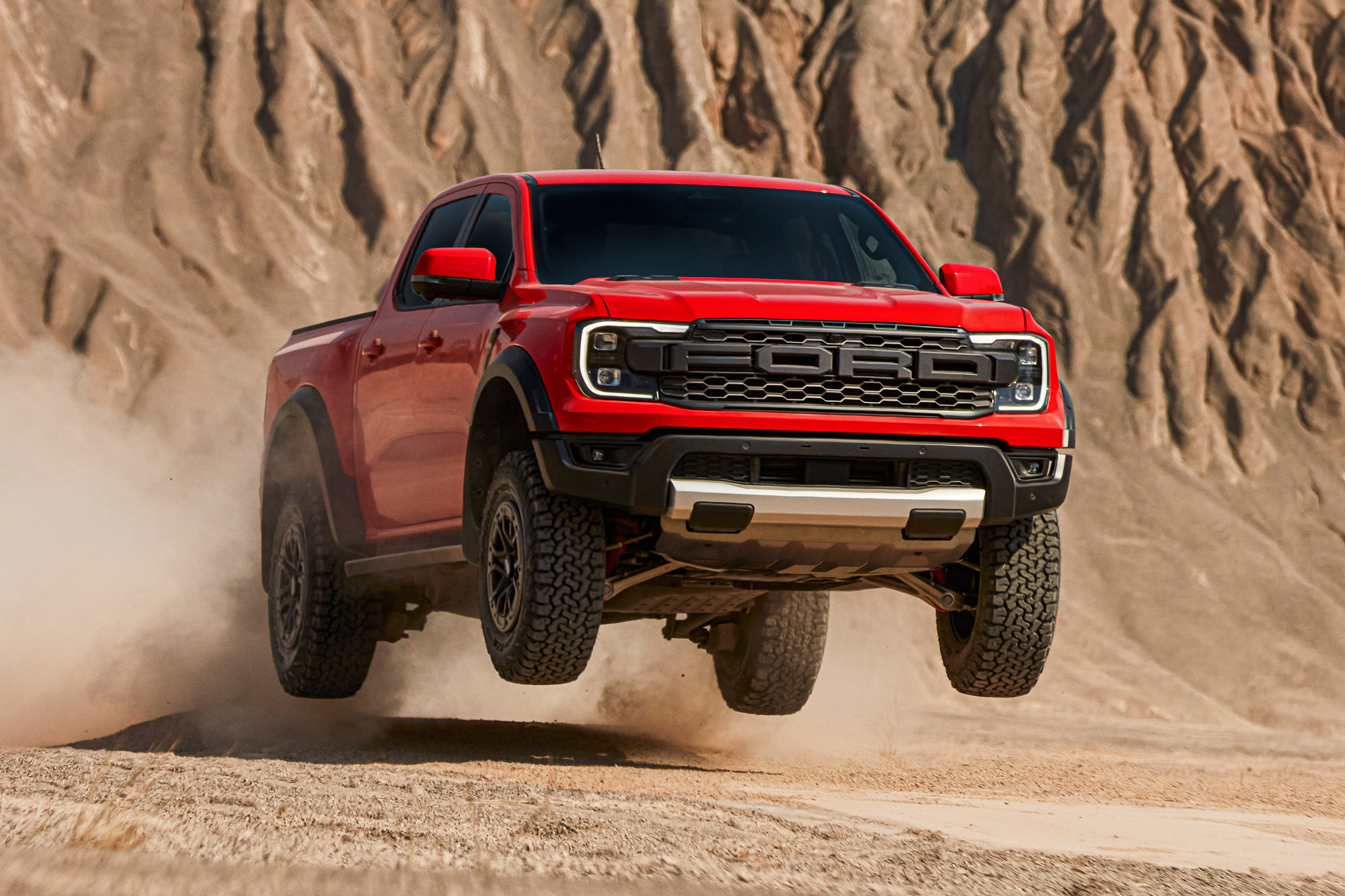
That is not necessarily poor performance for a heavily loaded midsize pickup. It does reveal what disappears from a tow-capacity advertisement: acceleration reserve.
Drivers merging onto fast highways, climbing grades, or passing while towing need to consider more than whether the trailer falls below a number on the door sticker. The closer a trailer gets to maximum capacity, the less performance margin a smaller truck may have.
Ford’s newer 2.7-liter EcoBoost improves the situation with 315 horsepower and 400 lb-ft of torque, although Ford still gives properly equipped 2.3- and 2.7-liter versions the same 7,500-pound maximum. That alone shows why equal tow ratings do not necessarily mean equal real-world towing experiences.
- Engine: 2.7L Twin-Turbo EcoBoost V6
- Horsepower: 315 hp
- Torque: 400 lb-ft
- Length: 210.6 inches
- Width: 75.1 inches
8. Ford Maverick 4K Tow Package
The Maverick is one of the smallest pickups sold in America, yet Ford has offered versions capable of towing 4,000 pounds with the appropriate 4K Tow Package. That is twice the rating of basic configurations and makes the compact truck attractive to buyers pulling small campers, utility trailers, or recreational equipment.
TFLtruck tested a 2022 AWD Maverick with the 2.0-liter turbocharged engine and 4K package on the Ike Gauntlet using a trailer weighing exactly 4,000 pounds. The truck therefore had no artificial safety cushion in trailer weight.
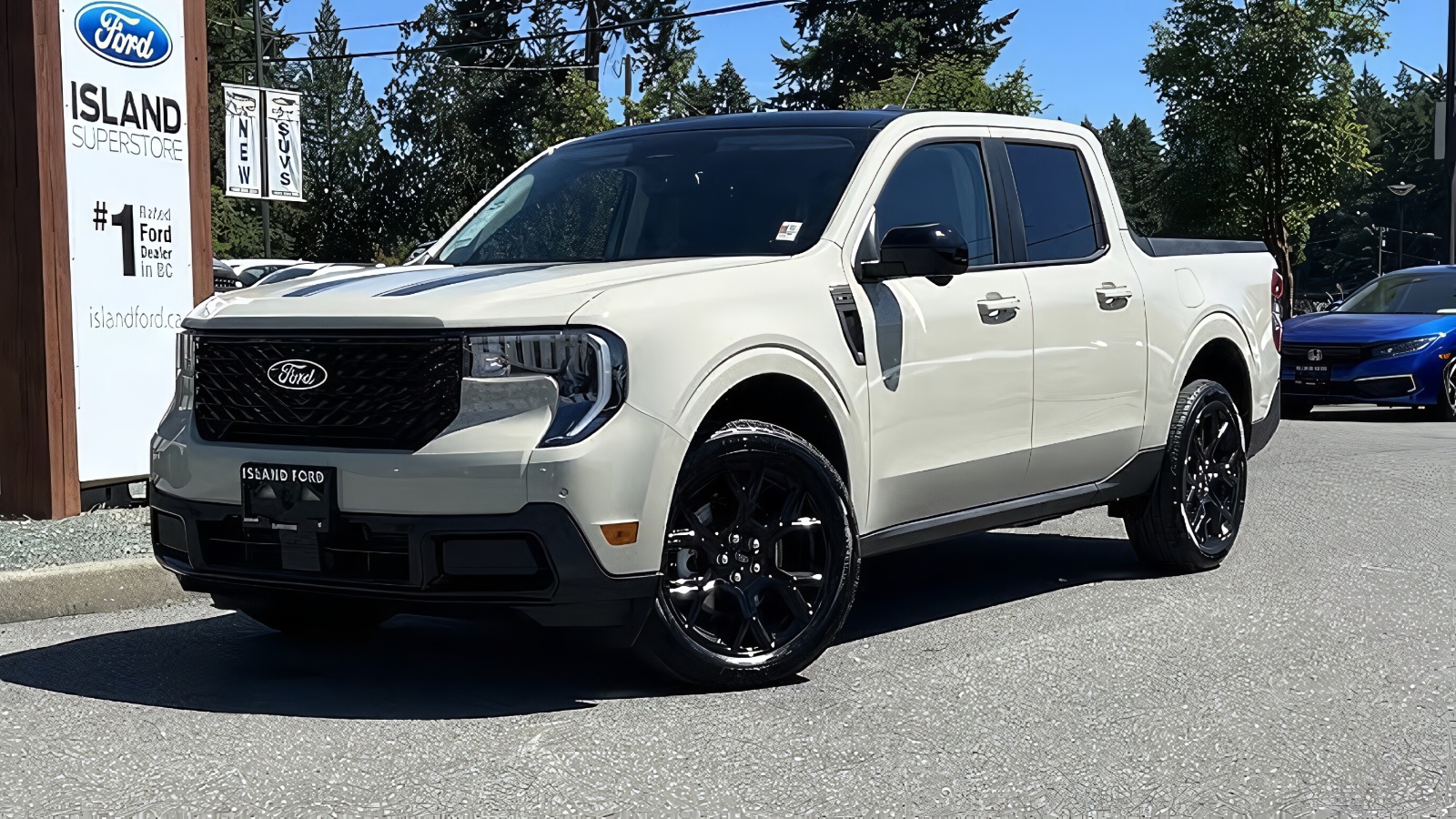
Remarkably, it completed the climb in approximately the benchmark eight-minute time and did so without overheating or suffering a serious mechanical issue. That proves the rating was not empty marketing. The revealing part came on the descent, where the Maverick required nine brake applications to maintain the test’s speed target.
A 4,000-pound rating can consequently be both legitimate and misleading when interpreted without context. The compact chassis is still controlling a trailer that approaches the truck’s own size and mass.
Tongue weight also counts against payload, while passengers and bed cargo further reduce the margin. Buyers who tow 4,000 pounds several times per year may find the package remarkably capable. Someone expecting to tow at the limit every weekend should consider whether a larger truck would provide more braking, cooling, stability and payload reserve. Maximum capacity describes a boundary, not necessarily the comfortable working weight.
- Engine: 2.0L EcoBoost Turbocharged Inline-Four
- Horsepower: 250 hp
- Torque: 277 lb-ft
- Length: 199.7 inches
- Width: 72.6 inches
9. Hyundai Santa Cruz Turbo AWD
The Hyundai Santa Cruz Turbo AWD is another compact pickup with a surprisingly large advertised towing figure. Properly configured turbocharged AWD versions have been rated to tow as much as 5,000 pounds. The 2022 model tested by TFLtruck used a 2.5-liter turbocharged four-cylinder producing 281 horsepower and 311 lb-ft of torque.
For the Ike Gauntlet comparison, however, reviewers used a 4,000-pound trailer, already 1,000 pounds below the truck’s stated maximum. The Santa Cruz still completed the uphill run around the eight-minute benchmark and did not overheat, demonstrating impressive power for such a compact vehicle.
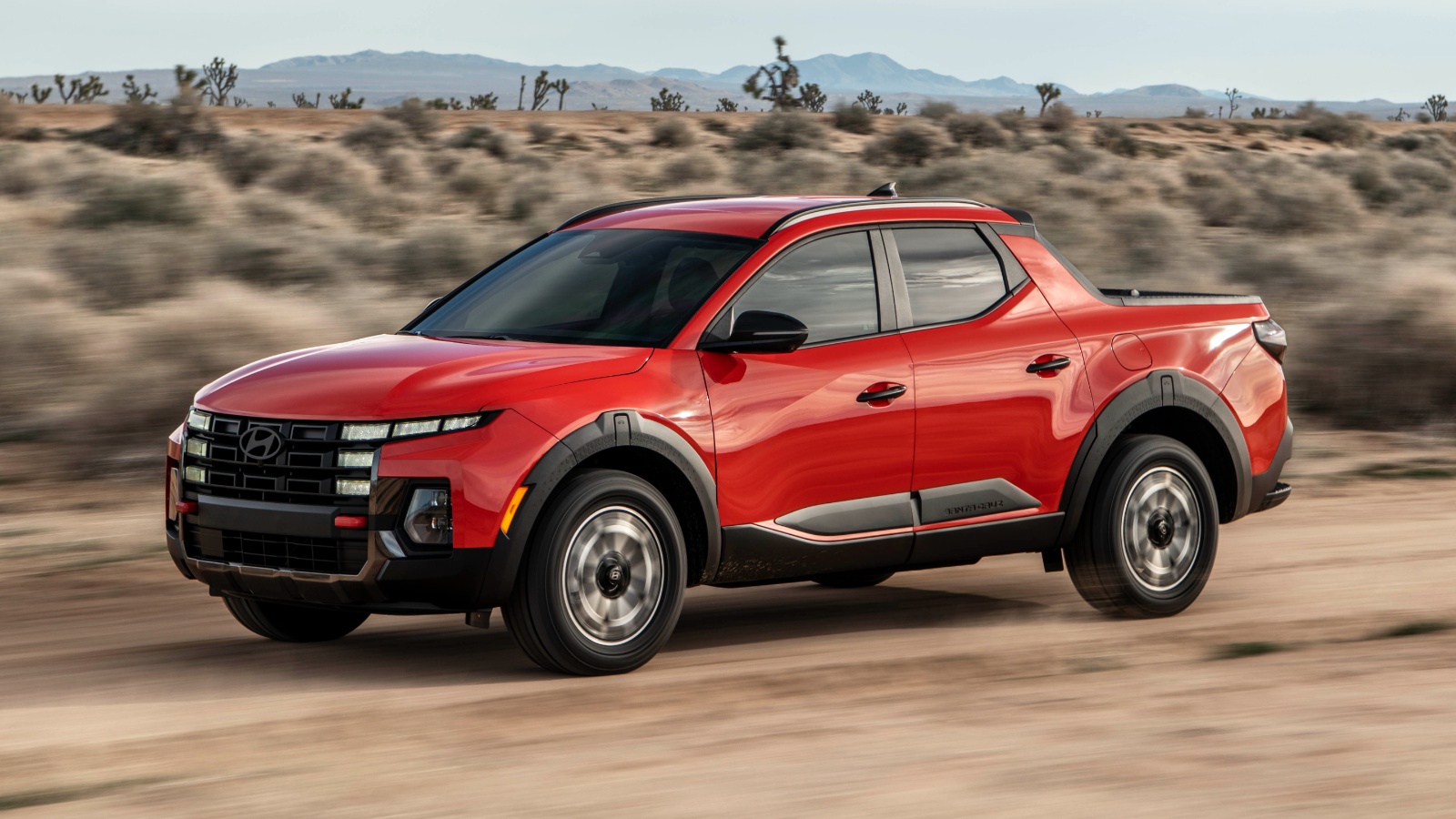
The descent was more revealing. It needed 12 brake applications, compared with nine for the Maverick using the same trailer. TFLtruck described the Santa Cruz’s downhill result as the worst of the two compact pickups, although its loaded ride was considered more comfortable.
This is exactly where the 5,000-pound headline needs context. A vehicle can possess enough engine power to move a trailer while still requiring considerably more driver involvement when gravity starts pushing that trailer downhill.
The Santa Cruz remains useful for boats, lightweight campers and recreational trailers. But a buyer planning to sit near 5,000 pounds regularly should account for tongue weight, passengers, cargo and terrain. The test suggests its maximum is best viewed as the outer edge of capability rather than proof that a 5,000-pound trailer will feel effortless under every condition.
- Engine: 2.5L Turbocharged GDI/MPI Inline-Four
- Horsepower: 281 hp
- Torque: 311 lb-ft
- Length: 195.7 inches
- Width: 75.0 inches
10. Ram 2500 Power Wagon
Seeing “2500” on the side of a pickup can create expectations of enormous towing capacity, especially when other Ram heavy-duty configurations approach 20,000 pounds. The Power Wagon is the exception because it is engineered primarily for serious off-road use. Its softer, articulation-focused suspension and gasoline Hemi powertrain reduce its towing ceiling considerably.
The 2026 Tradesman-based Power Wagon tested by TFLtruck used a 6.4-liter Hemi V8 producing 405 horsepower and 429 lb-ft of torque. Its stated towing capacity was approximately 10,900 pounds, nearly half what some other Ram 2500 configurations can handle.
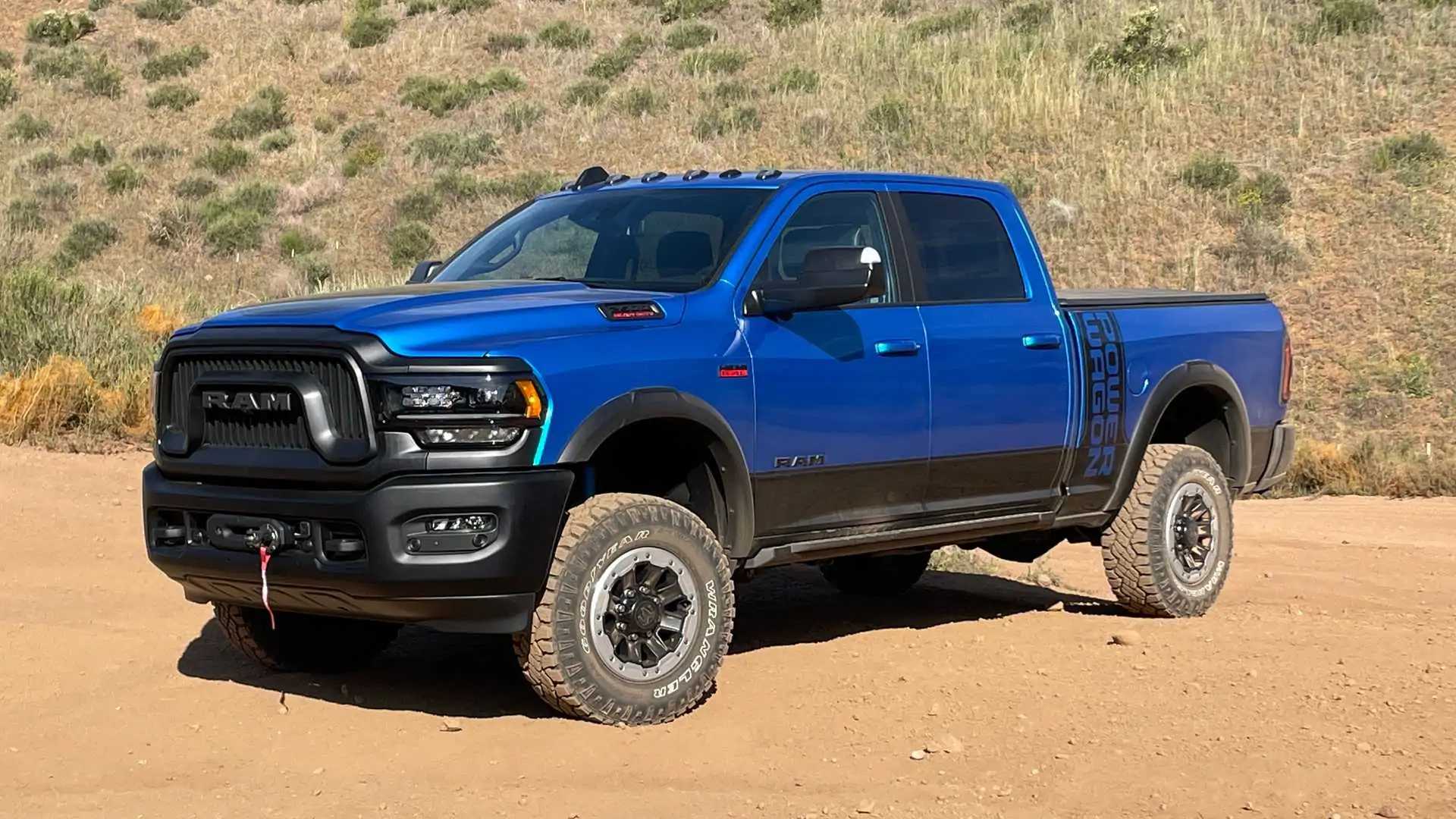
Reviewers attached an approximately 11,000-pound trailer carrying a skid steer, effectively placing the truck at its limit. Downhill performance was respectable, requiring five brake applications, and the truck remained stable. However, TFLtruck noted substantial suspension squat.
Going uphill exposed the workload more clearly. The Power Wagon completed the climb in 8:20.73 and reported only 3.2 mpg. The reviewers noted that diesel heavy-duty trucks typically managed roughly another mile per gallon during comparable climbs.
The Power Wagon therefore demonstrates the biggest problem with manufacturer towing headlines: model names alone mean very little. A Ram 2500 can be an enormous tow rig or a specialized off-roader with much lower capacity.
For buyers, the lesson is simple. Check the exact truck’s door labels, payload, hitch limits and configuration before assuming it can tow what another version of the same model advertises.
- Engine: 6.4L Naturally Aspirated HEMI V8
- Horsepower: 405 hp
- Torque: 429 lb-ft
- Length: 238.8 inches
- Width: 79.1 inches