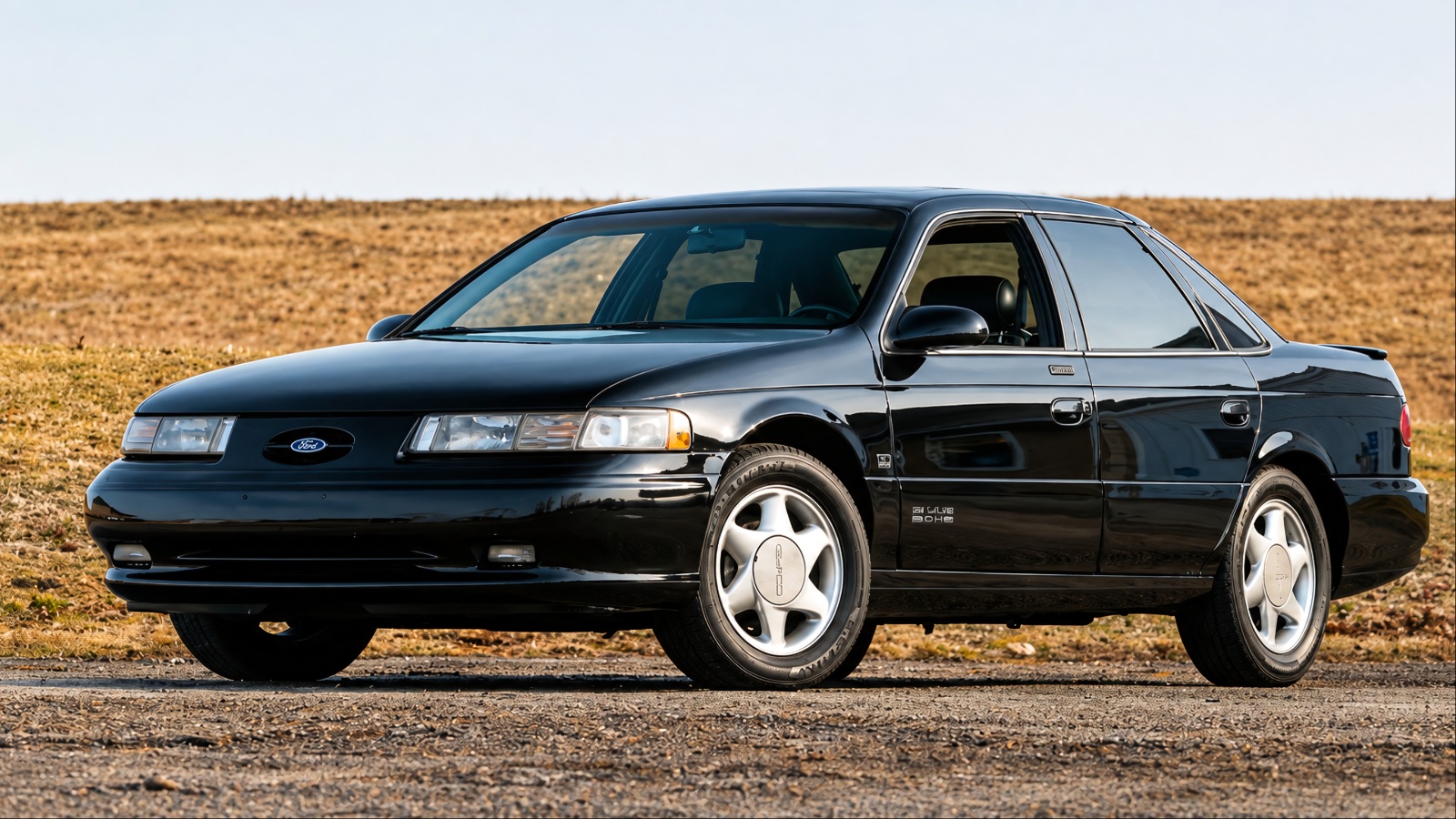
In the late 1980s, the Ford Taurus was about as far removed from a performance car as a family sedan could be. It was front-wheel drive, designed for comfortable transportation and aimed at buyers who wanted practicality rather than speed.
Then Ford quietly put a radically different engine under its hood and created the Taurus SHO, a sedan that could embarrass much more expensive performance cars while looking surprisingly ordinary.
The formula was unusual enough to sound like a corporate accident. Ford paired its mainstream Taurus with a 3.0-liter, 24-valve V6 developed and built by Yamaha, connected it to a five-speed manual transmission, and gave the car a chassis capable of handling the extra performance.
The result was 220 horsepower in a four-door family sedan that weighed around 3,350 pounds. More remarkable was the engine’s willingness to rev. Car and Driver reported that the Yamaha-developed V6 had a 7,300-rpm rev limit, although the engine itself was capable of revving higher.
The publication noted that the limit was imposed not because the internal engine components could not withstand higher speed, but to protect the accessory drive system.
That made the first Taurus SHO one of the strangest sleepers of its era. It looked sufficiently close to an ordinary Taurus that it could disappear into suburban traffic, but under hard acceleration it behaved like something Ford had no business putting into a family sedan.
Yamaha Gave the Taurus an Engine Nobody Expected
The story of the SHO engine began before Ford decided to put it into a Taurus. Yamaha had been involved with Ford in developing a high-performance V6 for the proposed GN34 sports-car project. When that program was abandoned, Ford’s Special Vehicle Operations team saw an opportunity to use the engine elsewhere.
According to Car and Driver’s history of the SHO, Ford’s SVO team pushed for the engine to be installed in a modified Taurus. It turned what could have been an abandoned performance-engine project into the powertrain for one of Ford’s most unexpected production cars.
The engine, often referred to internally as the “Shogun,” retained the 3.0-liter displacement of another Taurus V6, but mechanically the two engines were very different.
Car and Driver reported that the Yamaha unit used 24 valves, dual overhead camshafts, and high-performance hardware, sharing only a small number of components with the conventional 12-valve engine.
Its specifications were impressive for 1989. The V6 produced 220 horsepower at 6,000 rpm and 200 pound-feet of torque at 4,800 rpm. Power went through a Mazda-supplied five-speed manual transaxle to the front wheels.
The engine’s personality was particularly unusual. Most family-sedan buyers were accustomed to engines that delivered their strongest response at relatively modest engine speeds. The Yamaha V6 rewarded drivers willing to keep their foot down and let the tachometer climb.
Car and Driver reported that the engine could reportedly rev to approximately 8,500 rpm, although Ford limited the production engine to 7,300 rpm. That meant the SHO had an unusually high ceiling for a mainstream American sedan, and the engine’s sound and power delivery were a major part of its character.
Ford also had to deal with the basic problem of putting 220 horsepower through the front wheels. At the time, that was a serious engineering challenge. Front tires had to handle steering, braking, and acceleration while also dealing with the weight transfer that occurs under hard throttle.
Car and Driver’s original road test specifically highlighted the difficulty of transmitting that much power through the front axle. Ford’s engineers worked on issues such as torque steer and wheel hop, modifying the Taurus’s suspension and steering characteristics to make the SHO controllable. The effort paid off.
When Car and Driver tested the 1989 Taurus SHO, it reached 60 mph in 6.7 seconds and recorded a top speed of 143 mph. The magazine measured a 15.1-second quarter-mile and 0.82 g of grip on its skidpad.
Those numbers were remarkable for a four-door sedan costing less than $20,000. Car and Driver went even further in its contemporary assessment, calling the SHO the fastest four-door sedan it had tested in its class and noting that it could outperform considerably more expensive European performance sedans.
The magazine’s 1989 Ten Best coverage described the Taurus SHO as the fastest American-built four-door sedan at the time.
That performance was what made the SHO such an effective sleeper. Ford did not turn the Taurus into a flamboyant sports sedan with enormous wings or aggressive bodywork. The car remained recognizable as a Taurus.
There were visual differences, including unique wheels, body trim, and subtle exterior details, but the SHO did not scream about its mechanical transformation. A driver who did not know what the SHO badge meant could easily mistake it for another family Taurus. That was exactly the appeal.
The Sleeper Became a Performance-Sedan Benchmark
The first Taurus SHO was not simply quick for a Ford. It was competitive with serious sports sedans of the period.
Car and Driver’s 1989 test showed just how unusual the comparison was. The SHO combined its 220-horsepower V6 and manual transmission with seating for five and a useful trunk. It was a family sedan that could accelerate at a level normally associated with expensive performance machinery.
The formula became even more impressive when compared with the SHO’s price. Ford had essentially taken its mainstream family sedan and created a performance variant without transforming it into an entirely separate vehicle.
Car and Driver later recalled that the first SHO was capable of 6.4-second 0-to-60-mph acceleration in a 1992 test, showing that the basic combination remained competitive several years after its introduction.
The 1991 SHO was also tested at 6.6 seconds to 60 mph and 15.2 seconds through the quarter-mile. That version weighed about 3,459 pounds while retaining the 220-horsepower V6 and five-speed manual.
Ford eventually broadened the SHO’s appeal. For 1993, the company introduced an automatic transmission and paired it with a 3.2-liter version of the Yamaha V6. Car and Driver reported that the larger engine still produced 220 horsepower but increased torque to 215 pound-feet. The manual-equipped cars continued using the 3.0-liter engine.
That change was important because the original SHO’s manual-only configuration limited its potential audience. The car was fast, but buyers who wanted a comfortable automatic family sedan had no reason to choose it.
The automatic transmission made the SHO easier to live with, but it also changed some of what made the original special. The first-generation car’s combination of a high-revving Yamaha V6, five-speed manual, and understated styling created a particularly focused package.
Ford continued developing the SHO through several generations, but the formula gradually changed.
For 1996, the Taurus was redesigned with the controversial rounded styling that became one of the most recognizable designs of the 1990s. The SHO also changed dramatically. Instead of the Yamaha V6 and manual transmission, Ford used a 3.4-liter V8 producing 235 horsepower, paired exclusively with a four-speed automatic.
The V8 version was powerful, but it lacked the personality of the original. Car and Driver noted that the automatic transmission shifted just above 6,000 rpm despite the engine’s 7,000-rpm redline, and the new SHO was less overtly driver-focused than its predecessor.
Ford eventually discontinued the SHO after the 1999 model year. Car and Driver reports that only 3,368 examples were sold for 1999, illustrating how far the model’s popularity had fallen from the excitement surrounding the original.
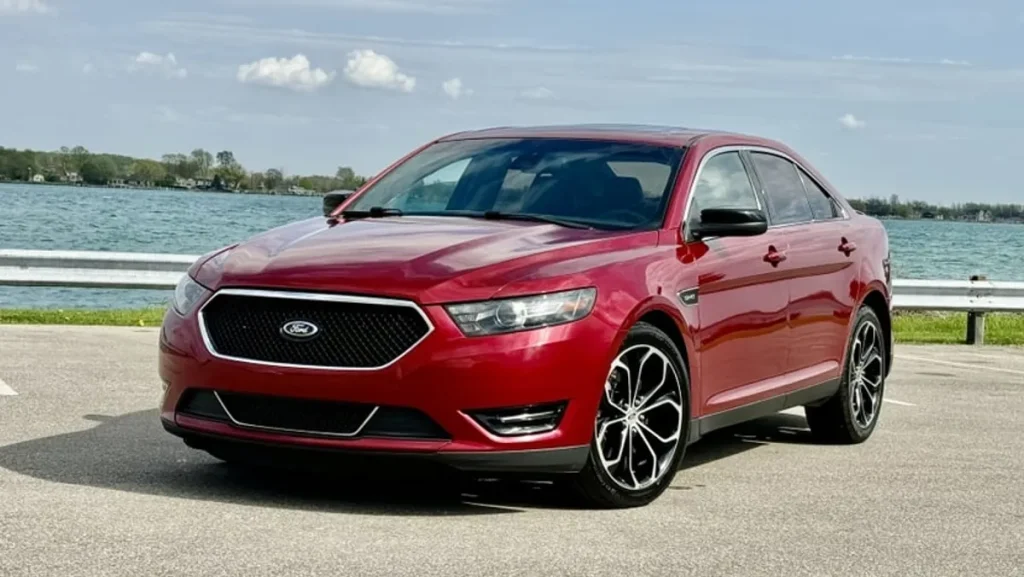
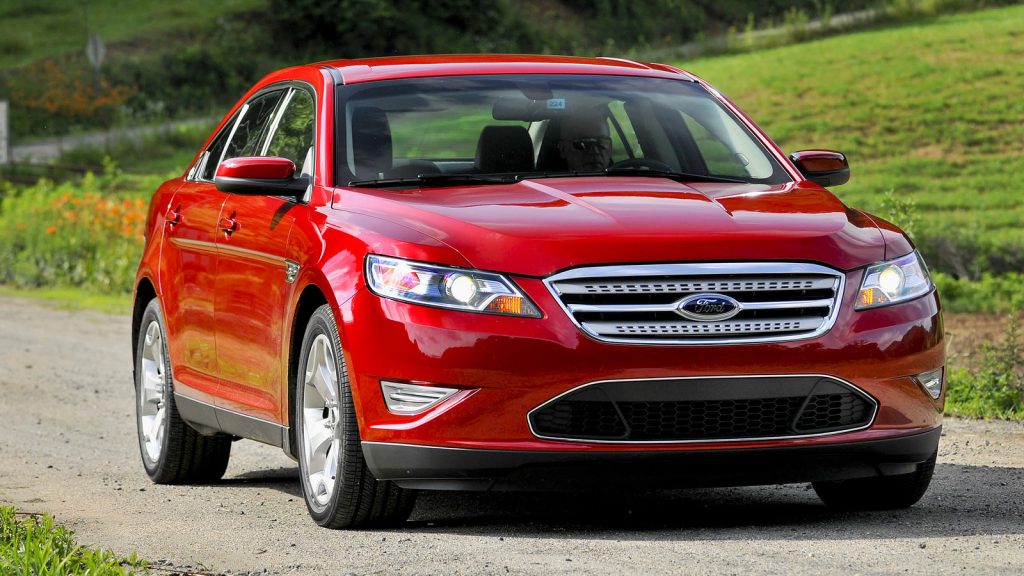
The SHO name eventually returned for 2010, but the philosophy was different. The new Taurus SHO used a twin-turbocharged 3.5-liter EcoBoost V6 producing 365 horsepower and standard all-wheel drive. Car and Driver recorded a 5.2-second 0-to-60-mph time for the 2010 model.
That later car was substantially faster, but it could not recreate the particular charm of the original. The first SHO was special because Ford had taken an ordinary family sedan and inserted an exotic-feeling engine into it.
The Yamaha V6 was the heart of the experiment. It was sophisticated, high-revving, and completely unexpected in a Taurus. Instead of chasing low-end torque and effortless automatic cruising, Ford gave enthusiasts an engine that demanded involvement.
The five-speed manual made the driver part of the equation, while the understated body allowed the car to remain a genuine sleeper.
That combination is why the 1989 Taurus SHO remains one of Ford’s most interesting performance experiments. Car and Driver’s original testing established that it could hit 60 mph in 6.7 seconds, reach 143 mph, and deliver sports-sedan performance for less than $20,000.
More than three decades later, the numbers alone are no longer shocking. Modern family sedans can easily exceed 220 horsepower, and many can accelerate faster than the original SHO. What has become difficult to replicate is the character.
Ford took an ordinary Taurus, fitted it with a Yamaha-engineered 24-valve V6, gave it a manual transmission, and allowed the engine to spin beyond 7,000 rpm. The result was a car that looked like transportation for the school run but could run with serious performance sedans of its time.
That is the essence of a true sleeper. The Taurus SHO did not need to look fast. It simply needed the right engine underneath the hood.