
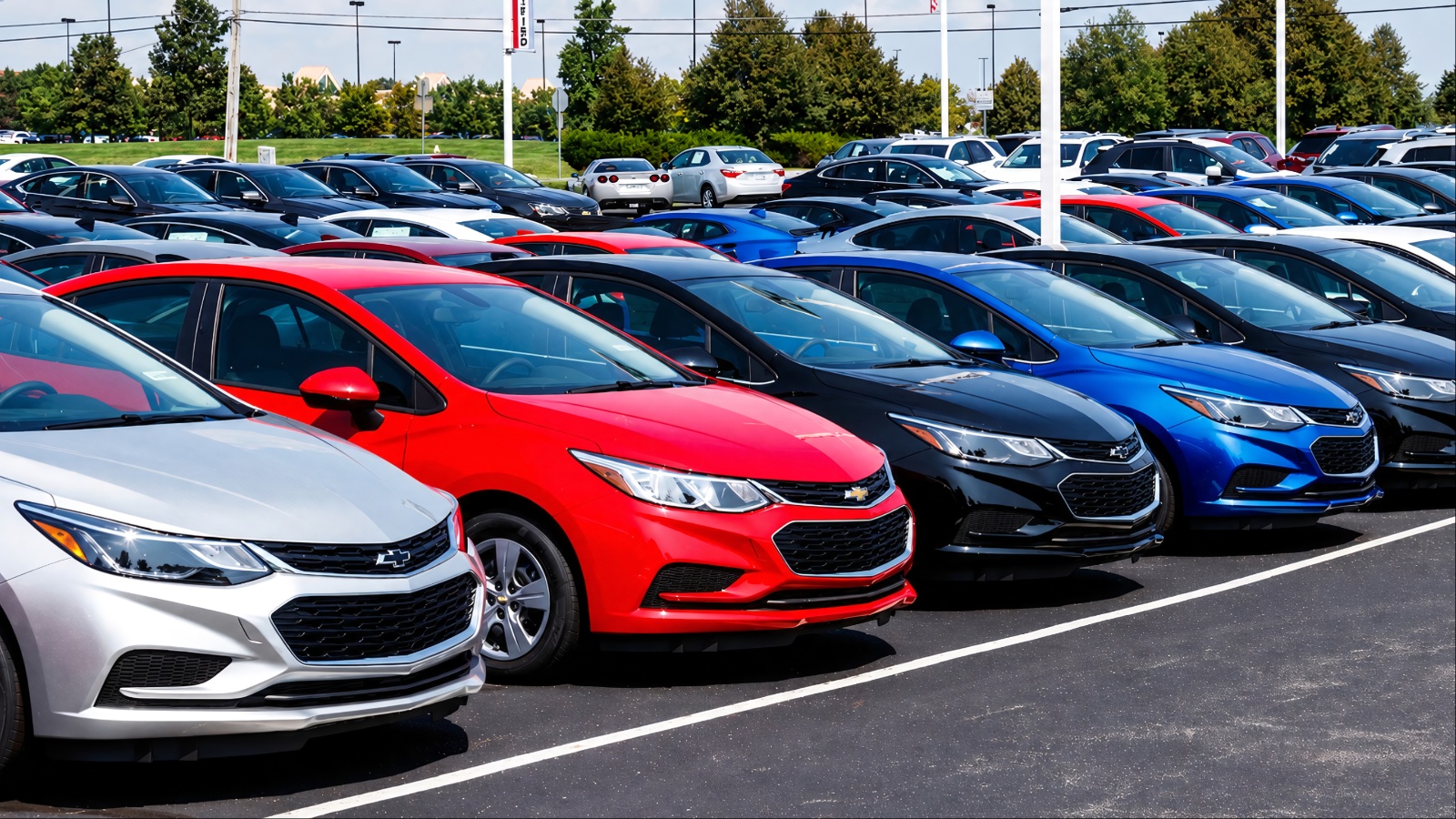
The used-car market has entered a very different phase from the frenzy that followed the pandemic. Vehicles that once disappeared from dealer lots within days are now taking considerably longer to find buyers, giving shoppers more time to compare prices and potentially creating greater negotiating power.
According to iSeeCars, the average 1- to 5-year-old used vehicle took 45.5% longer to sell in the first quarter of 2026 than it did a year earlier.
The analysis examined more than 6.7 million used vehicles sold during the first quarters of 2025 and 2026, comparing market share, prices, and days on the market across gasoline vehicles, hybrids, and EVs. The average used vehicle in the broader March 2026 sample sat for 58.8 days.
Electric vehicles produced one of the clearest divides in the market. Non-Tesla EVs averaged 60.1 days on the market in Q1 2026, compared with 50.1 days a year earlier. Tesla EVs, by contrast, averaged just 32.4 days, making them dramatically faster to sell than most competing electric vehicles.
The data show that the used-car slowdown is not simply an EV problem. Gasoline vehicles and hybrids are also sitting longer. What has changed is the strength of demand from one category to another.
The Used-Car Market Has Lost Its Pandemic Momentum
The 45.5% increase in selling time is significant because the used-car market has been gradually moving away from the extreme conditions that followed the pandemic. During the period of severe new-car shortages, used vehicles became unusually valuable because buyers who could not find new vehicles turned to the used market.
That environment pushed prices higher and encouraged dealers to move inventory quickly. The latest iSeeCars data indicate that consumers have become considerably less willing to purchase used vehicles at elevated prices.
iSeeCars’ analysis found that gasoline-powered used vehicles averaged 54.1 days on the market in Q1 2026, compared with 40.5 days in Q1 2025. That represents a 33.6% increase in selling time. Hybrids showed an even larger slowdown, moving from 40.1 days to 54.4 days, a 35.7% increase.
Fully electric vehicles appeared to be performing somewhat better than the gasoline average when Tesla models were included. The average EV took 49.9 days to sell in Q1 2026, compared with 41.5 days a year earlier, a 20.2% increase. But that average hides the enormous difference between Tesla and non-Tesla vehicles.
Non-Tesla EVs went from 50.1 days to 60.1 days, while Teslas moved from 31.2 days to 32.4 days. In other words, Tesla’s unusually quick sales pace significantly improves the headline EV figure.
The monthly data show that the slowdown was already developing before the first quarter ended. In February 2026, iSeeCars found that the average 1- to 5-year-old used car took 53 days to sell, compared with 37.7 days in February 2025. That represented a 40.6% year-over-year increase and was the highest February figure in the study since January 2024.
iSeeCars Executive Analyst Karl Brauer attributed the slowdown partly to consumers holding onto their current vehicles longer or looking toward older used cars to save money. That behavior is important because it reduces the number of shoppers competing for relatively new used inventory.
The pricing environment reinforces that point. In its April 2026 study, iSeeCars found that used gasoline vehicle prices had fallen 2.8% year over year, while used EV prices declined 3.0% and hybrid prices declined 1.4% during Q1. Non-Tesla EVs experienced a much sharper 10.3% decline, while Tesla used-car prices were nearly unchanged, down just 0.1%.
That combination of lower prices and longer selling times suggests dealers are facing a more competitive environment. A vehicle that remains unsold for weeks ties up capital, occupies valuable inventory space, and can eventually require a price adjustment.
For consumers, that can create opportunities, particularly when a particular model has been sitting substantially longer than the market average.

But buyers should not assume that every slow-selling vehicle is automatically a bargain. A vehicle may remain on a lot because of its price, equipment configuration, brand demand, financing conditions, or simply because it appeals to a relatively small group of shoppers.
Non-Tesla EVs Show the Biggest Demand Problem
The contrast between Tesla and other electric vehicles is arguably the most revealing part of the iSeeCars research.
Non-Tesla EVs averaged 60.1 days on the market in Q1 2026, making them the slowest-moving major drivetrain category in the study. Gasoline vehicles averaged 54.1 days and hybrids 54.4 days. Tesla vehicles were far ahead at only 32.4 days.
That does not mean buyers have rejected electric vehicles as a whole. Instead, demand appears highly selective.
iSeeCars found that used EV market share increased 15.9% year over year in Q1 2026, rising from 3.2% of the 1- to 5-year-old used-car market to 3.7%. Non-Tesla EV market share increased even more rapidly, from 1.8% to 2.4%, although that growth came alongside significantly weaker pricing.
The issue appears to be that supply is expanding faster than demand for some models. Buyers have more electric vehicles to choose from, while technology changes, price reductions on new EVs, and uncertainty around incentives can make shoppers more cautious about paying strong prices for used examples. Tesla is a notable exception.
The company’s four models accounted for several of the fastest-selling used vehicles in March. The Model X averaged 25.6 days, the Cybertruck 33.3 days, the Model Y 34.6 days, and the Model S 39.1 days. Only a small number of non-Tesla EVs appeared among the 20 fastest-selling used models. The Lucid Air, for example, averaged 31.6 days.
The broader used-car list also demonstrates that demand is not determined by drivetrain alone. The fastest-selling vehicles included multiple hybrids, Teslas, and conventional vehicles, while the slowest group contained EVs, hybrids, and gasoline-powered models.
In March, iSeeCars identified the Volvo XC60 Hybrid as the slowest-selling used vehicle, at 197.7 days. The GMC Sierra EV took 162.9 days, while the Dodge Hornet Hybrid averaged 162.5 days. The Chevrolet Blazer EV sat for 116.8 days, and the GMC Hummer EV averaged 110.6 days.
Those numbers show why it would be misleading to describe the market simply as “EVs are not selling.” Some electric vehicles are moving extremely quickly, while others are taking months.
The same principle applies to hybrids. Despite hybrids gaining substantial market share, certain expensive hybrid models were among the slowest-selling vehicles. At the same time, the Lexus RX 350h, Honda Civic Hybrid, and Lexus ES 300h were among the fastest sellers.
For shoppers, that creates an important distinction between market demand for a technology and demand for a particular vehicle.
A used EV with a strong range, desirable pricing, established charging compatibility, and good resale demand can move quickly. Another EV with a high original MSRP, limited demand, and rapid depreciation can remain on a dealer’s lot for months.
The changing market can therefore benefit buyers who are willing to research individual models rather than assuming every vehicle carries the same negotiating potential.
There is also evidence that consumers are becoming more selective about price. iSeeCars reported in February that the used-car market had been slowing for seven consecutive months, with the average 1- to 5-year-old vehicle taking 53 days to sell in February.
The company said consumers appeared increasingly reluctant to accept high used-car prices and were either retaining their existing vehicles or moving toward older vehicles to reduce costs.
That creates a very different environment for dealers than the one they experienced several years ago.
A vehicle that sits for 60 days is not necessarily a problem by itself, but a dealer holding several units for that long has considerably more incentive to make the price attractive. The opportunity becomes even stronger when a model’s days on market are substantially higher than the local or national average.
The latest iSeeCars findings therefore point to a used-car market that is becoming increasingly buyer-sensitive.
The headline figure of 45.5% longer selling times is supported by the company’s Q1 analysis, but it should not be interpreted as every used vehicle sitting exactly 46% longer than it did last year. The figure is an average change across the 1- to 5-year-old used-car market.
The most important takeaway is that patience is returning to the used-car market. Consumers no longer appear to be competing for every reasonably priced late-model vehicle as they did during the supply-constrained years. Dealers are carrying inventory for longer periods, while certain categories are experiencing particularly weak demand.
Non-Tesla EVs currently stand out, averaging 60.1 days on the market, but they are not alone. Gasoline vehicles and hybrids are also taking considerably longer to sell than they did a year earlier.
For shoppers, that shift can mean more room to negotiate, especially on vehicles that have been sitting for several weeks. For dealers, it means pricing and inventory selection matter more than they did during the market’s shortage-driven period.
And for the automotive industry, the numbers signal something even bigger: the used-car market is no longer being driven primarily by scarcity. It is increasingly being driven by value, desirability, and buyer confidence.
