
Ford is preparing to rebuild the affordable end of its U.S. lineup with a small SUV expected to arrive in 2029 at a starting price of roughly $25,000. The still-unnamed crossover was previewed to dealers at a recent meeting in Las Vegas, where Ford executives reportedly showed early digital mockups rather than a production-ready vehicle.
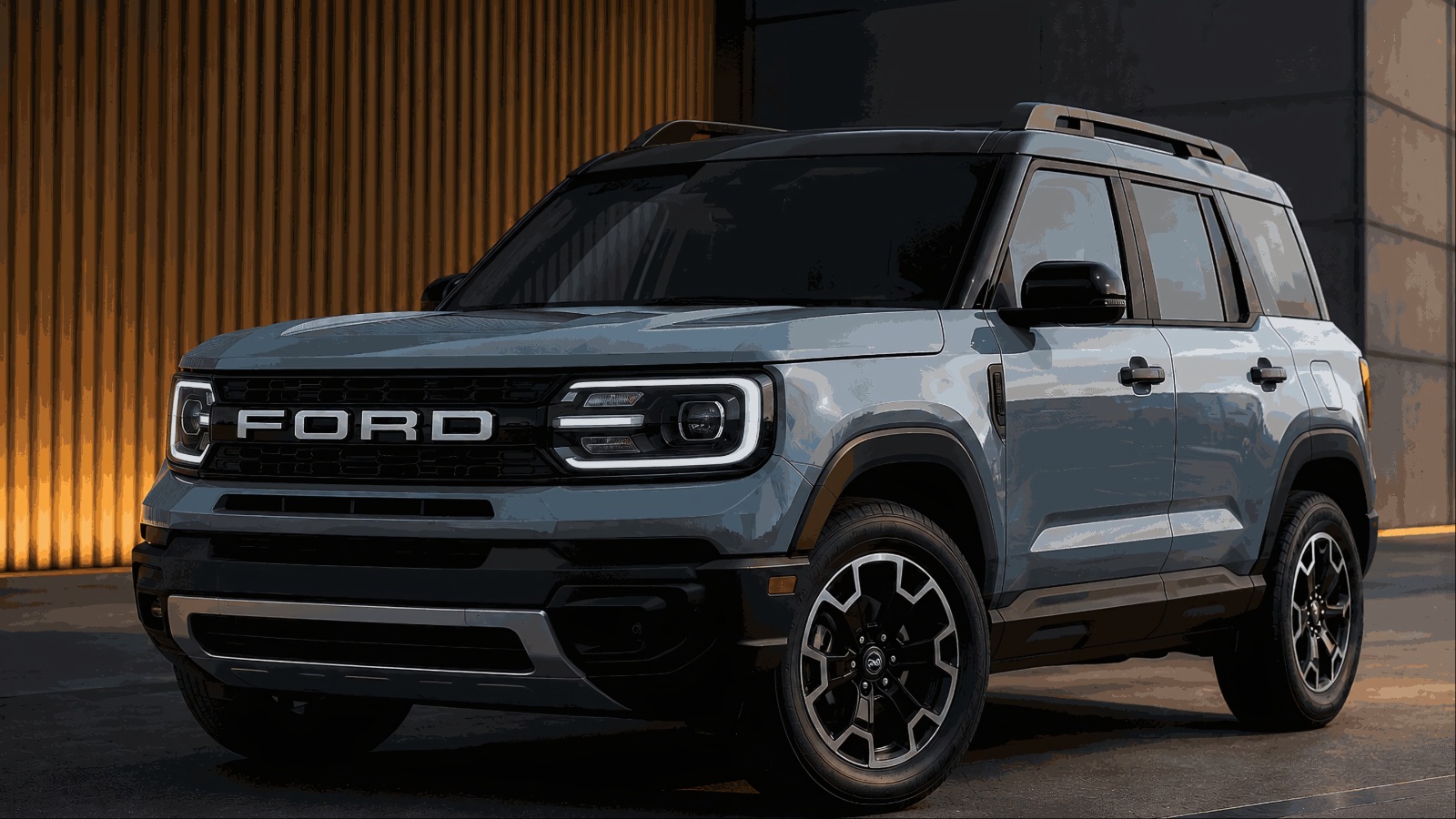
Dealers described the proposed SUV as wide and boxy, with one comparing its appearance to the first-generation Ford Escape. Ford has not publicly announced the vehicle, so its design, specifications, pricing and launch timing could change before production.
If Ford can deliver the vehicle close to its reported target price, it would become one of the least expensive new SUVs available in the United States and would undercut Ford’s current entry-level offerings.
The Maverick compact pickup currently serves as one of the cheapest ways into a new Ford, with entry versions priced in the high-$20,000 range. The proposed crossover would therefore give customers a conventional SUV alternative several thousand dollars below today’s Maverick while potentially attracting buyers who do not need a pickup bed.
Ford Wants a Small, Affordable SUV Back in Its Lineup
Few technical details have emerged about the 2029 SUV because the vehicle remains at an early development stage. Dealers reportedly saw only preliminary mockups, which were intended to communicate its general proportions rather than show the finished styling.
The most consistent descriptions portray it as relatively compact, upright and wide, with styling that reminded at least one attendee of the original Escape introduced for the 2001 model year.
The new model is expected to offer both conventional gasoline and hybrid powertrains. That could give Ford flexibility to attract budget-conscious shoppers who want a low purchase price while also offering a more fuel-efficient alternative to customers willing to pay extra for electrification. Importantly, the vehicle is not expected to be a battery-electric model.
Its likely dimensions have not been disclosed. However, a small crossover positioned below Ford’s larger SUVs could compete in the same broad affordability-focused market occupied by vehicles such as the Toyota Corolla Cross, Honda HR-V, Subaru Crosstrek, Chevrolet Trax, Hyundai Kona and Mazda CX-30.
These vehicles have become increasingly important as consumers move away from traditional subcompact cars but still want something cheaper and easier to maneuver than a midsize SUV.
The model would also arrive as Ford reshapes its compact-SUV portfolio. The Escape has served as Ford’s mainstream compact crossover for more than two decades, but the current generation is expected to disappear after the 2026 model year.
Ford would still have the more ruggedly styled Bronco Sport, yet a lower-cost crossover could occupy a different role by emphasizing affordability, fuel economy, and everyday transportation rather than off-road-inspired branding.
Ford reportedly plans to produce the new model at its Hermosillo Stamping and Assembly Plant in Sonora, Mexico, beginning around 2029. That plant is already an important source of Ford’s smaller vehicles for North America and currently builds the Maverick and Bronco Sport. Using an existing high-volume plant could help Ford control production costs and support the aggressive price target.
A $25,000 Ford Matters as New-Car Prices Approach $50,000
The proposed SUV comes at a time when new-vehicle affordability has become a major industry problem. Average new-vehicle transaction prices in the United States have moved close to $50,000, putting many new cars and trucks beyond the reach of households that once would have purchased mainstream compact models.
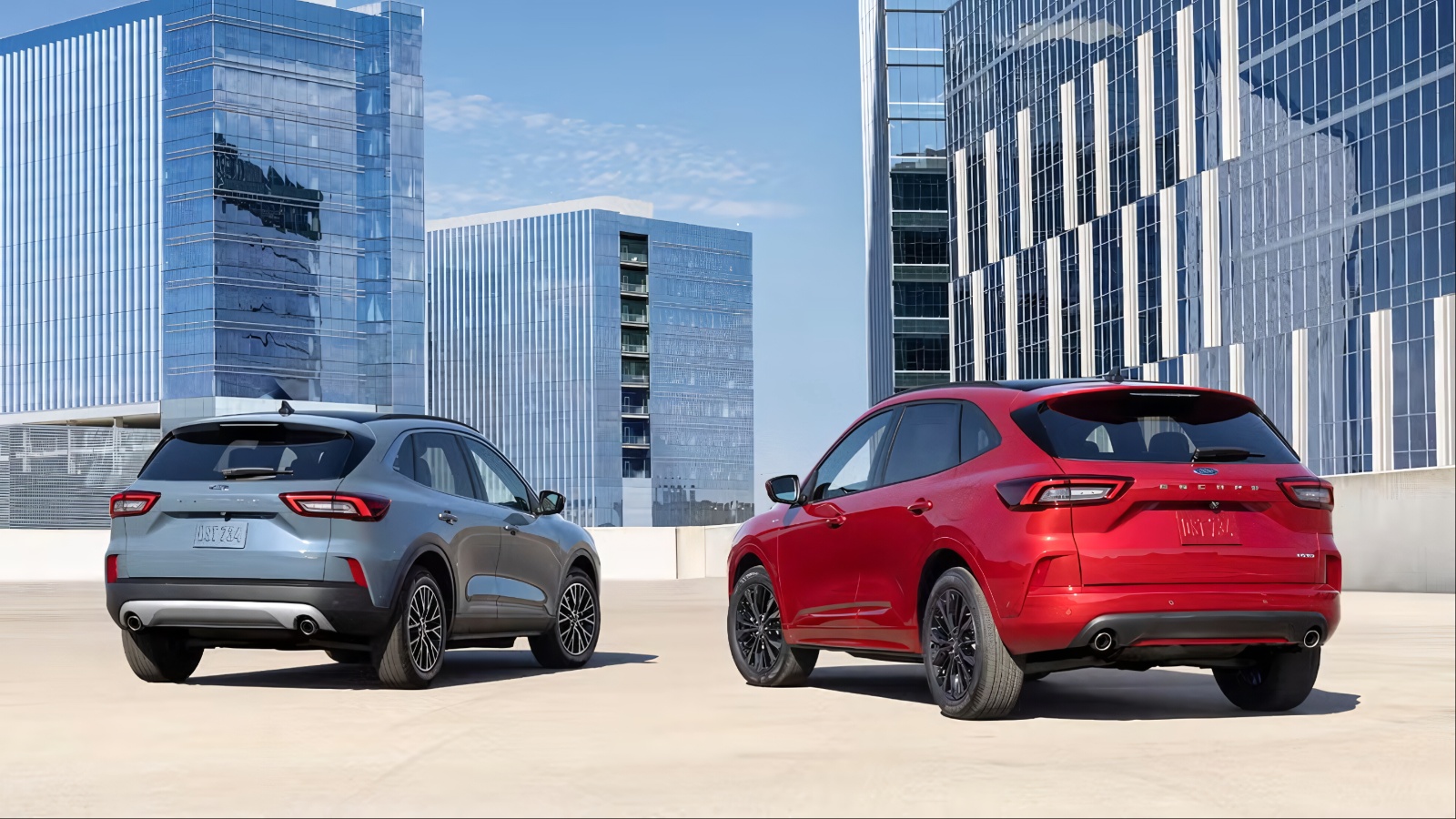
Even compact SUVs have become considerably more expensive. Many well-equipped examples now sell well into the $30,000 range, while larger crossovers routinely climb beyond $40,000. A genuinely competitive $25,000 Ford crossover would therefore enter the market substantially below typical new-SUV prices.
Ford’s plans extend beyond a single inexpensive SUV. Executives have reportedly outlined a goal of introducing several new vehicles priced below $40,000 before the end of the decade. These future models could cover multiple body styles and use gasoline, hybrid, and electric technology.
That strategy represents a shift from an era in which many automakers concentrated heavily on larger, higher-margin SUVs and trucks. Those products remain enormously important to Ford, particularly the F-Series, Bronco and Explorer, but high purchase prices and financing costs have made it increasingly difficult for younger buyers and middle-income households to purchase new vehicles.
A $25,000 crossover could give Ford a way to attract first-time buyers who might otherwise purchase a used vehicle or choose a lower-priced competitor. It could also provide an entry point into the Ford brand, potentially allowing the company to retain those customers when they later move into more expensive Broncos, Explorers or F-Series trucks.
Reaching the $25,000 target will be challenging. Inflation, mandatory safety technology, emissions equipment, infotainment hardware and manufacturing costs have all made inexpensive new vehicles harder to produce profitably. Advanced driver-assistance systems, multiple airbags, cameras, large displays and increasingly sophisticated powertrains add expenses that entry-level cars of previous decades did not face.
Because the SUV is not expected until 2029, Ford also has to account for several more years of material and labor costs. A nominal $25,000 price three years from now would represent an especially aggressive position if average vehicle prices continue increasing.
Ford could control costs through common components, simplified trim structures, efficient manufacturing and high production volume. Building the SUV in Hermosillo alongside other compact Ford products may also give the company opportunities to share suppliers and manufacturing infrastructure.
Ford Is Developing Affordable Gas, Hybrid and Electric Vehicles
The $25,000 crossover is one piece of a wider strategy. Ford has told dealers it plans to introduce several vehicles priced below $40,000 by the end of the decade, spanning gasoline, hybrid, and electric powertrains rather than betting on any single technology.
Ford’s electric strategy is built around a new Universal EV Platform aimed at simplifying production and lowering battery costs. The first vehicle based on this architecture will be the Fathom, a midsize electric pickup with a confirmed starting price of $28,350.
Pre-orders are expected to open in early 2027, with deliveries planned for later that year. Meanwhile, the upcoming $25,000 SUV is expected to follow a different path. Rather than using the new EV platform, it will reportedly rely on gas and hybrid powertrains similar to those found in the outgoing Escape.
The two vehicles reflect Ford’s current strategy of making affordable transportation available through two distinct approaches. The automaker is not relying on EVs as its only low-cost option, while the final specifications and pricing for both models could still change before they reach the market.