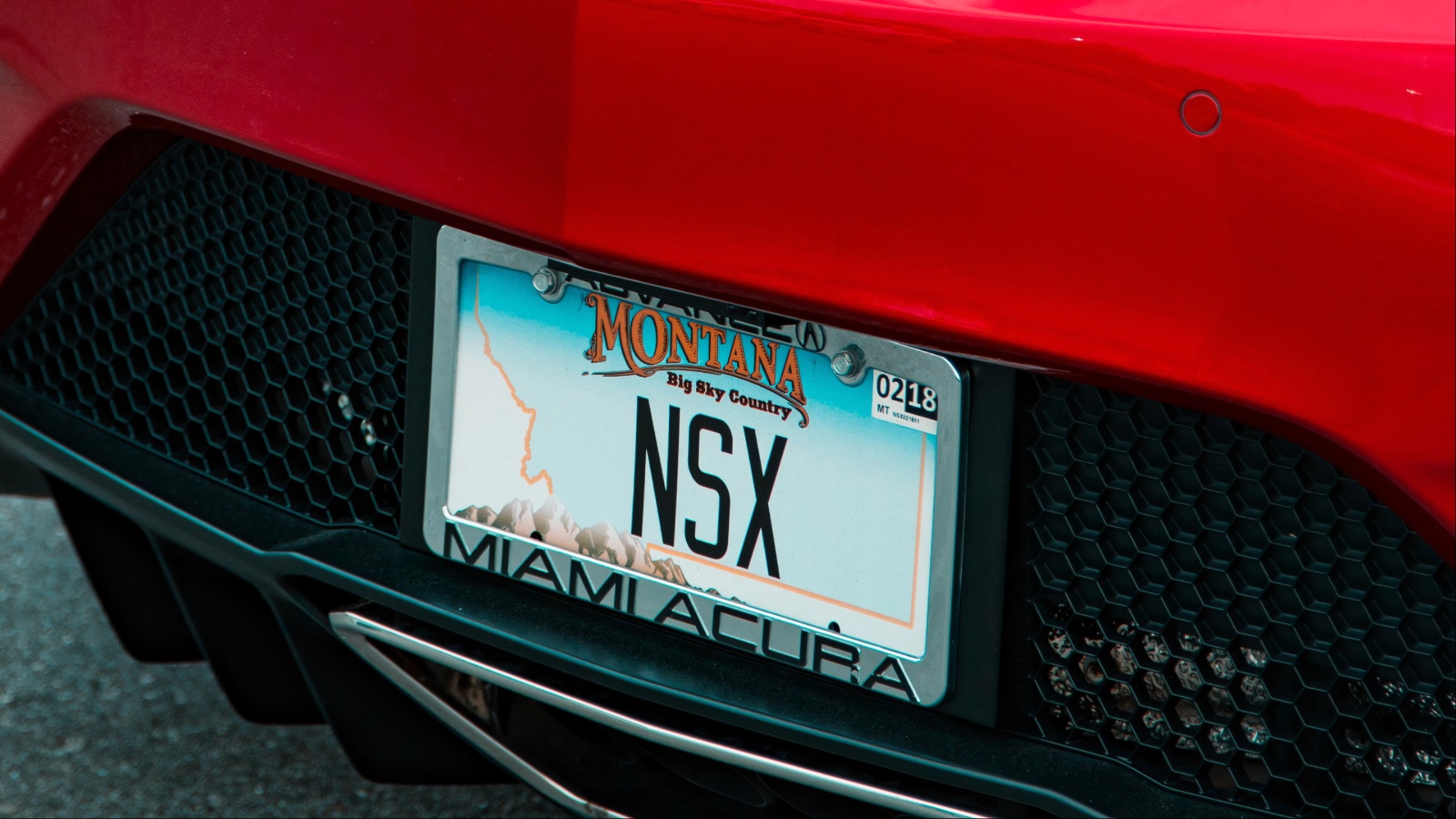
Montana license plates are a familiar sight on Ferraris, Lamborghinis, McLarens, Porsches, Rolls-Royces, and other high-value cars that may spend little or no time in Big Sky Country. The reason is mostly financial. Montana has no general statewide sales tax, and its laws allow vehicles to be titled and registered through Montana business entities, including limited liability companies.
For buyers spending hundreds of thousands of dollars on a car, that combination can create a large difference in upfront costs compared with states that impose substantial sales or use taxes.
The arrangement is often called the “Montana loophole,” but that phrase can make the process sound broader than it is. A Montana title and plate do not automatically cancel tax or registration obligations in the state where the owner actually lives, stores the vehicle, or drives it most often.
Whether the structure works legally depends on the ownership arrangement and the laws of the other state involved. Some states have increased enforcement against residents suspected of using Montana LLCs mainly to avoid local taxes.
No General Sales Tax Is the Main Attraction
Montana’s biggest advantage is simple: the state does not impose a general sales tax. That difference becomes especially important as vehicle prices climb into exotic-car territory.
Consider a hypothetical buyer purchasing a $300,000 supercar in a jurisdiction with an 8% sales or use tax. The tax alone would be $24,000. At $500,000, the same rate would produce a $40,000 tax bill. A $1 million collector car would generate $80,000 in tax at that percentage. These examples show why state tax differences matter far more to exotic-car buyers than to someone purchasing an inexpensive commuter vehicle.
The structure commonly associated with Montana registration involves forming a Montana LLC and making that company the legal owner of the vehicle. Instead of the buyer taking title personally, the LLC appears on the title and registration. Because Montana does not impose a general sales tax, the state does not collect the kind of purchase-based tax that can add tens of thousands of dollars to a high-end car elsewhere.
For a mainstream car, forming and maintaining an LLC may not be worth the extra paperwork and service expenses. For a Ferrari, McLaren, Lamborghini, or other vehicle costing several hundred thousand dollars, the tax difference can be substantial enough to make the arrangement attractive.
Montana Still Charges Registration Fees
Montana registration is not free. The state charges registration fees, and the amount generally varies with vehicle age. Newer light vehicles carry a higher base fee, vehicles between five and 10 years old fall into a lower bracket, and vehicles 11 years old or older are assessed at a lower level.
Expensive cars can also face an additional charge. A light vehicle with an original manufacturer’s suggested retail price above $150,000 and that is 10 years old or newer is subject to an extra $825 annual registration fee. That means a new Ferrari, Lamborghini, Bentley, or McLaren costs more to register in Montana than an ordinary passenger car.

Even so, hundreds of dollars in additional annual registration costs are still far smaller than the sales or use tax that can apply to a $300,000, $500,000, or $1 million vehicle elsewhere.
Collectors may also benefit from Montana’s permanent-registration option for many vehicles that are 11 years old or older. Once the required one-time charges are paid, an eligible vehicle can remain permanently registered as long as ownership does not change.
That can be appealing for older Ferraris, Porsches, Lamborghinis, American muscle cars, and other collector vehicles that may be driven only occasionally. Instead of renewing the registration every year, an eligible owner can potentially keep the same registration while ownership remains unchanged.
The LLC Is the Key Part of the Strategy
For someone who actually lives in Montana, registering a vehicle there is routine. The more controversial use of the system involves nonresidents who form Montana LLCs to own their vehicles.
The LLC becomes the legal owner listed on the title. Because the company is a Montana entity, the vehicle can potentially qualify for Montana titling and registration even though the person controlling the company lives in another state.
Specialty firms have developed businesses around this process. They may help clients form the LLC, provide a registered-agent address, obtain title documents, complete registration paperwork, and forward the plates to the customer.
That convenience does not settle the tax question outside Montana. Another state can look beyond the name on the title and examine where the owner lives, where the car is garaged overnight, where it was delivered, where it is driven most often, and how much time it spends within that state.
If the owner’s home jurisdiction requires residents to register vehicles locally or imposes use tax on vehicles brought into the state, putting the car in a Montana LLC may not eliminate those responsibilities. An arrangement can satisfy Montana’s registration requirements while still creating tax or registration obligations in another jurisdiction.
A Montana Plate Does Not Override Other State Laws
Many states impose use tax on goods purchased elsewhere but brought into the state for use. The purpose is to prevent residents from avoiding local sales tax simply by buying expensive property in another jurisdiction.

That is why a Montana plate is not a nationwide tax exemption. If a person establishes a Montana LLC, buys an exotic car through that company, and then keeps the vehicle primarily at a home in another state, that state may still determine that its tax and registration rules apply.
California has become one of the most visible examples of enforcement involving high-value vehicles registered through Montana entities. Authorities have investigated cases involving cars that carried Montana registrations but were allegedly delivered, stored, and regularly driven in California.
The potential consequences can extend beyond the original tax bill. Depending on the state and circumstances, an owner may face unpaid tax, interest, registration charges, civil penalties, or criminal exposure if authorities believe documents were intentionally used to conceal the vehicle’s actual location or use.
The important question is not simply whether Montana will issue a title and registration, but what the state where the vehicle is actually kept and driven requires. A registration valid under Montana law does not necessarily prevent another jurisdiction from claiming that the car should have been taxed or registered there.
Why the Strategy Is So Visible on Exotic Cars
The Montana strategy attracts so much attention in the exotic-car world because percentage-based taxes rise rapidly with vehicle value. On a lower-priced mainstream vehicle, the possible savings may not justify the administrative work of creating and maintaining an LLC. On a $300,000, $500,000, or $1 million car, however, the difference can reach tens of thousands of dollars.
The numbers become even more significant for collectors who buy several expensive vehicles. Someone building a collection of Ferraris, Porsches, McLarens, and Lamborghinis could face a large combined tax bill if each purchase is subject to a high sales or use tax.
Collector cars are also often driven far less than ordinary vehicles. Some spend most of their lives in storage and come out only for weekend drives, shows, rallies, or special events. For qualifying older vehicles, Montana’s permanent-registration option can make the state’s system even more convenient.
These factors explain why Montana plates appear so often on high-value automobiles. The state combines no general sales tax with a registration structure that can work well for expensive and older collector vehicles. Its LLC framework also allows a business entity, rather than the individual driver, to hold title to the car.
But the plate itself does not determine whether the arrangement is lawful everywhere the vehicle goes. Key factors can include the owner’s residency, who actually controls the vehicle, where the car is primarily stored, where it is regularly driven, and which state’s tax and registration laws apply.
For people who genuinely live in Montana and keep their cars there, the state’s rules can provide legitimate financial advantages. For residents of other states, the picture is more complicated. Another jurisdiction may still require local registration or collect tax when the vehicle is effectively based and used there.
That is the central fact behind the so-called Montana loophole. The structure can reduce costs in certain circumstances, especially for very expensive vehicles, but it does not create a universal exemption from state tax or vehicle-registration laws.