
Rear-end crashes are among the most common collisions on American roads, but the injuries they cause can be difficult to judge from vehicle damage alone. A new rear-impact evaluation from the Insurance Institute for Highway Safety takes a closer look at what happens to occupants when another vehicle strikes from behind.
The test focuses on seats and head restraints, measuring how effectively they control movement through the head, neck, and spine.
The first 18 small SUVs produced a wide range of results, with four earning good ratings and three receiving poor ratings. Here are five vehicles that passed the new evaluation and five that failed to meet its passing standard.
5 Cars That Passed the New Rear Test
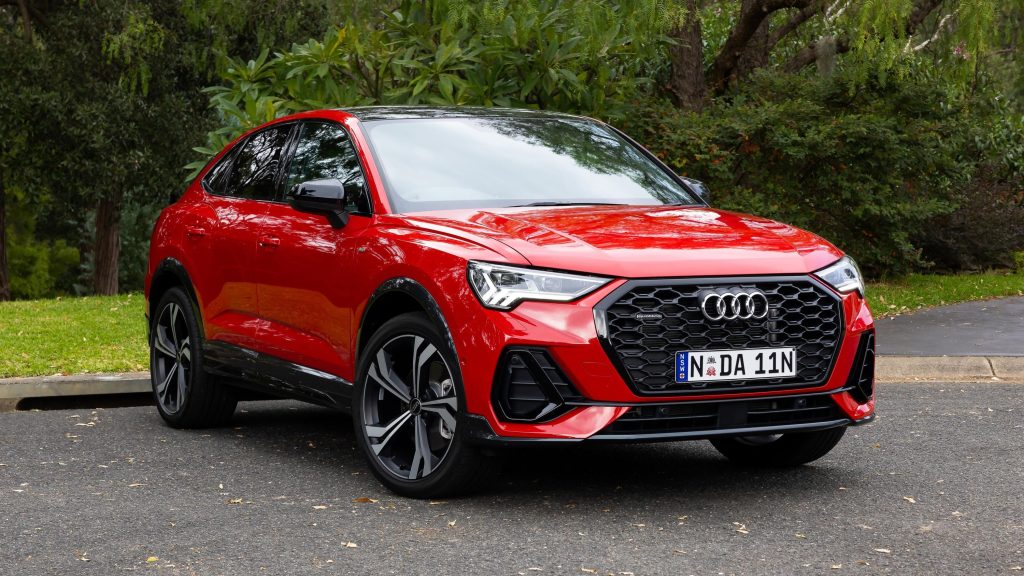
1. Audi Q3
The Audi Q3 immediately separates itself from most of the vehicles tested because it earned a Good rating in the new IIHS whiplash-prevention evaluation. Only four of the first 18 small SUVs tested reached that level, putting the Q3 among the strongest performers.
The significance of the result comes from what the test measures. In a rear collision, the vehicle moves forward abruptly after being struck while the occupant’s body reacts differently.
The torso and pelvis begin moving with the seat, but the head can lag. If the seat and head restraint cannot control that sequence, the neck can experience substantial bending and stretching.
The Q3’s strong rating indicates that its seating system handled those movements effectively. IIHS found that Good-rated vehicles generally kept the head and spine aligned, with relatively little movement between them. The cervical spine also retained more of its natural curvature during the simulated impacts.
That is why the Q3 belongs among the strongest performers. The evaluation is not simply checking whether a head restraint exists or reaches the appropriate height. It examines how the seat, restraint, and occupant interact throughout the crash.
The result also demonstrates why rear-impact protection deserves separate consideration when judging vehicle safety.
A vehicle can have strong crash structures, airbags, and advanced driver-assistance systems, but those features cannot completely prevent every rear-end collision. Once an impact occurs, the seat becomes a critical part of the occupant-protection system.
For someone sitting behind the wheel, the seat controls much of the body’s initial movement after impact. The Q3 showed that its design can manage that movement effectively under the tougher IIHS procedure.
Its good rating therefore represents more than another positive safety result. It demonstrates that Audi’s seating system performed strongly in a test specifically created to identify weaknesses that older testing had become less capable of exposing.
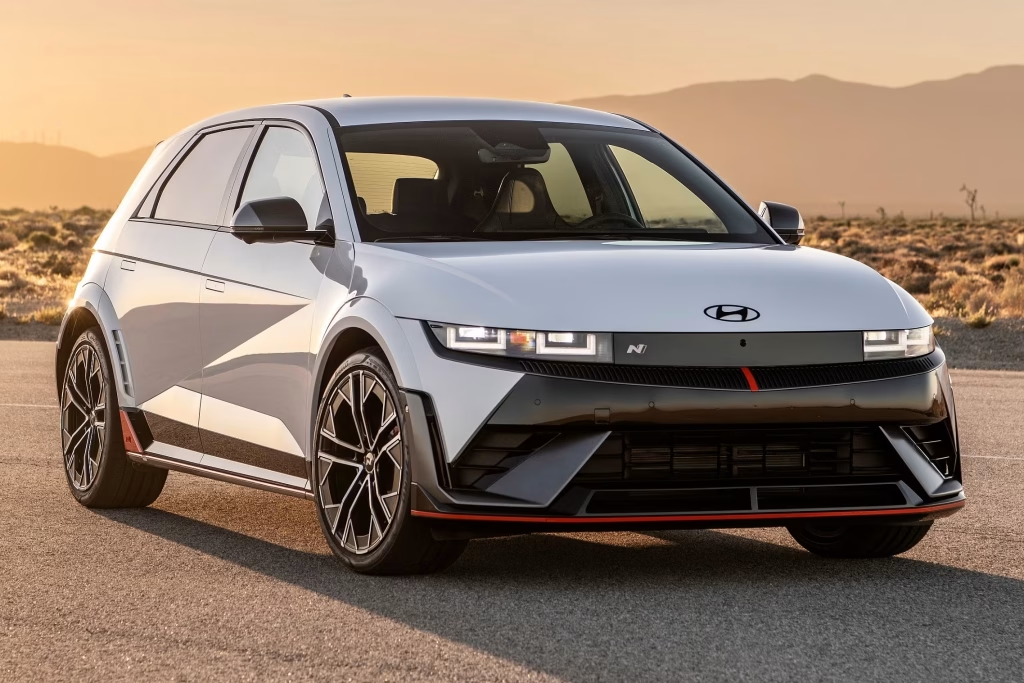
2. Hyundai Ioniq 5
The Hyundai Ioniq 5 also achieved a Good rating in the new rear-impact evaluation, placing it alongside only three other models from the initial group. That is significant because most of the vehicles tested received acceptable or lower ratings.
Although the Ioniq 5 is an electric vehicle, its powertrain is not what determines its result here. The important components are the seat, head restraint, and the way those parts interact with the occupant during a rear collision.
When a vehicle is struck from behind, the seat moves suddenly while the occupant follows a slightly different path. The head can move independently from the torso, increasing stress through the neck. A well-designed seat needs to manage that movement while keeping the head and spine in a controlled relationship.
The Ioniq 5 performed strongly under this scenario. IIHS reported that Good-rated vehicles provided excellent protection across nearly all of the measurements at both test speeds, with little movement between the head and spine.
That matters because a rear-end crash does not need to cause extensive vehicle damage to produce significant occupant movement. A collision in slow-moving traffic can still result in sudden forces through the neck. Effective seat and head-restraint design therefore remains important even when the exterior damage appears limited.
The Ioniq 5 also illustrates how vehicle safety engineering has expanded beyond traditional structural crash testing. Researchers are increasingly examining what happens to the occupant inside the cabin rather than focusing only on how the vehicle structure responds to a barrier.
For Hyundai, the good result demonstrates that the Ioniq 5’s interior occupant-protection system can handle the specific demands of a rear impact. It did not simply clear the test. It reached the highest rating available, placing it among the very small group of vehicles that performed particularly well across the evaluation’s measurements.
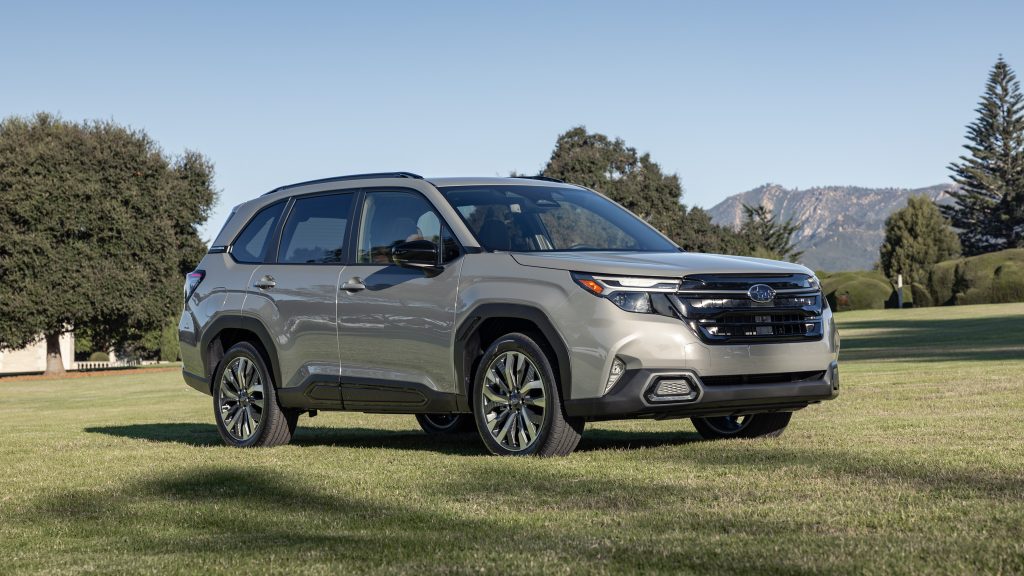
3. Subaru Forester
The Subaru Forester is another standout, earning a Good rating and joining the small group of vehicles that reached the highest level. Only four of the first 18 small SUVs achieved a good result, making the Forester’s performance particularly notable.
Rear-end crashes create a different set of forces from frontal collisions. The vehicle moves suddenly after being struck while the occupant’s body reacts with a slight delay. The pelvis, torso, and head can therefore move at different rates. If the seat does not control that sequence, the neck can experience excessive bending or stretching.
The Forester’s seating system handled this challenge effectively. IIHS reported that Good-rated vehicles generally kept the head and spine aligned during the simulated impacts while allowing the cervical spine to retain much of its natural curvature.
The goal is not simply to stop the head from moving. The seat and head restraint must coordinate the movement of the upper body.
The test uses two acceleration pulses corresponding to rear impacts at 20 mph and 30 mph. Researchers consider head contact time, upper-spine acceleration, pelvis displacement, and forces affecting the head and neck. These measurements offer a more detailed picture of occupant protection than the older evaluation.
The Forester’s strong result is especially relevant because the new procedure was introduced to create greater separation between modern seating systems. The previous test had become less effective because so many vehicles were achieving high ratings.
For shoppers, the Forester demonstrates that a vehicle’s actual seat and head restraint can perform strongly when subjected to a specialized rear-impact simulation. Its result therefore adds another useful dimension to the model’s safety credentials and shows why rear-end crash protection deserves attention alongside frontal and side testing.
4. Toyota RAV4
The Toyota RAV4 completes the four-vehicle group that earned a Good rating in the first IIHS rear-impact evaluation. With most tested SUVs falling below this level, the RAV4’s result gives it a clear distinction.
One of the most important features of the new evaluation is its attention to occupant movement rather than simply vehicle deformation. A rear-end collision may produce relatively little visible damage while still creating substantial forces through the neck.
The seat must therefore do more than provide comfort. It needs to absorb energy and guide the occupant through the impact in a controlled manner.
The RAV4’s good rating indicates that its seating system performed strongly in those areas. IIHS says good-rated vehicles provided excellent protection across nearly all measurements at both test speeds. Their seats and head restraints kept the dummy’s head and spine aligned, with relatively little movement between the two.
The test was developed using research connecting specific crash-test measurements with real-world insurance claims.
IIHS examined seats from 36 late-model vehicles at different impact speeds before determining which measurements were most closely associated with injury risk. The resulting procedure is therefore more than a simple revision of the previous test.
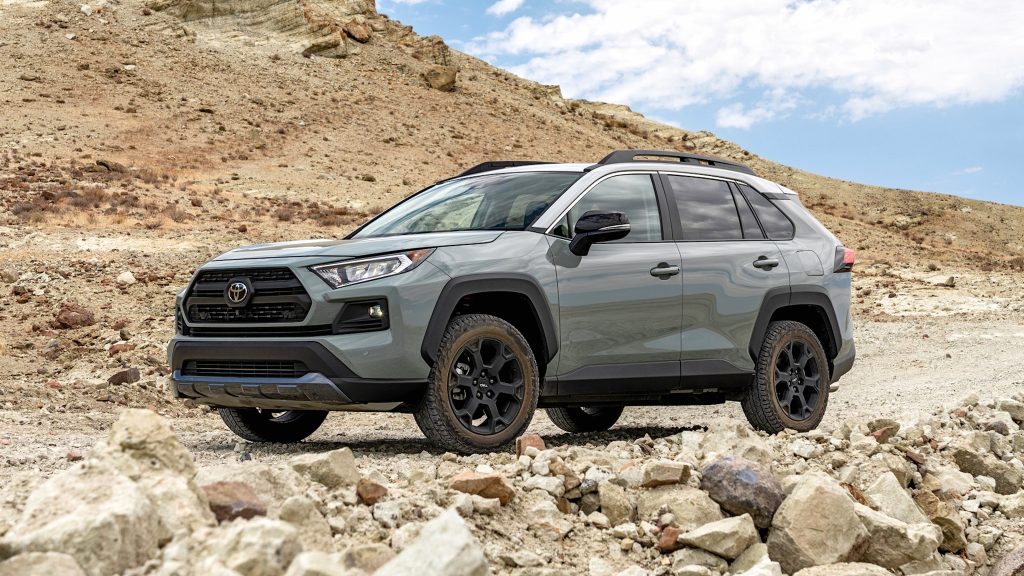
The RAV4 reached the highest rating available, demonstrating that its seat and head restraint worked together effectively. Its inclusion also provides an example from one of the most familiar vehicles in the small-SUV segment.
Advanced driver-assistance systems can reduce the likelihood of some crashes, but they cannot eliminate every rear-end collision. When prevention fails, the physical design of the seat becomes critical. The RAV4’s good rating indicates that Toyota addressed this aspect of occupant protection successfully.
5. Buick Encore GX
The Buick Encore GX rounds out the passing group with an acceptable rating. It did not match the four Good-rated models, but it still cleared the passing threshold and demonstrated a reasonable level of rear-impact protection.
The new evaluation examines several aspects of occupant movement, including the relationship between the head and spine, head-restraint contact timing, upper-neck forces, and upper-spine acceleration. Together, those measurements indicate how effectively the seating system manages the occupant after a rear collision.
The Encore GX’s acceptable rating places it below the Audi Q3, Hyundai Ioniq 5, Subaru Forester, and Toyota RAV4, but it remains within the range IIHS considers adequate. Nine vehicles in the initial group received acceptable ratings, making it the largest rating category among those tested.
That makes the Buick useful as a middle-ground example. Passing the evaluation does not mean every vehicle provides the same level of protection. A good rating indicates stronger performance, while acceptable means the system met the required standard with more room for improvement.
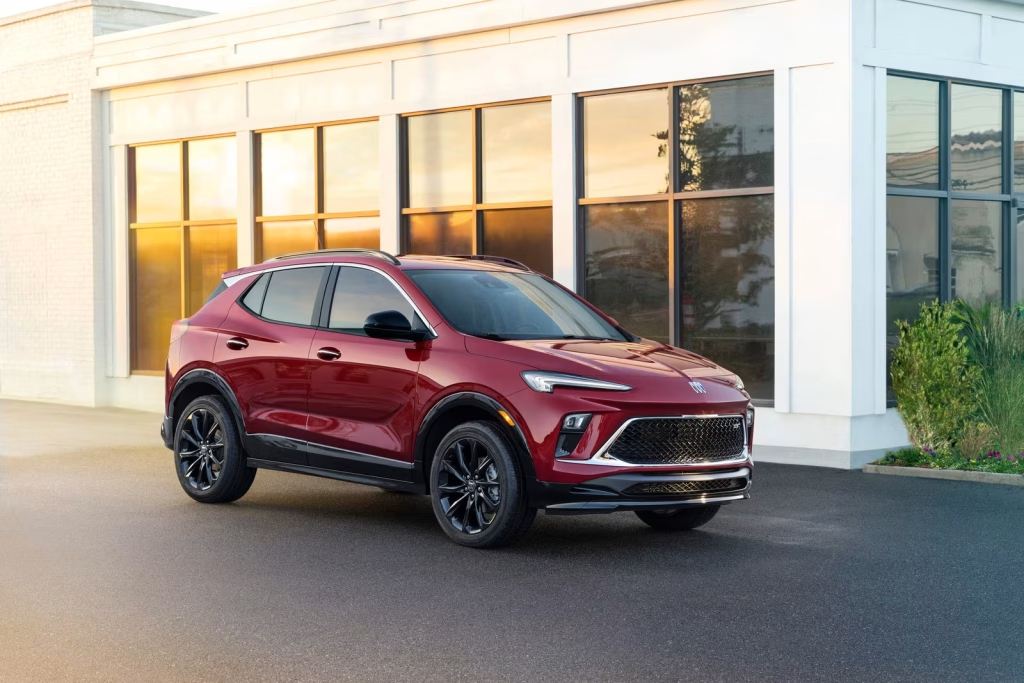
The Encore GX therefore demonstrates why buyers should pay attention to the actual rating rather than simply labeling every vehicle as safe or unsafe. Its performance was sufficient to pass this particular evaluation, even though four other models produced stronger results.
With the Buick, the passing section includes four Good-rated vehicles and one Acceptable-rated vehicle. The remaining five models fall into the Marginal and Poor categories and did not meet the passing standard.
5 That Failed
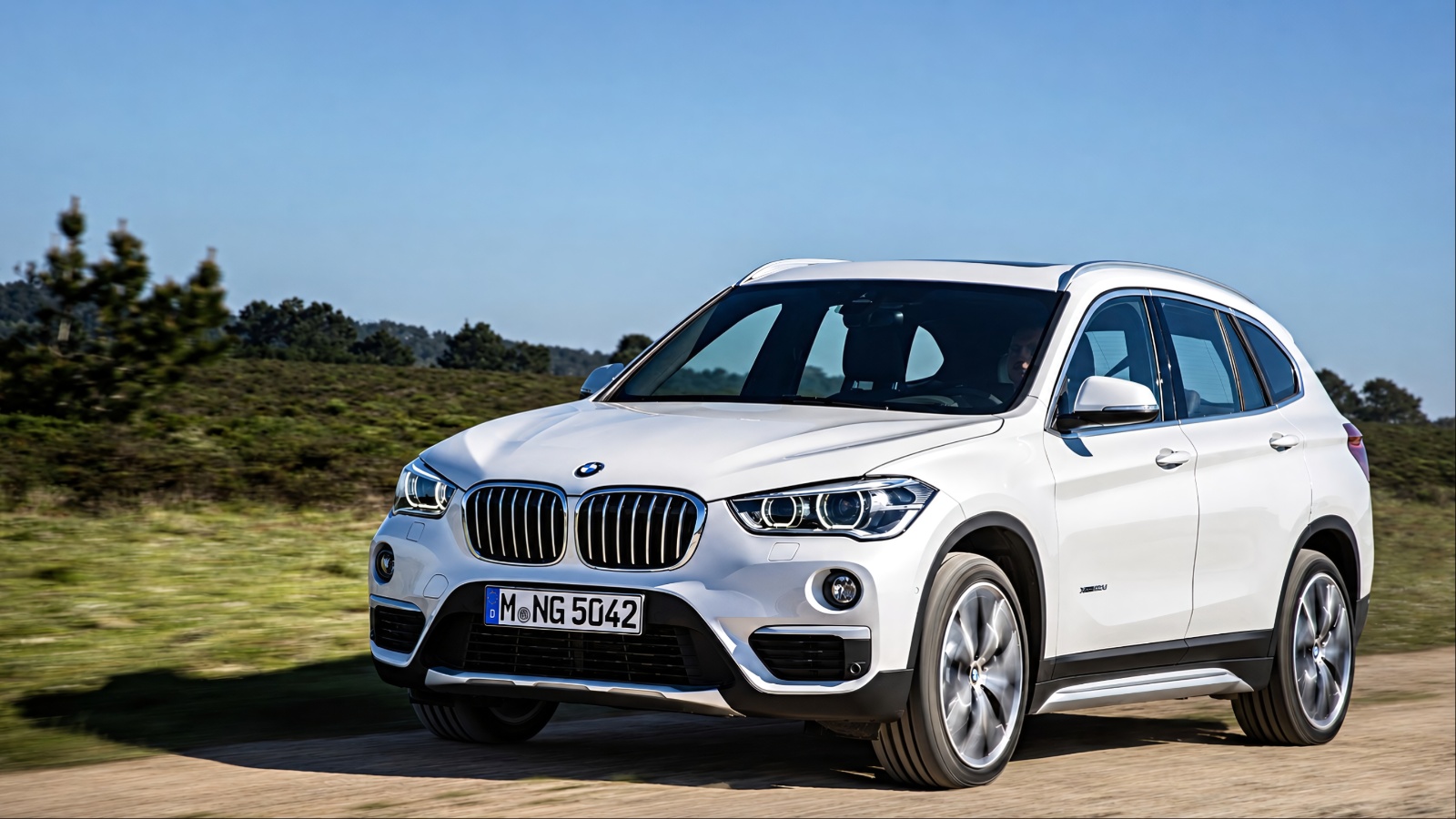
1. BMW X1
The BMW X1 produced one of the more notable results in the evaluation by receiving a marginal rating for rear-impact whiplash prevention. That places it below the Acceptable threshold even though the model has performed well in other areas of IIHS testing.
The marginal result indicates more significant shortcomings in the way the seat and head restraint manage occupant movement. During a rear collision, the head, neck, and torso do not move as one unit. The seating system needs to control those different movements while maintaining alignment between the head and spine.
IIHS measures factors such as head contact time, upper-spine acceleration, pelvis displacement, and forces affecting the head and neck. These measurements are important because a head restraint can look effective in a stationary inspection but still perform poorly when the entire seating system is subjected to a dynamic crash pulse.
The X1’s result demonstrates that simply having a modern head restraint is not enough. Its performance depends on how that restraint works with the seat and the occupant throughout the crash sequence.
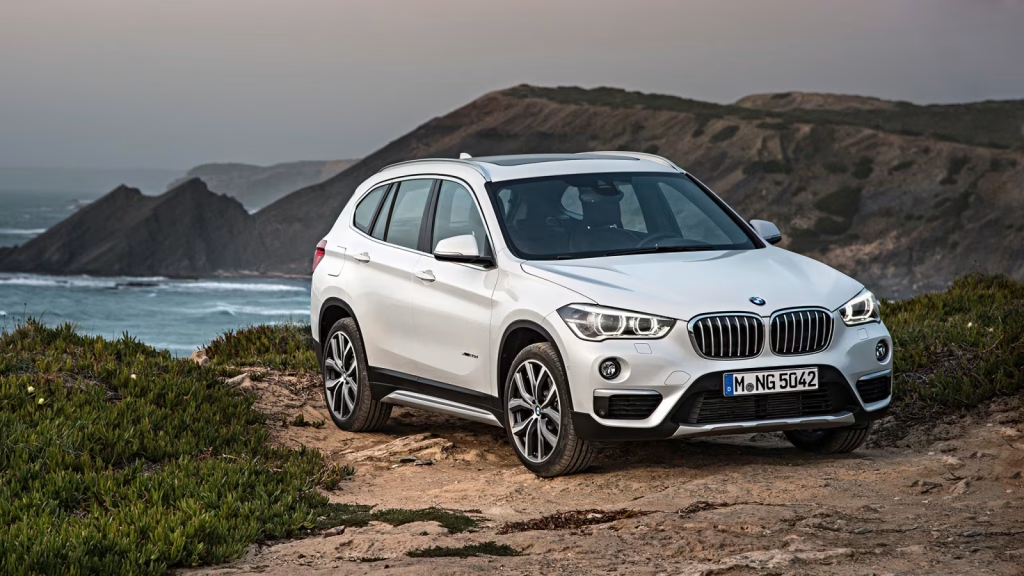
The BMW was not rated poor, which distinguishes it from the three vehicles at the bottom of the initial test group. Nevertheless, “marginal” still means it failed to reach the passing standard for this evaluation.
For buyers, the result serves as a reminder that premium branding does not automatically guarantee top performance in every safety category. The X1 may provide strong protection in other crash scenarios, but its rear-impact seating system showed room for improvement.
2. Nissan Rogue
The Nissan Rogue also received a marginal rating, making it the second vehicle in the group to fall short without reaching the poor category. Its result is notable because the Rogue has demonstrated strong performance in several conventional IIHS crash evaluations.
The new test examines a different problem. Instead of measuring how the vehicle’s structure performs when it strikes a barrier, it studies what happens when the vehicle itself is hit from behind. That puts greater emphasis on the driver’s seat and head restraint.
During the simulated impact, the pelvis, torso, and head need to remain within a controlled movement pattern. Excessive movement between the pelvis and head or between the head and spine can increase stress through the neck.
IIHS developed the evaluation after studying seats from 36 late-model vehicles at multiple impact speeds and comparing the measurements with real-world insurance claims. The resulting procedure includes measurements that were not part of the earlier head-restraint test.
The Rogue’s marginal rating shows that its seating system displayed more significant weaknesses in this specialized area. It therefore cannot be grouped with the Good and Acceptable models when specifically discussing rear-impact whiplash prevention.
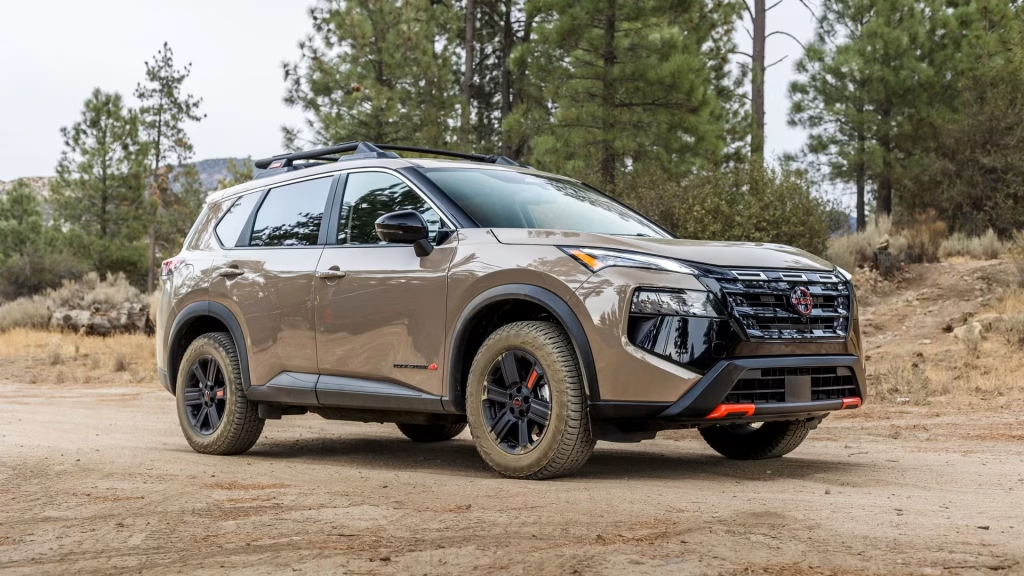
That does not mean the Rogue is generally unsafe. Its marginal result applies to this particular test rather than every aspect of its crashworthiness. Its performance in frontal and side evaluations demonstrates why safety ratings need to be viewed category by category.
The Rogue is important here because it shows that strong traditional crash performance does not automatically translate into strong rear-impact protection. The new evaluation exposes a different part of vehicle safety.
3. Ford Bronco Sport
The Ford Bronco Sport received a poor rating in the new rear-impact evaluation, placing it among the weakest performers in the initial group. The result is notable because the model has performed well in several other IIHS safety categories. The poor rating specifically concerns its seat and headrest performance during rear impacts.
One major weakness involved movement between the dummy’s head and pelvis. IIHS found that the difference in velocity was particularly high, indicating that the seat did not control the occupant’s upper-body movement effectively. The head restraint also took too long to contact the dummy’s head.
That delay matters because the purpose of the new test is to keep the head and spine moving together as much as possible. In the Bronco Sport, the cervical spine experienced a less controlled movement pattern, creating precisely the type of behavior the newer evaluation was designed to identify.
The vehicle accumulated 12 total demerits across the two simulated impacts, with weaknesses involving head and spine support, upper-neck management, and energy management.
Its poor rating, therefore, was not caused by one isolated measurement. The seating system showed problems across multiple parts of the evaluation, giving IIHS reason to place it at the bottom of the rating scale.
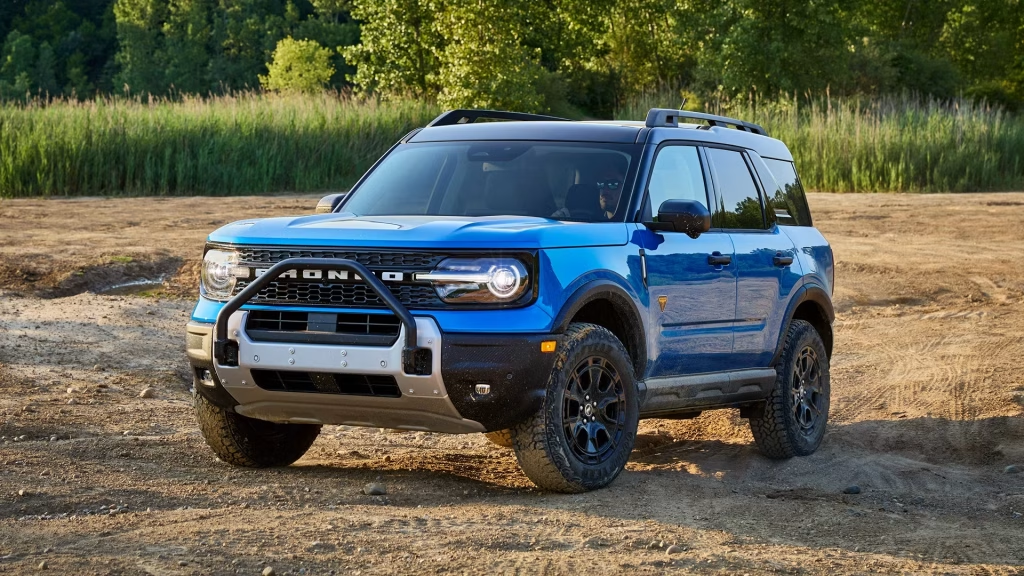
The Bronco Sport’s result demonstrates that strong performance in other crash categories cannot compensate for poor rear-impact seating performance when the specific concern is whiplash prevention. Its seat and head restraint require improvement in controlling occupant movement after a rear collision.
4. Hyundai Tucson
The Hyundai Tucson produced another surprising result, receiving a Poor rating even though it earned Good ratings in several conventional IIHS crash evaluations. Its small-overlap front, updated moderate-overlap front, and updated side ratings were strong, but its rear-impact seating performance fell considerably short.
The key problem involved the movement of the dummy’s head and spine. During the simulated collision, IIHS observed the head restraint pushing the dummy’s chin downward toward the chest rather than maintaining the desired relationship between the head and spine.
That behavior contributed to Tucson’s poor result. The vehicle accumulated five demerits in each test pulse, producing 10 in total. The largest deductions involved upper-neck load and moment management, with additional penalties related to head and spine support and energy transferred to the occupant.
The result illustrates why the new evaluation is useful. The Tucson’s strong performance in other crash tests does not disappear because of this rating. Instead, the new procedure identifies a particular weakness that would be difficult to understand from frontal and side tests alone.
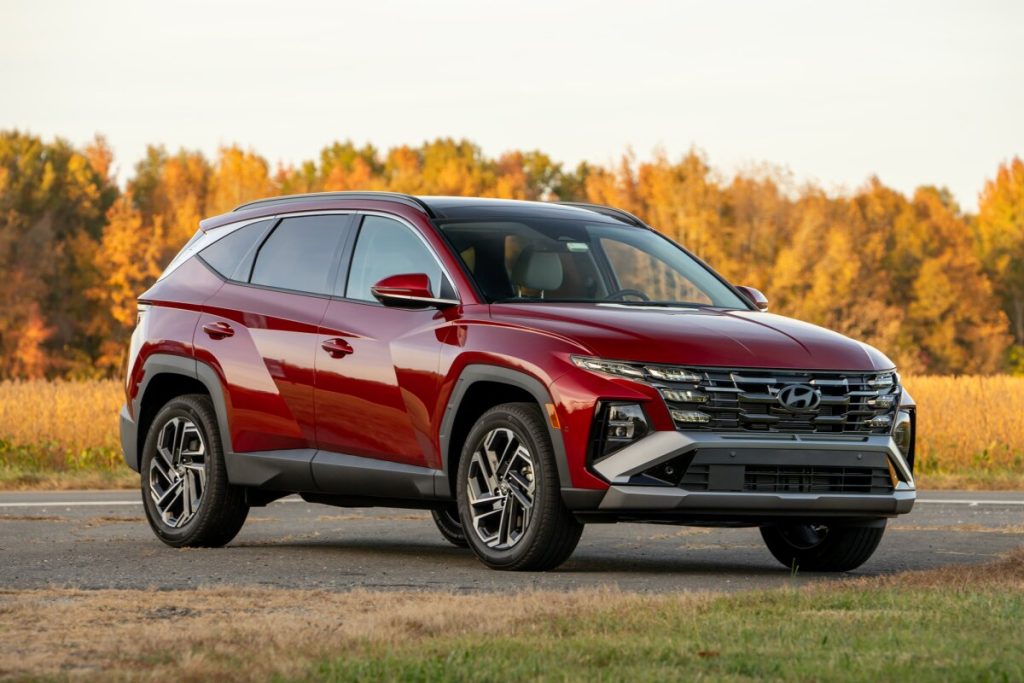
For buyers specifically concerned with rear-impact protection, that distinction matters. The vehicle’s structure may provide strong protection during other types of collisions, but the seat and head restraint did not manage occupant movement effectively enough during the rear-impact simulation.
The Tucson therefore belongs in the failed group because of its specific rear-impact performance, not because the new result represents a judgment on every aspect of the vehicle’s safety.
5. Mazda CX-50
The Mazda CX-50 completes the five vehicles that failed to achieve a passing rating. It received a poor rating despite earning good ratings in the small-overlap front, updated moderate-overlap front, and updated side crash evaluations. Its result reinforces the difference between rear-impact protection and other forms of crashworthiness.
IIHS identified a specific weakness in the CX-50’s seating system. During the simulated rear impact, the dummy’s head was allowed to move backward and upward rather than remaining properly supported by the head restraint. That movement contributed to the poor head-and-spine support result.
The detailed measurements show that the problem appeared at both simulated impact speeds. The CX-50 accumulated five demerits in the lower-speed test and six in the higher-speed test, producing 11 in total. Its deductions involved head and spine support, upper-neck loading, and management of energy transferred to the occupant.
That combination explains why the model received “Poor” rather than “Marginal.” The weakness was not restricted to a single measurement or one test speed. The seat showed problems in several areas that IIHS considers important when assessing the risk of harmful occupant movement.
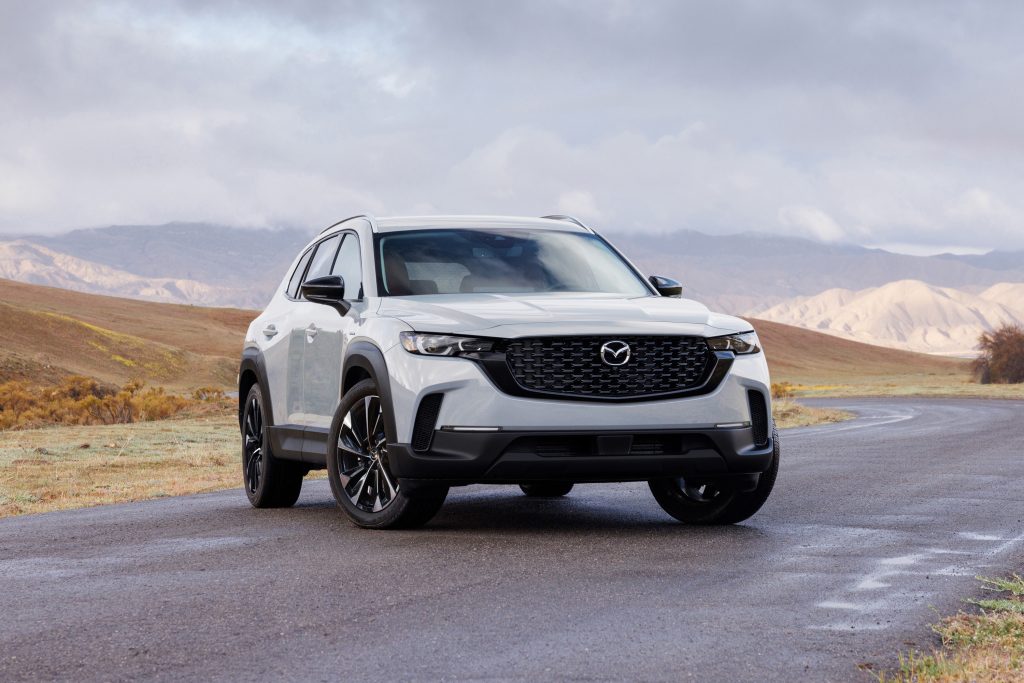
The CX-50 therefore provides a strong conclusion to the failed group. Its result demonstrates that a vehicle can perform well in frontal and side crash testing while still having shortcomings in rear-impact occupant protection.
The new test ultimately shows why seats and head restraints deserve more attention when vehicle safety is discussed. Preventing a crash is preferable, but when a rear-end collision occurs, the seating system becomes a crucial line of protection.
In the CX-50, IIHS found that the system did not control occupant movement effectively enough to achieve a passing rating.
