
Choosing a first car is about far more than finding something affordable or attractive. For a young driver, the right vehicle should offer predictable handling, strong crash protection, manageable power, good visibility, and reasonable ownership costs.
The wrong choice can introduce unnecessary risks through excessive performance, poor safety scores, difficult dimensions, or expensive insurance.
That makes the decision especially important for families helping a new driver get started. Some cars provide a sensible balance of safety, reliability, and ease of use, while others may be tempting but bring disadvantages that inexperienced drivers are not prepared to manage.
5 Smart First Cars for Young Drivers
1. Honda Civic
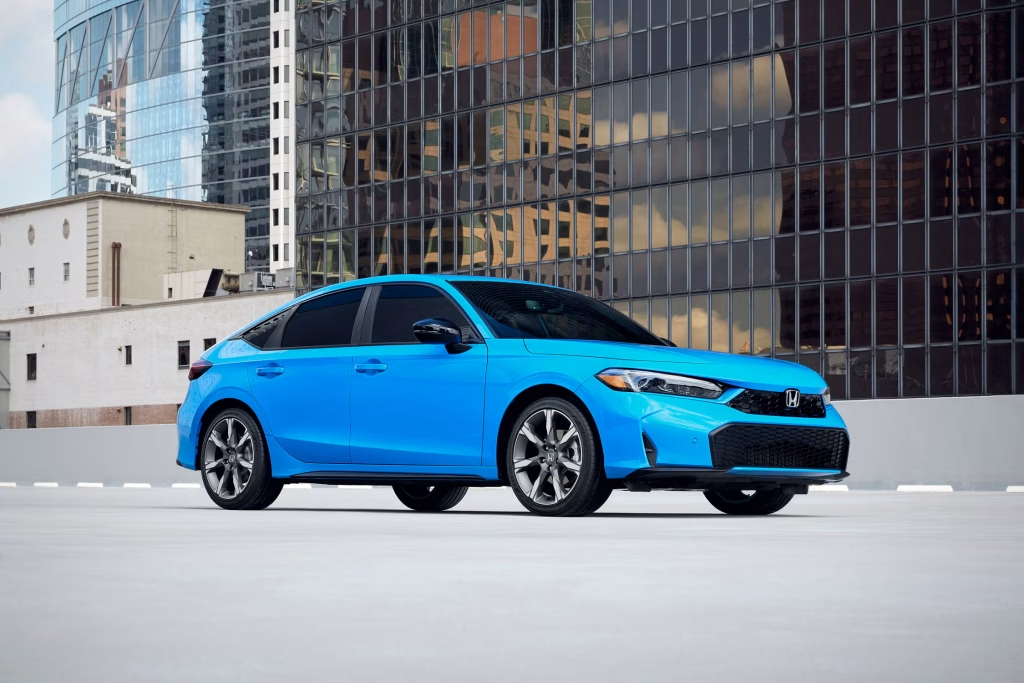
The Honda Civic has long made sense as a first car because it combines relatively compact dimensions with mature road manners and a wide range of safety equipment. That balance is especially useful for a young driver who is still learning how to judge parking spaces, lane positions, and distances around other vehicles.
The Civic is also available with moderate power rather than relying on a performance-oriented setup. That makes throttle response easier to manage, particularly for someone who has not yet developed strong instincts for controlling acceleration.
Modern Civics also benefit from Honda Sensing, which includes driver-assistance technologies designed to help with situations such as forward collisions, lane departure, and adaptive cruise control. These systems should not replace attentive driving, but they can provide an additional layer of protection when used properly.
Size is another advantage. The Civic provides enough room for passengers and luggage without being difficult to maneuver in crowded streets or parking lots. A new driver can learn the dimensions of the vehicle relatively quickly.
Its strong reputation for reliability is equally important. A first car should not regularly leave a young driver dealing with unexpected mechanical problems. The Civic’s widespread availability also means parts and service are generally easier to find than with more specialized vehicles.
For parents, the Civic offers a sensible combination of safety, practicality, and manageable performance. For young drivers, it remains approachable without feeling like a car they will immediately outgrow.
2. Toyota Corolla
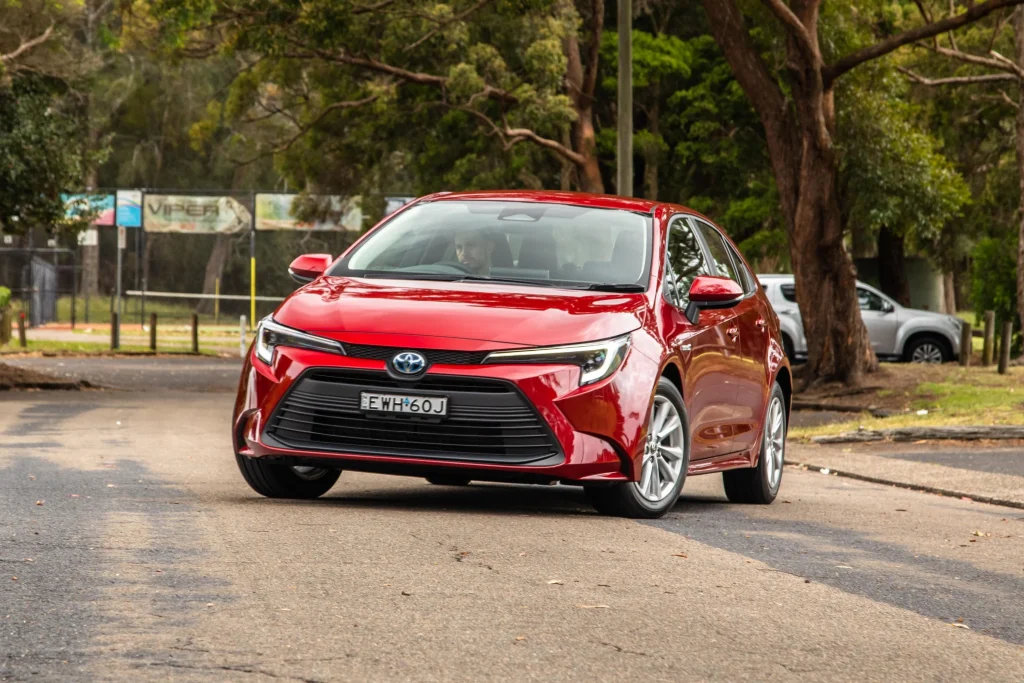
The Toyota Corolla is another strong candidate because it emphasizes predictable behavior rather than unnecessary performance. That makes it particularly well suited to someone who is still developing confidence in traffic, parking areas, and changing road conditions.
One of the Corolla’s biggest strengths is its straightforward character. The car does not require a new driver to adapt to an unusually sharp throttle response, excessive horsepower, or complicated handling characteristics.
It is designed primarily to provide dependable transportation, which is exactly what many families want from a first vehicle.
Toyota Safety Sense also gives modern Corolla models a substantial collection of driver-assistance features. Depending on model year and configuration, these systems can provide functions such as pre-collision warning, lane-departure assistance and adaptive cruise control.
The Corolla’s compact footprint is another benefit. Young drivers frequently have to deal with narrow parking spaces, crowded school lots and unfamiliar urban streets. A smaller sedan is generally easier to place on the road than a large SUV or pickup.
Then there is the ownership side. The Corolla has an established reputation for durability, while its popularity means replacement parts and service are widely available. That can help keep running costs manageable for families.
The Corolla also avoids one of the biggest problems with some first-car choices: excessive performance. Its appeal comes from consistency rather than speed.
That makes it a sensible tool for learning. A young driver can concentrate on developing good habits instead of learning how to manage a powerful engine or unusually large vehicle. For a first car, that simplicity can be a major advantage.
3. Mazda3
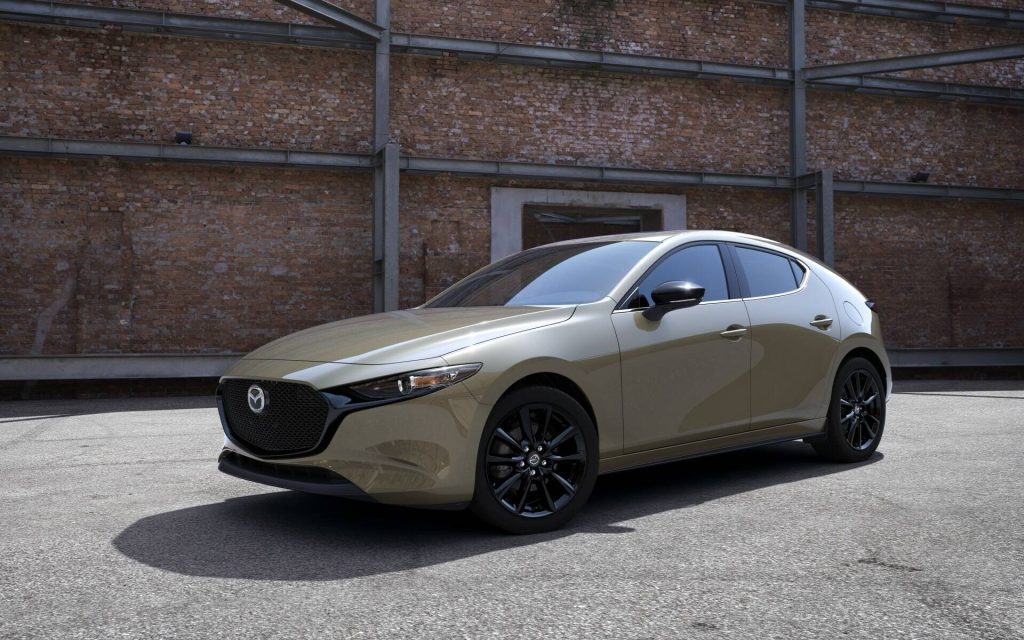
The Mazda3 is a smart first-car choice for a young driver who wants something slightly more engaging without stepping into excessive performance. Its compact dimensions make it relatively easy to maneuver, while its steering and chassis provide predictable responses that can help a new driver understand how a car behaves through corners.
That balance is important. A first vehicle should not feel intimidating, but it should still give the driver useful feedback. The Mazda3’s steering provides a more connected sensation than many basic compact cars, allowing a new driver to better understand how small steering inputs affect the vehicle.
Safety is another reason for its inclusion. Modern Mazda3 models offer a strong collection of active-safety technology, while the model has earned favorable crash-test results from IIHS across recent generations. That gives parents another reason to consider it when looking for a vehicle for an inexperienced driver.
The car’s relatively compact footprint is equally useful. New drivers can find it easier to judge the corners of a small sedan or hatchback than a larger SUV, particularly when parking or navigating narrow streets.
The Mazda3 also avoids the excessive horsepower found in many tempting performance-oriented choices. Its engines provide enough acceleration for normal American traffic without turning the vehicle into a high-powered machine that demands greater restraint.
For a young driver, that combination creates a useful learning environment. The Mazda3 can remain enjoyable after the driver gains experience, but it does not require that experience from day one.
4. Subaru Impreza
The Subaru Impreza brings another useful quality to the first-car discussion: standard all-wheel drive. For young drivers who live in areas where rain, snow, or poor road conditions are common, having power delivered to all four wheels can provide additional traction when accelerating on slippery surfaces.
That feature should not be confused with immunity from bad weather. All-wheel drive cannot overcome excessive speed, poor tires, or careless driving. Its value comes from helping the vehicle maintain traction when road conditions become challenging.
The Impreza is also relatively compact, making it approachable for someone who is still learning vehicle dimensions. Its hatchback configuration adds practical cargo space without requiring the physical size of a large SUV.
Subaru has also equipped modern Impreza models with EyeSight driver-assistance technology, depending on model year and configuration. Features such as forward collision warning and automatic emergency braking can provide another layer of protection when the driver fails to react quickly enough.
Another advantage is the Impreza’s modest performance. It is not designed around extreme acceleration, which helps keep the focus on controlled driving rather than speed. A young driver can learn how to handle different road surfaces without having a large amount of power immediately available.
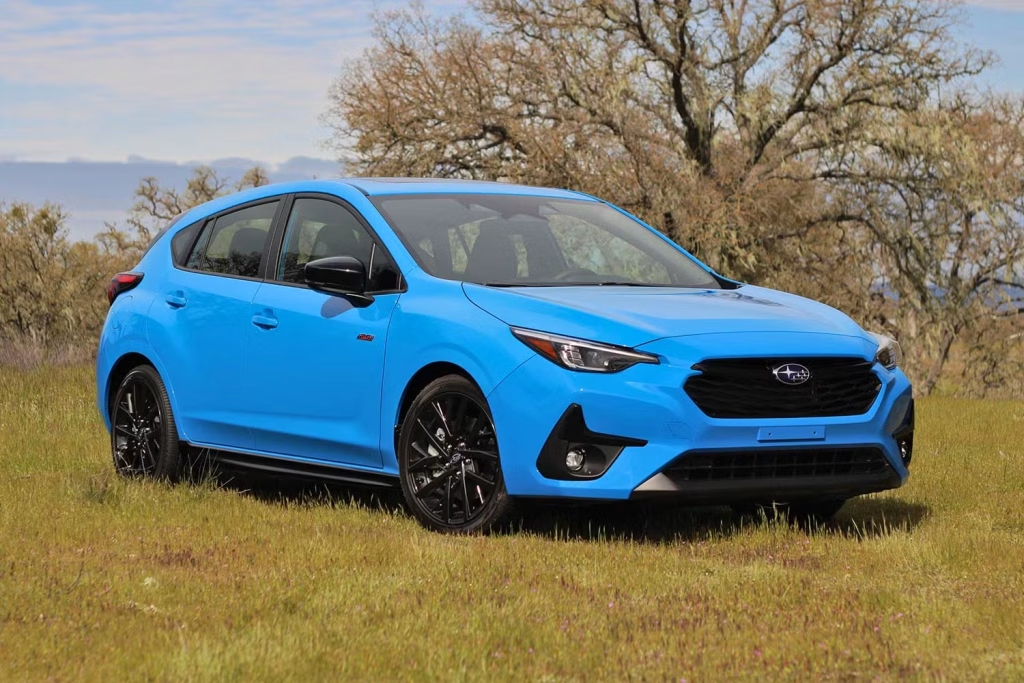
The Impreza therefore makes sense for families looking for something practical and confidence-inspiring. Its combination of compact dimensions, available safety technology, and standard all-wheel drive gives it a distinctive role among sensible first-car choices.
Most importantly, it encourages the right habits. A new driver still has to slow down for poor conditions and maintain safe following distances, but the car itself does not add unnecessary performance or size to the learning process.
5. Hyundai Elantra
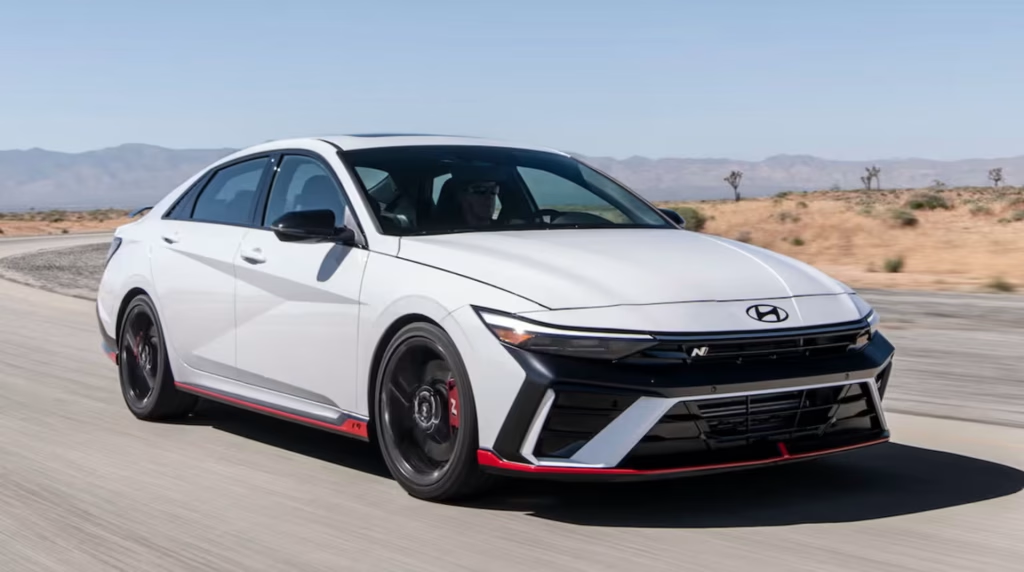
The Hyundai Elantra deserves consideration because it combines an approachable size with a useful collection of modern safety technology. For a young driver, that combination can be more valuable than outright performance.
The Elantra is compact enough to be manageable in parking lots and city traffic while still providing enough space for passengers and everyday belongings.
Its powertrains are generally focused on efficiency rather than speed, which is another reason it works well as a first car. A new driver can concentrate on judging traffic, maintaining safe distances and learning smooth acceleration instead of dealing with an engine that responds aggressively to every throttle input.
Modern Elantra models also offer Hyundai’s SmartSense suite, with features such as forward collision-avoidance assistance, lane-keeping assistance and available blind-spot monitoring depending on model year and trim. These technologies can provide useful support when a new driver makes a mistake, although they should never replace active attention.
The Elantra’s relatively straightforward dimensions are equally helpful. Young drivers often have limited experience judging where the front and rear corners of a vehicle are located, so a compact sedan can be easier to learn than a large crossover or pickup.
Reliability and warranty coverage add another practical advantage. Families buying a first car often want predictable ownership expenses, and Hyundai’s long factory warranty on new vehicles can reduce some concerns about unexpected repair costs.
The Elantra therefore makes sense because it gives young drivers a modern vehicle without surrounding them with unnecessary performance. It is comfortable enough for daily use, economical enough for regular commuting, and equipped with safety technology that can help support a developing driver.
5 Risky Choices
1. Ford Mustang GT
The Ford Mustang GT is an appealing car for an experienced enthusiast, but its combination of a powerful V8 engine and rear-wheel drive makes it a questionable choice for a new driver. The problem is not that the Mustang is inherently unsafe. The concern is that its performance gives an inexperienced driver significantly more capability than they are likely to need.
The 5.0-liter V8 produces substantial power, and the rear-wheel-drive layout allows the driver to influence the behavior of the rear tires with throttle input. For someone who has not learned how quickly traction can disappear, that combination can become difficult to manage.
A young driver may also be tempted to test the car’s acceleration simply because the performance is readily available. That creates a very different environment from driving a modest compact sedan. Speed can build rapidly, leaving less time to react to unexpected traffic or road conditions.
Insurance is another consideration. Performance-oriented vehicles can be more expensive to insure for younger drivers, particularly when the driver has little history behind the wheel.
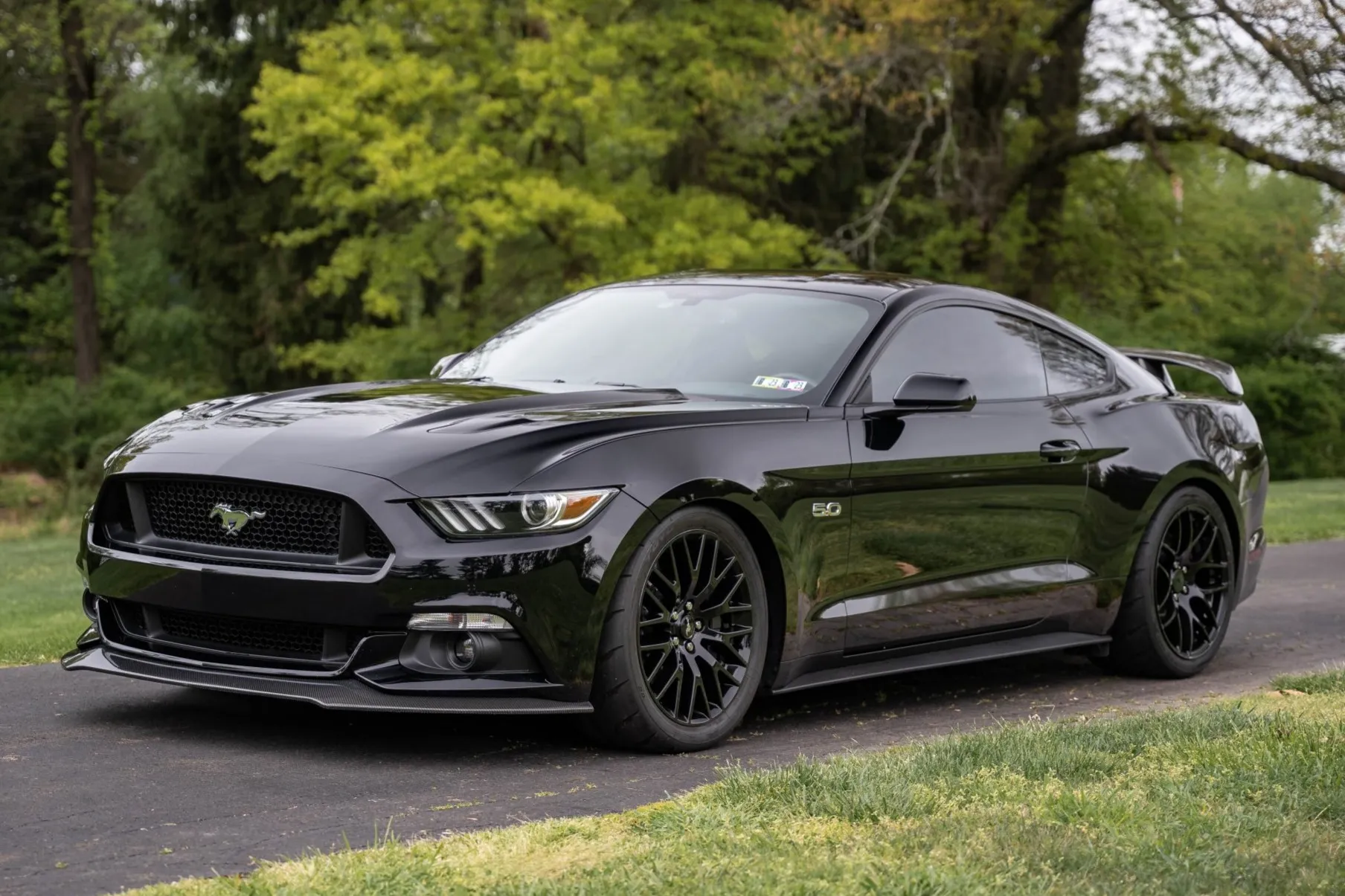
The Mustang GT can therefore be a fantastic car for someone who understands its capabilities, but those same capabilities make it a poor match for the learning stage. A new driver benefits more from predictable performance and a forgiving chassis than from hundreds of horsepower.
For a first car, the Mustang’s biggest weakness is not its quality. It is simply more performance than most inexperienced drivers need.
2. Chevrolet Camaro SS
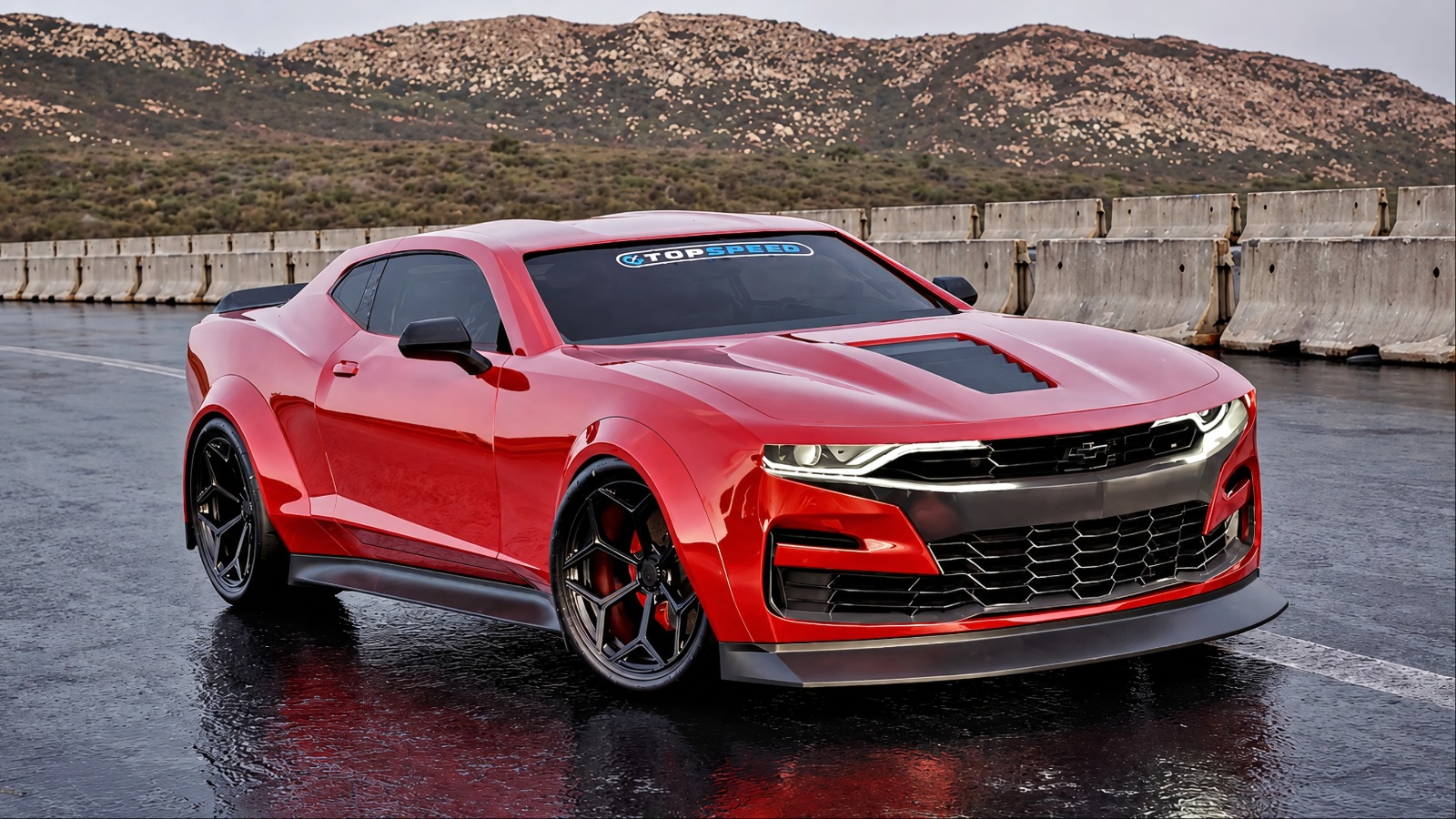
The Chevrolet Camaro SS presents a similar problem from a different angle. Its powerful V8, rear-wheel-drive layout, and performance-focused chassis make it an exciting machine, but those characteristics can create unnecessary challenges for someone who has only recently obtained a driver’s license.
The Camaro’s acceleration is far beyond what is required for normal commuting. A new driver can easily find themselves traveling much faster than intended if they are not careful with throttle inputs. Learning smooth acceleration takes time, and a powerful engine reduces the margin for error.
Visibility is another concern. The Camaro has a low driving position and substantial bodywork surrounding the cabin. For an experienced driver, those characteristics can become familiar. Someone who has only recently learned to drive may find it more difficult to judge the car’s corners, change lanes confidently, or maneuver through crowded parking areas.
The car’s performance also creates additional tire and maintenance costs. High-performance tires are not inexpensive, and aggressive driving can shorten their lifespan considerably. Insurance can add another significant expense for a young owner.
None of this means the Camaro SS is a bad vehicle. It is designed to deliver exactly the kind of performance that enthusiasts want. The problem is the mismatch between that capability and the needs of a beginner.
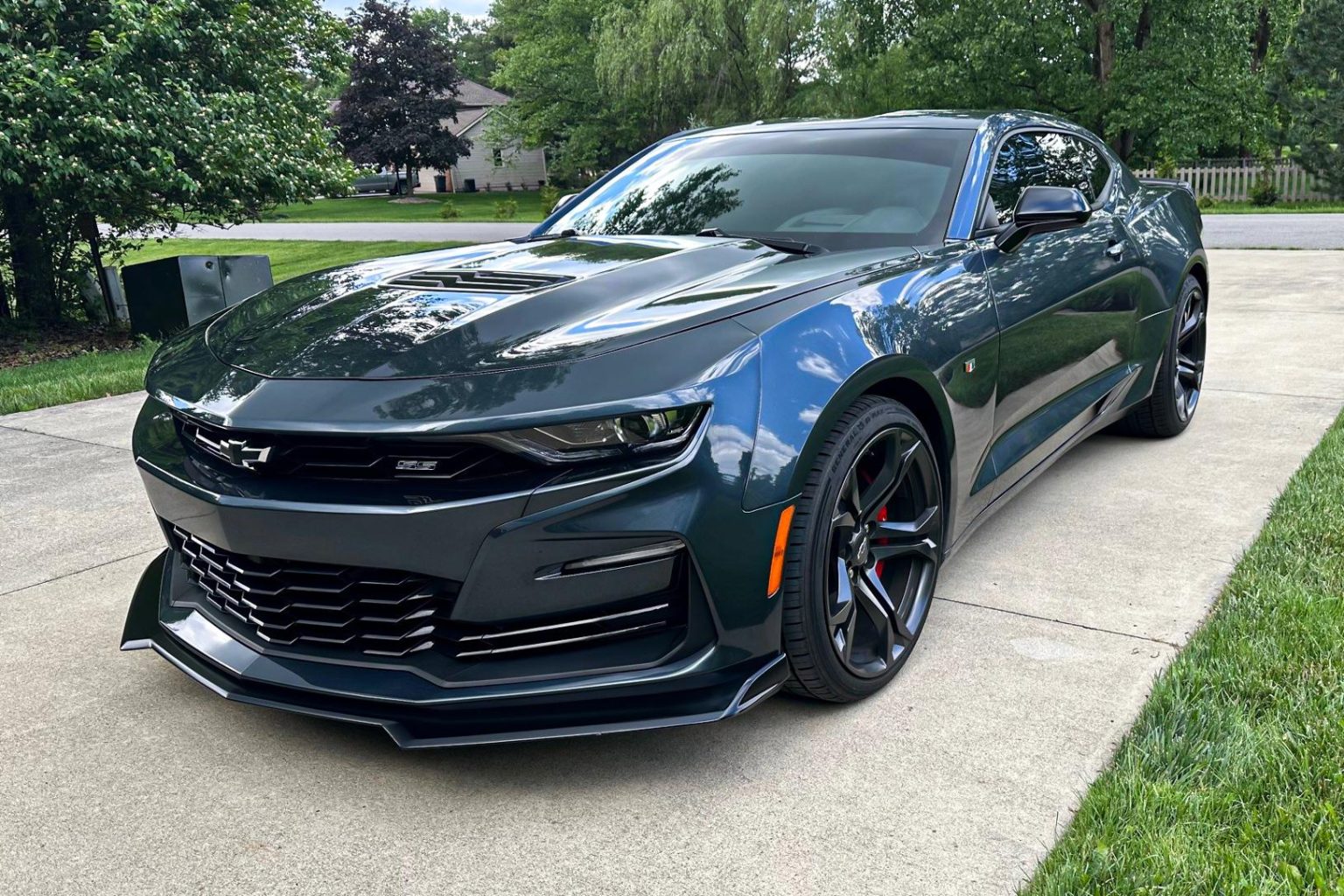
A first car should ideally give a new driver enough time to develop good judgment before introducing extreme acceleration and performance. The Camaro SS reverses that equation, placing considerable capability in the driver’s hands from the beginning.
3. Dodge Challenger R/T
The Dodge Challenger R/T is another tempting choice for a young driver, particularly because its retro styling and V8 soundtrack make it immediately appealing. The problem is that the same characteristics that make the Challenger exciting can make it unnecessarily demanding for someone with limited driving experience.
The R/T’s V8 provides substantially more power than a new driver needs for everyday transportation. That extra output is particularly important because the Challenger uses rear-wheel drive. Under normal conditions, the car can be easy to drive, but aggressive throttle application on a wet or slippery road can reduce rear-tire traction quickly.
The Challenger is also a large vehicle. Its long body and relatively wide footprint can make parking and maneuvering more challenging than they would be in a compact sedan. A new driver is still learning how to judge the corners of a vehicle, and a large performance coupe gives them more dimensions to manage.
Insurance is another concern. A young driver buying a V8 performance car can face significantly higher premiums than someone choosing a modest compact vehicle. Fuel costs are also higher, particularly if the driver frequently uses the engine’s performance.
None of those characteristics makes the Challenger R/T a poor car. They simply make it a poor match for the learning stage. An experienced driver can understand the vehicle’s size, power, and traction characteristics, while a teenager may still be developing those instincts.
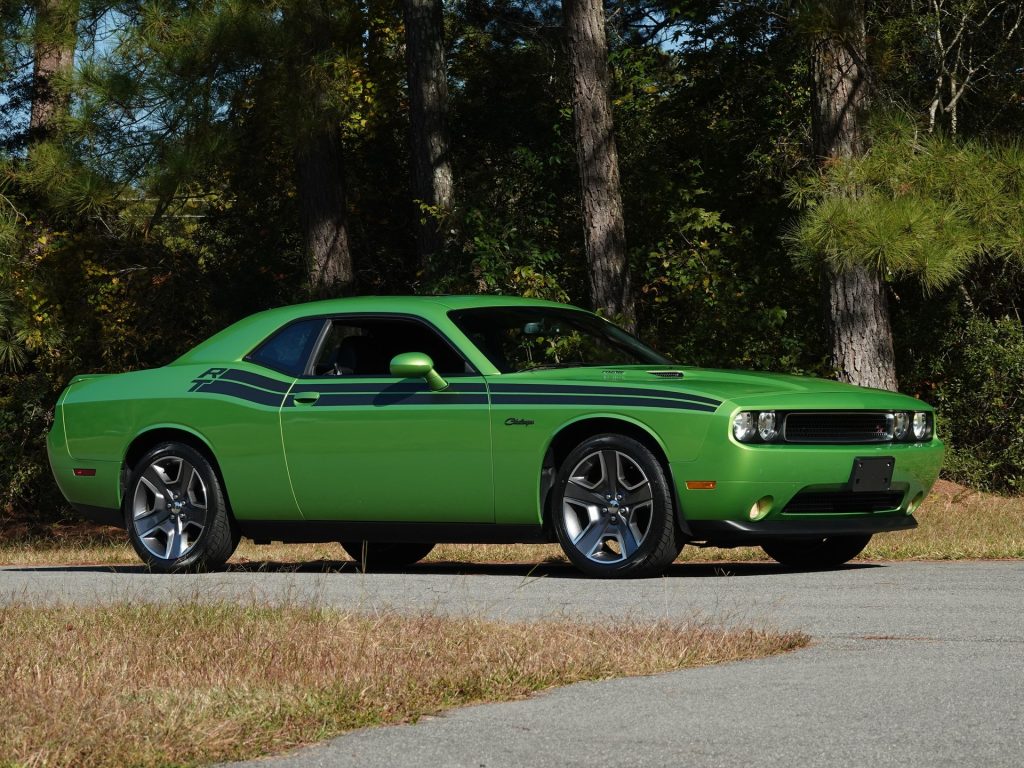
That is why the Challenger belongs in the risky group. Its combination of substantial power, rear-wheel drive, and large dimensions creates challenges that are unnecessary for a first vehicle. A less powerful sedan can teach the same fundamental driving skills while providing a considerably larger margin for mistakes.
4. Jeep Wrangler Rubicon
The Jeep Wrangler Rubicon creates a different set of challenges. Its problem for a new driver is not excessive acceleration in the same way as a V8 muscle car. Instead, it combines unusual dimensions, off-road hardware, and handling characteristics that require more adaptation than a conventional compact car.
The Wrangler’s tall body and upright seating position can provide excellent visibility in some situations, but its boxy shape and larger exterior dimensions can make tight parking areas more difficult. A young driver who has only recently learned vehicle positioning may need additional time to become comfortable judging the Wrangler’s corners.
Its steering and ride also feel different from a typical sedan. The vehicle is designed to maintain impressive capability away from paved roads, so it does not behave exactly like a conventional commuter car. New drivers accustomed to small sedans may initially find its handling less intuitive.
The Rubicon adds even more specialized equipment. Larger tires, increased ground clearance, and off-road hardware make it extremely capable on difficult terrain, but those features are unnecessary for most young drivers’ daily transportation needs.
There is also the temptation factor. A teenager with a highly capable off-road vehicle may be encouraged to attempt terrain beyond their experience. Even a vehicle engineered for difficult conditions can become dangerous when the driver misjudges an obstacle, slope or surface.
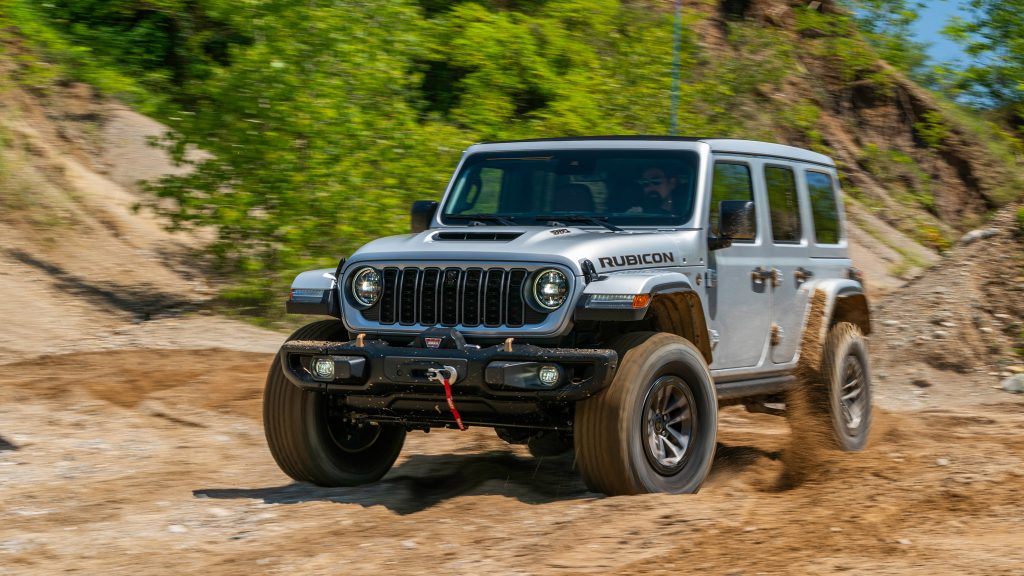
The Wrangler Rubicon is therefore not a bad vehicle. In fact, its strengths are precisely what make it so capable for experienced owners. But a first car should ideally be easy to understand, predictable on pavement and forgiving of inexperienced inputs.
For a new driver, a simpler compact car generally provides a better environment for developing those fundamental skills before moving into a specialized vehicle such as the Rubicon.
5. Chevrolet Corvette Stingray
The Chevrolet Corvette Stingray is perhaps the clearest example of a car that can be an excellent performance machine while still being a questionable first vehicle for a young driver. Its mid-engine layout, substantial horsepower, and rapid acceleration give it capabilities that far exceed what an inexperienced motorist needs for everyday transportation.
The biggest concern is the sheer speed available. The Corvette can reach highway speeds extremely quickly, which leaves a new driver less time to recognize how fast the vehicle is actually traveling.
A teenager who is still learning to judge speed and distance may find it difficult to develop good instincts when the car responds so aggressively to throttle inputs.
The mid-engine configuration also gives the Corvette a different handling balance from an ordinary front-engine sedan. That can be rewarding for an experienced enthusiast, but it introduces another characteristic for a novice to understand when the vehicle is pushed near its limits.
Insurance and running costs create additional disadvantages. A high-performance sports car can be expensive to insure for a young driver, while performance tires and specialized maintenance can add to the cost of ownership.
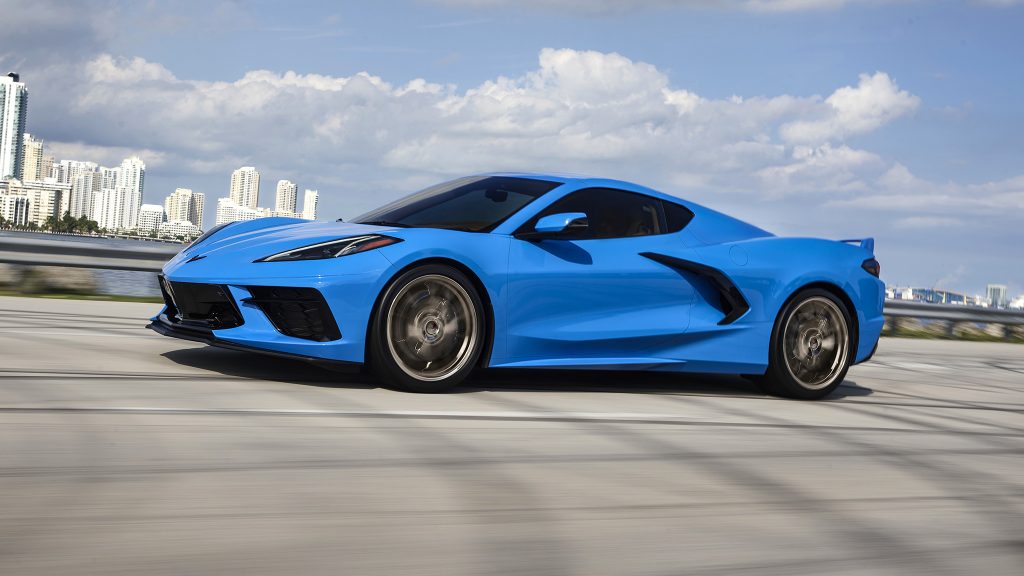
The Corvette is not included because it is poorly engineered. Quite the opposite is true. Its engineering is exactly what makes it such an impressive sports car. The problem is that a first-time driver has little reason to need this level of performance.
A young motorist is better served by a vehicle that allows mistakes to be corrected before they become serious. The Corvette’s acceleration and handling capability can reduce that margin. For an experienced driver, it can be extraordinary. For a first car, it is simply far more machine than most teenagers need.
