A great road-trip vehicle needs to do more than simply move passengers from one city to another. Comfort, highway stability, cargo capacity, seating space, and fuel range become increasingly important as the miles accumulate.
An errands-focused vehicle has a different mission. It needs to be easy to park, maneuverable in crowded areas, practical for short trips, and inexpensive to operate.
Some cars can handle both roles, but certain models are clearly better suited to one than the other. This comparison looks at four vehicles designed around long-distance travel and four that make more sense for everyday errands.
4 Cars Built for Road Trips
1. Honda Odyssey
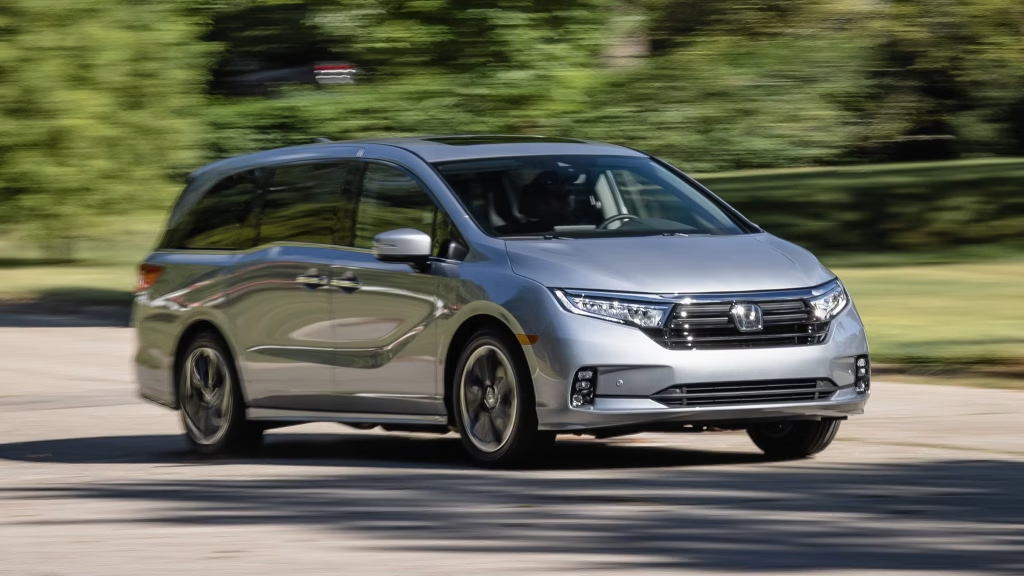
The Honda Odyssey is almost purpose-built for long family journeys. Its biggest advantage is the amount of usable space available for passengers and luggage, making it particularly effective when several people are traveling together.
Three rows provide seating flexibility, while the minivan’s wide cabin makes it easier for passengers to settle in for several hours. Sliding doors are another major advantage during road-trip stops. At crowded gas stations, parking areas, or restaurants, passengers can open the doors without worrying as much about neighboring vehicles.
Cargo flexibility is equally important. The Odyssey’s configurable seating allows families to adjust the cabin according to the number of passengers and amount of luggage being carried. That is far more useful on vacation than a vehicle with a fixed seating arrangement.
Highway comfort is another reason it belongs here. The Odyssey is designed primarily as a family transportation vehicle rather than a performance machine, so its priorities favor a relaxed driving experience.
The elevated seating position gives the driver a clear view of surrounding traffic, while the spacious cabin reduces the cramped feeling that can develop during long journeys.
Fuel economy is not its strongest attribute, but the trade-off is considerable interior and cargo capacity. Families can carry multiple passengers without requiring a large amount of luggage to be left behind.
The Odyssey therefore works best for road trips where the journey includes several people, substantial luggage, and frequent stops. It is less about driving excitement and more about making hundreds of miles easier for everyone inside.
2. Toyota Grand Highlander
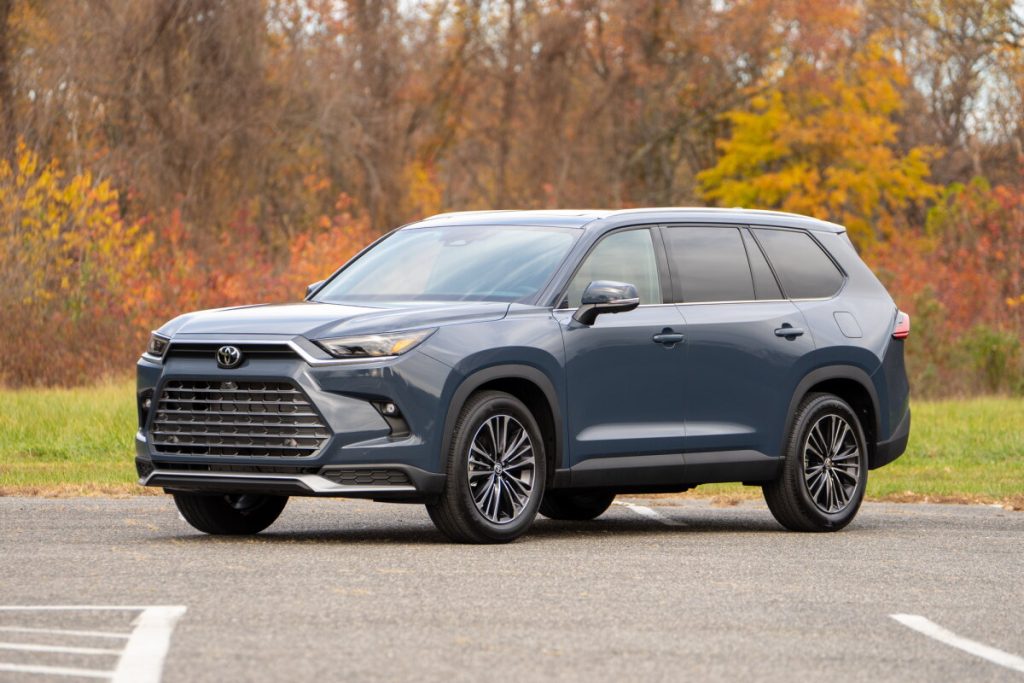
The Toyota Grand Highlander is particularly well suited to road trips because it combines three-row seating with substantial cargo capacity. That combination addresses one of the biggest problems with many three-row SUVs: having to sacrifice most of the luggage area when every seat is occupied.
Its larger body provides more usable space behind the third row, making it easier to carry suitcases, backpacks, and other travel equipment without forcing passengers to compromise. That matters on family vacations where every seat may be occupied.
The cabin also provides a comfortable environment for long-distance driving. The driver sits in a commanding position, while passengers have more room to spread out than they would in a smaller crossover. This can become especially valuable after several hours on the road.
Another strength is its broad powertrain range. Buyers can choose from gasoline and hybrid configurations depending on model year and trim, allowing them to prioritize either traditional power or improved fuel efficiency. For long highway journeys, the hybrid versions can reduce fuel stops in the right driving conditions.
The Grand Highlander’s size also contributes to a stable highway feel. Its longer body and substantial footprint make it feel planted when traveling at interstate speeds, which can reduce the constant corrections sometimes associated with smaller vehicles.
That makes it a strong road-trip choice for families who want SUV styling and capability without giving up the passenger and luggage space associated with a minivan.
For vacation travel, the Grand Highlander offers a useful combination of seating, cargo capacity, comfort, and long-distance practicality. It is particularly convincing when a family needs three rows but still wants enough room for everyone’s belongings.
3. Chevrolet Suburban
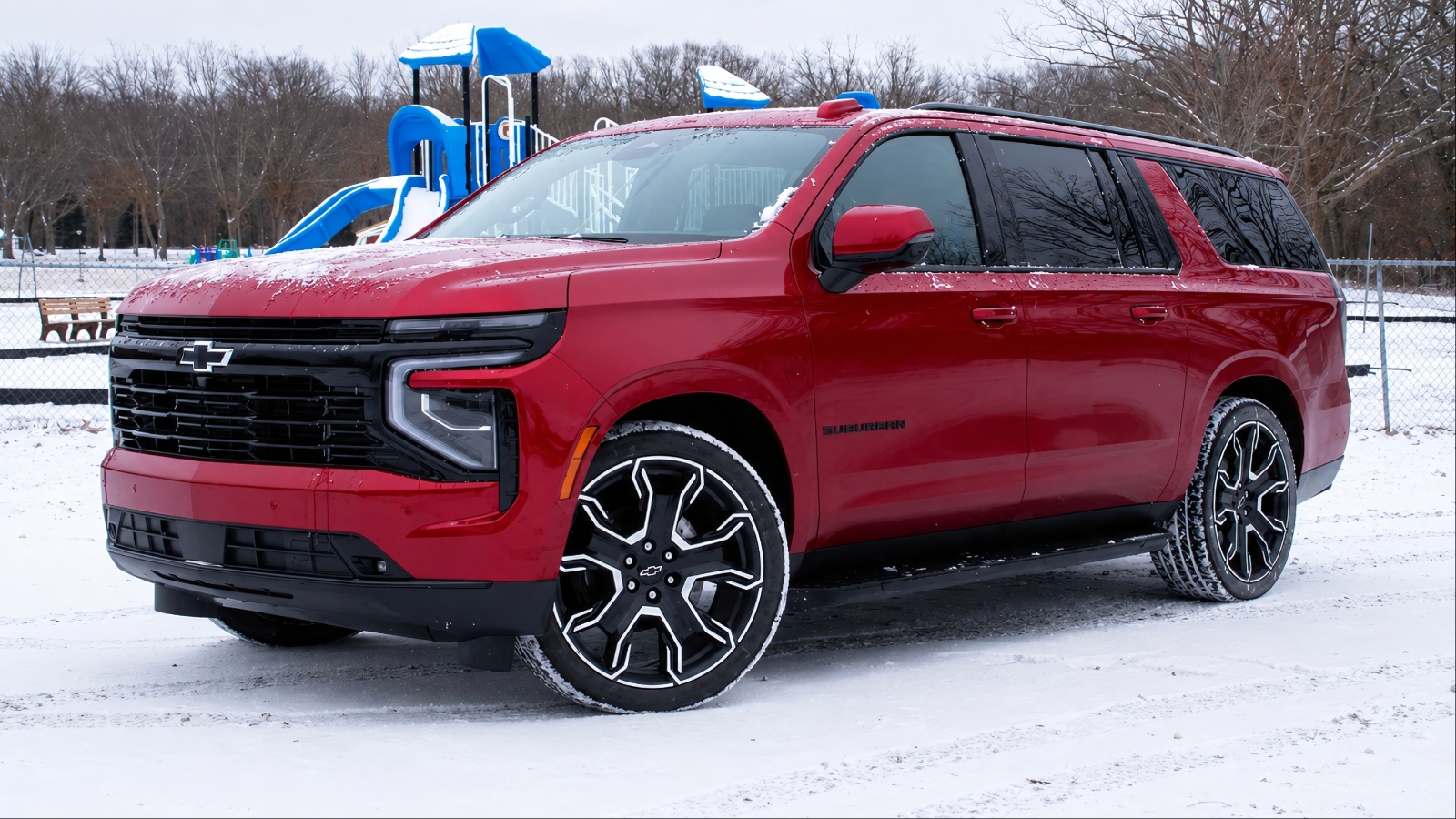
The Chevrolet Suburban is built for road trips where passenger count, luggage, and sheer space matter more than compact dimensions. Its greatest advantage is the enormous amount of room available throughout the vehicle, allowing families to travel with several passengers while still carrying substantial luggage.
That capacity becomes particularly useful when all three rows are occupied. Many three-row vehicles leave very little room behind the final row, forcing families to carefully limit what they bring or use a roof carrier.
The Suburban’s extended body provides considerably more cargo room, making it possible to pack suitcases, coolers, and travel equipment without turning the passenger area into a storage compartment.
The spacious cabin also helps during long journeys. Passengers have more room to move, while the driver benefits from a commanding seating position and a broad view of the road. On a multi-state trip, those characteristics can make the experience considerably less tiring.
Another reason the Suburban belongs here is its towing capability. Families pulling a camper, boat, or trailer have access to substantial capability, depending on the engine and configuration. That makes the vehicle useful for road trips that involve more than simply carrying people and luggage.
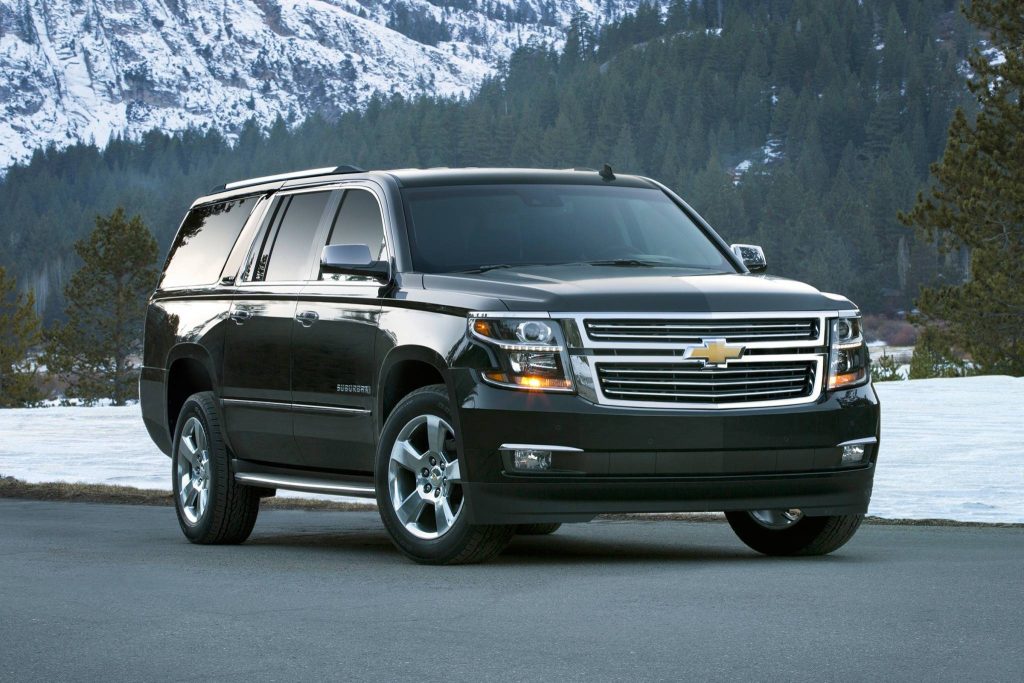
The trade-off is obvious: the Suburban is large. Parking garages, narrow streets, and crowded fuel stations require more attention than they would with a smaller crossover.
But on an open highway, its size becomes an advantage. It provides space, stability, and the ability to carry almost everything a large family might need.
4. Volvo XC90
The Volvo XC90 takes a more refined approach to road-trip duty. Rather than focusing primarily on maximum cargo capacity, it combines three-row practicality with a quiet, comfortable cabin and a driving experience designed around long-distance relaxation.
That distinction becomes increasingly valuable after several hours on the highway. A road-trip vehicle needs to minimize fatigue, and the XC90’s supportive seating and premium cabin environment make extended journeys easier to tolerate. The driving position gives the driver a clear view ahead while keeping controls within easy reach.
The XC90’s three-row layout also provides flexibility for families. The rear seats can accommodate additional passengers when needed, while the cargo area can be expanded by folding seats. That makes the vehicle adaptable to different types of trips rather than forcing owners into a single configuration.
Another advantage is the vehicle’s composed highway behavior. The XC90 feels substantial without becoming as cumbersome as a full-size SUV. That can be useful when a trip combines long interstate stretches with smaller roads, hotel parking lots, and unfamiliar city streets.
Fuel efficiency varies by powertrain, but the XC90’s appeal is less about minimizing every fuel stop and more about creating a comfortable environment for covering long distances.
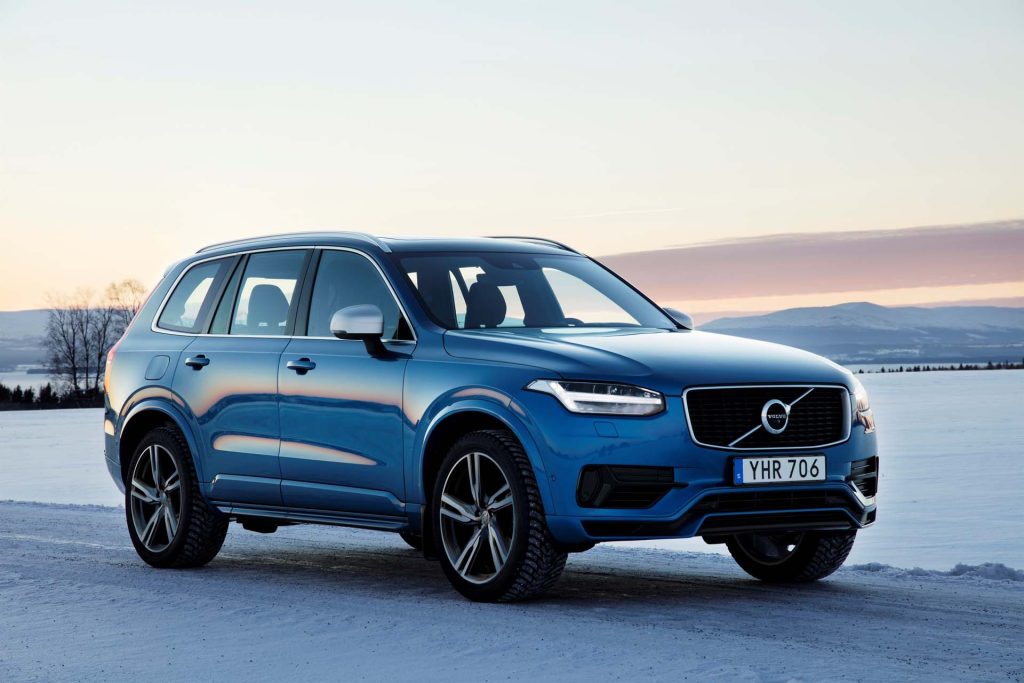
It also offers the kind of safety and driver-assistance technology that can be useful during extended highway travel. These systems are not substitutes for attention, but they can help reduce some of the workload during monotonous stretches.
The XC90 earns its place because it turns the road-trip vehicle into a comfortable space rather than simply a transportation tool. For travelers who value quietness, seating comfort, and premium surroundings alongside useful three-row capacity, it is a particularly strong long-distance companion.
4. Built for Errands
1. Honda HR-V
The Honda HR-V is well suited to errands because it occupies a useful middle ground between a small hatchback and a larger SUV. Its elevated seating position gives the driver a clearer view of surrounding traffic, while its relatively compact footprint keeps it manageable in crowded parking areas.
That combination is valuable during repeated short trips. A driver may visit a grocery store, pharmacy, bank and shopping center in the same afternoon, making easy maneuverability far more important than high-speed performance.
The HR-V also provides useful cargo flexibility. Its rear seating can be folded when larger items need to be carried, allowing the vehicle to handle everything from grocery bags to small household purchases without requiring a large SUV.
Another advantage is the seating position. Getting in and out repeatedly is easier when the driver does not have to drop into a very low seat. That can make a difference when a vehicle is being used for several errands in succession.
The HR-V’s powertrain is also focused more on efficient everyday transportation than outright acceleration. That suits its mission. There is little reason for an errands-focused vehicle to have excessive power when most driving occurs at moderate speeds.
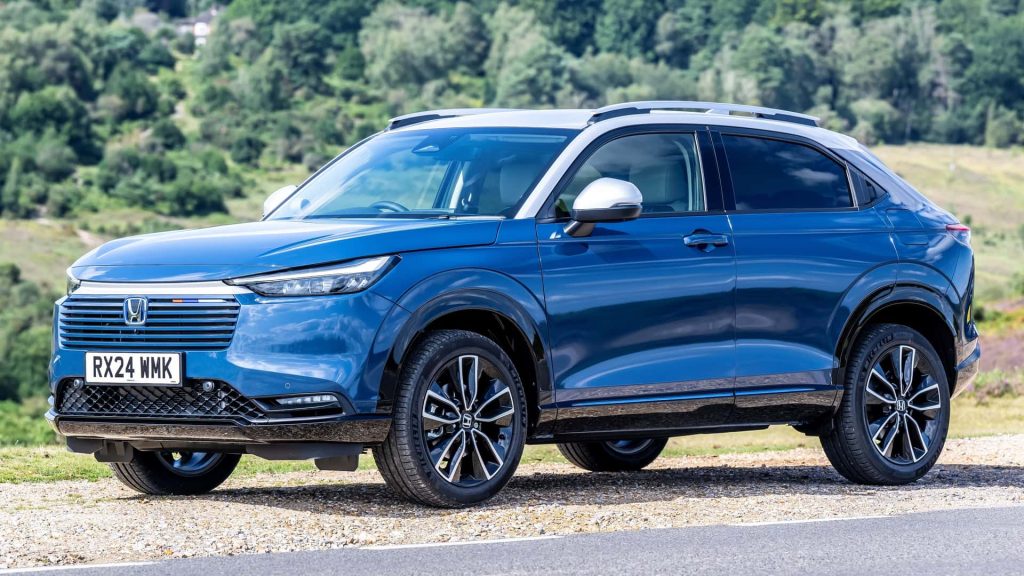
Its compact dimensions remain one of its strongest attributes. Tight parking spaces, narrow residential streets and busy shopping-center lanes are less intimidating when the vehicle is easy to place.
The HR-V therefore works particularly well for drivers who want the practicality and visibility of an SUV without taking on the size of a larger crossover.
2. Toyota Prius
The Toyota Prius is almost perfectly aligned with the economics of frequent errands. Short local journeys can involve repeated acceleration, braking, and idling, making efficiency particularly valuable. The Prius’ hybrid powertrain is designed specifically to reduce fuel consumption during this kind of everyday driving.
That advantage becomes more meaningful when the vehicle is used constantly. A person making several short trips every day can accumulate a surprising number of miles over a year, and improved fuel economy can translate into meaningful savings.
The Prius is also easy to maneuver. Its relatively compact dimensions make it less stressful to park outside busy stores or squeeze into tight spaces. Good visibility further helps when navigating crowded areas.
Cargo space adds another practical benefit. The hatchback design makes it easier to load groceries and packages than a traditional sedan trunk. The rear seats can also be folded when larger objects need to be transported.
Another strength is the Prius’ smooth driving character. Hybrid power delivery is particularly well suited to stop-and-go traffic, where the vehicle can operate quietly and efficiently without requiring aggressive throttle inputs.
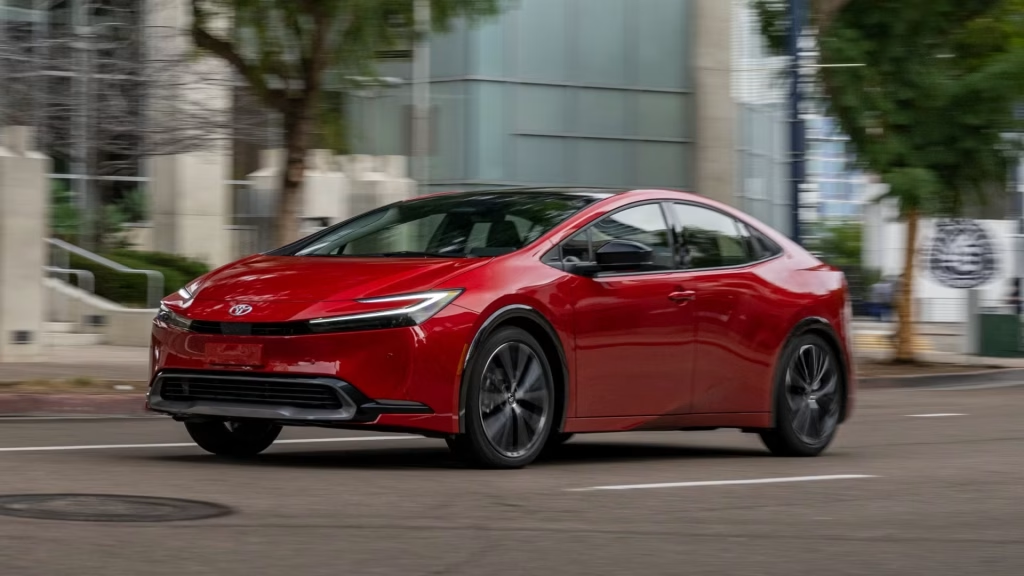
The car’s reputation for reliability is also important for an errands vehicle. Frequent short journeys mean the vehicle is used regularly, so unexpected mechanical downtime can quickly become inconvenient.
The Prius makes sense because it does not waste capability on things an errand car rarely needs. Instead of focusing on towing, high horsepower, or enormous passenger capacity, it concentrates on efficiency, practicality, and easy urban use.
For someone whose driving consists mostly of grocery runs, appointments, shopping trips, and commuting around town, that focused design can make the Prius one of the most logical choices available.
3. Kia Soul
The Kia Soul is particularly well suited to errands because its boxy shape makes the most of a relatively small footprint. From the driver’s seat, the upright body provides a useful view of the vehicle’s surroundings, while the squared-off dimensions make it easier to judge where the corners are when parking.
That is valuable in everyday shopping-center driving. A vehicle used primarily for errands spends considerable time maneuvering around parked cars, narrow lanes, and crowded entrances. The Soul’s shape can make those situations less intimidating than they might be in a larger crossover.
The boxy design also benefits cargo use. The rear opening provides a practical shape for loading grocery bags, packages, and other purchases. Instead of having to work around a long trunk opening, owners can place taller objects into the rear cargo area more easily.
Its relatively small exterior dimensions add another advantage. The Soul does not require a large parking space, yet the cabin feels more spacious than its footprint might suggest. That combination is useful for people who want practicality without moving into a large SUV.
Fuel consumption is also appropriate for its role. The Soul is designed as an affordable everyday vehicle rather than a high-performance machine, so its operating costs are generally more manageable than those of larger, more powerful vehicles.
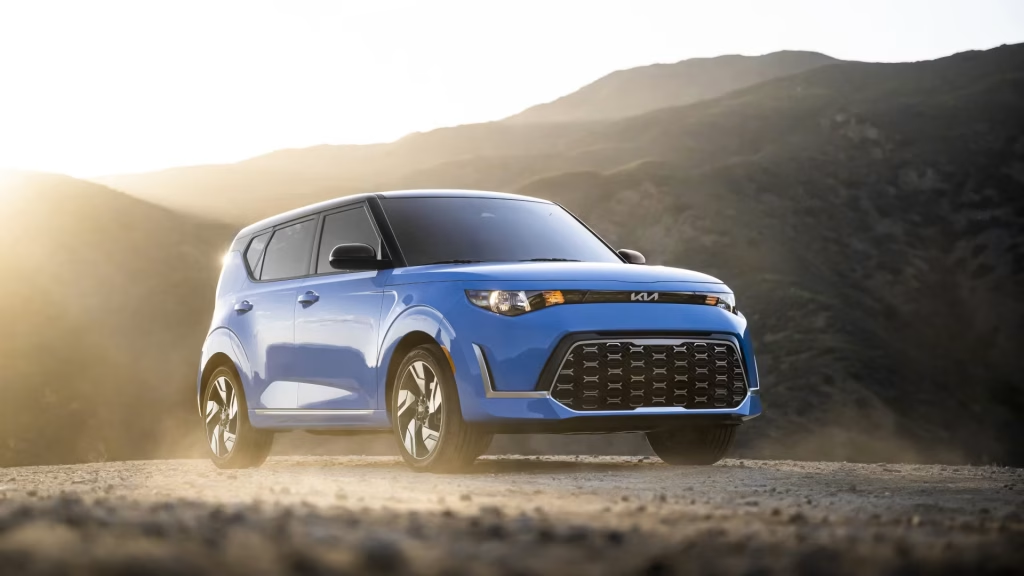
Another benefit is its distinctive shape. The upright roofline provides useful headroom for occupants, while the tall side windows contribute to a more open feeling inside.
The Soul therefore makes sense for errands because nearly every part of its design serves practical daily use. It is easy to maneuver, simple to load and compact enough for crowded parking areas, making it a useful choice for drivers who spend much more time around town than on long highway journeys.
4. Hyundai Kona
The Hyundai Kona completes the errands-focused group with a compact footprint, elevated seating position and useful cargo flexibility. Its size makes it considerably easier to maneuver through crowded streets and parking areas than a midsize SUV, while its crossover shape provides the visibility and accessibility many drivers prefer.
For repeated errands, those characteristics can matter more than outright performance. A driver may make several stops in a single trip, requiring constant parking, reversing, and low-speed maneuvering. The Kona’s relatively small dimensions make those tasks easier without forcing the owner into a tiny hatchback.
Its cargo area is also useful for everyday purchases. Groceries, small packages, and shopping bags can be loaded through the rear hatch without the restrictions of a conventional sedan trunk. Folding the rear seats expands the available space when something larger needs to be transported.
The elevated seating position is another practical advantage. Getting into a crossover is generally more convenient for repeated short trips than climbing down into a low sports car or sedan. That becomes especially noticeable when the driver is entering and exiting multiple times during the day.
Fuel economy is another reason the Kona fits this role. It does not need a large engine to perform its primary job, and its compact size helps keep daily operating costs reasonable.
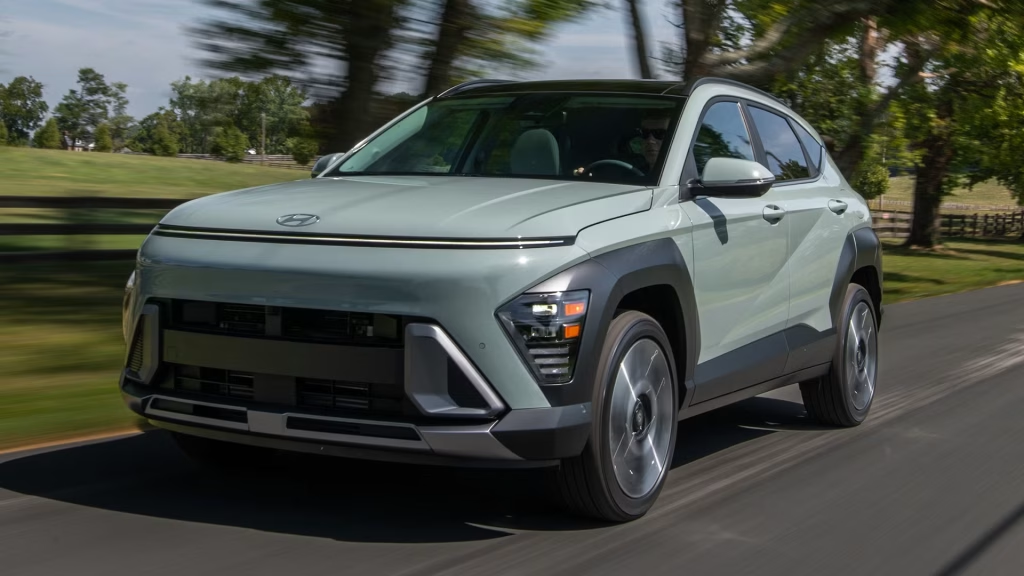
Parking is where the Kona’s dimensions become especially valuable. Shopping-center spaces can be narrow, and residential streets can become crowded with parked vehicles. A compact crossover gives the driver more room to maneuver and reduces the difficulty of judging the vehicle’s position.
The Kona therefore makes sense as an errands vehicle because it combines the useful qualities of a small SUV with the manageable dimensions of a compact car. It offers enough space for everyday needs without carrying the unnecessary bulk of a larger family vehicle.