
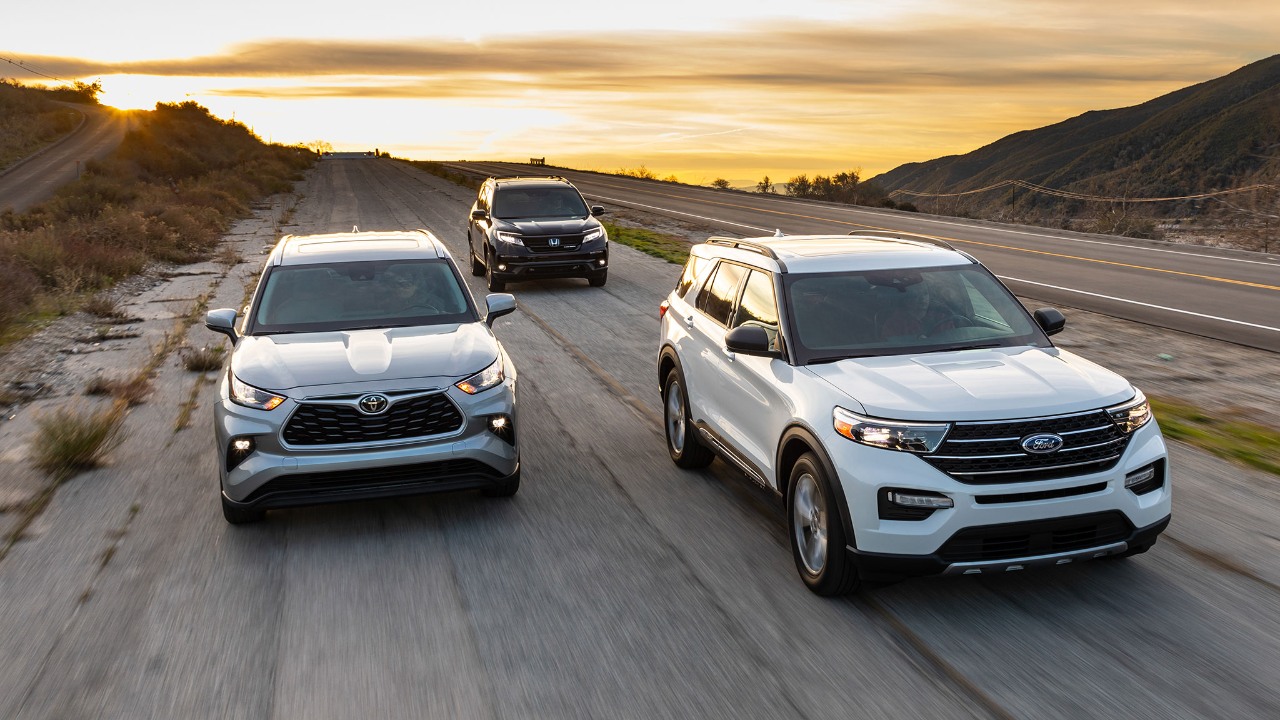
The three-row SUV market has become one of the most important battlegrounds in the American automotive industry. Families want the seating capacity and cargo flexibility of a large SUV, but many do not want to drive something as enormous as a full-size Tahoe or Expedition every day.
That is where vehicles such as the Toyota Highlander, Honda Pilot, and Ford Explorer come in. For 2026, these three SUVs have very different personalities.
The Highlander emphasizes efficiency and predictable family transportation. Toyota offers both a turbocharged gasoline engine and a hybrid powertrain, while all 2026 Highlander gas and hybrid models receive standard all-wheel drive.
The gas version produces 265 horsepower and 310 lb-ft of torque, while the hybrid makes 243 net combined horsepower and is estimated at 35 mpg combined.
The Honda Pilot follows a more traditional formula. Every version uses a 3.5-liter V6 producing 285 horsepower and 262 lb-ft of torque, paired with a 10-speed automatic. It can seat up to eight people and offers as much as 111.8 cubic feet of maximum cargo space.
The Ford Explorer is the performance-oriented option. Its available 3.0-liter EcoBoost V6 produces 400 horsepower and 415 lb-ft of torque, while the 2026 lineup also adds the off-road-focused Tremor. Properly equipped Explorer models can tow up to 5,000 pounds.
That creates a fascinating three-way battle. The Highlander has the fuel-economy advantage, the Pilot focuses heavily on family practicality, and the Explorer brings considerably more performance.
So which one should you buy? Here is how the 2026 Toyota Highlander, Honda Pilot, and Ford Explorer compare across six important categories.
Price and Value
Price is an important consideration with a three-row SUV because these vehicles can become expensive very quickly once buyers start adding larger wheels, upgraded interiors, premium audio, and advanced driver-assistance systems.
The Highlander has a strong value proposition because Toyota offers both gasoline and hybrid versions without requiring buyers to move into a completely different model.
For 2026, Toyota simplified the lineup and made all-wheel drive standard on both gas and hybrid grades. That means buyers do not have to pay extra for AWD simply to obtain additional traction.
The gasoline Highlander uses a 2.4-liter turbocharged four-cylinder producing 265 horsepower and 310 lb-ft of torque. Toyota offers it in XLE, XSE, Limited, and Platinum grades. Every gas version can tow up to 5,000 pounds when properly equipped.
The Highlander Hybrid takes a different approach. Its 2.5-liter hybrid system produces 243 net combined horsepower and carries a manufacturer-estimated 35 mpg combined rating. That makes it especially attractive to families that expect to keep the vehicle for years and drive substantial annual mileage.
The Pilot starts at a competitive point for the segment, but its conventional V6 means buyers do not have a hybrid option. Honda does provide strong equipment, including a 12.3-inch touchscreen and Google built-in on the 2026 Pilot. The Pilot also offers a removable second-row center seat on applicable versions, which gives families greater seating flexibility.
The Explorer has a strong value argument for buyers who want performance. Its 2.3-liter EcoBoost produces 300 horsepower in mainstream versions, while the 400-horsepower V6 is available in higher-performance configurations. The new Tremor adds off-road hardware and 4WD, making it particularly interesting for buyers who want more than a typical family SUV.
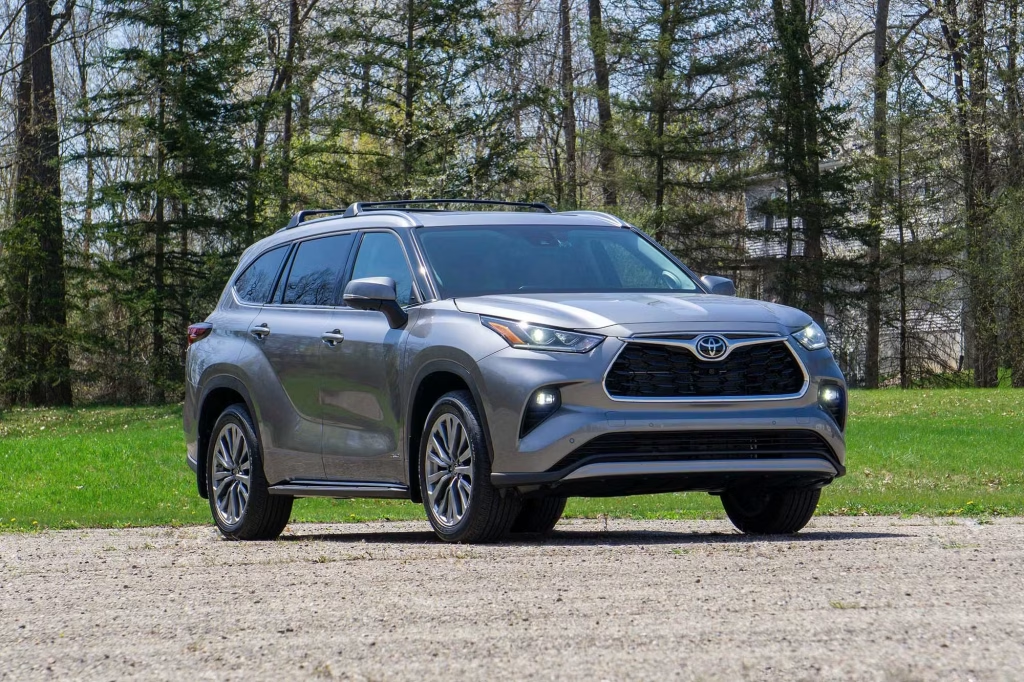
However, the Explorer’s more powerful versions can push the price significantly higher. The Pilot offers excellent space, and the Highlander provides hybrid efficiency, but Toyota gives buyers an unusually attractive combination of standard AWD, powertrain choice, and long-term fuel savings.
For a family trying to balance purchase price with operating costs and standard capability, the Highlander has the strongest value story.
Winner: Toyota Highlander
Powertrain and Performance
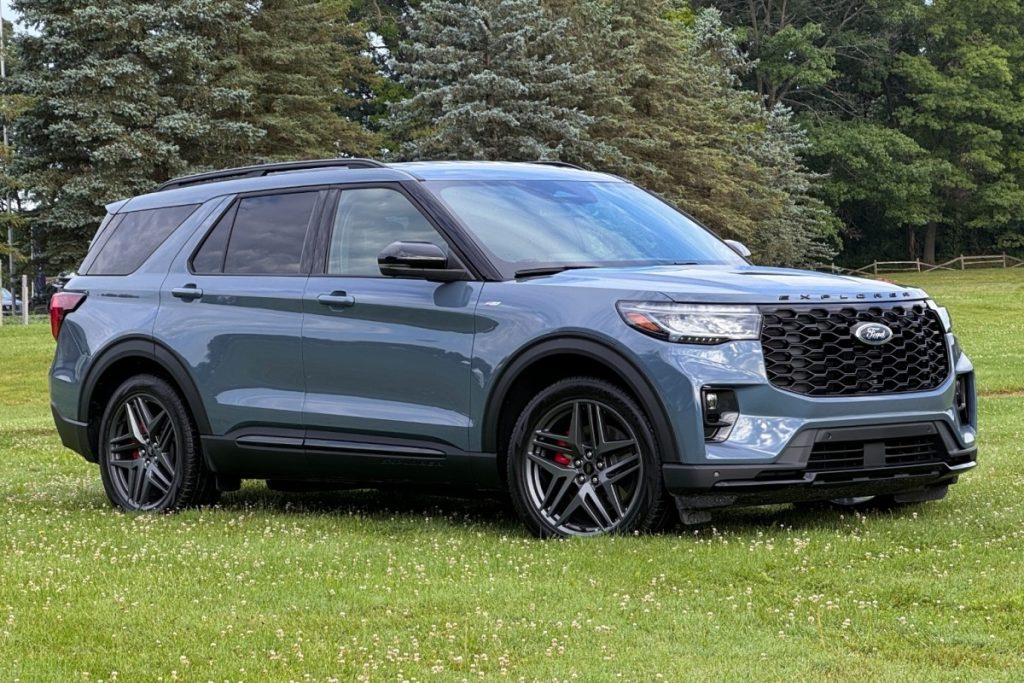
This category is where the Explorer separates itself from the other two. The standard Explorer engine produces 300 horsepower from a 2.3-liter EcoBoost four-cylinder, while the available 3.0-liter EcoBoost V6 produces 400 horsepower and 415 lb-ft of torque.
The high-output V6 is paired with a 10-speed automatic transmission. Ford’s 2026 Explorer ST and Tremor configurations use this 400-horsepower powertrain.
Those numbers put the Explorer comfortably ahead of the Highlander and Pilot in straight-line performance.
The Highlander’s gasoline engine produces 265 horsepower and 310 lb-ft of torque from its 2.4-liter turbocharged four-cylinder. That is enough for normal family driving, and the 310 lb-ft of torque arrives at relatively low engine speed, helping the SUV feel responsive in everyday situations.
The Highlander Hybrid makes 243 net combined horsepower. It is not designed to be a performance SUV, but Toyota’s hybrid system provides smooth electric assistance during acceleration. The hybrid also has an advantage in low-speed city driving because its electric motor can provide immediate torque.
The Pilot uses a 3.5-liter naturally aspirated V6, making 285 horsepower and 262 lb-ft of torque. Honda pairs it with a 10-speed automatic transmission.
The Pilot’s V6 has a different character from the turbocharged Explorer. Power delivery is linear and predictable, and the engine has enough output for highway merging, family road trips, and towing.
But the Explorer’s 400 horsepower changes the conversation. It is not simply about having a bigger number on the specification sheet. The extra output is noticeable when accelerating onto highways, passing slower traffic, or driving with several passengers aboard.
The Explorer also has a performance-oriented ST configuration, while the 2026 Tremor gives buyers a 400-horsepower SUV with additional off-road equipment.
That gives Ford two very different personalities within the same model. A buyer can choose the 300-horsepower four-cylinder for everyday family transportation or move to the 400-horsepower V6 for substantially stronger performance.
The Pilot’s V6 is smooth and proven, while the Highlander’s turbocharged four-cylinder provides respectable torque. The Highlander Hybrid is the most efficient powertrain of the three, but efficiency is not the objective of this category.
For drivers who actually enjoy having strong acceleration in a three-row SUV, the Explorer is the clear choice.
Winner: Ford Explorer
Fuel Economy
The Highlander wins this category by a considerable margin because Toyota offers a hybrid powertrain specifically designed around fuel efficiency.
The 2026 Highlander Hybrid carries a manufacturer-estimated 35 mpg combined rating. Toyota also says its hybrid battery is positioned beneath the second-row seats, meaning the battery does not take away cargo or passenger space.
That is an important advantage for a three-row SUV. Hybrid technology sometimes creates a concern that the battery will compromise practicality. Toyota’s packaging avoids that problem in the Highlander.
The Highlander Hybrid also uses an electric motor at the rear axle for its available all-wheel-drive system. Toyota’s system can activate rear-wheel assistance when needed, while the hybrid powertrain continues to prioritize efficiency during normal driving.
The gasoline Highlander is less efficient but still respectable. Toyota’s manufacturer estimate for the 2026 gas models is 24 mpg combined.
The Honda Pilot is considerably more conventional. Honda lists the front-wheel-drive Pilot at 19 mpg city, 27 mpg highway, and 22 mpg combined. AWD versions are rated at 19 mpg city, 25 mpg highway, and 21 mpg combined, with some configurations dropping to 18 mpg city, 23 mpg highway, and 20 mpg combined.
That means the Pilot’s fuel economy is reasonable for its size and power, but it cannot match the Highlander Hybrid.
The Explorer’s fuel economy depends heavily on its engine and drivetrain. Ford’s 400-horsepower Explorer Tremor is rated at 18 mpg city and 25 mpg highway in the configuration shown in Ford’s current inventory information.
The Explorer’s standard 300-horsepower turbocharged four-cylinder is more efficient than the high-output V6, but there is no conventional hybrid option in the 2026 Explorer lineup to challenge Toyota’s 35 mpg combined estimate.
This difference becomes important for families that drive thousands of miles annually. A three-row SUV can accumulate significant fuel costs because of its weight and aerodynamic profile. Saving several miles per gallon across years of commuting and road trips can add up to a meaningful amount of money.
The Highlander Hybrid is particularly well suited to families who spend a lot of time in urban traffic. Frequent acceleration and deceleration give the hybrid system opportunities to use electric assistance and regenerative braking.
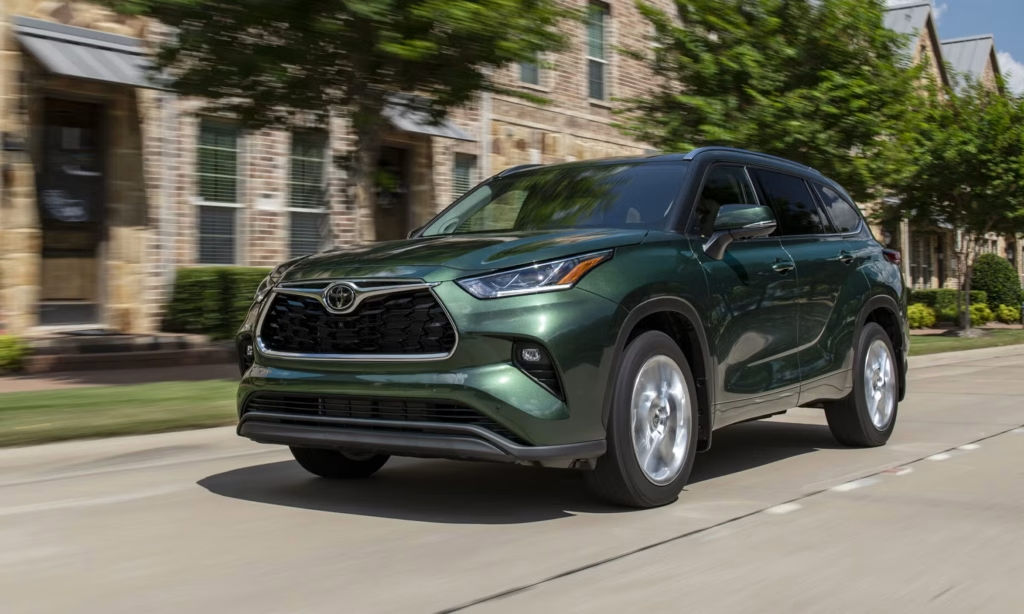
The Pilot makes more sense for buyers who prioritize its V6 character and family-focused packaging. The Explorer is the better choice for performance.
But if fuel consumption is the deciding factor, Toyota has designed the Highlander around exactly that requirement.
Winner: Toyota Highlander
Interior Space and Family Practicality
This is where the pilot makes one of its strongest arguments. Honda has designed the current Pilot around families who actually use all three rows rather than treating the third row as emergency seating.
The 2026 Pilot can seat up to eight people, depending on configuration. Honda also offers a multifunction second-row seat with a removable middle seat, allowing owners to change the cabin configuration depending on whether they need more passenger capacity or easier access to the third row.
Cargo capacity is another major advantage. Honda lists 87.0 cubic feet of cargo volume behind the first row and as much as 111.8 cubic feet of maximum cargo capacity depending on configuration.
That makes the Pilot exceptionally useful for family road trips. The Highlander is smaller inside. Toyota’s own comparison material lists 84.3 cubic feet of maximum cargo capacity for the Highlander, compared with 111.8 cubic feet for the Pilot.
That difference is significant when a family is loading luggage behind the first row. The Highlander remains practical. Toyota offers standard three-row seating for up to seven people, with an optional second-row bench increasing capacity to eight on XLE and Limited grades.
The hybrid’s battery packaging is also a positive because it does not reduce passenger or cargo space. The Explorer takes a slightly different approach.
Ford has made the Explorer more driver-focused than the Pilot, and its cabin offers useful technology and flexible seating. The second row can be configured with captain’s chairs or a bench, depending on trim. The Explorer also provides a useful cargo area behind the third row.
But when carrying a large family is the main priority, Honda has the strongest argument. The Pilot’s removable second-row center seat is especially useful. Parents can use the middle seat when carrying more children, remove it to create easier passage to the third row, or use captain’s chairs depending on the configuration.
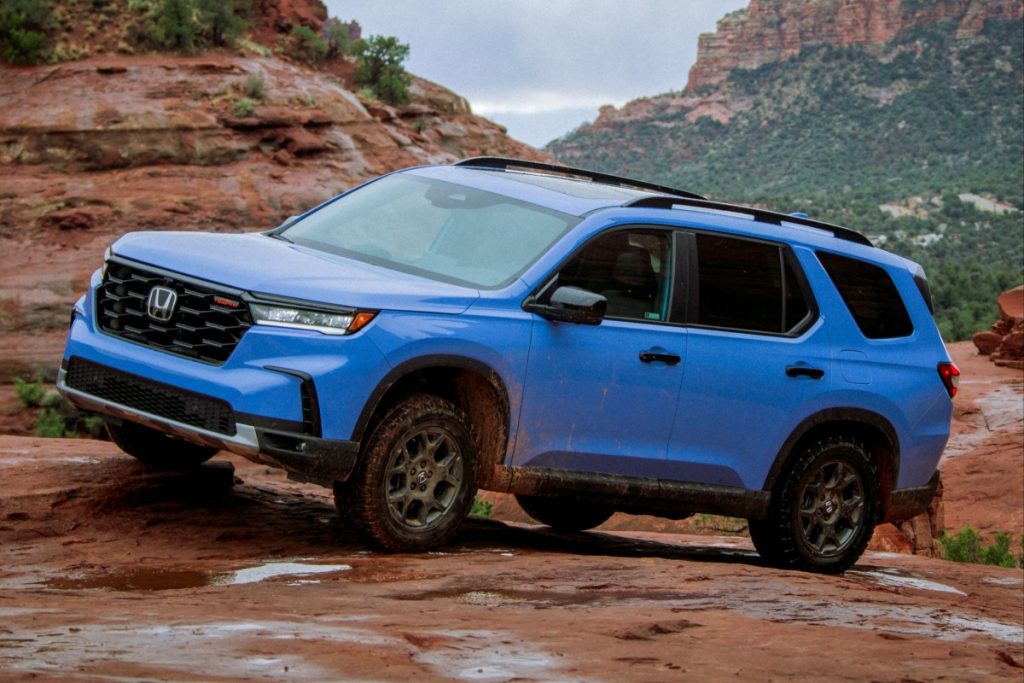
The Pilot’s seating flexibility is also supported by its drive modes. Honda provides Normal, Econ, Sport, Snow, and Tow modes, while AWD versions add Trail and Sand modes.
The result is an SUV that can transition easily between school runs, grocery trips, vacations, and towing.
The Highlander is more efficient, and the Explorer is more powerful, but the Pilot gives passengers the strongest combination of room and flexibility. For buyers who regularly use all three rows, that matters more than horsepower.
Winner: Honda Pilot
Technology and Safety
The Pilot takes another category because Honda has significantly upgraded its technology for 2026.
One of the most important changes is the adoption of a standard 12.3-inch touchscreen. Honda also adds Google built-in, allowing drivers to access services such as Google Maps and Google Assistant directly through the vehicle’s infotainment system.
That represents a meaningful improvement for a model that has historically been less aggressive with infotainment technology than some competitors.
Honda also makes a 10.2-inch digital instrument display standard on the refreshed 2026 Pilot. Higher trims can add a head-up display, Bose premium audio, heated and ventilated front seats, parking sensors, and a multiview camera system with TrailWatch.
The Pilot’s TrailSport trim is particularly interesting because it combines technology with off-road equipment. It includes an 18-inch wheel and all-terrain tire package, off-road-tuned suspension, a multiview camera system with TrailWatch, and a seven-mode drive system.
The Highlander also has a strong technology package. Toyota Safety Sense 2.5+ is standard, and Toyota offers an 8-inch touchscreen or an available 12.3-inch display depending on trim.
Toyota’s driver-assistance technology includes systems designed to support adaptive cruise control, lane management, and collision avoidance. The Highlander also benefits from Toyota’s established safety-focused engineering approach.
The Explorer is arguably the most technologically ambitious in certain areas. Ford offers BlueCruise on applicable Explorer configurations, providing hands-free highway driving on supported roads. The Explorer also has a large center display and digital instrumentation, while higher trims add premium audio and other convenience features.
The 2026 Tremor also brings technology specifically designed for off-road driving, including terrain management features. Yet the Pilot has a particularly convincing combination of standard and available technology.
The 12.3-inch display is now standard, Google built-in is standard, and the available camera system adds genuine usefulness for parking and trail driving. The Pilot also offers multiple USB ports throughout the cabin, wireless smartphone compatibility, and a Wi-Fi hotspot.
This matters in a family vehicle because technology needs to serve passengers as well as the driver.
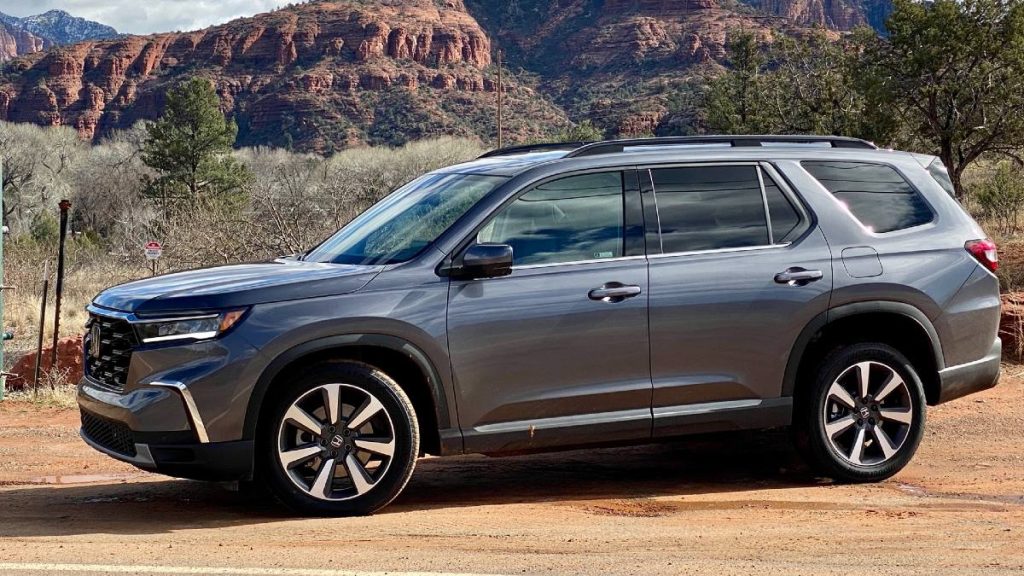
The Highlander has excellent safety equipment, and the Explorer’s BlueCruise is one of its standout features.
But the Pilot’s combination of infotainment, driver assistance, camera technology, and family-focused convenience features gives it the strongest package.
Winner: Honda Pilot
Towing and All-Weather Capability
The Explorer wins the final category because it combines strong towing ability with a powerful engine and a new off-road-oriented Tremor model.
Ford’s current 2026 Explorer information lists a maximum trailer rating of 5,000 pounds for properly equipped models. The 400-horsepower V6 produces 415 lb-ft of torque, giving the SUV substantial pulling power.
The Explorer Tremor adds another layer of capability. It comes with 4WD, all-terrain equipment and off-road-focused hardware, transforming the Explorer from a conventional family SUV into something more suitable for rougher terrain.
The Pilot is also a capable towing vehicle. Honda rates the Pilot TrailSport at 5,000 pounds of towing capacity. It uses the 285-horsepower V6, i-VTM4 all-wheel drive with Trail Torque Logic, and a seven-mode drive system.
That makes the Pilot TrailSport particularly appealing to families who want one vehicle capable of handling camping trips, light off-road travel, and trailer duties.
The Highlander can also tow up to 5,000 pounds with its gasoline powertrain. Toyota specifically lists 5,000 pounds for all 2.4-liter turbo gas models.
The Highlander Hybrid, however, is rated for 3,500 pounds. That lower limit is important because buyers choosing the hybrid for its 35 mpg combined rating are giving up some towing capability.
All three SUVs therefore provide meaningful towing capability. The difference comes in how they achieve it.
The Highlander offers strong turbocharged torque and standard AWD across its 2026 lineup. Toyota also provides Multi-Terrain Select on its gas models, with Mud & Sand and Rock & Dirt modes available for more challenging surfaces.
The Pilot provides an excellent balance between family practicality and trail capability. Its TrailSport trim is specifically designed for drivers who want to venture farther from paved roads without moving to a body-on-frame SUV.
The Explorer, however, has the strongest combination of horsepower and towing-oriented capability. Its 400-horsepower V6 gives it a clear performance advantage, while the Tremor provides an off-road-focused option for buyers who want more capability.
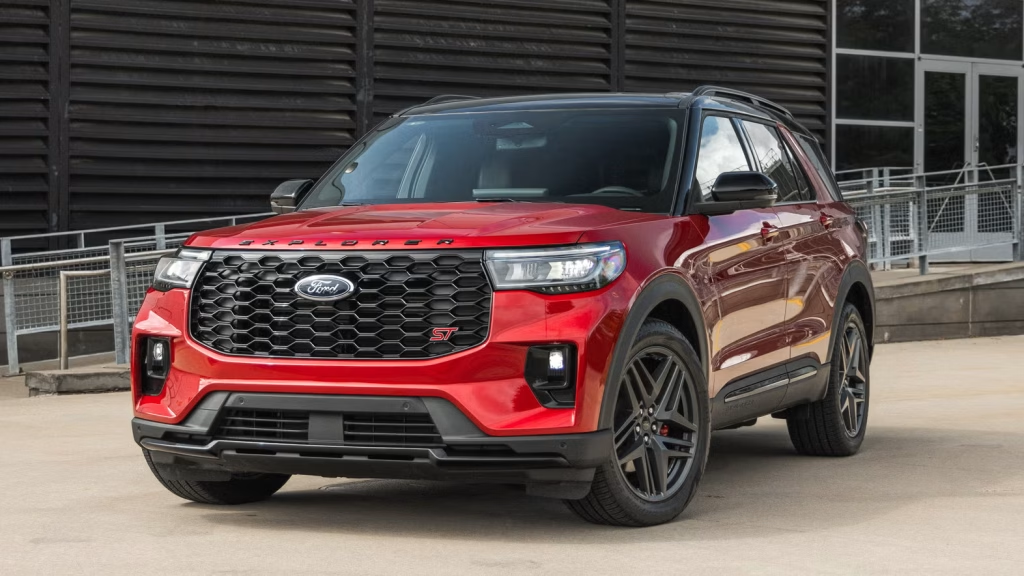
The Explorer’s 10-speed automatic also provides a broad range of ratios, helping it balance acceleration with highway cruising.
The Pilot matches its maximum 5,000-pound towing capacity, while the Highlander matches that figure with its gas engine.
But the Explorer’s combination of 400 horsepower, 415 lb-ft of torque, 5,000-pound towing capacity, and Tremor hardware makes it the most capable choice for buyers who want a three-row SUV that can handle more demanding driving.
Winner: Ford Explorer
The Toyota Highlander, Honda Pilot, and Ford Explorer each have a clear reason for existing. The Toyota Highlander is the efficiency specialist. Its hybrid produces 243 net combined horsepower and carries a manufacturer-estimated 35 mpg combined rating.
Toyota also made all-wheel drive standard across the 2026 gas and hybrid lineup, making the Highlander particularly attractive for families that want better fuel economy without giving up traction.
The Honda Pilot is the family specialist. Its 285-horsepower V6 is not the most powerful engine here, but its cabin provides exceptional flexibility, up to 111.8 cubic feet of maximum cargo space and seating for up to eight. The 2026 refresh also brings a standard 12.3-inch touchscreen and built-in Google.
The Ford Explorer is the performance and capability specialist. Its available 400-horsepower V6 produces 415 lb-ft of torque, and the new Tremor brings additional off-road equipment to the lineup. Properly equipped models can tow up to 5,000 pounds.
The six-category results are
| Category | Winner | The Edge |
|---|---|---|
| Price and Value | Toyota Highlander | Standard AWD and hybrid availability strengthen its long-term value. |
| Powertrain and Performance | Ford Explorer | 400 horsepower and 415 lb-ft provide the strongest performance here. |
| Fuel Economy | Toyota Highlander | Hybrid models deliver a manufacturer-estimated 35 mpg combined. |
| Interior Space and Family Practicality | Honda Pilot | Flexible seating and up to 111.8 cubic feet maximize family usability. |
| Technology and Safety | Honda Pilot | The standard 12.3-inch display and Google built-in give it a modern cabin. |
| Towing and All-Weather Capability | Ford Explorer | Strong V6 output and Tremor hardware create the broadest capability. |
