
Automakers have been sharing platforms, engines, factories, and even entire vehicles for decades, but some partnerships have gone far beyond simply borrowing a few components. In certain cases, two cars from different brands were so closely related that the biggest differences came down to badges, styling details, trim levels, and marketing.
These examples can be especially interesting in the used-car market because shoppers may find nearly identical vehicles wearing very different names and carrying very different reputations.
From Toyota and General Motors collaborations to Ford and Mazda partnerships, these cars show how manufacturers sometimes created two identities around essentially the same mechanical package.
1. Toyota Corolla and Chevrolet Prizm
The Toyota Corolla has long been one of America’s most recognizable compact cars, but during the 1990s and early 2000s, buyers could purchase essentially the same basic automobile wearing a Chevrolet badge.
The Chevrolet Prizm was produced through the Toyota and General Motors partnership at New United Motor Manufacturing Inc., or NUMMI, in Fremont, California. The relationship was not merely a case of GM borrowing Toyota technology.
The Prizm and Corolla shared major mechanical and structural components, with the Prizm serving as GM’s version of the Toyota-based compact.
For the 1998 model year, both cars used a 1.8-liter four-cylinder engine producing 120 horsepower and 122 lb-ft of torque. Their dimensions were also remarkably close, with both measuring about 174 inches long and 67 inches wide. The Corolla had a 97-inch wheelbase, while the Prizm used the same basic 97-inch wheelbase.
The differences were largely found in the details customers could see and touch. Exterior lighting, grille treatment, badging, interior trim, and some equipment choices helped distinguish the Chevrolet from the Toyota. GM also used its own audio equipment and branding in the Prizm, while Toyota retained its own identity inside the Corolla.
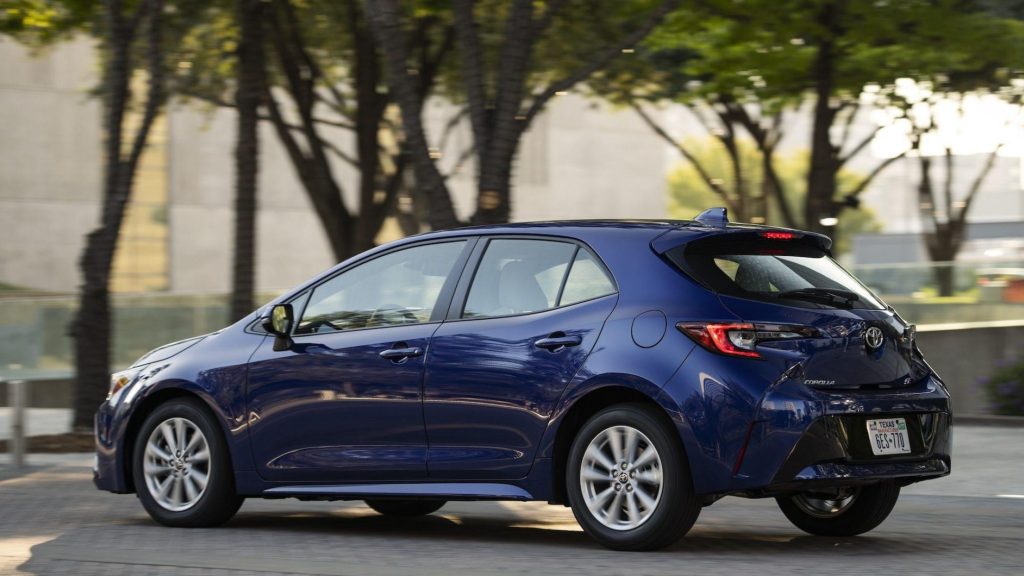
That makes this pairing particularly fascinating today. Someone shopping for a used Prizm might assume they are buying an ordinary Chevrolet compact, yet much of the vehicle’s engineering heritage came directly from Toyota’s Corolla family.
The two cars demonstrate how badge engineering can create a completely different market perception without fundamentally changing the vehicle underneath.
2. Ford Escape and Mazda Tribute
The Ford Escape and Mazda Tribute are another textbook example of two automakers taking one basic vehicle and giving it different personalities.
Introduced for the 2001 model year, the compact SUVs were developed through a Ford and Mazda relationship and shared their underlying architecture, major mechanical components, and much of their body structure.
Ford positioned the Escape as a mainstream compact SUV, while Mazda gave the Tribute a sportier interpretation intended to fit its brand image.
By 2005, the similarities were still obvious. The four-cylinder versions used a 2.3-liter engine producing 153 horsepower and 152 lb-ft of torque. Both vehicles measured roughly 174.4 inches long and 72 inches wide, with a 103.1-inch wheelbase.
The Mazda’s official specifications confirm those figures, while Ford’s specifications show the same 2.3-liter output for the Escape.
The interesting part was how differently the manufacturers presented them. Mazda emphasized steering response and handling, while Ford marketed the Escape toward buyers looking for a practical compact SUV.
Exterior styling separated the two, particularly around the grille, headlights, bumpers, and trim. Interior materials and equipment could also vary depending on the selected version.
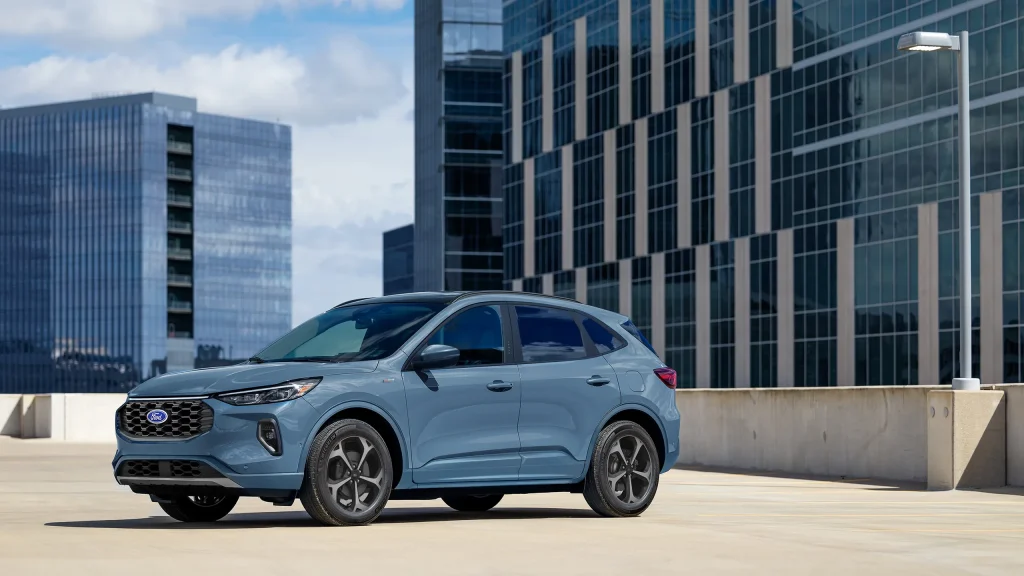
The relationship became even more interesting because Mercury entered the same family with the Mariner, giving Ford Motor Company three closely related SUVs in its lineup. The Mariner was positioned as the more upscale alternative, adding another layer to an already complicated example of shared engineering.
For shoppers today, the Escape and Tribute illustrate why the badge alone does not always tell you what is underneath. Two vehicles from different brands can have surprisingly similar mechanical DNA while being marketed toward completely different customers.
3. Toyota Matrix and Pontiac Vibe
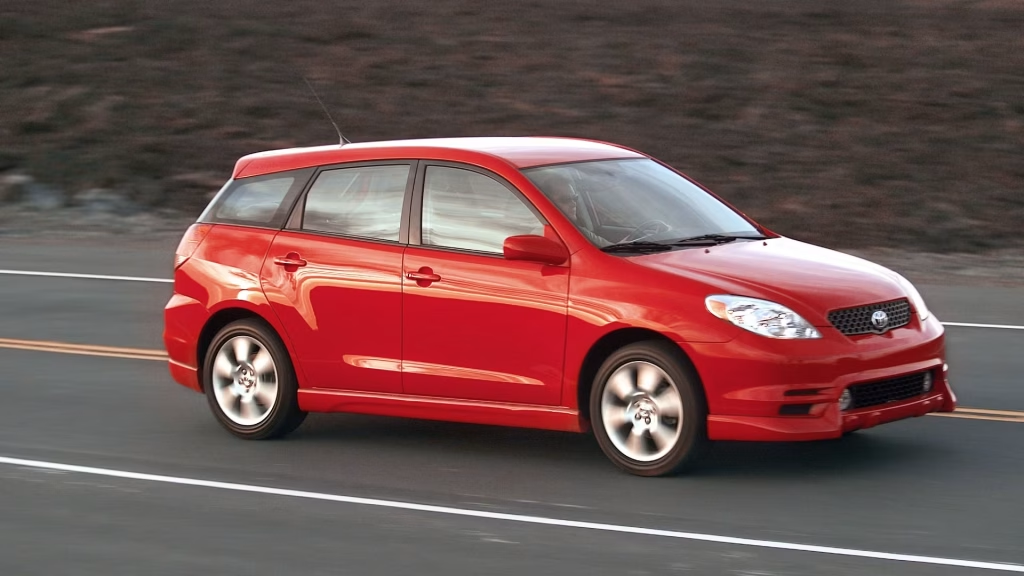
The Toyota Matrix and Pontiac Vibe are among the clearest examples of badge-sharing in the American market because their connection went deeper than simply using a common engine. The two compact hatchbacks were developed through the Toyota and General Motors partnership at NUMMI in California, with the Vibe built around the same basic architecture as the Matrix.
Pontiac gave its version a different front end, interior treatment, and suspension tuning, but the underlying relationship was unmistakable. The Vibe was also derived from the Toyota Corolla platform, making this an unusual combination of Toyota engineering and Pontiac branding.
The second-generation cars make the similarities especially easy to see. For 2009, the base Vibe used a 1.8-liter four-cylinder producing 132 horsepower and 128 lb-ft of torque. The car measured 171.1 inches long and 69.5 inches wide, with a 102.4-inch wheelbase.
Toyota’s Matrix used the same basic dimensions and architecture, although individual specifications could vary slightly depending on trim and configuration.
What made the Vibe interesting was Pontiac’s attempt to give the practical Toyota-based hatchback a different personality. Pontiac styling brought a more aggressive face, while available GT versions offered a stronger engine and sportier presentation.
The Vibe also offered useful cargo flexibility, making it more like a small wagon than a conventional sedan.
For shoppers who remember Pontiac as an American brand, discovering the Toyota connection can be surprising. Underneath the badge, however, the Vibe shared substantial engineering DNA with the Matrix.
The partnership created a car that could be sold through Pontiac dealers while benefiting from a Toyota-based platform and powertrain strategy. It is one of the strongest examples of two brands making essentially the same practical compact car look like two completely different products.
4. Chevrolet TrailBlazer and GMC Envoy
General Motors became extremely skilled at selling closely related vehicles through multiple divisions, and the Chevrolet TrailBlazer and GMC Envoy show how far that strategy could go with midsize SUVs.
Both belonged to GM’s GMT360 family and shared fundamental architecture, mechanical components, and much of their engineering. Yet Chevrolet and GMC gave them different appearances and positioned them toward somewhat different buyers.
The TrailBlazer became Chevrolet’s mainstream midsize SUV, while the Envoy sat within GMC’s lineup with a more upscale presentation.
Their grilles, lighting, bumpers, interior details, and trim choices separated them visually, but the mechanical relationship remained strong. This was not simply a case of two SUVs using the same engine. They were members of the same underlying vehicle family.
The relationship becomes particularly obvious when looking at the powertrain. The 4.2-liter inline-six used in these SUVs became one of the defining engines of the GMT360 platform.
In the TrailBlazer, the engine produced 275 horsepower and 275 lb-ft of torque in later applications. The Envoy offered the same basic inline-six concept, giving both SUVs strong acceleration for their class.
Their dimensions were also substantial. The TrailBlazer measured roughly 191 inches long and about 74 inches wide, depending on model year and configuration. That placed it firmly in midsize SUV territory rather than the compact crossover category occupied by the Escape and Tribute. The Envoy occupied essentially the same footprint.
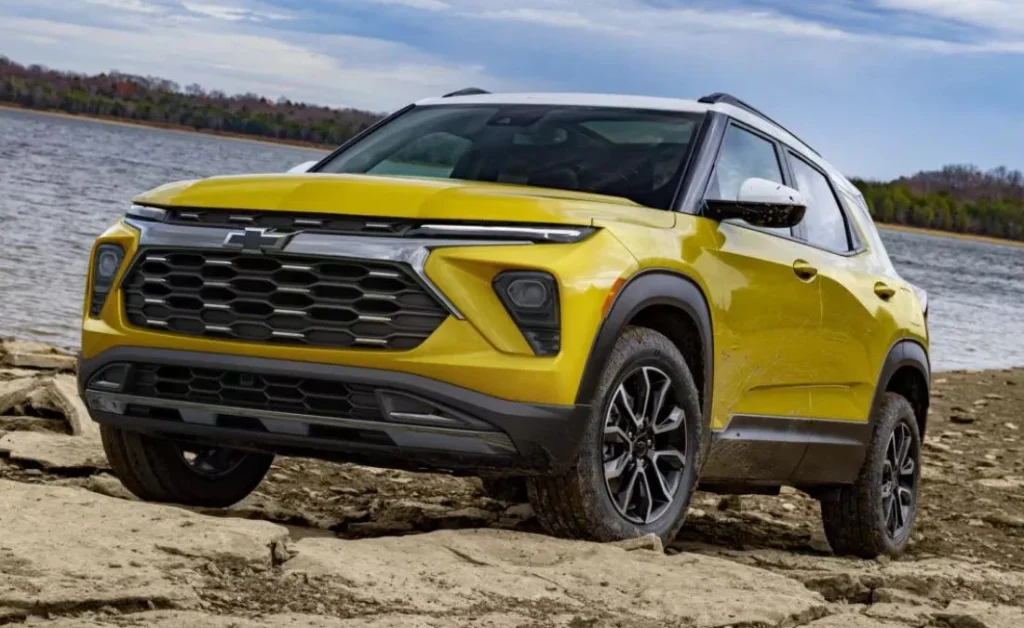
The interesting distinction was not what GM had engineered underneath, but how the company packaged and marketed it. Chevrolet emphasized broad appeal, while GMC pushed the Envoy toward buyers wanting a more premium truck-based SUV experience.
For someone shopping the used market, that means the badge does not necessarily tell the entire story. Two different GM dealerships could sell SUVs with remarkably similar mechanical foundations while presenting them as separate products. This pairing is a classic example of corporate badge engineering on a larger scale.
5. Ford Crown Victoria and Mercury Grand Marquis
For decades, the Ford Crown Victoria and Mercury Grand Marquis occupied different spots in Ford’s showroom, but mechanically they were remarkably close. The Crown Victoria was marketed as the more straightforward Ford, while the Grand Marquis was positioned as a slightly more upscale Mercury.
Beneath the different grilles and badges, however, both used Ford’s full-size rear-wheel-drive Panther platform and shared the same basic body-on-frame construction.
The similarities were especially clear in the 2005 model year. Both cars used Ford’s 4.6-liter V8, producing 224 horsepower and 275 lb-ft of torque in the configurations compared by Cars.com.
Both also used rear-wheel drive and a four-speed automatic transmission. Their dimensions were nearly identical as well: each measured about 212 inches long and used a 115-inch wheelbase.
That mechanical commonality explains why the two cars often had a similar driving character. Neither was designed to feel like a lightweight sports sedan. Instead, they delivered the relaxed ride, roomy cabin, traditional rear-drive layout, and smooth V8 power that defined Ford’s large sedans during this period.
The differences were mainly about presentation and equipment. Mercury gave the Grand Marquis a more formal appearance, with its own grille, lighting, trim, and interior touches.
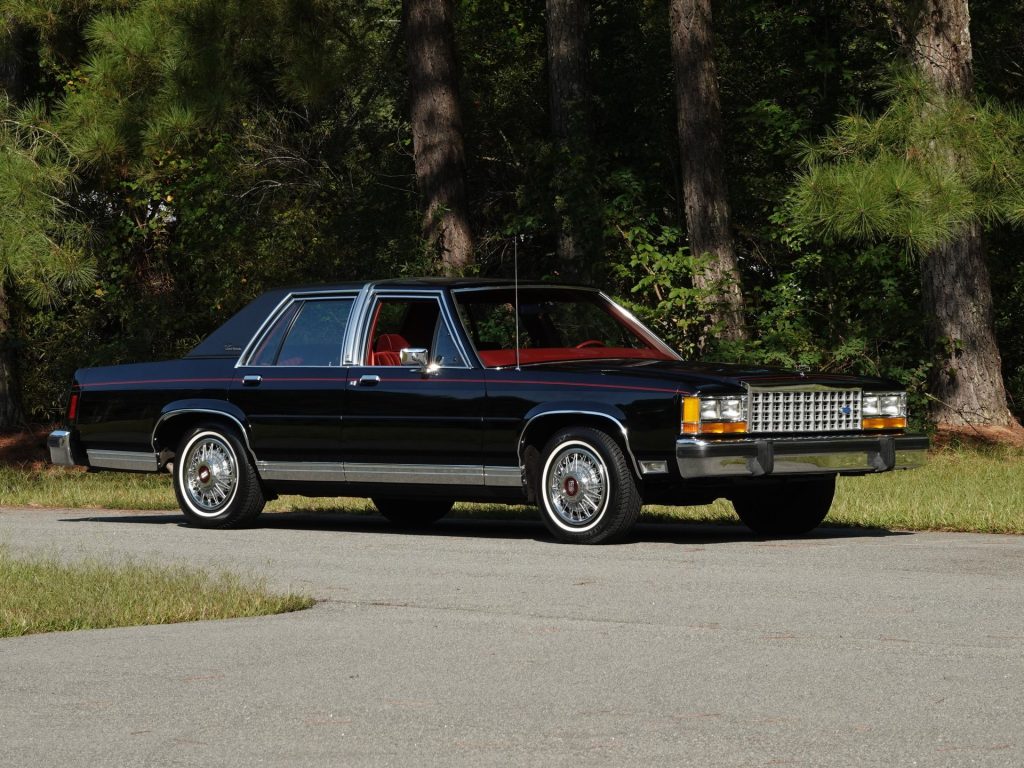
Ford’s Crown Victoria had a more utilitarian image, helped by its enormous presence in police fleets and taxi service. The Grand Marquis, meanwhile, became strongly associated with private buyers who wanted a comfortable full-size sedan.
The result is one of the clearest examples of badge differentiation in American automotive history. A buyer could walk into two different Ford Motor Company dealerships, choose two different names, and leave with vehicles that were fundamentally members of the same mechanical family.
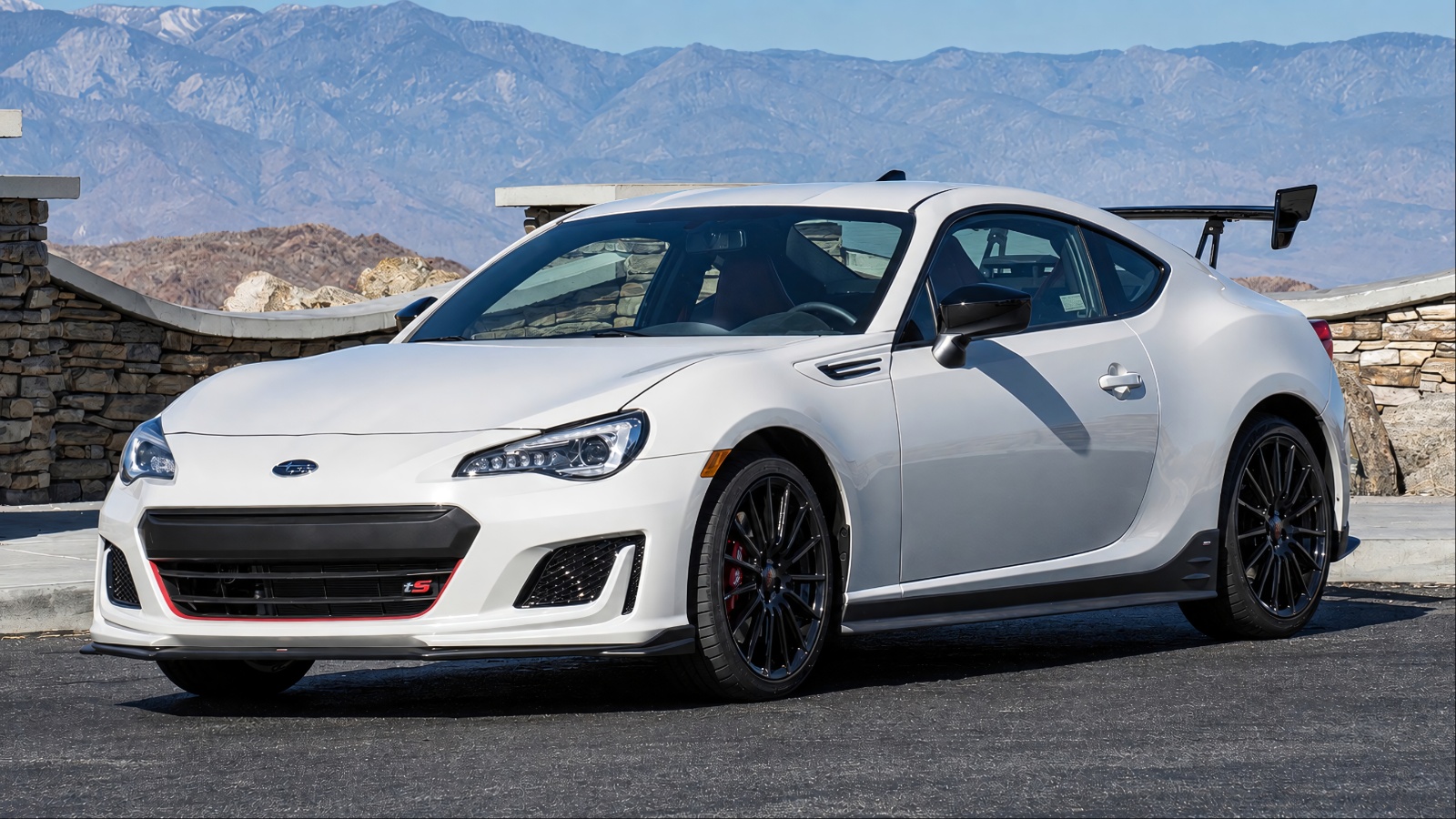
6. Toyota 86 and Subaru BRZ
The Toyota 86 and Subaru BRZ take the badge-sharing idea in a completely different direction. Instead of being ordinary family cars sold under different names, these two were deliberately developed as joint sports cars.
Toyota and Subaru worked together on the project, with Subaru supplying its boxer engine expertise and manufacturing while Toyota contributed its own engineering and product-development input.
The result was two rear-wheel-drive coupes with almost identical fundamental hardware. For 2020, both used a naturally aspirated 2.0-liter four-cylinder boxer engine producing 205 horsepower and 156 lb-ft of torque with the six-speed manual transmission.
Their dimensions were virtually identical as well. Cars.com lists both at 167 inches long and 70 inches wide, with a 101-inch wheelbase.
Yet Toyota and Subaru made a deliberate effort to prevent the cars from feeling completely interchangeable. Exterior styling was different enough to establish separate identities, particularly around the front fascias, headlights, grilles, and badging. Suspension tuning and equipment combinations could also vary between the brands.
The philosophy behind the cars was more important than simply giving customers two badges. Both were engineered around low weight, a low center of gravity, rear-wheel drive, and balanced handling. That gave enthusiasts an affordable alternative to larger and heavier performance cars.
This partnership also makes the 86 and BRZ particularly interesting because neither company could honestly claim the other was simply copying its product. They were co-developed siblings. The Toyota badge and Subaru badge represented different interpretations of essentially the same sports-car formula.
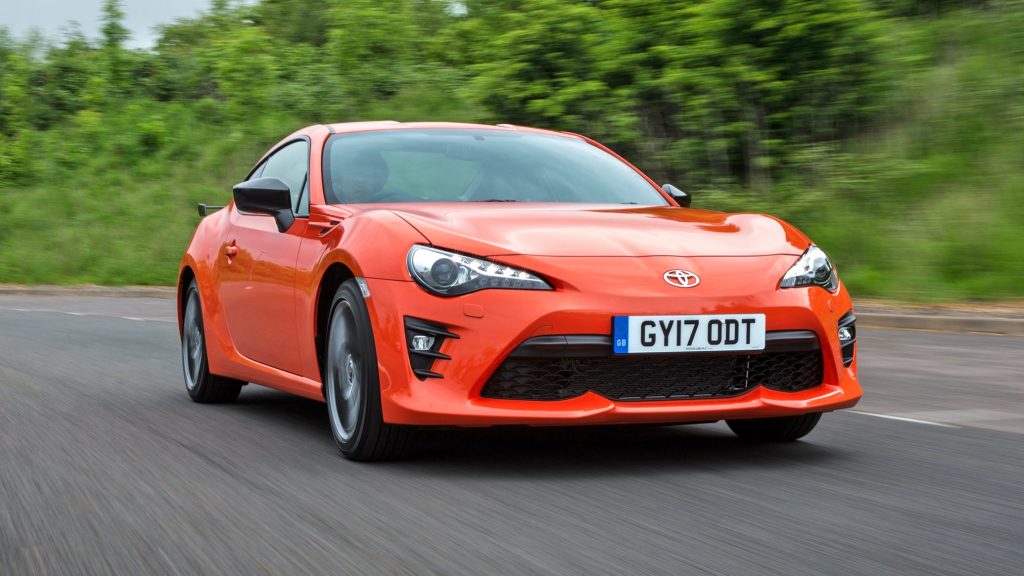
For buyers, the choice often comes down to styling, equipment, condition, and personal preference rather than fundamental mechanical differences. That is precisely what makes the pair such a strong modern example of shared-car engineering.
7. Ford Taurus and Mercury Sable
The Ford Taurus and Mercury Sable were not merely similar family sedans wearing different badges.
They were corporate siblings developed around the same basic vehicle architecture, powertrains, and dimensions, with Mercury receiving styling and equipment changes intended to give it a more upscale identity. This was particularly apparent during the final generation of the original Taurus and Sable lineage.
For 2008, the relationship was extremely close. Both used Ford’s 3.5-liter V6, producing 263 horsepower and 249 lb-ft of torque, paired with a six-speed automatic transmission. The cars also shared a 113-inch wheelbase and measured 202.1 inches long.
The Mercury Sable was 74.5 inches wide, while the Ford Taurus was listed at 75 inches, a difference small enough to illustrate just how closely related the two vehicles were.
What separated them was largely presentation. Ford’s Taurus badge carried decades of recognition, while Mercury used the Sable to appeal to customers who wanted something that looked a little more refined. The Sable featured its own front fascia and grille design, while interior trim and equipment helped establish a separate personality.
Interestingly, the 2008 Taurus itself represented Ford’s decision to revive the familiar Taurus name after the company had discontinued the nameplate following the 2007 model year. The mechanically related Mercury Sable continued alongside it, creating a situation where two different brands were selling nearly the same large sedan.
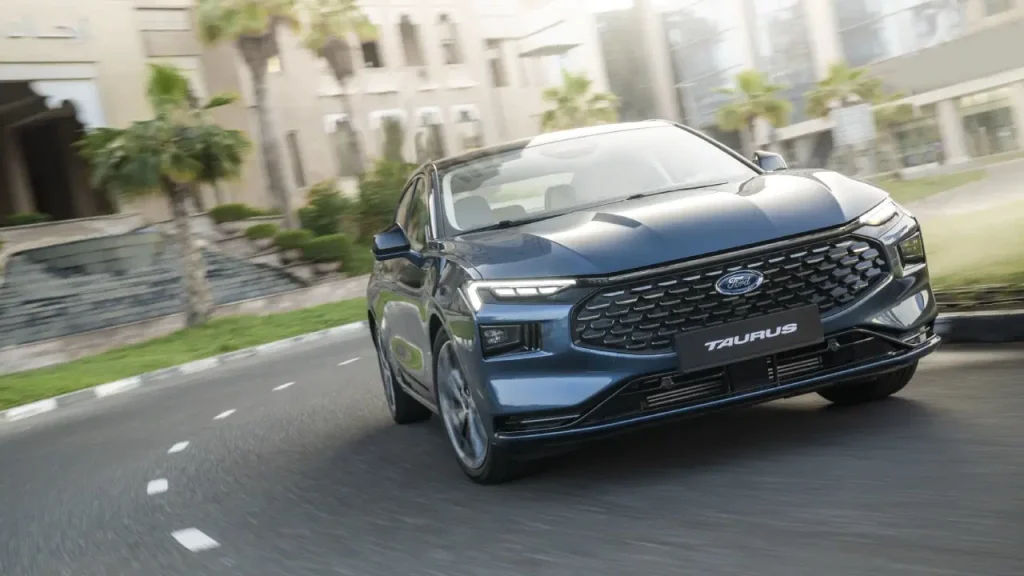
The dimensions tell the story better than the badges do. A 202-inch-long sedan with a 3.5-liter V6 and six-speed automatic was essentially occupying the same mechanical territory regardless of whether the steering wheel carried a Ford or Mercury emblem.
For today’s used-car shopper, this pairing is a reminder that comparing the actual vehicle, equipment, condition, and price can be more useful than assuming one badge represents a completely different machine.
8. Chevrolet Cavalier and Pontiac Sunfire
If you remember compact American cars from the late 1990s and early 2000s, chances are you have seen both the Chevrolet Cavalier and Pontiac Sunfire.
They looked different enough that many buyers probably considered them separate cars, but underneath, they were members of the same GM J-body family. Chevrolet positioned the Cavalier as a practical, affordable compact, while Pontiac gave the Sunfire a sportier appearance aimed at younger buyers.
The similarities become obvious when comparing their 2002 specifications. The Cavalier used a 2.2-liter four-cylinder engine producing 115 horsepower and 135 lb-ft of torque. The Sunfire used the same displacement and output.
Both were front-wheel-drive cars and could be equipped with a five-speed manual or four-speed automatic transmission.
Their dimensions were also nearly interchangeable. The 2002 Cavalier measured 181 inches long and 69 inches wide, with a 104-inch wheelbase. The Sunfire was listed at 182 inches long and approximately 68 inches wide in the corresponding specifications.
The biggest visual difference came from Pontiac’s styling. The Sunfire’s front end, headlights, grille treatment, and bodywork gave it a more dramatic appearance than the relatively conservative Cavalier. Pontiac also offered coupe and sedan versions, allowing the Sunfire to lean further into its youthful image.
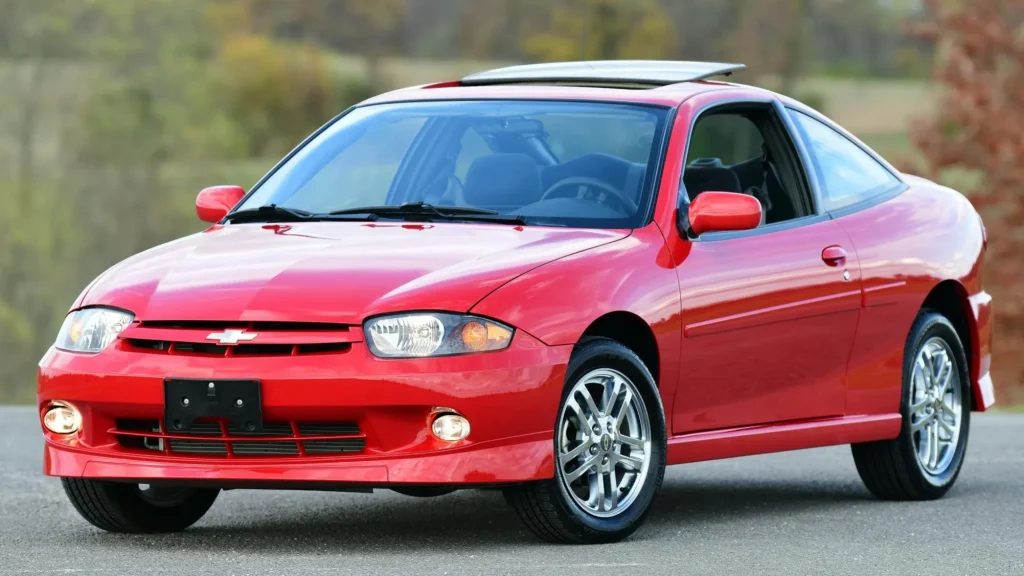
Underneath, though, the fundamentals remained familiar. The cars shared the same basic J-body architecture and engine family, making them far closer than their separate showroom identities suggested.
This pairing also demonstrates why badge engineering was valuable to GM. Instead of developing two completely different compact cars, the company could use one proven platform across multiple divisions and change the exterior design, equipment, and marketing message. Buyers saw two products. GM could share a significant amount of engineering underneath.
9. Ford Explorer and Mercury Mountaineer
The Ford Explorer and Mercury Mountaineer show how Ford could turn one SUV into two products simply by changing the presentation. The Mountaineer was not a completely separate vehicle engineered from the ground up by Mercury.
It was closely related to the Explorer and shared its basic platform, powertrains, dimensions, and much of its mechanical hardware. Mercury’s role was to make the SUV feel more upscale, giving buyers an alternative to the more mainstream Ford.
The connection is particularly clear with the 2008 models. The Mountaineer used a 4.0-liter V6 producing 210 horsepower and 254 lb-ft of torque, paired with a five-speed automatic transmission.
The Explorer offered the same 4.0-liter V6 configuration and similar drivetrain choices. Both vehicles used a 114-inch wheelbase, while the Mountaineer measured approximately 193 inches long and 73.7 inches wide. Cars.com lists the Explorer and Mountaineer with essentially matching core dimensions.
Where Mercury tried to create separation was in the details. The Mountaineer received its own grille, exterior trim, interior materials, and equipment combinations. Mercury’s branding was intended to give the SUV a more premium character without requiring Ford Motor Company to develop an entirely different midsize SUV.
That strategy made financial sense. A shared architecture allowed Ford to spread development and manufacturing costs across multiple nameplates, while separate styling and equipment helped dealers present them as different choices.
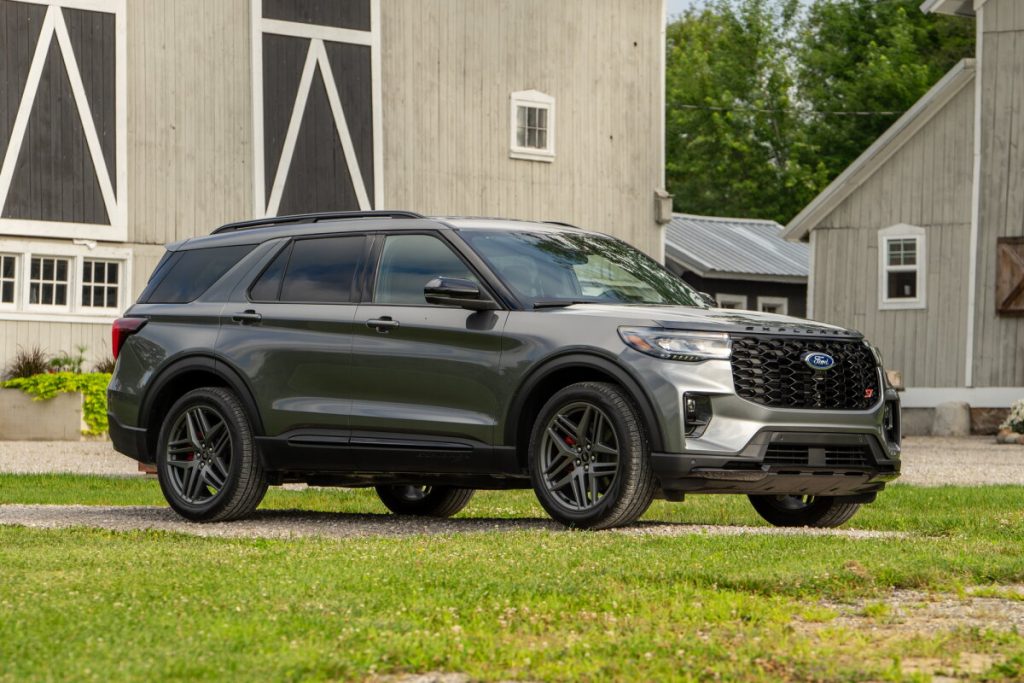
The Mountaineer could therefore attract customers who wanted something more refined without leaving Ford’s corporate family.
There is another useful clue in the specifications. The 2008 Mountaineer was available with rear-wheel drive or all-wheel drive, and its V6 delivered 254 lb-ft of torque. The vehicle could also tow up to 3,500 pounds in certain configurations.
For used-car shoppers, the lesson is simple: the Mercury badge did not transform the Explorer into a fundamentally different SUV. It gave a familiar Ford product a different identity and equipment package.
10. Toyota Matrix and Pontiac Vibe
Few badge-sharing partnerships demonstrate the idea better than the Toyota Matrix and Pontiac Vibe. These compact hatchbacks were developed through the Toyota and General Motors partnership at the NUMMI manufacturing plant in California.
While their exterior designs and brand identities differed, the mechanical relationship was exceptionally close. They were built around the same fundamental vehicle architecture and shared the same basic 1.8-liter engine in their standard versions.
The 2009 models make the connection particularly easy to verify. The Pontiac Vibe’s 1.8-liter four-cylinder produced 132 horsepower and 128 lb-ft of torque. Toyota’s Matrix used the same 1.8-liter engine with identical horsepower and torque figures. Both offered front-wheel drive, five-passenger seating, and a 102-inch wheelbase.
The dimensions were nearly interchangeable too. The Vibe measured 171 inches long and 70 inches wide, while the Matrix was listed at 172 inches long and 70 inches wide in Cars.com’s specifications.
Both had approximately 20 cubic feet of cargo capacity with the rear seats raised, although their maximum cargo figures differed depending on how the manufacturer measured the available space.
Toyota did not simply hand Pontiac an existing Matrix and ask it to change the emblem. The two brands gave their versions distinct styling. The Vibe adopted Pontiac’s characteristic design language, while the Matrix received Toyota’s own exterior and interior treatment.
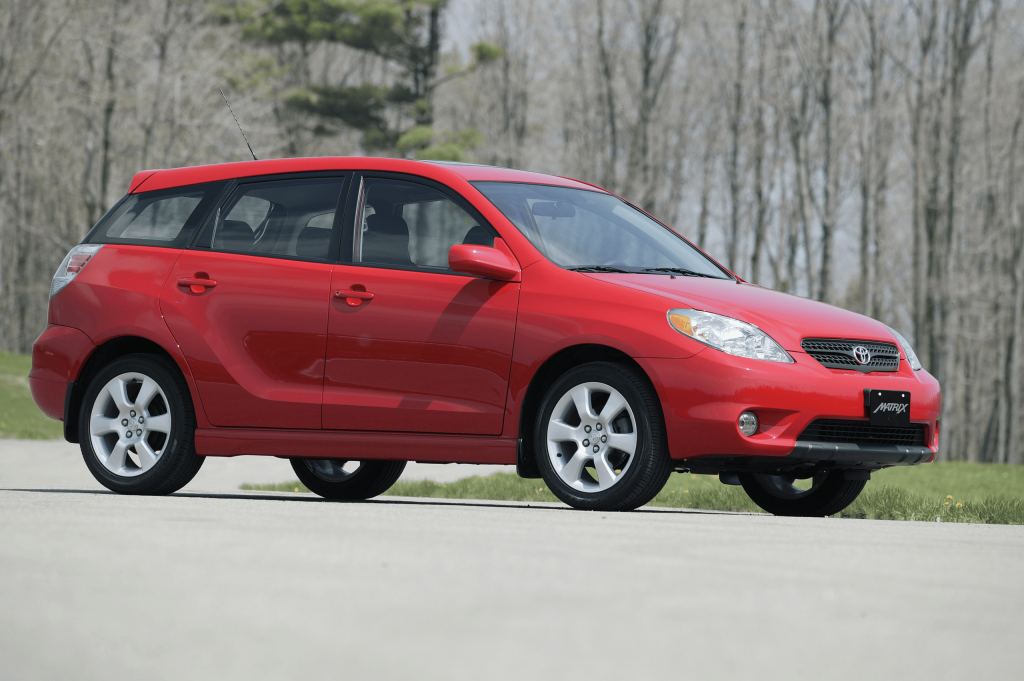
Toyota also offered a 2.4-liter four-cylinder producing 158 horsepower in higher-performance Matrix configurations, demonstrating that not every version of the two vehicles had identical equipment.
That distinction is important because calling them “the same car” does not mean every trim level was mechanically identical. It means their core engineering relationship was unusually close.
The partnership ultimately produced an unusual combination: a Pontiac that benefited from Toyota engineering and a Toyota that was manufactured alongside a GM-branded sibling. For anyone studying automotive badge engineering, the Matrix and Vibe are almost a perfect case study.
