A 300,000-mile odometer reading is rare enough that it should be treated as evidence, not a marketing promise. iSeeCars’ 2025 longevity study, based on nearly 400 million vehicles, gives Ford a 3.1 percent predicted chance of reaching 250,000 miles, below the 4.8 percent industry average. Yet some individual Ford models and work vehicles have gone far beyond that benchmark, especially trucks, body-on-frame SUVs, fleet sedans, and commercial vans.
This list uses the iSeeCars brand result as context, then looks for particular Fords with documented 300,000-plus-mile examples. Some are current used-vehicle listings; others are owner reports, forum posts, or published interviews, so their mileages should be read as real-world claims rather than laboratory-verified records.
The point is not that every Ford will reach 300,000 miles. It is that these ten specific vehicles show what can happen when durable hardware meets heavy use, timely repairs, and persistent maintenance over many demanding years.
10. 2007 Ford Fusion – 308,000 Miles
A high-mileage Fusion is useful because it shows that Ford’s 300,000-mile club is not limited to body-on-frame trucks. In a Ford Fusion owner discussion, one 2007 model was reported at 308,000 miles with its original powertrain, with the owner saying most of the distance was highway mileage.
That is a self-reported case rather than an independently audited odometer record, but it is still a particular running car, not a generic claim that Fusions simply last forever. Separate marketplace evidence has also shown a 2017 Fusion Hybrid advertised with approximately 305,000 miles and described as being in good condition.
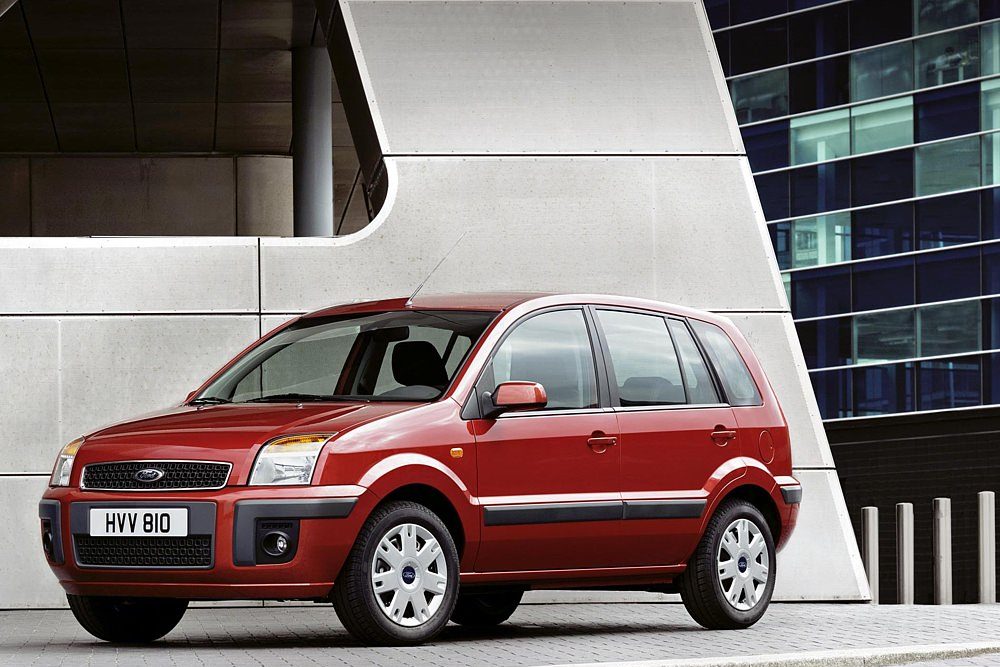
The Fusion’s long-term durability varies significantly by generation and powertrain. Early naturally aspirated four-cylinder and V6 cars are mechanically different from later EcoBoost versions, hybrids, and plug-in hybrids. At 300,000 miles, cooling-system health, transmission servicing, wheel bearings, suspension bushings, engine mounts, oil leaks, and electrical accessories can matter as much as the engine itself.
The significant detail here is that a specific 2007 Fusion reportedly crossed 308,000 miles while retaining its original drivetrain. It demonstrates that an ordinary midsize Ford sedan, when subjected to favorable use and continued maintenance, can survive into mileage normally associated with taxis, delivery vehicles, and work trucks.
9. 2022 Ford Mustang Mach-E Premium – 316,000+ Miles
The newest Ford here is also the most unusual. California private-car-service operator David Blenkle bought a 2022 Mustang Mach-E Premium Extended Range new in June 2022 and quickly began piling on commercial-level mileage. By early 2026, the electric crossover had surpassed 316,000 miles.
Ford had already taken notice when it crossed 250,000 miles, but Blenkle kept driving it, transporting thousands of passengers in the Santa Cruz area and turning one relatively young EV into an extreme real-world durability test.
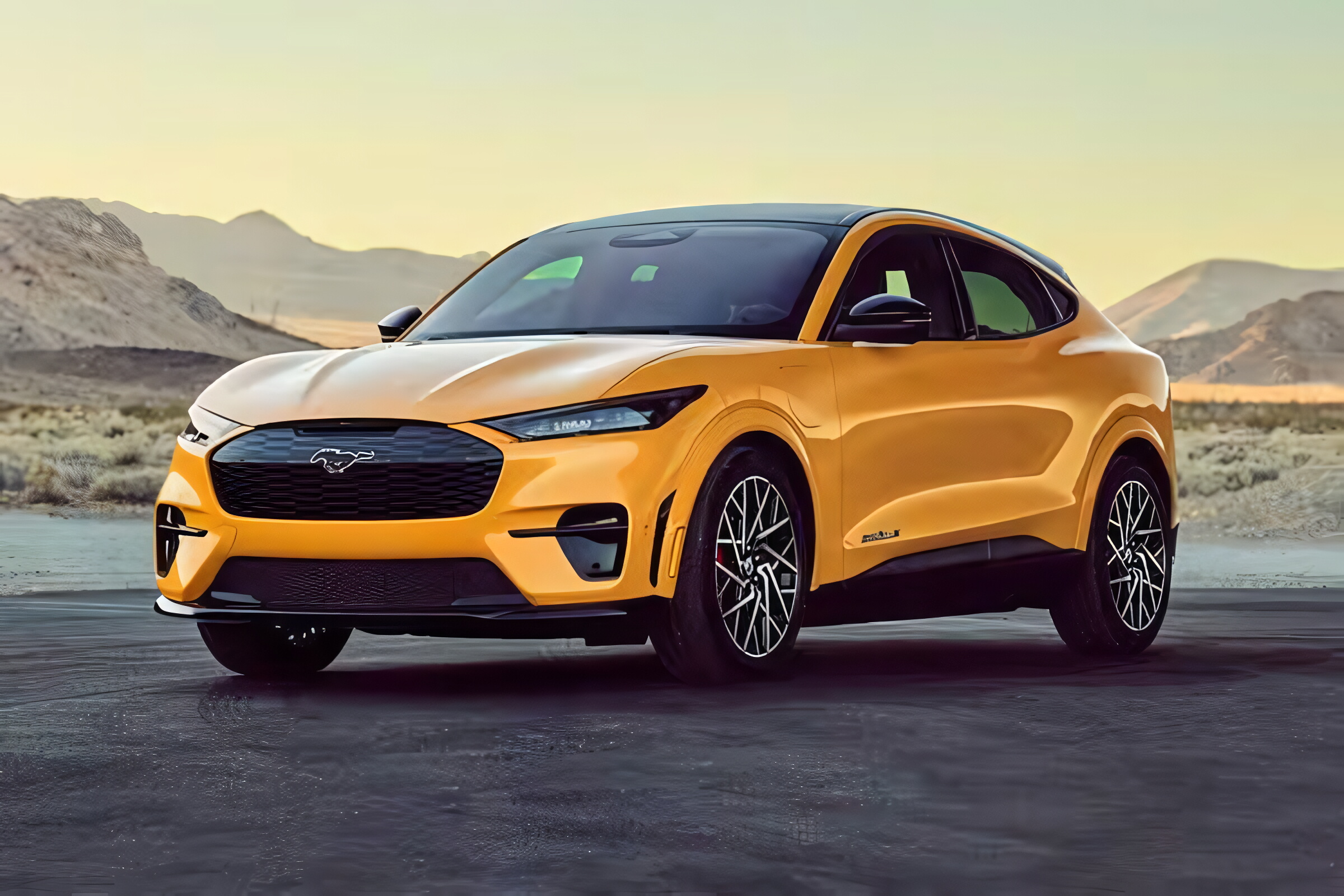
The maintenance record makes this particular example even more interesting. At more than 316,000 miles, Blenkle reported six sets of tires, seven cabin-air filters, and more than 20 routine 10,000-mile inspections. Remarkably, he said the vehicle still had its original brakes and had required no repairs.
Battery degradation was reported at only about eight percent. Those figures are owner-reported, but they give the Mach-E one of the strongest documented 300,000-mile stories among modern Fords. Its longevity also changes what needs to survive. There is no conventional automatic transmission, engine oil, spark plugs, or exhaust system.
Instead, battery thermal management, charging hardware, drive units, suspension components, electronics, and battery-cell health become the important long-term systems. More than 316,000 miles shows they can endure extraordinary commercial use.
8. 1999 Ford F-150 – 320,000 Miles
The F-150 is an obvious candidate for a high-mileage Ford list, but this entry is based on an actual truck rather than reputation alone. An iSeeCars used-vehicle listing showed a 1999 Ford F-150 in Dallas with 320,000 miles, a V8 engine, four-wheel drive, and an automatic transmission.
Most importantly, the truck was still being advertised as a usable vehicle instead of appearing in a salvage inventory. That provides a concrete example of an F-150 surviving well beyond the 300,000-mile threshold.
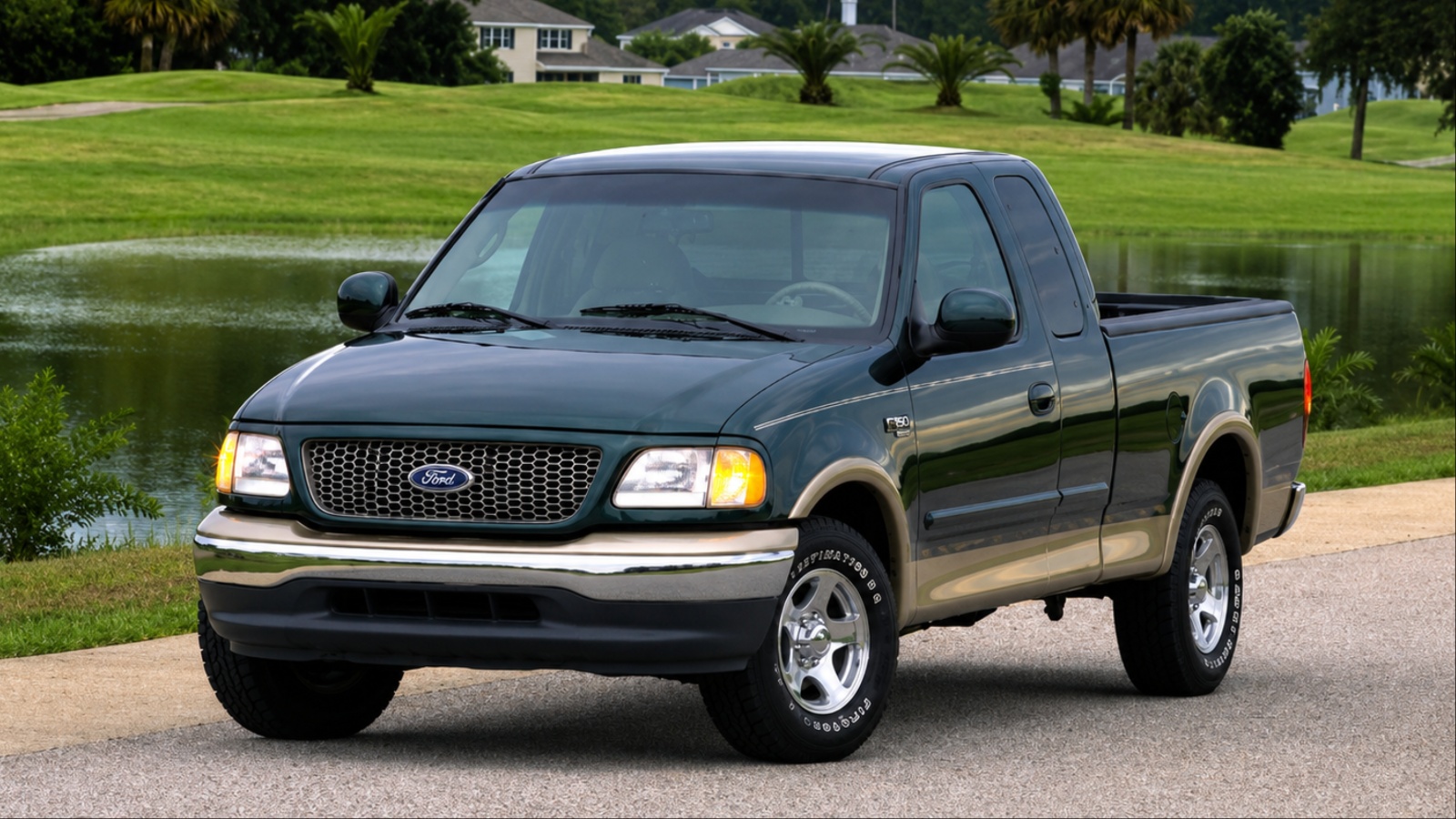
Another 1999 F-150 owner supplied even more detail after his 4.6-liter V8 XLT passed 300,000 miles. He reported using synthetic oil from roughly 36,000 miles and following the maintenance schedule. Larger repairs included an alternator around 150,000 miles and later front-end work, but the truck remained something he was willing to drive regularly.
That is what very high mileage usually looks like. The vehicle does not reach 300,000 miles because nothing ever breaks; it survives because repairable parts are replaced.
At this age, steering joints, suspension components, ignition coils, cooling parts, seals, transmission condition, and differential maintenance can become more important than the basic engine block. A specific F-150 showing 320,000 miles demonstrates that Ford’s full-size pickup can remain serviceable long after many vehicles disappear from the road.
7. 1997 Ford Explorer Eddie Bauer – 330,000 Miles
A 1997 Ford Explorer Eddie Bauer equipped with the 5.0-liter V8 provides a particularly useful high-mileage Explorer example. Its owner reported the SUV approaching 297,000 miles in 2016 and later updated the record after it had exceeded 330,000 miles. According to that account, the major engine and transmission assemblies remained essentially untouched apart from maintenance.
A timing-cover gasket was described as the most significant engine-related repair around the earlier mileage point, and the Explorer continued serving as an everyday work vehicle after passing 330,000.
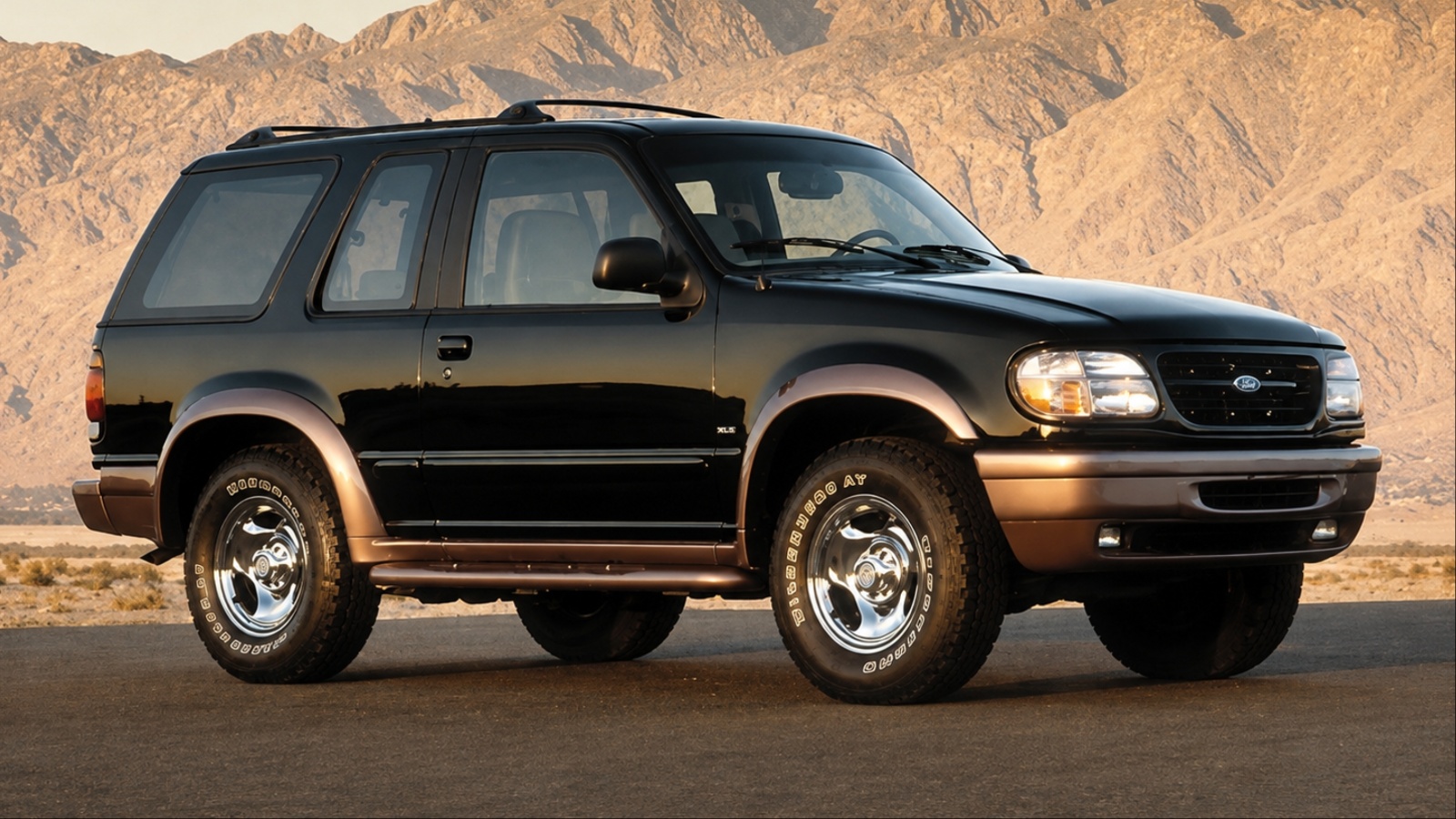
That distinction matters because “Ford Explorer” covers multiple generations with completely different engines, transmissions, chassis designs, and reliability histories. This older rear-drive-based Explorer could use Ford’s relatively straightforward 5.0-liter pushrod V8. It should not be assumed that every later Explorer shares the same durability characteristics.
There are other examples as well. An Edmunds owner review for a 2003 Explorer reported that the vehicle’s subsequent owner had taken it beyond 300,000 miles while it remained mechanically healthy.
At such mileage, cooling-system care, transmission condition, wheel bearings, differentials, suspension hardware, and rust become major survival factors. The 330,000-mile 1997 example matters because it did more than simply touch the milestone. It remained in regular use afterward, demonstrating genuine whole-vehicle longevity.
6. 1997 Ford F-250 – More Than 400,000 Miles
Ford’s heavy-duty pickups have an advantage in longevity discussions because many were engineered for demanding commercial work from the beginning. One particular 1997 Ford F-250 belonged to Oklahoma farmer and motorsports figure Brent Hajek.
Coverage of a Ford biodiesel land-speed-record project noted that Hajek operated six F-250s on his farm, with his 1997 truck already showing more than 400,000 miles. That makes it a real working example rather than a theoretical estimate of how long the model might last.
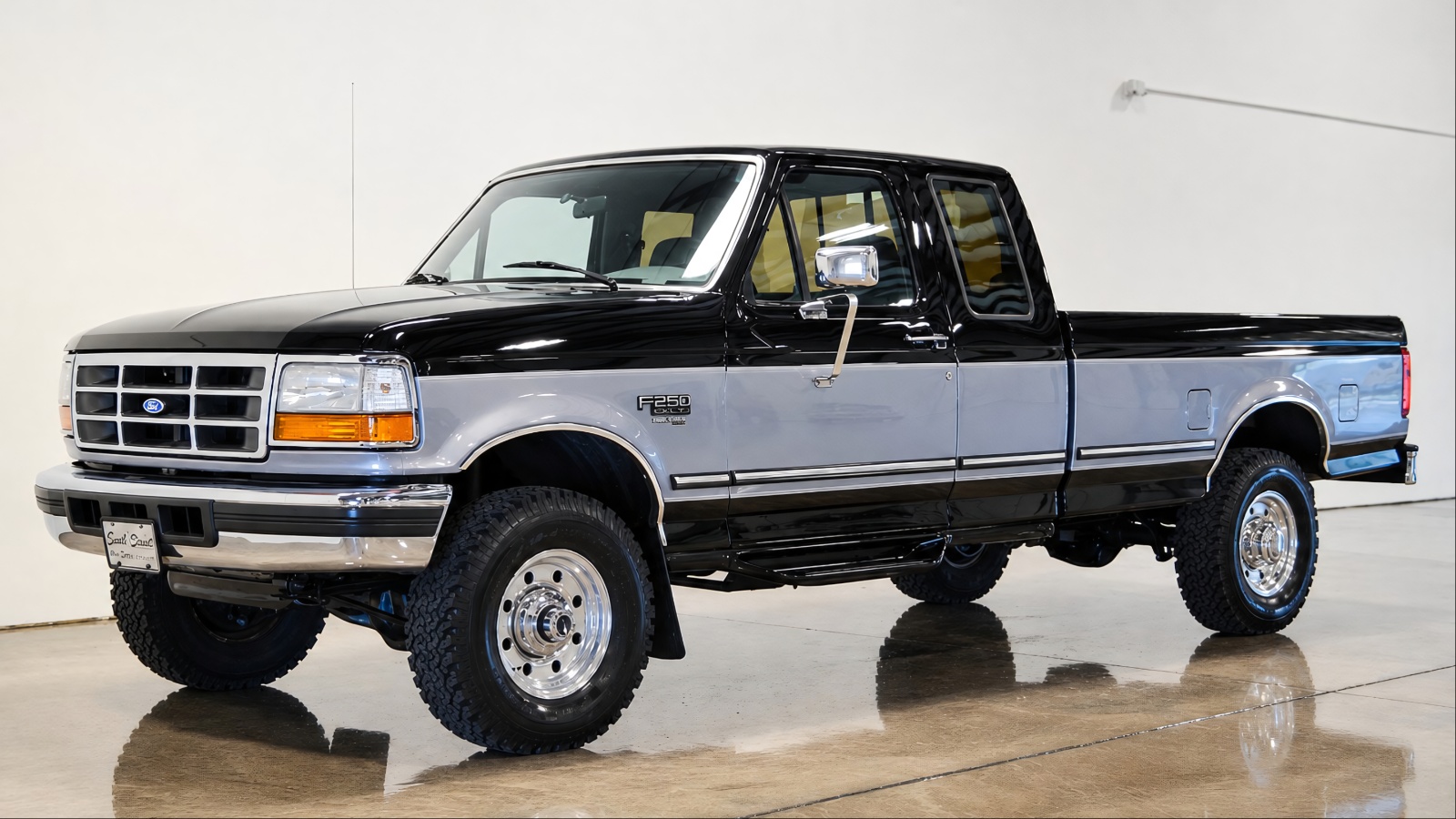
Another owner provided a similar case. Farm Show documented a 2001 F-250 4WD crew cab with the 7.3-liter diesel and more than 400,000 miles. Its owner reported replacing the transmission at 396,000 miles and described that as the truck’s only major repair.
Large-sample data further supports the F-250’s reputation for durability, although the mileage benchmark is lower. In iSeeCars’ 2025 truck analysis, the F-250 Super Duty had an 18.6 percent predicted chance of reaching 250,000 miles, compared with a 4.8 percent average among vehicles included in the broader study.
That does not mean 18.6 percent will reach 300,000. Beyond that point, injector work, transmissions, turbochargers, front suspension, seals, cooling systems, and drivetrain repairs should be expected. The important fact is that specific F-250s have already demonstrated 400,000-mile service lives.
5. 2008 Ford E-350 – 400,000 Miles
Touring bands provide an unusually tough durability test. Their vans spend endless hours at highway speed, carry people and equipment, cross state lines repeatedly, and cannot afford extended downtime. Musician Lee Bains III described his band’s 2008 Ford E-350, nicknamed “Zant,” after the van reached 400,000 miles.
It was equipped with Ford’s 5.4-liter V8 and had approximately 100,000 miles when the band began touring with it. Bains credited frequent oil changes, brake work, filters, tire maintenance, and the mechanical knowledge acquired from years of keeping the van working.
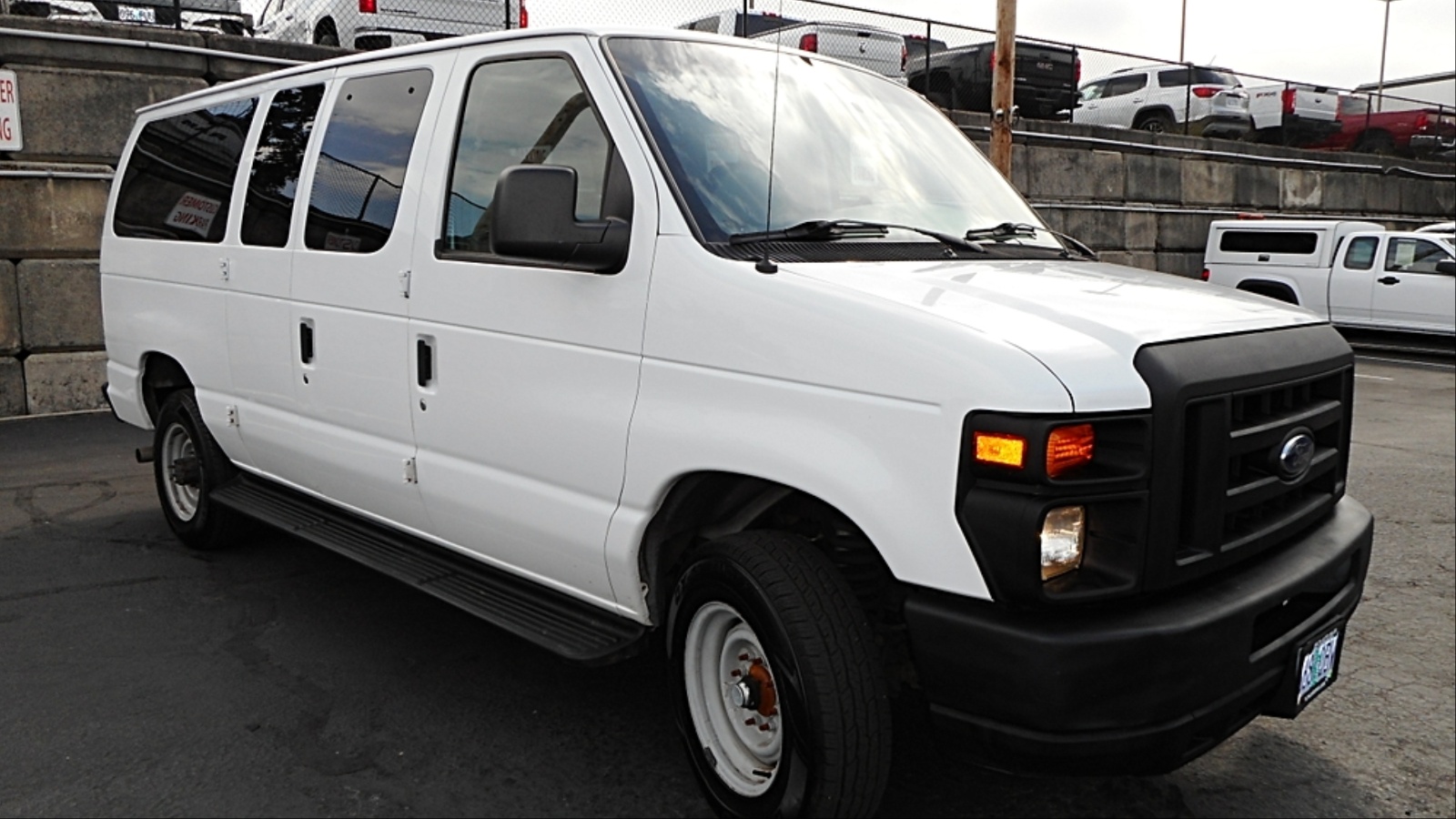
Other E-Series examples support the story. A 2011 E-350 Super Duty passenger van recently appeared in Edmunds listings with exactly 400,000 miles. Its history identified taxi use, three owners, and a clean title. An automotive technician case also documented a 2006 E-350 commercial van with the 5.4-liter V8 and more than 400,000 miles that still ran smoothly, although it had developed a hot-restart problem.
These examples show what commercial-vehicle longevity really means. High mileage rarely comes without repairs. Instead, the E-Series benefits from serviceable mechanical hardware and owners who treat replacement parts as normal operating expenses. When brakes, cooling components, suspension pieces, accessories, and drivetrain parts can be repaired economically, an old work van can keep earning its keep far beyond 300,000 miles.
4. 2010 Ford Taurus – More Than 415,000 Miles
One of the most impressive sedan examples appeared in a Car Talk column involving a 2010 Ford Taurus. Its owner reported more than 415,000 miles after purchasing the car when it had approximately 21,000 miles. Even more striking, he said it retained the same engine and transmission.
His maintenance description was surprisingly ordinary: scheduled servicing, oil changes, tires, fluid attention, and spark plugs. There was no claim of a replacement engine carrying the car to its enormous mileage.
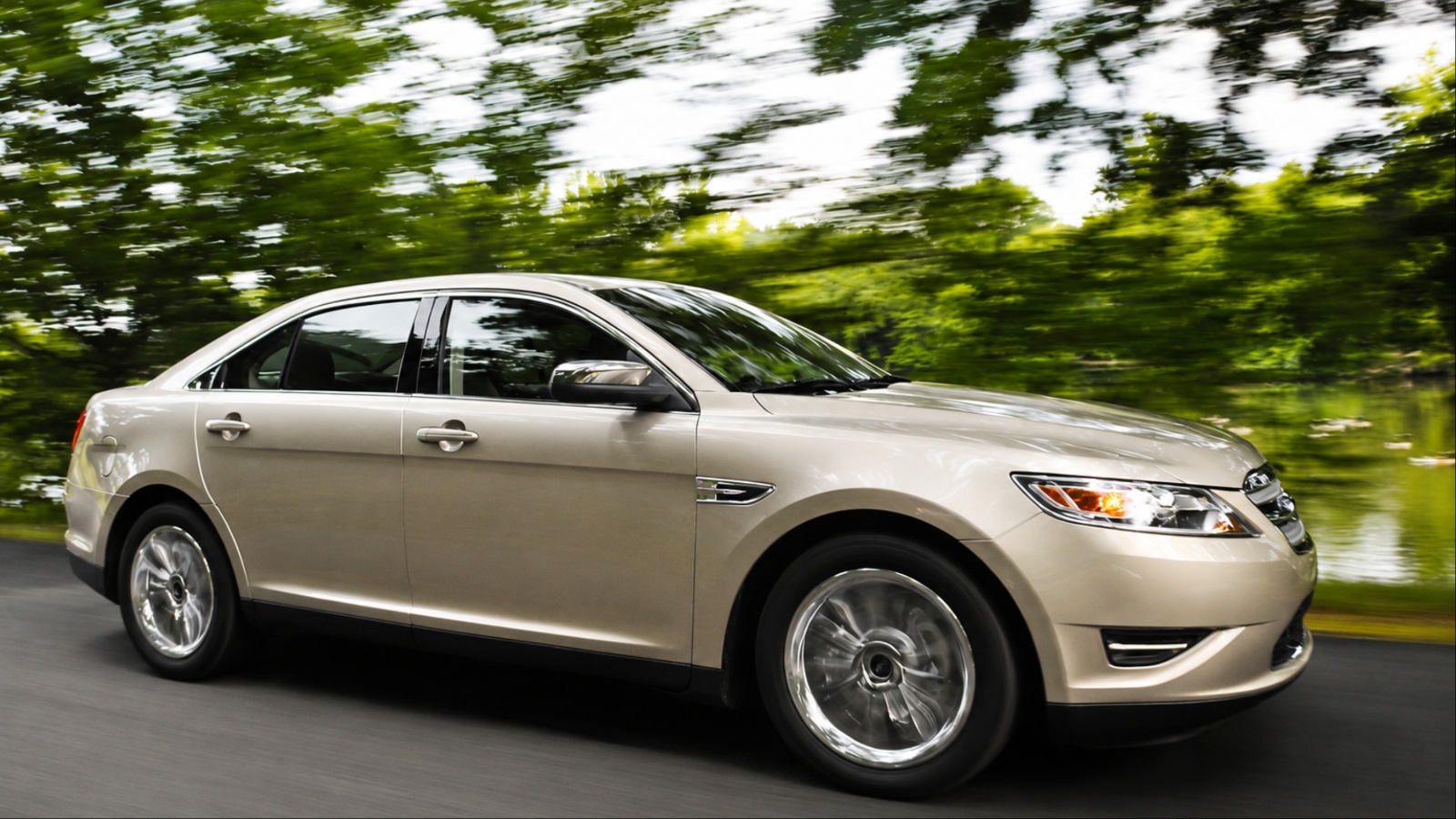
Car Talk’s response was appropriately cautious. Ray Magliozzi noted that regular highway driving, gentle use, diligent maintenance, and plain luck can all contribute to unusually long vehicle life. He also warned that once a car is beyond 400,000 miles, virtually any component can fail simply through accumulated wear.
That observation is important. Reaching 300,000 or 400,000 miles is not solely an engine achievement. Brake lines, wheel bearings, steering components, cooling hoses, suspension joints, wiring, seals, and corrosion can retire a car even when the powertrain remains healthy. A thorough safety inspection becomes increasingly important as mileage rises.
Still, the specific 415,000-mile Taurus is difficult to dismiss. It was not an old body-on-frame taxi or diesel work truck. It was a modern full-size sedan with a six-speed automatic and substantial electronics, yet it remained on the road with its original major drivetrain components.
3. 2005 Ford Crown Victoria LX – 521,000 Miles
Few Ford passenger cars have a stronger reputation for high mileage than the Crown Victoria, and one owner provided an extraordinary real-world number. A Cars.com review describes a 2005 Ford Crown Victoria LX purchased for only $850 with 274,000 miles already on its odometer. Two years later, the owner reported that it had reached approximately 521,000 miles. Even the factory intake manifold reportedly remained in service until about 520,000 miles before finally being replaced.
That is not the only high-mileage Crown Vic on record. A professional driver reviewing a 2007 Police Interceptor reported more than 300,000 miles while saying the car continued to perform strongly. Another long-distance owner documented a 1997 Crown Victoria crossing 300,000 miles before its eventual retirement at roughly 325,000 miles.
The formula behind these cars was straightforward: Ford’s 4.6-liter Modular V8, rear-wheel drive, body-on-frame construction, a conventional automatic transmission, and engineering influenced by police, taxi, and fleet requirements. None of that makes the Crown Victoria indestructible. Intake manifolds, transmissions, suspension parts, cooling systems, and rust still require attention.
But a particular car reaching 521,000 miles is much stronger evidence than saying Crown Victorias are merely “reliable.” This one traveled more than half a million miles and remained useful long after passing the 300,000-mile mark.
2. 2006 Ford Ranger XLT- 550,000 Miles
One Ford Ranger owner supplied an unusually detailed fleet history that included a 2006 Ranger XLT 3.0 V6 with 550,000 miles and still running. There is an important qualification: it was not running at that mileage with every original mechanical component. The owner reported that the engine had been replaced around 300,000 miles and the transmission at approximately 350,000 miles.
That detail is exactly why this Ranger belongs on the list. A 550,000-mile vehicle is not necessarily a 550,000-mile engine. The chassis, cab, electrical system, axles, steering, suspension, interior, fuel system, and countless smaller pieces also have to remain serviceable while major components are repaired or replaced.
The same owner reported a 2004 Ranger Edge reaching about 363,000 miles, with a transmission replacement near 250,000 miles and engine trouble developing near 300,000. These were working trucks rather than preserved collector vehicles.
Rangers have historically been attractive to owners who value simplicity. Their smaller size and relatively conventional mechanical layouts often make repairs cheaper than on larger modern pickups. Still, keeping one alive past 300,000 requires attention to frame corrosion, leaf springs, wheel bearings, brake lines, cooling systems, steering components, and drivetrain wear.
The 550,000-mile Ranger does not prove its original engine was immortal. It proves something more realistic: a repairable vehicle can keep working for an extraordinary distance when its owner considers major component replacement worthwhile.
1. 2004 Ford Expedition Eddie Bauer – 996,000+ Miles
The most extreme Ford here is an owner-reported 2004 Expedition Eddie Bauer equipped with the 5.4-liter two-valve V8. In January 2025, its second owner posted that the Expedition had originally been given to him with more than 300,000 miles already accumulated. Instead of retiring it, he repaired it and continued using the SUV for work and towing boats around the country. He reported driving approximately 100,000 to 110,000 miles per year and listed its current mileage at more than 996,000 miles.
That figure should be presented for what it is: a self-reported owner claim rather than an independently certified million-mile record. Even so, the same Expedition community contains multiple less extreme examples above 300,000 miles. One early 2003 Expedition owner reported 306,000 miles with the vehicle still driven weekly, while Cars.com carries a review of a 2003 4.6-liter Expedition exceeding 300,000 miles without an engine rebuild.
iSeeCars’ earlier lifespan analysis gives useful context. The Expedition had a 244,682-mile potential-lifespan figure based on the mileage achieved by its highest-mileage population, but iSeeCars specifically warned that the number was not a maximum possible lifespan.
The alleged 996,000-mile Expedition demonstrates why that distinction matters. Statistical studies describe typical fleets and probabilities. Individual vehicles maintained, repaired, and driven intensively can become extraordinary outliers.