Wheelbase offers a better sense of a luxury car’s true proportions than length alone. Bumpers, trunks, and styling elements can add inches to a vehicle, while wheelbase measures the distance separating the front and rear axles. That space plays a major role in determining passenger room, cabin proportions, and ride comfort.
In America’s prewar luxury market, exceptionally long wheelbases became closely associated with wealth and prestige. The tradition survived into later decades as Cadillac, Mercedes-Benz, Maybach, and Rolls-Royce developed chauffeur-focused flagship models with proportions far beyond those of conventional full-size sedans.
For this ranking, factory-built four-door sedans and factory limousines sold in the United States count as production passenger cars. Aftermarket stretches, hearses, ambulances, commercial chassis, SUVs, and one-off customs are excluded.
Low-volume catalog models such as the Duesenberg Model J are included when the extended chassis was offered as a genuine production configuration. Because several cars are closely matched, the ranking is based on documented factory wheelbase rather than total length. The resulting list traces nearly a century of American automotive excess.
10. 1942 Packard Super Eight One-Sixty – 148 Inches
Packard continued producing large seven-passenger automobiles until civilian car production was halted by World War II. The 1942 Super Eight One-Sixty featured one of the longest passenger-car chassis in Packard’s history, with a 148-inch wheelbase used for Model 2005 and other long-wheelbase variants. Period Packard materials identify both seven-passenger Touring Sedan and Touring Limousine bodies as available on this chassis.
That dimension becomes more impressive when compared with modern vehicles. A current full-size luxury sedan generally uses a wheelbase somewhere around 120 to 130 inches. Packard added nearly another two feet between the axles, primarily to provide generous space for rear passengers and auxiliary seating.
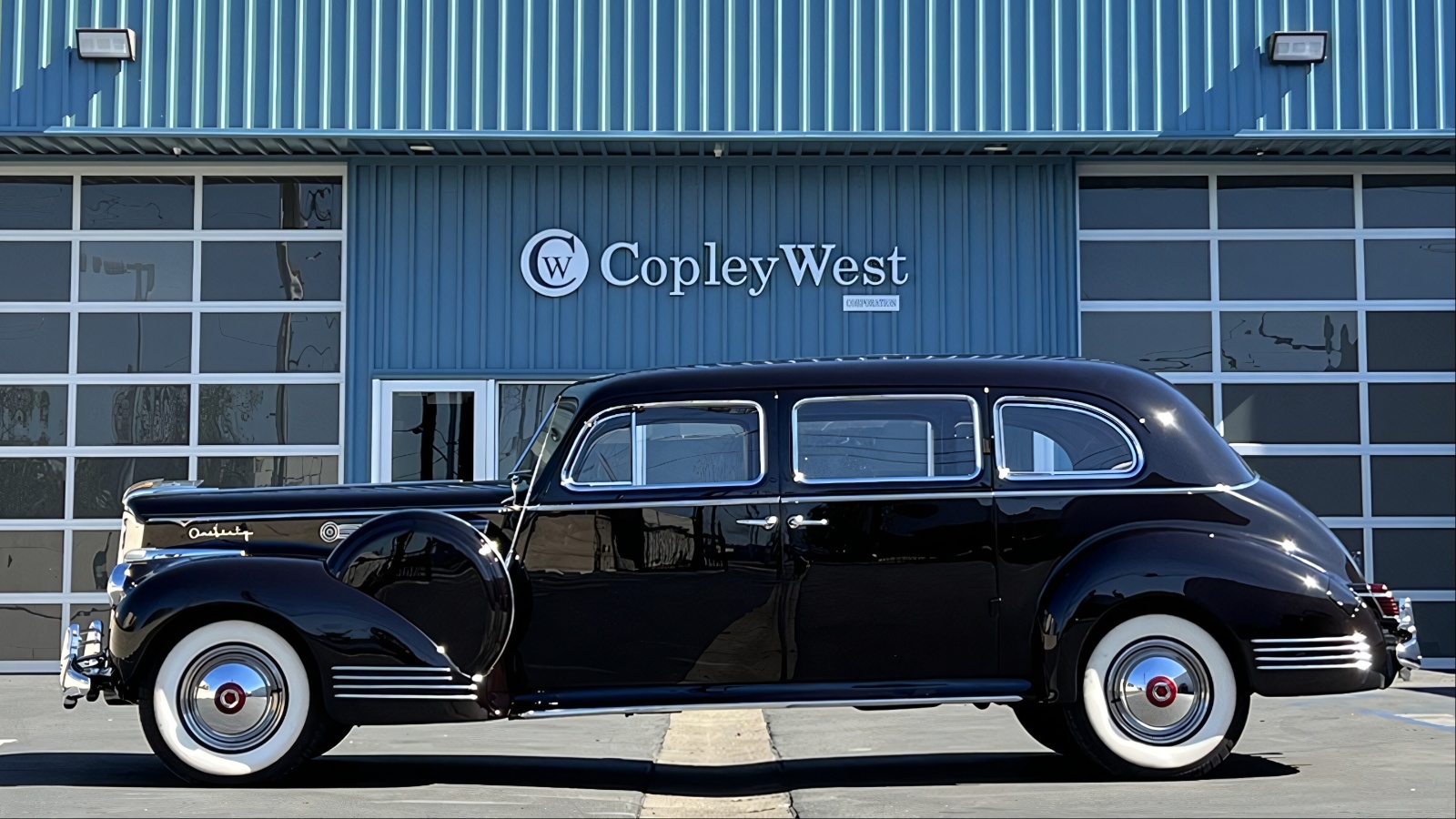
This was not length added merely for appearance. Packard’s big cars were expected to transport executives, wealthy families, hotel guests, and chauffeur-driven owners in exceptional comfort. The long chassis allowed a broad passenger compartment without sacrificing the enormous hood proportions expected of a prestigious Packard.
The One-Sixty also represented the final phase of America’s traditional senior luxury-car era. Wartime production restrictions soon transformed the industry, and postwar manufacturers increasingly favored shorter, more efficiently packaged bodies.
Its 148-inch measurement ties some early Cadillac V-16 configurations, but the Packard earns this spot as a clearly cataloged seven-passenger production sedan. Even today, its axle spacing exceeds that of almost every conventional sedan on the road.
9. Rolls-Royce Phantom VIII Extended – 148.5 Inches
The current-generation Rolls-Royce Phantom proves that the long-wheelbase luxury sedan did not disappear with America’s classic coachbuilt era. In Extended form, the Phantom VIII rides on a 148.5-inch wheelbase, 8.7 inches longer than the standard version. Car and Driver lists the Phantom range at 139.8 to 148.5 inches between the axles.
Rather than extending the car simply to make it visually imposing, Rolls-Royce directs virtually all of that extra dimension toward the rear passenger compartment. That is appropriate because Extended models are frequently configured around the person sitting behind the front passenger rather than the person holding the steering wheel.
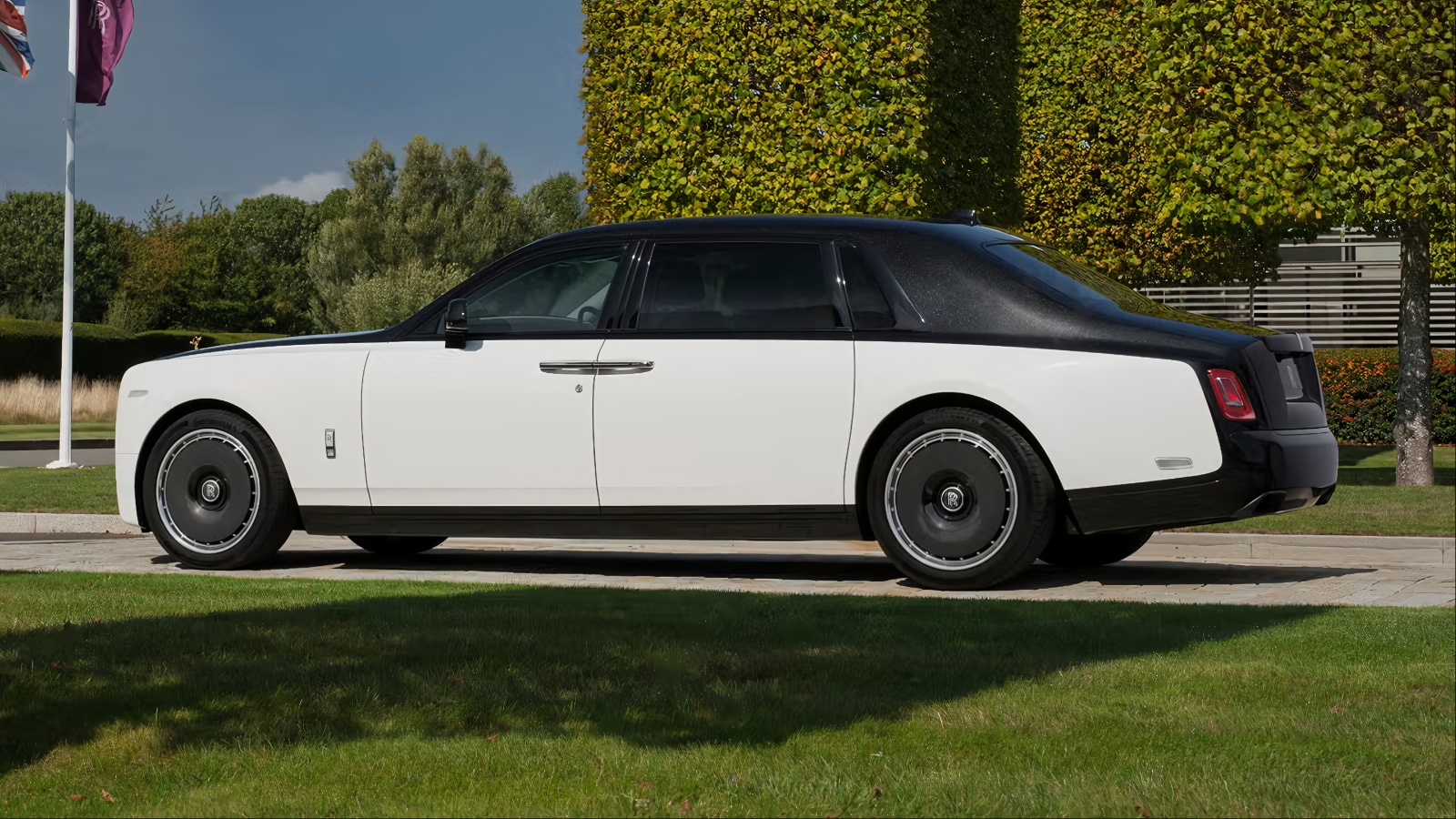
The Phantom’s aluminum architecture also separates it from the old body-on-frame giants elsewhere on this ranking. Modern crash requirements, suspension engineering, electronics, and structural rigidity must all coexist with dimensions that would have looked enormous even during Detroit’s land-yacht era.
The car stretches roughly 235.8 inches in length, but Rolls-Royce makes its size appear less imposing through a long hood, upright grille, high beltline, and carefully balanced passenger cabin.
For American buyers, it remains a genuine factory production sedan rather than an aftermarket stretch limousine. That distinction matters here.
At 148.5 inches, the Phantom Extended is longer between its axles than many three-row SUVs. Remarkably, though, several luxury sedans sold decades earlier still surpass it, showing just how extreme manufacturers once became when passenger space and prestige mattered more than compact dimensions.
8. 1960 Crown Imperial Limousine by Ghia – 149.5 Inches
Chrysler’s Imperial division produced some enormous automobiles, but the 1960 Crown Imperial limousine existed on another level. Built in Italy by Ghia, it rode on a stretched 149.5-inch wheelbase, substantially longer than regular Imperial sedans and hardtops. Hagerty records that only 16 of these $16,000 limousines were sold for 1960.
That price was astonishing for the period. A Crown Imperial cost roughly three times as much as many already-expensive Imperial models, placing it in direct competition with the most exclusive chauffeur-driven automobiles from Cadillac and European luxury manufacturers.
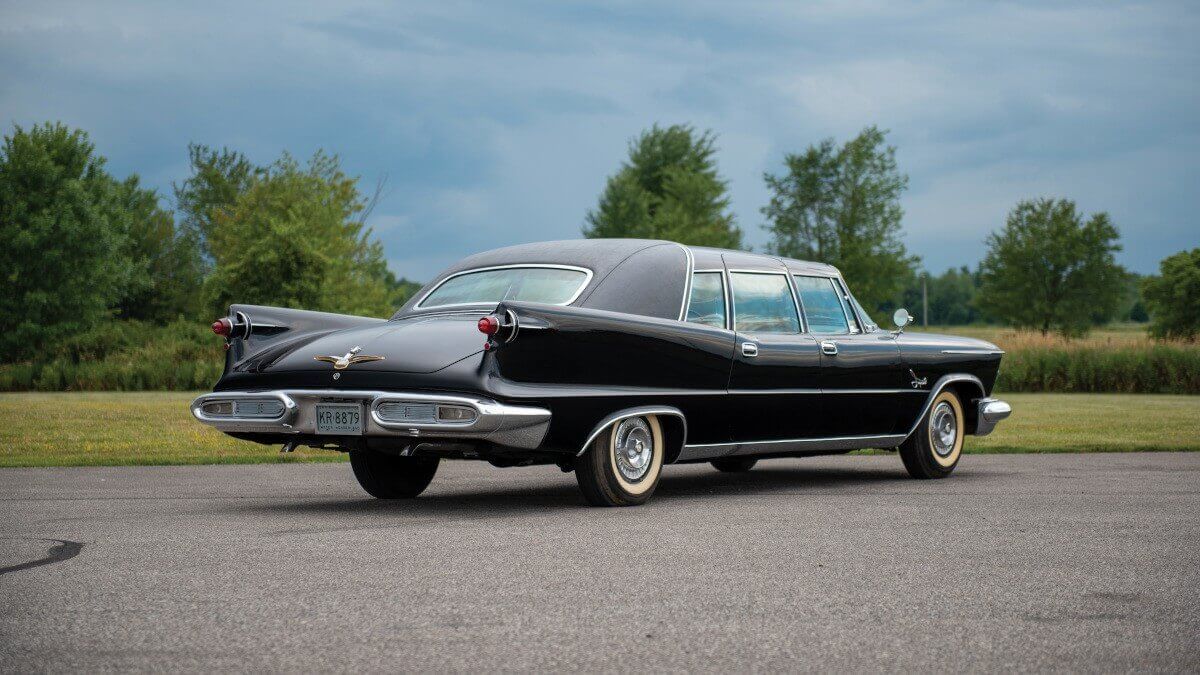
Underneath was Chrysler’s 413-cubic-inch V-8 producing 350 horsepower, but straight-line performance was not the primary mission. The limousine was designed around rear-seat space, formal appearance, and exclusivity. Its stretched chassis created the proportions expected of a diplomatic or executive automobile without requiring an outside limousine company to cut and lengthen a finished sedan.
That last detail gives the Crown Imperial an important place in this ranking. It was a factory-sanctioned production model, however tiny its production run, rather than a conventional Imperial modified years later.
The enormous wheelbase also illustrates how fiercely American luxury manufacturers competed during the late 1950s and early 1960s. Cadillac had the Fleetwood 75, Lincoln pursued its own formal luxury cars, and Chrysler answered with an automobile so specialized that much of its construction occurred across the Atlantic.
At 149.5 inches, it remains one of the longest factory passenger cars ever offered to American customers.
7. 1959 Cadillac Fleetwood Seventy-Five – 149.8 Inches
The towering fins of the 1959 Cadillac may steal the attention in photographs, but the Fleetwood Seventy-Five’s most striking figure lies beneath the bodywork. Cadillac’s factory specifications list a 149.8-inch wheelbase for the eight-passenger sedan and limousine, with a total length of 244.8 inches.
The Seventy-Five was Cadillac’s purpose-built long-wheelbase flagship. Unlike a stretched DeVille created by an outside coachbuilder, it was engineered and sold by Cadillac as a separate factory model. Depending on configuration, buyers could choose a formal limousine with a divider or an eight-passenger sedan that allowed occupants to share the same cabin.
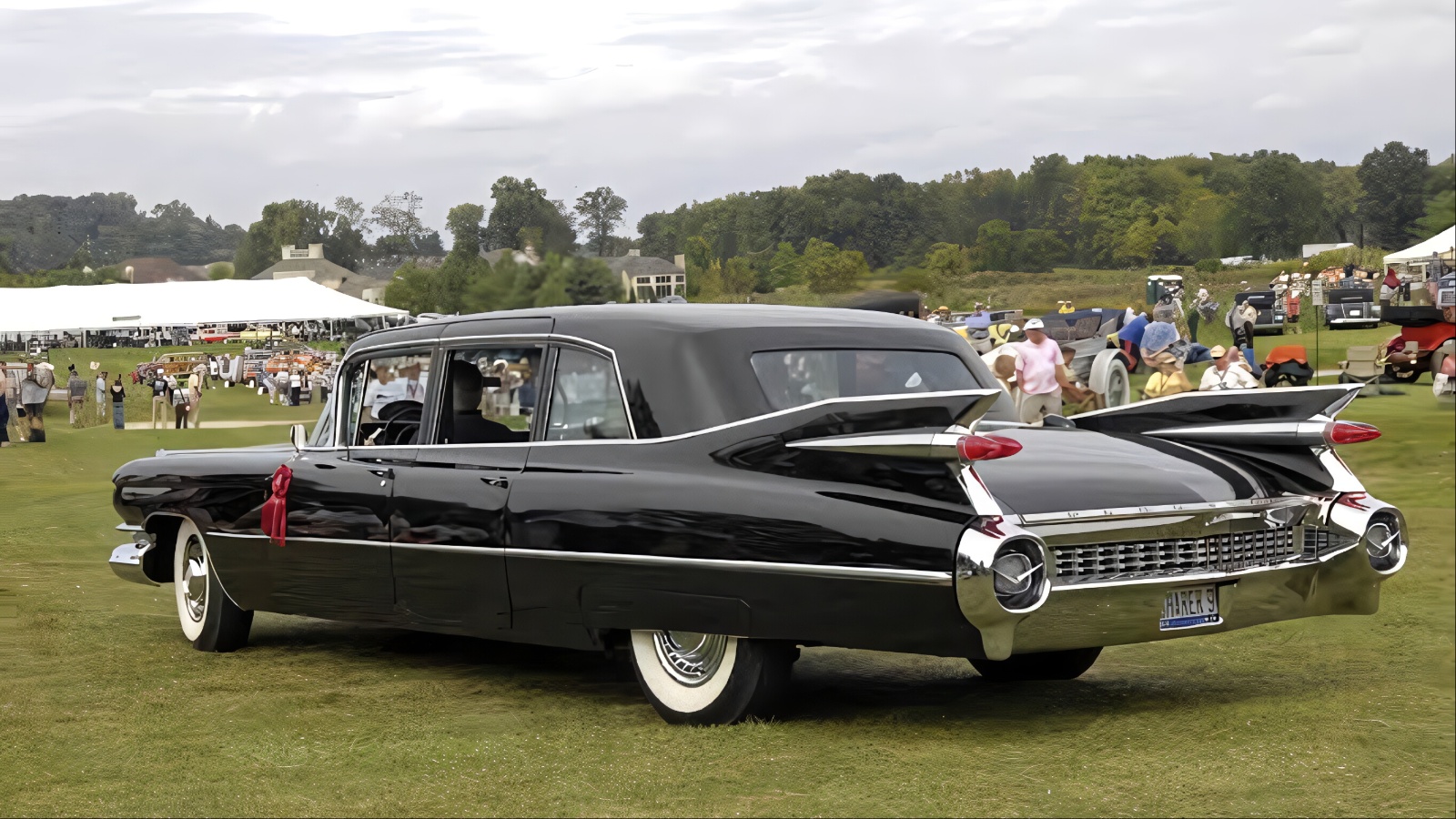
Rear accommodation was the priority. Auxiliary seats and extraordinary legroom turned the Fleetwood 75 into transportation suited to executives, dignitaries, hotels, funeral homes, and wealthy private owners.
Its proportions also reveal something important about Cadillac’s late-1950s design philosophy. The famous fins, panoramic windshield, heavy chrome, and elaborate lighting details made the vehicle appear dramatic, but there was genuine mechanical scale beneath the styling. Nearly twelve and a half feet separated the axle centers.
The 149.8-inch chassis survived in various Fleetwood 75 generations well beyond 1959, helping make the figure one of Cadillac’s most enduring extreme dimensions.
Even many extended-wheelbase modern luxury sedans cannot match it. A current Phantom Extended is slightly shorter between the axles.
In an era already famous for enormous American cars, the Fleetwood Seventy-Five was effectively Cadillac’s land yacht among land yachts.
6. Rolls-Royce Phantom VII Extended Wheelbase – 150.4 Inches
The seventh-generation Phantom represented a new chapter for Rolls-Royce under BMW ownership. The Extended Wheelbase model took the already imposing sedan to another level, creating a limousine with proportions that could almost be compared to a private railcar. Factory technical specifications give it a 150.4-inch wheelbase and a total length of approximately 239.8 inches.
Rolls-Royce achieved the EWB transformation by adding approximately 250 millimeters 9.8 inches to the Phantom’s aluminum spaceframe. The manufacturer specifically used the extension to create additional space in the rear compartment.
The result was a five-seat production sedan with dimensions normally associated with purpose-built limousines. Yet the Phantom VII EWB retained conventional four-door construction, making it especially significant for a production-sedan ranking.
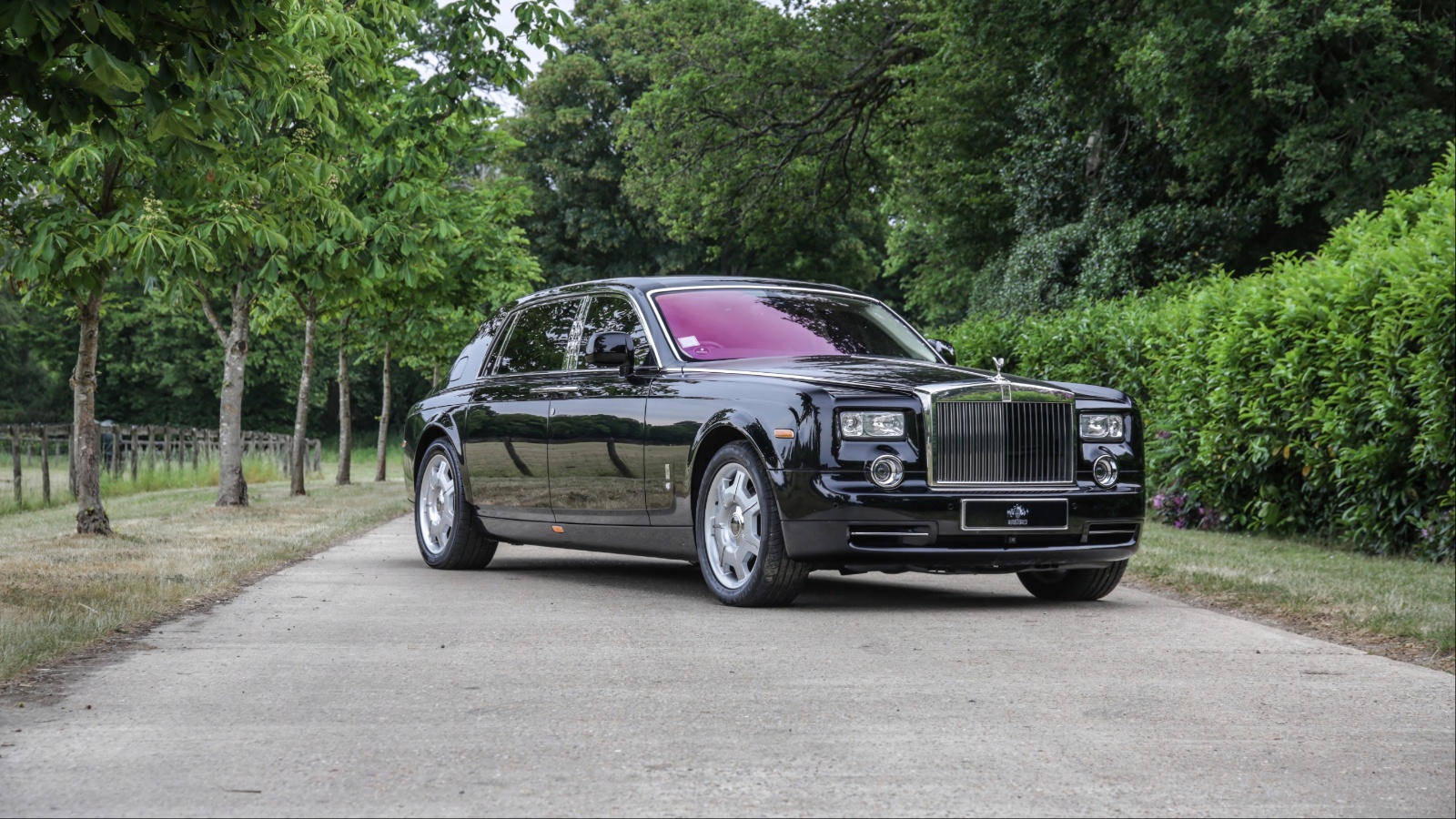
Despite its size and curb weight approaching three tons, it used a 6.75-liter V-12 producing more than 450 horsepower. Performance was therefore surprisingly strong for something designed primarily to isolate rear passengers from the outside world.
The Phantom VII also represents an interesting moment in automotive history. While mainstream cars were becoming shorter, lighter, and increasingly concerned with efficiency, Rolls-Royce deliberately moved in the opposite direction at the very top of the market.
Its successor is actually shorter between the axles. The Phantom VIII Extended measures 148.5 inches compared with this car’s 150.4.
That makes the Phantom VII EWB not merely enormous in modern terms but a legitimate competitor to Cadillac’s great factory limousines of the twentieth century.
5. Maybach 62 – 150.7 Inches
When Daimler revived Maybach as a standalone ultraluxury marque in the 2000s, the larger Maybach 62 was conceived as a road-going equivalent of a private jet. Its defining feature was a massive 150.7-inch wheelbase, while its total length stretched to approximately 242.7 inches. Contemporary American specifications confirm both dimensions.
The model designation itself referenced its approximate 6.2-meter length. Rather than building a conventional Mercedes sedan and sending it to a limousine company, Maybach manufactured the 62 as a complete four-door production automobile.
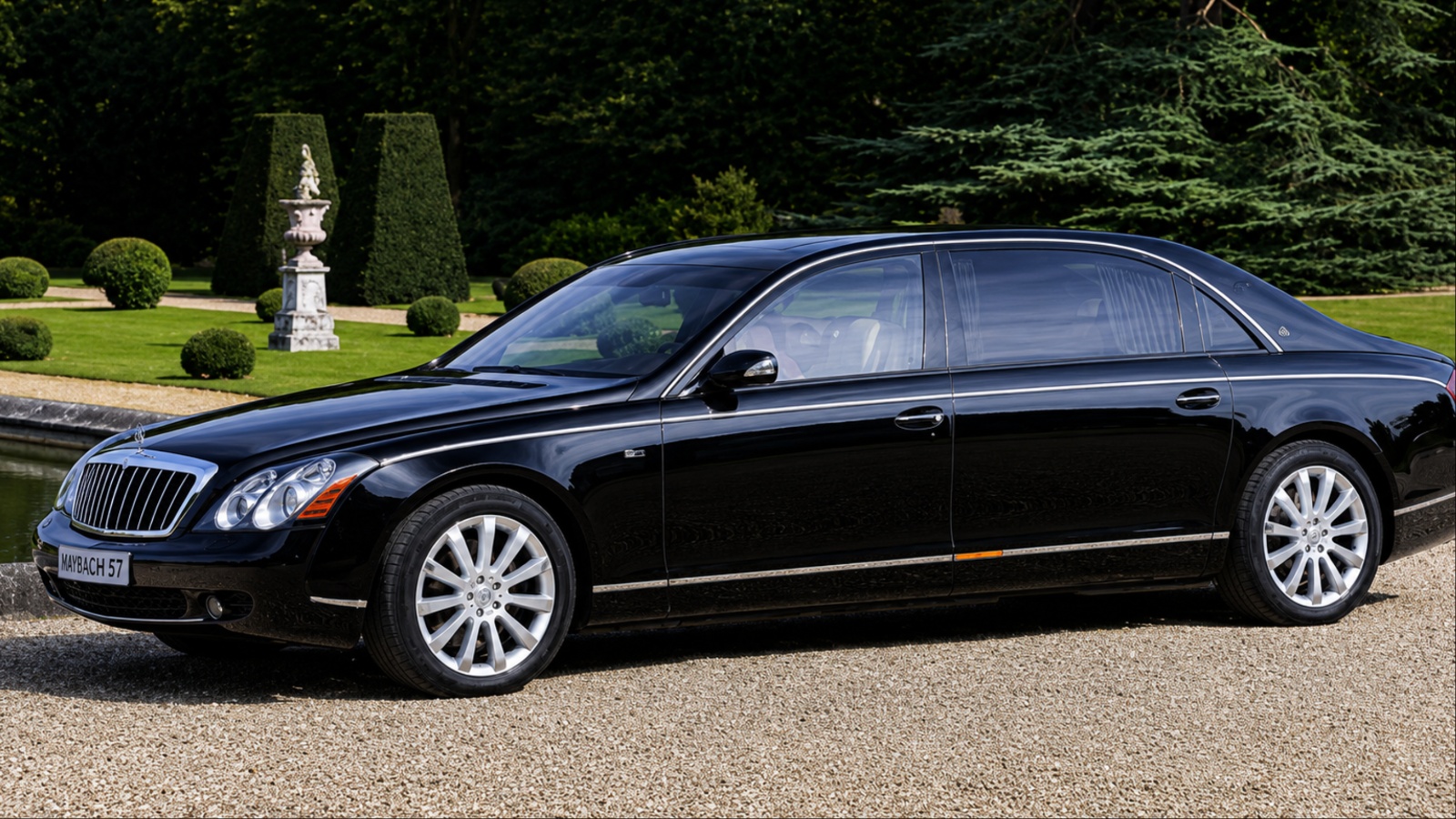
Rear passengers received the benefits. Reclining seats, extensive leather and wood trim, individual climate control, entertainment systems, communications equipment, and available business features were intended to make the rear compartment the primary destination.
The car was equally extravagant mechanically. Early examples used a twin-turbocharged 5.5-liter V-12 producing roughly 550 horsepower, while later 62 S variants became even more powerful. Despite weighing more than 6,000 pounds, the Maybach could accelerate with the urgency of a much smaller performance sedan.
With a 150.7-inch wheelbase, it holds a rare distinction. It is longer than the Phantom VII EWB and falls less than an inch short of Cadillac’s massive Fleetwood 75 from the 1970s.
When it appeared in America for 2004, the Maybach 62 cost around $350,000, and contemporary descriptions compared its rear compartment with business-class aviation.
Few modern sedans have ever taken the chauffeur-car concept quite so literally or stretched it so far.
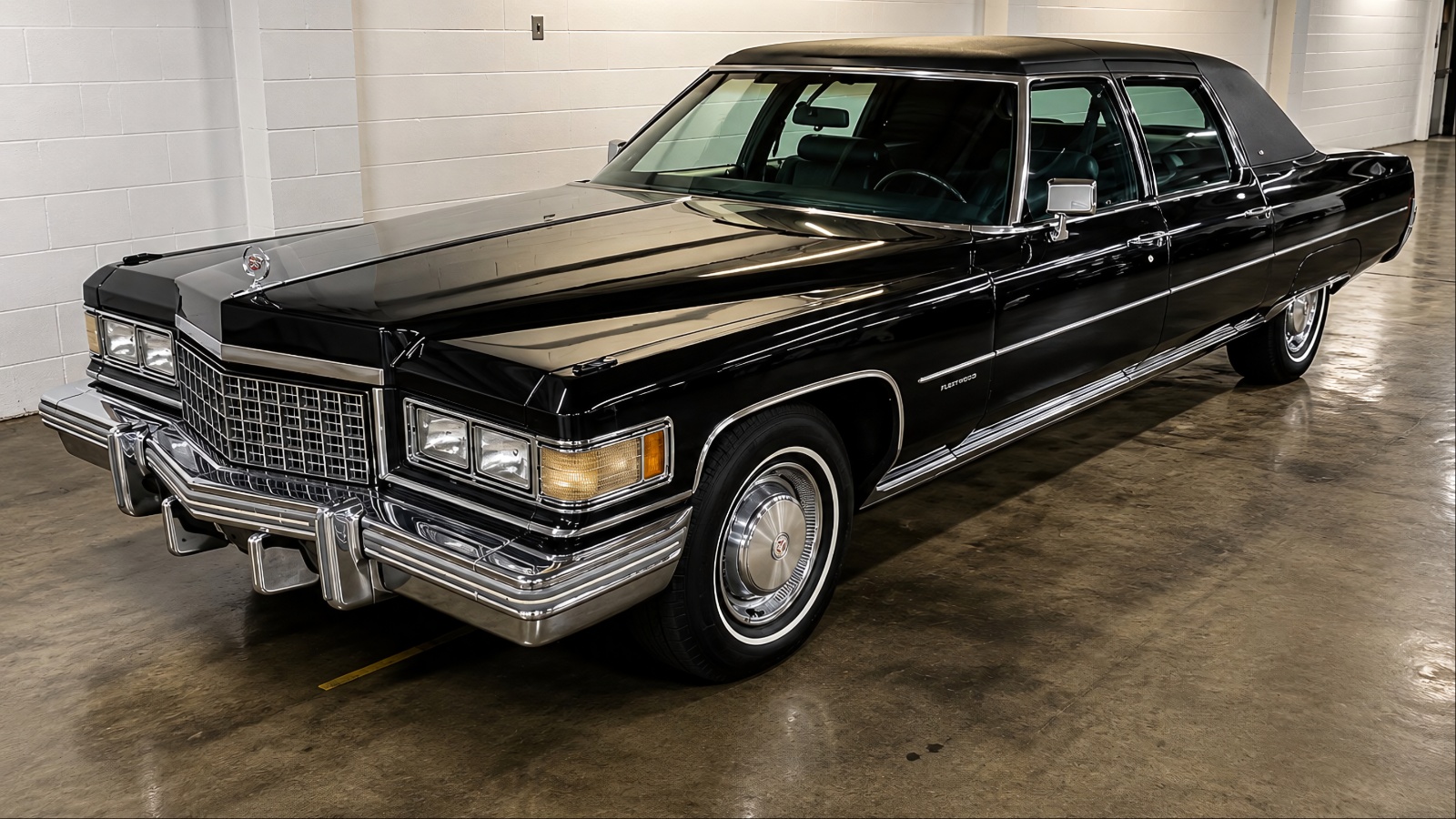
4. 1971–1976 Cadillac Fleetwood Seventy-Five – 151.5 Inches
Cadillac reached one of its postwar size peaks with the 1971–1976 Fleetwood Seventy-Five. Both the factory-style sedan and limousine rode on an extraordinary 151.5-inch wheelbase. A 1976 example stretched 252.2 inches from bumper to bumper, making it more than 21 feet long.
The Seventy-Five was not merely a stretched version of Cadillac’s normal sedan. Standard Calais and DeVille models of this generation used 130-inch wheelbases, while the Fleetwood Sixty Special measured 133 inches. The 75 added more than a foot and a half beyond even those substantial cars.
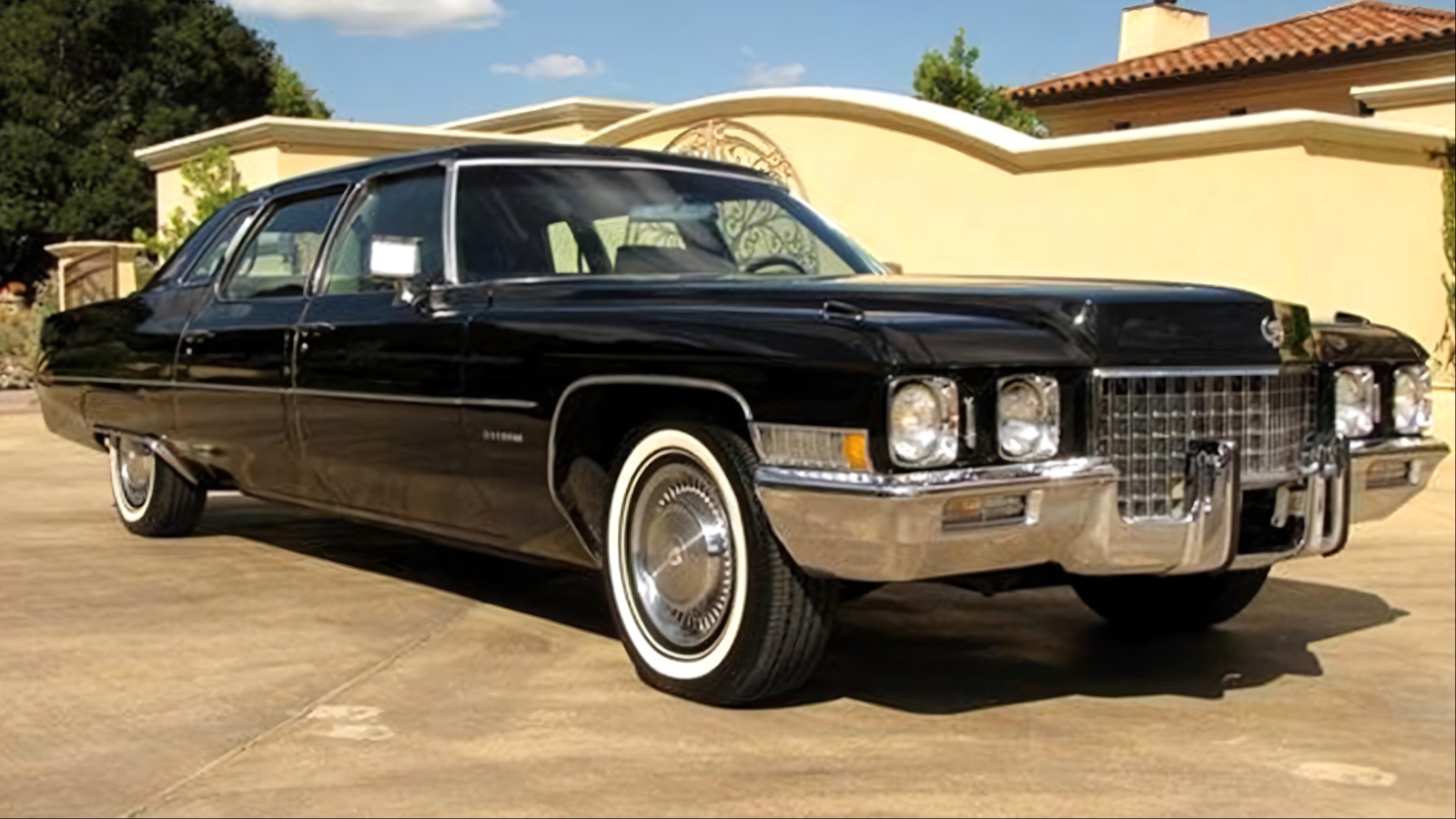
The additional space allowed eight-passenger seating and the formal proportions expected of Cadillac’s top chauffeur-oriented model.
Power came from enormous Cadillac V-8s, culminating in the 500-cubic-inch engine during much of the generation. By 1976, emissions equipment and changing horsepower measurement standards had reduced advertised output dramatically, but effortless low-speed torque remained central to the car’s personality.
What makes the 151.5-inch figure especially remarkable is that this was not a handful of experimental coachbuilt automobiles from the 1930s. Cadillac was still cataloging such a huge factory passenger car during the age of emissions regulation, fuel-economy concerns, and the aftermath of the 1973 oil crisis.
The next-generation Fleetwood 75 was downsized dramatically.
As a result, the 1971–1976 model stands as perhaps the clearest monument to peak postwar American sedan gigantism.
3. Duesenberg Model J Long-Wheelbase Sedan – 153.5 Inches
The Duesenberg Model J was never a conventional mass-market sedan, but its 153.5-inch long-wheelbase chassis was a genuine production offering and supported several closed sedan designs. The famous Murphy Beverly Sedan, for example, was available on the long Model J chassis, and period survivors confirm the 153.5-inch dimension.
That distance is nearly 12 feet 10 inches between the axle centers before considering the body extending ahead of and behind them.
Duesenberg supplied the mechanical chassis while elite coachbuilders including Murphy, LeBaron, Rollston, and others created bodies for customers. That construction method was normal at the top of the luxury market, so the Model J belongs in a historical production ranking even though individual bodies could differ dramatically.
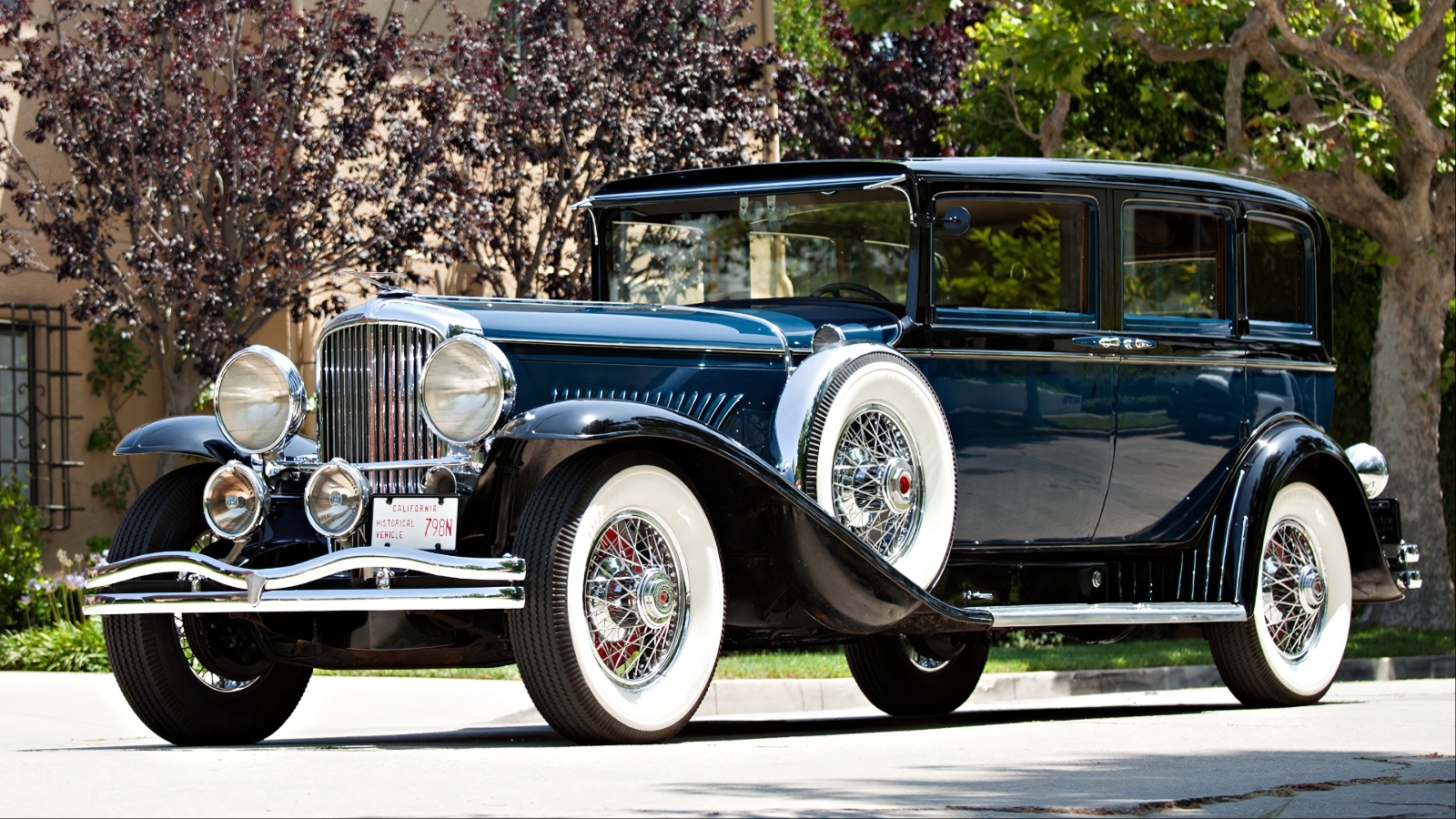
The Model J’s enormous wheelbase served a purpose beyond passenger comfort. It was also essential to maintaining the car’s proportions. Its 420-cubic-inch straight-eight sat beneath an exceptionally long hood, requiring substantial chassis length behind the engine to prevent the design from appearing too heavy at the front.
Long-wheelbase sedans could therefore combine enormous rear compartments with the graceful hood-to-cabin proportions that made Duesenbergs visually distinctive.
The naturally aspirated engine produced a claimed 265 horsepower, extraordinary output around 1930. Later supercharged cars were even more formidable.
At 153.5 inches, the Duesenberg essentially ties the Mercedes-Benz 600 Pullman. The Mercedes ranks higher here because it was a fully factory-produced body-and-chassis sedan, while Duesenberg relied on outside coachbuilders.
Measured purely between the axles, however, they are equals.
2. Mercedes-Benz 600 Pullman – 153.5 Inches
Mercedes-Benz’s W100 600 Pullman transformed the limousine into a showcase of engineering and luxury. Its four-door Pullman configuration rode on a 3,900-millimeter wheelbase, or about 153.5 inches, placing it among the longest unit-body production passenger cars ever built. Mercedes-Benz archival specifications give the same 3,900-millimeter wheelbase and a total length of 6,240 millimeters.
Unlike many limousine conversions, the Pullman was engineered that way from the beginning. Mercedes offered four-door and six-door versions as well as extremely rare landaulets.
The company built only 304 four-door Pullman limousines, but the broader 600 family had a particularly strong American connection. Mercedes-Benz historical material states that 743 W100s were delivered to the United States, more than to any other country.
Its size was matched by extraordinary technology. A 6.3-liter fuel-injected V-8 powered the car, while air suspension supported its considerable mass. Most famously, an extremely high-pressure hydraulic system operated items including windows, seats, door mechanisms, the trunk, and other luxury functions.
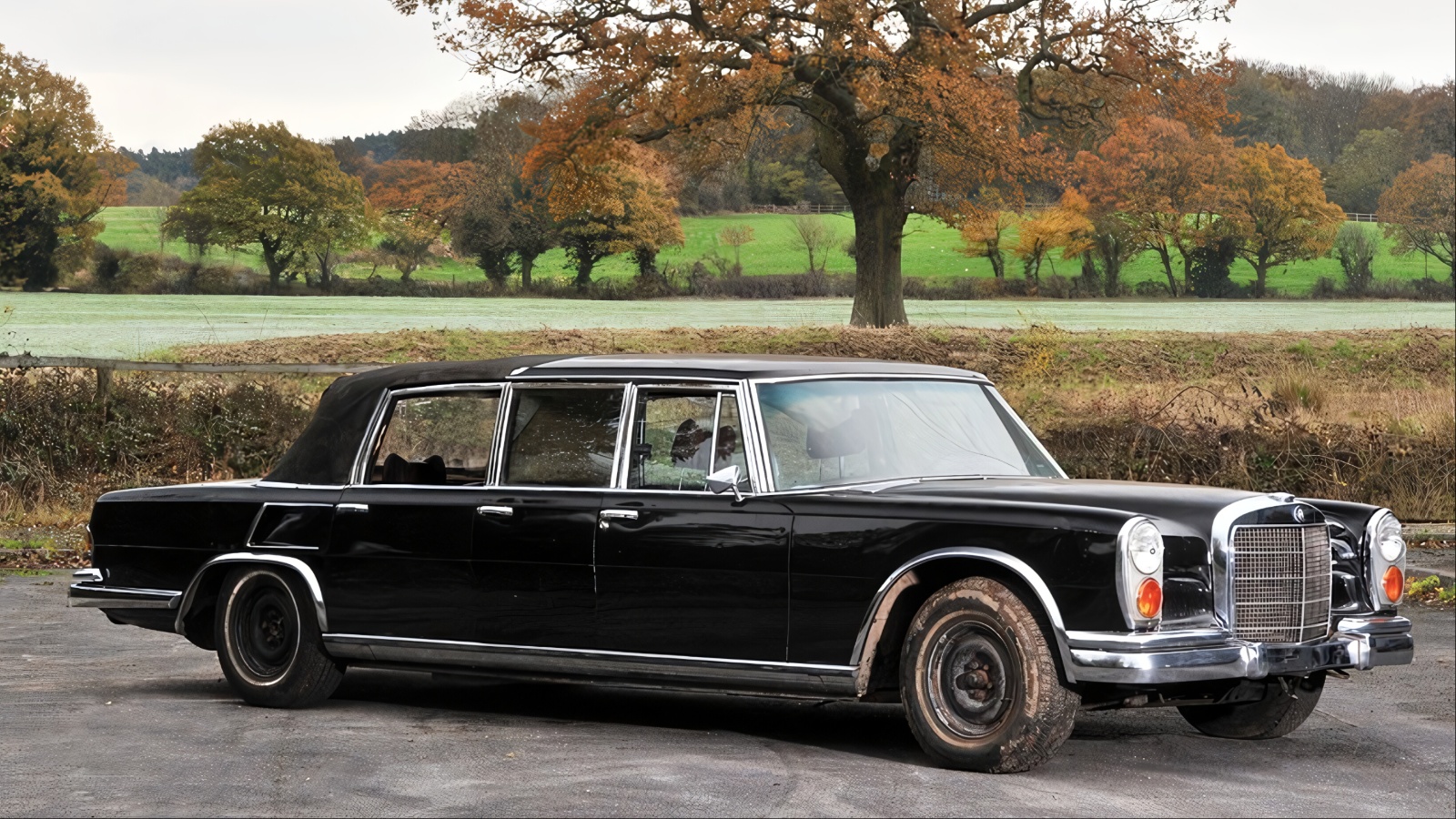
The Pullman consequently offered limousine space without the compromises associated with cutting a completed sedan apart and inserting an extension.
Its wheelbase exactly matches the long Duesenberg Model J at 153.5 inches, but Mercedes earns the higher ranking because the Pullman was a complete factory-designed and factory-bodied production model.
For decades it served royalty, heads of state, celebrities, and industrial leaders, the sort of clientele for whom a normal full-size luxury sedan was simply not large enough.
1. 1934–1935 Cadillac V-16 Series 452-D – 154 Inches
The production-sedan wheelbase crown belongs to one of the most extravagant automobiles Cadillac ever created. The 1934–1935 Cadillac V-16 Series 452-D rode on a colossal 154-inch wheelbase. Cadillac’s own 1934 technical documentation confirms the 154-inch V-16 chassis, while period accounts describe it as the longest American production car of its year.
Cadillac offered numerous Fleetwood bodies on the V-16 chassis, including four-door Imperial Sedans and formal closed cars. A surviving 1935 Imperial Sedan specification lists seven-passenger seating and the full 154-inch wheelbase.
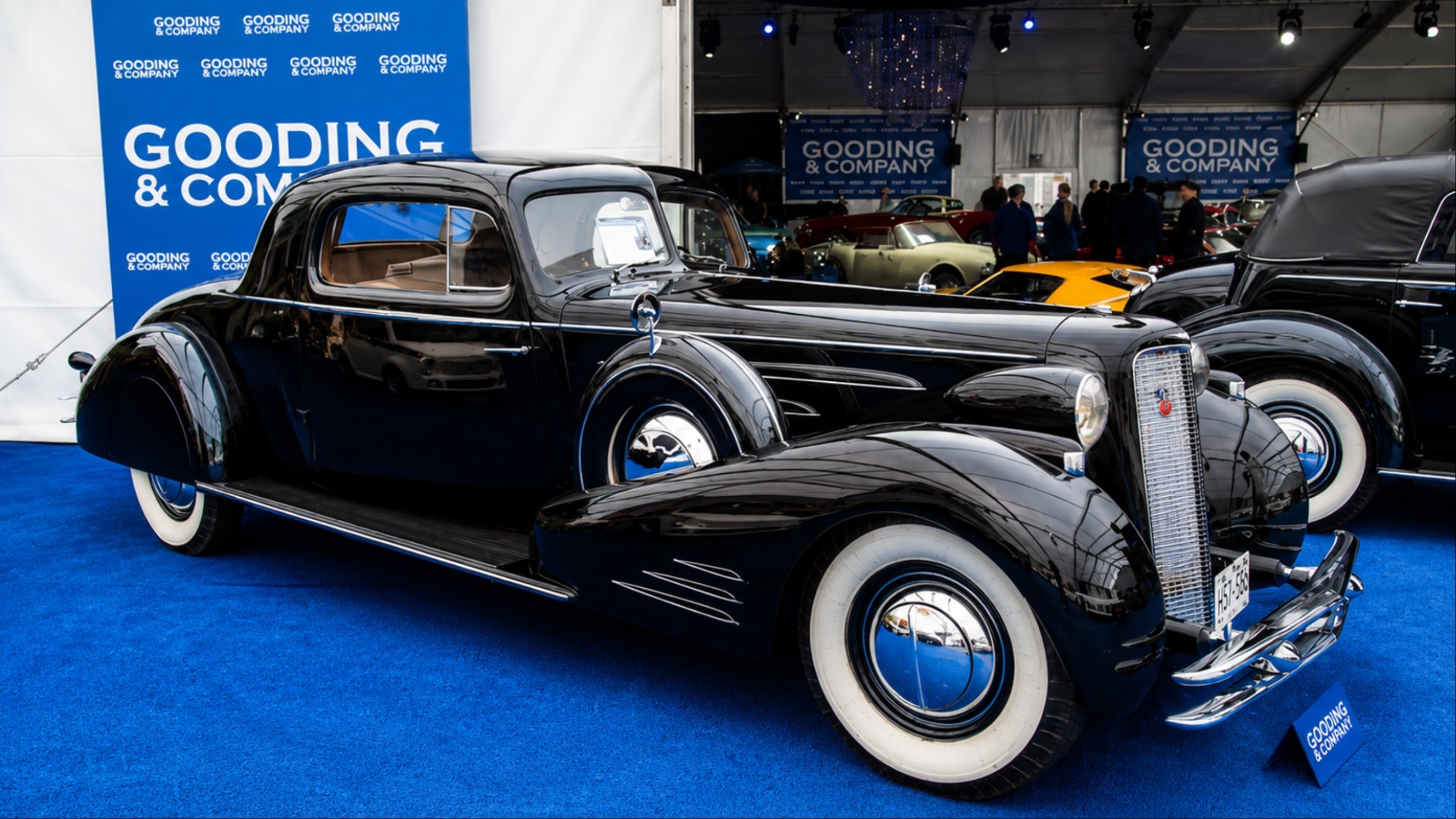
Everything about the automobile was excessive. Under the hood sat Cadillac’s 452-cubic-inch V-16, one of the most prestigious powerplants produced by an American manufacturer during the Classic Era. The enormous chassis gave Fleetwood enough room for vast passenger compartments while preserving a hood length suitable for sixteen cylinders.
Only tiny numbers were built because America was deep in the Great Depression. That scarcity did not make the V-16 a prototype, however. Cadillac cataloged and sold it as a production automobile, with multiple bodies available to customers.
At 154 inches, its wheelbase exceeds the Mercedes-Benz 600 Pullman by half an inch, the 1970s Fleetwood 75 by 2.5 inches, and today’s Phantom Extended by 5.5 inches.
Almost a century later, Cadillac’s prewar V-16 still stands out as an extraordinary example of automotive excess. Its factory-built passenger cars stretched nearly 12 feet 10 inches between the axles, reflecting a period when immense size and mechanical scale were central to the idea of luxury.