
A vehicle can be safe in a crash and still be expensive for insurers when collisions happen. HLDI’s collision-loss data measures the economic side of crashes by combining how frequently collision claims occur with how costly those claims are.
In HLDI’s 2023 report covering 2020-22 model years, the average vehicle was assigned a relative loss result of 100. The 10 vehicles below recorded the highest relative collision losses, with results ranging from 506 to 752.
The list is dominated by sports cars and luxury vehicles, where expensive parts and repairs can make even a relatively small crash costly.
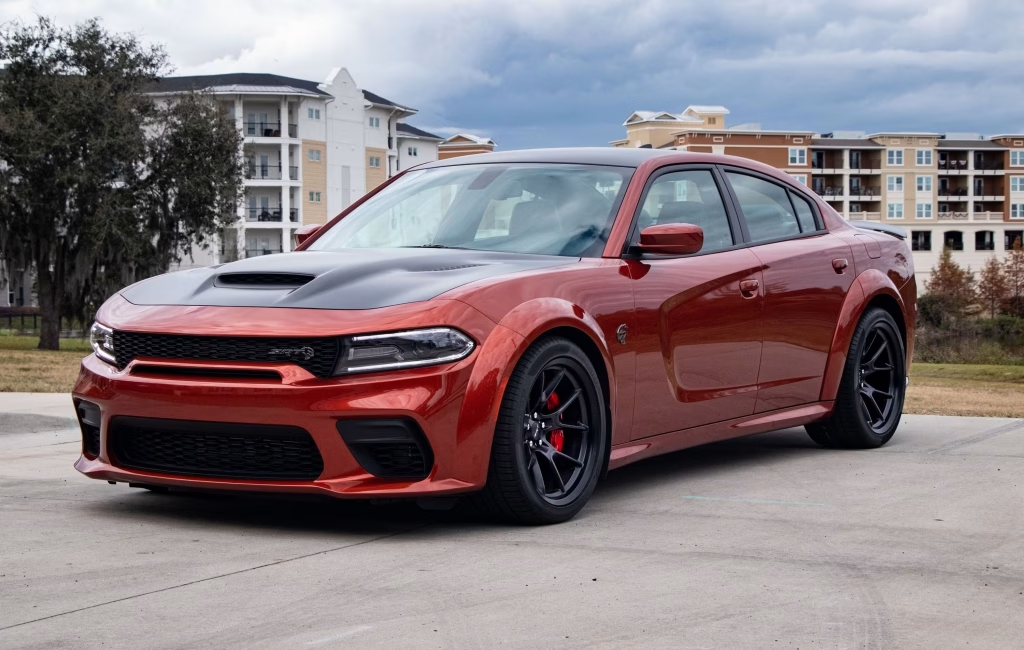
10. Dodge Charger SRT Hellcat
The Dodge Charger SRT Hellcat closes this list with a relative collision loss result of 506, more than five times the all-vehicle benchmark used by HLDI.
Its position is particularly interesting because the Charger is a large four-door car rather than an exotic sports car or ultra-luxury model. HLDI analyzed 7,749 insured vehicle years for the 2020-22 model-year Charger SRT Hellcat and found its collision losses substantially above the average.
There is a clear performance angle behind the Hellcat’s inclusion. The 6.2-liter supercharged HEMI V8 produces 717 horsepower and 650 lb-ft of torque in the Charger SRT Hellcat. That enormous output gives the sedan performance normally associated with purpose-built sports cars, but it also means the vehicle carries expensive performance hardware.
HLDI’s figure should not be interpreted as saying that every Hellcat will crash or that the car is structurally unsafe. Collision loss measures the insurance cost associated with crashes, not occupant protection in a crash.
HLDI explains that its collision-loss figure accounts for both how often claims are filed and how costly those claims are. A vehicle can receive a poor rating because accidents occur more frequently, repairs cost more, or both factors play a role.
The Hellcat’s ranking also fits another HLDI finding: powerful Dodge muscle cars have historically generated unusually high insurance losses in several coverage categories. The Charger SRT Hellcat previously appeared prominently in HLDI’s theft-loss research as well, although theft and collision are separate measurements.
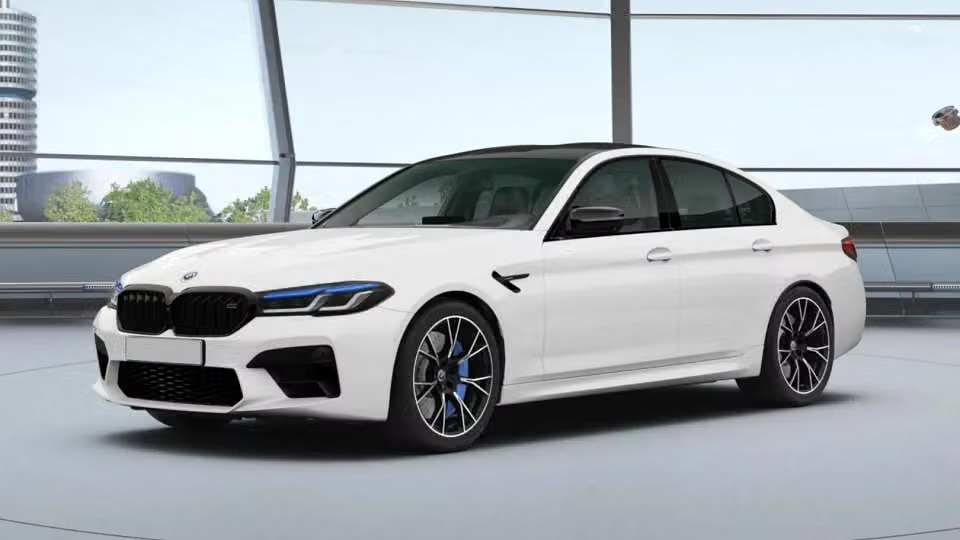
9. BMW M5 4WD
The BMW M5’s 506 relative collision-loss result places it just above the Charger SRT Hellcat, but the reasons are considerably different.
The M5 is a large luxury performance sedan engineered to combine everyday usability with serious acceleration. HLDI recorded 6,697 insured vehicle years for 2020-22 M5 models and found collision losses more than five times the all-vehicle reference point.
The generation represented in HLDI’s data used BMW’s 4.4-liter twin-turbocharged V8, producing 600 horsepower in the standard M5 and 617 horsepower in the M5 Competition. Torque reached 553 lb-ft. BMW paired the engine with an eight-speed automatic transmission and its M xDrive all-wheel-drive system.
That combination makes the M5 unusually quick for a large sedan, but its performance equipment also comes with expensive components. High-performance brakes, specialized suspension parts, sophisticated electronics, and an all-wheel-drive system can make collision repairs considerably more costly than those of a conventional family sedan.
HLDI’s collision-loss result therefore provides useful information for prospective owners, particularly those comparing performance cars from an insurance perspective. The 506 score does not mean the M5 is poorly engineered or unsafe.
It simply means that the financial losses associated with collision claims were substantially higher than the average vehicle in HLDI’s comparison.
That distinction matters. HLDI notes that its database measures economic losses resulting from vehicle ownership and operation, while crashworthiness ratings are a separate subject. The M5’s placement on this list is therefore better understood as an insurance-cost warning than a traditional safety warning.
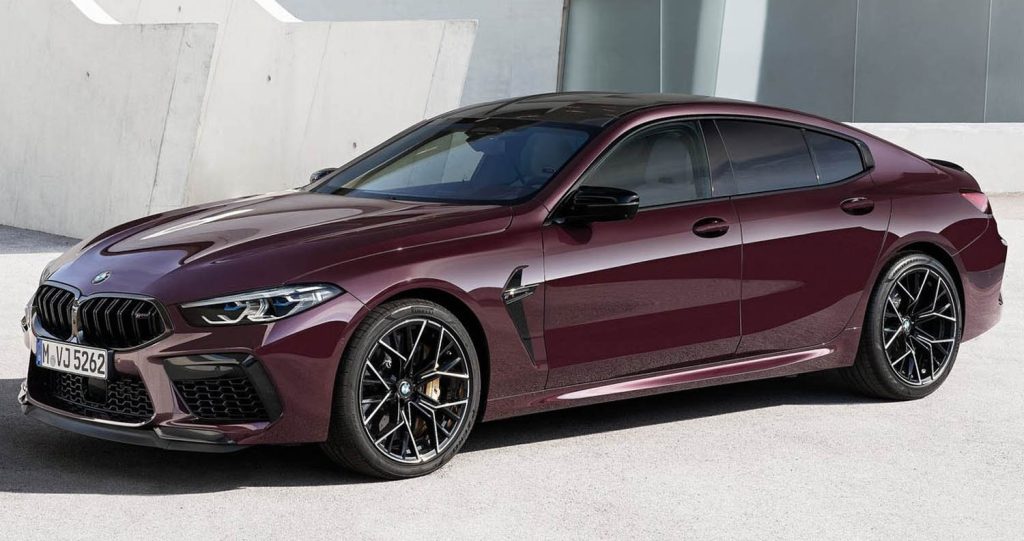
8. BMW M8 4-Door 4WD
The BMW M8 Gran Coupe occupies a particularly expensive corner of the collision-loss table. HLDI gave the 2020-22 BMW M8 4-door with all-wheel drive a relative collision-loss result of 699, placing it third among all vehicles in the study.
The figure was based on 2,357 insured vehicle years, a smaller exposure than mass-market models but sufficient for HLDI to include it in the ranking.
That number is striking because the HLDI benchmark is 100. A result of 699 therefore represents collision losses roughly seven times the average used in the study.
HLDI calculates relative collision losses from both claim frequency and claim severity. In other words, expensive claims can push a vehicle’s result upward even when the number of crashes is not exceptionally high.
The M8’s mechanical specification helps explain why repairs can become costly. The 2020-22 M8 Gran Coupe used BMW’s 4.4-liter twin-turbocharged V8, producing 617 horsepower and 553 lb-ft of torque in competition specification.
Sophisticated all-wheel drive, high-performance brakes, adaptive suspension components, and extensive electronic systems add considerable complexity compared with a conventional sedan.
Its large footprint also matters. The M8 Gran Coupe measures about 200 inches long and nearly 76 inches wide, putting substantial bodywork and expensive components around the vehicle.
Importantly, HLDI’s collision result should not be confused with a crash-test safety rating. The organization specifically describes insurance-loss data as a measurement of economic losses, while vehicle crashworthiness is evaluated separately. A high collision-loss number does not mean the M8 provides poor occupant protection.
7. BMW M8 2-Door 4WD
The two-door BMW M8 records a 686 relative collision-loss result, only slightly below its four-door sibling. HLDI’s data covered 2,726 insured vehicle years for 2020-22 models, giving this high-performance coupe the fourth-highest collision-loss result in the study.
There is an important lesson in that placement. The M8 Coupe is not necessarily generating high losses simply because it is difficult to drive. HLDI’s calculation combines the frequency of collision claims with the severity of those claims. Expensive repair bills can therefore have a major effect on the final number.
Under its hood sits BMW’s 4.4-liter twin-turbocharged V8. In M8 Competition form, the engine produces 617 horsepower and 553 lb-ft of torque, sent through an eight-speed automatic transmission and BMW’s M xDrive all-wheel-drive system.
The combination makes the M8 extraordinarily capable, but it also means a collision can involve specialized drivetrain, braking, suspension, and body components.
The coupe’s dimensions add another consideration. BMW lists the M8 Coupe at roughly 191 inches long and 76 inches wide. Its relatively low roofline, broad stance, and performance-focused bodywork give it a very different physical profile from a conventional family car.
HLDI’s data also demonstrates why insurance loss statistics need context. A score of 686 is a warning about potential insurance costs, not a statement that the M8 is inherently unsafe. HLDI says its collision-loss results represent the economic cost associated with collision claims and normalize the all-vehicle average to 100.
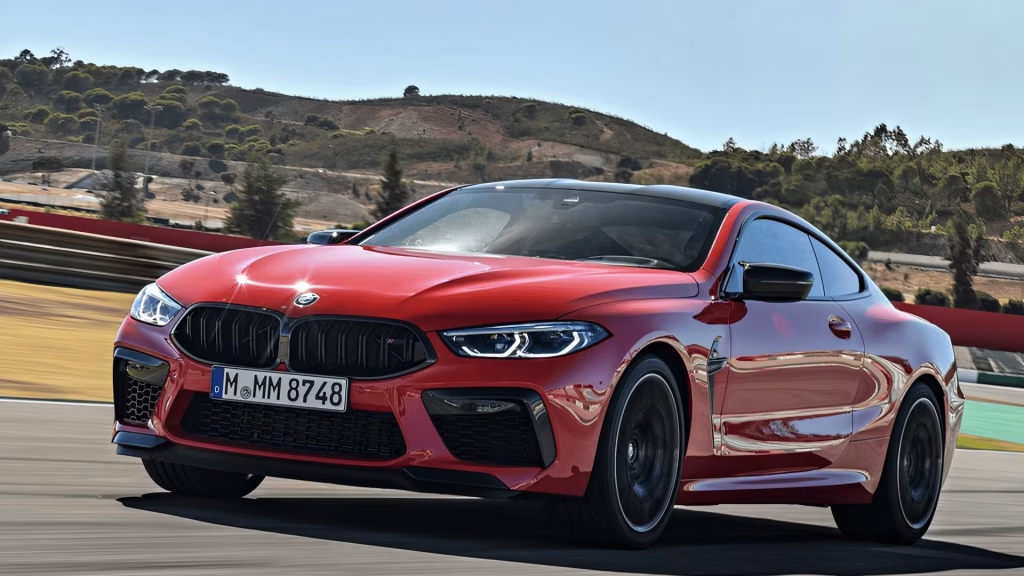
For an owner considering an M8, the number is therefore useful in a practical way. The vehicle’s extraordinary performance comes with sophisticated hardware and expensive components, and HLDI’s figures show that those characteristics can translate into unusually high collision-related insurance losses.
6. BMW M3 4-Door 4WD
The BMW M3 4-door with all-wheel drive recorded a 649 relative collision-loss result in HLDI’s 2020-22 study, putting it firmly among the vehicles with the highest insurance collision losses.
HLDI’s table covers the 2022 model year for this particular series and lists 1,202 insured vehicle years of exposure. Its result is more than six times the all-passenger-vehicle benchmark of 100.
The figure becomes more interesting when the M3’s performance is considered. The 2022 M3 Competition xDrive used BMW’s 3.0-liter twin-turbocharged inline-six, producing 503 horsepower and 479 lb-ft of torque.
BMW paired it with an eight-speed automatic transmission and all-wheel drive. BMW’s U.S. specifications list a 0-to-60 mph time of 3.4 seconds and an electronically limited top speed of 155 mph, or 180 mph with the available M Driver’s Package.
However, HLDI’s number should not be interpreted as evidence that the M3 is an unsafe vehicle. Collision-loss ratings measure the economic consequences of crashes involving the insured vehicle.
HLDI says its calculations combine claim frequency and claim severity, then standardize the results for factors such as driver demographics, location, deductible, and vehicle density.
The M3’s high-performance hardware helps explain why collision repairs can become expensive. Large performance brakes, specialized suspension components, advanced electronics, and the xDrive system are considerably more sophisticated than the equipment found in an ordinary 3 Series sedan.
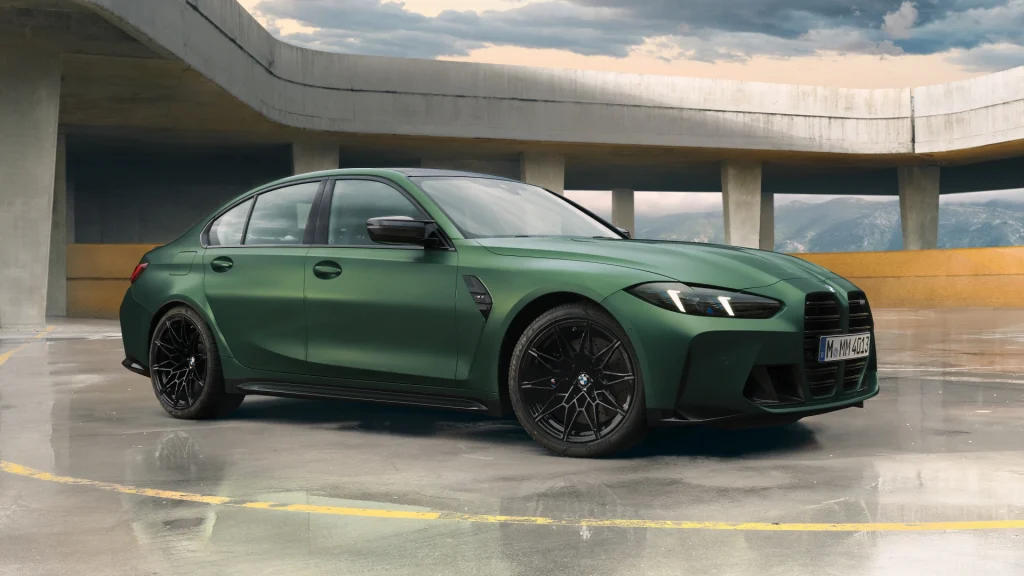
The result is a fascinating contrast: the M3 is a practical four-door sedan with rear-seat space and everyday usability, yet its insurance-loss profile resembles that of far more exotic machinery. For buyers considering one, the HLDI figure is a useful reminder that purchase price is not the only ownership expense worth investigating.
5. Ferrari F8 Tributo
The Ferrari F8 Tributo recorded a 589 relative collision-loss result, making it the sixth-highest vehicle in HLDI’s 2020-22 study. HLDI recorded 1,136 insured vehicle years for the F8 Tributo, and its result was nearly six times the all-vehicle reference point of 100.
Unlike the BMW M3, the F8 is unmistakably a purpose-built exotic sports car. Its mid-engine layout, two-seat cabin, and rear-wheel-drive configuration are centered on performance. The 3.9-liter twin-turbocharged V8 produces 710 horsepower and 568 lb-ft of torque in the U.S.-market car. Ferrari’s engine sends its output through a seven-speed dual-clutch transmission.
Ferrari’s published technical information gives the F8 Tributo a claimed top speed of 211 mph, while independent testing from Car and Driver recorded a 2.7-second 0-to-60 mph run. Its 181.5-inch length and 77.9-inch width give it a relatively compact footprint compared with the large luxury cars also appearing in HLDI’s ranking.
The HLDI data becomes even more interesting when you separate collision losses from the cost of individual claims. The F8 Tributo recorded the highest relative collision claim severity in HLDI’s table, with a score of 1,340. That figure indicates that when a collision claim was filed, the resulting repair costs were exceptionally high.
That makes intuitive sense for an exotic machine. A collision can involve specialized carbon-fiber components, expensive body panels, performance brakes, sophisticated suspension hardware and a highly complex powertrain. Even damage that appears modest from the outside can therefore produce a substantial repair bill.
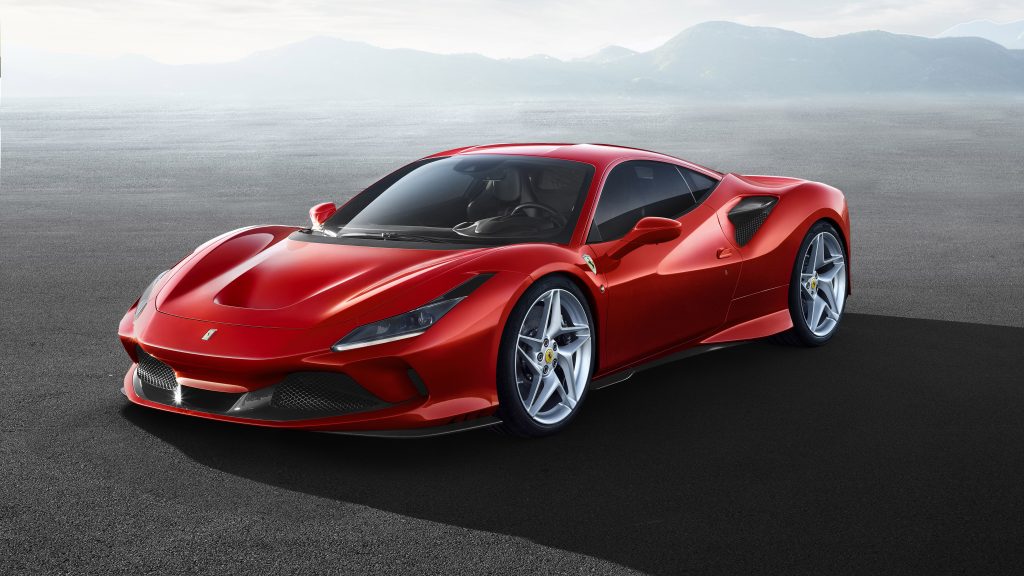
The F8’s 589 collision-loss score is not a crashworthiness rating. It tells prospective owners something different and equally important: when this kind of exotic car is involved in a collision, the financial consequences can be unusually severe.
4. BMW M4 2-Door 4WD
The BMW M4 2-door with all-wheel drive takes fourth place in HLDI’s ranking with a 741 relative collision-loss result, making it one of the most expensive vehicles in the study from a collision-insurance perspective. HLDI analyzed 958 insured vehicle years for the 2022 M4 2-door 4WD, and its result was more than seven times the all-vehicle benchmark of 100.
That figure is remarkable because the M4 is not an exotic supercar. It is based on BMW’s 4 Series platform, yet the M division turns it into a serious performance machine.
The 2022 M4 Competition xDrive used a 3.0-liter twin-turbocharged inline-six producing 503 horsepower and 479 lb-ft of torque. BMW’s all-wheel-drive system gives the car substantial traction while allowing the driver to select different drivetrain settings.
The collision-loss number does not mean the M4 is unsafe. HLDI specifically distinguishes insurance-loss measurements from crashworthiness evaluations. Its collision figures represent the economic losses associated with collision claims, incorporating both how frequently claims occur and how expensive those claims become.
That distinction becomes important with a high-performance coupe. The M4 uses specialized brakes, suspension components, drivetrain hardware, and electronic systems that can increase repair complexity. Damage to expensive performance components can make a relatively limited collision more costly than it might be in a conventional 4 Series.
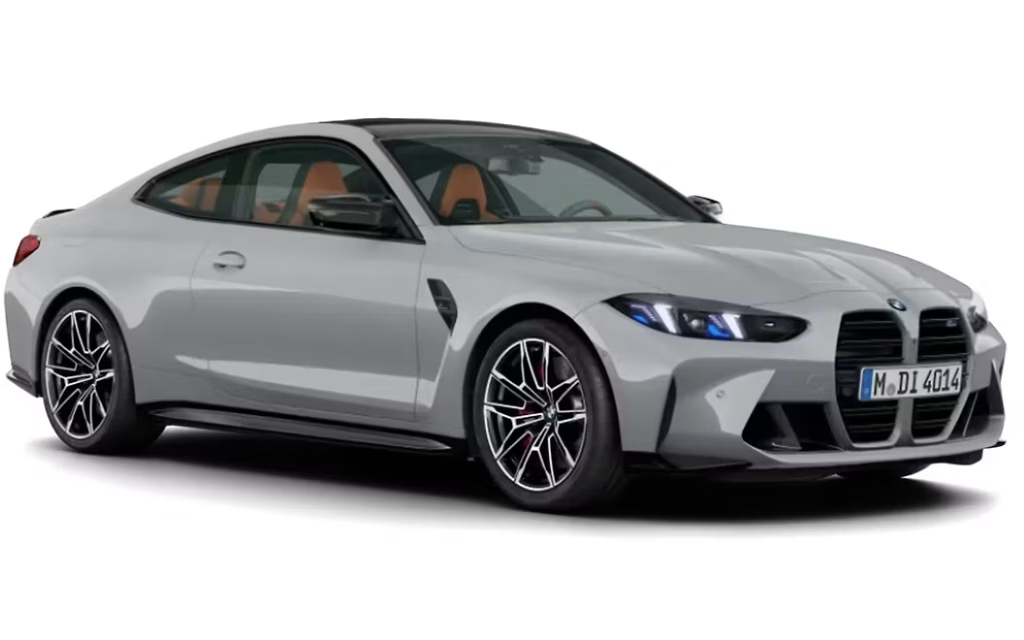
The M4 also demonstrates how performance cars can produce unusual insurance results even when they are relatively practical. It has two doors, four seats, and enough technology for everyday driving, but its 503-horsepower engine gives it a very different character from an ordinary commuter car.
For buyers, HLDI’s 741 result should therefore be treated as a financial warning rather than a safety verdict. The M4’s combination of performance hardware and collision-loss experience suggests that insurance costs deserve careful consideration before purchase.
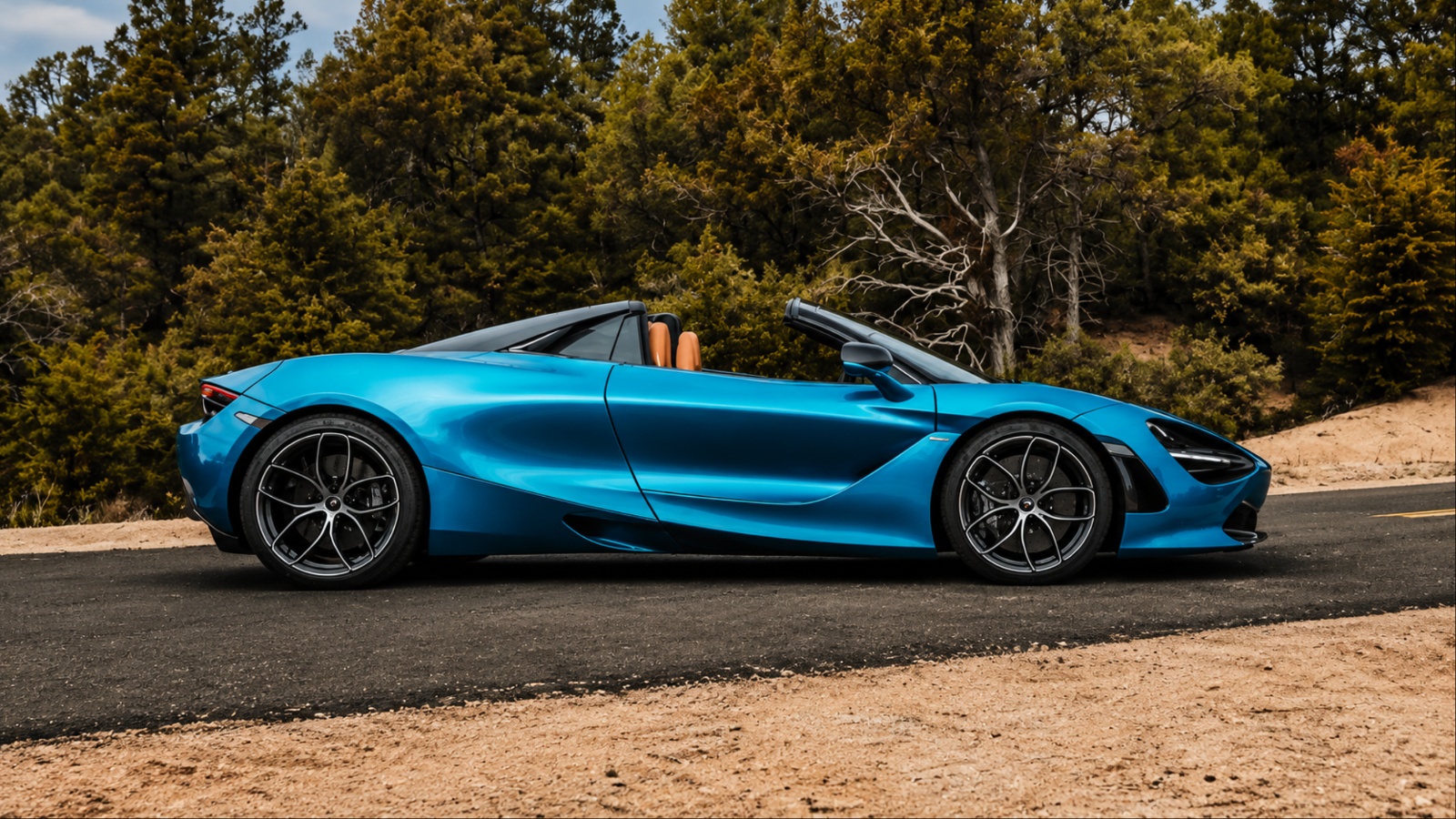
3. McLaren 720S Convertible
The McLaren 720S Convertible ranked at the extreme high end of HLDI’s collision-loss data, posting a remarkable relative loss score of 752 for the 2020 through 2022 model years. That was the highest collision-loss figure recorded among all the vehicles included in the study.
The analysis included 1,478 insured vehicle years, giving the 720S Convertible the unwanted distinction of leading the entire ranking.
The number becomes even more significant when HLDI’s methodology is considered. The all-vehicle benchmark is 100, so a result of 752 represents collision losses roughly seven and a half times the average.
HLDI determines its loss figures by looking at two key factors. One is how frequently collision claims occur, while the other is how much those claims typically cost. Both factors contribute to the final loss rating.
The 720S is an extraordinary machine mechanically. Its 4.0-liter twin-turbocharged V8 produces 710 horsepower and 568 lb-ft of torque in the 720S, with power sent to the rear wheels through a seven-speed dual-clutch transmission. McLaren’s U.S. vehicle data lists the 720S Spider at 179 inches long and 85 inches wide.
The convertible body introduces another layer of complexity. The 720S uses an advanced carbon-fiber structure and sophisticated suspension technology, while its performance-oriented braking and aerodynamic components are far removed from ordinary passenger-car hardware.
When an exotic car like this sustains collision damage, replacement parts and specialized repair procedures can become extremely expensive.
HLDI’s separate claim-severity table reinforces that point. The Ferrari F8 Tributo had the highest severity result at 1,340, but the McLaren 720S Convertible followed closely with 1,159, demonstrating that individual collision claims involving the McLaren were exceptionally expensive.
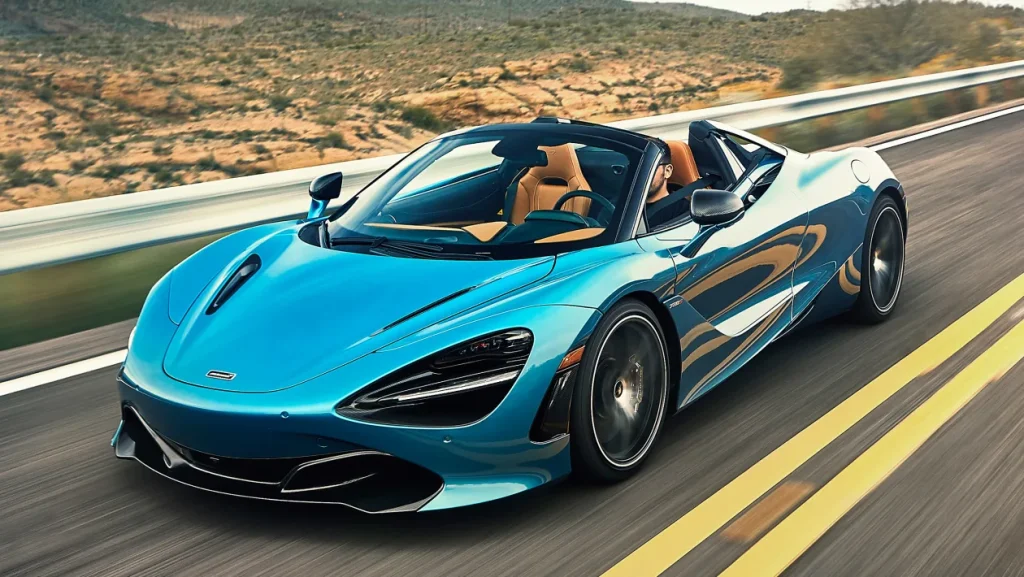
The 720S therefore represents the clearest example of why collision-loss ratings matter. Its enormous performance is not the problem by itself, but the combination of exotic construction, specialized components, and high repair costs can make an accident financially painful even when the vehicle remains repairable.
2. Rolls-Royce Cullinan
The Rolls-Royce Cullinan takes the second position with a 588 relative collision-loss result, according to HLDI’s analysis of 2020-22 model-year vehicles.
HLDI recorded 1,943 insured vehicle years for the Cullinan 4WD, placing the ultra-luxury SUV among the 10 vehicles with the highest collision losses in the entire study. Its result is substantially above the all-passenger-vehicle benchmark of 100.
The Cullinan is an interesting case because its high ranking is not driven by a high-performance sports-car layout. Instead, it combines enormous size, luxury construction, and highly sophisticated mechanical and electronic equipment.
HLDI notes that collision losses can rise with vehicle size because larger vehicles can cost more to repair or replace. Luxury vehicles can also have higher claim severity because their components are more expensive.
For the model years covered by HLDI, the Cullinan used a 6.75-liter twin-turbocharged V12 producing approximately 563 horsepower and 627 lb-ft of torque in U.S. specification. Power was sent through an eight-speed automatic transmission and an all-wheel-drive system.
The SUV measures roughly 210 inches long and nearly 79 inches wide, giving it a substantial physical footprint. That size is accompanied by an exceptionally elaborate cabin containing premium materials, advanced electronics, and numerous comfort systems.
Consequently, damage to exterior panels, lighting equipment, sensors, or mechanical components can become expensive very quickly.
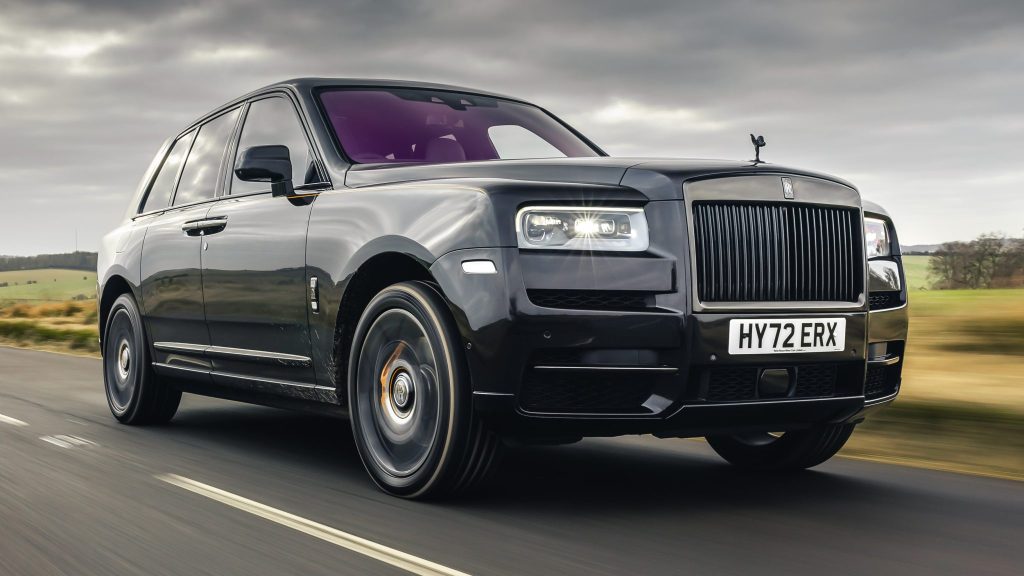
For shoppers considering a luxury SUV, HLDI’s finding provides useful context. The Cullinan’s collision-loss score of 588 does not suggest that the vehicle offers inadequate protection for its occupants. Instead, the figure reflects the financial impact of collision claims, based on how often claims occur and how expensive those claims are.
The Cullinan’s position demonstrates an important pattern in the HLDI data: expensive vehicles do not need to be sports cars to generate high collision losses. Sophisticated construction and costly replacement parts can make even an ordinary-looking accident a very expensive insurance event.
1. Aston Martin Vantage V8
The Aston Martin Vantage V8 completes HLDI’s top 10 with a 528 relative collision-loss result, meaning its collision losses were more than five times the all-passenger-vehicle reference value of 100. HLDI’s study covered 2,163 insured vehicle years for 2020-22 Vantage V8 models.
Unlike the Cullinan, the Vantage is a compact two-seat sports car built around performance. Its 4.0-liter twin-turbocharged V8 supplied 503 horsepower and 505 lb-ft of torque in the U.S.-market 2020-22 Vantage.
Power was delivered to the rear wheels through an eight-speed automatic transmission, giving the car the character expected from a lightweight, rear-drive performance machine.
The Vantage measures approximately 175.8 inches long and 76.5 inches wide, making it dramatically smaller than the Cullinan. Yet its collision-loss result remains high. That is where HLDI’s distinction between claim frequency and claim severity becomes important.
A vehicle does not need to be large to generate expensive collision claims. Specialized bodywork, performance components, and expensive replacement parts can significantly increase the amount paid when damage occurs.
The Vantage’s ranking also fits the broader pattern visible in HLDI’s study. Three sports cars appeared among the 10 vehicles with the highest collision-loss results, while six were luxury vehicles and one was a large four-door car.
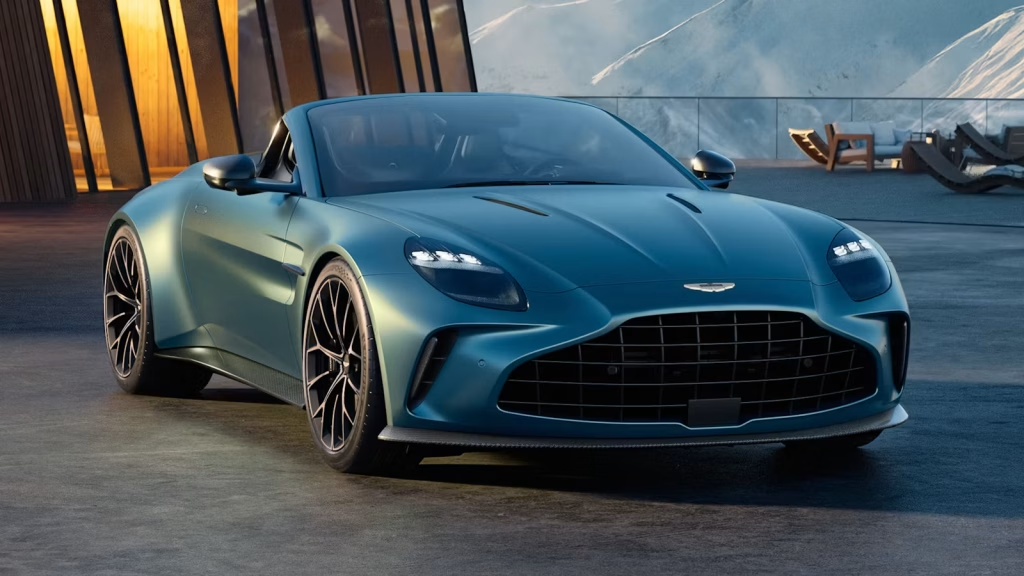
HLDI specifically identified the Vantage as the third sports car in the top 10, behind the McLaren 720S Convertible and Ferrari F8 Tributo.
It is important not to confuse the 528 result with a crash-safety score. HLDI’s collision-loss research concerns the financial consequences of insured vehicle damage, not how well occupants are protected during a crash.
For an Aston Martin owner, the finding is still valuable. The Vantage delivers serious performance in a relatively compact package, but HLDI’s data shows that repairing one after a collision can carry a disproportionately high insurance cost.
