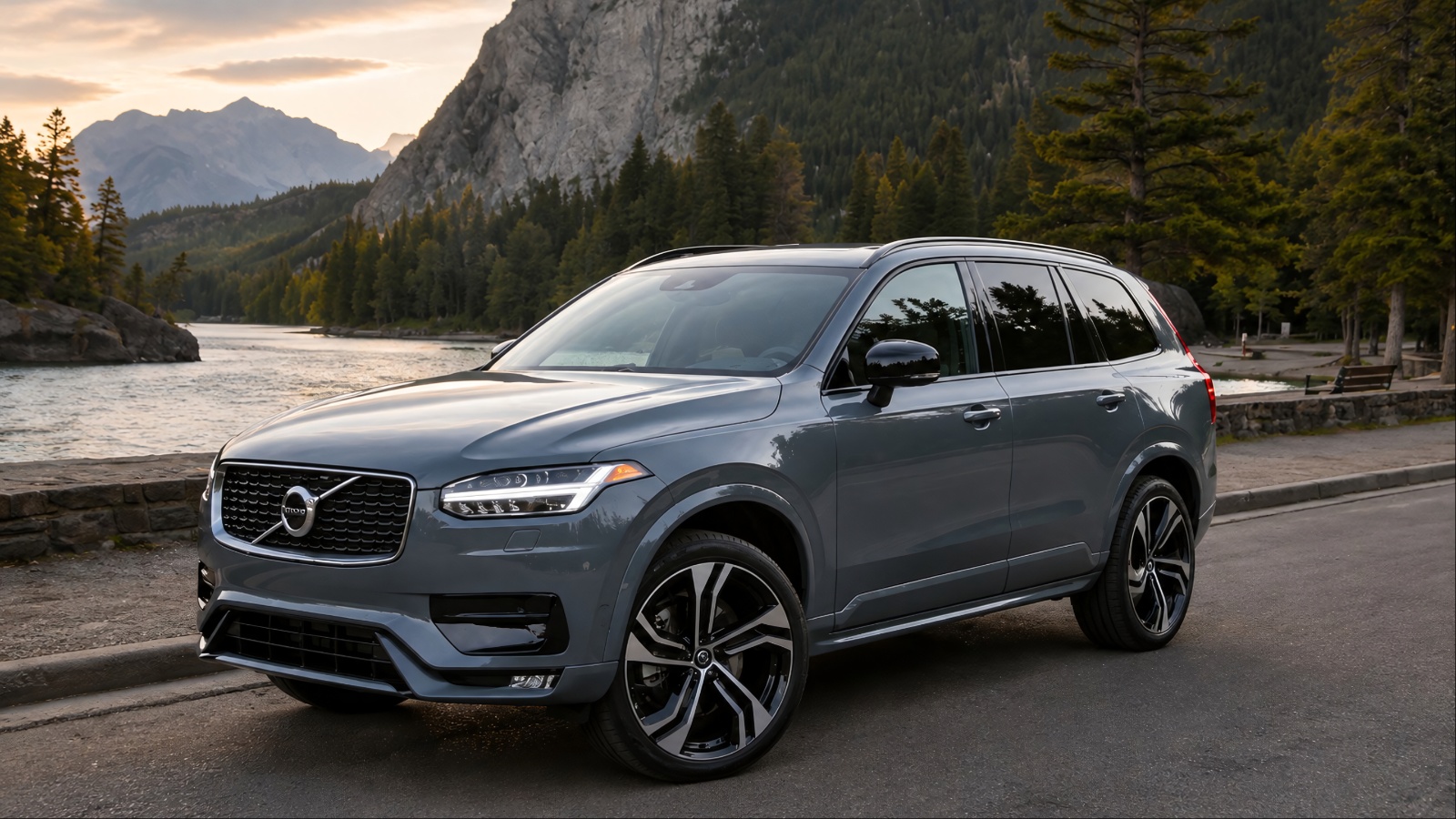
Luxury SUVs dominated the latest Insurance Institute for Highway Safety ranking of vehicles with the lowest driver death rates, accounting for 18 of the 20 lowest individual rates when the broader SUV category is considered. Models such as the Porsche Macan, BMW X5, Porsche Cayenne, Volvo XC60, and Volvo XC90 all appeared among the strongest performers.
The latest IIHS study examines 2023 model-year vehicles and equivalent earlier models, using fatal crashes from 2021 through 2024. Driver death rates are expressed as deaths per million registered vehicle years, with calculations adjusted for driver age and gender.
There is a key detail worth clarifying about the headline. According to the IIHS, 18 of the 20 vehicles with the lowest driver death rates were SUVs, but that does not mean all 18 were luxury models. The list also featured popular mainstream vehicles such as the Chevrolet Tahoe, Toyota RAV4 Prime, Volkswagen Atlas, Ford Escape Hybrid, and Toyota Highlander. Of the 20 vehicles included in the rankings, 10 were specifically categorized as luxury SUVs.
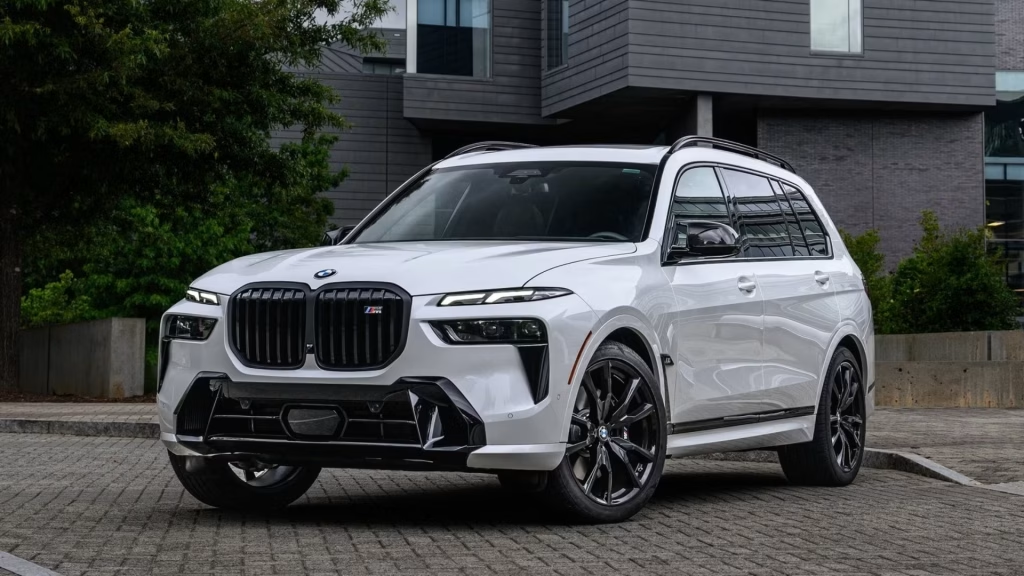
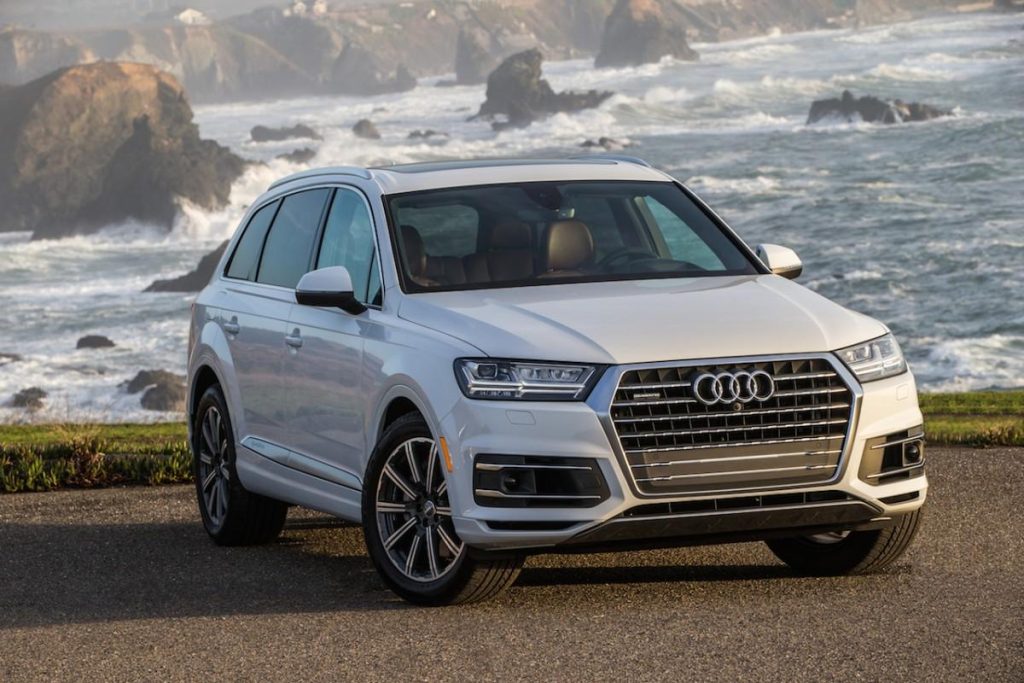
The six vehicles with a zero driver death rate sit at the top of the ranking: the Audi Q7 4WD, BMW X7 4WD, Chevrolet Tahoe 4WD, Mercedes-Benz GLB-Class 4WD, Mercedes-Benz GLE-Class 2WD, and Toyota Tundra CrewMax 4WD. The Porsche Macan 4WD followed with just four deaths per million registered vehicle years.
Porsche, BMW, and Volvo Among the Lowest-Risk Vehicles
The IIHS list becomes especially notable after the six zero-rate vehicles. The Porsche Macan 4WD recorded four driver deaths per million registered vehicle years, followed by the BMW X5 4WD at five. The Toyota RAV4 Prime 4WD and Volkswagen Atlas 2WD also recorded five.
The BMW X5 2WD followed at six, while the Chevrolet Suburban 1500 4WD and Ford Escape Hybrid 4WD each recorded six. The Porsche Cayenne 4WD, Toyota Highlander 4WD, Volkswagen Atlas 4WD, Volvo XC60 4WD, and Volvo XC90 4WD each recorded seven.
The complete ranking demonstrates that size alone does not explain the results. The strongest performers range from smaller SUVs to very large SUVs and pickups.
The average driver death rate across all vehicles in the study was 37 deaths per million registered vehicle years. Midsize SUVs averaged 24, large SUVs 26, and very large SUVs 20. Luxury SUVs performed even better, with small luxury SUVs averaging 28, midsize luxury SUVs 17, large luxury SUVs 10, and very large luxury SUVs 13.
By comparison, minicars averaged 158 deaths per million registered vehicle years, small cars 79, and large cars 104.
IIHS says vehicle size and weight matter because lighter vehicles are disadvantaged when they collide with heavier vehicles. Larger vehicles generally provide more structure and mass to manage crash forces, helping explain why SUVs occupy so many positions near the bottom of the driver death-rate ranking.
But vehicle size does not tell the entire story. Luxury SUVs often include sophisticated crash-avoidance technology as standard equipment, while similar systems have historically been optional or unavailable on less expensive vehicles.
IIHS notes that lower death rates associated with luxury vehicles may partly reflect differences in available safety technology, driver demographics, and behavior.
Why Luxury Vehicles May Have an Advantage
The results should not be interpreted as proof that simply buying a luxury SUV automatically makes a driver safer.
IIHS adjusts its calculations for driver age and gender, but the rates still reflect how and where vehicles are actually used. A particular model can attract a different population of drivers, travel different distances, and operate in different environments.
IIHS says the lower death rates for luxury vehicles and higher rates for cheaper models likely reflect some of these differences. More affluent drivers may have different exposure patterns, while drivers of less expensive vehicles can include younger or less experienced motorists. People working multiple jobs may also accumulate more miles, increasing crash exposure.
That is why a driver death rate is not equivalent to a controlled crash-test score. IIHS calculates the number of drivers killed in crashes involving each vehicle and compares that number with registered vehicle years.
A vehicle must have at least 100,000 registered vehicle years of exposure or at least 20 deaths during the four-year study period to receive an individual estimate.
The agency obtains fatality information from the federal Fatality Analysis Reporting System, while registration data come from Mobility Global. Earlier model years can be included when they retain the same basic design and safety features, increasing the available sample.
Even with those requirements, IIHS cautions that individual model estimates are less statistically reliable than broad vehicle-class averages. Class-level figures are based on larger populations and therefore provide a more stable measure.
Protection for the Driver Is Not the Whole Story
The data also show that the safest vehicles for their own drivers are not necessarily the safest vehicles for everyone else on the road.
IIHS separately calculates an other-driver death rate, measuring drivers in other vehicles who are killed in crashes involving the model being evaluated.
The overall other-driver death rate was 53 deaths per million registered vehicle years, compared with 37 for drivers of the vehicles themselves. Large and very large pickups had particularly high other-driver rates, with very large pickups averaging 110 deaths per million registered vehicle years.
That highlights an important issue surrounding America’s increasingly large vehicles. A heavy SUV can offer substantial protection to its own occupants because of its size and structure, while the same mass can increase the consequences for occupants of a much smaller vehicle in a collision.
The IIHS list contains six models that rank among both the lowest driver death rates and the lowest other-driver death rates: BMW X5 4WD, BMW X7 4WD, Porsche Cayenne 4WD, Volkswagen Atlas 4WD, Volvo XC60 4WD, and Volvo XC90 4WD. Five of those six are luxury SUVs.
That suggests some vehicles can combine strong occupant protection with relatively low fatality risk for people in other vehicles.
Still, IIHS emphasizes that size and power, crashworthiness, crash avoidance, and driver behavior all influence the results.
What the Ranking Really Tells Buyers
The latest study should not be reduced to the idea that luxury SUVs are inherently safe while inexpensive cars are inherently dangerous. The contrast is real, but several variables are operating simultaneously.
The Kia Rio had the highest driver death rate at 170 deaths per million registered vehicle years, followed by the Nissan Versa at 164. More than half of the 20 vehicles with the highest rates were small cars, sports cars, or muscle cars.
IIHS says small vehicles can be disadvantaged when they collide with substantially heavier vehicles, while sports cars and muscle cars may have higher rates partly because of driver behavior and the types of drivers they attract.
The safest group, meanwhile, is heavily populated by SUVs. That does not mean an SUV will prevent every fatal crash. Speed, road conditions, driver behavior, vehicle compatibility, and other factors continue to influence outcomes.
The numbers instead demonstrate the combined effect of vehicle design and real-world usage.
For consumers, the findings offer a useful lesson. Looking only at a vehicle’s price or reputation is not enough. Buyers should consider crash-test performance, standard crash-avoidance technology, vehicle size, driver-assistance systems, and how the vehicle is likely to be used.
The Porsche Macan’s rate of 4 deaths per million registered vehicle years, the BMW X5’s 5, and the Porsche Cayenne, Volvo XC60, and Volvo XC90’s 7 each are impressive figures. But these are statistical measurements of a specific vehicle population, not guarantees of individual safety.
The broader finding is particularly striking. SUVs accounted for 18 of the 20 vehicles with the lowest driver death rates, and luxury SUVs alone made up half of the top 20. Their larger size and weight, combined with modern crash engineering and advanced safety features on many models, may give occupants a significant level of protection during real-world collisions.
At the same time, the results expose a difficult reality of America’s vehicle market. Larger vehicles can provide better protection for their own occupants, but their size can increase the consequences for smaller vehicles they collide with.
The IIHS study therefore reinforces two separate lessons: vehicle size and safety technology can make a major difference to occupant survival, but no vehicle can substitute for safe driving.
The Porsche Macan, BMW X5, Porsche Cayenne, Volvo XC60, and Volvo XC90 remain among the strongest real-world performers in the latest IIHS data, while the dominance of SUVs across the lowest-rate ranking shows how dramatically vehicle size and design influence fatal-crash outcomes.