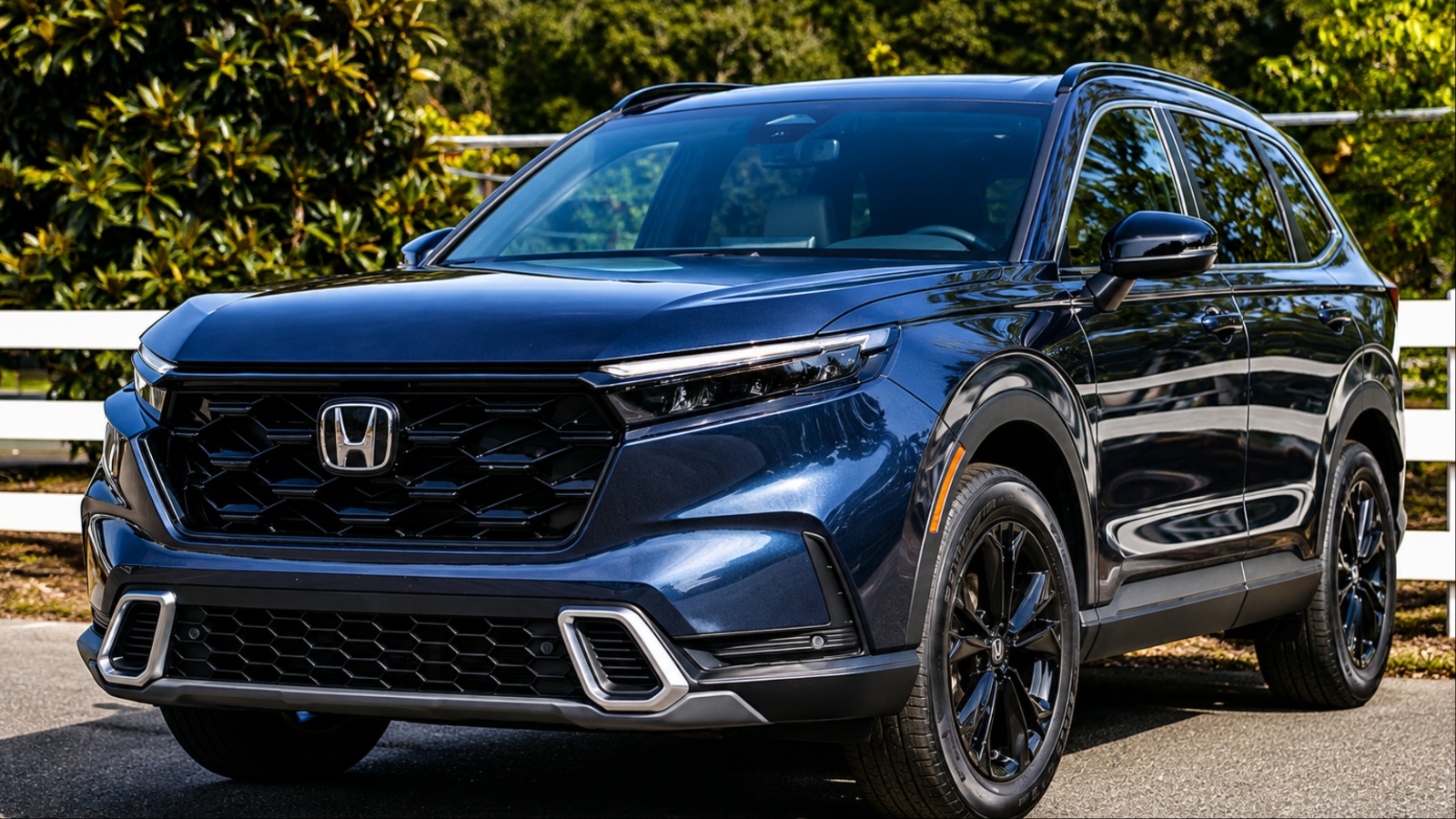
The Honda CR-V remains one of the best-selling compact SUVs in America, and every model year update draws attention from shoppers and enthusiasts alike. For 2027, however, most credible reporting agrees on one key point.
Honda has not issued an official reveal or confirmed specification sheet for the 2027 CR-V as of this writing. The sixth-generation CR-V launched for 2023, and industry trackers expect it to continue largely unchanged through 2027, following its 2026 mid-cycle refresh that introduced the TrailSport Hybrid trim.
That means 2027 is shaping up to be a carryover year rather than a redesign year. A full next-generation CR-V is more likely for the 2028 model year, based on Honda’s typical four-to-five-year update cycle.
Still, several outlets, including MotorTrend and Automotive News, have reported on likely small-scale updates. This article breaks down what those reports and existing data suggest the 2027 CR-V could gain, organized into styling, powertrain, and technology.
Exterior and Design Updates
Honda has not published confirmed exterior specifications for the 2027 CR-V. Reports instead point to a modest mid-cycle refresh rather than a full styling overhaul.
MotorTrend has reported that possible changes may include revised front lighting elements. A larger front grille has also been mentioned as a likely styling tweak for the model year.
These updates would follow a familiar Honda pattern. The automaker typically refreshes lighting and grille designs mid-cycle before a full redesign arrives a few years later.
Some industry watchers have speculated that Honda could borrow styling cues from the newer Passport and Pilot. Both of those models received bolder, more squared-off redesigns in recent years.
If that influence carries over, the CR-V could look more rugged and upright at the front end. However, Honda has not confirmed any of these specific design directions.
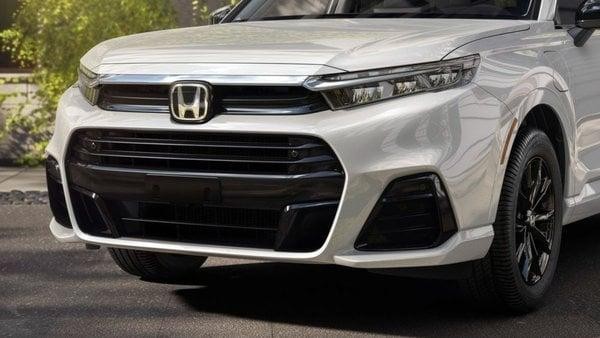
The TrailSport trim, introduced for the CR-V Hybrid in 2025 and expanded in 2026, is expected to continue into 2027. It added all-terrain tires as one of its defining features.
That trim also brought an enhanced all-wheel-drive system tuned for light off-road use. Unlike the Passport and Pilot TrailSport variants, the CR-V’s version is offered only on the hybrid powertrain.
Wheel design updates have also been mentioned as a possible 2027 change. New wheel patterns are a low-cost way for automakers to visually differentiate a carryover model year.
Updated bumper designs have appeared in some early speculative reports as well. These would likely be modest revisions rather than a full body change.
One CGI rendering project by the YouTube channel AutoYa Interior imagined restyled headlights, a new grille, and reworked taillights. It is worth stressing that this was an unofficial, artist-created concept, not a leaked Honda design.
Exterior color offerings for 2027 have not been detailed in any confirmed source. Automakers commonly rotate one or two paint options during a carryover year without major announcement.
The exterior data available right now points to evolution, not revolution. Anyone expecting a dramatically different-looking CR-V in 2027 should adjust expectations toward a lighter refresh.
The current CR-V generation earned strong reception for its cleaner, more mature design language when it launched for 2023. A subtle 2027 update would likely preserve that visual identity rather than replace it.
Honda has also not confirmed changes to exterior dimensions for 2027. The current CR-V’s footprint has proven competitive against rivals like the Toyota RAV4 and Mazda CX-50.
Given the sixth generation is only entering its fifth model year in 2027, a ground-up redesign remains unlikely. Automakers rarely change platforms this early in a generation’s lifecycle.
For now, exterior buyers should treat 2027 CR-V styling as a mystery with only speculative hints. Official confirmation from Honda is expected closer to the vehicle’s on-sale date.
Powertrain, Performance, and Efficiency
Honda’s own reporting pattern suggests the 2027 CR-V will carry over its existing two powertrain options. Neither is expected to see major mechanical changes for this model year.
The gas-only CR-V currently uses a 1.5-liter turbocharged four-cylinder engine. It produces 190 horsepower and 179 pound-feet of torque, paired with a continuously variable transmission.
That gas engine is available in either front-wheel drive or all-wheel drive configuration. It is rated to tow up to 1,500 pounds, adequate for light trailers or small watercraft.
The CR-V Hybrid uses a more complex setup built around a 2.0-liter four-cylinder engine. It works alongside two electric motors and a lithium-ion battery pack.
Honda’s hybrid architecture pairs a gasoline engine with a main drive motor and a separate generator motor. This two-motor hybrid system is often described as Honda’s two-motor i-MMD design.
Combined output for the hybrid system sits at approximately 204 horsepower. Torque is rated at 247 pound-feet, noticeably stronger than the standard gas engine’s output.
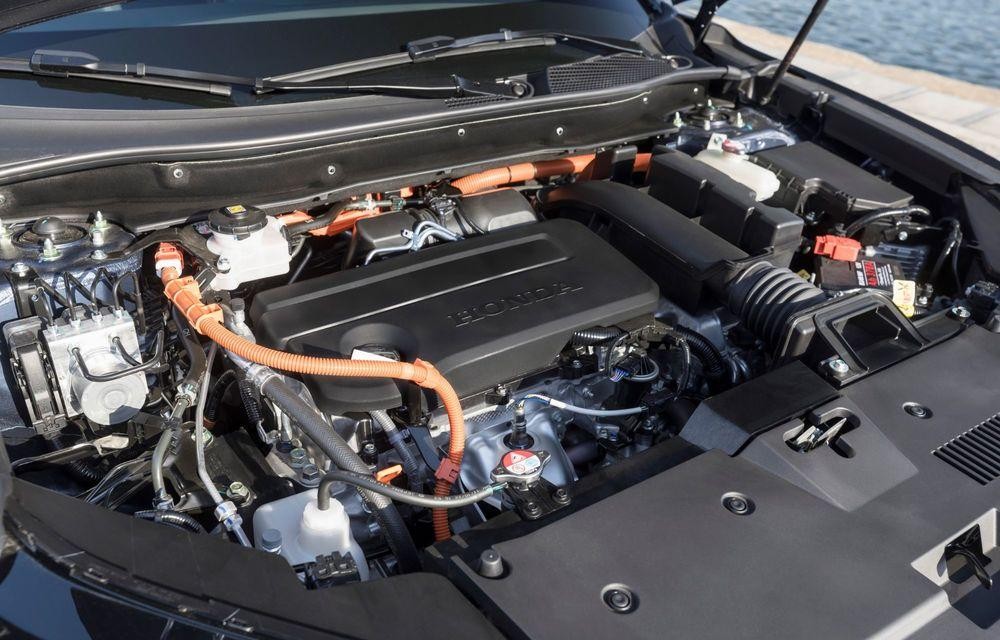
That torque advantage gives the hybrid quicker real-world acceleration than the base gas model. It is also the reason Honda positions the hybrid as the recommended choice for most buyers.
All-wheel drive comes standard on the CR-V Hybrid’s TrailSport and Sport Touring trims. Lower hybrid trims may still offer AWD as an available option rather than standard equipment.
Fuel economy figures for 2027 are expected to carry over from the current model year. The hybrid currently holds roughly a 10-mpg advantage over the standard gas engine in EPA ratings.
That gap has made the hybrid the more popular configuration among CR-V shoppers in recent years. Hybrid trim availability has expanded while gas-only trim choices have narrowed accordingly.
No confirmed reports currently point to a plug-in hybrid CR-V for the U.S. market in 2027. One speculative YouTube analysis floated the idea as a response to the Toyota RAV4 PHEV, but Honda has not validated this claim.
A CR-V e:PHEV variant does exist for other global markets, based on the same 2.0-liter hybrid architecture. Whether that technology reaches North America for 2027 remains unconfirmed and speculative at this stage.
Honda’s broader EV strategy also affects expectations for the CR-V lineup. Reports indicate Honda scaled back parts of its aggressive electric vehicle plan in early 2026.
That shift makes a fully electric CR-V variant unlikely to arrive soon. The CR-V e:FCEV, a hydrogen fuel-cell version, remains a separate and limited-availability model.
The CR-V e:FCEV is currently offered only through leasing and only in California. Honda includes hydrogen fuel credits as part of that lease agreement, based on prior program details.
Suspension tuning for 2027 has been described in some reports as smoother and quieter. These claims currently lack confirmed technical backing from Honda and should be treated cautiously.
The CR-V has long been praised for balanced handling rather than sporty aggression. Precise steering and effective bump absorption have defined the current generation’s driving character.
Braking and safety hardware are expected to remain consistent with the current model. The CR-V has earned a five-star NHTSA safety rating every year since the 2023 redesign.
The powertrain story for 2027 is one of continuity rather than change. Buyers cross-shopping model years should expect performance and efficiency numbers close to the current CR-V.
Technology, Safety, and Interior Features
Cabin technology is one area where 2027 reports suggest at least modest improvements. MotorTrend has noted a potential update to onboard technology as part of a possible refresh.
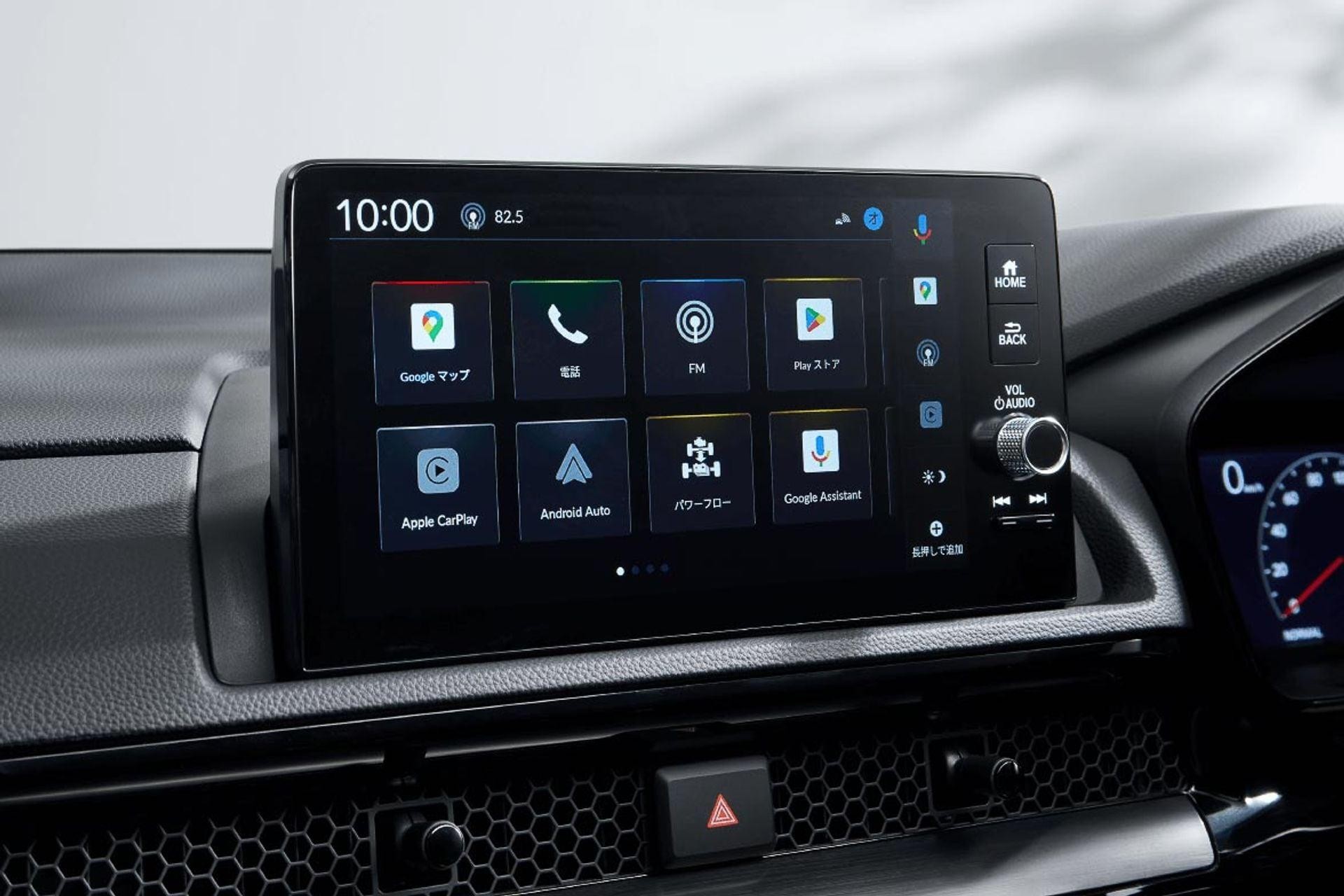
Some speculative previews describe a larger central touchscreen for the 2027 model. Other reports point toward a fully digital instrument cluster replacing partial analog gauges.
None of these specific technology upgrades have been confirmed by Honda directly. They currently exist only in unofficial previews and industry speculation pieces.
The current CR-V already includes wireless Apple CarPlay and wireless Android Auto compatibility. These features are expected to continue as standard or widely available equipment for 2027.
Honda Sensing, the brand’s suite of driver-assistance systems, is expected to remain standard across the 2027 lineup. This bundle has been included on every CR-V trim since the current generation launched.
Honda Sensing typically includes forward collision warning and automatic emergency braking. Adaptive cruise control and lane-keeping assistance are also part of the standard suite.
Optional safety features like rear parking sensors add further convenience for family buyers. Cross-traffic braking is another optional feature mentioned in current trim documentation.
These optional features have not been confirmed as newly added for 2027 specifically. They already exist on select current CR-V trims and are expected to carry forward.
Interior materials and cabin refinement are frequently cited in speculative previews as improved. However, without an official Honda announcement, these claims remain unverified marketing-style speculation.
The current CR-V’s cabin is already known for a quiet interior at highway speeds. Sound insulation and glass thickness have contributed to that reputation across recent testing.
Storage space and rear-seat room have been strong selling points for the CR-V nameplate for years. No confirmed reports indicate significant changes to interior packaging for 2027.
The TrailSport trim’s interior includes unique styling touches distinct from other grades. Orange accent stitching and unique badging have differentiated it from standard hybrid trims.
Wireless smartphone charging has been a feature on higher CR-V trims in recent years. It is expected to remain available on upper trims for the 2027 model year as well.
A power tailgate with hands-free access has also been a feature on higher trims historically. This convenience feature is likely to continue without major changes for 2027.
Honda’s approach with the CR-V has generally been incremental technology rollout rather than dramatic yearly overhauls. That pattern supports expectations of a quiet, evolutionary tech update for 2027.
Pricing for the 2027 CR-V has not been officially announced by Honda at this time. Historical pricing trends suggest modest year-over-year increases rather than dramatic jumps.
Release timing also remains unconfirmed, though most outlets expect dealership arrival in late 2026 or early 2027. Honda has historically rolled out gas and hybrid trims simultaneously rather than staggering them.