
Oldsmobile’s diesel V8 remains one of the most infamous engineering stories in American automotive history. During the fuel crisis of the 1970s, General Motors looked for a fast, cheap way to offer diesel economy to mainstream buyers.
Oldsmobile’s answer was the LF9, a 350-cubic-inch diesel V8 introduced for the 1978 model year. Oldsmobile quickly retrofitted its 350-CID V8 to run on diesel fuel to capitalize on diesel’s lower price during the gas crisis.
The idea sounded brilliant on paper. Diesel fuel was noticeably cheaper than gasoline, and diesel engines promised far better fuel economy. Reusing an existing, well-proven gasoline architecture seemed like a shortcut to fast production. GM’s engineers based their new V8 diesel engine on the company’s very successful 350 V8 gasoline engine, largely to save development costs.
But diesel combustion works nothing like gasoline combustion. The decision to keep so much of the gas engine’s design would haunt Oldsmobile for years.
This article examines how the engine was built, why it failed so badly, and how its failure changed America’s relationship with diesel cars. It is a case study in cutting corners during a crisis.
The Birth of the LF9 and Chevrolet’s Transformation of a Gas V8 Into a Diesel
Oldsmobile did not design an all-new diesel from scratch. Instead, engineers started with the brand’s existing 5.7-liter gasoline V8 and reworked it.
The LF9 shares the same bore, stroke, and bottom end as the gasoline engine it was derived from, while weighing about 25 pounds more due to larger pistons, a larger iron crankshaft, and revised cylinder heads. This kept tooling and production costs down.
GM publicly insisted this was not a simple conversion. The company’s official statement claimed that all major parts, including the block, crankshaft, rods, pistons, and lifters, had been strengthened to handle the diesel’s higher compression ratio.
Still, the family resemblance was obvious to engineers and owners alike. The heads were completely new, but the valves stayed the same size as the gasoline 350’s valves.
The camshaft profile was altered for diesel operation, and the material was upgraded from ordinary cast iron to hardened Conkerall iron. Lifters were made from a tungsten-titanium alloy steel for added durability.
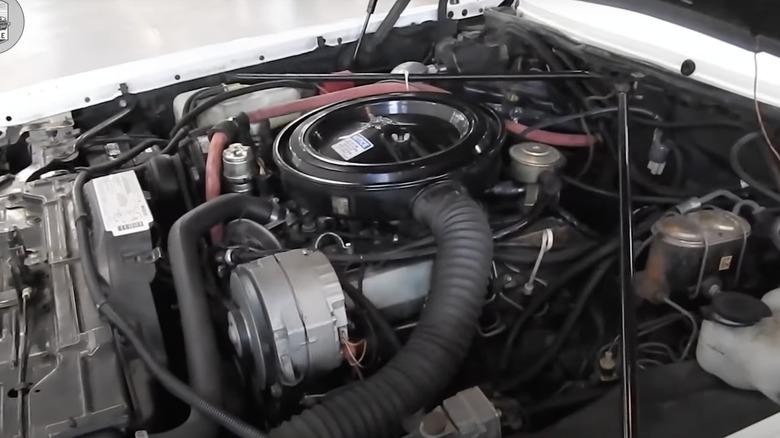
A double roller chain drove both the camshaft and the injection pump, replacing the simpler gear-driven setup of many diesels. Fuel was delivered through a Roosa-Master DB-2 rotary injection pump made by Stanadyne, fed by a mechanical lift pump.
The injectors also came from Stanadyne, using a new pencil-nozzle design with two tiny 0.017-inch orifices that popped at 1,800 psi. This was a genuinely sophisticated fuel system for its time.
The engine debuted in the 1978 Delta 88 and Ninety-Eight. The LF9 made its debut in 1977 for the 1978 model year in the mid-size Delta 88 and the full-size Ninety-Eight.
A smaller companion engine soon followed. A smaller 260-cubic-inch, 4.3-liter LF7 joined the lineup for the 1979 Cutlass Salon and Cutlass Supreme.
From there, GM spread the diesel across its entire lineup. The engines became optional upgrades across Buicks, Chevrolets, Oldsmobiles, Checker taxi cabs, and even Cadillacs.
Cadillac’s involvement was especially notable, and especially damaging. The De Ville, Seville, Fleetwood Brougham, and Eldorado all received these engines in the early 1980s, undermining any perception that Cadillac could still compete with Mercedes-Benz on quality.
The core problem was the compression ratio itself. The 350 Oldsmobile diesel ran a 22.5:1 compression ratio, a level the ordinary 350 gasoline block would never have survived.
For comparison, gasoline engines of the era ran far lower pressures. Typical gasoline engines at the time had a compression ratio of around 8.5:1, a fraction of what the diesel demanded.
That difference in cylinder pressure is where the engineering shortcuts began to matter most. Reusing gas-engine geometry under diesel-level stress created a fundamental mismatch.
A 350-cubic-inch V8 launched in 1978, followed by a 261-cubic-inch V8 offered only for the 1979 model year. A 263-cubic-inch V6 arrived in 1982 for both front-wheel-drive and rear-wheel-drive vehicles.
So the “gas engine turned diesel” story is technically half-true. The block architecture, bore, stroke, and much of the bottom end trace directly back to Oldsmobile’s gasoline V8.
Engineering Compromises and the Rise of Reliability Failures
The single biggest mistake involved the cylinder head bolts. GM kept the gasoline engine’s head bolt pattern instead of designing one suited for diesel pressures.
Oldsmobile left the head bolt design and pattern unchanged specifically so the same tooling used for gasoline engines could also be used for the diesel. This single choice caused enormous downstream damage.
GM engineers retained the gasoline engine’s head bolt design and pattern to save tooling costs, and it would prove to be a massive mistake. The bolts simply were not strong enough.
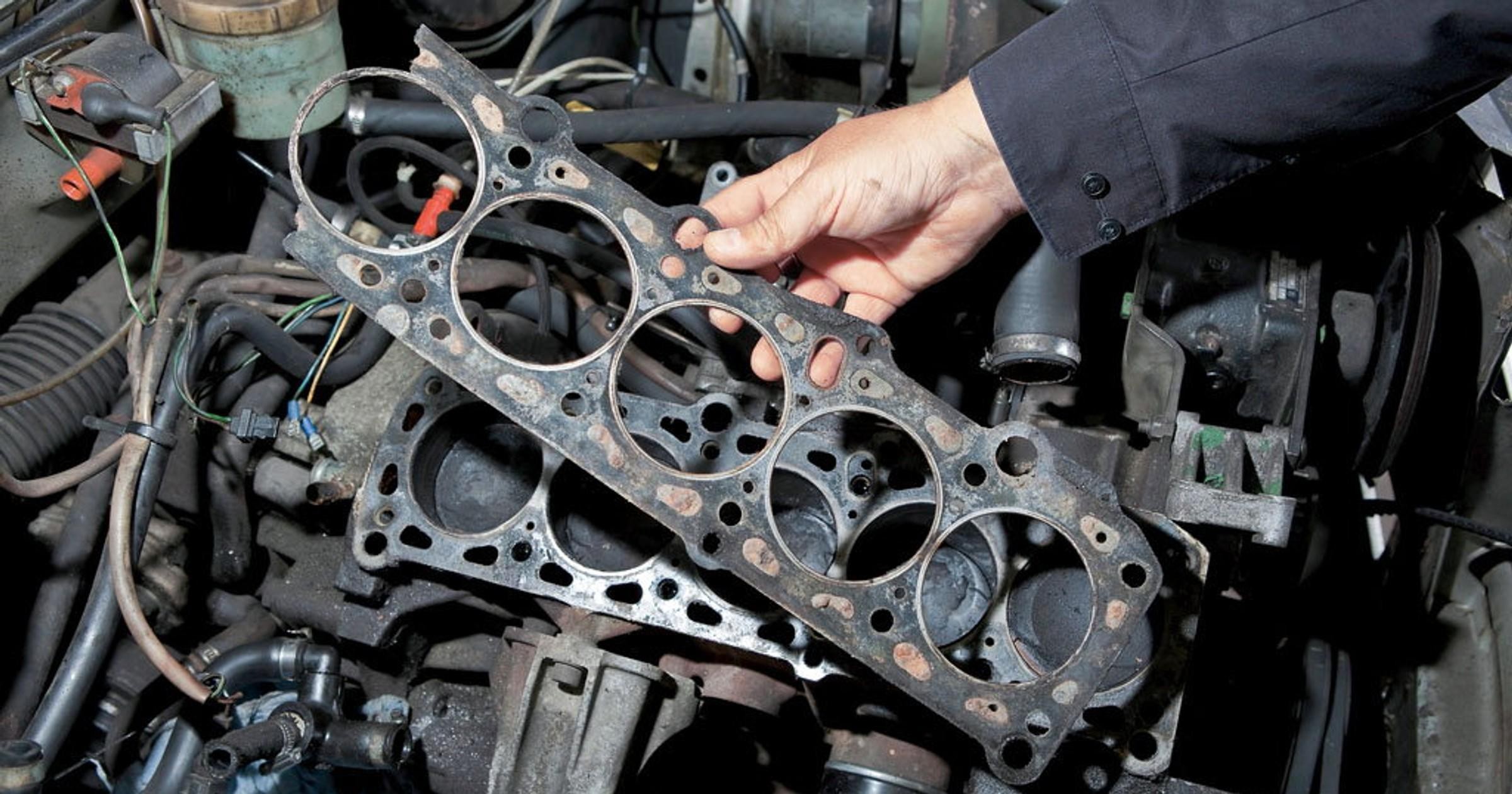
Torque-to-yield head bolts provided poor mounting for the cylinder heads, which led to head gaskets wearing out and failing over time. Owners reported coolant and oil leaks as an early symptom.
Worse, the bolts sometimes failed catastrophically. Head bolts were even known to shear under the engine’s extreme cylinder pressures, since the Olds diesel already ran a very high compression ratio.
A second major flaw involved fuel contamination. The fuel system lacked a fuel-water separator, so any water entering the injection pump could corrode and damage internal parts.
Diesel fuel at gas stations in the late 1970s was often contaminated with water. Without a separator, that water traveled straight into a precision-machined injection pump.
Timing problems compounded the reliability crisis. Some engines experienced “timing jump,” where the timing chain moved out of position and threw the valvetrain out of sync.
This timing failure could cause premature engine wear and even complete engine failure if not caught and corrected quickly. Many owners had no idea what was happening under the hood.
GM did eventually fix most of these issues, but far too late. By 1981, Oldsmobile had largely resolved the major issues, but the negative reputation from the first three years of service never recovered.
A more thorough redesign followed a year later. By 1981, GM revealed the 350 DX version with a new head design for higher compression, revised head bolts and torque specs, new head gaskets, and improved block casting.
By the time the 350 DX reached GM products, the reputational damage from the earlier failures far outweighed the benefits of the reworked engine. Customer trust does not reset with a spec sheet.
Not every version of the diesel shared the same fate. Later engines, particularly the smaller ones, proved far sturdier than the original V8. Problems with the Olds diesels mostly afflicted the early 350 V8s, while the diesel V6 was very reliable, and later V8 improvements made them reliable as well. The V8’s early reputation, however, was already sealed.
There is also confusion worth clearing up. The Oldsmobile Diesel LF9 350 was succeeded by a separate Detroit Diesel V8 engine, developed with GM subsidiary Detroit Diesel starting in 1982.
That successor engine performed far better and is often mistaken for the Olds diesel. The 5.7-liter Oldsmobile V8 is often confused with, and tarnishes the reputation of, its far more reliable and economical 6.2-liter Detroit Diesel V8 successor.
That Detroit Diesel V8 was used in numerous GMC C/K light trucks and G-vans from 1982 into the early 1990s, and even the military Humvee. It shared a name association but not the same flaws.
Owners who worked on these engines describe a mixed picture. The Oldsmobile Diesel, used across the GM lineup from 1978 to 1985, earned a deserved reputation as one of the worst engines ever built.
Not everyone agrees the block itself was weak, however. Some mechanics argue the diesel’s internals were actually beefed up compared to the gasoline version, even if the head bolts were not.
Market Impact, Sales Peak, and the Legacy of Distrust
Despite its flaws, the diesel Oldsmobile initially sold in huge numbers. Buyers were desperate for better fuel economy during the ongoing energy crisis.
The 350 Olds diesel was capable of up to 30 miles per gallon in the right car with the right driver. That figure was a major selling point against thirstier gasoline V8s.
GM leaned heavily into marketing the engine as a lifestyle upgrade rather than just an economy option. GM continuously tried to sell buyers on the Olds diesel by associating it with “prestige” and “status.”
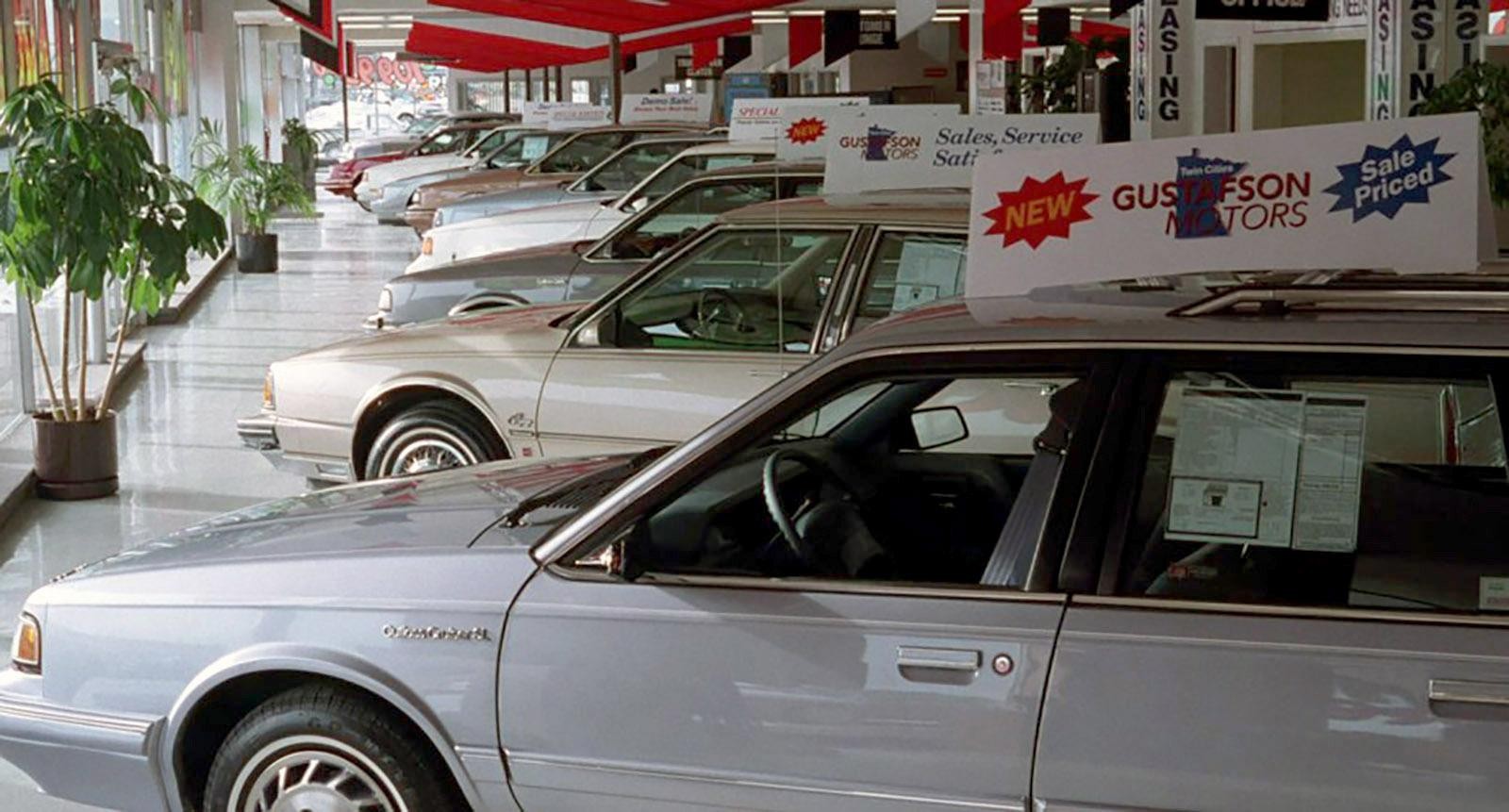
The strategy worked for a while, at least in raw sales figures. Sales peaked in 1981 at approximately 310,000 units, representing 60 percent of the total U.S. passenger vehicle diesel market.
A separate source confirms similarly dominant market share. Even the Oldsmobile 350 diesel alone represented over half of all domestic passenger diesel sales by 1981.
That dominance did not last. Sales success was short-lived because the V8 version suffered severe reliability issues that quickly caught up with its reputation.
Word of mouth about failed head bolts, water-damaged injection pumps, and stalled cars spread quickly. Dealerships struggled to keep up with warranty repairs and unhappy customers.
Even though it once represented over half of domestic diesel sales, the engine was quietly discontinued in 1985. The end came without fanfare, almost as if GM hoped nobody would notice.
The damage to consumer confidence extended far beyond Oldsmobile itself. The engine effectively made most American drivers swear off diesel cars, more or less for good.
This sentiment is echoed elsewhere as well. The engine’s shortcomings, combined with heavy publicity around its failures, negatively affected American light diesel engine sales for years afterward.
Even reliable diesels that came later struggled against this lingering stigma. The American consumer was so turned off by the Oldsmobile diesel’s early failings that sentiment toward diesel-powered passenger cars stayed tarnished for quite a while.
There was also a human cost within GM’s engineering department. Reports describe an engineer responsible for the diesel V8’s development being sidelined after insisting the design had serious flaws.
Whether that account is fully accurate or not, it reflects how contentious the program became internally. Corporate pressure to launch quickly likely overruled sound engineering caution.
The engine did soldier on in light trucks for a few more years. The Oldsmobile Diesel V8 continued service in trucks like the GMC 1500 until 1985, when it was finally discontinued.
Looking back, the LF9 stands as a cautionary tale about rushing a fuel-crisis solution to market. Reusing gasoline architecture saved money upfront but cost GM enormously in reputation.
The lesson has outlived the engine itself. Decades later, “Oldsmobile diesel” is still shorthand among car enthusiasts for an ambitious idea undone by penny-pinching engineering decisions.