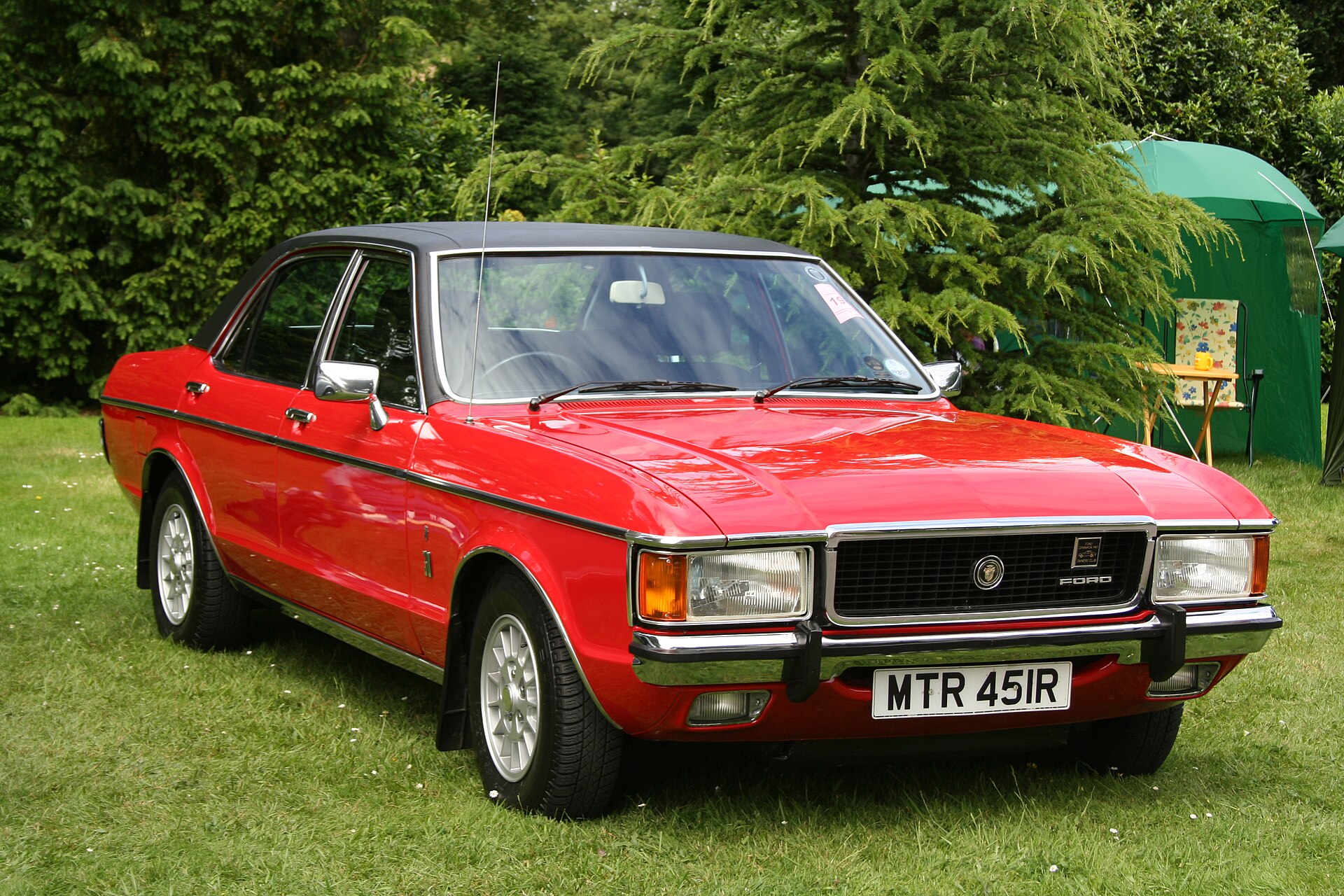
Ford has a long history of sharing engines across different models, but few examples sound as surprising as the claim that the company once sold a sedan with a Mustang engine.
The story is largely true, but it needs some important clarification. The Ford Granada, particularly the North American model sold during the 1970s, could be ordered with Ford’s 302 cubic-inch V8, an engine also associated with the Mustang. That does not mean Ford took a complete Mustang engine and simply dropped it into a family sedan.
The 302 was a Ford engine used across several vehicles, and the Granada shared it with the Mustang during an era when common engines were central to Ford’s product strategy.
The Ford Granada Was the Sedan Behind the Story
The North American Ford Granada arrived for the 1975 model year as a compact sedan positioned above smaller Ford offerings. It was intended to give buyers a more substantial, comfortable car without moving into Ford’s largest full-size sedans.
The Granada came as part of a period when American manufacturers were responding to changing customer expectations, fuel concerns, and demand for smaller cars. Ford gave the model a relatively conservative appearance, but its mechanical choices were more interesting than its styling suggested.
The car was available with six-cylinder engines and V8 power, including Ford’s 302 cubic-inch small-block V8.
The Granada’s 302 connection is where the Mustang comparison becomes legitimate. The 302 was used in the Mustang, but the engine was never exclusive to that car. Ford’s small-block V8 family appeared in numerous vehicles, ranging from passenger cars to trucks.
The 302 was produced for many years and became one of Ford’s most widely used V8 designs. Its appearance in a Granada was therefore not an unusual engineering experiment. It was part of Ford’s broader practice of adapting the same basic engine family to different vehicles and applications.
The evidence for the Granada’s 302 option is strong. Contemporary and historical vehicle records list the 302 V8 among the engines available for the North American Granada during the late 1970s. Automotive documentation also identifies the 302 as an option on Granada models from 1975 through 1980.
A surviving 1978 Granada documented by Autoweek, for example, carried the optional 302-cubic-inch Windsor V8. That car produced 134 horsepower under the power ratings used at the time.
The phrase “Mustang engine” can therefore be misleading if it is taken too literally. The Granada did not receive an engine that belonged exclusively to the Mustang program. Instead, Ford offered a V8 that was also used in the Mustang.
This distinction matters because the same basic 302 engine could have different specifications, emissions equipment, intake systems, carburetion, exhaust arrangements, and power ratings depending on the vehicle. Calling it a “Mustang engine” is useful shorthand for enthusiasts, but “Ford 302 V8 also used in the Mustang” is technically more precise.
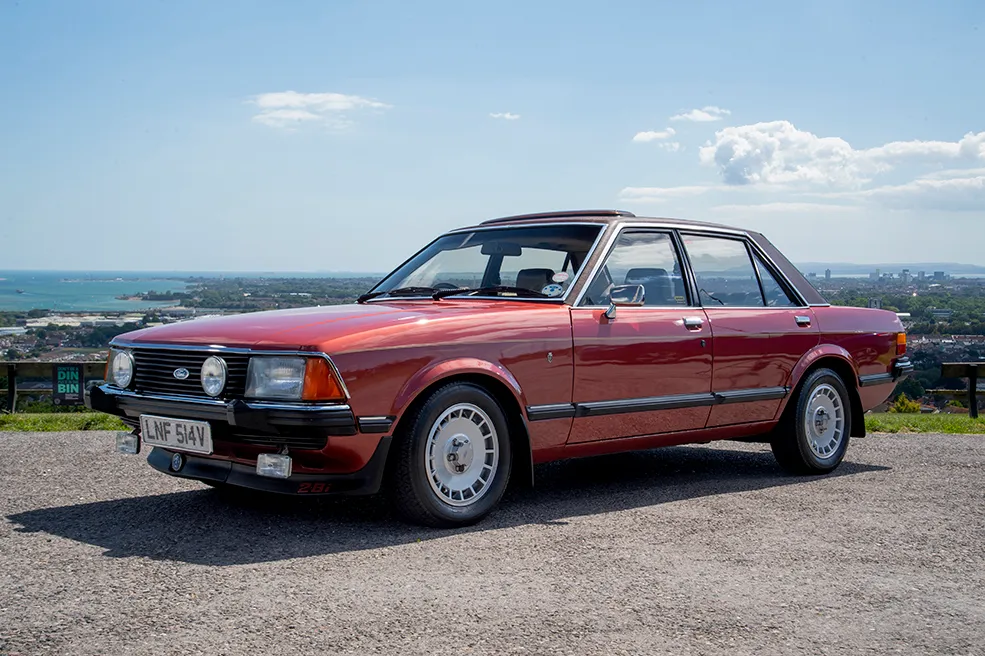
The 302 Was Far More Than a Mustang Engine
Ford’s 302 V8 has become closely associated with the Mustang, particularly among enthusiasts who remember later high-performance versions. That association can make it easy to forget how widely Ford used the engine.
The small-block V8 family that included the 302 powered many different Ford and Mercury products. It was fitted to cars such as the Torino, Maverick, Granada and LTD, along with several other Ford vehicles. The engine was valuable to Ford precisely because it could serve many purposes.
The Mustang itself did not create the 302. Ford introduced the small-block V8 in the early 1960s, with the family initially associated with the Fairlane. The engine later developed through different displacements and configurations.
The 302 became particularly important from the late 1960s onward, eventually becoming a familiar 5.0-liter engine when Ford adopted metric displacement labeling. Its long production history explains why the same engine family could appear in vehicles with very different prices, dimensions, and intended uses.
This is also why the Granada story should not be presented as Ford secretly giving a family sedan access to a special Mustang powerplant. The reality is less dramatic but more interesting. Ford had a proven V8 architecture that could be installed in different vehicles.
The Mustang was famous for using it, but the Granada could use the same basic engine family as part of its own lineup. In the late 1970s, a buyer could therefore choose a conservative-looking four-door Ford and still have a V8 under the hood.
There was also a practical advantage to this strategy. Using an existing engine across multiple models reduced the need to create a separate powerplant for every vehicle. Ford could use established components, manufacturing processes and service knowledge across its product range.
Dealers and mechanics were already familiar with the company’s V8 designs, while customers could choose different vehicles without necessarily giving up the engine configuration they preferred. This kind of parts sharing is now normal throughout the automotive industry, but it was especially visible in American cars of this era.
The Granada’s 302 also shows why engine identity can become confusing when discussing classic cars. Enthusiasts often identify an engine by its reputation in a particular vehicle, even when the engine has a much wider history.
The 302 is frequently called a Mustang engine because of its importance to Mustang culture, yet the same basic Ford small-block architecture served many other applications.
The Granada is a good example of that broader history. It was a sedan with a Ford V8 that was also available in the Mustang, rather than a Mustang disguised as a sedan.
The Granada and Mustang Were Mechanical Relatives
The connection between the Granada and Mustang went beyond simply sharing a Ford V8. The early North American Granada was mechanically related to Ford’s older compact-car architecture.
The Granada used a 109.9-inch wheelbase and incorporated elements derived from the Ford Maverick, including parts of its floorpan, steering system and suspension. The Mustang also had roots in Ford’s compact-car engineering, which helps explain why enthusiasts sometimes find surprising mechanical similarities among these cars.
The relationship became even more obvious when Ford redesigned the Granada for 1981. The new Granada moved onto Ford’s Fox platform, a major architectural change that brought it much closer to vehicles such as the Ford Fairmont, Mercury Zephyr and Mustang.
Automotive historians have described the 1981 Granada as a sibling to the Mustang because both were based on the Fox platform.
That 1981 change is important because it can create confusion when people discuss the Granada’s Mustang connection. The 1975 through 1980 Granada and the 1981 through 1982 Granada were not the same basic vehicle.
The first-generation North American car was related to the Falcon and Maverick architecture. The later car was part of Ford’s Fox-platform family. The name stayed the same, but the engineering underneath changed substantially.
The later Fox Granada also demonstrates that Ford was increasingly building a family of vehicles around common architecture. The Mustang, Fairmont, Granada, Mercury Zephyr and other models could share fundamental engineering while being marketed toward different buyers.
The Mustang was the sporty member of that family, while the Granada emphasized comfort, room and traditional sedan styling. This platform strategy allowed Ford to serve different segments without engineering every vehicle from scratch.
For car historians, the shared-platform relationship makes the story more interesting than the headline alone. Ford was not simply taking a Mustang and stretching it into a sedan.
Instead, the company was developing related vehicles around common components and engineering principles. The result was a range of cars that could feel very different from behind the wheel while still sharing significant mechanical DNA.
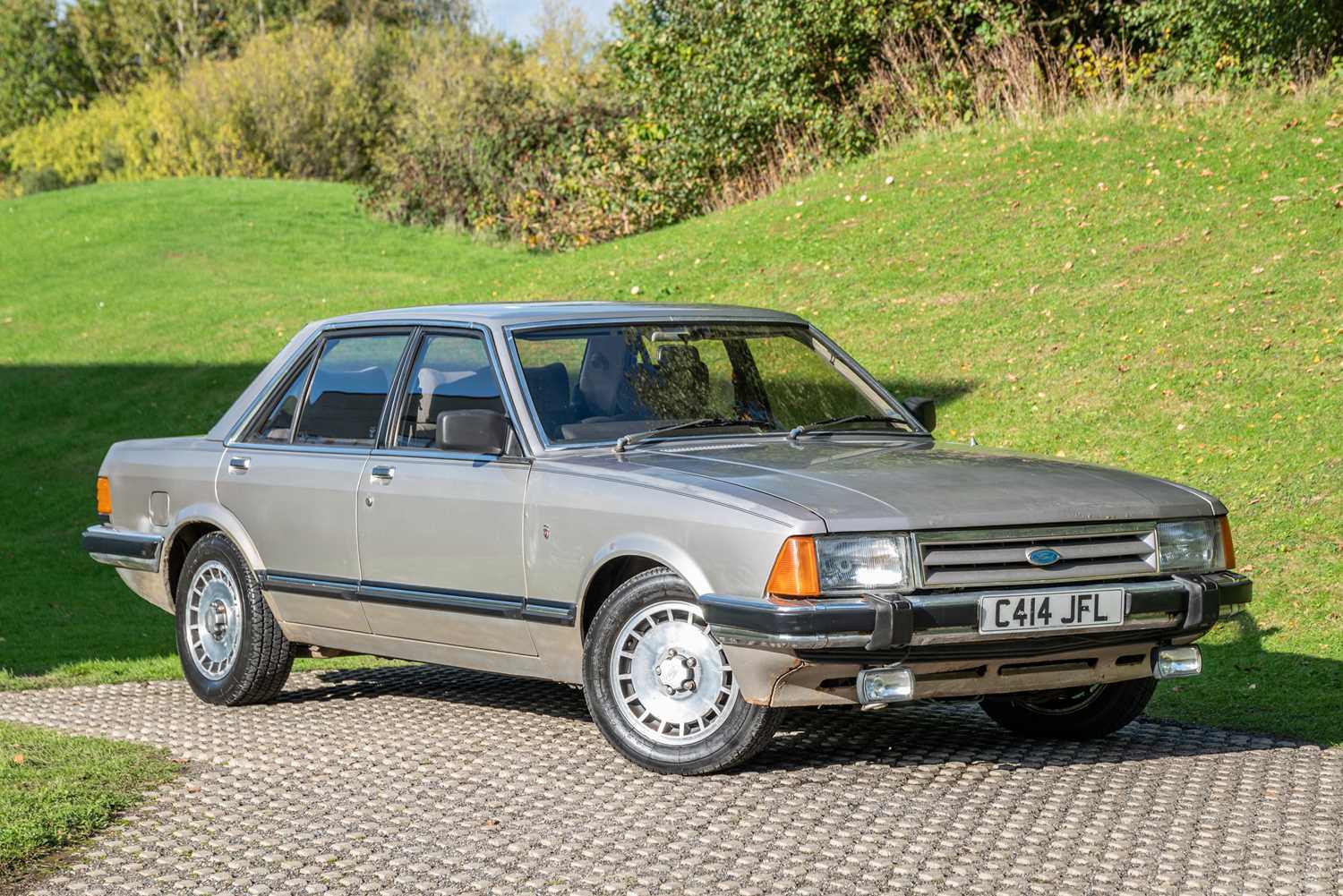
Was It Really a Mustang Engine?
The short answer is yes, if the statement is understood correctly. The longer answer is that the wording needs qualification. Ford sold Granada sedans equipped with the 302 V8, and the 302 was also used in the Mustang.
Historical engine application records list the 302 in Granada models from the mid-1970s through 1980. Automotive coverage of surviving Granadas also confirms the availability of the 302.
Calling it a “Mustang engine” becomes inaccurate if someone suggests that Ford removed an engine from a Mustang production line and installed it in the Granada as a special arrangement. Ford did not need to do that.
The 302 was a mainstream Ford powerplant with applications throughout the company’s lineup. It was manufactured for use in multiple vehicles, with specifications adapted to each application.
There is an even bigger misconception to avoid when discussing horsepower. A Granada equipped with a 302 was not automatically as quick as a Mustang using a 302.
Vehicle weight, gearing, transmission choice, axle ratio, exhaust design, carburetion, emissions equipment, and engine calibration all affected performance. A large sedan with a softly tuned V8 could have the same displacement as a sporty car while producing a very different driving experience.
The period itself also matters. The late 1970s were not the golden era of high-output American V8 performance. Emissions regulations, fuel economy requirements and changing industry standards had pushed manufacturers toward lower output.
Ford’s 302 remained useful, but its role varied substantially between applications. The Granada’s V8 was primarily about providing smooth, familiar power rather than turning the family sedan into a muscle car.
There is a good reason the story continues to attract attention today. Modern car buyers are accustomed to engines being shared across many models, but classic-car enthusiasts often attach strong identities to particular engines.
The 302 became legendary through its Mustang applications, especially as later generations transformed the 5.0-liter V8 into a performance icon. Discovering that a boxy family sedan could be ordered with the same basic engine family makes the Granada an unexpectedly interesting chapter in Ford history.