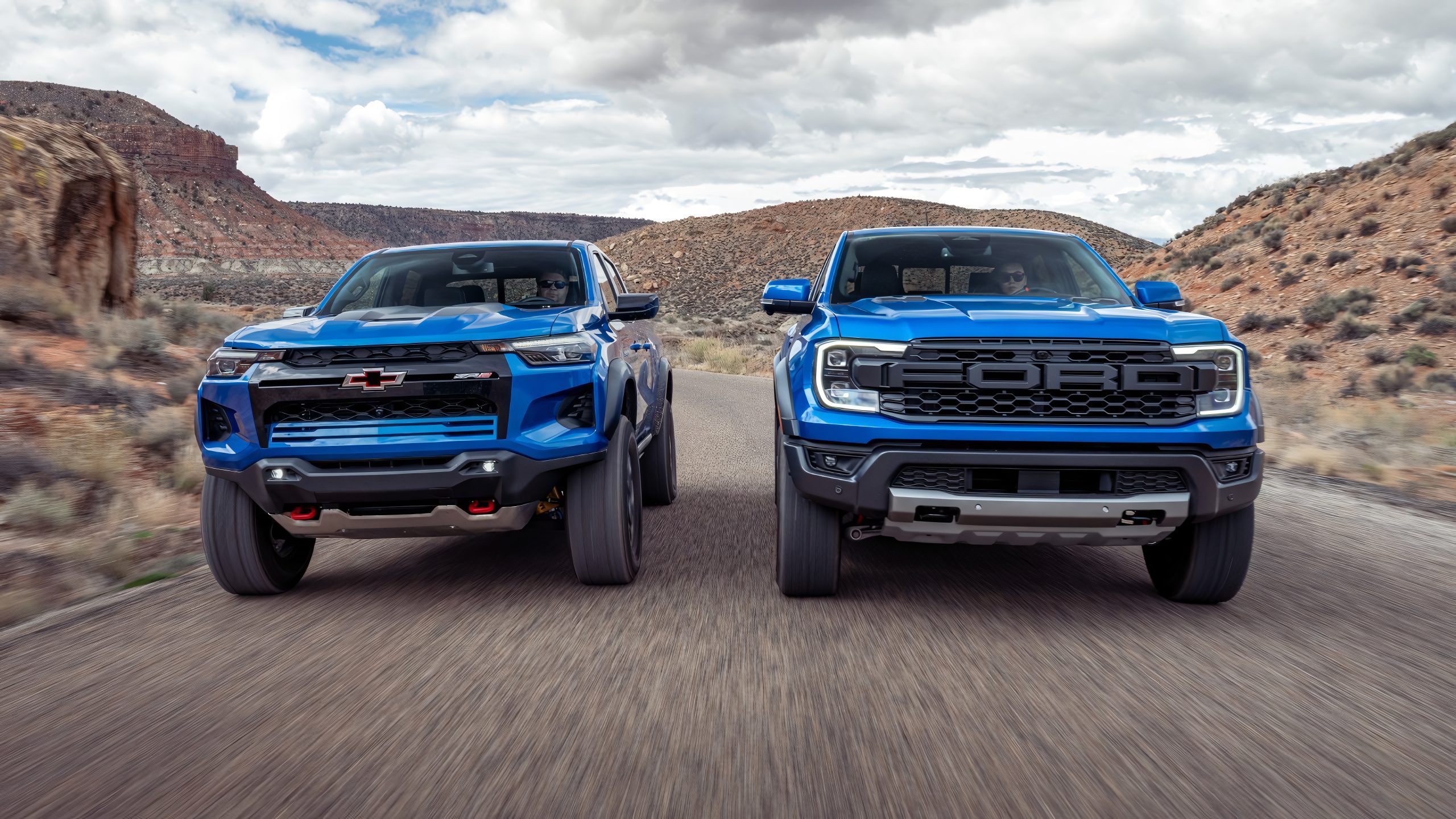
Choosing a midsize pickup is no longer as simple as picking the truck with the biggest engine or the most aggressive styling. The 2026 Ford Ranger, Chevrolet Colorado, and Jeep Gladiator approach the segment from very different directions.
The Ranger focuses on balanced capability, strong payload capacity, road manners, and a wide range of powertrains. The Colorado puts serious emphasis on towing, torque, technology, and value.
The Gladiator remains the specialist, combining pickup practicality with removable doors, a removable roof, and genuine off-road hardware.
This comparison focuses on six key areas that help distinguish the three trucks. These include power and performance, towing and payload capacity, fuel economy, off-road ability, interior and technology, and pricing and value. Each category has a winning truck, with the final table summarizing how they compare across all six areas.
Figures can vary according to trim, drivetrain, equipment, and configuration, so the comparison uses maximum available figures where appropriate.
Power and Performance
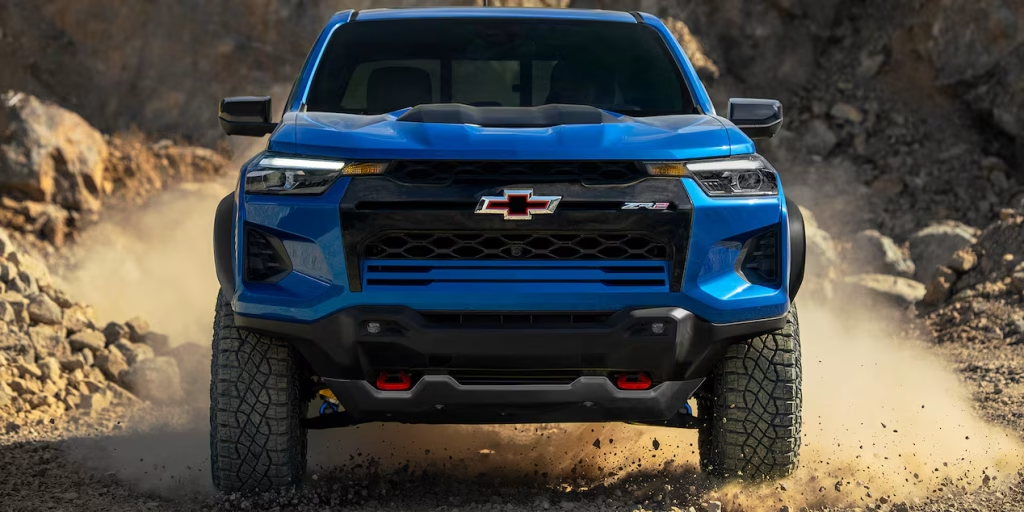
The Chevrolet Colorado enters the competition with a significant power advantage. Its standard 2.7-liter TurboMax four-cylinder delivers 310 horsepower and 430 lb ft of torque. That gives it a clear edge in torque over the standard Ford Ranger and a substantial advantage over the Jeep Gladiator.
Chevrolet lists the Colorado at 310 horsepower and 430 lb-ft, while Ford’s standard 2.3-liter EcoBoost produces 270 horsepower and 310 lb-ft.
The Ranger, however, has the broadest powertrain selection. Its standard 2.3-liter EcoBoost makes 270 horsepower, while the available 2.7-liter EcoBoost V6 increases output to 315 horsepower and 400 lb-ft. The Ranger Raptor goes much further with a 3.0-liter EcoBoost V6 producing 405 horsepower and 430 lb-ft.
That makes the Ranger the performance choice for buyers willing to move beyond the base engine. The 2.7-liter V6 provides a useful combination of acceleration and torque, while the Raptor turns the Ranger into a much more specialized high-performance off-road truck.
Colorado takes a different approach. Rather than requiring an engine upgrade to access substantial torque, its TurboMax delivers 430 lb-ft from the standard powertrain. That is particularly useful for drivers who regularly carry equipment, tow trailers, or need strong low-speed pulling power.
The Gladiator uses a 3.6-liter Pentastar V6 with 285 horsepower and 260 lb-ft of torque. Jeep gives it a maximum towing capacity of 7,700 pounds, but its torque figure trails both the Colorado and Ranger by a considerable margin.
The Ranger is quicker in higher-performance configurations, but the Colorado makes the strongest case for everyday performance because its standard engine delivers substantial horsepower and class-leading torque without requiring a premium powertrain.
Winner: Chevrolet Colorado
Towing and Payload
Towing is one of the closest contests between these three trucks, but Colorado has the numbers to claim the category. Properly equipped, the 2026 Colorado can tow up to 7,700 pounds. Chevrolet’s official trailering information confirms that the TurboMax-equipped Crew Cab can reach 7,700 pounds with the appropriate equipment.
The Ford Ranger is only 200 pounds behind. Properly equipped with the available Trailer Tow Package, it can tow up to 7,500 pounds. Ford lists that maximum for the 2.3-liter and 2.7-liter models, while the Raptor is rated lower at 5,510 pounds.
The Gladiator also reaches 7,700 pounds, giving it a tie with the Colorado for maximum towing capacity. Jeep’s specifications confirm that the 3.6-liter V6 can provide up to 7,700 pounds of towing capacity.
Payload creates a more noticeable separation. Ford’s Ranger can carry up to 1,767 pounds in the configuration listed by Ford, making it particularly attractive to buyers who frequently put heavy equipment into the bed. The Gladiator can carry up to 1,720 pounds in its 4×4 configuration, according to Jeep.
Colorado payload figures vary considerably by configuration, so buyers need to check the exact truck rather than relying only on the model’s headline capability. This is an important distinction because maximum towing and maximum payload are not necessarily available on the same configuration.
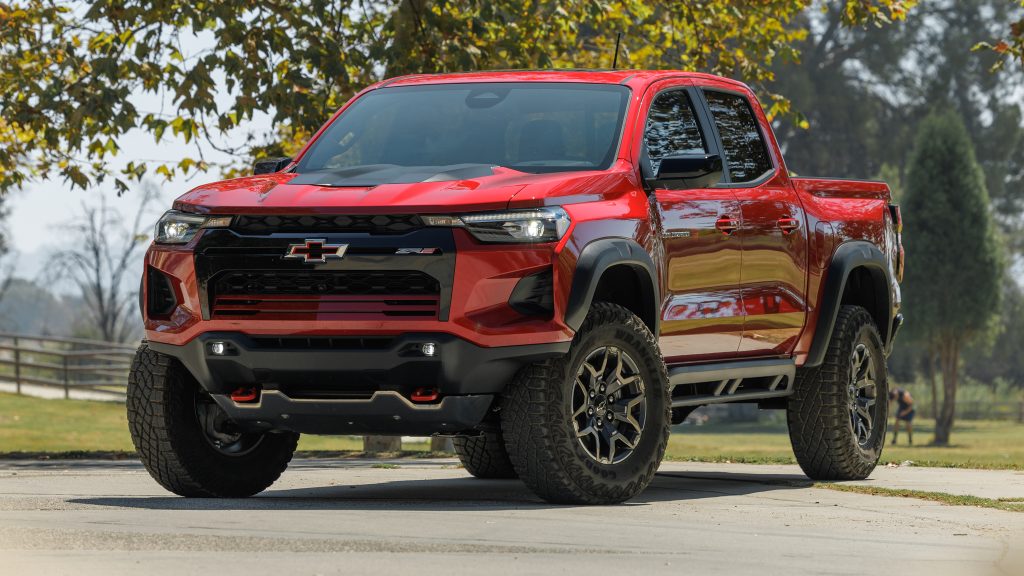
For pure towing, the Colorado and Gladiator are tied at the top, with the Ranger just behind. The Ranger answers with a stronger payload figure and a very useful towing package, while the Colorado combines its 7,700-pound maximum with 430 lb-ft of standard torque.
The Gladiator’s towing rating is impressive, but its lower torque output means it does not have the same engine advantage when moving heavy loads. Its strengths become more obvious when the road disappears.
Winner: Chevrolet Colorado
Fuel Economy and Everyday Driving
A truck that spends most of its life on highways and city streets needs more than towing strength. It also needs to be reasonably efficient, and that is where the Ranger gains an important advantage.
Ford lists the 2026 Ranger 4×2 with the 2.3-liter EcoBoost at 21 city, 25 highway, and 23 mpg combined. The 4×4 version is rated at 19 city, 24 highway, and 21 mpg combined. The available 2.7-liter V6 is rated at 18 city, 23 highway, and 20 mpg combined in 4×4 form.
The Colorado’s 2WD configuration is listed at 19 city and 24 highway mpg by Cars.com, while Edmunds lists a 19/24/21 city/highway/combined rating for the Colorado configuration it evaluated.
The Gladiator falls behind both rivals. Edmunds lists the 2026 Gladiator at 17 city, 22 highway, and 19 mpg combined in the configuration shown.
The difference might not sound dramatic on paper, but it becomes meaningful for drivers covering tens of thousands of miles. A truck that spends most of its time commuting does not need the same hardware priorities as a truck that regularly tackles rocky trails.
The Ranger also benefits from having a broad range of configurations. Buyers can choose the efficient 2.3-liter engine or move to a V6 when additional power is more important. Colorado’s single-engine strategy is simpler, but it gives buyers less flexibility.
The Gladiator has an unavoidable disadvantage here because its design prioritizes off-road capability and the mechanical requirements associated with that mission. Its upright shape, four-wheel-drive hardware, solid-axle architecture, and rugged equipment are not optimized for highway fuel consumption.
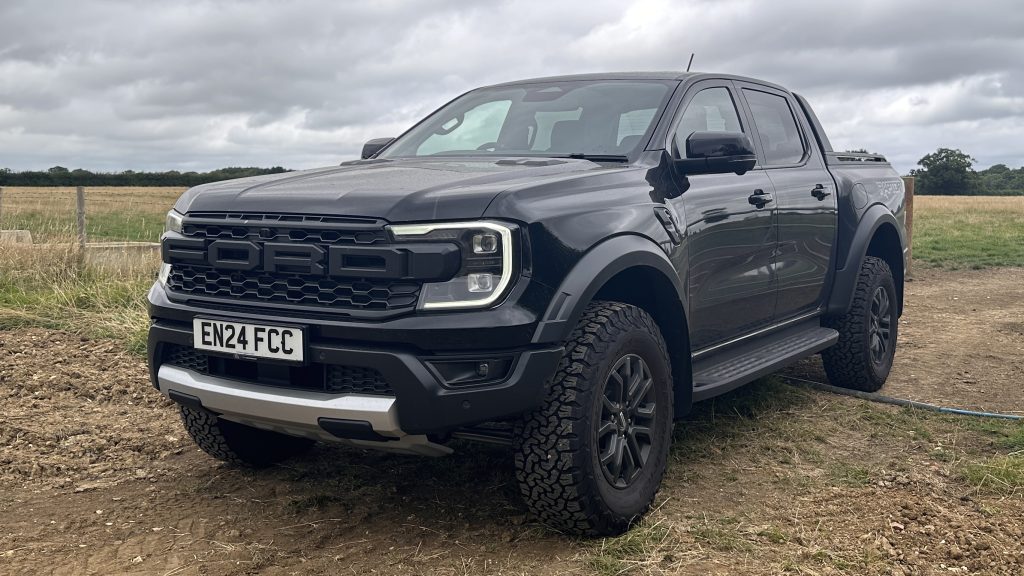
For daily driving, the Ranger also has a reputation for being easier to live with on pavement. Car and Driver’s comparison notes that the Ranger rides more quietly and handles more crisply on the road than the Gladiator.
The Colorado remains competitive, but the Ranger offers the strongest combination of fuel economy and everyday usability.
Winner: Ford Ranger
Off-Road Capability
This is where the comparison changes dramatically. The Gladiator was designed around the idea that a pickup can be a serious trail machine without giving up its cargo bed.
The Wrangler connection is obvious in its removable doors, removable roof, fold-down windshield, and available specialized off-road versions. Those features give the Gladiator something neither the Ranger nor Colorado can completely replicate.
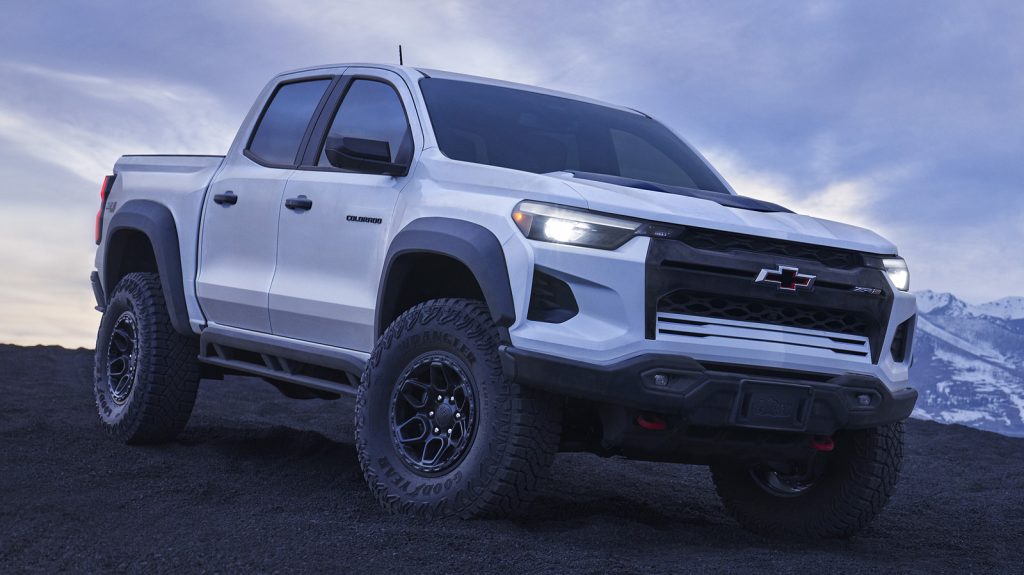
Colorado is a very capable alternative. Its ZR2 brings Multimatic DSSV dampers, a factory lift, 33-inch mud-terrain tires, selectable drive modes, and dedicated off-road equipment. Chevrolet lists the 2026 ZR2 with a 3-inch factory-installed lift, 33-inch mud-terrain tires, and Multimatic DSSV dampers.
The Ranger has perhaps the broadest off-road range. Buyers can select packages such as FX4, while the Ranger Raptor sits at the top of the lineup with specialized suspension hardware and a 405-horsepower V6. Ford’s specifications show the Raptor using FOX internal-bypass dampers and a dedicated suspension setup.
The Raptor is especially impressive for high-speed dirt driving. It is designed to absorb rough terrain at speed rather than simply crawl over obstacles.
But the Gladiator’s advantage comes from versatility on technical trails. Its 4×4 architecture, available Rubicon hardware, removable body panels, and open-air configuration make it uniquely suited to buyers who view off-roading as a primary reason for buying a truck.
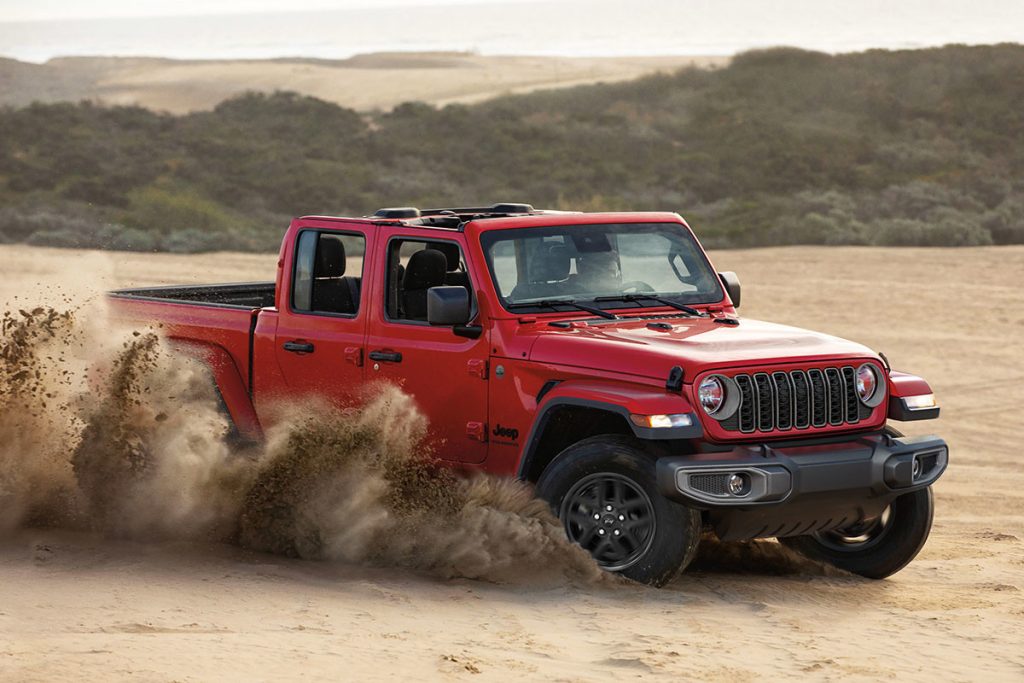
The Colorado ZR2 is arguably the most sophisticated rival in this area, especially for drivers who want a truck that remains relatively conventional on the road. The Ranger Raptor is the more aggressive performance machine.
Still, neither gives buyers the same combination of pickup bed utility and open-air trail experience as the Gladiator.
This category is therefore less about horsepower or towing numbers and more about purpose. If off-road driving is an occasional activity, either the Ranger or Colorado can make more sense. If it is the main reason for purchasing the truck, the Gladiator has the clearest identity.
Winner: Jeep Gladiator
Interior, Technology, and Practicality
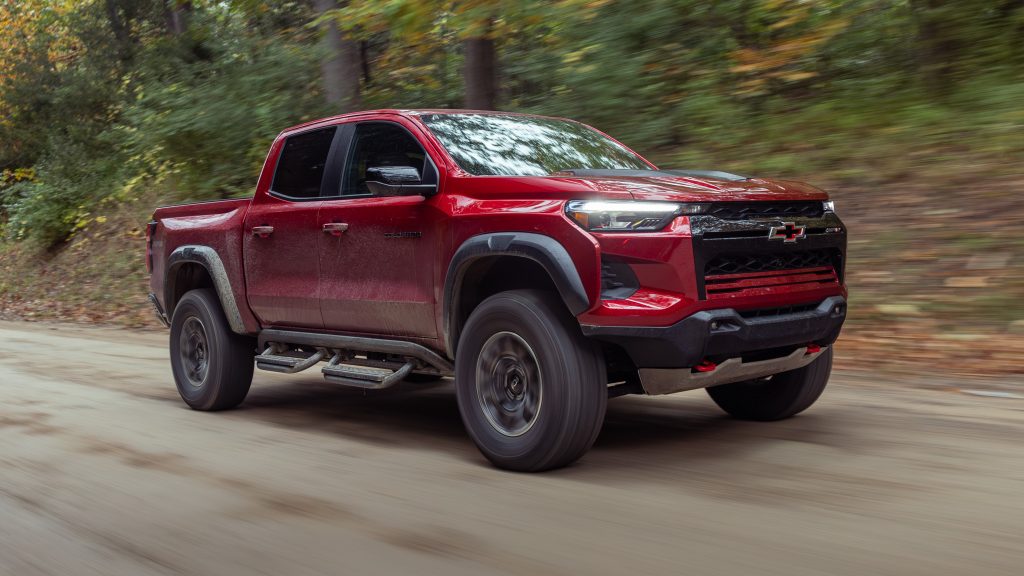
Colorado makes another strong case with its cabin technology. Every 2026 Colorado comes with an 11.3-inch diagonal center touchscreen, while Chevrolet also provides an 11-inch digital Driver Information Center. Apple CarPlay, Android Auto, and Google built-in are part of the technology package.
The Ranger’s standard touchscreen is smaller at 10.1 inches, although higher trims can bring a larger 12-inch display and additional technology. Chevrolet itself highlights the Colorado’s 11.3-inch screen against the Ranger’s standard 10-inch display.
The Colorado also has several practical touches aimed directly at pickup owners. Chevrolet offers its StowFlex tailgate, a cargo-bed power outlet, and up to 25 available bed tie-downs.
The Ranger counters with a very practical interior and strong towing-related technology. Depending on configuration, Ford offers features designed to make trailer operation easier, while its cabin has a straightforward layout that works well for daily use.
The Gladiator has a different personality. Its cabin prioritizes durability and the open-air experience rather than trying to imitate a luxury SUV.
The removable roof and doors are major advantages for enthusiasts, but they also influence the truck’s refinement. Car and Driver’s testing notes that the Ranger is quieter and handles more cleanly on pavement than the Gladiator.
For family use, commuting, and general truck duties, Colorado’s technology package gives it a strong advantage. Its standard touchscreen is large, the interface is modern, and the truck offers useful cargo-management features.
The Ranger remains competitive, especially in upper trims where available technology becomes more sophisticated. Its cabin also feels better suited to long-distance road use than the Gladiator.
The Gladiator wins the personality contest, but personality is not the same as practicality. For buyers who spend more time commuting than crawling over rocks, Colorado’s standard technology and useful bed features are more valuable.
Winner: Chevrolet Colorado
Pricing and Value
Price can change the entire argument when three trucks are as closely matched as these. The 2026 Chevrolet Colorado starts at $32,400, according to Chevrolet. Its standard equipment includes the 310-horsepower TurboMax engine, 430 lb-ft of torque, an 11.3-inch touchscreen, and Chevy Safety Assist.
Ford’s 2026 Ranger has a higher starting figure. Ford inventory listings show the Ranger XL beginning at $35,445 in the configuration shown. Exact pricing can change according to destination charges, options, dealer pricing, and configuration, so shoppers should compare similarly equipped trucks rather than relying solely on base MSRP.
The Gladiator starts higher still. Cars.com lists the 2026 Gladiator at $39,820 for the configuration shown, compared with $32,400 for the Colorado.
Colorado’s value becomes stronger when its standard equipment is considered. A buyer gets 310 horsepower, 430 lb-ft of torque, a large touchscreen, and a truck capable of towing up to 7,700 pounds when properly equipped.
The Ranger justifies some of its higher price through powertrain flexibility. Buyers can step from the 2.3-liter engine to the 2.7-liter V6, while the Raptor provides a completely different performance proposition. Its standard payload capacity is also excellent.
The Gladiator’s price is harder to justify if the buyer has no interest in its unique off-road features. However, for someone who specifically wants removable doors, an open-air cabin, serious trail equipment, and a pickup bed, there is no direct substitute.
That makes value highly dependent on the intended use. The Gladiator is expensive because it provides a combination that its competitors do not. The Ranger is a strong middle ground. Colorado, however, offers the most capability and technology for the money at the entry point.
For a typical buyer who wants a midsize truck for work, commuting, towing, and occasional recreation, Colorado’s lower starting price and strong standard specifications make it the strongest value.
Winner: Chevrolet Colorado
The 2026 Ford Ranger, Chevrolet Colorado, and Jeep Gladiator are not interchangeable trucks. Each one is built around a different idea.
The Ford Ranger is the balanced choice. It offers strong payload capacity, good fuel economy, several engine options, comfortable road manners, and a serious Raptor model for enthusiasts. It is the truck to choose when daily driving is just as important as weekend capability.
The Jeep Gladiator is the specialist. Its 7,700-pound towing capacity is impressive, but towing is not its main reason for existing. The removable doors and roof, fold-down windshield, and Rubicon-focused off-road hardware make it the clear choice for buyers who want a truck built around adventure.
The Chevrolet Colorado wins the comparison by taking more categories than either rival. It has the strongest standard engine, competitive towing, useful technology, a lower entry price, and a highly capable ZR2 for serious trail driving.
It does not have the Gladiator’s open-air design or the Ranger’s powertrain variety, but it does a remarkable job of covering the most important everyday truck requirements.
For most buyers, the Chevrolet Colorado is the winner. The Ranger is the better choice for fuel economy and balanced daily driving, while the Gladiator is the better choice for dedicated off-road enthusiasts.
But when power, towing, technology, and purchase value are considered together, the Colorado offers the strongest package.
Winner’s Table
| Category | Winner | The Edge |
|---|---|---|
| Power and Performance | Chevrolet Colorado | 310 horsepower and 430 lb-ft provide stronger standard output than rivals. |
| Towing and Payload | Chevrolet Colorado | 7,700-pound towing and strong torque give it exceptional hauling capability. |
| Fuel Economy and Everyday Driving | Ford Ranger | Better EPA efficiency makes the Ranger more economical for daily road use. |
| Off-Road Capability | Jeep Gladiator | Removable doors, roof, and specialized 4×4 hardware make it uniquely trail-ready. |
| Interior, Technology, and Practicality | Chevrolet Colorado | Larger standard touchscreens and useful cargo features improve everyday truck usability. |
| Pricing and Value | Chevrolet Colorado | The lower starting price combines with strong standard power and equipment. |
Final Winner: Chevrolet Colorado
The Colorado wins four of the six categories, while the Ranger takes one and the Gladiator takes one. That does not make the other two trucks poor choices. It shows that each has a more specific strength, while the Colorado provides the most convincing combination for the widest range of midsize-truck buyers.