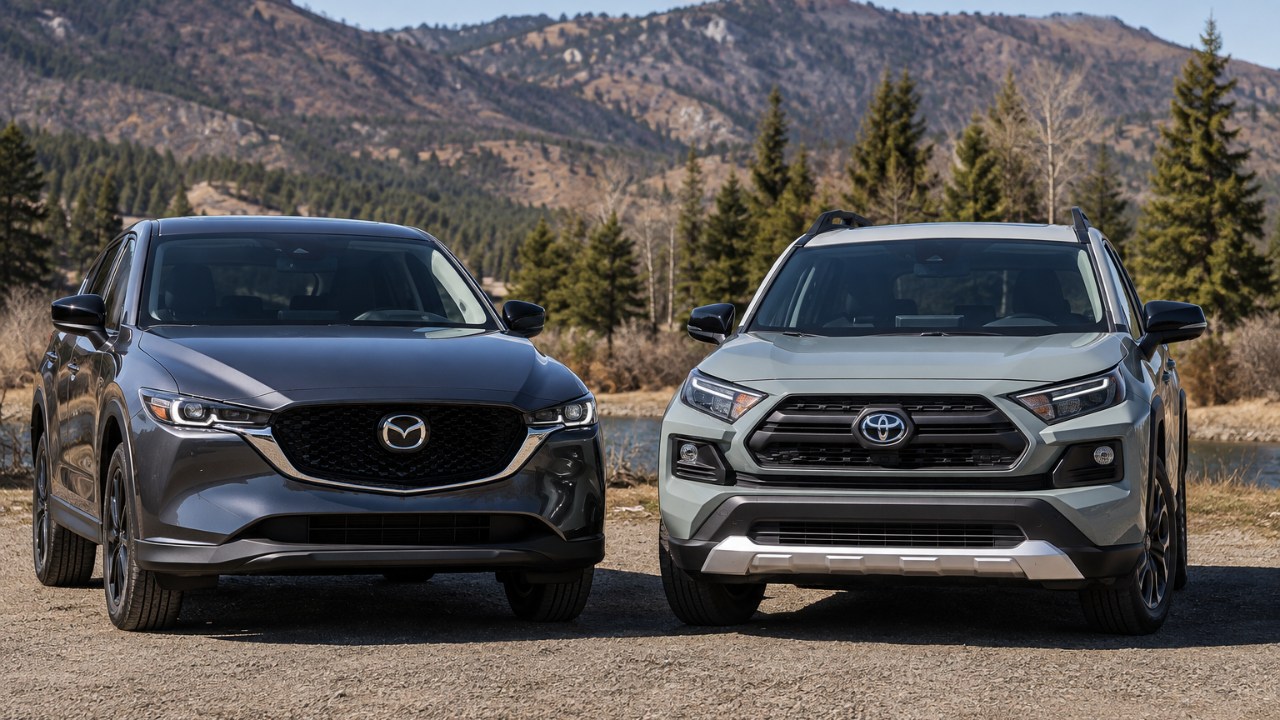
The redesigned 2026 Mazda CX-5 has earned the Insurance Institute for Highway Safety’s highest safety award, Top Safety Pick+, after making major improvements to its crash-avoidance technology.
The result is particularly notable because the 2025 CX-5 received a poor rating for vehicle-to-vehicle front crash prevention, one of the weaknesses that kept it from qualifying for IIHS’s top award.
The redesigned CX-5 changed that result completely. Its new standard front crash prevention system earned a Good rating, while its pedestrian crash prevention system also received a Good rating. The SUV additionally earned good ratings in all three required crashworthiness tests.
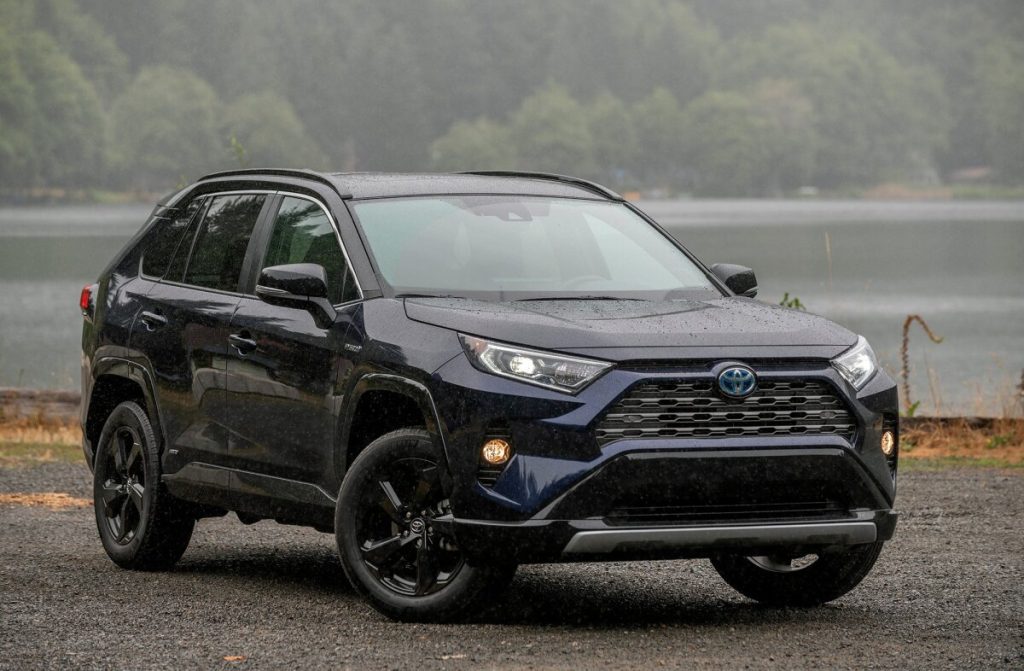
The achievement also puts the CX-5 ahead of the 2026 Toyota RAV4 in the IIHS award standings. Toyota’s 2026 Top Safety Pick listings do not include the RAV4, while the redesigned CX-5 is a Top Safety Pick+ winner in the small-SUV class.
The turnaround is notable because the CX-5 did not rely on a single strong result. Mazda’s redesigned SUV performed well across crash protection, pedestrian detection, vehicle-to-vehicle crash prevention, headlights, and child-seat usability.
The 2026 CX-5 Fixed the 2025 Model’s Biggest Weakness
The 2025 CX-5 already had a strong crashworthiness record. IIHS gave it. Good ratings in the small overlap front, updated moderate overlap front, and updated side tests. Its headlights were good or acceptable depending on configuration, and its pedestrian front crash prevention system received an advanced rating.
The major problem was its vehicle-to-vehicle front crash prevention system. Under IIHS’s updated evaluation, the standard system received a poor rating. The system could avoid collisions with a passenger-car target at 31 mph, but its performance weakened at higher speeds.
At 37 mph, it reduced the vehicle’s speed by 32 mph in the centered test and 36 mph with the target offset. At 43 mph, reductions were 24 and 25 mph.
Those results were insufficient under IIHS’s newer requirements. The redesigned 2026 model addresses that weakness.
Its standard Smart Brake Support earned a good rating in IIHS’s vehicle-to-vehicle front crash prevention 2.0 evaluation. The CX-5 avoided collisions in all six passenger-car and motorcycle tests conducted at 31, 37, and 43 mph, with both centered and offset targets.
That is a substantial improvement over the previous generation. The redesigned CX-5 also earned a good pedestrian front crash prevention rating. IIHS found that the system avoided collisions with crossing children and adults in the tested scenarios, including nighttime tests involving an adult pedestrian.
For 2026, IIHS requires a vehicle seeking Top Safety Pick+ to earn good ratings in the small overlap front, updated moderate overlap front, and updated side tests.
It also needs acceptable or good headlights, good pedestrian front crash prevention, and acceptable or good vehicle-to-vehicle front crash prevention, with qualifying systems standard. The CX-5 met those requirements.
Strong Crash Protection Completes the Award
The front crash prevention improvement alone would not have been enough. The redesigned 2026 CX-5 earned good ratings in the small overlap front, updated moderate overlap front, and updated side tests.
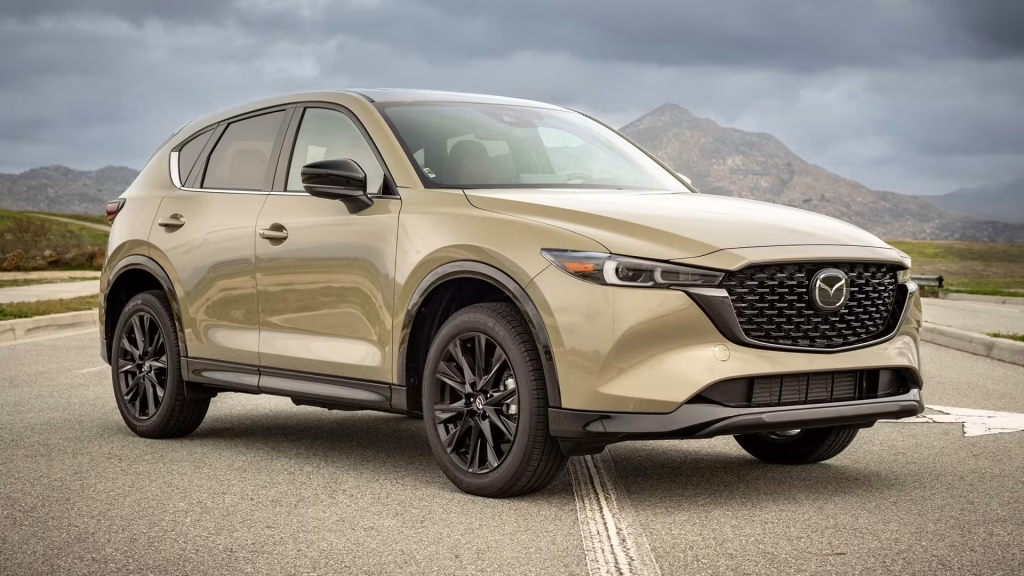
In the small overlap test, both driver-side and passenger-side evaluations received Good ratings. The structure and safety cage were good, while driver and passenger injury measurements also remained in the good range. The driver’s HIC-15 head measurement was 165, with no hard head contact recorded.
The updated moderate overlap test also produced a good result. This test evaluates both the driver and a rear passenger. The CX-5 earned good ratings for its structure and safety cage, driver injury measurements, restraints, and dummy movement.
The rear passenger also received good ratings for head and neck, chest, thigh, restraints, and dummy kinematics. The side test was equally strong.
IIHS gave the CX-5 a good structural rating and good ratings for driver head and neck, pelvis, and head protection. The driver’s torso received an Acceptable rating, but the side-test result remained Good. The rear passenger received good ratings across the tested injury and head-protection categories.
The B-pillar also remained well away from the driver’s seating centerline. IIHS recorded it 23 centimeters short of the longitudinal centerline of the driver’s seat, indicating limited intrusion into the occupant compartment.
The CX-5’s headlights also met the award requirement, with available systems rated Good or Acceptable.
IIHS also gave the vehicle a Good seat-belt reminder rating and a Good+ LATCH ease-of-use rating, although these are not required for Top Safety Pick+.
The combination gives the redesigned CX-5 a considerably stronger safety profile than its predecessor.
IIHS specifically highlighted the improvement when announcing the award. In July 2026, the organization said the redesigned CX-5 earned Top Safety Pick+ partly because of its good vehicle-to-vehicle and pedestrian front crash prevention ratings.
IIHS also noted that the 2025 CX-5 had received a poor vehicle-to-vehicle rating. That makes the 2026 redesign more than a cosmetic update from a safety perspective.
CX-5 Now Ranks Among the Strongest Small SUVs
The Top Safety Pick+ award places the redesigned CX-5 among several highly rated small SUVs.
The 2026 IIHS list includes other Top Safety Pick+ winners such as the BMW X1, Genesis GV60, Honda HR-V, Hyundai Ioniq 5, Hyundai Kona, Hyundai Tucson, Kia Sportage, Mazda CX-30, Mazda CX-50, and Subaru Forester.
The comparison with the Toyota RAV4 is nevertheless notable. Toyota’s 2026 IIHS award list includes the Prius, Camry, and Tundra, but the RAV4 is absent from the Top Safety Pick and Top Safety Pick+ winners.
That does not mean the RAV4 is unsafe. IIHS awards are based on specific testing requirements for each model year, and the absence of an award does not establish that a vehicle is unsafe.
It does mean that the redesigned CX-5 has achieved the higher IIHS distinction while the 2026 RAV4 has not.
Another important factor is that the CX-5’s qualifying safety systems are standard equipment, rather than features restricted to an expensive trim. IIHS requires standard systems for Top Safety Pick+ eligibility.
That makes the award more useful to buyers because the safety performance does not depend on selecting a premium package.
The redesigned CX-5 demonstrates how quickly a vehicle can improve when manufacturers address weaknesses identified by newer testing standards.
The 2025 model already had strong crash protection, but its poor vehicle-to-vehicle front crash prevention rating prevented it from reaching the highest IIHS recognition. Mazda’s 2026 redesign transformed that category into a Good rating while maintaining strong crashworthiness results.
The improvement is especially clear in the front crash prevention testing. The new CX-5 avoided every tested passenger car and motorcycle collision at 31, 37, and 43 mph in IIHS’s evaluation. Its pedestrian system also performed strongly in daytime and nighttime scenarios.
For Mazda, that is a meaningful safety achievement. The company did not simply add more technology; it improved the performance of a system that previously received one of IIHS’s lowest ratings.
For shoppers considering small SUVs, the 2026 Mazda CX-5 stands out as a significant safety upgrade compared with the 2025 model.
Its good ratings in all three major crash tests, good pedestrian and vehicle-to-vehicle crash prevention systems, and qualifying headlights allowed it to earn Top Safety Pick+. Meanwhile, the 2025 model’s poor front crash prevention rating has been replaced by a good result.
The fact that the CX-5 now holds a Top Safety Pick+ award while the 2026 Toyota RAV4 does not makes the comparison particularly interesting. But the larger story is Mazda’s turnaround.
The redesigned CX-5 shows how modern safety testing can push manufacturers to correct specific weaknesses. In this case, the change was substantial enough to move the CX-5 from a model that missed IIHS’s highest award to one of the strongest-rated small SUVs of the 2026 model year.