

Ever stood next to a supercar and stared at its rear tires, wondering how something so wide even fits under the fender? You’re not alone. When engineers chase four-figure horsepower numbers, putting that power down safely becomes its own puzzle, one that often gets solved with tire sections so wide they look borrowed from a race car.
Section width, that first number in any tire size, measures how broad the rubber is in millimeters, and the cars below pushed that number further than almost anything else ever sold to the public. Here are eight production cars whose factory rear tires still make jaws drop.

1. Bugatti Veyron 16.4 / Veyron Super Sport
Nothing else on this list, or arguably in automotive history, quite matches what Bugatti did with the Veyron’s rear rubber. Michelin didn’t pull an existing tire off the shelf and slap a Bugatti label on it.
The company built a completely bespoke tire from scratch, the 365-710 ZR540 PAX, specifically to handle a car capable of blowing past 400 kilometers per hour, a speed that puts extraordinary stress on rubber compounds, sidewalls, and the wheel itself.
That 365 mm rear section width remains the widest factory rear tire ever fitted to a production passenger car, a record that has stood since the Veyron’s introduction and hasn’t been challenged since, even by cars built well over a decade later.
Reaching that kind of top speed safely requires far more than raw horsepower. The tire has to survive sustained centrifugal loading, extreme heat buildup, and aerodynamic forces that would tear a conventional tire apart within minutes.
Bugatti’s engineering team worked directly alongside Michelin to solve this problem, resulting in a tire so specialized it uses a unique mounting system unrelated to typical wheel designs.
Replacing a set isn’t like visiting a regular tire shop; it involves specific logistics tied directly to the Veyron’s engineering. For anyone chasing the title of widest factory tire ever fitted to a road car, the Veyron still stands alone at the top.

2. Bugatti Chiron
Bugatti did not make the Chiron’s rear tires wider than those on the Veyron, even though the newer hypercar produces considerably more power. The Chiron uses 355/25 ZR21 Michelin rear tires, measuring 10 mm less than the Veyron’s huge 365 mm rear setup.
With up to 1,500 horsepower available, it may seem surprising that Bugatti did not simply increase tire width to handle the extra power. Instead, engineers relied on improvements in tire technology, wheel design, and chassis tuning.
Better rubber compounds and improved tire construction helped the Chiron deliver its power effectively without requiring a wider contact patch. The larger 21-inch wheels also changed the tire’s proportions and helped provide the grip and stability needed at high speeds.
Tire technology had advanced considerably by the time the Chiron arrived. Engineers no longer had to depend mainly on adding width when developing tires for extremely powerful cars.
Modern compounds can provide strong traction, while improved internal construction helps maintain stability during hard acceleration and high-speed driving. Even though the Chiron gives up 10 mm of rear tire width compared with the Veyron, its 355 mm tires are still extremely large.
They are much wider than the tires found on most sports cars from earlier periods. The Chiron therefore shows that producing more power does not always require fitting wider tires. Better engineering can enable a car to achieve the required grip by improving several areas in tandem, rather than relying on tire width alone.
That approach helped Bugatti create a tire package capable of supporting the Chiron’s exceptional performance.
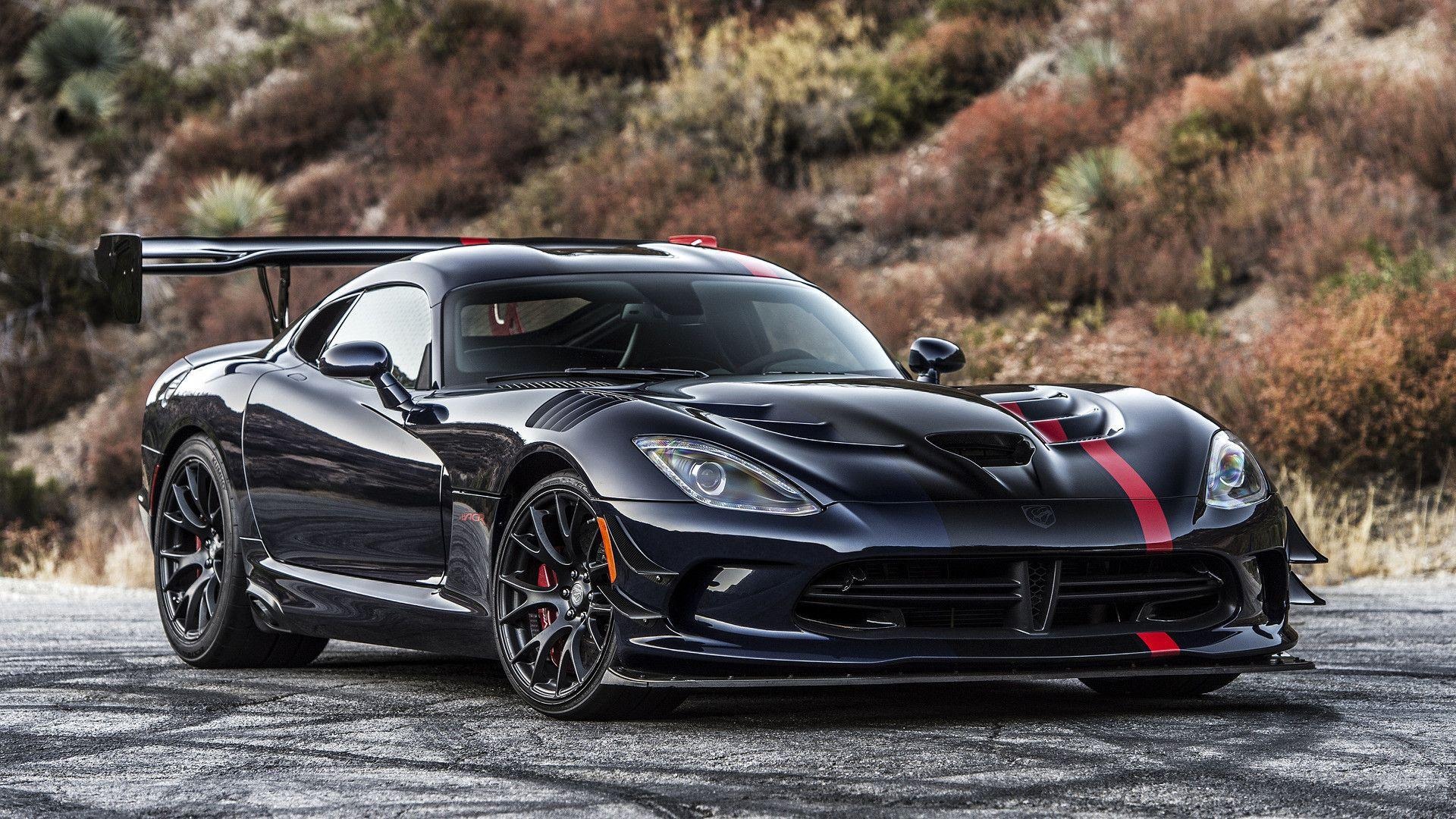
3. Dodge Viper ACR
American muscle rarely gets mentioned in the same breath as European hypercars, yet the Viper ACR earned its spot through pure, deliberate engineering focus rather than chasing outright top speed records.
Dodge developed the fifth-generation ACR with a clear focus on track performance. Every aspect of its suspension and tire setup was engineered to deliver as much grip as possible on a road course.
The result was a set of 355/30R19 rear tires, matching the section width found on cars costing several times the Viper’s price tag. That’s a striking achievement for a domestic sports car, especially one built by a manufacturer not historically known for chasing tire-width records against Italian and French hypercar makers.
Dodge didn’t simply bolt oversized tires onto an existing chassis and call it finished. Engineers reworked the ACR’s aerodynamics, suspension geometry, and chassis tuning specifically around that enormous contact patch, ensuring the tires could actually be used effectively rather than serving as a marketing footnote.
The car’s track-focused aerodynamic package, including its largest available wing option, worked in tandem with the wide rear rubber to generate genuinely competitive lap times against far more expensive competition.
For anyone who assumed only million-dollar hypercars could claim genuinely record-setting tire widths, the Viper ACR stands as proof that a focused American engineering team could match that benchmark on a fraction of the budget.

4. Lamborghini Aventador
Lamborghini has built its reputation on visual drama, and the Aventador’s rear tires deliver exactly that kind of presence in person. When the model launched, its 355/25ZR21 Pirelli P Zero rear tires ranked among the widest available on any production car being sold at the time, immediately setting the Aventador apart from nearly every rival in showroom photos alone.
Pirelli itself confirms the 355 mm rear specification, and that width played a direct role in how the Aventador delivers its power to the road. With a naturally aspirated V12 sending output through all four wheels, Lamborghini needed serious rear-end grip to keep the car planted during hard acceleration, and the wide Pirelli rubber became a core part of achieving that stability.
Beyond raw grip numbers, that width also shapes the Aventador’s visual identity. The dramatically flared rear fenders needed to accommodate tires this wide became one of the model’s most recognizable design elements, influencing how the entire rear three-quarter view of the car reads from a distance.
Few design decisions on a modern supercar carry that much visual weight from a purely functional starting point. Years after its debut, the Aventador’s tire specification still holds up against newer competition, a testament to how correctly Lamborghini’s engineers sized the contact patch relative to the car’s power output from the very beginning.

5. Pagani Huayra
Pagani produces so few cars that every Huayra feels like a custom-built machine rather than a mass-market vehicle. Its tire setup follows that same approach. The car rides on huge 355/25ZR21 Pirelli rear tires, placing it among production vehicles with some of the widest factory rubber available.
Pagani has also retained this size for several Huayra versions, including special editions and roadsters. Keeping the same rear tire measurement across different versions shows confidence in its original engineering choice.
Instead of changing the setup with every new model, Pagani found a specification that suited the Huayra’s power, handling, and design, then carried it forward through later road-going versions.
Horacio Pagani is known for combining engineering with artistic design, and the Huayra’s rear tires fit that philosophy. Their massive width is not simply hidden beneath the body. The tires become part of the car’s appearance, sitting alongside the exposed exhaust system, detailed diffuser, and carefully shaped body panels.
Every part works together to make the rear look purposeful while supporting its performance. Because Pagani builds such a limited number of vehicles, only a small number of people get the chance to see a Huayra beside other high-performance cars.
Still, its 355 mm rear tires place it among production cars fitted with extremely wide factory tires. The specification also shows how Pagani pays attention to performance needs and visual design when developing its cars.
For a manufacturer focused on low-volume craftsmanship, that combination makes the Huayra especially distinctive among modern hypercars today alone.
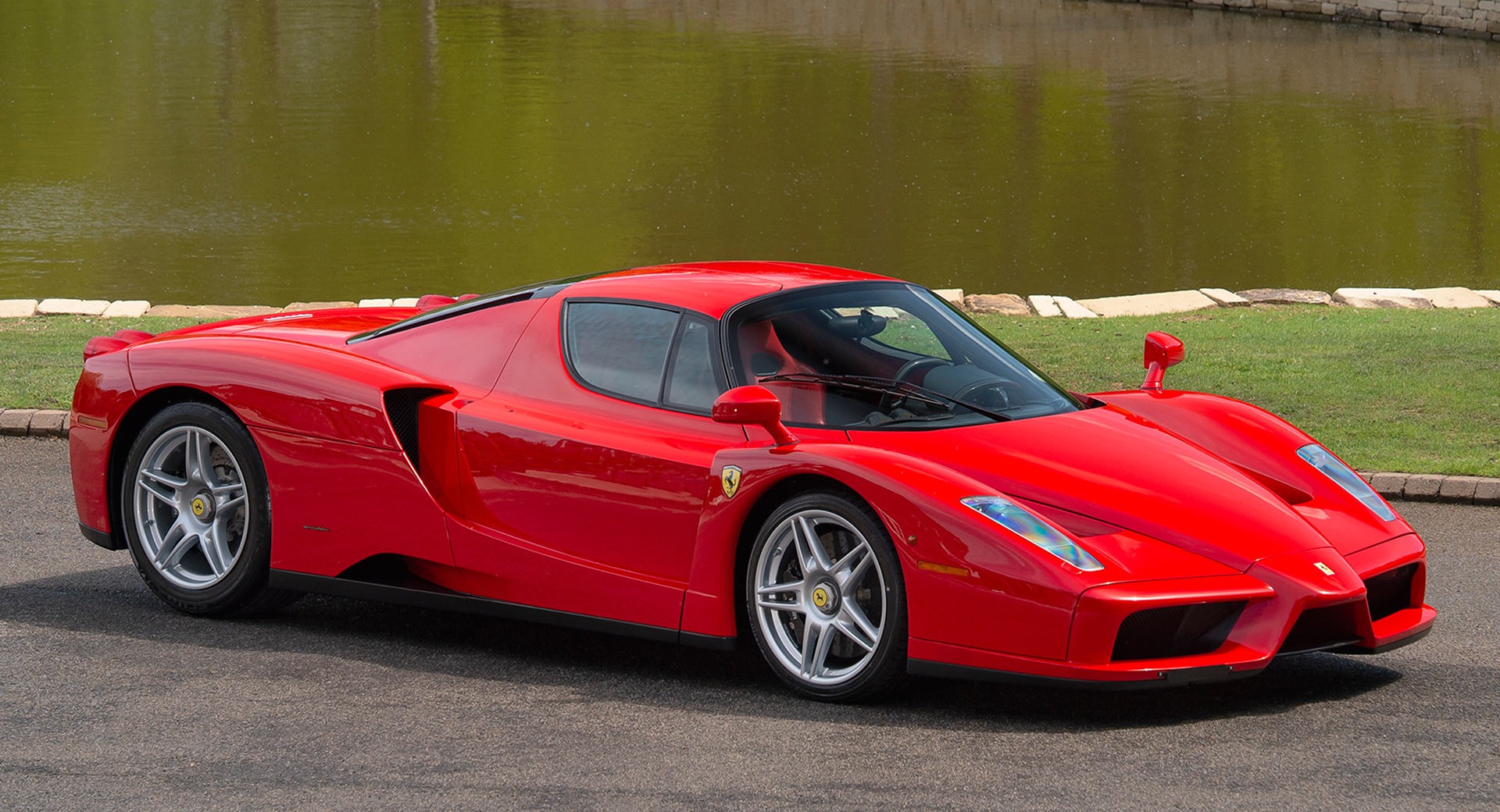
6. Ferrari Enzo
When Ferrari introduced the Enzo in the early 2000s, few could have predicted how well its engineering would age. Even against much newer hypercars, its 345/35 R19 rear tires remain impressive.
Pirelli and Michelin have both confirmed this size as the Enzo’s original rear specification, giving the Ferrari a verified place among the widest factory tires of its generation.
The timing makes this achievement even more interesting. The Enzo arrived before models from Bugatti, Pagani, and Lamborghini began using extremely wide tire setups of their own.
Ferrari was already giving the rear axle a level of width that would take years to become common among other high-performance manufacturers. Rather than copying an established trend, the Enzo helped push the standard forward.
There was also a serious reason behind that massive rear footprint. Ferrari did not simply name the car after its founder for marketing purposes. The mechanical package had to live up to the name.
Its naturally aspirated V12 produced strong performance, while the Formula One-inspired aerodynamic design helped the car stay composed when driven hard. The wide rear tires provided the grip needed to put that performance onto the road.
Two decades later, the Enzo’s tire specification still looks impressive beside newer hypercars with much greater power. The car proves that performance is not determined by horsepower alone.
Ferrari’s engineers understood that the right amount of tire contact was essential for making the Enzo handle, accelerate, and corner as intended. That careful balance remains one of the reasons the Enzo is still respected today.
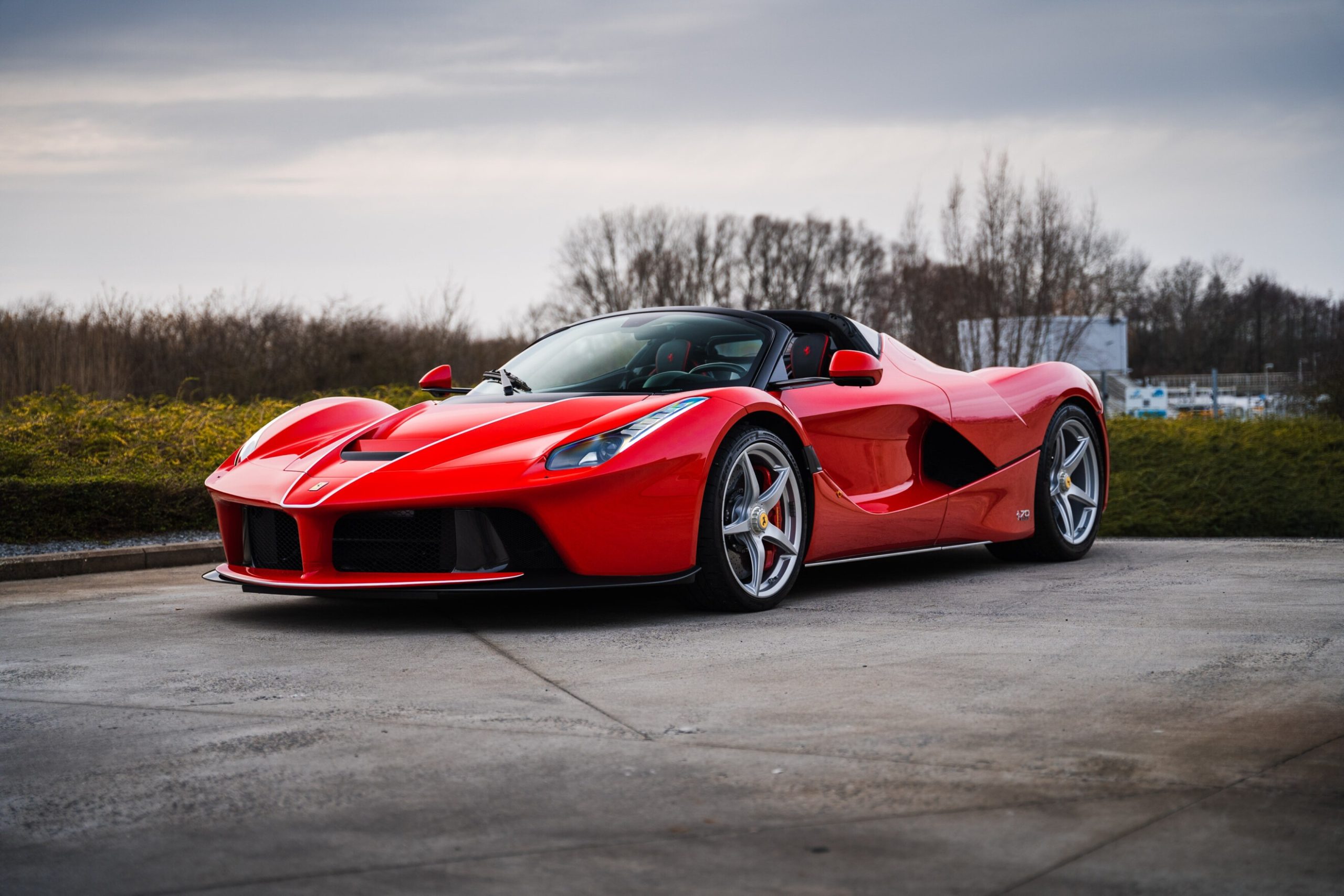
7. Ferrari LaFerrari
Ferrari clearly liked what the Enzo’s wide rear tires accomplished, because the concept carried forward directly into the LaFerrari roughly a decade later. The hybrid hypercar’s factory specification lands at 345/30YR20 for the rear, matching the Enzo’s section width while updating the wheel diameter and profile to suit a car built around an entirely different powertrain architecture.
Combining a V12 engine with an electric motor created a genuinely different set of engineering demands than the naturally aspirated Enzo faced, particularly around instant torque delivery from the electric side of the hybrid system.
That immediate torque hits the rear wheels without the gradual buildup typical of a purely combustion-powered car, making a wide, stable contact patch arguably even more important for managing power delivery cleanly off the line.
Ferrari’s decision to stick with the same 345 mm width rather than pushing wider suggests the company found something close to an ideal balance point with the original Enzo specification, one that continued working effectively even as the powertrain underneath changed dramatically.
Rather than chasing an ever-larger number purely for bragging rights, Ferrari’s engineers appear to have prioritized what actually worked for the LaFerrari’s specific handling characteristics and weight distribution.
The result gives the LaFerrari a massive rear contact patch that pairs naturally with its aggressive aerodynamic package, reinforcing Ferrari’s continued commitment to that particular tire-width philosophy first proven on the Enzo.
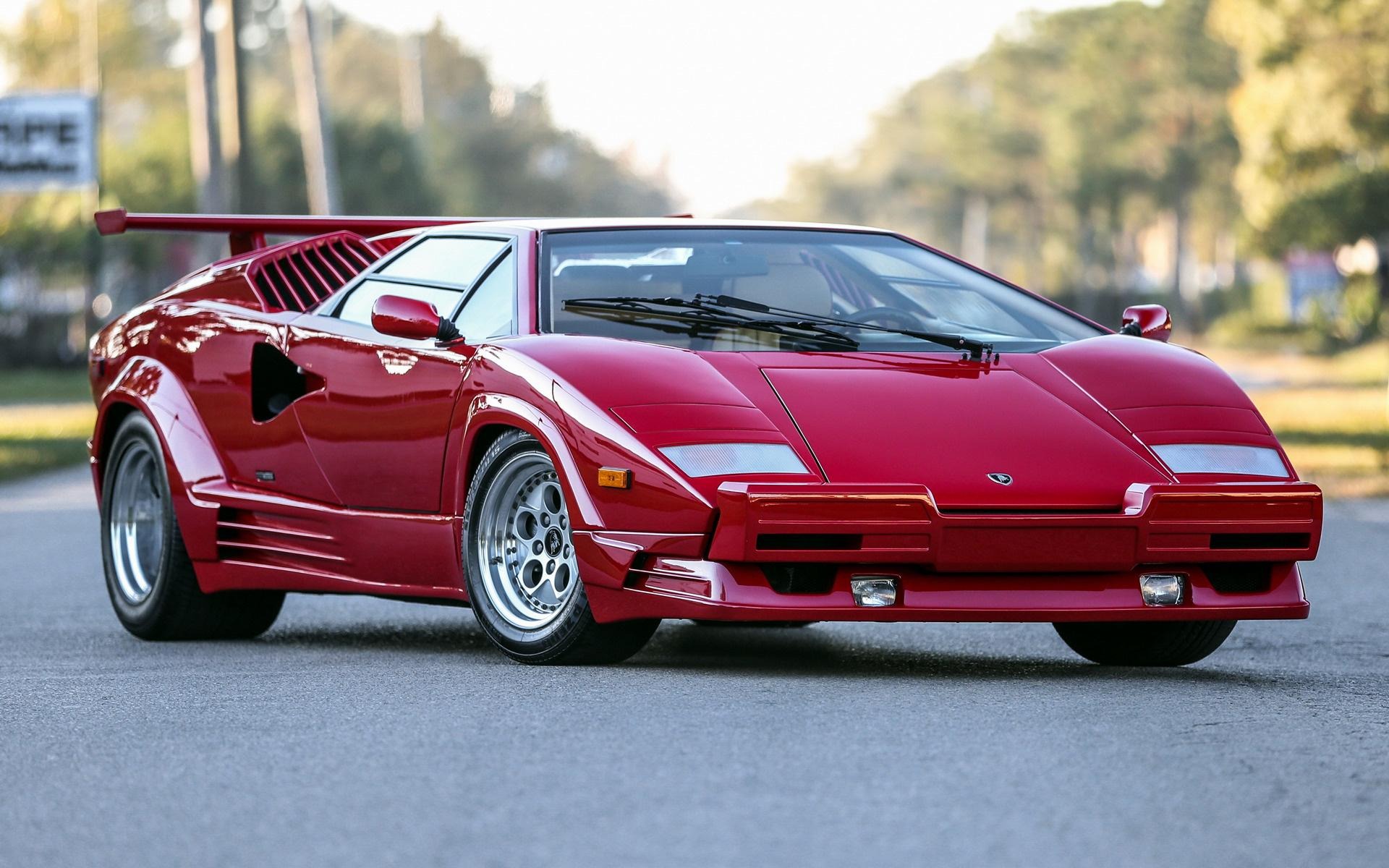
8. Lamborghini Countach 5000 QV / 25th Anniversary
Before hypercars started producing four-figure horsepower, the Lamborghini Countach had already changed how people viewed the design and performance of a road car. Its 345/35 R15 rear tires became one of the most recognisable features of the 1980s supercar era.
Even people who knew little about cars could easily identify the Countach by its dramatic rear stance and wide tires. The 5000 QV and 25th Anniversary versions continued using the same 345 mm rear tire width.
This helped preserve the car’s famous proportions while Lamborghini improved its engine performance and styling. Keeping such a wide rear setup throughout the model’s production also shows that the company got the original tire choice right for the technology available at the time.
The achievement becomes more impressive when you consider the period. Tire technology, wheel production, and chassis development during the 1980s were far behind what manufacturers could achieve decades later.
Despite those limitations, Lamborghini successfully fitted exceptionally wide tires to a production road car. That decision played a major role in the Countach’s lasting reputation. Its wide rear tires became part of the car’s identity and helped give it the planted appearance that enthusiasts still remember today.
Even though modern supercars produce far more power, the Countach remains an important example of how bold engineering choices can influence an entire generation of performance cars.
