
A water pump is one of those parts most drivers barely think about until coolant starts leaking or the engine begins running hot. Unlike oil, filters, or spark plugs, a water pump generally is not replaced at a fixed mileage interval on most modern vehicles.
Cars.com notes that many water pumps can last at least 100,000 miles, although seals, bearings, and impellers can eventually wear. The vehicles below stand out because their cooling systems and engines have generally avoided a routine water-pump replacement requirement.
That does not make any pump immortal. Coolant condition, heat, mileage, and maintenance still determine how long the component survives.
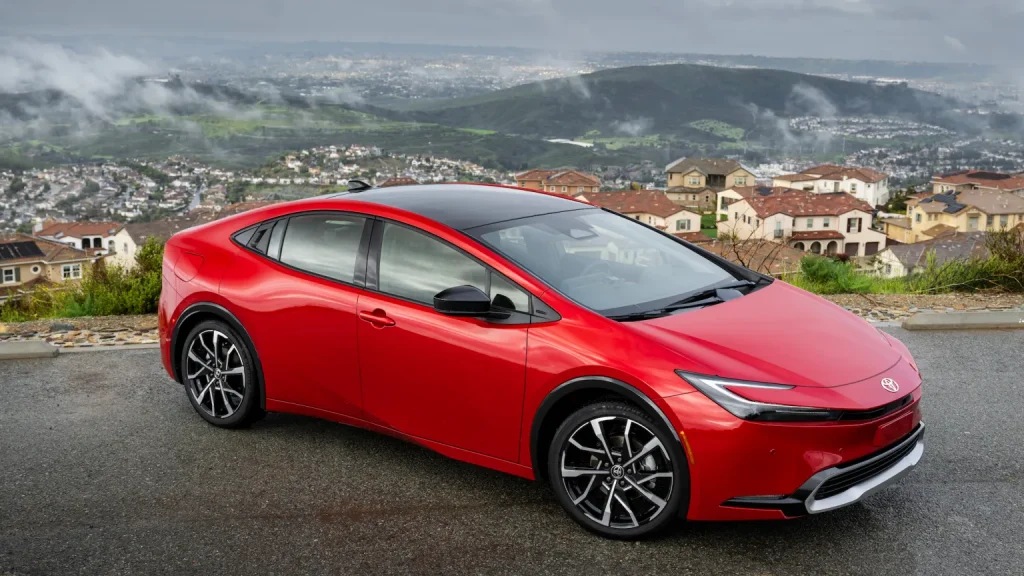
1. Toyota Prius
The Toyota Prius has earned a reputation for long service life, but its water-pump story requires an important distinction. Certain Prius generations use separate cooling components for different parts of the hybrid system, so it is misleading to claim that the car can never need a pump.
Toyota’s service documentation for the first-generation Prius, for example, identifies an engine water pump on the 1.5-liter 1NZ-FXE engine and provides a specific replacement procedure.
What makes the Prius interesting is that Toyota did not establish a simple routine water-pump replacement interval comparable to scheduled items such as engine oil or filters. That means owners generally replace the pump because inspection reveals a problem rather than because the odometer reaches a predetermined mileage.
The first-generation Prius also used an additional electric coolant pump associated with the coolant heat storage system. Toyota documentation describes this pump as a DC motor-driven unit used to move stored hot coolant during preheating and heat recovery.
For owners, the practical lesson is straightforward. A Prius should not be treated as though its water pump is guaranteed for life, but replacing it automatically at a particular mileage is not normally the point. Coolant leaks, unusual bearing noise, overheating, or other cooling-system symptoms are more meaningful reasons for inspection.
That distinction is important because the title’s “almost never” refers to scheduled replacement, not permanent immunity from failure.
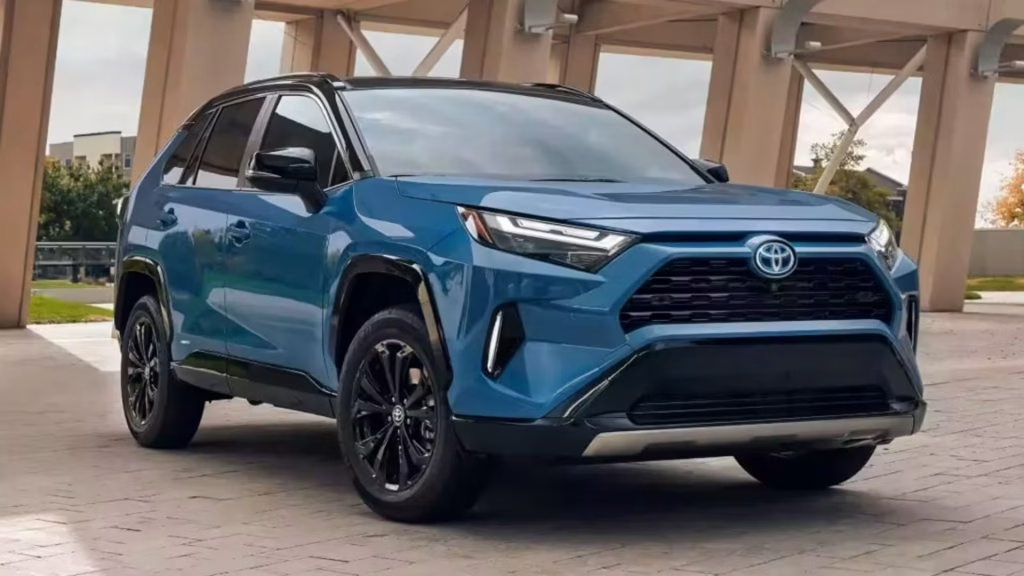
2. Toyota RAV4
The Toyota RAV4 provides an excellent example of why water-pump claims must be tied to the specific model year and engine. Toyota used a conventional belt-driven mechanical water pump on earlier gasoline RAV4s, meaning those vehicles can absolutely require pump replacement.
Factory service information for a 2009 RAV4 with the 2.5-liter 2AR-FE engine shows a dedicated water-pump assembly driven as part of the accessory system.
The story changed with later generations. The 2019 to 2022 RAV4 with the 2.5-liter A25A-FKS engine uses an electric engine water pump rather than the older belt-driven arrangement. That design eliminates the traditional belt-driven pump and its direct dependence on accessory-belt rotation.
That does not mean the electric pump is incapable of failing. It simply changes the design and removes the reason to replace a belt-driven pump as part of another belt-related service.
For drivers, this distinction is useful when evaluating a used RAV4. Ask which engine and model year the vehicle has before assuming anything about its water pump. A 2014 RAV4 and a 2020 RAV4 can have substantially different cooling-system hardware even though they share the same nameplate.
There is also no sensible reason to replace a functioning pump simply because the vehicle reaches an arbitrary mileage figure. Cooling-system leaks, temperature problems, diagnostic trouble codes, and abnormal operation are better reasons for inspection.
The RAV4 therefore belongs on this list because newer versions moved toward an electric pump design, not because Toyota made the component impossible to fail.
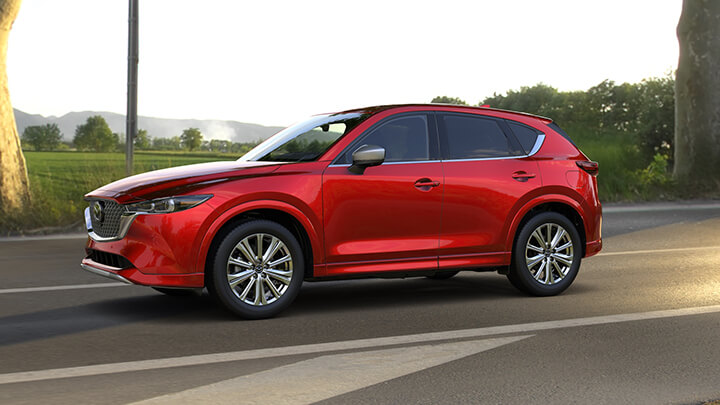
3. Mazda CX-5
The Mazda CX-5 is another vehicle that can give owners long stretches without water-pump work, but it would be inaccurate to say its pump can never fail.
Mazda’s Skyactiv-G engines use conventional engine cooling systems, and Mazda’s owner documentation does not list routine water pump replacement as a normal scheduled maintenance item.
That means the component is generally replaced when inspection identifies a problem rather than simply because the vehicle reaches a predetermined mileage.
That distinction is important for buyers looking at higher-mileage CX-5s. A vehicle approaching 100,000 miles does not automatically need a new pump just because of its odometer reading. Instead, technicians should look for coolant leakage, unusual pump noise, overheating, or other cooling-system symptoms.
The 2.5-liter Skyactiv-G is particularly common in the U.S. CX-5 lineup. Mazda’s technical specifications identify it as a 2,488 cc DOHC four-cylinder engine.
Its relatively straightforward gasoline-engine architecture means there is no special mileage-based pump replacement requirement that owners need to budget for in the way they would for scheduled maintenance items.
Still, calling the CX-5 “water-pump proof” would be wrong. Mechanical components eventually wear, and a pump can develop a leaking seal or bearing problem. Coolant maintenance also matters because contamination or corrosion can affect the cooling system.
For a used CX-5, service history is therefore more valuable than an arbitrary pump replacement date. If there is no evidence of overheating or leakage and the cooling system is functioning correctly, replacing a healthy pump simply for preventive reasons may not make financial sense.
4. Honda Accord
The Honda Accord has used several different engines across its long U.S. production history, so its water-pump durability depends heavily on the specific generation and powertrain. Still, many Accord owners can go for years without treating the water pump as a scheduled replacement item.
That is the key reason this sedan belongs on the list. A water pump is not normally something Honda owners replace at every major mileage milestone simply because the odometer reaches a certain figure. Instead, the component is inspected when cooling-system symptoms appear or when related engine work makes replacement practical.
The distinction becomes particularly important with older Accords. Some generations use timing belts, and the water pump can be located in a way that makes replacing it during timing-belt service sensible.
Other Accord engines use timing chains and have different cooling-system layouts. Consequently, claiming that every Accord has the same water-pump replacement strategy would be misleading.
For a used Accord, buyers should identify the exact engine before deciding whether preventive pump replacement makes sense. Maintenance records can reveal whether previous owners already replaced the component, while evidence of coolant leaks or overheating deserves immediate attention.
Honda’s reputation for durable four-cylinder engines also helps explain why a properly maintained Accord can accumulate substantial mileage without requiring constant cooling-system repairs. That does not make the pump immortal. Seals, bearings, and other components can still deteriorate with age.
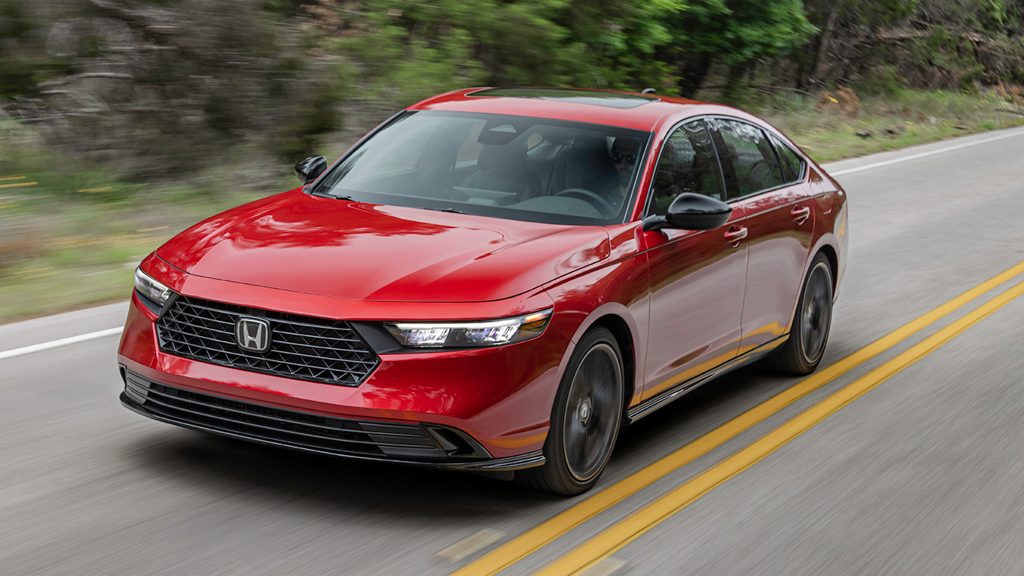
The smarter approach is to treat the pump as a condition-based component unless the particular engine’s maintenance schedule or related service calls for replacement.
For shoppers, that can make a high-mileage Accord more attractive. A 100,000-mile vehicle does not automatically deserve a water-pump replacement bill. Its actual condition and service history tell you far more.
5. Toyota Camry
The Toyota Camry is one of the strongest candidates for this list because its water pump is generally treated as a component that is replaced when it shows signs of failure, rather than an item that automatically appears on the routine maintenance schedule.
Toyota’s maintenance information focuses regular service on items such as fluids, filters, inspections, and other scheduled maintenance rather than prescribing a universal water pump replacement mileage.
That does not mean every Camry will keep its original pump forever. A mechanical pump still contains bearings, seals, and an impeller, and those parts can eventually wear. Coolant leakage around the pump, bearing noise, overheating, or visible coolant loss are reasons to have the system inspected.
The Camry’s reputation becomes particularly useful when buying an older example. A seller who says, “It has 100,000 miles, so the water pump must be replaced,” is not necessarily describing a factory requirement. The correct answer depends on the engine, model year, and condition.
Toyota has also offered different powertrains over the Camry’s history, including four-cylinder engines, V6s, and hybrid systems. Those differences mean buyers should verify the exact vehicle rather than applying one maintenance rule to every Camry.
For owners, a better approach is to maintain the cooling system, check the coolant level regularly, and address warning signs before they develop into an overheating problem. Replacing a water pump simply because the vehicle has reached a certain mileage can lead to unnecessary expenses when the pump is still working properly.
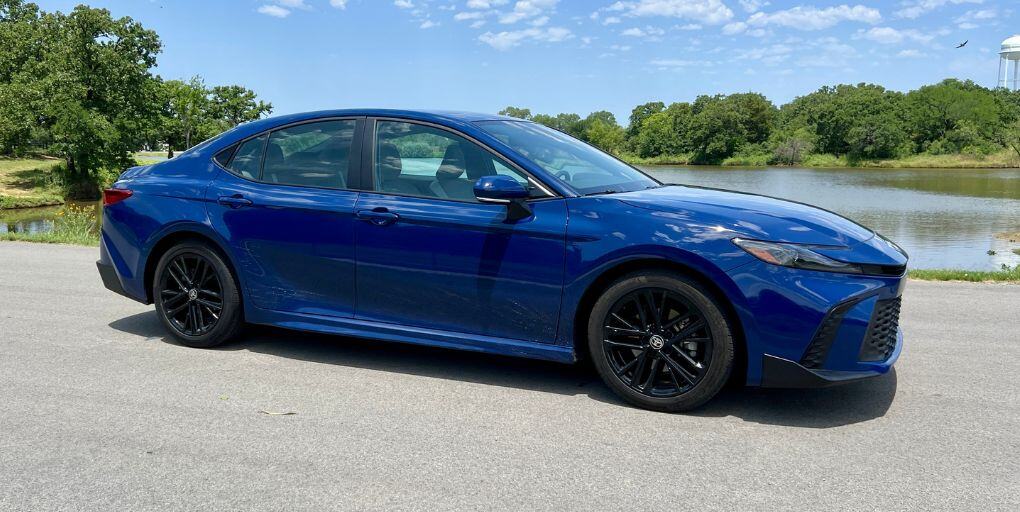
A well-maintained Camry can therefore go considerable distances without a water pump replacement. The important word is “can.” Durability is not a guarantee, and an inspection should always take priority over assumptions based on mileage alone.
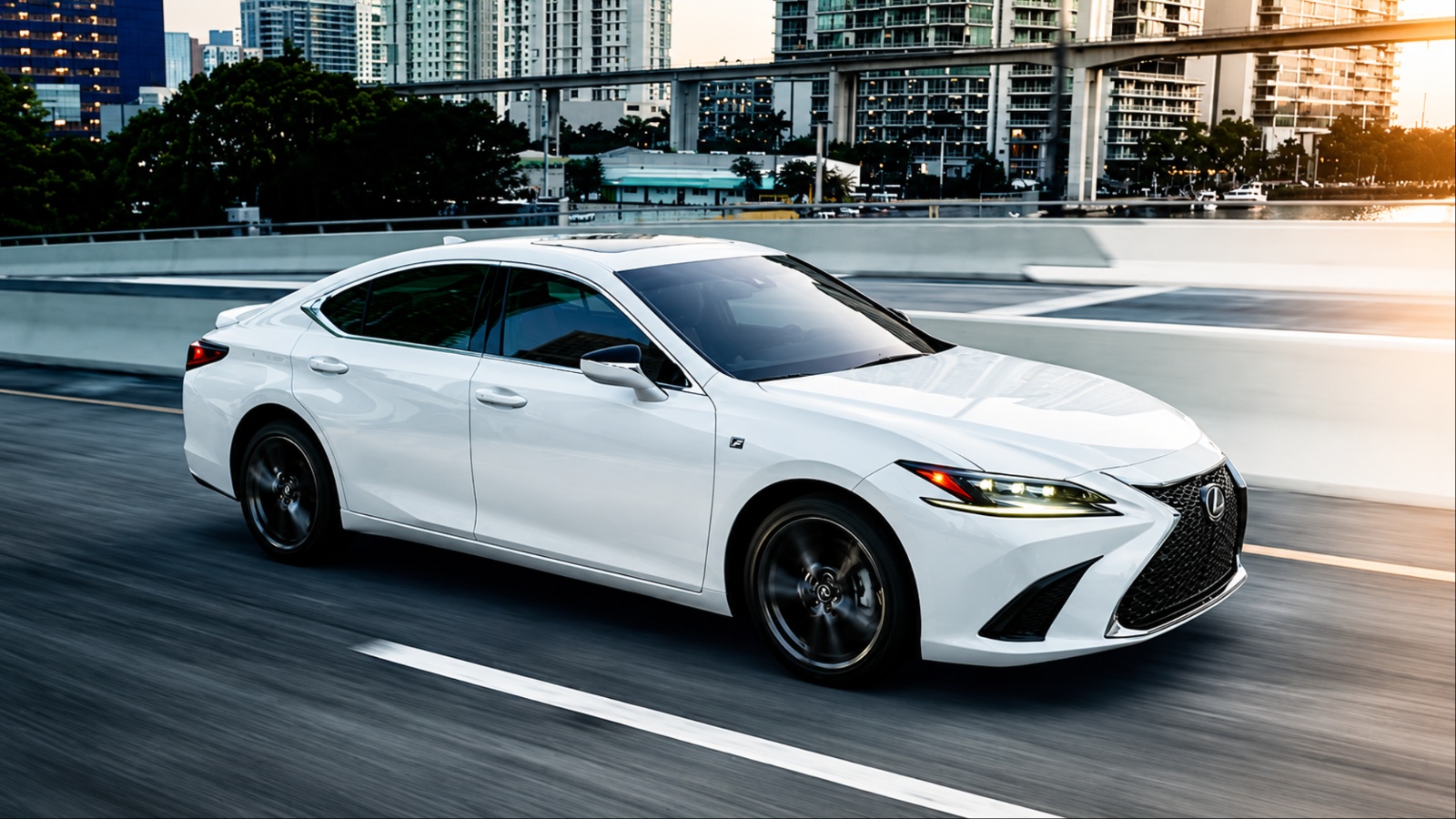
6. Lexus ES
The Lexus ES takes a different path to long-term cooling-system durability because it shares much of its engineering with Toyota’s established powertrains. Lexus does not generally list water pump replacement as a routine mileage-based service item in its scheduled maintenance information.
That means owners are normally dealing with the component when inspection identifies wear or a cooling-system problem, rather than replacing it automatically at a predetermined interval.
That distinction matters with a luxury sedan because repair bills can become expensive when an owner replaces parts unnecessarily. A water pump should not be considered a guaranteed lifetime component, but there is also little reason to replace a properly functioning unit simply because the vehicle has reached a particular mileage.
The ES has been sold in the United States with several engines over its history. Depending on the generation, buyers can encounter four-cylinder, V6, and hybrid configurations. Consequently, the precise water-pump design and service considerations can vary substantially.
For a used ES, coolant level and service records are worth examining closely. Evidence of dried coolant around the engine, unexplained coolant loss, overheating, or unusual mechanical noise deserves professional inspection. A clean maintenance history is a much better sign than simply seeing a low odometer reading.
The ES also benefits from Toyota and Lexus’s emphasis on scheduled maintenance and inspection. Owners who follow those requirements are more likely to identify a developing cooling-system problem before it becomes an expensive overheating event.

So why does the ES qualify for this list? It is not because its water pump is impossible to break. Rather, the vehicle does not normally demand a routine pump replacement as part of ordinary scheduled maintenance.
That can be a meaningful advantage for long-term owners who want to avoid adding unnecessary repair work to an otherwise well-maintained vehicle.
7. Honda Civic
The Honda Civic is another model where a functioning water pump is generally not replaced simply because the odometer reaches a particular mileage.
Honda’s scheduled maintenance system focuses on inspections, fluids, filters, and other service items, while water pump replacement is normally driven by condition or related engine work rather than a universal mileage deadline.
That is especially useful for owners trying to keep a Civic beyond 100,000 miles. Reaching that figure does not automatically mean the cooling system needs a new pump. Instead, technicians should look for evidence such as coolant leakage, abnormal bearing noise, overheating, or problems maintaining normal engine temperature.
The Civic’s long production history does mean there is no single water-pump design shared by every U.S. model. Earlier generations used different engines and timing-belt arrangements, while newer Civics use timing-chain-equipped engines.
That distinction can change how a pump is accessed and whether replacement makes sense alongside another major repair.
For example, if a particular engine requires substantial work that already exposes the water pump, replacing an aging pump at the same time can be sensible. That is different from replacing a healthy pump simply because the vehicle has reached an arbitrary mileage.
Used-car buyers should therefore pay more attention to maintenance records than a claimed “water-pump replacement interval.” A Civic with documented coolant service and no signs of overheating can be a much safer bet than one with an impressive odometer but neglected maintenance.
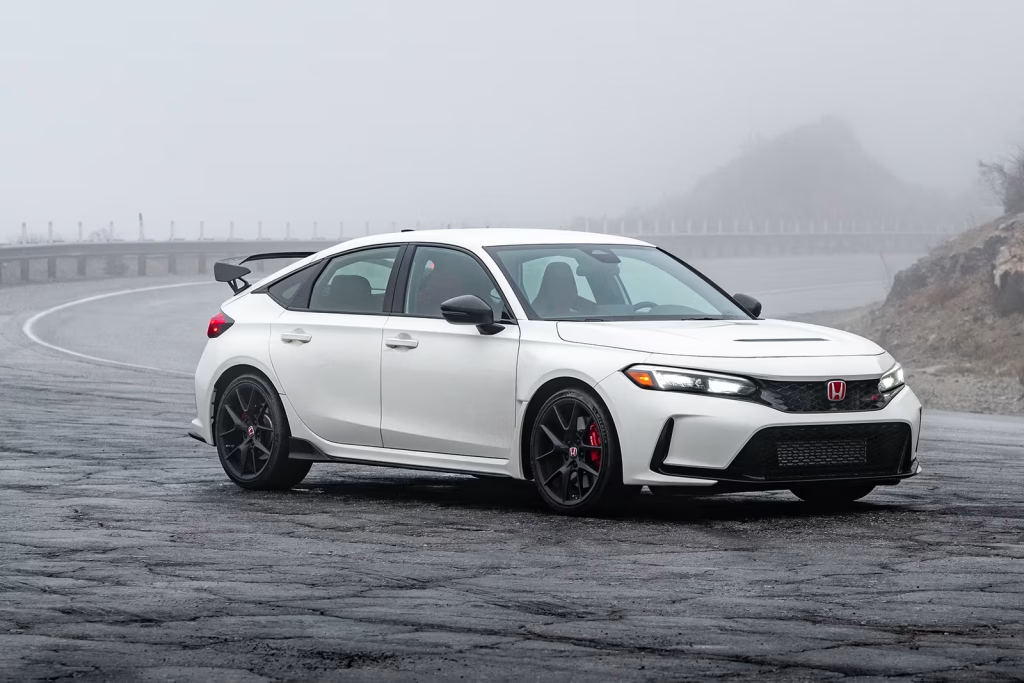
The important takeaway is that longevity depends on the entire cooling system. Keeping the correct coolant in the engine, responding quickly to leaks, and avoiding prolonged overheating can all help protect the pump and surrounding components.
The Civic cannot promise a pump that lasts forever. What it offers is a design and maintenance philosophy where routine replacement is generally unnecessary unless inspection or related service provides a reason.
8. Subaru Outback
The Subaru Outback belongs on this list, but its water pump maintenance depends heavily on the engine and model year. Different Outback generations have used both timing belts and timing chains, so the recommended service approach can vary significantly between models.
Modern Outbacks equipped with Subaru’s horizontally opposed engines generally do not have a routine water-pump replacement interval comparable to scheduled oil or filter service. Instead, replacement is normally associated with an actual cooling-system problem or related mechanical work.
That can make the Outback appealing to owners who intend to keep their vehicles for many years. However, the absence of a routine replacement interval should never be confused with immunity from failure. Water-pump seals and bearings remain mechanical components that can eventually wear.
Common warning signs include unexplained coolant loss, rising engine temperatures, visible leaks, unusual sounds, and noticeable changes in cooling performance. Leaving these symptoms unchecked can allow a minor cooling system issue to develop into serious and expensive engine damage.
Older Outbacks require additional caution. Certain Subaru engines use timing belts, and the water pump is serviced in conjunction with timing-belt work because access is already available. In those cases, replacing the pump during the belt service can be sensible even if the pump has not yet failed.
That is why buyers should identify the exact engine before planning maintenance. A 2.5-liter four-cylinder from one generation may have substantially different service requirements from a 3.6-liter six-cylinder or a newer turbocharged model.
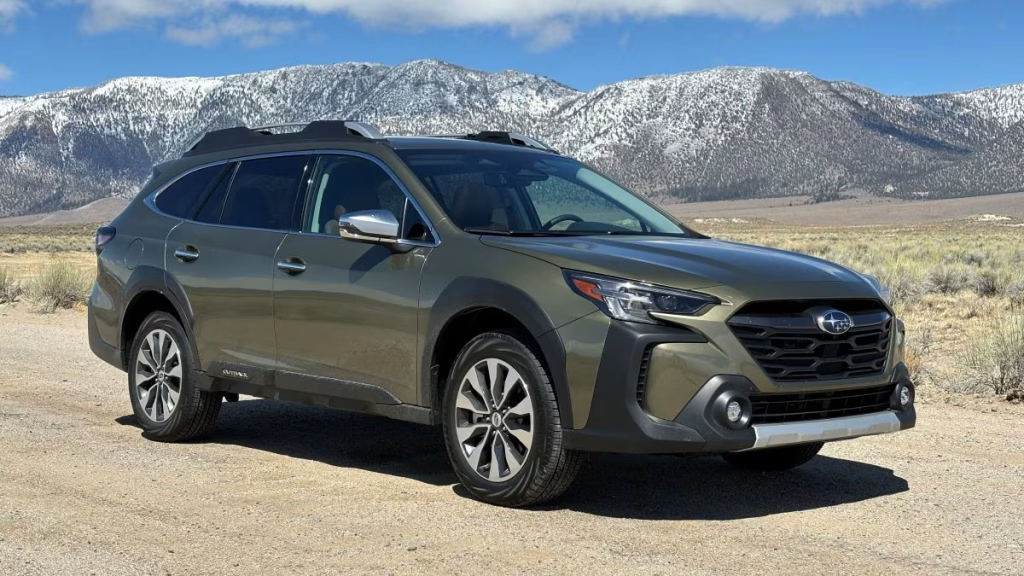
For a well-maintained Outback, the pump is generally a condition-based component rather than a routine replacement item. Regular coolant checks and prompt attention to temperature problems remain essential.
The vehicle’s reputation for durability does not eliminate mechanical wear, but it can reduce the likelihood of treating the water pump as a predictable scheduled expense.
9. Toyota Highlander
The Toyota Highlander is another vehicle where a water pump is generally not treated as a routine replacement item at a fixed mileage. Toyota’s scheduled maintenance focuses on inspections, fluids, filters, and other service requirements, while the water pump is typically addressed when its condition indicates that work is necessary.
That can be reassuring for owners keeping a Highlander well beyond the mileage of a typical new-car warranty. Reaching 100,000 miles does not automatically mean the pump has reached the end of its useful life. The actual condition of the cooling system matters much more.
Highlander powertrains have changed considerably through the years. Earlier U.S. models used engines such as Toyota’s 3.5-liter V6, while newer generations have offered both gasoline and hybrid powertrains. Because of those differences, the exact cooling-system configuration should always be verified by model year and engine.
The most useful warning signs are practical ones. A technician should investigate unexplained coolant loss, visible leakage, unusual pump or bearing noise, repeated overheating, or an engine that is not maintaining its expected operating temperature.
Preventive maintenance still matters. Old or contaminated coolant can contribute to cooling-system problems, while allowing a small leak to continue can eventually reduce coolant enough to cause serious overheating.
There is also a financial reason not to replace a healthy pump unnecessarily. A functioning component that is showing no signs of trouble does not automatically become defective when the odometer reaches a round number.
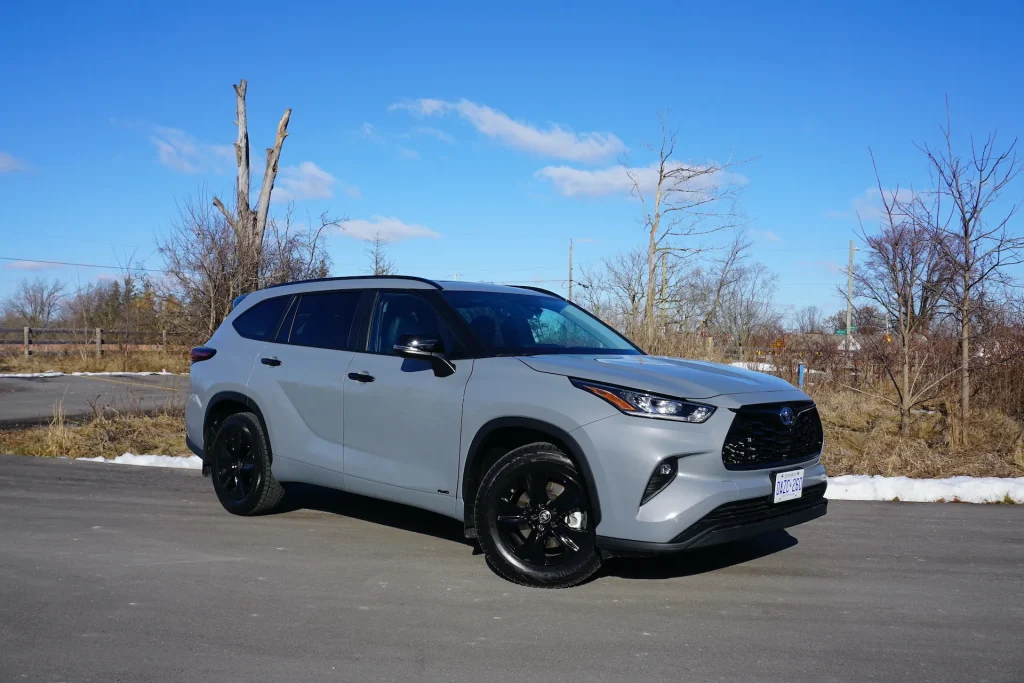
For buyers considering a used Highlander, maintenance records therefore deserve close attention. A vehicle with consistent servicing and no cooling-system symptoms can be a much better prospect than one with a documented pump replacement but neglected fluids and inspections.
The Highlander is not a water-pump-free vehicle. It simply belongs among vehicles where routine pump replacement is generally not an automatic milestone, allowing owners to replace the part when evidence actually supports doing so.
10. Ford F-150
The Ford F-150 rounds out the list, but its long production history calls for some caution. Water-pump designs and maintenance needs can differ significantly depending on the engine and model year. Not every F-150 uses the same water pump, and their durability can vary as well.
Modern F-150 engines generally do not require owners to replace the water pump at a universal mileage interval simply as routine maintenance. Instead, the component is normally replaced when it develops a problem or when related repair work makes replacement appropriate.
That matters because the F-150 has been offered with numerous gasoline engines, including naturally aspirated V8s, turbocharged EcoBoost V6s, and other configurations. Each has its own mechanical layout, meaning a maintenance recommendation for one engine should not automatically be applied to another.
A failing pump can announce itself through coolant leakage, abnormal noise, overheating, or other cooling-system symptoms. Ford’s maintenance information also emphasizes scheduled inspections and servicing, which gives technicians opportunities to identify developing problems before they become severe.
Some F-150 engines use cooling-system arrangements that make water-pump replacement more involved than a simple bolt-on repair. Consequently, buyers of high-mileage trucks should ask whether any cooling-system work has already been performed and whether there are signs of leakage around the engine.
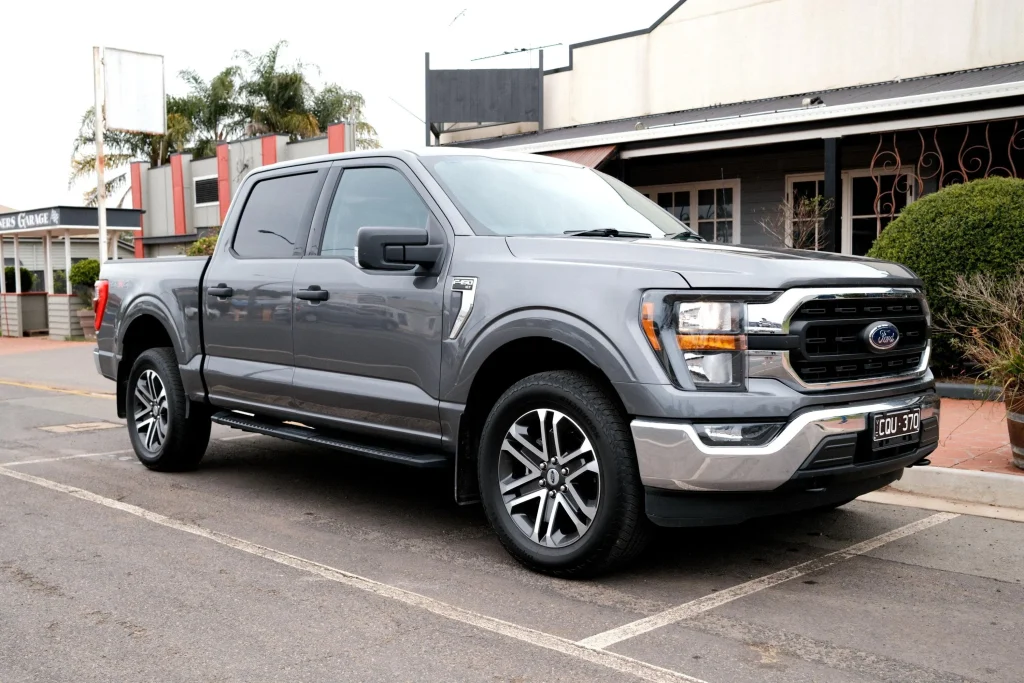
The truck’s ability to accumulate substantial mileage does not eliminate water pump wear. Heavy towing, high engine loads, extreme temperatures, and neglected coolant maintenance can place additional demands on the cooling system.
For that reason, the best strategy is not to replace the pump merely because the truck reaches 100,000 miles. Inspect it, monitor the cooling system, and follow the service requirements for the specific engine.
The F-150 earns its spot because a healthy pump can remain in service for a long time without a predetermined replacement date. Its longevity still depends on maintenance, operating conditions, and the exact powertrain under the hood.
