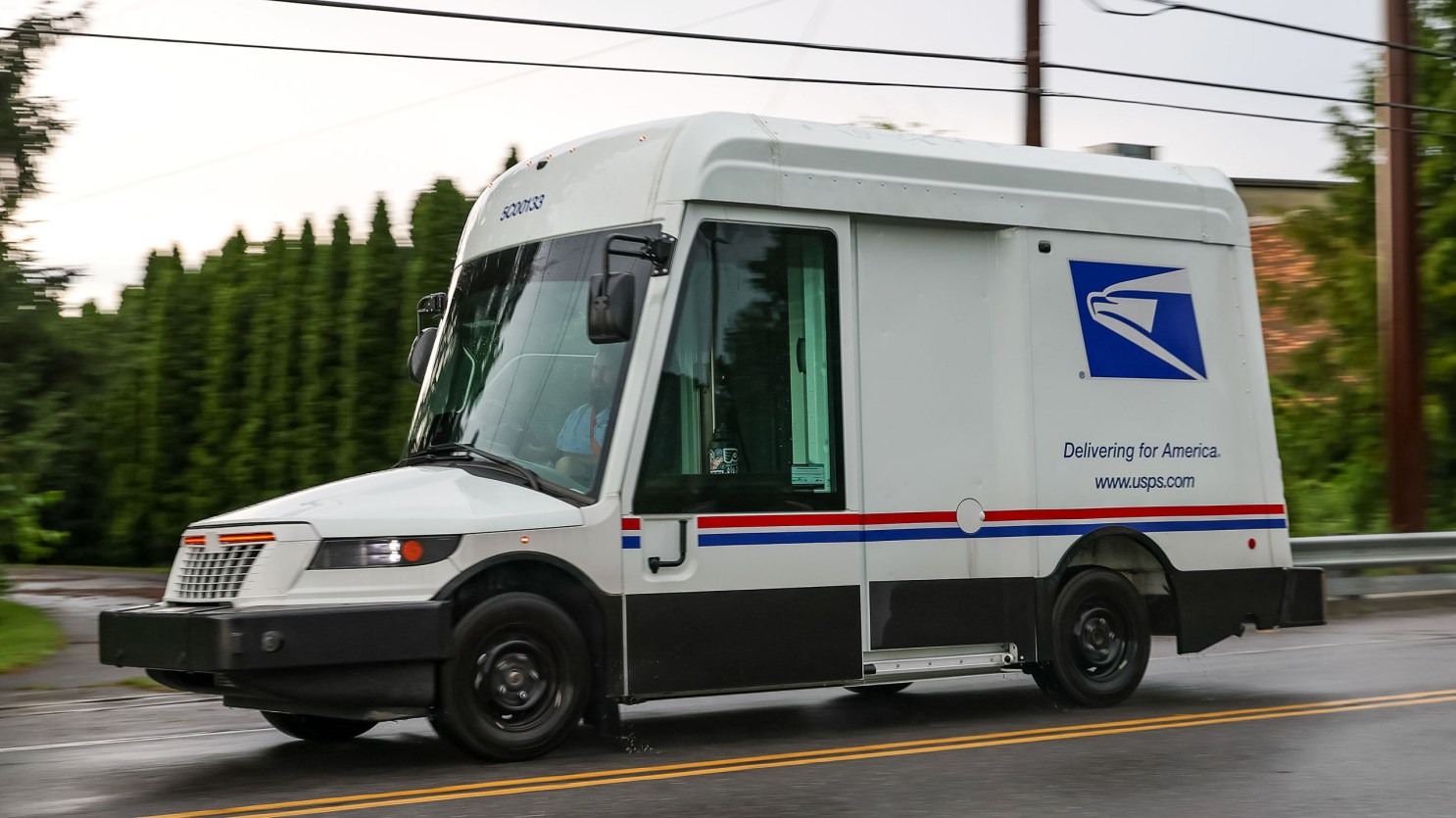
Mail delivery in America is finally getting an upgrade that’s been decades overdue. The trucks that carry your packages and letters are getting a full electric makeover, and the numbers behind this new vehicle are worth paying attention to.
The Oshkosh Next Generation Delivery Vehicle pairs a 94 kWh battery pack with a 201 horsepower motor, sends power to the front wheels, weighs in at 6,400 pounds, and covers roughly 120 miles on a single charge.
That’s a serious leap from the boxy, decades-old Long-Life Vehicles most people picture when they think of a mail truck. This piece breaks down what’s under the hood, how it drives, and why this rollout matters for one of the largest vehicle fleets in the country.
What Powers America’s New Mail Truck
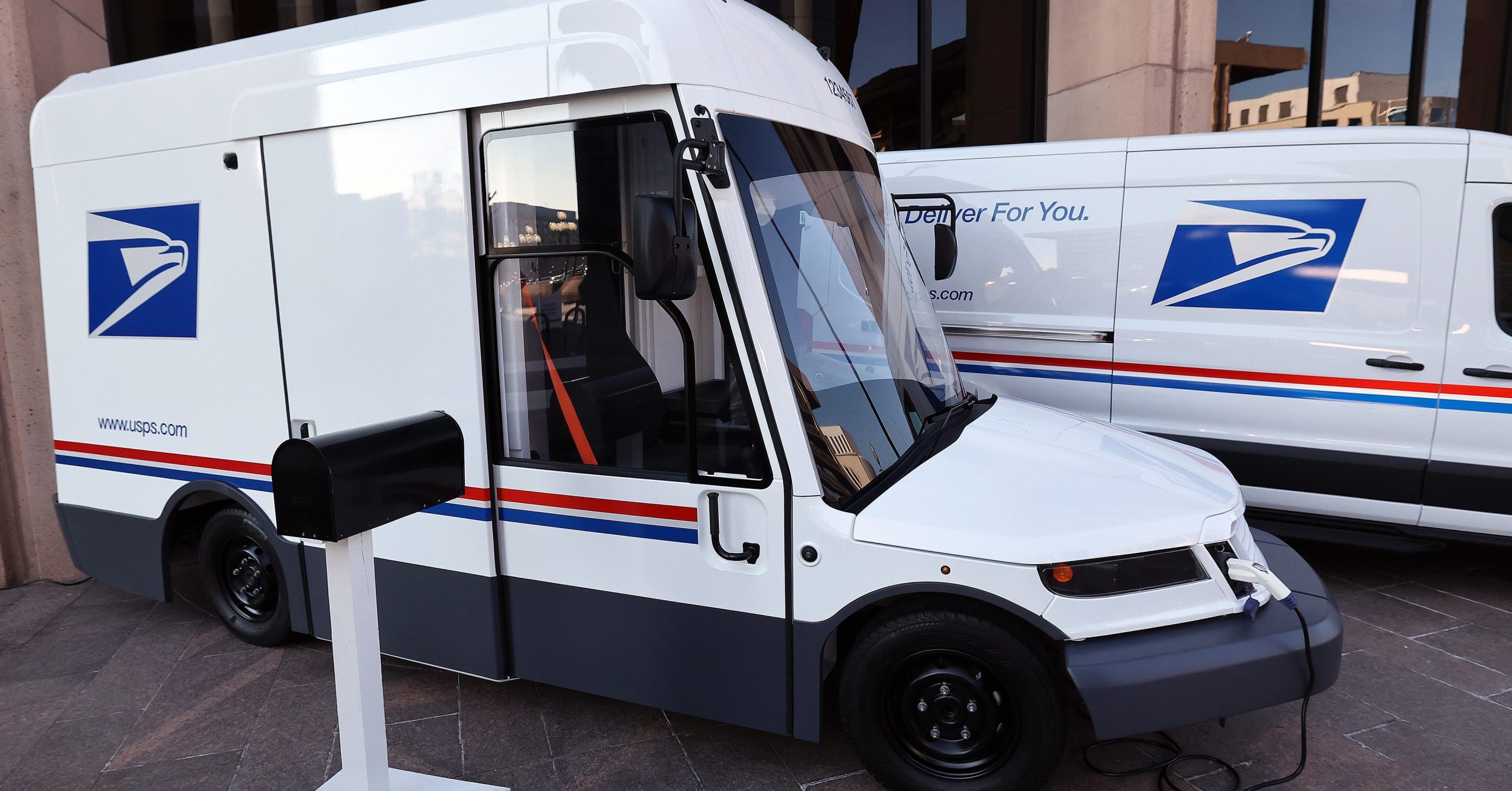
Strip away the awkward styling for a moment and look at what’s actually powering this truck. A 94 kWh lithium-ion battery feeds a Bosch permanent-magnet motor rated at 150 kW, which translates to 201 horsepower.
That output flows exclusively to the front wheels, a straightforward layout chosen for reliability over anything flashy. Curb weight lands at 6,400 pounds, heavier than a typical sedan but reasonable given the battery pack and the boxy cargo body bolted on top.
EPA testing puts range at approximately 120 miles per charge, and that figure holds up fine against how these vehicles actually get used. Most delivery routes only cover somewhere between 18 and 24 miles a day, and close to 96 percent of the vehicles being replaced travel under 40 miles daily.
A 120-mile buffer leaves plenty of room even accounting for battery drain during extreme heat or cold. Recharging happens overnight at postal facilities using Level 2, 240V chargers, with a full charge taking around six hours.
Since these trucks return to the same depot every evening, there’s no need for the kind of rapid charging infrastructure a road-tripping EV owner might expect.
The whole system was clearly built around predictable, repetitive routes rather than long-distance driving, and that focus shows in every spec on the sheet.
More Room for the Packages Taking Over Mail Routes
Mail delivery looks nothing like it did when the old Grumman trucks first rolled out back in the late 1980s. First Class letters have dropped off sharply, while package volume has climbed thanks to online shopping and last-mile delivery contracts with companies like Amazon. The new truck’s design reflects that change directly.
Step inside and the cargo area towers over what carriers are used to. The load bay measures 78.5 inches tall, tall enough that a 95th percentile adult can stand upright even with the roller door rolled open.
That extra headroom isn’t just for comfort. It lets carriers grab packages without crouching or straining, which adds up across hundreds of stops a day. Safety upgrades round out the package in ways that feel almost overdue.
Airbags, anti-lock brakes, and backup cameras were all missing from the old fleet, features that had become standard on nearly every other vehicle on the road decades ago.
The new trucks add 360-degree cameras, parking sensors, emergency braking, and a heads-up display, alongside more modern comforts like real air conditioning, cupholders, and a touchscreen for infotainment.
None of these additions sound dramatic on their own. Stacked together, they represent a fleet finally catching up to basic expectations drivers have had for years.
What It Feels Like Behind the Wheel
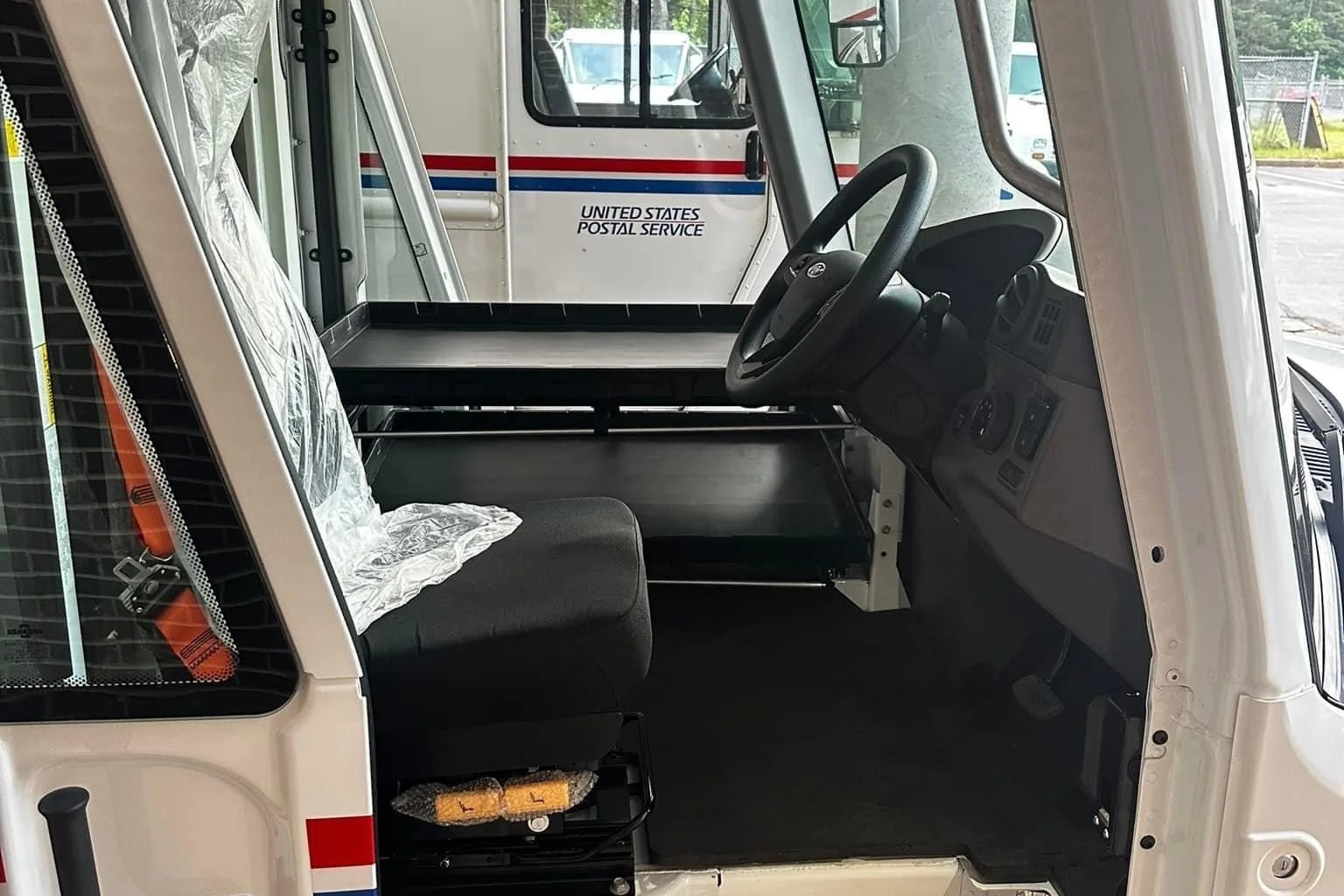
A specification sheet only tells part of the story, so driving experience matters. Car and Driver tested a prototype and found the electric NGDV smooth and easy to operate. Its tall cabin and boxy design provide excellent visibility, helping drivers see both sides of the street during frequent stops.
The electric motor delivers instant torque, giving the truck quick and predictable response. That is especially useful for postal workers who stop and start repeatedly throughout the day. Its maneuverability also makes it easier to handle narrow suburban streets and tight parking spaces.
Air conditioning adds welcome comfort for carriers working long summer shifts. With 201 horsepower, the electric NGDV should also feel considerably quicker than the aging Long-Life Vehicles, whose three-speed automatic transmissions can struggle with modern traffic.
The New Mail Trucks Are Already Hitting the Streets
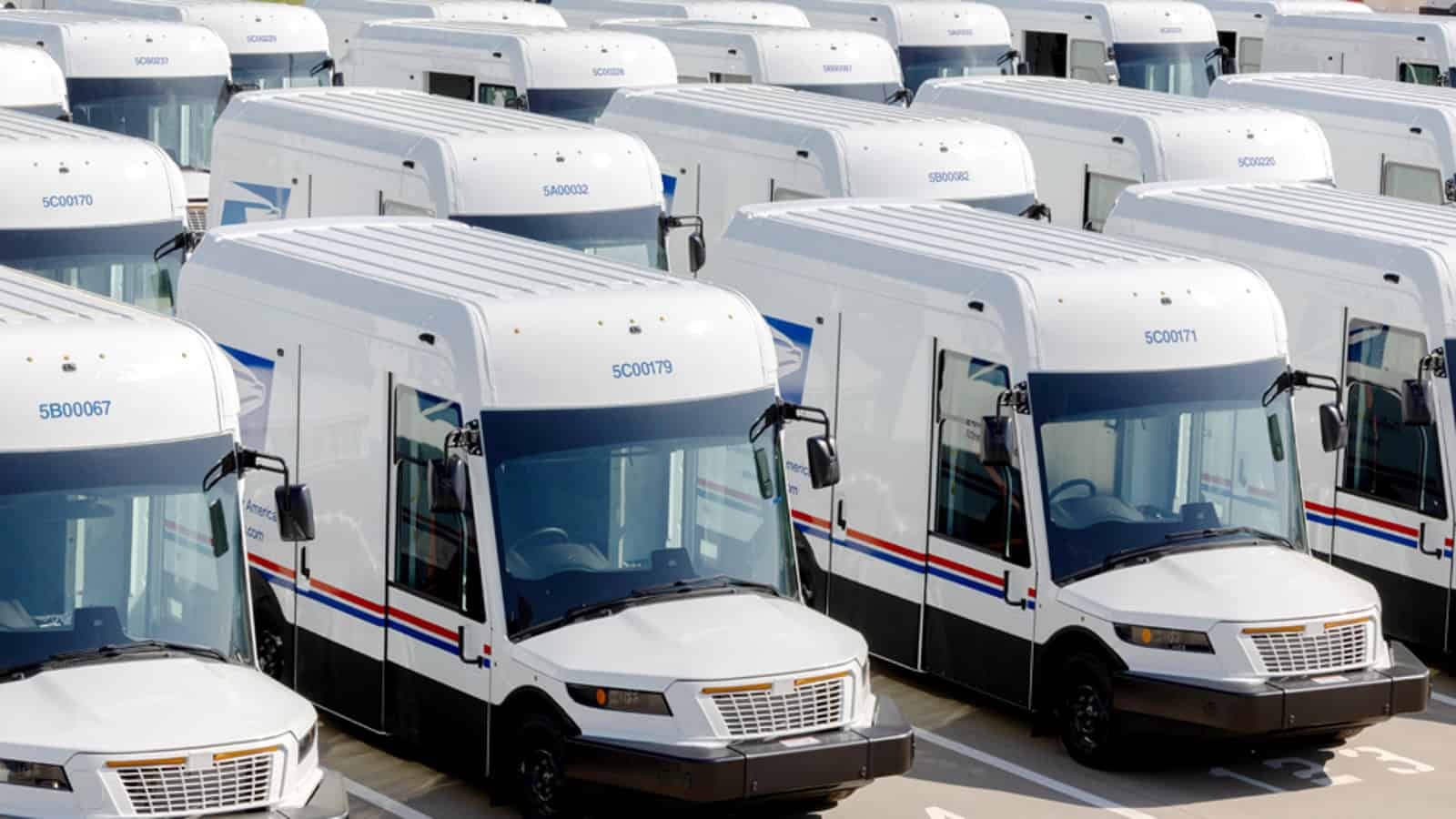
This isn’t a small pilot program tucked away in one city. Oshkosh holds a contract allowing for production of anywhere between 50,000 and 165,000 vehicles over ten years, with an initial order of 50,000 units already placed.
As of late 2025, roughly 70 percent of that first batch carries the battery electric powertrain, with the remaining share running on a turbocharged gas engine supplied by Ford.
Deployment has picked up speed heading into the holiday season, with USPS reporting close to 24,000 new vehicles on the road and somewhere between 9,000 and 10,000 of those being fully electric.
The agency is targeting close to a 30/70 split between gas- and battery-powered vans across the broader fleet, a ratio that reflects both cost considerations and the reality that extremely rural routes still favor gas-powered or off-the-shelf vehicles better suited to long distances.
Assembly takes place at Oshkosh facilities in South Carolina, part of a broader manufacturing push tied to the contract. Roughly 90 percent of parts are shared between the gas and electric versions, which keeps production simpler and should make maintenance easier across a mixed fleet.
Why This Change Goes Far Beyond the Postal Service
A fleet this large switching to electric power sends a signal well beyond the Postal Service itself. Government fleets rarely move fast, and a commitment covering up to 165,000 vehicles represents one of the biggest single EV purchases in the country’s history. Suppliers, charging infrastructure companies, and other large fleet operators are all watching how this rollout performs.
The specs themselves tell a fairly simple story. A 94 kWh pack, 201 horsepower, 120 miles of range, and a 6,400 pound curb weight aren’t record-breaking numbers by EV standards. They’re practical numbers, chosen to match a job that’s repetitive, predictable, and heavy on stop-and-go driving rather than distance.
For millions of households, this truck will become a familiar sight over the coming years, quietly swapping out decades-old machines for something safer, cleaner, and considerably more pleasant to drive. It’s not a flashy transition, but it’s a real one, and it’s already showing up on driveways across the country this holiday season.