
For someone who drives to work before sunrise or heads home after midnight, headlights are not a cosmetic feature. They determine how much of an unlit road, pedestrian, animal, or unexpected obstacle can be seen before it becomes a hazard.
The Insurance Institute for Highway Safety tests headlights for illumination and glare, and its research found that vehicles with good-rated headlights have 19% fewer nighttime single-vehicle crashes and 23% fewer nighttime pedestrian crashes than vehicles with poor-rated headlights.
The following vehicles deserve caution for night-shift workers because their IIHS-tested headlight configurations received poor or marginal ratings.
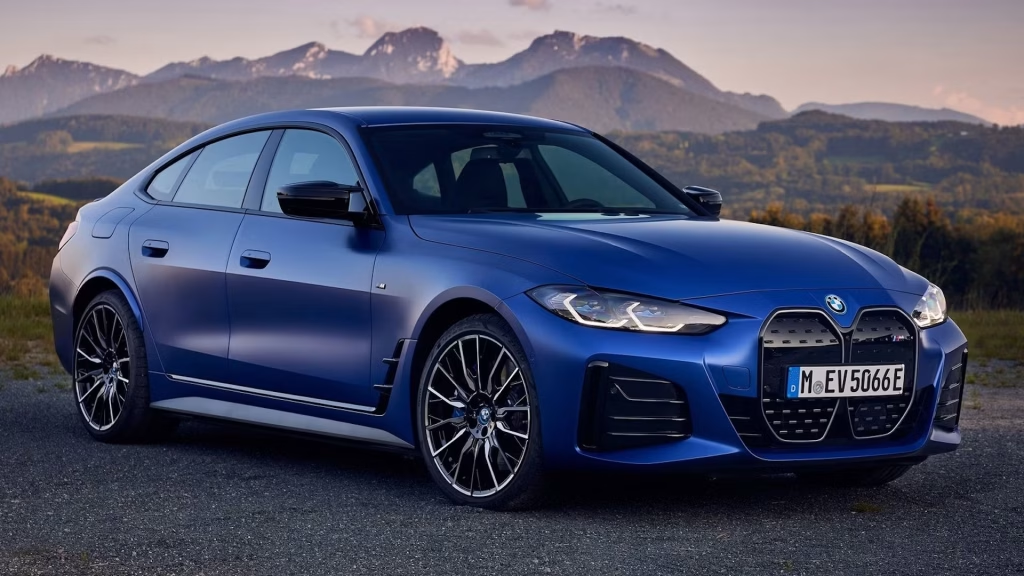
1. 2025 BMW i4
The BMW i4 is quick, refined, and capable of being an excellent daily driver, but night-shift workers need to look beyond its premium cabin and electric performance. IIHS gives the 2025 i4 a marginal or poor headlight rating, depending on the configuration.
The tested Shadowline-equipped eDrive35, eDrive40, xDrive40, and M50 versions received a marginal rating, while another headlight configuration available on the eDrive35, eDrive40, and xDrive40 received a poor rating.
The problem is not simply that the i4 produces weak light. IIHS found that the poor-rated system created excessive glare. Its low beams provided good visibility on straight sections and curves during portions of the test, yet glare exceeded the permitted threshold by substantial amounts on several curves.
The poor-rated system exceeded the glare threshold by 119.7% on one 250-meter-radius curve and 173.8% on a 150-meter-radius curve.
That creates an unusual situation for someone who regularly drives at night. A headlight can illuminate the road reasonably well for its driver while simultaneously producing excessive glare for other motorists. The marginal-rated system performed better in this respect, but IIHS still found limitations with high-beam illumination.
The i4 is not an unsafe vehicle simply because of its headlight score. It earned a Good rating in the updated moderate-overlap front test, and its standard pedestrian front crash-prevention system earned a Good rating.
But for someone whose commute happens almost entirely in darkness, the headlight configuration deserves serious attention before buying.
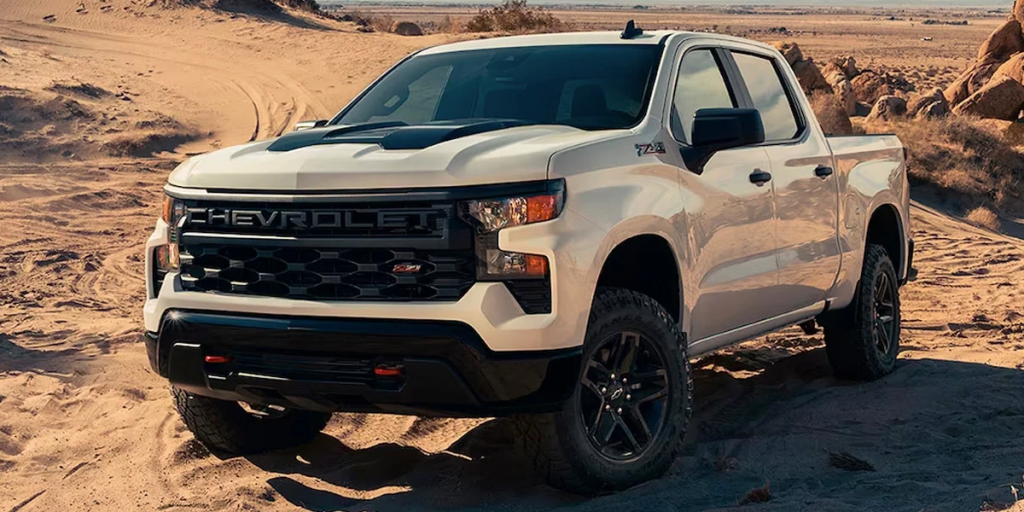
2. 2024 Chevrolet Silverado 1500
The Chevrolet Silverado 1500 looks like an obvious choice for workers who want a large, comfortable vehicle for long commutes. Its size, seating position, and available powertrains can make it appealing for highway driving, but the IIHS headlight results tell a different story for motorists who spend their working lives on the road after dark.
The 2024 Silverado 1500 received a poor headlight rating, and IIHS applied that rating to both tested headlight variations. The LED projector setup available on LT, RST, and LT Trail Boss trims was rated poor, while the halogen reflector system used on WT, Custom, and Custom Trail Boss trims also received a poor rating.
The LED system’s low beams provided fair visibility on the straightaway and good visibility on several right-hand curves, but illumination became inadequate on the gradual left curve. More importantly, IIHS found excessive glare.
The halogen system had an even more difficult time around curves, with inadequate low-beam visibility in all four curved-road evaluations.
High beams helped compensate for some of those shortcomings, particularly when the truck was equipped with high-beam assist.
That feature can automatically switch between low and high beams when conditions allow, giving the driver more useful illumination without requiring constant manual operation. It does not, however, change the underlying IIHS headlight rating.
For a night-shift worker, the distinction matters because the morning or evening commute may happen when traffic is lighter and roads are darker. A driver can spend hundreds of hours each year relying on the headlights to identify road edges, curves, and hazards.
A poor rating does not make the Silverado undrivable, but it makes the truck less attractive when excellent nighttime visibility is a primary buying requirement.
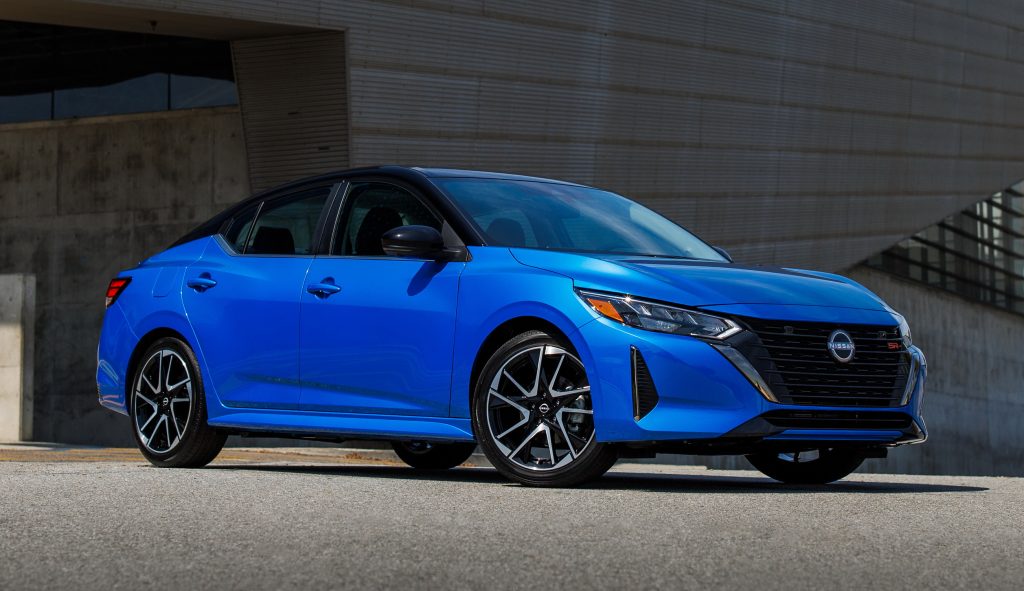
3. 2025 Nissan Sentra
The Nissan Sentra is easy to recommend for commuters because it is compact, economical, and inexpensive compared with many larger vehicles.
For a person whose commute begins at 11 p.m. or ends before sunrise, however, its headlight performance deserves much more attention. IIHS gives the 2025 Sentra a poor headlight rating, and importantly, that rating applies to both of the tested headlight configurations.
The S and SV trims use halogen reflector headlights, while the SR receives LED reflector headlights. Neither configuration earned a better-than-poor rating in the IIHS evaluation. The problem was not excessive glare. Instead, the issue was insufficient illumination.
With the LED system, IIHS found inadequate visibility on both sides of the road on the straightaway and inadequate visibility through all four curve tests. High-beam assist helped compensate for some of those limitations, but it could not change the overall rating.
That is a meaningful drawback for someone driving predominantly in darkness. A night-shift worker may encounter unlit intersections, pedestrians wearing dark clothing, animals crossing rural roads, and debris that is difficult to see until it is relatively close. Poor illumination gives the driver less time to identify those hazards.
The IIHS findings become more significant when considered alongside the institute’s broader research.
Vehicles with good-rated headlights have been associated with 19% fewer nighttime single-vehicle crashes and 23% fewer nighttime pedestrian crashes than vehicles with poor-rated headlights, after researchers controlled for factors such as miles traveled and road conditions.
The Sentra is not inherently a bad vehicle, and its headlight rating does not determine its complete safety performance. But for someone who spends a large percentage of driving time after dark, another vehicle with stronger tested illumination would be a smarter place to start.
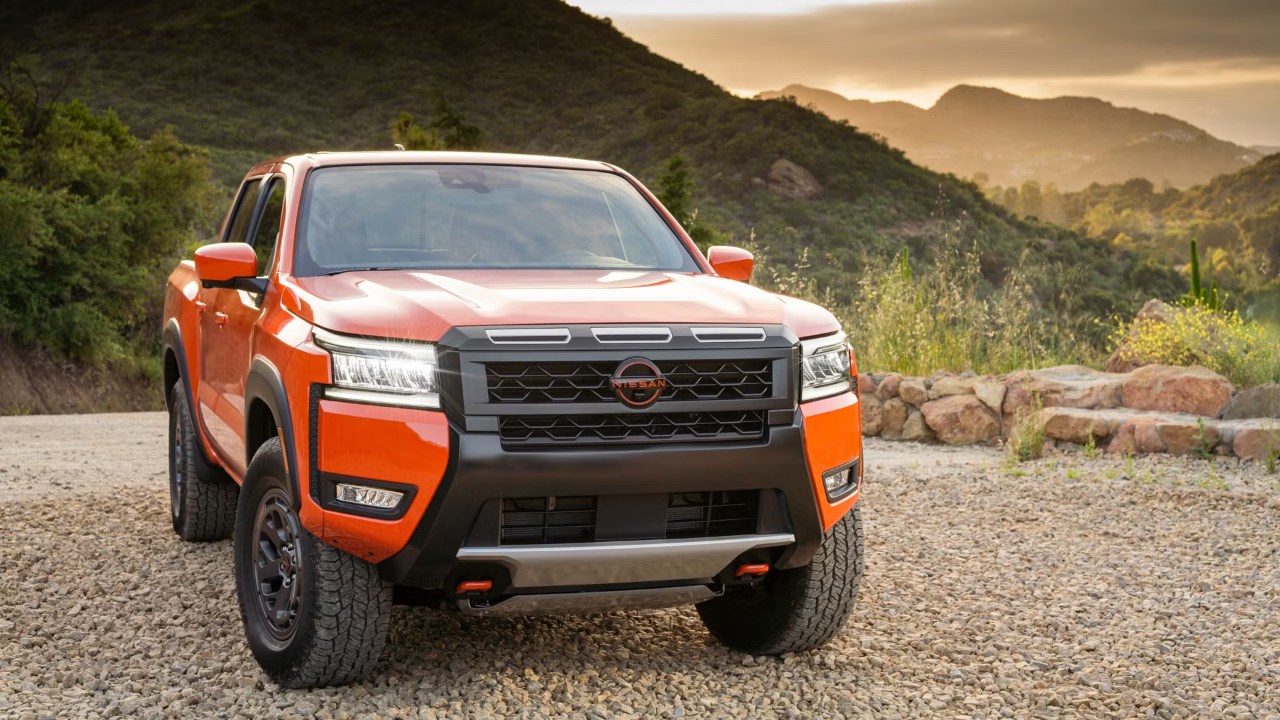
4. 2025 Nissan Frontier
The Nissan Frontier creates an especially interesting choice for night-shift workers because its headlight performance depends heavily on trim. The truck is not universally poor in IIHS testing. The SL, Pro-X, and Pro-4X trims received an acceptable headlight rating, but the S and SV trims received poor ratings with both tested halogen configurations.
That difference makes the cheaper Frontier trims the ones buyers should approach cautiously. IIHS found that the low beams on the S and SV versions provided inadequate visibility on both sides of the straightaway and inadequate visibility through all four curve evaluations.
One configuration included high-beam assist, which compensated for some limitations, but the underlying low-beam performance remained poor.
For someone who drives primarily during daylight, that might be an inconvenience rather than a deciding factor. A night-shift employee has a different calculation. Regular nighttime driving means repeatedly relying on low beams because high beams cannot safely be used whenever oncoming traffic or vehicles ahead are present.
The truck’s higher driving position also does not automatically solve the problem. Sitting higher can provide a useful view over some vehicles, but it cannot compensate for inadequate illumination on the road surface or around curves.
On winding roads, the ability to see the edge of the roadway and potential hazards before reaching them matters more than the height of the driver’s seat.
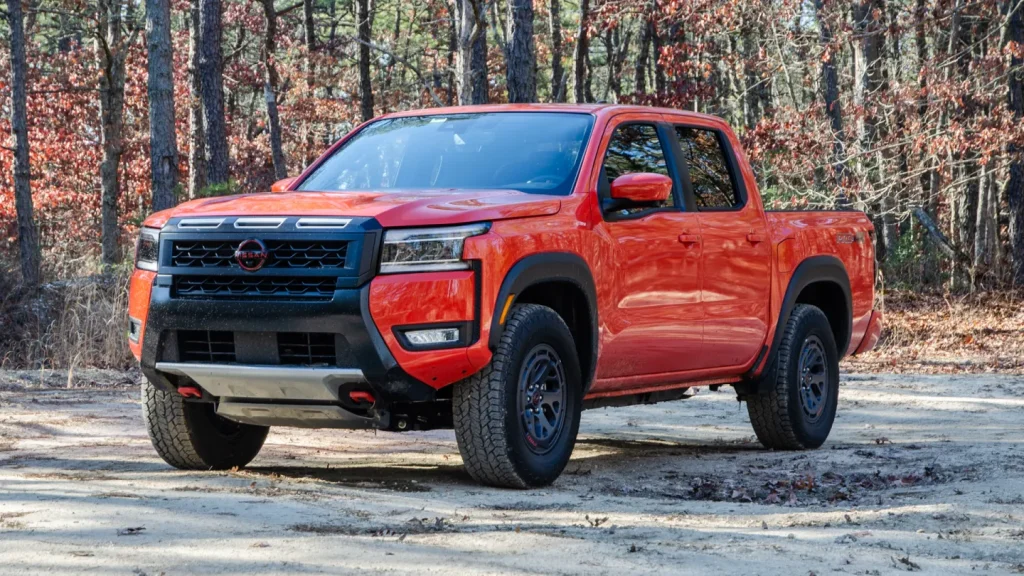
There is a simple way to avoid the Frontier’s headlight problem. Buyers can choose a configuration with better rated headlights. IIHS gives the SL, Pro-X, and Pro-4X an acceptable rating, meaning shoppers do not necessarily have to rule out the Frontier.
That makes the S and SV versions the real concern for night-shift workers. If darkness dominates the commute, paying attention to the exact headlight configuration is far more useful than assuming every Frontier has identical lighting.
5. 2025 Kia Seltos
The Kia Seltos looks like a sensible night-shift vehicle on paper. It is compact enough for city streets, offers available all-wheel drive, and has a relatively upright seating position. The problem is that not every Seltos has the same headlight performance.
IIHS gives the 2025 model a poor rating for the halogen projector setup used on the LX, S, EX, and X-Line trims. The SX’s LED projector system performs substantially better and earns an acceptable rating.
For the poorly rated system, IIHS found inadequate low-beam visibility on both sides of the straightaway and on all four curves. High beams improved the picture but still produced inadequate visibility on several sections of the test track.
High-beam assist compensated for some limitations, but a night-shift driver cannot safely depend on high beams whenever other traffic is present.
That makes the Seltos an unusual recommendation rather than a blanket rejection. Someone who works nights should pay close attention to the exact trim and headlight equipment. The SX’s LED projector headlights received an acceptable rating, while the lower configurations received poor ratings.
The difference is important because IIHS testing measures actual illumination at multiple locations, including straight sections and curves. A vehicle can have bright-looking headlights yet still leave portions of the road inadequately illuminated.
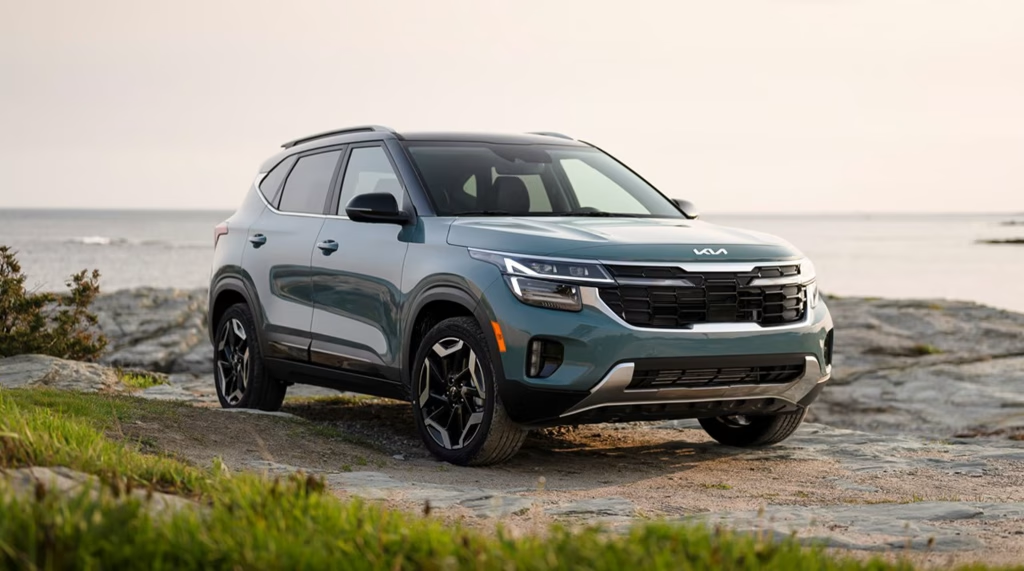
The Seltos itself remains a practical commuter. Its standard 2.0-liter engine produces 146 horsepower and 132 lb-ft of torque, while the 1.6-liter turbo available in higher trims produces 190 horsepower and 195 lb-ft. The vehicle measures 172.6 inches long and 70.9 inches wide.
For a night worker, the smart choice is therefore not necessarily to eliminate the Seltos but to avoid the poorly rated headlight configuration.
6. 2025 Chevrolet Malibu
The Chevrolet Malibu spent its final model years as a comfortable, relatively efficient sedan, but its IIHS headlight performance gives night-shift workers a reason to look elsewhere. The 2025 Malibu received a marginal headlight rating, with the same halogen projector and reflector arrangement evaluated across the LS, RS, and 1LT trims.
The low beams performed reasonably on the straightaway in some portions of the IIHS test, but the weaknesses became more obvious when the road began to curve. IIHS found inadequate low-beam visibility on all four curved sections.
The high beams provided good visibility on the straightaway, yet remained inadequate through all four curves. High-beam assist helped compensate for some limitations, but it cannot replace strong low-beam performance during normal traffic conditions.
That distinction makes the Malibu particularly relevant to people whose commute is almost entirely in darkness. Night-shift workers often drive when there are fewer vehicles around, but they still encounter traffic, meaning high beams must frequently be switched off.
If the low beams do not adequately illuminate curves, the driver can have less time to identify hazards outside the immediate lane.
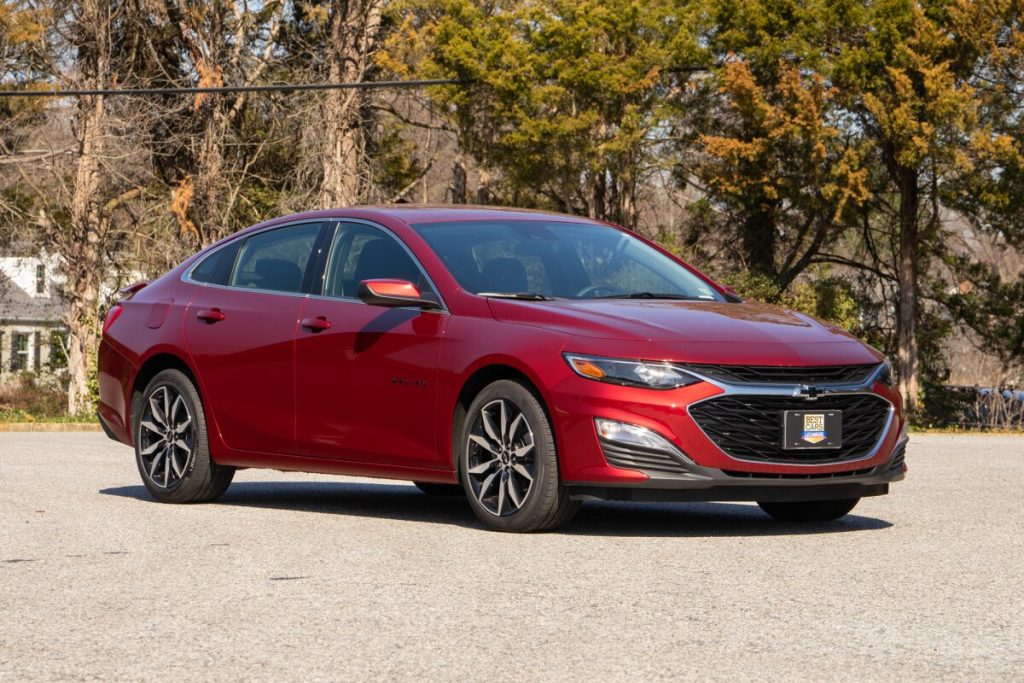
The Malibu’s problem is not that it lacks useful everyday qualities. Its 1.5-liter turbocharged four-cylinder produces 163 horsepower and 184 lb-ft of torque, while its 194.2-inch length gives it a spacious footprint for highway commuting. Edmunds lists its width at 73.0 inches.
However, headlights become disproportionately important when a vehicle is used primarily after sunset. IIHS research found that vehicles equipped with good-rated headlights have lower nighttime crash rates than vehicles with poor-rated headlights.
For someone buying specifically for a night commute, the Malibu’s Marginal rating means it should not be an automatic choice simply because the sedan is comfortable and efficient.
7. 2025 Tesla Cybertruck
The Tesla Cybertruck may stand out because of its unusual design, imposing size, and electric power, but night shift workers have a more practical reason to think twice. The IIHS gave its headlights a poor rating, which could be a concern for drivers who regularly travel after dark.
The institute’s 2025 evaluation found that the Cybertruck’s lighting system did not provide enough useful illumination in several portions of the test course.
IIHS does not judge headlights simply by whether they appear bright to the driver. Its evaluation measures how far the lamps provide adequate illumination on straight roads and curves while also checking whether the low beams create excessive glare for oncoming traffic.
That distinction is especially important for someone commuting during the darkest hours of the day.
A night-shift driver spends more time depending on the low beams than someone who occasionally drives after sunset. High beams can provide substantially more illumination, but they cannot remain activated when approaching traffic or when following another vehicle.
Poor low-beam performance therefore matters most during the normal conditions of a nighttime commute.
The Cybertruck’s poor rating is also notable because it was among the models specifically identified by IIHS as having poor headlight performance in the 2025 testing cycle. Only about 51% of headlight systems tested on 2025 models earned a Good rating, while roughly 16% were rated Marginal or Poor.
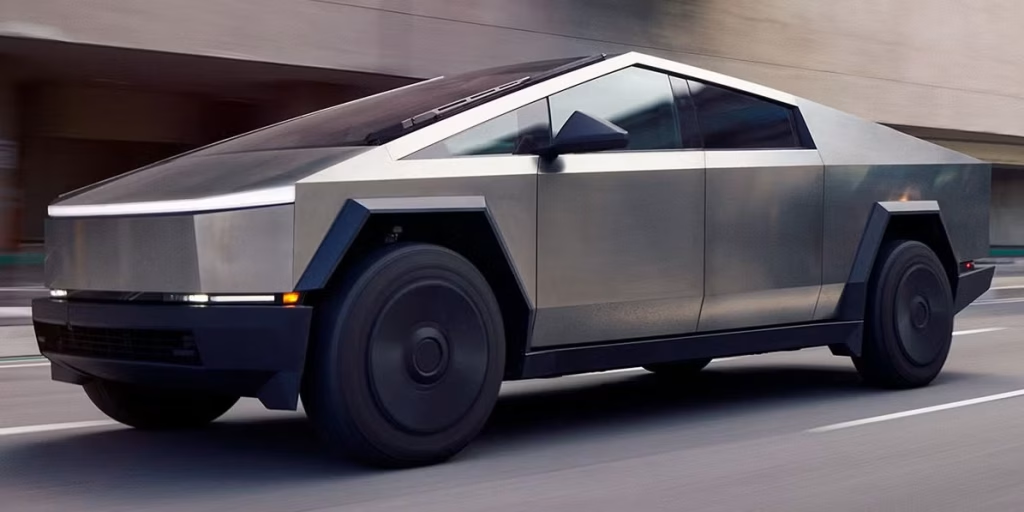
That does not mean the Cybertruck is universally unsafe, and its headlight score should not be confused with its complete crashworthiness evaluation. It simply means the lighting system did not meet IIHS’s higher performance standards.
For a driver who regularly travels rural highways, poorly lit suburban roads, or winding routes before sunrise, this is a meaningful consideration. A vehicle can be impressive in almost every other category and still be the wrong tool for someone whose daily commute depends heavily on nighttime visibility.
8. 2025 Cadillac Lyriq
The Cadillac Lyriq is designed to feel like a sophisticated luxury vehicle, but its headlight performance is less impressive than its technology-heavy cabin might suggest. IIHS rated the tested Lyriq headlight system poor, making it a vehicle that night-shift workers should examine carefully before choosing it for a darkness-heavy commute.
The Lyriq was also among the 2025 models that failed to qualify for an IIHS safety award because of substandard performance in one or more required evaluations.
The issue is not simply the presence or absence of LED lighting. IIHS specifically evaluates the amount of useful illumination reaching the road and the amount of glare produced for other drivers. A modern LED system can therefore receive a poor rating if its light pattern does not illuminate the required areas effectively.
That is an important lesson for buyers who assume that expensive vehicles automatically have superior headlights. The Lyriq’s luxury positioning and advanced electronic systems do not guarantee an excellent IIHS lighting result. The institute’s testing is based on measured performance rather than the technology’s marketing description.
For someone leaving work at 2 a.m., the weaknesses matter more than they would for a driver who rarely travels at night. Empty roads can encourage higher speeds, while rural routes can contain pedestrians, animals, disabled vehicles, and debris that are difficult to identify without adequate forward and peripheral illumination.
IIHS’s broader research gives this issue additional weight. Vehicles with good-rated headlights have been associated with 19% fewer nighttime single-vehicle crashes and 23% fewer nighttime pedestrian crashes compared with vehicles equipped with poor-rated headlights.
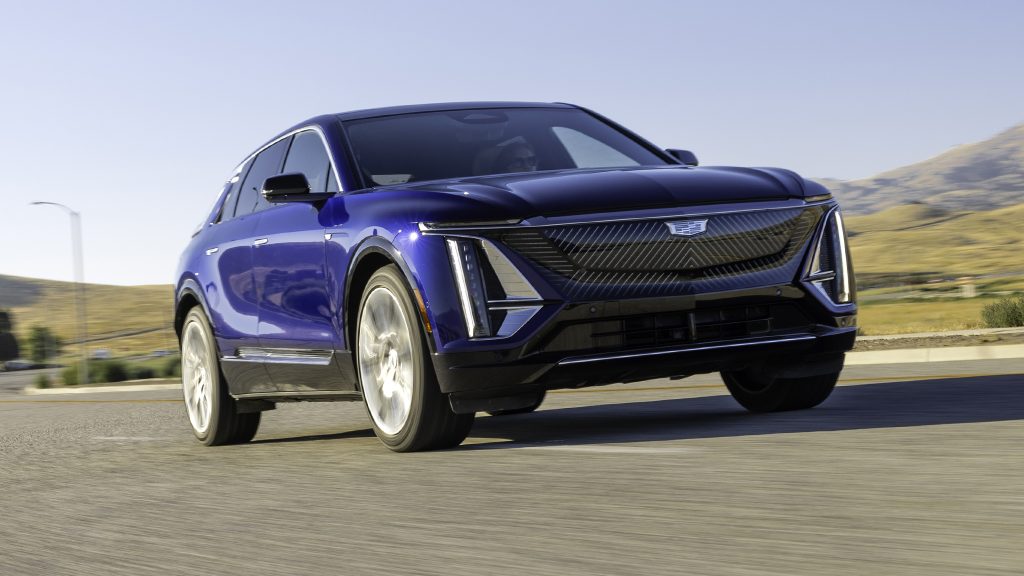
The Lyriq is therefore not a vehicle that should automatically be rejected by every buyer. Its poor headlights simply make it a questionable match for a person whose vehicle will spend much of its life traveling in darkness.
Before purchasing one, a night-shift worker should pay particular attention to the exact model year and headlight configuration being considered, rather than assuming that every luxury EV has equivalent nighttime performance.
9. 2025 Nissan Kicks
The Nissan Kicks is built around affordability and practicality, which makes it an attractive option for someone looking for a simple commuter. Night-shift workers, however, should pay close attention to its IIHS headlight results.
The 2025 Kicks received a poor headlight rating in IIHS testing, and that matters more when darkness is a daily part of the commute rather than an occasional inconvenience.
The Kicks is one of the models that missed an IIHS safety award in 2025 because of inadequate performance in one or more required evaluations, with its headlight performance among the concerns identified by the institute. IIHS requires acceptable or good headlights across all trim levels for its Top Safety Pick awards.
For a night worker, the biggest issue is the difference between having headlights and having headlights that illuminate enough of the roadway. IIHS’s testing program measures useful illumination on straight sections as well as curves, while also accounting for excessive glare.
The institute’s research found that vehicles with good-rated headlights experience 19% fewer nighttime single-vehicle crashes and 23% fewer nighttime pedestrian crashes than vehicles with poor-rated headlights.
That does not mean a Kicks automatically becomes a dangerous vehicle after sunset. Crash risk depends on many factors, including speed, road design, weather, traffic, and driver behavior.
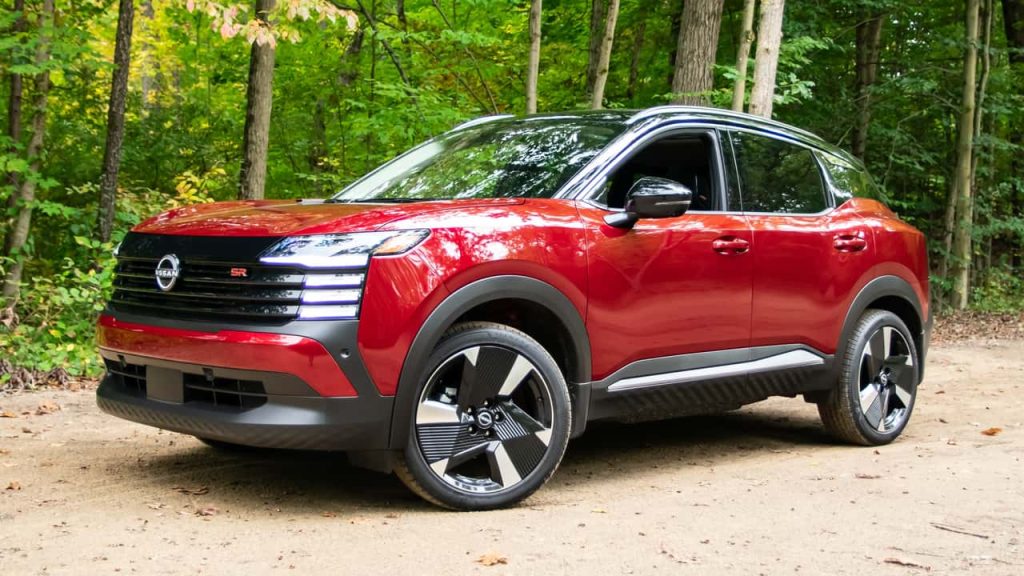
But someone leaving work at 1 a.m. on an unlit road has a much stronger reason to prioritize tested headlight performance than someone who drives almost exclusively during daylight.
There is another practical consideration. The Kicks is a relatively small crossover, so drivers should not assume that its elevated seating position provides the same advantage as stronger forward illumination.
Seeing over traffic does little to help identify a dark pedestrian, animal, or piece of debris outside the vehicle’s immediate path.
For night-shift workers considering a Kicks, the Poor IIHS headlight result is enough reason to compare alternatives before committing to the purchase.
10. 2025 Toyota Tacoma
The Toyota Tacoma is an excellent example of why a vehicle’s reputation cannot substitute for checking its individual safety ratings. The midsize pickup is popular with American buyers, but the 2025 Tacoma crew cab received a poor headlight rating in IIHS testing.
The result was significant enough that the Tacoma crew cab did not qualify for an IIHS award in the institute’s 2025 evaluation.
The issue is particularly relevant to night-shift workers because a pickup’s large size and elevated seating position can create a false sense of security.
Sitting higher may improve the driver’s view of traffic, but it does not automatically provide better illumination around curves or along the edges of an unlit road. Those areas depend on the actual performance and aiming of the headlight system.
IIHS considers both visibility and glare when assigning its headlight grades. The institute’s current data shows that approximately 51% of headlight systems tested on 2025 vehicles earned a Good rating, while about 16% were still rated Marginal or Poor. That means a poor result is not simply the unavoidable consequence of modern headlight technology.
The Tacoma’s result is worth taking seriously for a worker who drives before dawn or after midnight every day. Nighttime roads can present hazards that are difficult to spot until they are close, especially on rural routes without street lighting. A stronger headlight system can give the driver more useful time to react.
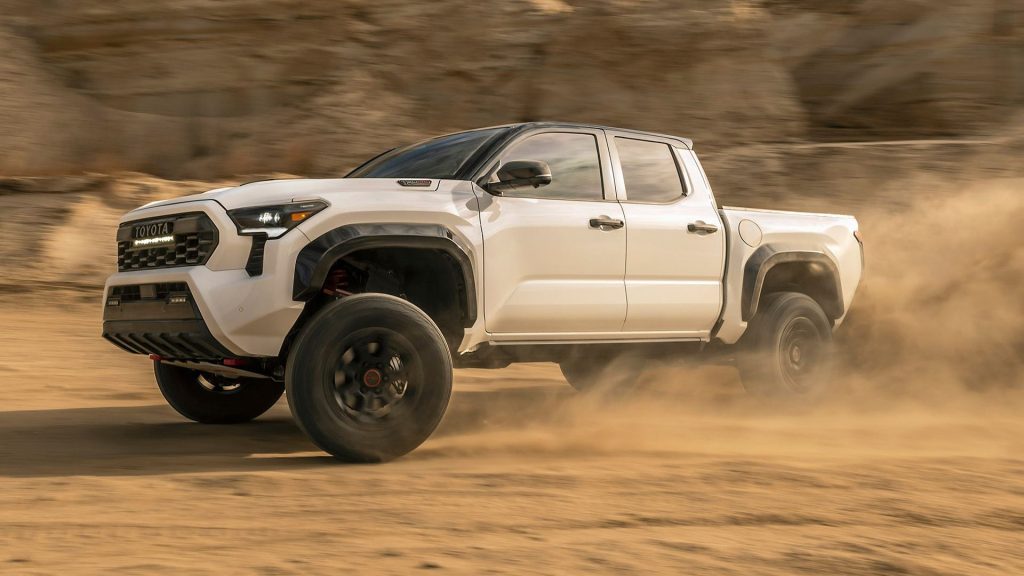
This is also why night-shift workers should not choose a vehicle solely because it has LED headlights. IIHS ratings are technology-neutral. The institute evaluates how effectively the system actually illuminates the roadway and whether its low beams create excessive glare.
The Tacoma remains a capable pickup, but its poor headlight rating makes it a less convincing choice for someone whose daily driving happens almost entirely in darkness. A buyer in that situation should compare the Tacoma with trucks that achieve Acceptable or Good IIHS headlight ratings before making a final decision.
