
America’s pursuit of speed did not begin with modern supercars. Long before computerized aerodynamics and turbocharged engines, American manufacturers were building road cars capable of astonishing velocities for their era.
From lightweight Marmons and enormous Duesenbergs to muscle-era Corvettes and modern hypercars, each generation pushed the definition of a production automobile further. The phrase “production speed record” can be complicated because period testing methods, production quantities, and definitions varied considerably.
This list therefore focuses on American-built production or series-produced road cars with documented top-speed claims or tests, using the strongest available historical evidence for each period.
1. Marmon Model 34
The 1920s opened with an American manufacturer that approached speed very differently from the huge, heavy automobiles that dominated much of the domestic market.
The Marmon Model 34, built by the Marmon Motor Car Company in Indianapolis, became recognized as the fastest American production car of the early 1920s. Marmon’s own literature guaranteed the Model 34 a top speed of 85 mph, an extraordinary figure for a production automobile of the period.
The Model 34 was not simply a big engine wrapped in a large body. Its engineering included extensive use of aluminum, including components such as the cylinder block and body.
Its construction helped keep the car at approximately 3,295 pounds, around 30 percent lighter than comparable large American automobiles according to historical descriptions. That relatively low weight was a major part of its performance advantage.
The car’s engineering was also remarkably advanced for its time. Marmon used what was described as “unification construction,” bringing the body and chassis closer together than was common among contemporary automobiles.
The Model 34 also featured a 50/50 front-to-rear weight distribution, aluminum components, and a six-cylinder engine.
What makes the Marmon particularly fascinating is that its speed did not come from the enormous horsepower figures that later became associated with American performance. Instead, reducing weight and improving engineering allowed a relatively sophisticated automobile to move considerably faster than many heavier competitors.
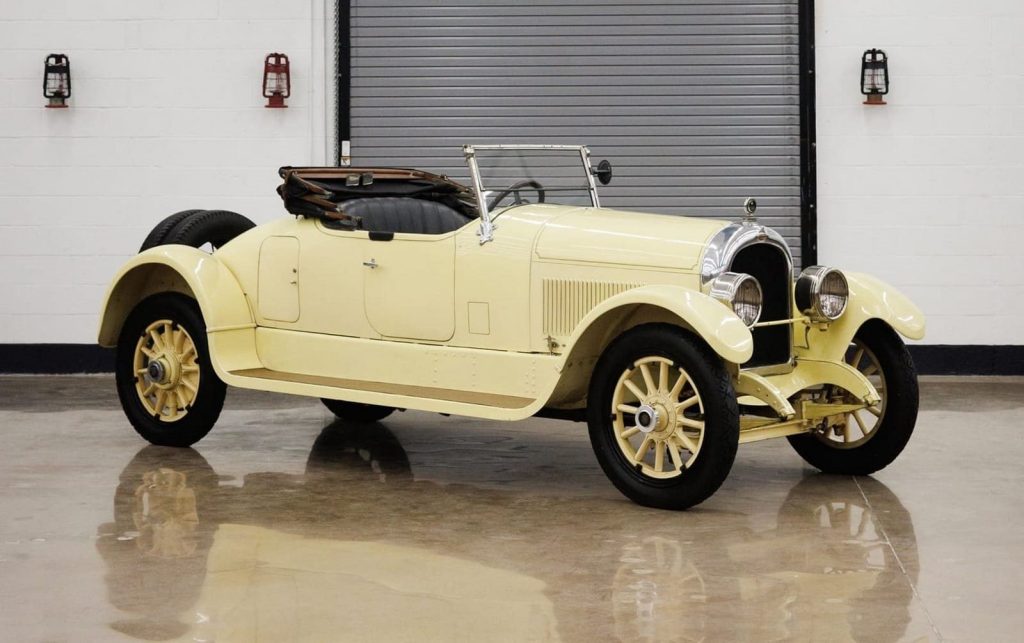
By 1921, Marmon was confident enough to guarantee the Model 34’s 85-mph maximum speed, and that figure remained part of the model’s identity through the end of production in 1924.
The Model 34 marks an important early chapter in America’s pursuit of speed. It showed that performance was becoming a matter of engineering rather than simply relying on a larger engine.
2. Duesenberg Model SJ
By the 1930s, American performance had entered an entirely different league, and few names demonstrated that transformation better than Duesenberg.
The supercharged Model SJ arrived in 1932 with a 420-cubic-inch inline-eight and a remarkable 320 horsepower. Historical sources report a top speed of approximately 135 to 140 mph, depending on configuration and testing conditions.
That figure is extraordinary when placed against the automobiles surrounding it. The standard Model J already produced 265 horsepower and could reach approximately 119 mph. Adding a centrifugal supercharger transformed the car into the SJ, giving it the ability to exceed 100 mph in second gear and continue toward roughly 130 mph or more in third.
The SJ was also mechanically exotic. Its straight-eight used dual overhead camshafts and four valves per cylinder, technology far removed from the typical American road car of the period. The supercharger was mounted alongside the engine, requiring distinctive exhaust routing through the side of the engine compartment.
Performance was not limited to top speed. Contemporary Duesenberg literature described the 320-horsepower SJ accelerating from a standstill to 100 mph in approximately 20 seconds, while historical road-test accounts have reported roughly eight seconds for 0 to 60 mph.
Duesenberg’s production philosophy was also unusual. Buyers purchased an engineered chassis and powertrain, then frequently commissioned custom coachwork from specialist builders. As a result, Model J and SJ bodies varied considerably, while the underlying mechanical package remained closely related.
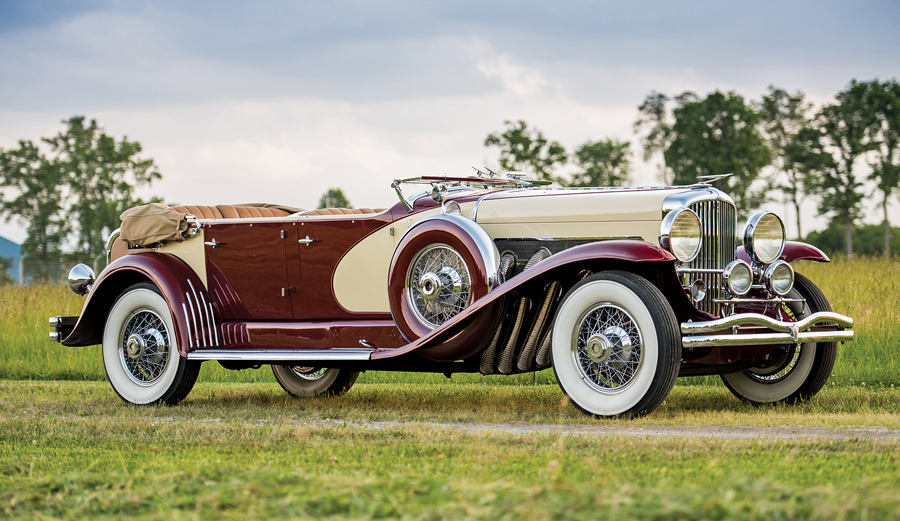
Only a small number of supercharged SJs were produced, making them exceptionally rare even when new. Yet rarity does not diminish their importance to American automotive history.
The Model SJ demonstrated that an American road car could combine enormous power, sophisticated engine technology, and genuinely exceptional speed.
For the 1930s, it represented America’s answer to the world’s finest performance automobiles.
3. 1955 Chrysler C-300
The 1950s brought a completely different kind of American speed machine. The 1955 Chrysler C-300 was a large luxury coupe, yet it possessed the performance to challenge dedicated sports cars. Motor Trend recorded a 128.6 mph top speed during its testing, making the C-300 one of the fastest American production cars available in the middle of the decade.
What made the C-300 remarkable was not merely its size. Chrysler installed a 331-cubic-inch Hemi V8 producing 300 horsepower, an enormous figure for a production American automobile in 1955.
The engine used hemispherical combustion chambers and two four-barrel carburetors, while the car received suspension and brake changes intended to handle its additional performance.
The numbers were impressive beyond top speed. Motor Trend recorded a 0 to 60 mph time of 10.0 seconds and a standing quarter-mile of 17.6 seconds at 82 mph. Those figures may seem modest by modern standards, but the context matters.
This was a heavy American luxury car accelerating with sports-car ambition while carrying the comfort and equipment expected from a full-size Chrysler.
The C-300 also laid the groundwork for Chrysler’s renowned letter series performance cars. The formula was simple. Start with a comfortable Chrysler, add a significantly more powerful engine, and develop the chassis enough to handle the added performance effectively.
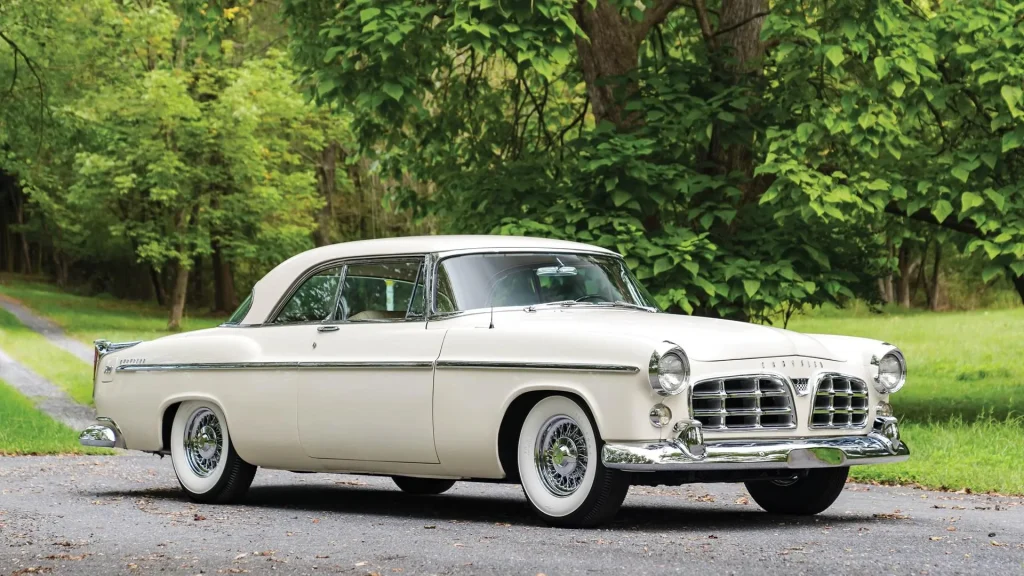
Its importance in American speed history goes beyond the exact top-speed number. The C-300 showed that serious performance could be integrated into a conventional American production automobile rather than confined to a tiny two-seat sports car.
That idea would become increasingly important during the following decade as horsepower became one of the defining features of the American automotive industry.
4. 1963 Chevrolet Corvette Sting Ray
The 1960s transformed the Corvette from an interesting American sports car into a genuine high-performance contender. The 1963 Chevrolet Corvette Sting Ray arrived with a new independent rear suspension, sharper styling, and increasingly powerful V8 engines.
More importantly for this list, Chevrolet’s development work was pushing the Corvette into territory previously occupied by much more exotic automobiles.
Zora Arkus-Duntov’s engineering efforts had already produced extraordinary speed before the second-generation Corvette entered production.
In late 1955, a Duntov-driven Corvette prototype became the first car to exceed 150 mph at Daytona’s Flying Mile Speed Trials, averaging 150.583 mph. That was a prototype rather than the production 1963 Sting Ray, but it demonstrated the performance direction Chevrolet was pursuing.
The production Sting Ray offered several V8 choices, with the most powerful 1963 version being the fuel-injected 327 producing 360 horsepower.
Buyers could pair the engine with a four-speed manual transmission, giving the Corvette a combination of acceleration and high-speed gearing that made it a serious performance machine.
The Sting Ray’s chassis was just as important as its engine. Independent rear suspension replaced the previous solid rear axle, improving wheel control and allowing Chevrolet engineers to build a more sophisticated sports car. Disc brakes were also available, helping the Corvette cope with repeated high-speed driving.
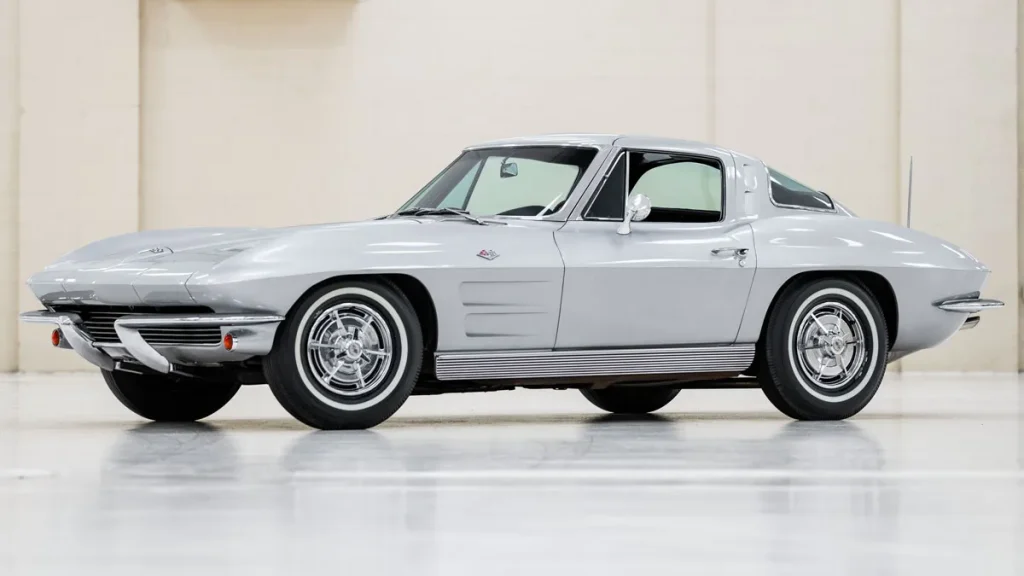
Unlike the enormous Chrysler 300, the Corvette’s performance came from a comparatively compact two-seat body and a much more favorable power-to-weight ratio. That distinction became increasingly important as American manufacturers began chasing both acceleration and maximum velocity.
The 1963 Sting Ray therefore represents the point at which Corvette’s speed ambitions became unmistakable. It was no longer simply an American alternative to European sports cars. Chevrolet was deliberately engineering it as a serious world-class performance automobile.
5. 1969 Chevrolet Corvette ZL1
The late 1960s marked one of the most extreme periods in American performance-car development, and the 1969 Chevrolet Corvette ZL1 represented the wildest end of that spectrum.
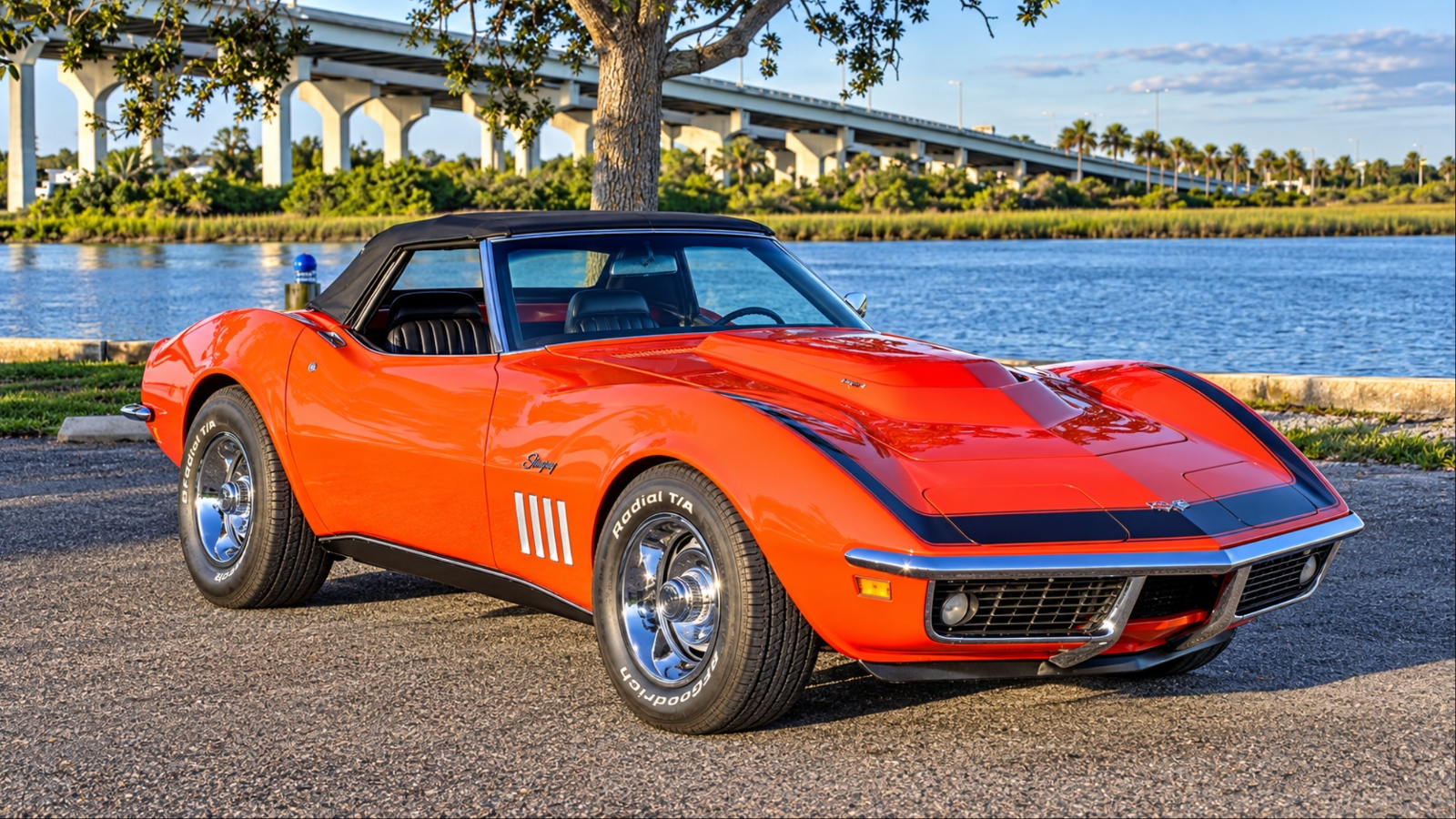
Chevrolet offered the ZL1 as a limited-production package built around an all-aluminum 427-cubic-inch big-block V8. Only two production ZL1 Corvettes were built, making it one of the rarest factory Corvettes ever produced.
The engine was officially rated at 430 horsepower and 450 lb-ft of torque, although contemporary and historical estimates have frequently suggested that its actual output was considerably higher.
Chevrolet’s own published rating was deliberately conservative, partly because of insurance and racing-related concerns surrounding high-output cars of the era.
The ZL1’s most important technical feature was its aluminum construction. The engine used an aluminum block and aluminum cylinder heads, reducing weight compared with the conventional iron 427. The package also included heavy-duty performance components designed to withstand the demands of the enormous engine.
Period testing and historical references place the ZL1’s potential top speed at approximately 180 mph, although this figure needs context because the two production examples were not subjected to the standardized modern testing procedures used today.
The car’s gearing, aerodynamics, and tire limitations meant that real-world maximum-speed results could vary considerably.
The Corvette’s low weight was crucial. The ZL1 was not a huge luxury automobile carrying a massive engine. It was a comparatively compact two-seat sports car with a high-output big block, giving it an extraordinary power-to-weight ratio.
Acceleration was the ZL1’s more easily demonstrated strength. With the right gearing and traction, it was capable of blistering quarter-mile performance, although period results varied depending on driver, tires, and track conditions.
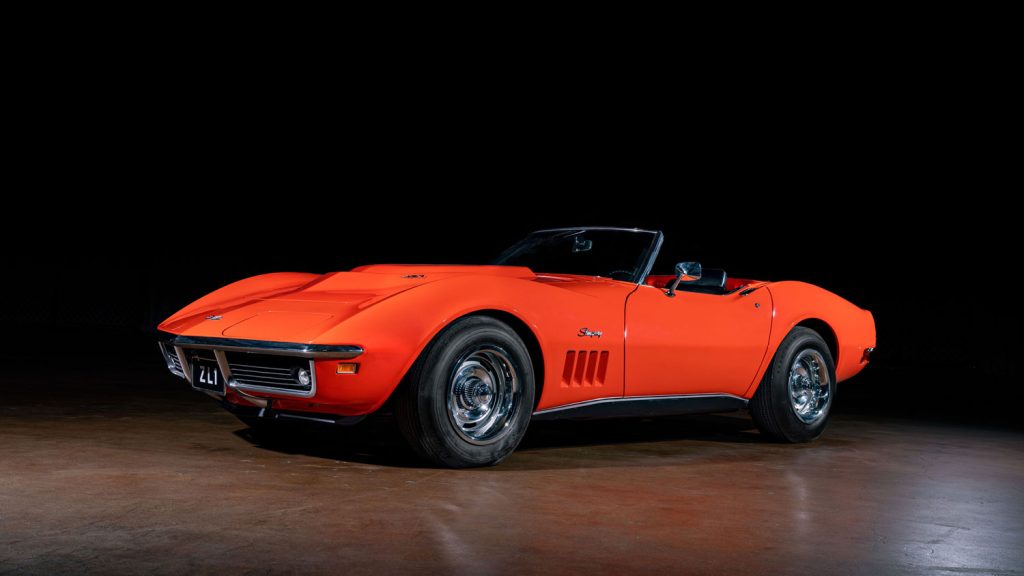
The ZL1 also illustrates why historical speed records require careful wording. It is tempting to attach one definitive top-speed figure to every famous American performance car, but many 1960s claims were based on estimates or limited testing.
What cannot be disputed is the ZL1’s place among America’s most extreme production cars. Chevrolet effectively combined race-engine technology with a street Corvette, producing a machine that was almost impossible to replicate.
6. 1987 Buick GNX
The 1987 Buick GNX arrived when American performance cars were moving away from the giant naturally aspirated engines that had dominated the muscle-car era. Instead of relying on displacement alone, Buick turned to turbocharging, electronic engine management, and sophisticated chassis development.
Buick officially rated the GNX’s 3.8-liter turbocharged V6 at 276 horsepower and 360 lb-ft of torque, but those numbers were widely regarded as conservative.
Independent testing produced substantially higher real-world output estimates, with Car and Driver recording 276 horsepower at the wheels in one period test and demonstrating the car’s remarkable acceleration.
The GNX could reach 60 mph in approximately 4.6 seconds in that testing, extraordinary for a 1987 American production car.
Its top speed was reported at approximately 124 mph, although the GNX was never designed primarily as a maximum-speed machine. Its strength was the way turbocharged torque transformed acceleration.
The engine featured a Garrett turbocharger and intercooler, while McLaren Performance Technologies/ASC assisted Buick with the GNX’s chassis and powertrain development. The package received special suspension components, wider wheels and tires, upgraded transmission cooling, and distinctive fender vents.
One of the GNX’s greatest achievements was changing perceptions. A black Buick with a turbocharged V6 could outrun many V8-powered performance cars while delivering the quiet, comfortable character of a personal luxury coupe.
Only 547 GNXs were produced for the 1987 model year, making the car extremely limited from the beginning. Buick created the GNX as the ultimate version of the Grand National before ending the model’s production.
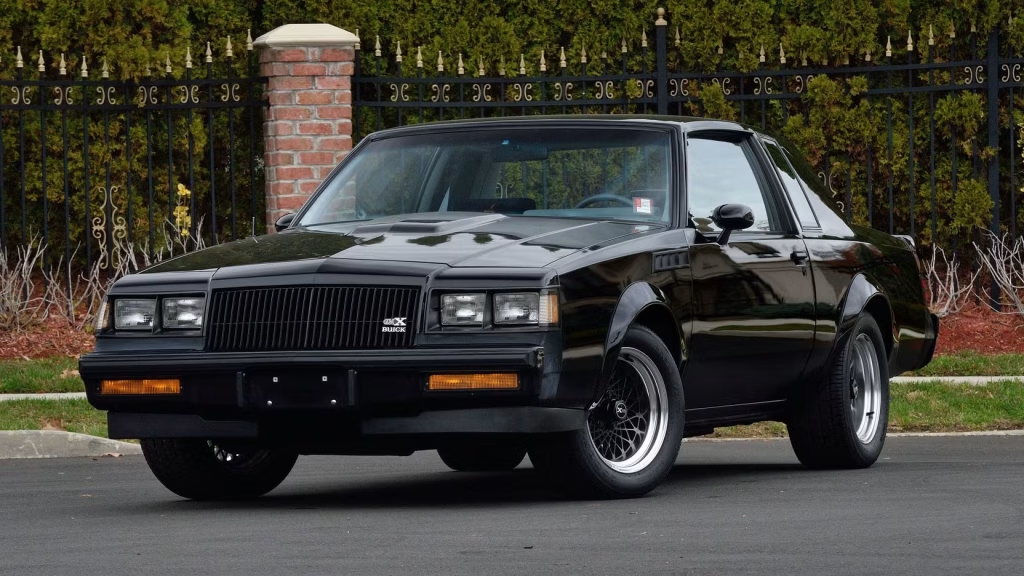
The GNX matters to America’s speed-record story because it demonstrated that performance was entering a new technological phase. Displacement was no longer the only route to speed. Forced induction, electronics, and careful chassis engineering were becoming equally important.
Its straight-line performance also foreshadowed the turbocharged performance cars that would dominate portions of the market decades later.
7. 1990 Chevrolet Corvette ZR-1
The 1990 Chevrolet Corvette ZR-1 represented a dramatic return to serious American high-speed performance after years when emissions regulations, fuel-economy concerns, and changing market conditions had restrained horsepower.
Developed with substantial input from Lotus, the ZR-1 used a sophisticated 5.7-liter LT5 V8 that was unlike the conventional Corvette engine of the period.
The LT5 featured four overhead camshafts and 32 valves, making it technologically unusual for an American production car. Chevrolet rated the engine at 375 horsepower and 370 lb-ft of torque when the ZR-1 debuted. Power reached the rear wheels through a six-speed manual transmission.
Its performance was remarkable. Car and Driver’s testing recorded a 0 to 60 mph time of 4.5 seconds and a quarter-mile time of 13.4 seconds at 109 mph.
More importantly for a production-speed discussion, the ZR-1 was capable of a claimed 180 mph top speed under suitable conditions. That put the Corvette among the fastest production cars available in the United States at the beginning of the 1990s.
The ZR-1 also had the hardware needed to make its speed usable. The Chevrolet fitted four-wheel anti-lock disc brakes, a specialized suspension, and wider rear tires. The car’s selective ride and handling system allowed drivers to alter the chassis response, while the six-speed gearbox gave the LT5 enough gearing for high-speed running.
Visually, the ZR-1 was more restrained than its performance suggested. Its wider rear body and distinctive rear fascia separated it from the standard Corvette, but the car did not advertise its capabilities with the kind of extravagant styling associated with later supercars.
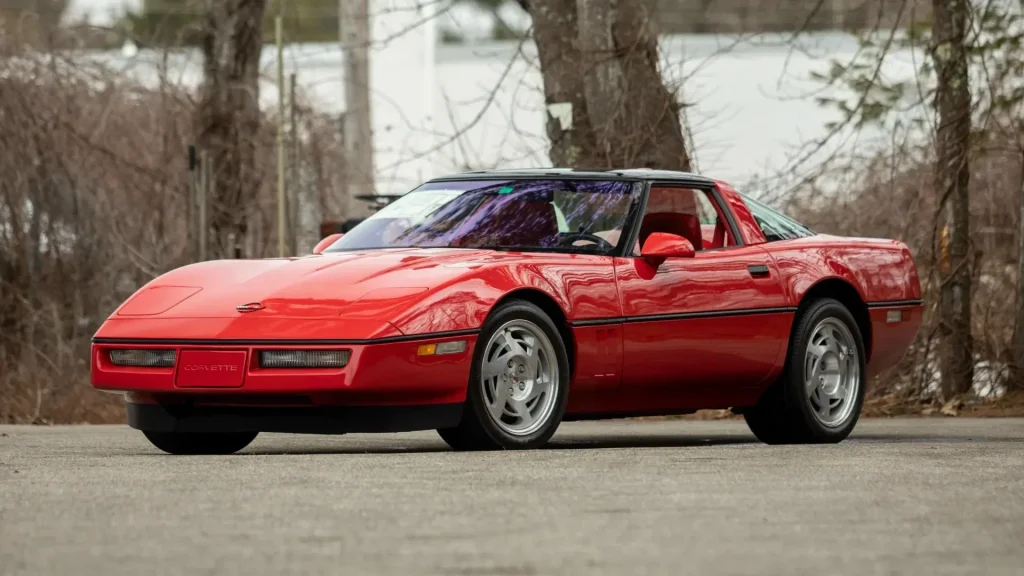
Production lasted from 1990 through 1995, with 6,939 ZR-1s ultimately built. Its combination of advanced engine technology and exceptional speed gave Chevrolet a genuine supercar competitor without abandoning the Corvette’s basic formula.
The ZR-1 was proof that American engineering could compete at the highest level of production-car performance using sophisticated technology rather than relying solely on huge displacement.
8. 2005 Ford GT
The 2005 Ford GT arrived as a modern tribute to the GT40 that dominated endurance racing at Le Mans, but it was much more than a nostalgic styling exercise.
Ford developed the GT as a genuine high-performance road car, giving it a supercharged V8, lightweight construction, and aerodynamic engineering capable of producing extraordinary speed.
At the center was a 5.4-liter supercharged V8 producing 550 horsepower and 500 lb-ft of torque. The engine was paired with a six-speed manual transmission and drove the rear wheels.
Ford used an aluminum space frame and aluminum body panels to keep the car’s mass under control while providing the structural strength needed for high performance.
The GT’s official top-speed figure was approximately 205 mph, putting it firmly into supercar territory. Its acceleration was equally impressive, with period testing recording 0 to 60 mph in roughly 3.8 seconds.
The numbers become more impressive when considering the GT’s relatively straightforward mechanical recipe. There was no hybrid assistance, dual-clutch gearbox, or sophisticated electronic torque-vectoring system. Instead, Ford relied on a large supercharged V8, a manual transmission, and carefully engineered chassis dynamics.
The body was designed around aerodynamic efficiency. The GT’s low roofline, long rear section, and large openings were not merely visual references to the original racing car. They helped manage airflow around the vehicle and provide cooling for the engine and brakes.
Ford produced only 4,038 GTs during the 2005 and 2006 model years, making the car rare from the moment it reached customers.
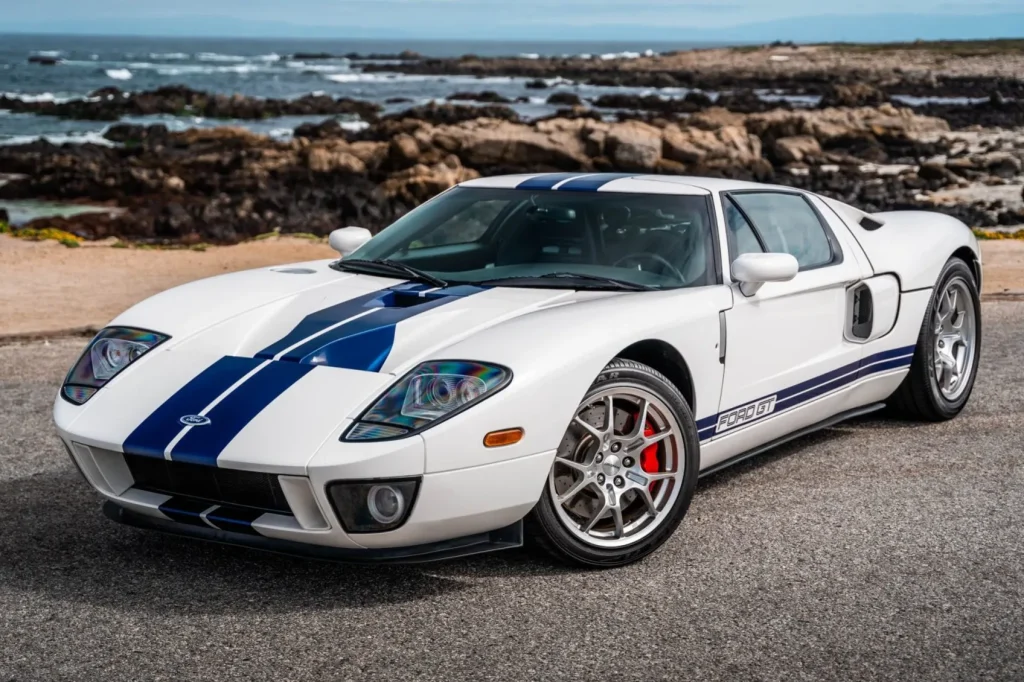
Its significance in the American speed story is considerable. By the middle of the 2000s, an American manufacturer had produced a street-legal car capable of exceeding 200 mph while still offering a traditional manual gearbox and rear-wheel drive.
The Ford GT demonstrated that America’s performance industry had moved decisively into the supercar era.
9. 2018 Dodge Challenger SRT Demon
The 2018 Dodge Challenger SRT Demon was not designed to chase a traditional top speed record. Instead, Dodge concentrated its engineering on a measurement that has long been central to American performance cars. Acceleration became the Demon’s primary focus.
The result was a factory-built streetcar with 840 horsepower when running on 100-plus octane fuel and equipped with the appropriate calibration.
Its 6.2-liter supercharged HEMI V8 produced 770 lb-ft of torque in its highest-output configuration. Dodge paired the engine with an eight-speed TorqueFlite automatic transmission and developed the car specifically around drag-strip performance.
The numbers were extraordinary. Dodge stated that the Demon could accelerate from 0 to 60 mph in 2.3 seconds and cover the quarter mile in 9.65 seconds at 140 mph.
The National Hot Rod Association certified the car’s 9.65-second quarter-mile time, making the Demon the first production car recognized by the NHRA to run the quarter mile in less than 10 seconds. That distinction gave the car a legitimate place in American performance history.
Dodge also gave the Demon specialized hardware that separated it from an ordinary Challenger. A factory TransBrake helped the driver launch the car, while launch control and torque reserve prepared the supercharged engine for maximum acceleration. The car could also be ordered with narrow front wheels and wider rear drag-oriented tires.
Its top speed was only 168 mph, which illustrates why calling every performance record a “speed record” can be misleading. The Demon was engineered primarily to accelerate brutally hard rather than chase the highest possible terminal velocity.
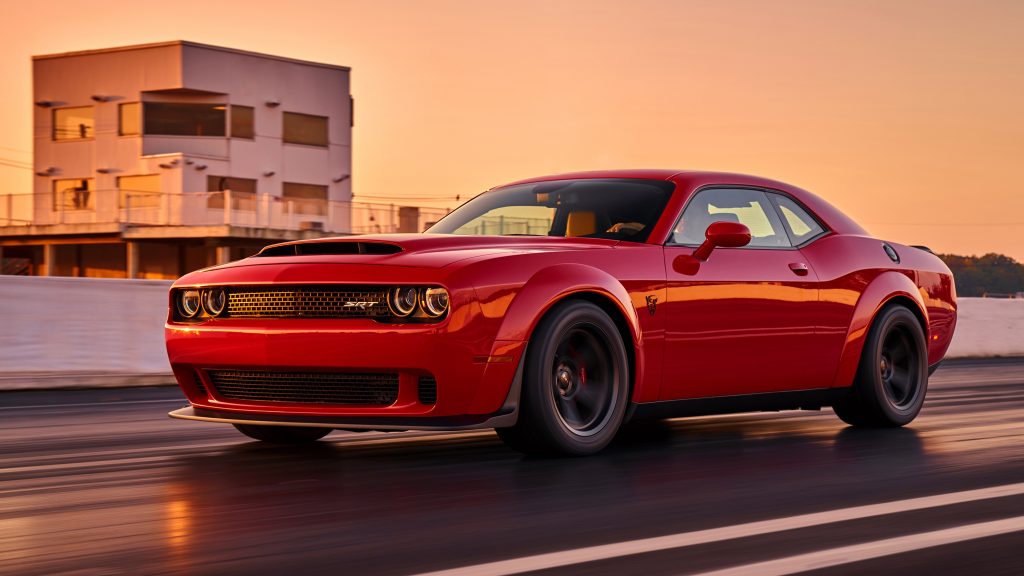
Production was limited to 3,300 units for the United States and Canada, plus an additional small number beyond that allocation. That scarcity added to its importance among modern American performance cars.
The Demon demonstrated that production-car records could be about acceleration just as much as maximum speed. It took an American muscle car formula and transformed it into a factory-built drag-racing weapon that could still be registered for road use.
10. 2021 SSC Tuatara
The SSC Tuatara represents the modern extreme of America’s production-car speed ambitions. Built by Washington-based SSC North America, the Tuatara was designed specifically to challenge the world’s fastest road cars, using a lightweight carbon-fiber structure, extensive aerodynamic development, and an enormous twin-turbocharged V8.
The production car uses a 5.9-liter twin-turbocharged V8, producing as much as 1,750 horsepower when running on E85 fuel. On 91-octane gasoline, SSC lists output at 1,350 horsepower. Torque reaches approximately 1,322 lb-ft on E85. Power is transmitted through a seven-speed automated manual transmission.
The Tuatara’s speed claims became one of the most closely scrutinized stories in modern supercar history. In January 2021, an initial high-speed run was publicized at more than 300 mph, but questions were subsequently raised about the accuracy of the video and data.
SSC later conducted independently verified runs that established a two-way average of 282.9 mph at the Kennedy Space Center in Florida in May 2022, according to the company and Dewesoft’s independent data verification.
That result is particularly significant because a two-way average accounts for differences caused by wind and other environmental factors. SSC also reported a later one-way run of 295.0 mph in 2022, but the 282.9-mph two-way average is the more defensible figure when discussing a verified production-car speed record.
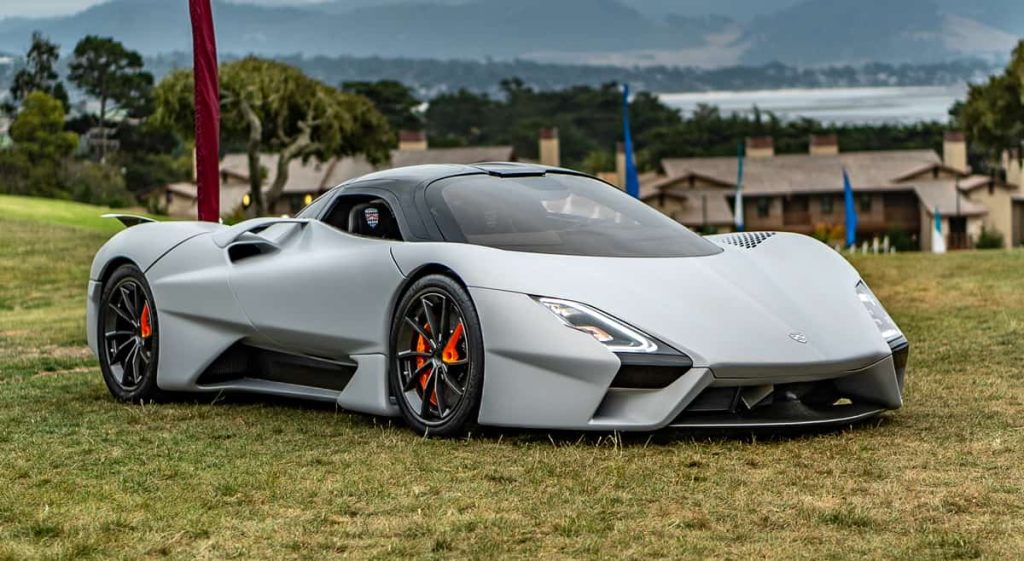
The Tuatara’s construction explains how SSC approached these numbers. The carbon-fiber monocoque keeps weight low, while active aerodynamic systems help balance downforce and drag. SSC lists the vehicle’s dry weight at approximately 2,750 pounds, depending on specification.
The Tuatara therefore represents a very different engineering philosophy from the massive engines of America’s earlier speed machines. Its performance comes from combining huge power with low mass, sophisticated aerodynamics, and careful high-speed development.
At nearly 283 mph in independently verified two-way testing, the Tuatara demonstrated just how far American production-car engineering had progressed.
