
A sub-$30,000 car no longer has to feel stripped down. Automakers are increasingly putting large touchscreens, wireless smartphone connectivity, driver-assistance systems, heated seats, and other features into entry-level trims.
For this comparison, the focus is on 2026 U.S.-market vehicles with a starting MSRP below $30,000, using manufacturer-listed standard equipment rather than dealer-installed options.
Because manufacturers categorize equipment differently, the feature comparison counts distinct standard equipment highlights rather than pretending every brand uses an identical feature-count system.
The result is a group of affordable cars where buyers can get considerably more equipment before adding a single option.
1. Kia K4
The 2026 Kia K4 makes a strong opening argument for the idea that an affordable car does not need to feel basic. Kia lists the K4 sedan with a starting MSRP of $22,290 before destination, taxes, title, license fees, and dealer charges.
More importantly, its standard equipment list includes several features that used to be associated with substantially more expensive vehicles.
The base K4 LX comes with a 12.3-inch touchscreen, wireless Apple CarPlay and Android Auto, Smart Cruise Control with Stop & Go, lane keeping and lane following technology, high-beam assist, rear occupant alert, and automatic emergency braking technology.
Kia also includes a smart key with push-button start, four USB ports, a rearview monitor, and LED lighting.
That is a substantial collection of equipment for an entry-level sedan. The safety package is particularly noteworthy because the K4’s standard Forward Collision-Avoidance Assist 2 can provide detection for pedestrians, cyclists, and certain junction-turning situations.
Kia also lists direct oncoming, lane-change oncoming, and lane-change side detection among the system’s capabilities.
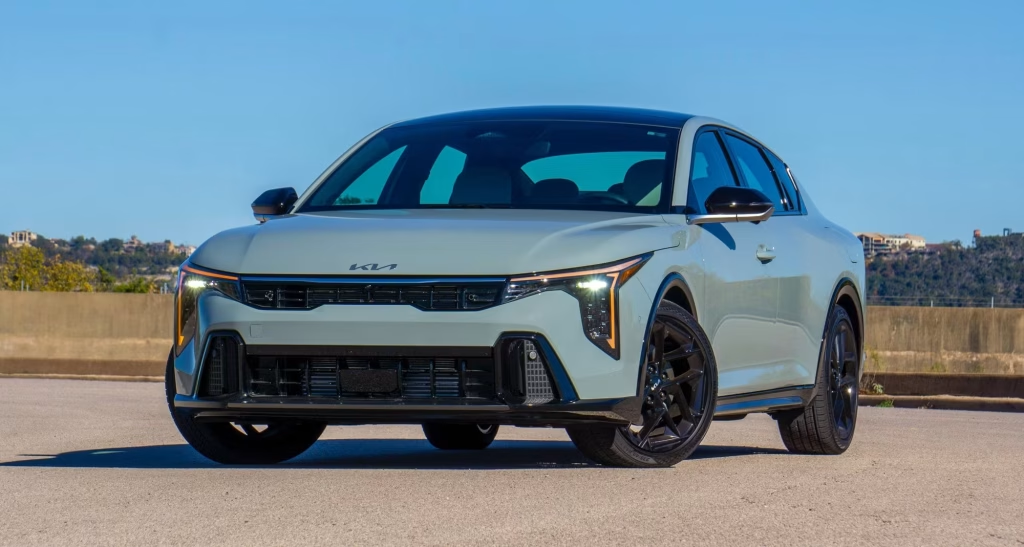
For this comparison, the K4’s base equipment can reasonably be divided into more than 20 distinct feature highlights before moving up the trim ladder. That is not a manufacturer-published official feature count but a count of separately listed standard convenience, technology, safety, and exterior items.
The value becomes even more obvious higher up the range. The K4 EX adds heated front seats, dual-zone automatic climate control, wireless charging, and 17-inch alloy wheels, while remaining below $30,000.
2. Hyundai Venue
The Hyundai Venue takes a completely different approach to affordable equipment. Instead of being a sedan, it packages its standard technology into a small SUV-style body, and its $20,550 starting MSRP leaves considerable room beneath the $30,000 ceiling.
Hyundai lists the 2026 Venue SE with an 8-inch touchscreen, wireless Apple CarPlay and Android Auto, Bluetooth, a rearview monitor, and high-beam assist as standard.
The base model also includes Forward Collision-Avoidance Assist with pedestrian detection, Lane Keeping Assist, Driver Attention Warning, and Rear Occupant Alert. Those systems are standard on the SE rather than being restricted to the more expensive SEL.
Hyundai also includes automatic headlights, a 4.2-inch gauge display, six-way driver’s seat adjustment, 60/40 split-folding rear seats, and a 12-volt outlet.
Counting Hyundai’s separately listed standard equipment highlights gives the Venue SE more than 20 identifiable standard features across safety, connectivity, convenience, lighting, and interior equipment. As with the K4, this is a comparative count based on manufacturer-listed equipment rather than a formal manufacturer feature-count claim.
The venue becomes particularly interesting when the budget rises. The SEL adds blind-spot collision warning, rear cross-traffic collision warning, heated front seats, wireless device charging, automatic temperature control, a leather-wrapped steering wheel, 17-inch alloy wheels, and proximity key entry with push-button start.
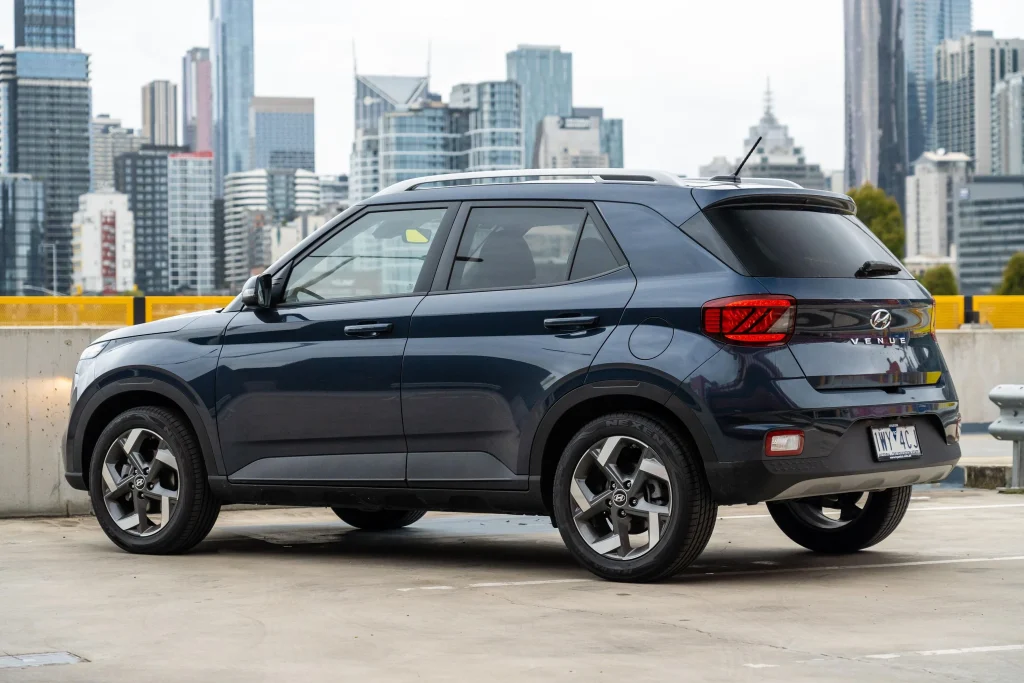
Its modest dimensions also make the Venue useful for city buyers. Hyundai lists it at 159.1 inches long and 69.7 inches wide, while the 1.6-liter four-cylinder produces 121 horsepower and 113 lb-ft of torque.
The combination is less about outright performance and more about delivering a surprisingly complete equipment list at a very low entry price.
3. 2026 Chevrolet Trax
The Chevrolet Trax is one of the clearest examples of how much equipment can now be packed into an inexpensive SUV. Chevrolet lists the 2026 Trax with a starting MSRP of $21,700, before destination charges, making it one of the least expensive new SUVs available in the United States. That low entry price is only part of the appeal.
The base LS includes a surprisingly substantial collection of technology and safety equipment. The standard list includes an 11-inch diagonal HD color touchscreen, an 8-inch driver information center, wireless Apple CarPlay and wireless Android Auto, Bluetooth connectivity, SiriusXM capability, steering-wheel-mounted controls, and a six-speaker audio system.
The Chevrolet also includes remote start, automatic climate control, LED headlamps, and automatic headlamp control on the Trax. These features give the entry-level model considerably more than a bare-bones commuter setup.
Safety equipment is another major part of the value proposition. The Trax comes with Chevrolet’s standard Chevy Safety Assist package, which includes Automatic Emergency Braking, Front Pedestrian Braking, Lane Keep Assist with Lane Departure Warning, Following Distance Indicator, Forward Collision Alert, and IntelliBeam automatic high beams. Rear seat reminder and buckle-to-drive are also standard.
That makes the base Trax particularly compelling for buyers who want an SUV rather than a sedan but still have a strict $30,000 ceiling.
Moving upward through the lineup adds equipment such as heated front seats, a heated steering wheel, wireless phone charging, and additional convenience features, while the vehicle remains comfortably within the stated budget depending on configuration.
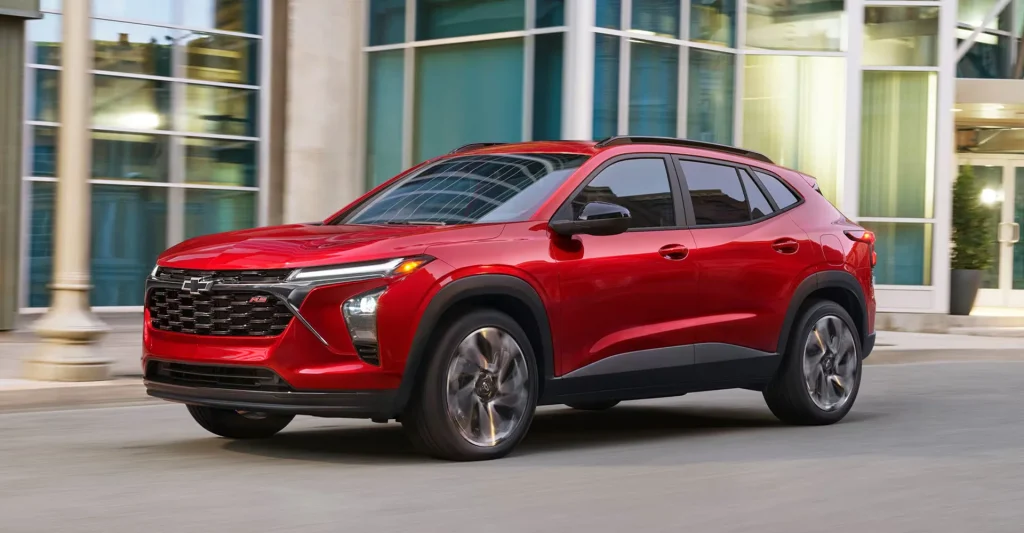
The mechanical side is straightforward. Every 2026 Trax uses a 1.2-liter turbocharged three-cylinder engine producing 137 horsepower and 162 lb-ft of torque, paired with a six-speed automatic transmission.
Rather than relying on one expensive option package, the Trax puts many desirable features directly into the standard vehicle, which is exactly what makes it stand out in a feature-focused comparison.
4. 2026 Nissan Sentra
The 2026 Nissan Sentra makes a strong case for buyers who want a traditional sedan without giving up modern technology. Nissan lists the redesigned Sentra with a starting MSRP of $21,800, excluding destination and handling charges.
At that price, the car comes with an unusually broad collection of standard technology and driver-assistance equipment.
Even the entry-level Sentra S includes a 12.3-inch color touchscreen, a 12.3-inch digital dashboard display, wireless Apple CarPlay and Android Auto, Bluetooth, SiriusXM capability, multiple USB-C ports, and a six-speaker audio system.
The Nissan also includes remote keyless entry, push-button ignition, automatic climate control, and a rearview monitor. That means a buyer does not have to climb several thousand dollars up the trim ladder just to get the connectivity features expected in newer vehicles.
The safety list is equally important. Standard equipment includes Automatic Emergency Braking with Pedestrian Detection, Lane Departure Warning, High Beam Assist, Rear Automatic Braking, Rear Cross Traffic Alert, and Blind Spot Warning. Nissan also provides Intelligent Forward Collision Warning and Intelligent Driver Alertness.
Counting the separately identified standard convenience, technology, safety, and exterior features produces a substantial equipment list before optional packages enter the picture.
Nissan does not advertise a single official number of “standard features,” so the comparison here focuses on individually listed equipment rather than assigning a marketing-style feature count.
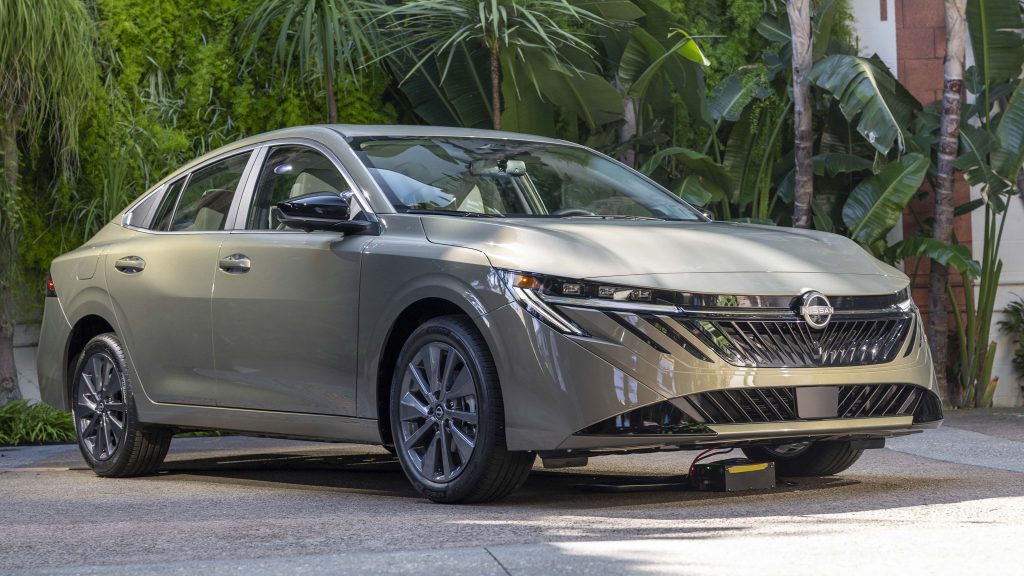
The Sentra also offers useful mechanical simplicity. Its 2.0-liter four-cylinder engine produces 149 horsepower and 146 lb-ft of torque, with a continuously variable transmission sending power to the front wheels. Nissan lists the sedan at 184.7 inches long and 71.5 inches wide.
For a buyer with $30,000 available, that leaves substantial room for higher trims or accessories while still keeping the purchase below the target threshold.
5. 2026 Kia Soul
The Kia Soul approaches the under-$30,000 category from an unusual angle. Its boxy shape makes it instantly recognizable, but the more interesting detail for this comparison is how much standard technology Kia places in the vehicle. The 2026 Soul starts at $20,490 before destination charges, putting it well below the $30,000 ceiling.
The base LX includes a 10.25-inch touchscreen navigation system, wireless Apple CarPlay and Android Auto, Bluetooth connectivity, multiple USB ports, and a six-speaker audio system. Kia also provides a rearview monitor, remote keyless entry, automatic headlights, and steering-wheel-mounted controls.
Those are meaningful additions for a vehicle positioned near the lower end of the new-car market.
Kia’s standard Drive Wise technology adds another layer. Depending on the equipment listing, the Soul includes Forward Collision-Avoidance Assist with Pedestrian and Cyclist Detection, Lane Keeping Assist, Lane Following Assist, Driver Attention Warning, and High Beam Assist.
Blind-Spot Collision Warning and Rear Cross-Traffic Collision Warnings become available on higher trims rather than being universal across the lineup.
That distinction is worth remembering when comparing feature counts. A car can have a long standard-equipment list while still reserving certain desirable technologies for more expensive versions. For the Soul, the base model nevertheless provides enough connectivity, convenience, and safety equipment to make the entry price compelling.
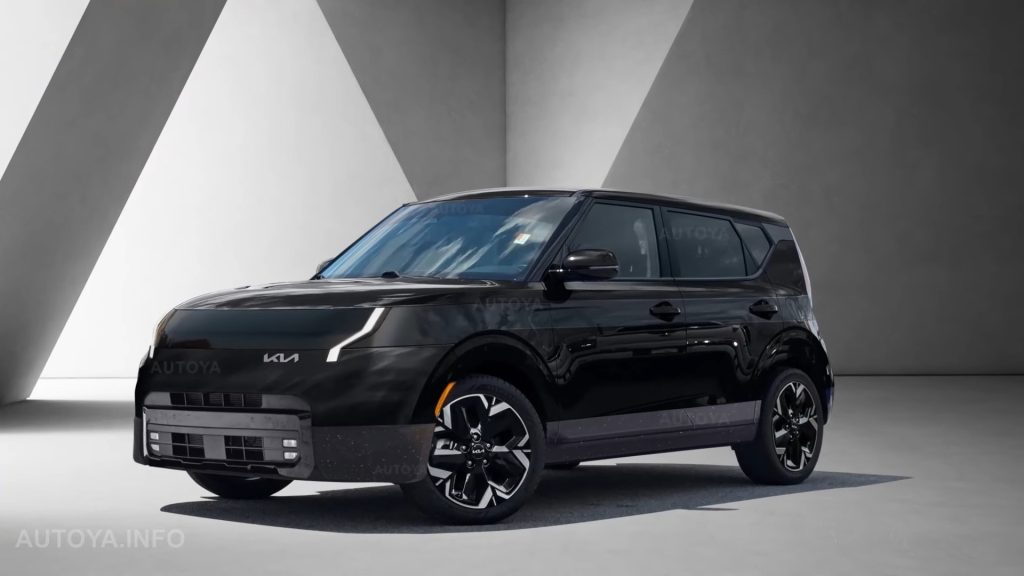
Under the hood, every current U.S.-market Soul uses a 2.0-liter four-cylinder producing 147 horsepower and 132 lb-ft of torque. Kia pairs it with an Intelligent Variable Transmission, while the vehicle measures 165.2 inches long and 70.9 inches wide.
The Soul’s biggest advantage is therefore not one spectacular feature. It is the combination of a low purchase price, a large infotainment display, smartphone integration, and a substantial collection of standard driver-assistance technology.
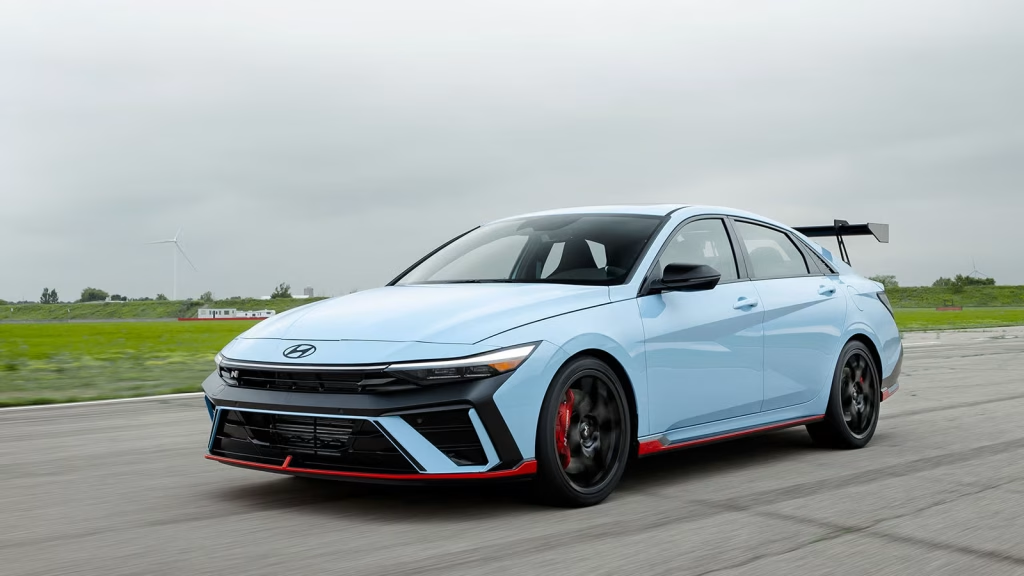
6. 2026 Hyundai Elantra
The Hyundai Elantra is one of the strongest examples of an inexpensive sedan that refuses to look or feel like an entry-level purchase.
The 2026 Elantra SE starts at $22,825, while even the N Line remains below the $30,000 threshold at $29,600 before freight, taxes, and other charges. That gives buyers several opportunities to stay within budget while moving beyond the most basic configuration.
The base SE already includes an 8-inch touchscreen, wireless Apple CarPlay and Android Auto, Bluetooth hands-free connectivity, steering-wheel-mounted controls, LED headlights, automatic high beams, and an integrated anti-theft system.
Hyundai also includes Forward Collision-Avoidance Assist with Pedestrian Detection and Safe Exit Warning as standard equipment.
That is only the beginning. Hyundai’s higher trims add features such as proximity key entry with push-button start, a 10.25-inch navigation display, Bose premium audio, heated seats, blind-spot collision warning, Smart Cruise Control, and additional convenience technology.
The SEL Sport starts at $23,950, while the SEL Sport Plus costs $24,450, leaving substantial room beneath the $30,000 ceiling.
For shoppers comparing equipment rather than simply chasing the lowest sticker price, the Elantra is particularly interesting because the jump from the base model to the upper trims does not require entering luxury-car money. A buyer can prioritize technology, comfort, or driver assistance while remaining within the same broad budget.
The standard safety equipment is also extensive. Along with the forward collision system, the Elantra includes electronic stability control, traction control, anti-lock brakes, multiple airbags, tire-pressure monitoring, and other passive safety equipment.
The standard powertrain uses a 2.0-liter four-cylinder engine producing 147 horsepower. The sedan measures approximately 184.1 inches long and 71.9 inches wide, giving it a conventional compact-sedan footprint while providing a generous equipment list for its price.
7. 2026 Toyota Corolla
The Toyota Corolla proves that standard equipment does not have to mean sacrificing the qualities buyers traditionally associate with an affordable compact sedan. The 2026 Corolla LE starts at $23,125, and the lineup extends to the XSE at $28,840 while remaining below the $30,000 target. Toyota also offers the Corolla Hybrid, with the Hybrid LE starting at $24,975.
The base LE comes with an 8-inch Toyota Audio Multimedia touchscreen, wireless Apple CarPlay and Android Auto, Blind Spot Monitor with Rear Cross-Traffic Alert, LED headlights, and Toyota Safety Sense 3.0.
That safety suite includes Lane Tracing Assist and Full-Speed Range Dynamic Radar Cruise Control, giving the Corolla a particularly strong technology package for its starting price.
Toyota also equips the Corolla with automatic high beams, a rearview camera, electronic stability and traction control, hill-start assist, multiple airbags, and a temporary spare tire. The standard equipment therefore covers much more than infotainment. It combines active safety, passive safety, convenience, and connectivity in the same entry-level package.
The value becomes even more interesting once the budget approaches $30,000. The Corolla XSE remains under the limit and adds 18-inch alloy wheels, a 12.3-inch digital gauge cluster, and heated SofTex-trimmed front sport seats.
Meanwhile, the Hybrid XLE starts at $29,340 and adds a power moonroof, heated front seats, and the larger digital gauge display.
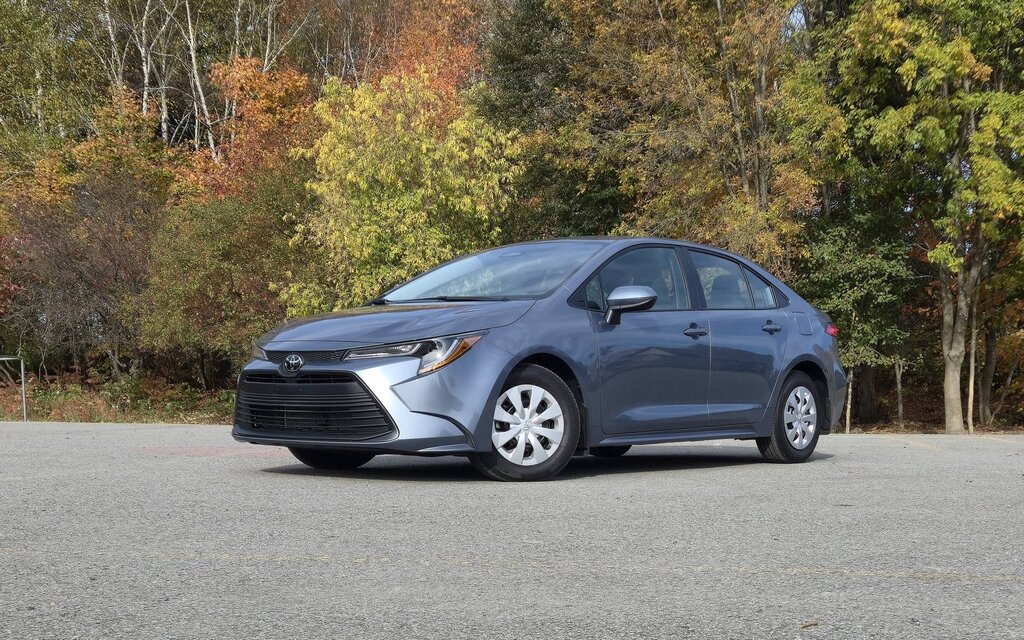
The Corolla offers something many competitors cannot match. Buyers can choose between gasoline and hybrid powertrains while keeping the purchase price below $30,000. Toyota also lists an EPA estimated fuel economy rating of up to 53 mpg in the city and 46 mpg on the highway for the Hybrid LE.
The standard gasoline Corolla uses a 2.0-liter four-cylinder producing 169 horsepower. With its broad safety package and multiple sub-$30,000 trims, the Corolla is a particularly convincing choice for buyers who measure value by how much equipment arrives before options.
8. 2026 Mazda3
The Mazda3 takes a slightly different route to value. Rather than loading the base car with a huge number of flashy extras, Mazda gives the compact sedan a combination of useful technology, safety equipment, and higher-quality cabin touches.
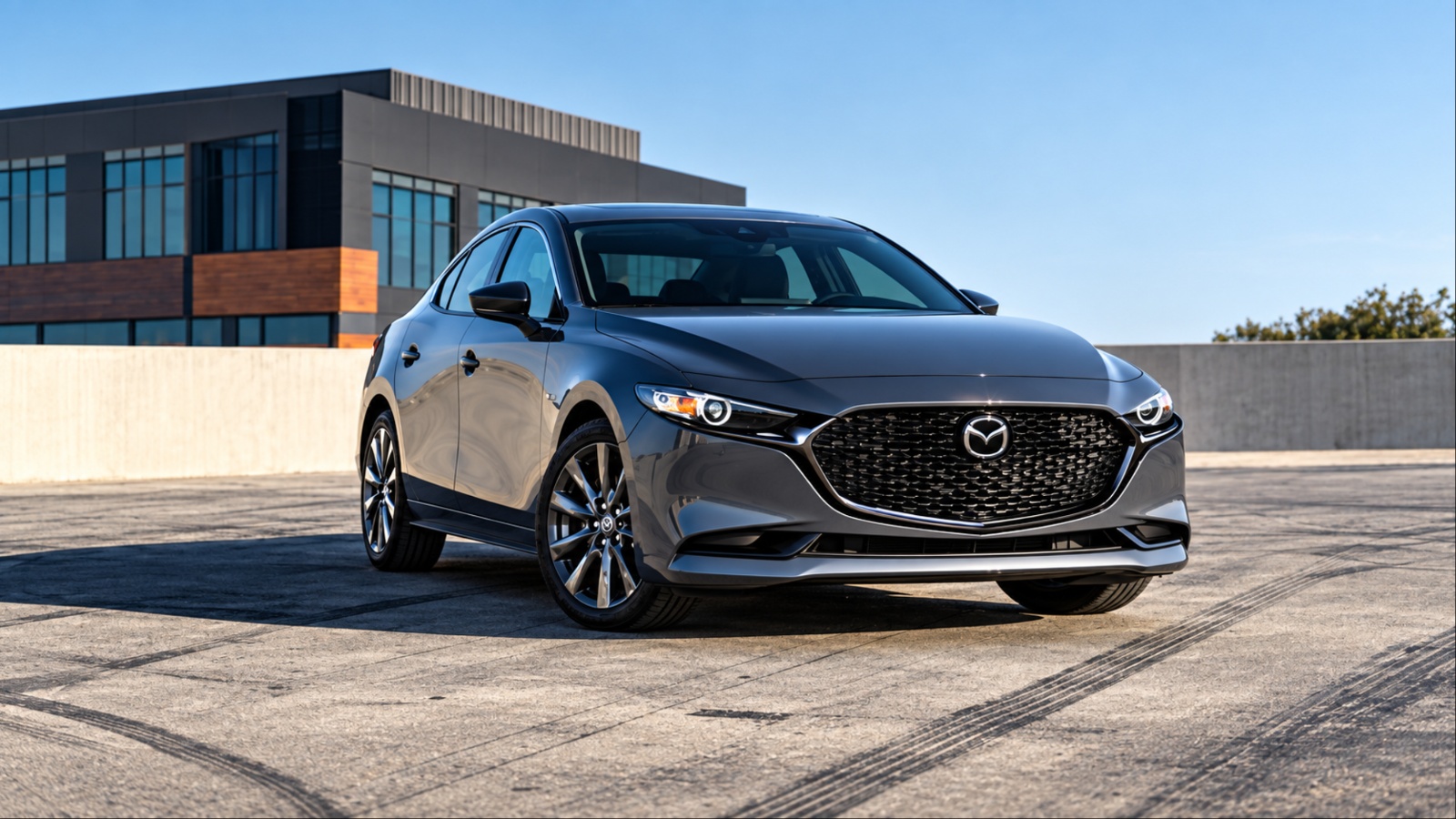
The 2026 Mazda3 2.5 S starts at $24,650, keeping it comfortably below the $30,000 target before destination charges and other fees.
For 2026, Mazda upgraded the standard equipment package by making its eight-speaker Mazda Harmonic Acoustics audio system standard.
The base sedan also provides an 8.8-inch center display, Apple CarPlay and Android Auto, Bluetooth, a rearview camera, push-button start, and Mazda’s i-Activsense collection of driver-assistance technologies.
The safety side is where the Mazda3 becomes particularly competitive. Standard systems include Smart Brake Support, Mazda Radar Cruise Control, Lane Departure Warning, Lane Keep Assist, High Beam Control, and other electronic safety systems.
Instead of requiring buyers to immediately purchase a premium package for basic driver assistance, Mazda builds much of the technology into the entry-level car.
There is also considerable room to move upward without automatically crossing the $30,000 threshold.
The 2.5 S Select Sport adds equipment such as synthetic leather-trimmed sport seats, 18-inch alloy wheels, and heated side mirrors, while the 2.5 S Preferred adds a power sliding-glass moonroof, heated front seats, and an eight-way power driver’s seat with memory. Mazda lists the Preferred at around $27,000 before applicable charges.
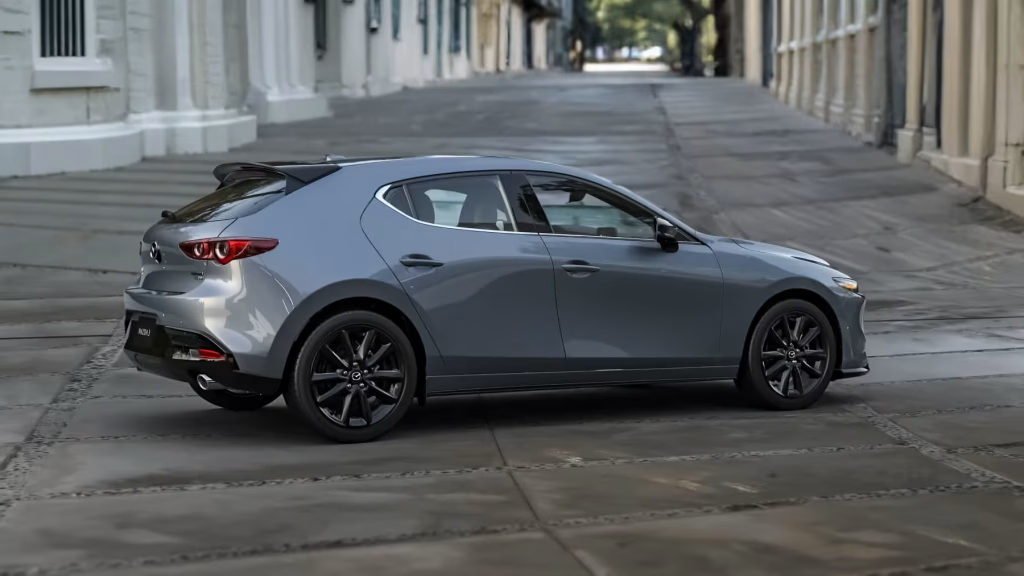
That makes the Mazda3 interesting for buyers who value standard equipment but also care about cabin quality and driving character. Its feature list may not be the longest in this comparison, yet the equipment it does provide is thoughtfully selected.
The 2.5-liter four-cylinder produces 186 horsepower and 186 lb-ft of torque in the naturally aspirated version. The sedan measures roughly 184.3 inches long and 70.7 inches wide.
9. 2026 Volkswagen Jetta
The Volkswagen Jetta has one of the more interesting equipment stories in the sub-$30,000 market because the sedan combines a relatively low starting price with a long list of standard driver-assistance and convenience technology. The 2026 Jetta starts at approximately $22,995, giving buyers plenty of headroom before reaching the $30,000 ceiling.
Even at the entry level, the Jetta provides a digital instrument display, touchscreen infotainment, wireless smartphone integration, Bluetooth connectivity, USB ports, LED exterior lighting, and keyless features.
Volkswagen also equips the car with IQ. DRIVE-related driver-assistance technology, including Front Assist with pedestrian and cyclist monitoring, Active Side Assist, Lane Assist, and Adaptive Cruise Control.
The value becomes more apparent when looking at what is included without forcing buyers into a luxury-oriented trim. Automatic emergency braking can warn the driver and intervene when a frontal collision is detected, while adaptive cruise control can maintain a selected distance from traffic ahead.
Those are meaningful features for highway commuters because they assist with some of the most repetitive parts of long-distance driving.
The Jetta also provides equipment that improves day-to-day comfort rather than simply adding technology.
Automatic climate control, heated front seats, and a heated steering wheel are available on higher trims, meaning a buyer with a budget approaching $30,000 can obtain a substantially more sophisticated version without entering the premium-car price bracket.
Volkswagen’s 1.5-liter turbocharged four-cylinder produces 158 horsepower and 184 lb-ft of torque. That torque figure is particularly useful in everyday driving because it arrives at relatively low engine speeds, helping the Jetta feel responsive without requiring a large-displacement engine.
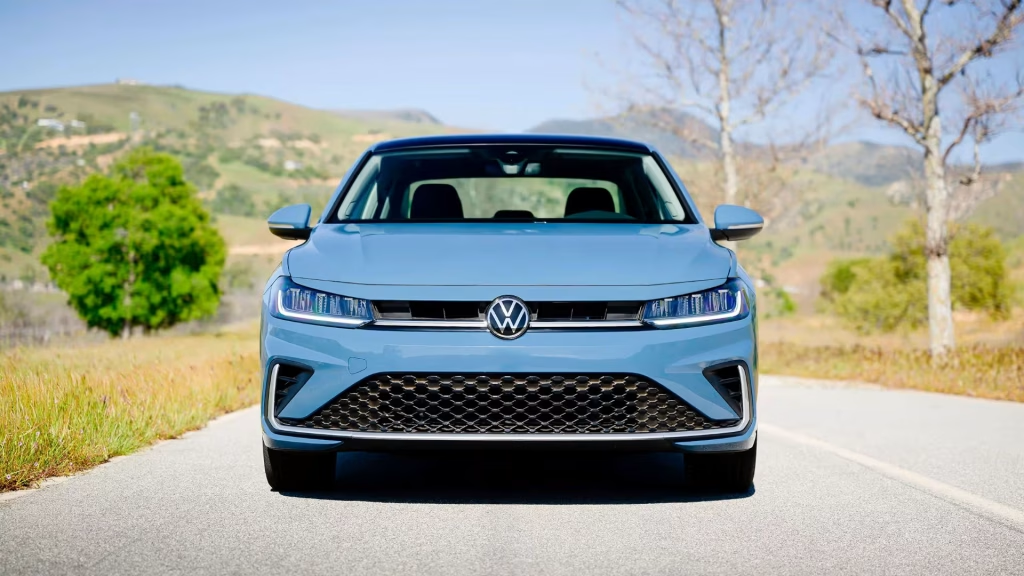
The sedan’s combination of standard driver assistance, connectivity, and practical cabin equipment makes it one of the more balanced entries in this group.
It is not simply trying to win with the largest touchscreen or the longest list of electronic gadgets. Instead, the Jetta provides equipment that addresses commuting, safety, and everyday convenience while keeping its starting price well below the $30,000 ceiling.
10. 2026 Honda Civic
The 2026 Honda Civic is one of the strongest choices for buyers who want a large amount of useful equipment without approaching luxury-car pricing.
The Civic Sedan LX starts at $24,695, while the Sport is $26,695 and the Sport Hybrid is $29,395, all before destination and other charges. That means buyers can move well beyond the entry trim and remain under the $30,000 target.
The base LX already brings a 7-inch color touchscreen, Apple CarPlay and Android Auto compatibility, Bluetooth, USB-C connectivity, a 160-watt four-speaker audio system, automatic climate control, push-button start, LED headlights, and a rearview camera.
It also includes adaptive cruise control with low-speed follow, lane-keeping assistance, traffic sign recognition, automatic high beams, and road departure mitigation.
Honda’s standard safety package is particularly extensive. Every Civic Sedan receives Honda Sensing, along with multiple airbags, stability control, traction control, ABS, brake assist, a tire-pressure monitoring system, and a multi-angle rearview camera.
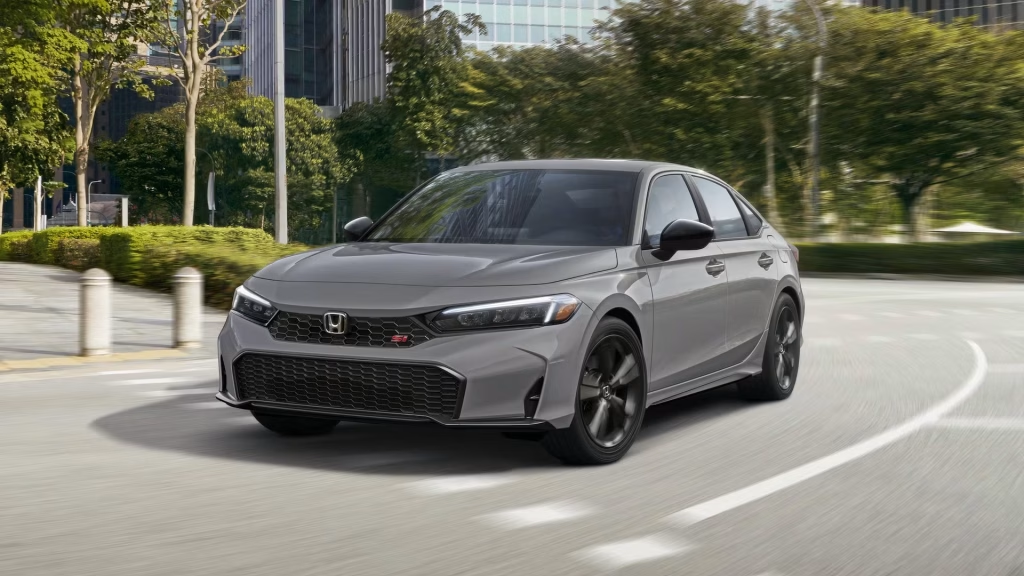
Then comes the interesting part for a $30,000 shopper. The Sport Hybrid costs $29,395 and adds a 200-horsepower hybrid powertrain, 18-inch alloy wheels, heated front seats, a one-touch power moonroof, dual-zone automatic climate control, an eight-speaker audio system, and a leather-wrapped steering wheel.
In other words, the Civic can be purchased as a basic but well-equipped compact sedan or pushed almost to the $30,000 ceiling with considerably more comfort and technology.
The gasoline LX uses a 2.0-liter four-cylinder engine producing 150 horsepower and 133 lb-ft of torque. Honda lists the sedan at approximately 184.8 inches long and 70.9 inches wide.
