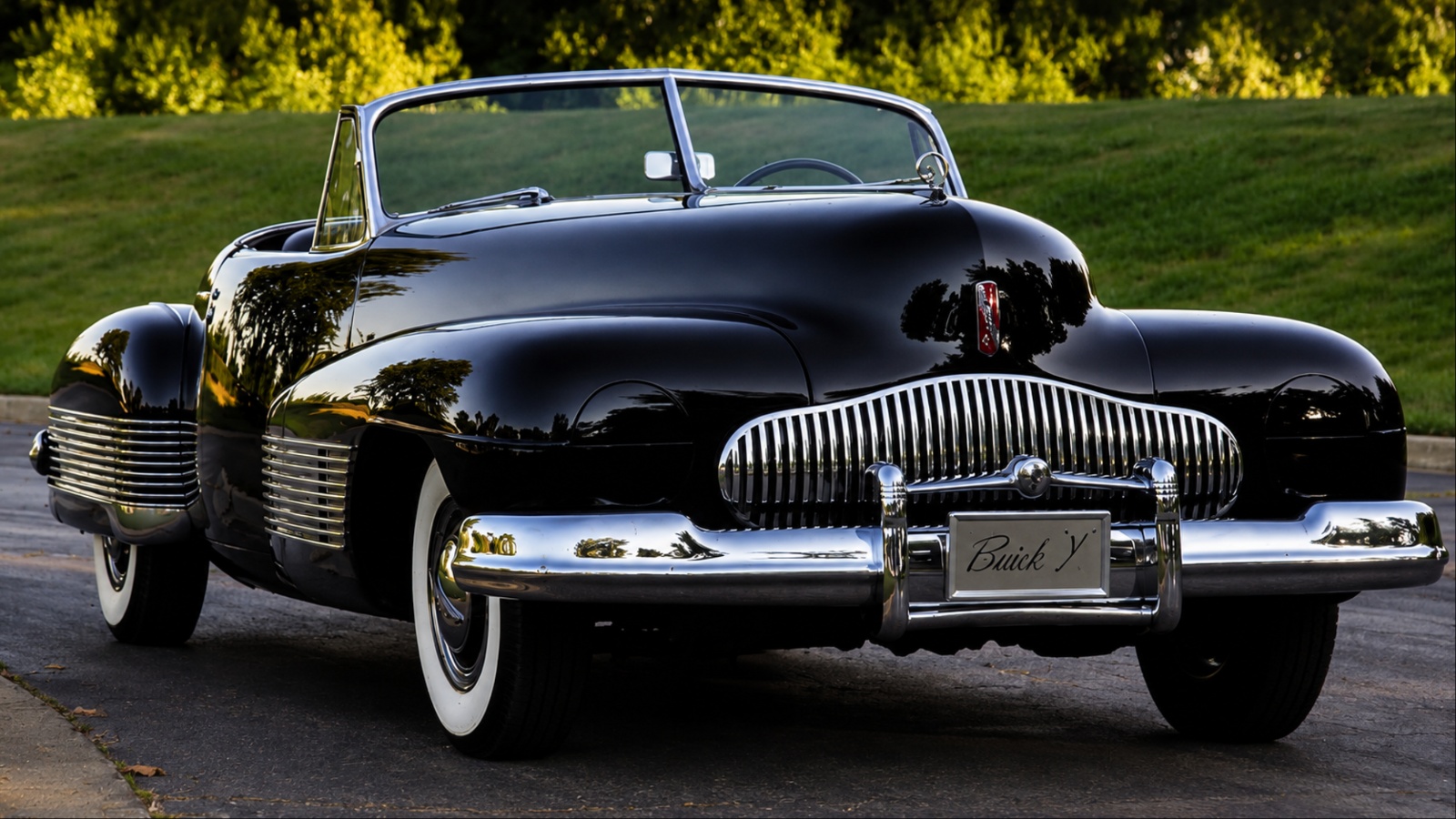
Before concept cars became the spectacular centerpieces of auto shows, manufacturers rarely built vehicles whose primary purpose was to explore what a future production car might look like. In 1938, General Motors changed that approach with the Buick Y-Job, a one-off automobile created under the direction of GM design chief Harley Earl.
The Y-Job is widely regarded as the first concept car, although GM did not originally use that terminology. Earl’s experimental Buick was intended to test styling ideas, demonstrate new design features, and give designers a full-size vehicle on which to experiment.
What made it particularly unusual was that it was not simply a static showpiece. Earl actually drove the Y-Job for years.
The car was built as a functioning automobile, and Earl reportedly used it as his personal transportation. That gave the Y-Job an unusually long life beyond the design studio and made it one of the most influential vehicles in automotive design history.
General Motors’ own Heritage Collection identifies the Y-Job as the industry’s first concept car and credits Earl with creating it to demonstrate future design possibilities. (gm.com)
Harley Earl’s Experiment With Automotive Design
Harley Earl had already established himself as one of the most influential designers in the American automobile industry before the Y-Job appeared.
After joining General Motors in the late 1920s, Earl became increasingly influential in the company’s approach to styling. GM eventually established the Art and Color Section, the industry’s first dedicated automotive styling department, under his leadership.
The department separated vehicle styling from traditional engineering and manufacturing functions, helping establish professional automotive design as a distinct discipline.
That philosophy was important because the Y-Job was not created simply to preview the next Buick. It allowed Earl and his design team to experiment with ideas that did not necessarily need to be production-ready.
The finished car was based on a Buick chassis but featured a dramatically streamlined body. It had a long, low profile, a low hood, concealed headlights, and a clean grille design. The fenders were integrated into the body rather than standing apart as prominently as they did on many 1930s automobiles.
The car also eliminated running boards, which were still common on American vehicles. GM’s Heritage Collection describes the Y-Job as incorporating several styling innovations that would later influence Buick and the broader industry, including power-operated windows, hidden headlights, flush door handles, and a power-operated convertible top.
Not all of those features became immediate production-car standards, but that was not really the point.
The Y-Job gave designers a chance to explore how the automobile might look when practical limitations were temporarily pushed aside. Even its name was unusual.
According to GM’s historical material, the “Y” designation followed the “X” terminology used for experimental aircraft, while Earl used “Y-Job” as the designation for his experimental automobile. The term would eventually become associated with experimental and concept vehicles.
At the time, however, consumers did not have today’s established concept-car culture. Automakers displayed new models and styling proposals, but the modern idea of building a complete, non-production vehicle specifically to demonstrate future design directions was still developing. The Y-Job helped create that formula.
Earl Didn’t Just Display It, He Drove It
The most remarkable aspect of the Y-Job may have been what happened after it left the design studio. Earl did not put the car behind glass and forget about it. He used it.
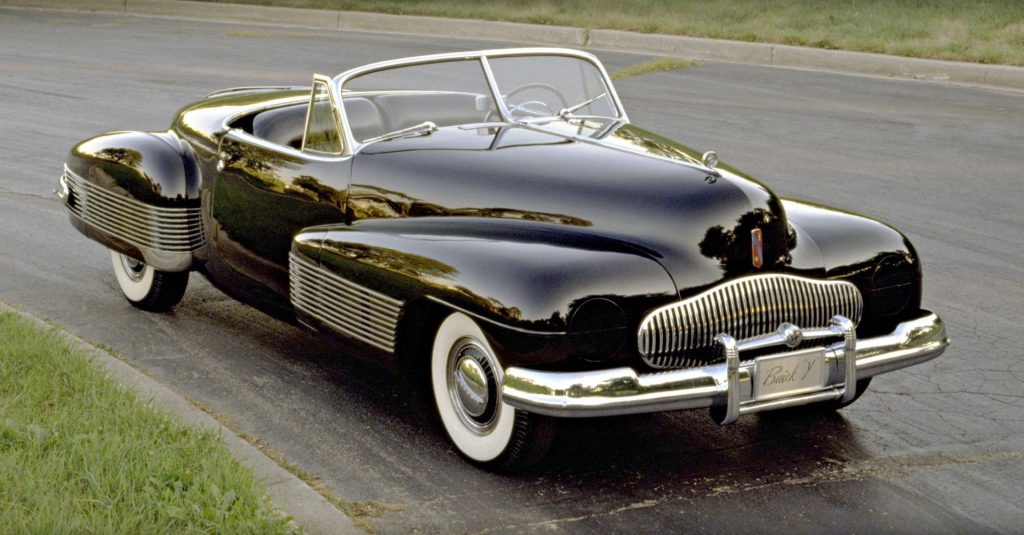
GM’s historical record says Earl drove the Y-Job as his personal car for several years. That detail distinguishes it from many later concept vehicles that were transported from show to show and rarely operated outside controlled demonstrations.
Driving the vehicle also meant that the design could be experienced as an actual automobile rather than merely evaluated as a piece of sculpture.
Earl could see how the proportions worked in everyday use. He could experience the controls, visibility, and practicality. He could discover whether features that looked attractive in a design studio made sense when used on the road.
That was an important advantage. A concept car can look spectacular while sitting motionless under bright lights. But a vehicle that has to start, stop, turn, park, and operate in traffic exposes problems that a static model cannot.
The Y-Job was therefore both a design experiment and a working laboratory. Its hidden headlights are a good example. Concealing the lamps produced a cleaner front-end appearance and reinforced Earl’s pursuit of a low, streamlined body.
Power-operated windows and a power-operated convertible top similarly demonstrated how convenience features could be incorporated into a futuristic design.
The Y-Job’s influence was not necessarily about transferring every feature directly into production. Instead, it demonstrated that an automaker could use a single vehicle to explore multiple possible directions at once. That became the foundation of the modern concept-car strategy.
The Y-Job Changed What a Concept Car Could Be
Modern concept cars serve many purposes. Automakers use them to test public reactions, explore new styling languages, preview technology, communicate brand direction, and gauge whether customers are prepared for an unusual design.
The Y-Job established the basic philosophy decades before auto manufacturers began routinely creating elaborate show cars for major exhibitions. Its significance also comes from its timing.
The late 1930s represented a period when American automobile design was becoming increasingly sophisticated. Aerodynamic styling, integrated bodywork, and lower silhouettes were replacing many of the upright forms associated with earlier cars.
Earl was one of the designers pushing that transformation. The Y-Job allowed him to combine those ideas without having to worry about whether every feature could immediately be manufactured at production volume.
GM’s Heritage Collection notes that the vehicle influenced later Buick styling and became an important milestone in the history of automotive design.
The vehicle also helped reinforce Earl’s broader philosophy that styling could be used strategically rather than simply making an existing mechanical package look attractive.
Under Earl, GM’s design organization became increasingly important to the company’s product strategy. Styling became a major factor in encouraging customers to replace vehicles even when their existing cars remained mechanically functional.
That approach would eventually contribute to the development of annual styling changes, dramatic show cars, and increasingly sophisticated design studios. The Y-Job was an early expression of that philosophy.
It also foreshadowed an approach that automakers now widely embrace. A concept vehicle can shape future production models and influence design decisions even if the concept itself never reaches the showroom.
The Y-Job itself was never sold as a regular Buick model. There was no Y-Job dealership inventory and no production run. Its purpose was to explore. Yet some of its ideas gradually appeared in other automobiles.
The hidden-headlamp treatment became increasingly popular in later decades. Flush or integrated body details became common as manufacturing technology improved. Power windows eventually became normal equipment rather than futuristic features.
The Y-Job reflected a pattern that has appeared throughout automotive history. Many technologies and design ideas begin as costly experiments before gradually becoming familiar features in everyday vehicles.
Its legacy also continued through GM’s later concept-car programs. The company would build increasingly elaborate experimental vehicles to showcase ideas ranging from futuristic styling to new propulsion systems. The concept car had become a legitimate part of automotive product development.
Modern automakers can invest huge amounts of money in vehicles that may never make it into production. Some concepts are designed to preview models expected to arrive within a few years, while others serve mainly to introduce a new design direction or spark conversation.
The central question remains much the same as the one Earl posed back in 1938.
What could the automobile look like next?
The Buick Y-Job provided a new way to answer that question. Rather than limiting designers to sketches, clay models, or production prototypes, Earl created a complete, running automobile that could demonstrate an alternative vision on the road.
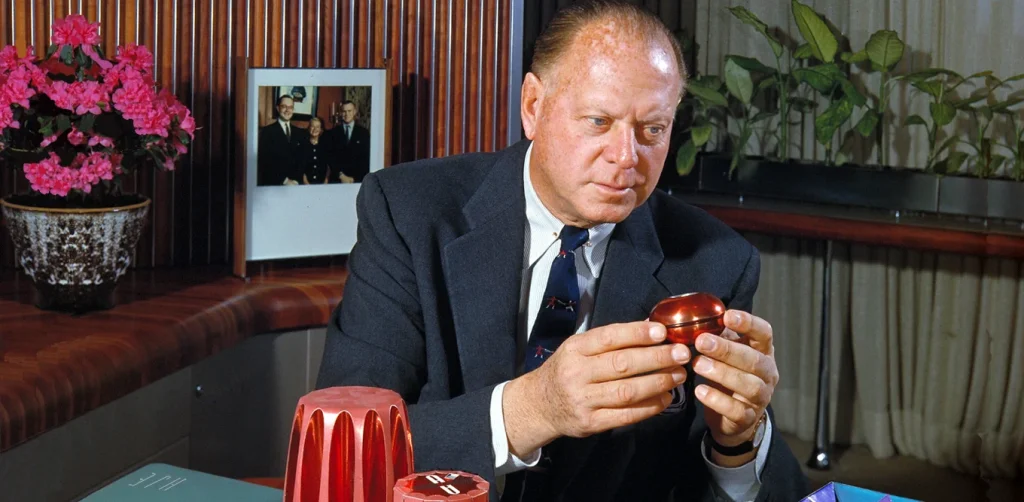
And he personally lived with the experiment. That detail is what makes the Y-Job more than an important historical curiosity. Earl wasn’t merely presenting a futuristic Buick to the public. He was using the vehicle himself, experiencing the design as a driver and allowing an experimental automobile to function in the real world.
The concept-car industry that followed became much more elaborate, but its basic purpose remained intact.
The 1938 Buick Y-Job showed that an automaker could build a car not because it intended to sell it, but because it wanted to explore what cars could become.
Harley Earl’s experiment created a new category of automobile and helped turn automotive design into a forward-looking discipline rather than simply a process of refining what already existed.