
For decades, the station wagon was associated with school runs, grocery trips, family vacations, and an almost complete absence of excitement. Then a handful of manufacturers decided that a long roof did not have to mean slow acceleration.
They installed huge V8s, turbocharged five-cylinders, sophisticated all-wheel-drive systems, and even superchargers into vehicles designed to carry luggage. The results were gloriously unexpected.
Some of these wagons could challenge contemporary sports cars in straight-line acceleration, while others delivered astonishing top speeds for vehicles with enormous cargo areas. Here are eight American-market wagons that proved practicality and serious performance could coexist.
1. 2005 Mercedes-Benz E55 AMG Wagon
The idea of a family wagon keeping pace with a Porsche 911 sounds ridiculous until the E55 AMG arrives. Mercedes-Benz gave this understated estate a supercharged 5.4-liter V8, and the result was one of the quickest practical cars available in the United States during the mid-2000s.
The AMG-built engine produced 469 horsepower and a massive 516 lb-ft of torque. That torque arrived from just 2,650 rpm and remained available through 4,500 rpm, giving the wagon an enormous reserve of acceleration without requiring the driver to chase the tachometer. Power went to the rear wheels through a five-speed automatic transmission.
Car and Driver’s testing revealed the figure that helped make the E55 Wagon legendary. It could sprint from 0 to 60 mph in just 4.1 seconds, cover the quarter-mile in 12.5 seconds at 114 mph, and reach 150 mph in only 24.0 seconds. Mercedes electronically limited its top speed to 156 mph.
Those figures put it squarely into sports-car territory for its era. Car and Driver specifically compared its acceleration to that of the contemporary Porsche 911 Carrera S.
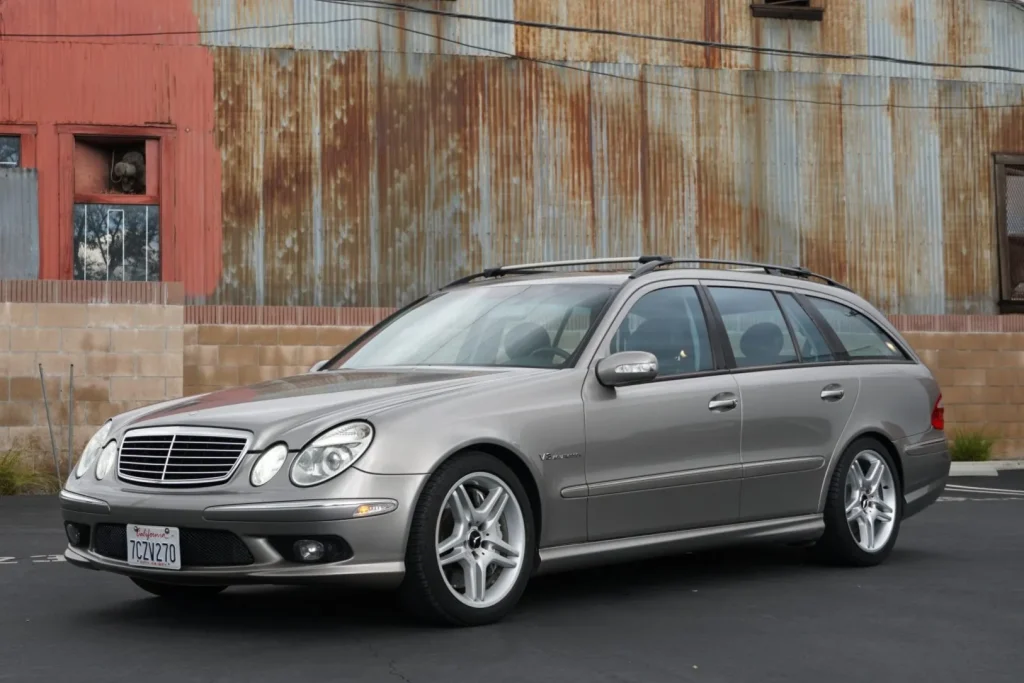
There is an especially interesting reason the wagon could outperform the E55 sedan in acceleration despite weighing more. Mercedes gave the wagon a slightly more rear-biased weight distribution, with 51 percent of its mass over the rear axle. That helped its rear tires find traction during hard launches.
Yet the E55 remained remarkably useful. It offered 24 cubic feet of cargo capacity behind the rear seats and 69 cubic feet with the rear seats folded. An optional rear-facing third row could even turn it into a seven-passenger machine.
2. 2011 Cadillac CTS-V Wagon
Cadillac did not merely build a fast wagon with the CTS-V. It effectively installed the mechanical hardware of a high-performance American muscle car into a five-door body and then gave the result a manual transmission.
Under the hood sits a supercharged 6.2-liter LSA V8 producing 556 horsepower and 551 lb-ft of torque. That engine sends its output to the rear wheels, with a six-speed manual transmission available as standard equipment. A six-speed automatic was also offered.
The performance figures were extraordinary for a vehicle with genuine wagon practicality. Car and Driver recorded 4.3 seconds to 60 mph in its initial test, followed by a 12.6-second quarter-mile at 116 mph.
The publication estimated a drag-limited top speed of approximately 191 mph. A later long-term test produced an even quicker 4.0-second zero-to-60 run and a 12.3-second quarter-mile at 118 mph.
Those numbers are difficult to reconcile with the CTS-V’s physical size. The wagon stretches 191.3 inches and weighs about 4,390 pounds. Yet its chassis included magnetic ride control, Brembo brakes, and performance tires, allowing the huge V8’s output to be backed by hardware capable of handling high speeds.
The six-speed manual makes the car particularly unusual. A driver could row through the gears while carrying passengers and luggage in a vehicle that looked more like an executive family hauler than a track machine.
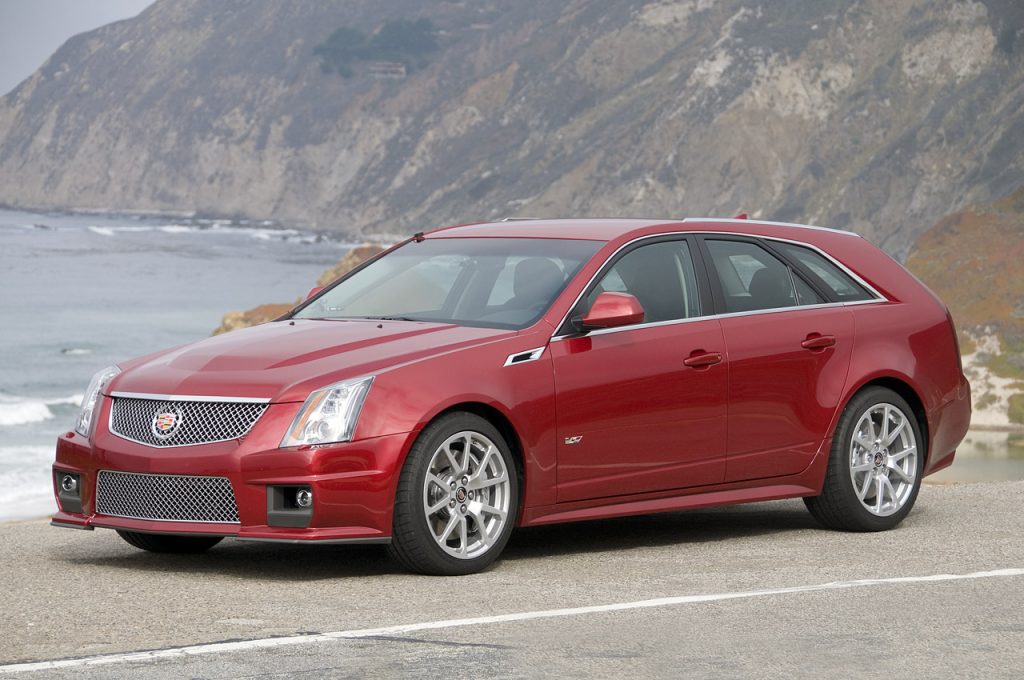
Car and Driver’s long-term experience also demonstrated that the CTS-V was not simply a quick novelty. After 40,000 miles, the wagon still managed 4.0 seconds to 60 mph and a 12.3-second quarter-mile.
Its combination of 556 horsepower, rear-wheel drive, manual transmission, and usable cargo space made it one of the most outrageous American wagons ever sold.
3. 2007 Mercedes-Benz E63 AMG Wagon
Before the modern era of 600-horsepower family wagons, Mercedes-Benz was already proving that a practical estate could have the heart of a muscle car. The 2007 E63 AMG Wagon used a naturally aspirated 6.2-liter V8 producing 507 horsepower and 465 lb-ft of torque.
Unlike today’s turbocharged AMG engines, this powerplant relied on displacement and high-revving character to make its numbers.
The engine’s peak horsepower arrived at 6,800 rpm, while maximum torque was available at 5,200 rpm. Power was sent to the rear wheels through AMG’s seven-speed Speedshift automatic transmission. That combination made the E63 considerably more serious than its conservative exterior suggested.
Car and Driver tested the E63 AMG sedan at 4.1 seconds from zero to 60 mph, while the wagon shared the same 507-hp engine and drivetrain concept. Mercedes-Benz electronically limited the standard car to 155 mph, with an optional AMG Driver’s Package raising the limit to 186 mph.
The wagon’s large body could therefore carry passengers and luggage at speeds that were once the exclusive domain of dedicated performance cars.
The dimensions also reinforce just how unusual the package was. The E63 wagon measured about 190 inches long and 71 inches wide, yet its naturally aspirated V8 gave it enough output to challenge far smaller performance machines.
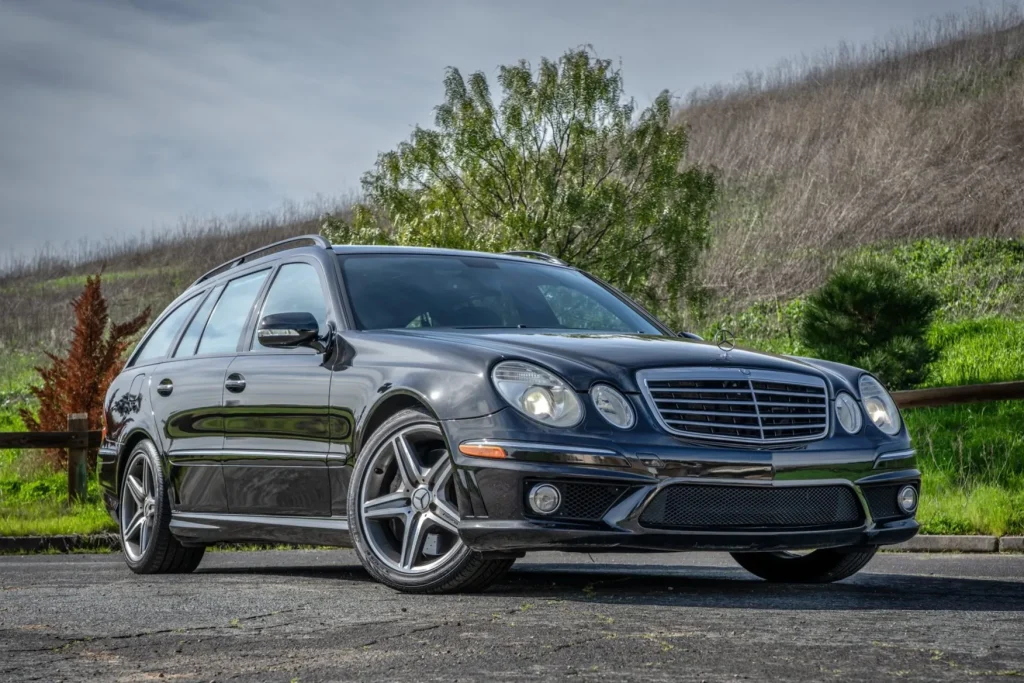
What makes this Mercedes particularly interesting today is its engine philosophy. There was no electric motor, no turbocharger, and no downsized displacement trying to extract every possible horsepower from a small cylinder count.
Instead, AMG used a large naturally aspirated V8, a high rev limit, and a relatively lightweight, performance-focused approach.
That makes the E63 AMG Wagon an important bridge between old-school performance and today’s extremely powerful family cars.
4. 2006 Dodge Magnum SRT8
The Dodge Magnum SRT8 looked like it belonged in a completely different category from European performance machinery. Its upright wagon body offered enormous cargo capacity, but underneath the hood sat Chrysler’s 6.1-liter HEMI V8. The engine produced 425 horsepower at 6,000 rpm and 420 lb-ft of torque at 4,800 rpm.
That output was enough to give the Magnum a surprisingly serious straight-line performance advantage over many ordinary sports cars of its period. Car and Driver recorded a zero-to-60-mph time of 5.1 seconds and a quarter-mile pass of 13.6 seconds at 106 mph. The publication also recorded a drag-limited top speed of 169 mph.
The numbers become more amusing when the car’s size is considered. The Magnum stretched 197.7 inches from nose to tail and measured 74.1 inches across. It weighed 4,379 pounds in Car and Driver’s test configuration, yet still managed to accelerate like a performance machine rather than a conventional family wagon.
Dodge did more than simply install a larger engine. The SRT8 received a strengthened version of the HEMI architecture, including larger valves, a stronger block, a forged crankshaft and connecting rods, and a performance-oriented camshaft. The five-speed automatic transmission also included manual shifting control.
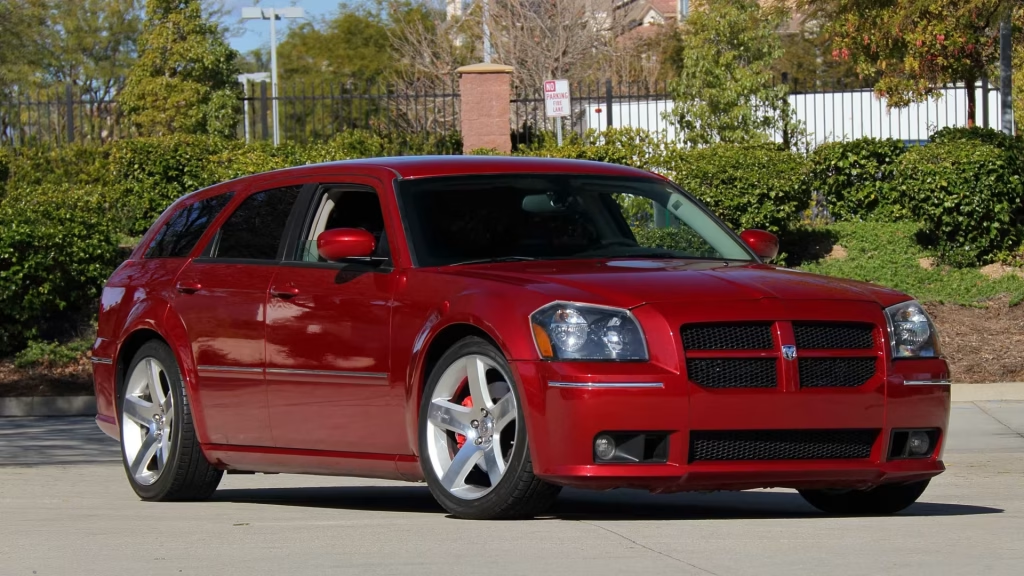
Practicality remained one of its defining strengths. Edmunds lists 27.2 cubic feet of cargo room with the seats in place and 71.6 cubic feet with them folded.
The Magnum SRT8 offered a combination that was hard to find elsewhere. It had generous cargo space, seating for five, rear-wheel drive, and a powerful V8 that made its long wagon body look almost absurdly fast.
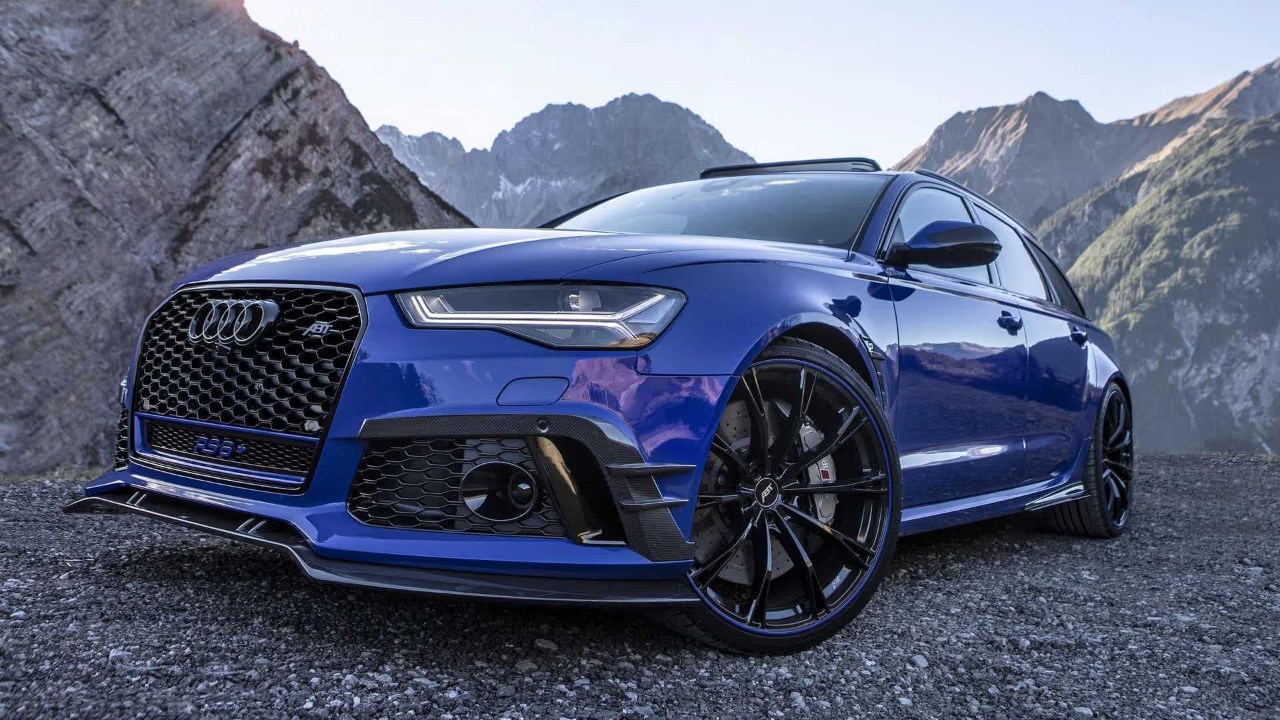
5. 2015 Audi RS 6 Avant
Audi’s RS 6 Avant took the high-performance wagon formula in a distinctly European direction. Instead of relying on a naturally aspirated V8, Audi installed a twin-turbocharged 4.0-liter V8 and paired it with quattro all-wheel drive.
For the U.S.-market 2015 model, the engine produced 560 horsepower and 516 lb-ft of torque, giving this family-sized wagon the output of a serious grand tourer.
The performance figures were startling. Car and Driver recorded 3.7 seconds from zero to 60 mph and a 12.1-second quarter-mile at 116 mph. Audi limited the standard RS 6 Avant to 155 mph, while the available Dynamic package increased the limit to 174 mph. With the Dynamic Plus package, the published maximum rose to 190 mph.
What makes the RS 6 particularly compelling is how little drama its speed creates from behind the wheel. Quattro sends the engine’s output through all four wheels, allowing the wagon to launch with considerably more composure than a powerful rear-drive car might manage on ordinary pavement.
The eight-speed Tiptronic automatic transmission also keeps the V8 within its strong torque range.
Despite its performance credentials, this remained a genuine five-door family vehicle. The RS 6 Avant measured approximately 193 inches long and 76 inches wide, with enough room for passengers and luggage. Audi’s approach was not to make practicality secondary to speed. Instead, the wagon’s utility became part of its appeal.
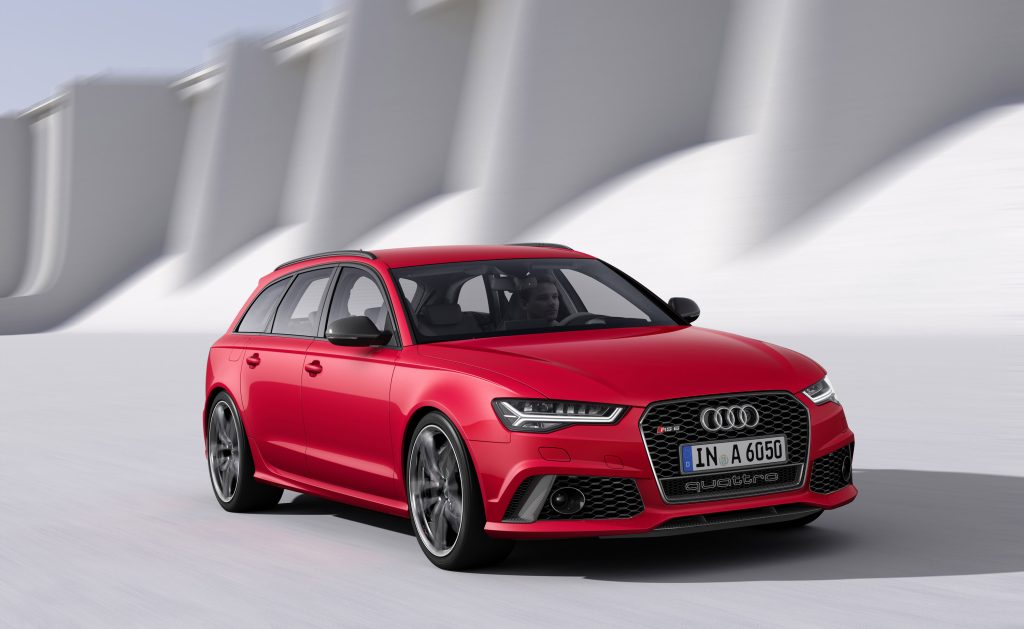
The 4.0-liter V8 also represents an important stage in Audi’s performance-engine strategy. Turbocharging allowed the company to extract enormous output from a displacement considerably smaller than the naturally aspirated V8s used by several rivals.
At 560 horsepower, the RS 6 Avant could accelerate with the urgency of an exotic sports car while carrying the luggage, passengers, and everyday responsibilities of a family wagon. That contradiction is precisely what made it so memorable.
6. 2018 Mercedes-AMG E63 S Wagon
Mercedes-AMG took the idea of a fast wagon to another level with the E63 S. Beneath the restrained long-roof body sits a hand-built 4.0-liter twin-turbocharged V8 producing 603 horsepower and 627 lb-ft of torque. Those figures are enough to make the E63 S one of the most powerful factory wagons ever offered in the United States.
The acceleration figure tells the story better than the horsepower number alone. Mercedes-Benz rated the E63 S Wagon at 3.4 seconds from zero to 60 mph. Car and Driver went further, recording 3.0 seconds in testing and an 11.1-second quarter-mile at 122 mph. The publication measured a 186-mph top speed with the available performance package.
Unlike the rear-wheel-drive AMG wagons of earlier generations, the E63 S uses AMG’s 4MATIC+ all-wheel-drive system. Its drivetrain can distribute the engine’s huge torque to the wheels with considerably greater traction, helping explain how a large wagon can produce launch figures that would have been remarkable for a dedicated sports car.
The car’s dimensions underline the absurdity. It stretches roughly 197 inches long and is about 75 inches wide, providing substantial interior and cargo space. Yet the driver gets a nine-speed AMG Speedshift automatic transmission, performance brakes, and an engine capable of producing more than 600 horsepower.
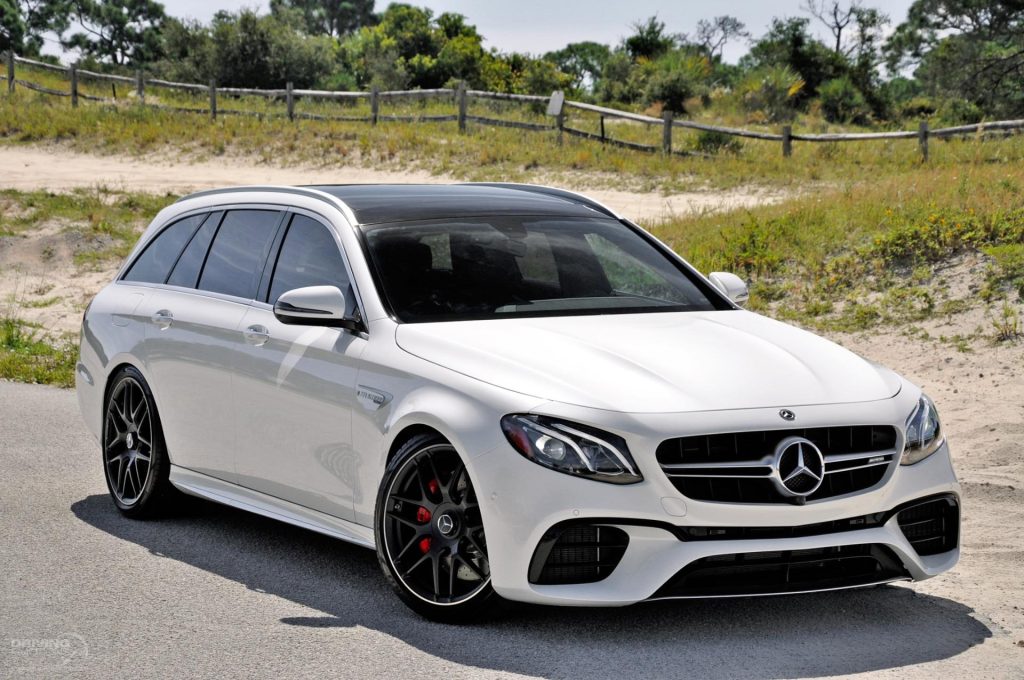
There is also an unusual duality to the E63 S. In relaxed driving, the V8-powered wagon can behave like a luxury family vehicle. Press the accelerator aggressively, however, and the twin turbochargers turn that calm personality into something far more serious.
The E63 S demonstrates how far the performance-wagon concept had progressed. Earlier AMG estates were already fast, but this generation moved the formula into supercar acceleration territory while retaining four doors, five seats, and a large rear cargo area.
7. 2019 Porsche Panamera Turbo Sport Turismo
Porsche’s decision to build a wagon-shaped Panamera created one of the most unconventional high-performance cars of the modern era.
The Panamera Turbo Sport Turismo used a 4.0-liter twin-turbocharged V8 producing 550 horsepower and 567 lb-ft of torque. Rather than sacrificing the performance expected from a Porsche, the Sport Turismo added a longer roof and a more useful rear cargo area.
The numbers were genuinely serious. Porsche rated the Turbo Sport Turismo at 3.6 seconds from zero to 60 mph when equipped with the Sport Chrono package, with a top track speed of 188 mph. The eight-speed Porsche Doppelkupplung dual-clutch transmission and all-wheel drive helped make the engine’s output readily usable during hard acceleration.
Car and Driver’s testing was even more revealing. The publication recorded a 3.0-second zero-to-60-mph run and an 11.1-second quarter-mile at 122 mph. Those figures placed the large Porsche wagon in the same acceleration conversation as purpose-built performance cars.
The Sport Turismo was not simply a Panamera hatchback with a stretched roof. Porsche redesigned the rear portion of the car to provide additional versatility while retaining the Panamera’s low, performance-oriented stance. The body measured about 198.8 inches long and 76.3 inches wide.
Inside, the wagon offered considerably more useful cargo capacity than a conventional sports coupe. Porsche listed 49.0 cubic feet of cargo volume with the rear seats folded. That meant the car could handle luggage, equipment, and everyday hauling duties without abandoning serious performance.
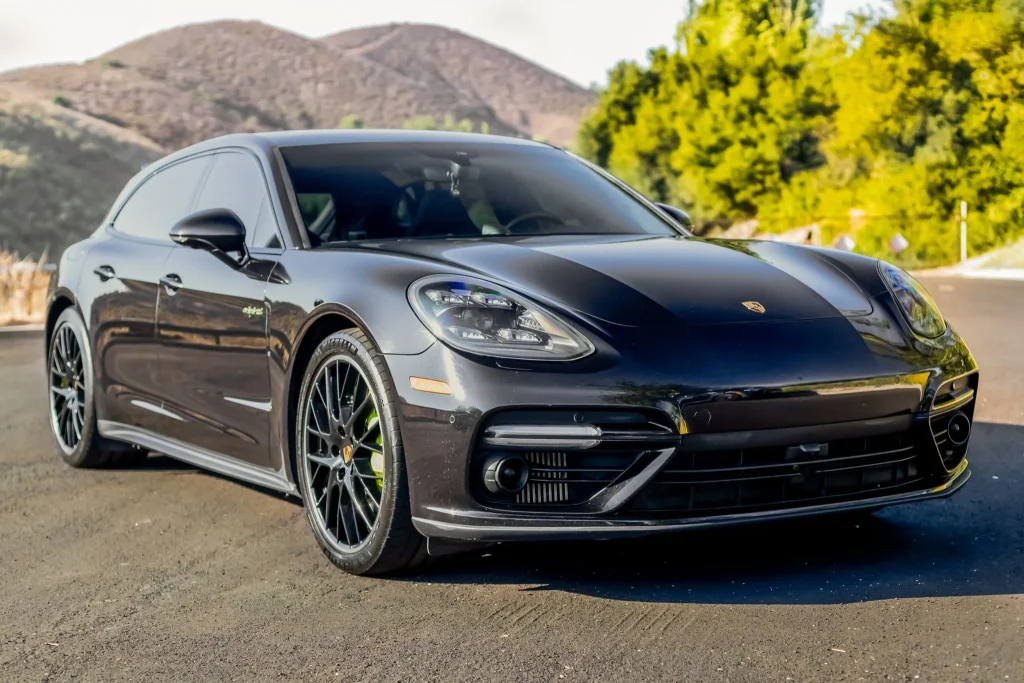
The Turbo Sport Turismo’s significance comes from how naturally Porsche integrated those two opposing priorities. Its V8 provided explosive acceleration, while the long-roof configuration gave owners a level of practicality rarely associated with a car capable of approaching 190 mph.
It was a reminder that Porsche did not consider performance and utility mutually exclusive. In the Panamera Turbo Sport Turismo, both became central parts of the same machine.
8. 2013 Cadillac CTS-V Wagon
Cadillac’s CTS-V Wagon deserves a place here for a reason that goes beyond its raw acceleration. It was one of the rare American wagons that combined a supercharged V8, rear-wheel drive, and a six-speed manual transmission in a package designed to serve as a genuine family vehicle.
Its 6.2-liter LSA V8 produced 556 horsepower and 551 lb-ft of torque. That output was transmitted through either a six-speed manual or six-speed automatic, depending on configuration. The manual gearbox gave the CTS-V a character that many high-performance wagons lacked, putting the driver directly in control of the supercharged engine.
Car and Driver’s long-term CTS-V Wagon recorded 4.0 seconds from zero to 60 mph and completed the quarter-mile in 12.3 seconds at 118 mph. The publication also reported a 191-mph top speed in testing, although exact results can vary with conditions and vehicle configuration.
Those figures are remarkable when the car’s size is considered. The CTS-V Wagon measures roughly 191 inches long and more than 72 inches wide. It also provides substantially more cargo room than a sedan or coupe, making its performance harder to anticipate from its practical body shape.
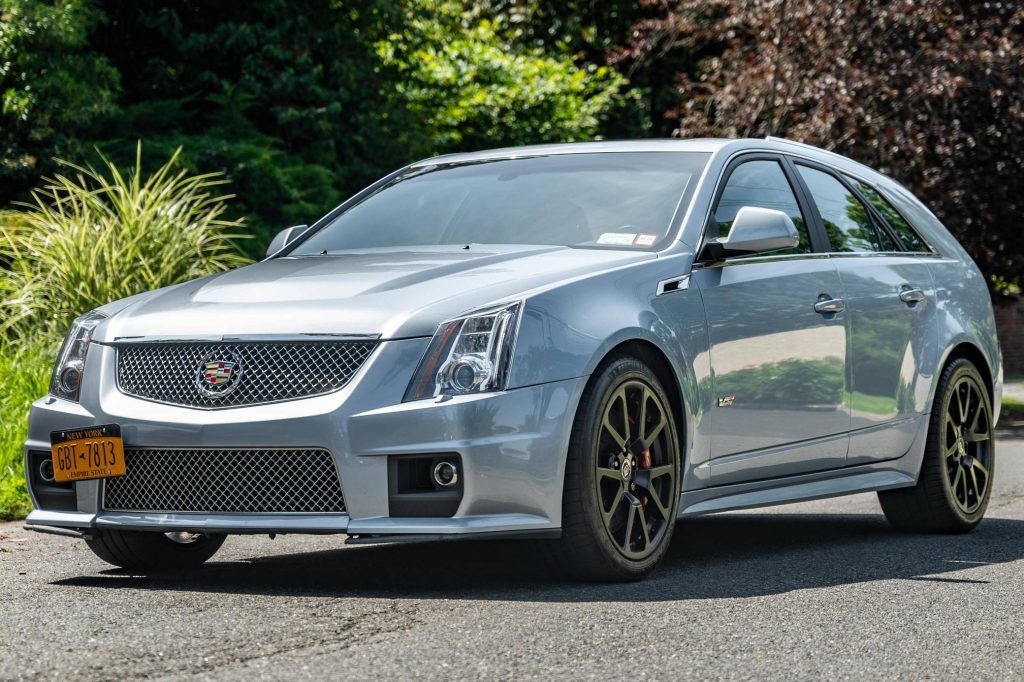
Cadillac equipped the V-Series wagon with hardware intended to match its engine. Magnetic Ride Control could adjust damping rapidly, while large Brembo brakes were fitted to help manage repeated high-speed stops. The rear-wheel-drive layout also preserved the traditional muscle-car character that made the CTS-V so appealing.
The wagon’s rarity adds another layer to its story. Cadillac did not produce an endless stream of these cars, and the combination of supercharged V8 power, manual transmission, and long-roof practicality has become increasingly difficult to find.
The CTS-V Wagon was therefore more than a fast family car. It was a distinctly American answer to Europe’s performance estates, delivering huge displacement and supercharged torque in a body that could still handle everyday responsibilities.
