Long before cameras, processors, and adaptive LED headlights became part of modern cars, Cadillac had already found a way to make high-beam headlights respond automatically to traffic.
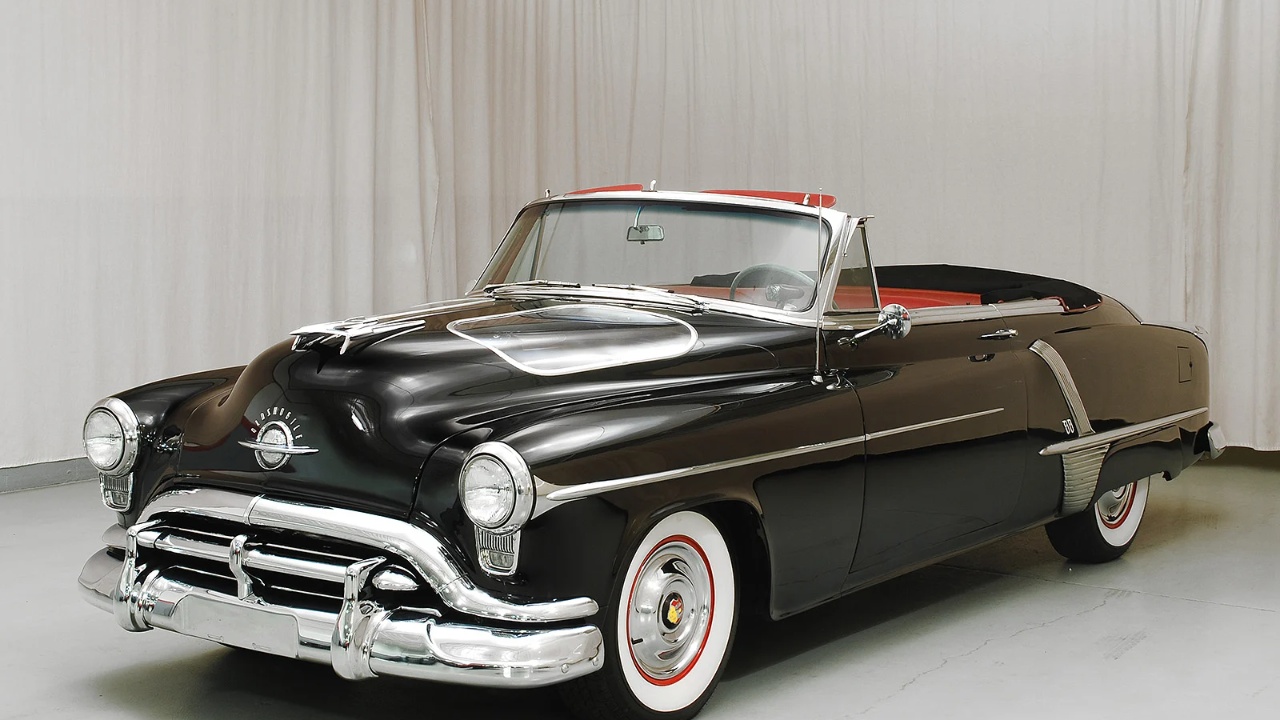
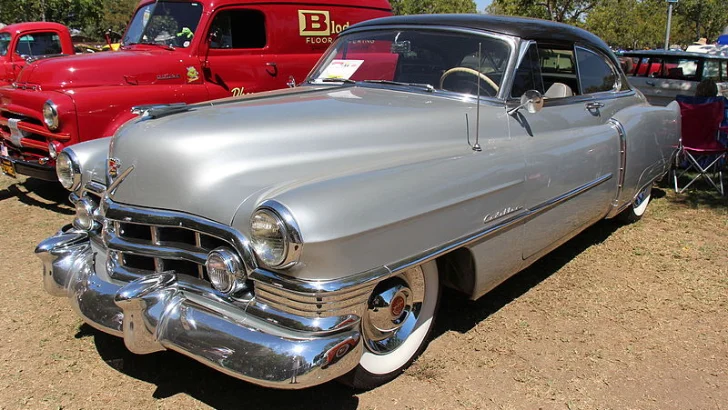
In 1952, General Motors introduced the Autronic Eye, an automatic headlight-dimming system offered on Cadillac and Oldsmobile models. Instead of a camera or digital sensor, it relied on a photosensitive tube mounted in a small housing on the dashboard.
When the sensor detected the headlights of an approaching vehicle, the system automatically switched the car from high beam to low beam. After the opposing vehicle passed, it returned the headlights to high beam.
It was an extraordinary piece of automotive technology for the early 1950s. The system was essentially an early form of driver assistance, using light detection and electronic control to automate a task that motorists normally performed with a foot-operated dimmer switch.
There is one historical wrinkle worth noting. Cadillac’s own current heritage timeline lists the Autronic Eye as a 1954 introduction, while contemporary technical material and historical documentation identify the system as being factory-installed on 1952 Cadillac and Oldsmobile models.
The broader historical record supports 1952 as the beginning of the Autronic Eye program, with Cadillac continuing to develop and offer the technology through later model years.
How Cadillac’s Autronic Eye Worked
The most recognizable part of the Autronic Eye was the small sensor mounted on top of the dashboard near the windshield. Its appearance was unusual enough that it looked more like a miniature periscope or gunsight than anything resembling a modern automotive sensor.
Inside that housing was a phototube, which responded to incoming light. The sensor was connected to an amplifier and a relay system that controlled the headlights. Unlike today’s systems, there was no digital computer interpreting an image.
The Autronic Eye essentially detected a sufficiently strong light source and used that signal to determine when the headlights should be dimmed.
A February 1953 edition of Radio-Electronics provided a detailed technical explanation of the system and confirmed that the Autronic Eye was offered as a factory-installed option on 1952 Cadillac and Oldsmobile models. The publication described four main components that made up the system. These included the phototube unit, amplifier, power relay, and the vehicle’s foot-operated dimmer mechanism.
The basic operating sequence was surprisingly similar to the purpose of modern automatic high-beam systems.
When the driver selected the high-beam position, the Autronic Eye remained ready to respond to approaching headlights. If its phototube detected sufficient light from another vehicle, the electronic circuitry caused the relay to switch the headlights to low beam.
Once the opposing vehicle passed and the sensor no longer received the necessary level of light, the system returned the headlights to high beam.
Cadillac’s later documentation confirms the same fundamental operation. Its 1956 vehicle information material explains that the Autronic Eye automatically switched the headlights to low beam when another car approached from the opposite direction. An override allowed the driver to retain manual control when necessary.
That manual override was important because the system could not understand traffic in the way a modern camera-based system can. It reacted to light intensity rather than identifying vehicles, road geometry, or traffic patterns.
The amplifier was located away from the dashboard sensor, under the hood. Historical restoration documentation describes the Autronic Eye as consisting of the dashboard-mounted phototube, an amplifier, and a power relay, along with the appropriate switching equipment.
In other words, the little device the driver could see was only the “eye.” The actual control system extended into the engine compartment.
A 1950s Solution to a Problem Drivers Still Have Today
The Autronic Eye had a simple goal. It was designed to reduce glare for approaching drivers while making nighttime driving more comfortable and convenient for the person behind the wheel.
In the early automobile, manually switching between high and low beams was simply part of driving after dark. Drivers had to recognize an approaching vehicle, operate the dimmer, and then switch back after the other vehicle passed.
The Autronic Eye attempted to remove that repetitive task. That was especially significant because high beams were becoming increasingly important as American roads expanded and nighttime driving became more common.
Yet high beams could create a dangerous situation when used around other traffic. An automatic system promised to make the correct response without requiring constant driver intervention.
The contemporary radio-electronics description explicitly said the system was intended to relieve drivers of the responsibility of operating the foot-operated dimmer and thereby improve driving safety.
The technology also included provisions for situations in which the driver needed to override it. The original system could be placed on standby by moving the conventional foot switch to the low-beam position. An auxiliary switch could also allow the driver to momentarily select high beam for signaling.
That combination of automatic operation and manual override is still familiar today. Modern Cadillac vehicles, for example, use IntelliBeam to automatically switch high beams on and off based on surrounding traffic conditions.
Cadillac’s current system uses forward-looking cameras and can automatically control high beams at speeds above 25 mph on equipped vehicles.
The hardware is dramatically more advanced, but the fundamental objective has barely changed in more than seven decades. The Autronic Eye’s biggest limitation was its sensitivity to the environment.
A phototube does not know whether the light entering it comes from an approaching vehicle, a streetlight, or another bright source. Its operation therefore depended heavily on calibration and surrounding conditions.
Historical accounts of the system note that ambient light could confuse the sensor and that reliability problems eventually hurt the feature’s popularity.
That helps explain why a seemingly futuristic feature did not immediately become standard equipment across the automobile industry.
Nevertheless, GM continued developing the technology. The Autronic Eye name remained in use through the 1950s, and by 1960 the system had evolved into Guide-Matic.
Cadillac’s later documentation describes Guide-Matic as automatically switching from high beam to low beam when an approaching vehicle was detected, then returning to high beam when conditions permitted.
It also provided sensitivity adjustment and manual override functions. The concept therefore survived even as the hardware and branding changed.
From a Dashboard Phototube to Modern Camera-Based Headlights
The Autronic Eye is significant because it demonstrates how many modern driver-assistance ideas actually developed.
Today’s automatic high-beam systems use cameras and sophisticated software to analyze the road ahead. They can distinguish vehicles, respond to traffic, and account for changing conditions much more intelligently than a 1950s phototube.
Cadillac’s current IntelliBeam system, for example, uses a forward-looking camera to determine when high beams should be switched on or off.
The Autronic Eye lacked the computing power found in modern systems. Its sensor performed a much simpler task by detecting whether the amount of light ahead was sufficient to trigger the headlights to switch to a lower beam.
Yet that simple question was enough to automate a function that drivers had performed manually for decades.
The technology also illustrates an important characteristic of Cadillac during this period. The brand frequently used expensive and technically ambitious features to distinguish its cars from competitors. The Autronic Eye was not merely a novelty. It was a genuine attempt to solve a real driving problem using the electronic technology available at the time.
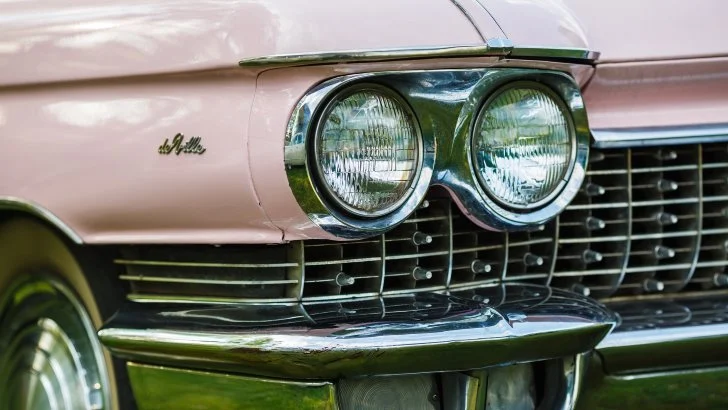
Cadillac’s own heritage material now places the Autronic Eye among the brand’s significant innovations, although its official timeline dates the Cadillac introduction to 1954. The contemporary technical record, however, clearly establishes factory installation on 1952 Cadillac models, making 1952 the stronger date for the system’s debut.
That distinction matters because the Autronic Eye was not simply an early automatic-lighting feature. It was an early example of a vehicle sensing its environment and changing its behavior without direct driver input.
That is the same broad principle behind many modern systems, from automatic high beams to automatic emergency braking.
The technology has obviously changed. A modern vehicle can use cameras, radar, software, and powerful processors to make decisions that the Autronic Eye could never have made. But the basic idea remains remarkably familiar.
More than 70 years ago, a small phototube sitting inside a housing on a Cadillac’s dashboard was already watching the road for approaching headlights. When it saw one, it dimmed the lights.
The Autronic Eye may seem primitive by modern standards, but it introduced an idea that remains common in today’s vehicles. The car could sense traffic conditions and handle a small but meaningful part of the driving process automatically.