
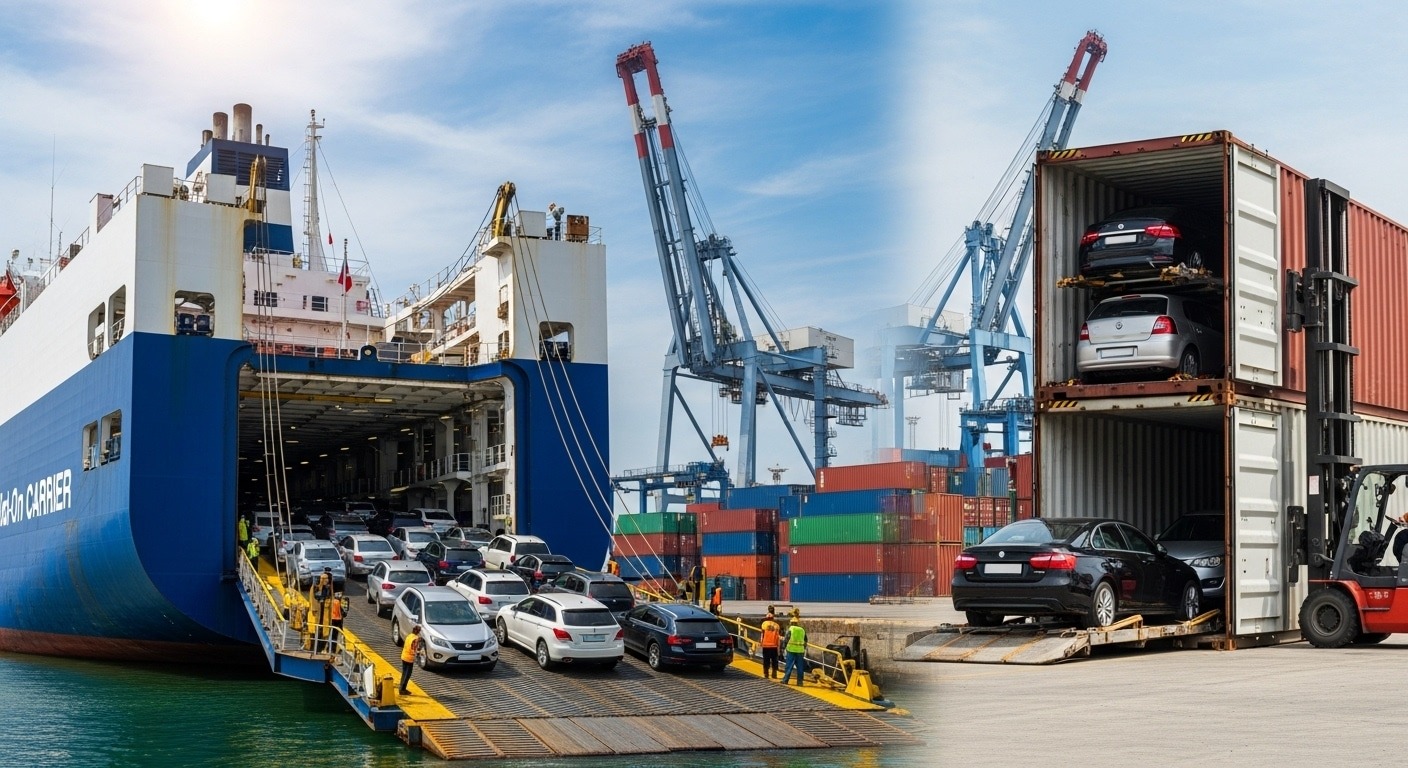
A used car that leaves an American driveway may have a much longer journey ahead. Each year, close to one million used vehicles leave the United States for buyers in other countries. At the same time, millions of cars that are too worn out to keep driving are dismantled and recycled. That creates a huge trade in vehicles, parts, steel, aluminum, copper, plastics, and other materials.
The scale is easy to miss because most people only see the car’s first owner and perhaps its next buyer. Behind that familiar process sits an international business worth billions of dollars. In 2024, US recyclers exported $28.1 billion in recovered materials, while the auto recycling industry alone handled millions of end-of-life vehicles.

Nearly One Million Used Cars Leave the US
The figure is surprisingly large. UC Davis researchers report that the United States exports nearly one million used cars every year, with most going to lower- and middle-income countries.
That trade includes vehicles that still have plenty of useful life left in them. A car that no longer makes financial sense for an American owner can be an affordable option for someone elsewhere. Lower purchase prices, available replacement parts, and familiar mechanical designs can make these vehicles attractive to buyers.
Mexico is especially important to this trade. Research from UC Davis describes it as the largest market for American second-hand vehicles, receiving nearly 15 percent of vehicles retired from US roads each year.
The flow has been around for decades. Earlier research found that more than 2.5 million used vehicles were exported from the United States to Mexico between 2005 and 2008 after Mexico changed its import rules for older vehicles.
So, when an American driver replaces an older vehicle, that car may not be headed for a scrapyard. Someone thousands of miles away may be waiting to give it another few years of service.
Why Old American Cars Still Have Value
Age does not automatically make a vehicle worthless. In many cases, the opposite can be true when a buyer has access to cheaper repair labor, affordable parts, or a market where used transportation is in high demand.
Consider a 10-year-old pickup. An American owner may see rising maintenance bills and decide that a newer truck makes more sense. A buyer elsewhere may see the same vehicle differently. If the engine and transmission are healthy, the truck can still provide dependable transportation without the price attached to a newer model.
Salvage vehicles add another layer. Some cars are damaged in crashes, floods, or other incidents and receive insurance classifications that make repair unattractive in the United States.
International buyers can purchase these vehicles through auctions, repair them, and return them to service. UC Davis researchers found that salvage vehicles are part of the used vehicle trade into Mexico and that repair shops and junkyards have developed around this activity.
Parts matter, too. A vehicle that cannot be restored can supply doors, engines, transmissions, wheels, electronics, and other components. That means a car can have value even when its original owner has decided it is time to move on.
The Recycling Business Adds Billions More
Cars that are no longer suitable for regular driving can take on a new role as valuable sources of recyclable materials.
The United States processes around 12 million end-of-life vehicles each year, according to Recycling International. About 95 percent enter the recycling system, while at least 80 percent of the material is recycled. The industry includes roughly 9,000 dismantlers and hundreds of shredding facilities.
Steel makes up a large share of a vehicle’s material content. Recycling International reports that US auto recyclers process more than 14 million tonnes of steel annually, supplying more than one third of the steel that goes to American smelters.
Then there is the broader recycled materials trade. US recyclers exported $28.1 billion worth of recovered materials in 2024. Those shipments included 13.9 million metric tons of recycled iron and steel, 4.1 million metric tons of recycled nonferrous metals, and 400,000 metric tons of recycled plastics.
The $26.7 billion figure cited by some industry reports comes from an earlier estimate. Recycling International reported that figure for US recycled material exports while discussing the country’s large scrap trade.
Put simply, old cars help feed a massive materials business.
Exporting Cars Has Benefits and Costs
Sending a used car abroad can be useful because it allows a vehicle to remain productive instead of being discarded immediately. For buyers who cannot justify the cost of a new vehicle, a used American car can provide access to transportation at a lower price.
There is an environmental argument on both sides, though. A vehicle that continues running produces emissions for longer. At the same time, keeping an existing car in service can avoid the immediate need to manufacture another vehicle.
Research on US vehicle exports to Mexico found that traded vehicles were dirtier than the average American vehicle but cleaner than the average vehicle already operating in Mexico.
That trade therefore lowered average vehicle emissions in both countries, even though total greenhouse gas emissions increased because more vehicles remained in use.
Electric cars introduce another concern. UC Davis researchers warn that exporting used EVs can reduce domestic access to batteries containing valuable materials. If those batteries eventually reach recycling facilities outside the United States, the materials inside them may not return to American supply chains.
There are also effects for American drivers. UC Davis research says used vehicle exports can help remove older cars from US roads, supporting vehicle replacement and new-car sales. Yet sending repairable cars and parts abroad can also make certain used components harder to find domestically.
The trade brings benefits, but it also creates questions about what happens to vehicles and materials after they leave US borders.

One Old Car Can Have Several Lives
The journey of an American vehicle does not necessarily finish when the first owner sells it. A car can move through several stages, with each stage creating another opportunity for use, repair, resale, or recycling.
First, there is the original purchase. Years later, the vehicle enters the used market. If domestic demand is weak, an exporter may purchase it and send it abroad. A buyer can then repair it, maintain it, and keep it running.
Eventually, even that second life comes to an end. The vehicle may enter a dismantling facility, where usable components are removed before the remaining shell is processed for metal recovery.
That cycle explains why the numbers are so large. The United States exports close to one million used cars each year, while around 12 million vehicles reach the end of their driving lives annually.
The financial value extends beyond the vehicles themselves. Recycled materials exported from the United States reached $28.1 billion in 2024, according to the Recycled Materials Association. About 30 percent of recyclable and recycled materials processed by US recyclers were exported.
An old car, then, is rarely just an old car. It can become transportation for another driver, a source of affordable parts, or a supply of raw materials for another manufacturing process.
That is one of the most remarkable aspects of the American used car market. A vehicle may leave its original market, yet continue generating economic value for many years.