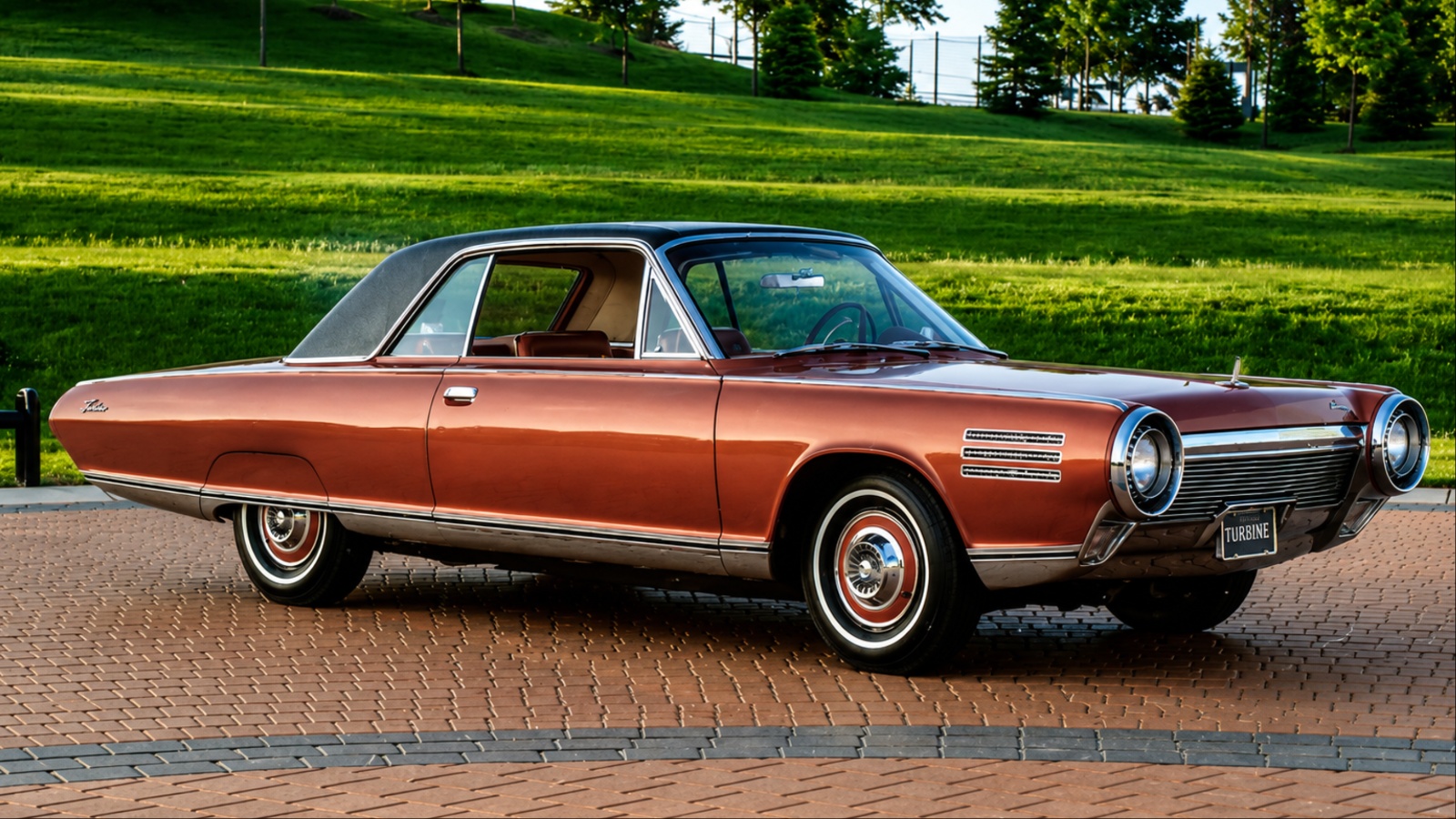
Imagine pulling into a gas station in 1963 and telling the attendant to fill your car with perfume. It sounds ridiculous, but Chrysler actually built a car that could run on perfume. This was not some publicity stunt or a regular engine modified for attention. Instead, it was the result of years of serious research into gas-turbine technology. Chrysler believed turbine engines could offer everyday drivers a smoother and simpler alternative to traditional piston engines.
The result was the Turbine Car, a futuristic-looking vehicle that seemed straight out of a science-fiction film. It sounded more like a small jet than a normal car and could run on several different fuels, including diesel and jet fuel. During one well-known demonstration, it even ran on tequila, showing just how versatile the unusual engine could be.
It Started With a Jet-Engine Idea
Chrysler’s interest in turbine technology began decades before the bronze Turbine Car appeared on American roads. The company had been researching gas turbines for aviation applications since the 1930s, but engineer George Huebner helped push the idea toward passenger vehicles after World War II.
The appeal was straightforward. A turbine could generate power without the pistons, connecting rods, crankshaft, and numerous other components required by a conventional engine.
The first road-going experiments were far less glamorous than the finished car. Chrysler installed early turbine engines in existing vehicles, allowing engineers to gather practical information while the technology matured.
A prototype made its public debut in 1954 inside a Plymouth Belvedere. Another turbine-powered Plymouth later completed a trip from New York City to Los Angeles, giving Chrysler a chance to show that the concept could function outside a laboratory.
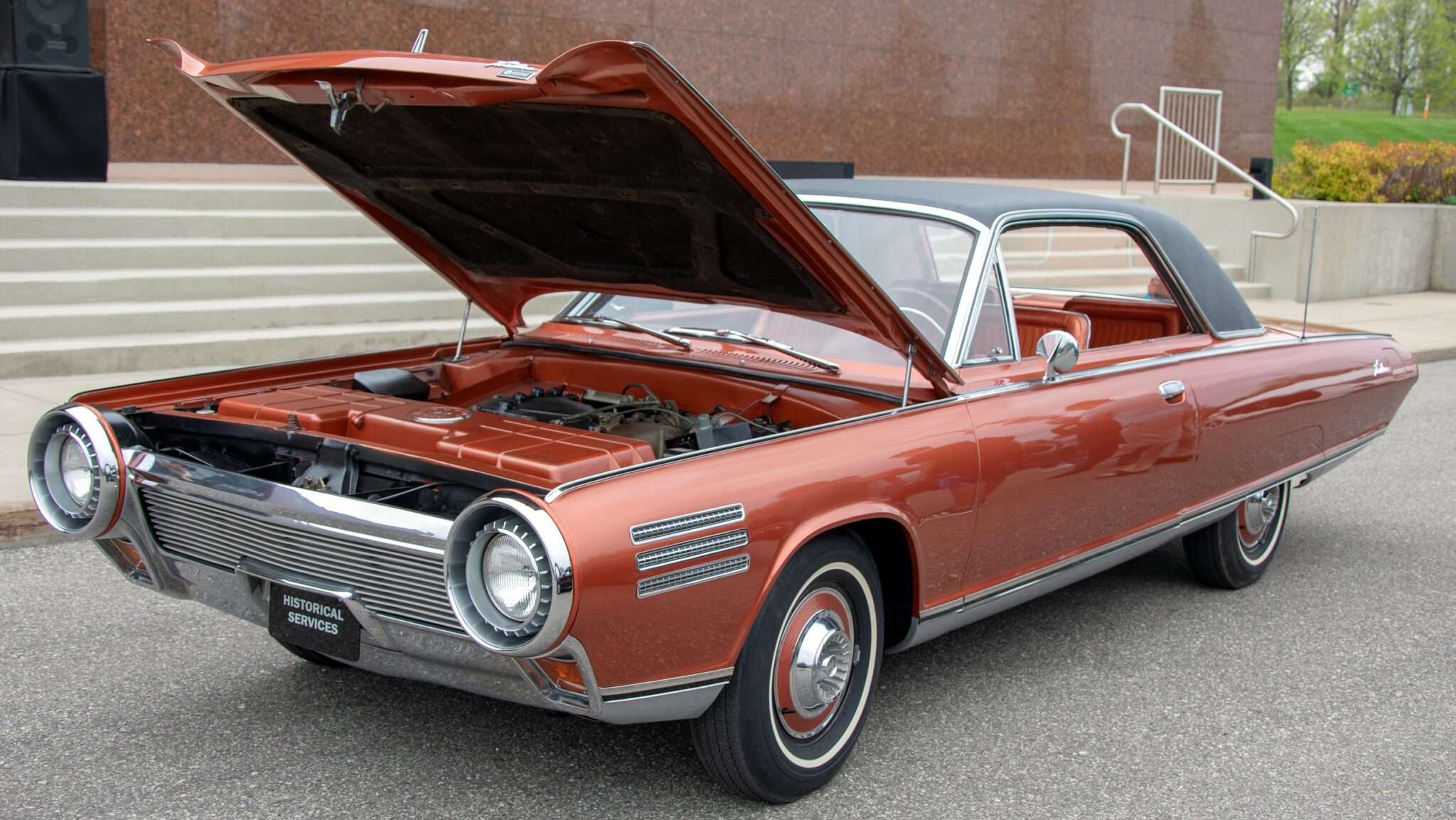
By the early 1960s, Chrysler was ready to create a vehicle designed specifically around turbine power. Rather than simply placing the latest engine inside another standard sedan, the company commissioned a fresh body from Italian coachbuilder Ghia. The result was sleek, futuristic, and unmistakably different.
The Engine Did Something Almost Absurd
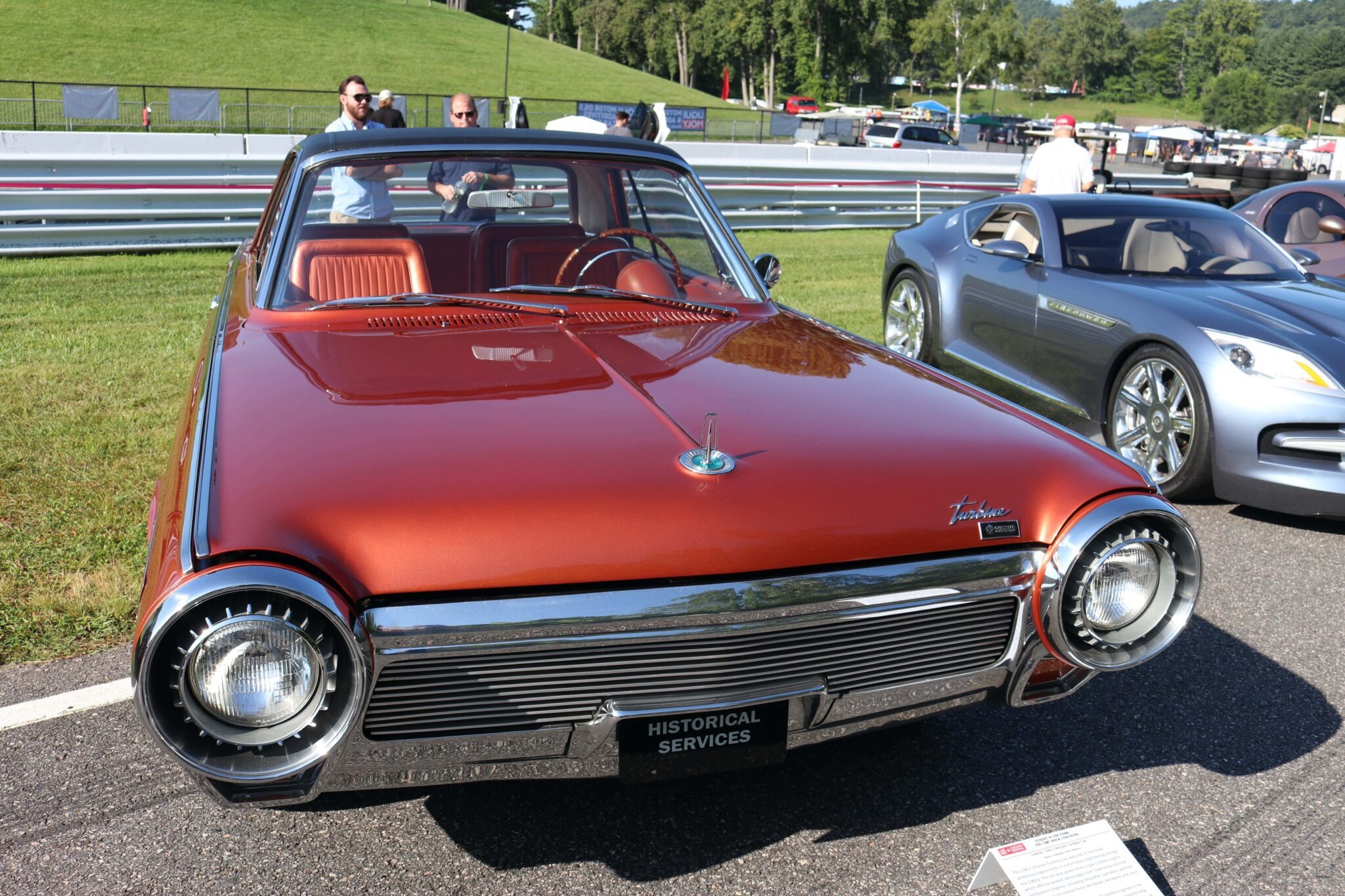
Here is where the story gets wonderfully strange. The Chrysler Turbine Car did not need one special type of fuel. Its A-831 turbine could burn unleaded gasoline, diesel, kerosene, and JP-4 jet fuel. Chrysler also reported that the engine could handle other combustible liquids, including furnace oil, peanut oil, soybean oil, and perfume.
Why was that possible? A turbine engine works differently from a normal piston engine. Air is compressed and mixed with fuel before combustion creates a hot, expanding flow that spins a turbine.
The rotating turbine then sends power through a modified TorqueFlite three-speed automatic transmission to the rear wheels. Since the engine was designed around continuous airflow and combustion rather than individual piston cycles, it had a remarkable tolerance for different liquid fuels.
The numbers were unusual, too. The A-831 produced about 130 horsepower at 36,000 rpm and delivered 425 pound-feet of torque at stall. Its operating speed could reach 60,000 rpm. Yet despite those extraordinary figures, the car was not a rocket off the line. A standard 0-to-60 mph run took roughly 12 seconds.
Yes, Chrysler Really Tried Perfume
Imagine the reaction at a Paris press event when Chrysler representatives demonstrated that the turbine could accept perfume. According to reports, a few ounces were added to the tank, and the engine continued running.
The perfume was not a magical replacement for gasoline; it worked because the turbine could burn a combustible liquid. Its presence also gave Chrysler a memorable way to demonstrate just how broad the engine’s fuel tolerance was.
The tequila episode was even more theatrical. During the car’s international demonstrations in Mexico, President Adolfo López Mateos wanted to know whether the machine could operate on tequila.
Chrysler engineers reportedly tested the idea before approving, and the turbine-powered car ran successfully using the liquor. Peanut oil provided another colorful demonstration. At a peanut festival, engineers reportedly ran the turbine on peanut oil, with the exhaust taking on a food-like smell.
These demonstrations helped communicate the engine’s unusual ability in a way that ordinary technical specifications could not. A car that ran on diesel was interesting; a car that could run on perfume or tequila was unforgettable.
Chrysler did warn drivers about one particular fuel. Although the turbine could run on leaded gasoline, the resulting lead deposits could damage important engine components.
Fifty Cars Became a Giant Road Test
Chrysler did not simply build the Turbine Car and park it under bright lights. The company produced 50 cars for a public testing program, lending them to ordinary drivers for three-month periods.
Participants were asked to maintain records and share feedback about their experiences. The program lasted from 1963 to 1966 and included hundreds of drivers. This gave Chrysler valuable information from real world driving that could not be fully replicated in a laboratory.
Families could use the cars for commuting, errands, and normal trips, allowing engineers to see how turbine power behaved in real traffic. Drivers liked several aspects of the experience, including smooth operation, easy starting in cold conditions, and reduced maintenance demands.
The Turbine Car also had plenty of problems. Fuel consumption was poor, especially during city driving, and acceleration was slower than many drivers expected. Engineers encountered issues such as starter trouble at high altitude. The turbine’s design made it excellent at steady operation, but stop-and-go driving exposed some of its weaknesses.
Then there was cost. Building the turbine required specialized materials and highly precise manufacturing. A car that could accept an astonishing range of fuels still had to make financial sense for regular buyers.
The Jet Car Never Became the Future
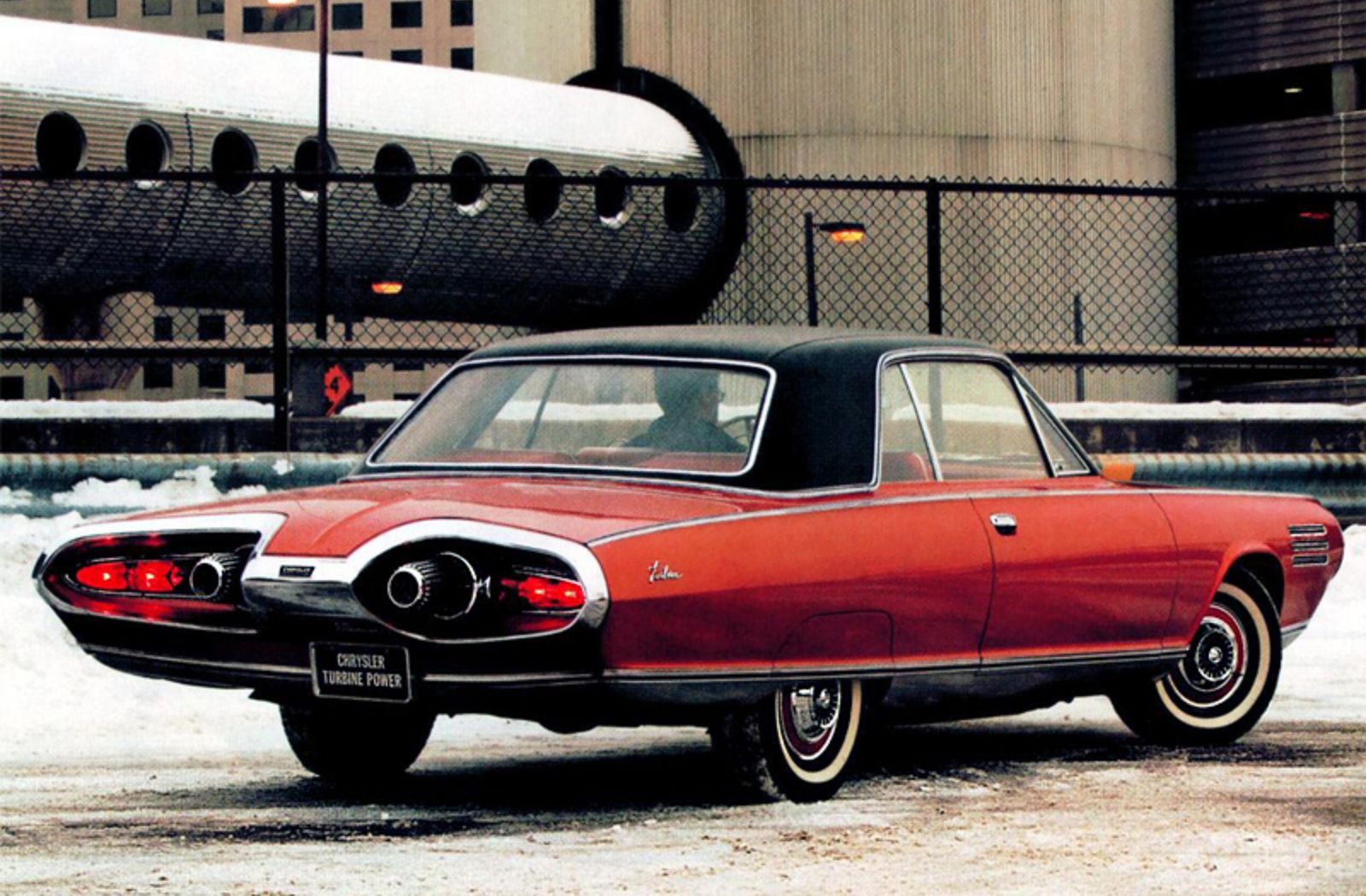
For a brief period, it looked as though turbine-powered cars might become a genuine part of everyday transportation. Ford and General Motors were also investigating turbine technology, and the jet-age fascination of the 1950s and 1960s made the concept feel perfectly suited to its time. Chrysler’s Turbine Car gave the idea a particularly dramatic public face.
But the practical obstacles proved difficult to overcome. Fuel economy remained a problem, acceleration was less impressive than expected, production costs were high, and emissions presented another challenge. Chrysler continued turbine research for years, yet the passenger-car project never reached regular showroom production.
Most of the 50 test cars eventually disappeared. Chrysler destroyed many of them after the public program ended, while a small number survived in museums and private collections. One example became part of comedian and car collector Jay Leno’s collection.
That makes the perfume story more than a quirky automotive fact. Chrysler was testing a serious alternative to the piston engine, and the perfume demonstration proved just how unusual its technology was. The Turbine Car showed that a family automobile could run on fuel that would have sounded ridiculous in an ordinary gas tank.
It also showed why brilliant engineering ideas still have to satisfy everyday demands such as efficiency, cost, emissions, and easy operation. For a few years, though, Chrysler had a car that could sip perfume, burn tequila, and sound like a jet while cruising down the road.