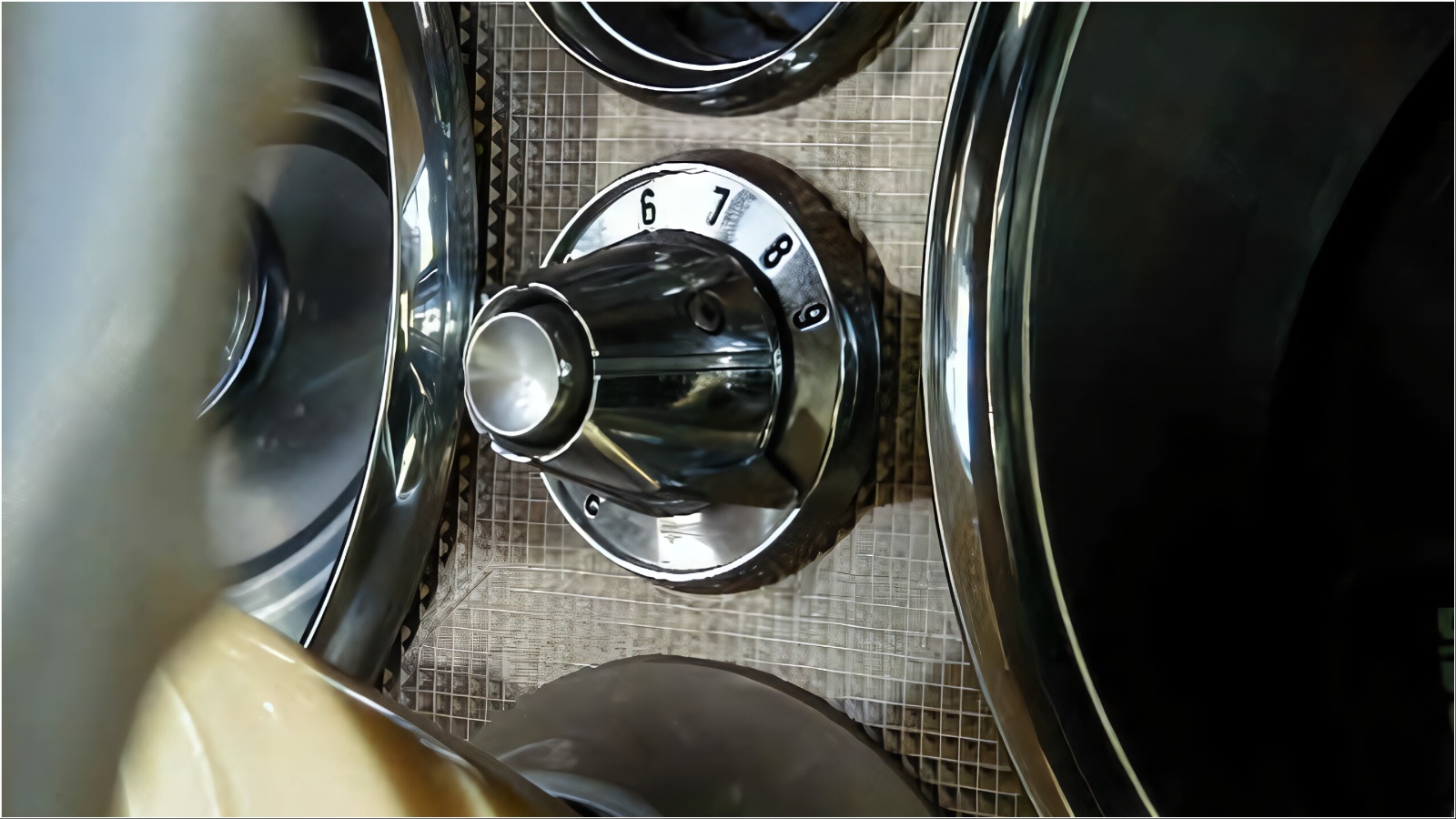
Whenever drivers activate cruise control and allow their cars to maintain a constant highway speed, they are relying on an idea developed by a man who never experienced highway driving himself.
Ralph Teetor, one of the earliest blind engineering graduates in the United States, spent more than a decade developing a mechanical solution to a problem he encountered as a passenger. The issue was not his own driving, but the inconsistent speeds of the people behind the wheel.
Teetor’s invention, first patented in 1948 and later trademarked as the “Speedostat,” did not become a household name until Chrysler adopted it for its 1958 model year.
Branded “Auto-Pilot” and offered on the flagship Imperial along with the New Yorker and Windsor, it marked one of the first times automatic speed control appeared in a production automobile, a milestone made more remarkable by the fact that its inventor could never watch the needle on a speedometer.
From Childhood Blindness to Pioneering Automotive Engineering
Ralph Teetor was born in 1890 in Hagerstown, Indiana, into a family that had built its fortune manufacturing piston rings and other auto parts through the Perfect Circle Corporation. His path toward engineering seemed set from the start, but at age five, an accident with a knife injured one of his eyes, and within a year he had lost his sight completely.
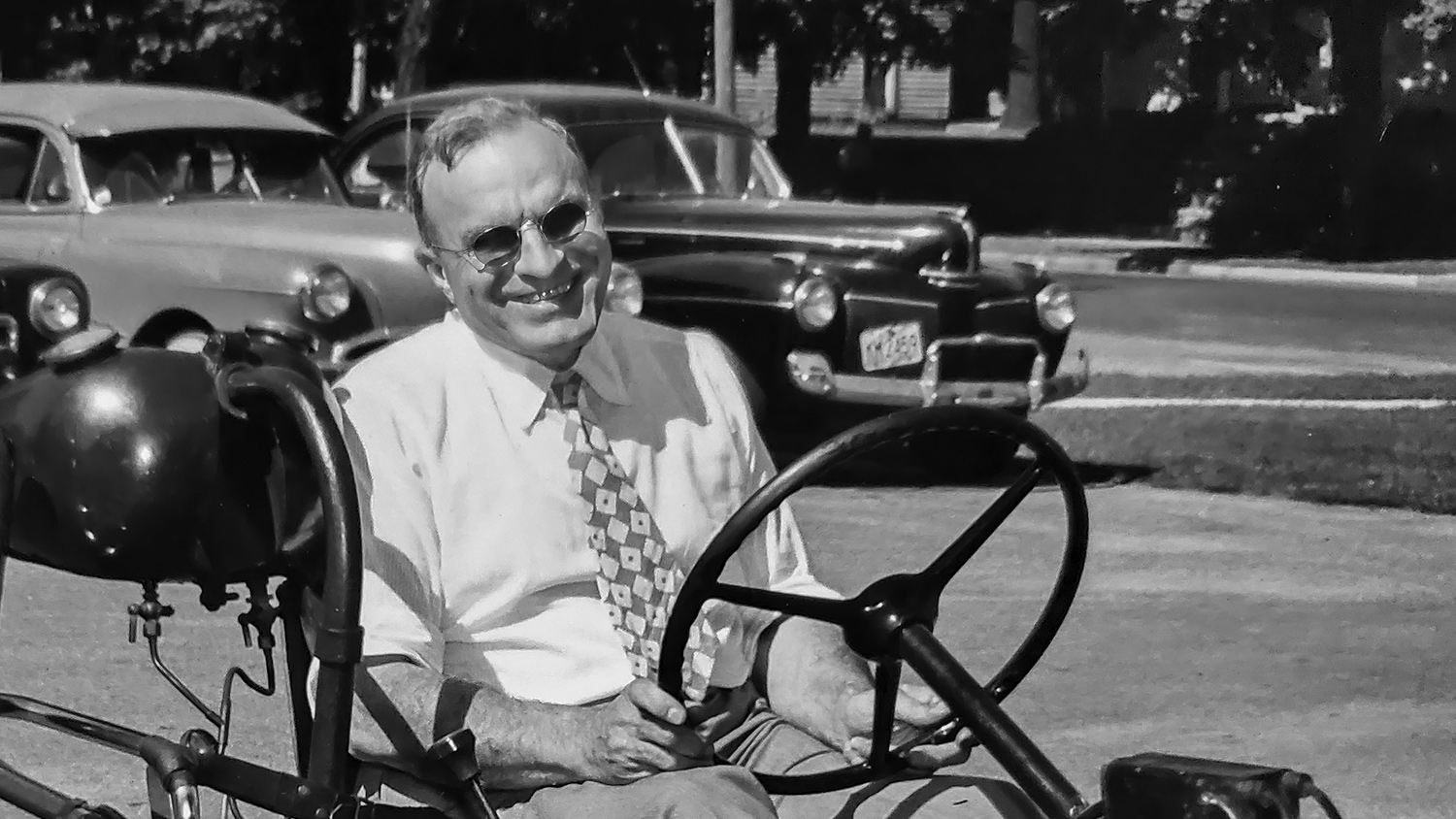
Rather than treat blindness as a barrier, Teetor developed an extraordinary internal map of his surroundings, memorizing the layout of his neighborhood and counting his steps between destinations.
At Perfect Circle, his father and uncles put him to work as a machinist while he was still young, training his hands to do what his eyes no longer could. He went on to study mechanical engineering at the University of Pennsylvania, becoming one of the university’s first blind graduates, and by his twenties he had already begun collecting patents.
Over the course of his life, he would earn more than 40 of them, covering everything from speed-control devices to a knurling machine, a door latch, and even a fishing-rod holder. Colleagues and later historians would come to regard him as the country’s first blind professional engineer, a title he earned not through accommodation but through sheer technical output.
The idea for cruise control began far from an engineering laboratory. In the mid 1930s, Teetor was riding to Detroit with his friend and patent attorney, Harry Lindsey, when he noticed something unusual about the drive. Lindsey’s foot on the accelerator appeared to respond to their conversation.
The car would speed up while Lindsey was talking and slow down when Teetor spoke. The constant changes in speed made the journey noticeably uncomfortable. Years later, Teetor’s grandson remembered that his grandfather regarded Lindsey as one of the least consistent drivers he had ever ridden with.
Instead of brushing off the uncomfortable ride, Teetor saw it as a technical challenge. He believed that human attention could easily drift during conversations, distractions, or moments of fatigue, so maintaining a steady speed should not depend entirely on the driver’s foot.
For nearly a decade, he developed the idea of a system that could hold a vehicle at a speed chosen by the driver. He believed such a device could make driving smoother, improve fuel efficiency, and help prevent accidents caused by inconsistent speeds. In 1945, he began seriously developing the concept, and three years later he filed his first patent for an automotive speed control system.
How Teetor’s Mechanical Innovation Became the Cruise Control We Know Today
Teetor developed a completely mechanical solution to a problem that many engineers would have approached through visual observation. A speed selector on the dashboard was linked through the drive shaft to a mechanism located in the engine compartment.
After the driver reached the desired speed and activated the system, there was no need to keep the accelerator pedal in a fixed position. The mechanism maintained the selected speed on its own and resisted further pedal movement unless the driver intentionally took control.
The system went through several stages of refinement. Early versions worked by increasing resistance in the gas pedal once the target speed was reached, a design any engineer could test by feel rather than sight a fitting method for its inventor.
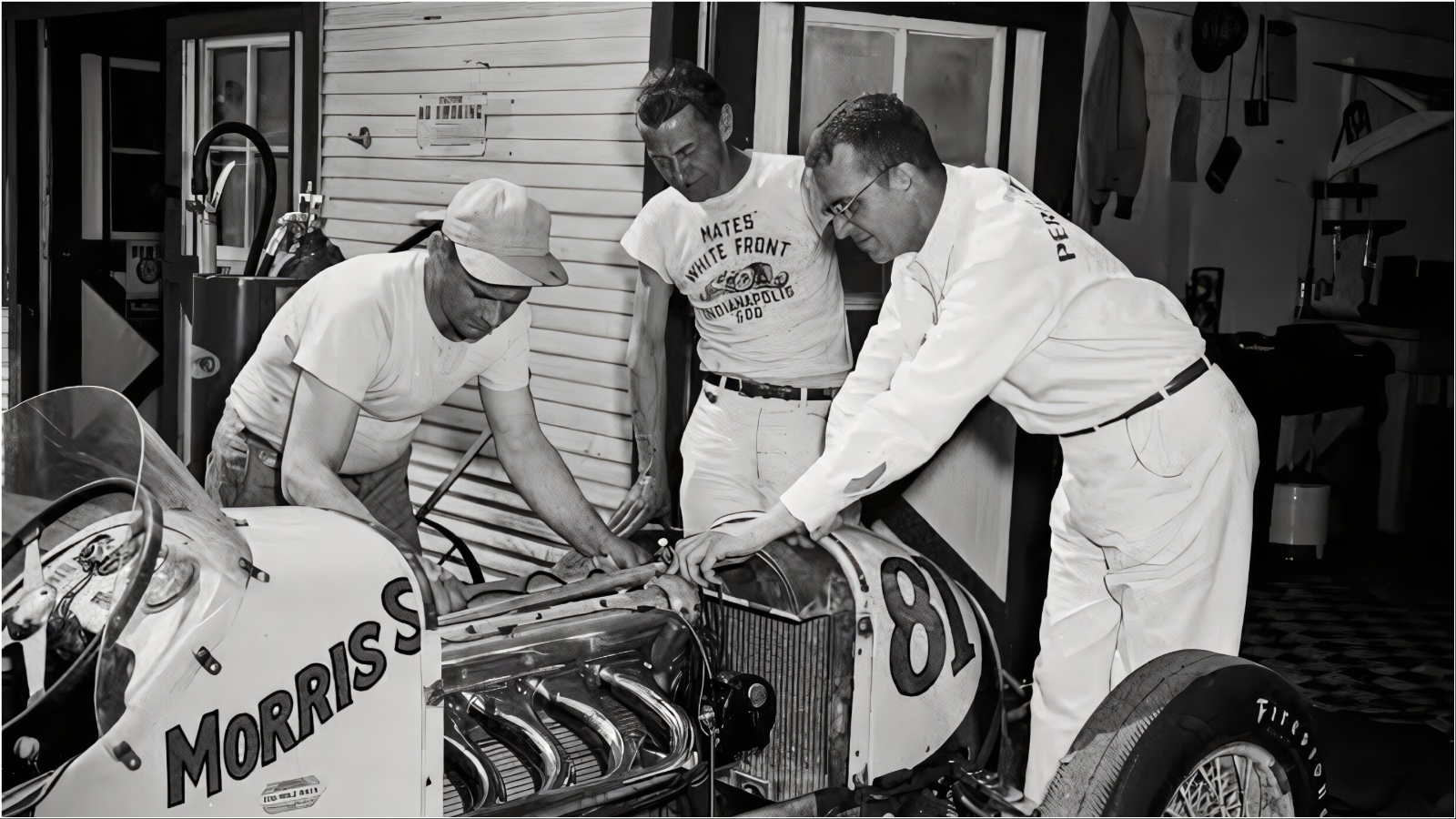
By the time the system entered production in 1958, its design had become considerably more advanced. It relied on an electromagnetic locking mechanism and a small motor with a bidirectional screw drive to regulate the throttle. An electromagnet controlled the system’s engagement, while electrical contacts on the throttle helped maintain the selected setting between increasing and reducing power.
Perfect Circle produced the completed device and gave it the trademarked name Speedostat, allowing Teetor’s own company to play a central role in bringing his invention to consumers. The result was especially remarkable because a man who could not see the road had created a system through touch, reasoning, and mechanical precision that allowed drivers to remove their foot from the accelerator.
Chrysler was the first automaker willing to gamble on the unproven technology, introducing the Speedostat under the name “Auto-Pilot” as a luxury option on the 1958 Imperial, New Yorker, and Windsor.
The timing suited the moment. Chrysler’s Imperial division, launched a few years earlier to compete directly with Cadillac and Lincoln, had built its identity around cutting-edge features and Virgil Exner’s dramatic “Forward Look” styling, and an automatic speed-holding system fit neatly into that image of forward-looking luxury.
The trade press took notice almost immediately. Ward’s Automotive Reports described the new feature as a genuinely remarkable innovation, one that stood up against anything the industry had produced before. Chrysler expanded the option to its full model lineup within a year.
In 1959, Cadillac released its own version of Teetor’s invention and gave it a new name, Cruise Control. The name quickly caught on and became the term most people use today. Chrysler had introduced the technology first, but Cadillac’s branding proved far more memorable and eventually became the standard name for the feature in cars around the world.
Teetor did not stop innovating after his invention reached production. He continued to lead Perfect Circle as its president, later serving as president of the Society of Automotive Engineers, and kept refining speed-control technology until his death in 1981 at the age of 91.
He was posthumously inducted into the Automotive Hall of Fame in 1988 and, decades later, into the National Inventors Hall of Fame, cementing his place among the most consequential and least visible figures in automotive history.
What began as one blind engineer’s frustration with an unsteady car ride now underpins not just standard cruise control but the adaptive, sensor-driven systems found in modern driver-assist technology, from lane-keeping aids to the earliest building blocks of self-driving cars.
Teetor never framed his blindness as a limitation. As he put it to the veterans he mentored at Perfect Circle, a person is not handicapped so long as they can still think logically a philosophy borne out by a piece of technology that, six decades later, still quietly does its job on nearly every highway in the world.