
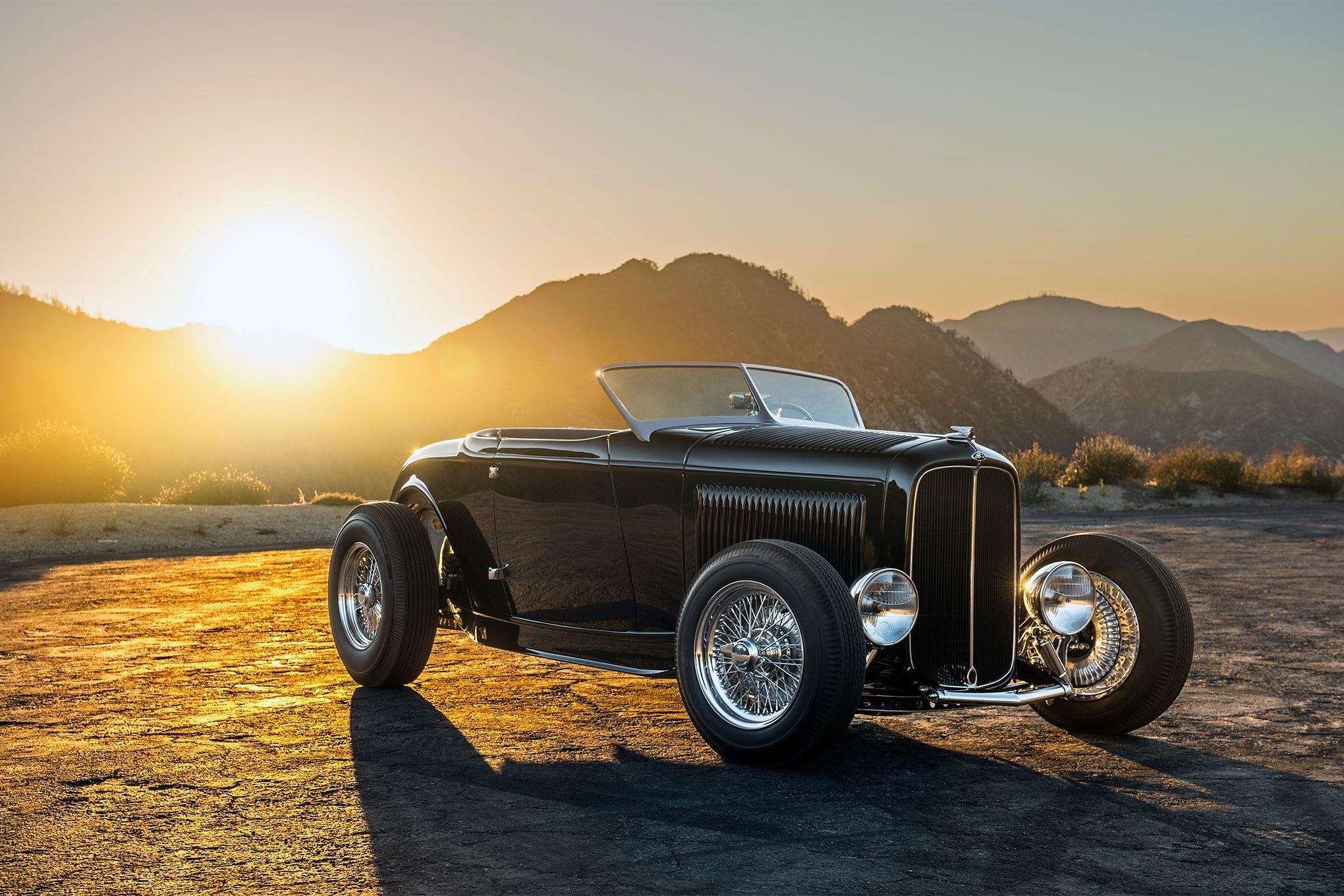
California did not just sell cars. It reinvented what a car could mean. Wide streets, cheap gas, dry lake beds, and endless coastline gave restless young people room to experiment. Out of garages in Los Angeles, Newport Beach, and Venice came entirely new ways to build and style a car.
Hot rodders stripped down Fords on the dry lakes near Muroc. Surfers needed something cheap to haul boards to the beach. Chicano car clubs in East L.A. turned Impalas into rolling art with hydraulics. Shop owners in Venice bolted V8s into British roadsters. Each of these movements left a permanent mark on car culture worldwide.
This list looks at eight vehicles that trace directly back to a specific California scene. Every car here has documented production numbers, real sales data, and a clear origin story. These are not generic “classic car” picks. Each one was shaped, built, or made famous inside California’s borders, and each one changed how people everywhere thought about cars.
From dry lake racers to dune buggies, from lowriders to Japanese tuner icons, this is the data-backed story of how California built modern car culture from the ground up.
1. 1932 Ford “Deuce” Coup
The 1932 Ford Model 18 is the true starting point of hot rod culture. Ford introduced its first affordable V8 that year. This engine sat in a lightweight body that racers instantly wanted.
Ford sold close to 300,000 V8-powered Model 18s that year. Just 133,000 four-cylinder Model B versions were built for comparison. The V8 cars became the ones everybody wanted to modify.
The flathead V8 made about 65 horsepower stock. A buyer could get a V-8 coupe for as little as $490 in 1932. That price point mattered enormously during the Depression.
Two coupe body styles dominate hot rod history today. Some 23,411 Deuce three-window coupes were produced, split between 22,264 V8 models and only 1,147 four-cylinder versions. The five-window body was even more common on the road.
Young Californians raced these cars on dry lakebeds like Muroc and El Mirage starting in the late 1930s. Stripped-down roadsters and coupes became test beds for speed parts. This scene eventually formed the backbone of organized drag racing.
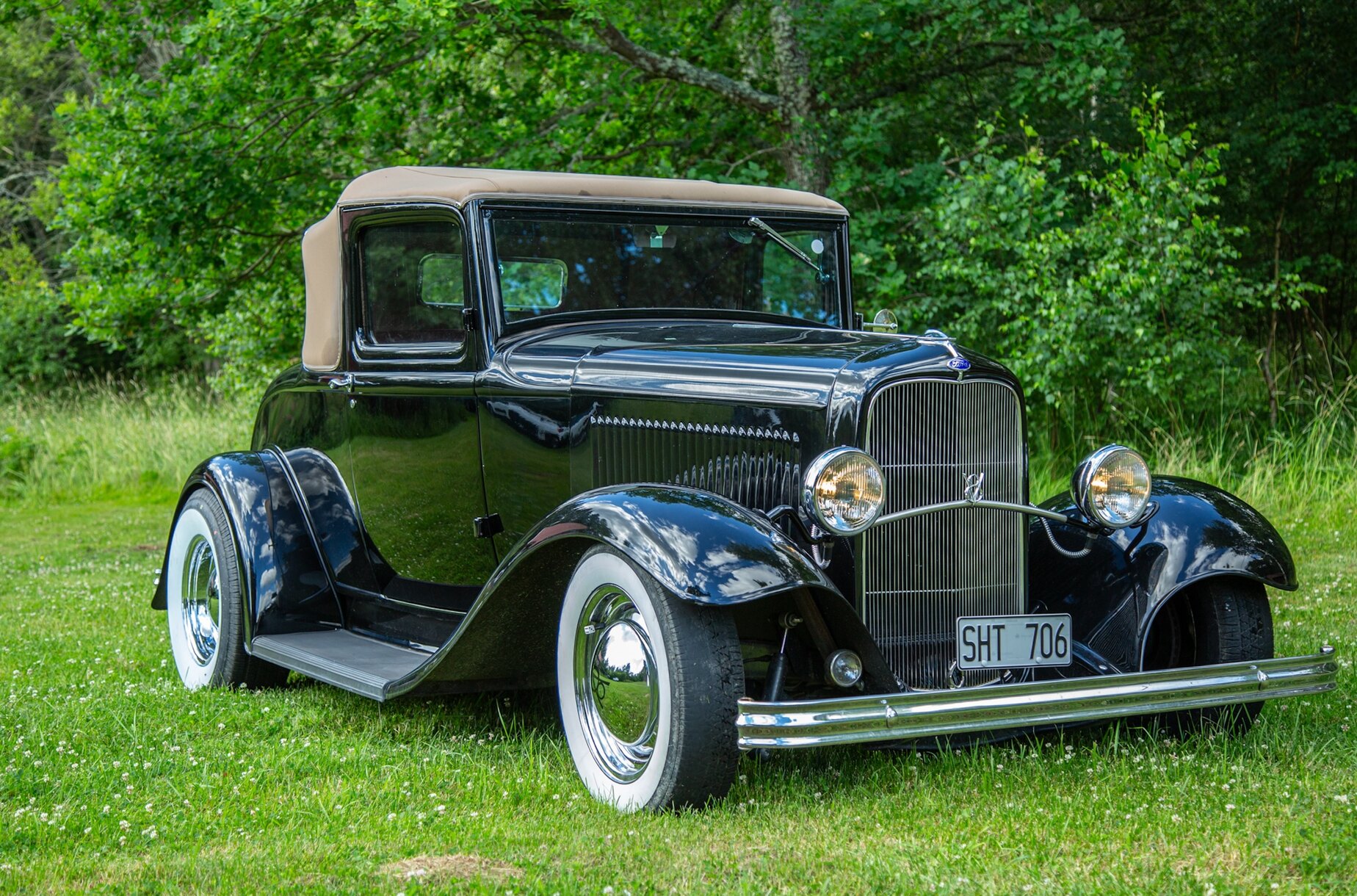
The National Hot Rod Association grew directly out of this Southern California dry lake racing culture. Founded in 1951, it turned outlaw street racing into sanctioned competition. The Deuce coupe remained its unofficial mascot for decades.
Pop culture cemented the car’s legend permanently. A yellow five-window 1932 Ford Deuce Coupe was driven by John Milner in the 1973 film American Graffiti. The Beach Boys also immortalized it in their 1963 song “Little Deuce Coupe.”
The Deuce proved a simple formula that still holds. Take a light, affordable factory body. Drop in a powerful, accessible engine. That formula launched an entire American subculture from California’s dry lakebeds outward.
2. 1949–51 Mercury “Lead Sled”
While hot rodders chased speed, another group of Californians chased style. The Kustom Kulture movement grew out of Los Angeles bodywork shops in the late 1940s. Its favorite canvas was the Mercury Eight coupe.
The 1949 to 1951 Mercury Eight became one of the most revered hot rods in Americana, launching what would become known as “Kustom Kulture.” Brothers George and Sam Barris led this movement from their shop.
Sam and George Barris operated Barris Kustoms first from a small shop on Compton Avenue in Los Angeles before relocating to Lynwood, California. Their techniques defined an entire genre of custom bodywork.
The signature look involved chopping the roofline dramatically lower. Builders also shaved door handles and trim, then filled the gaps using body lead, which is where the “lead sled” nickname originated. The result was a low, smooth, flowing silhouette unlike anything Detroit sold.
The Lead Sled debuted at the 1950 Oakland Roadster Show to stunned crowds, kicking off a revolutionary styling trend that spread quickly. Custom shows across California followed almost immediately.
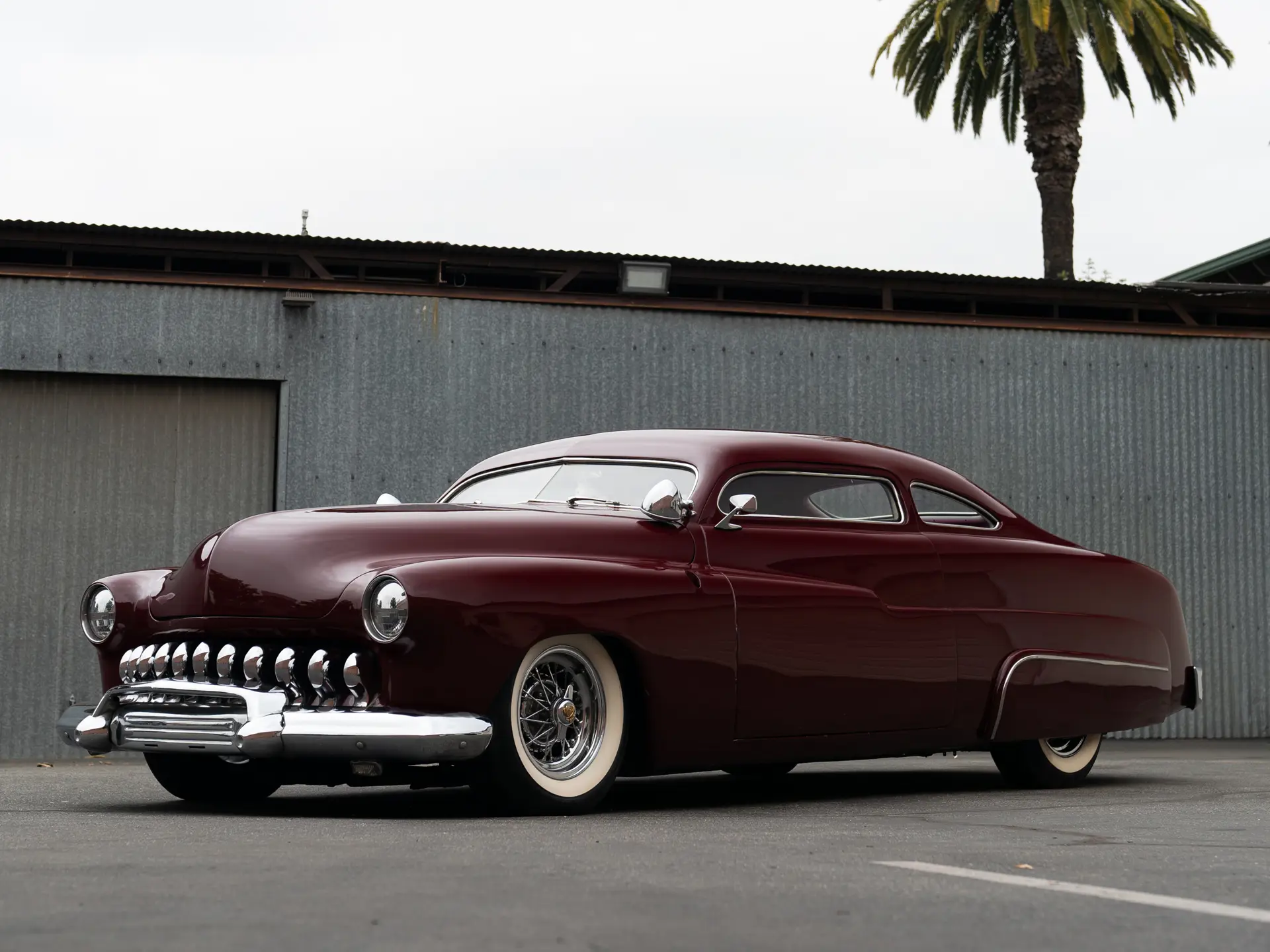
The most celebrated single build came a few years later. George and Sam Barris built the most celebrated Mercury custom at their Lynwood, California shop for a customer named Bob Hirohata, fresh out of the Navy in 1953. That build took just over three months.
The Hirohata Mercury was constructed in only 97 days with up to ten Barris craftsmen working at once, and it earned multiple car magazine covers in the 1950s. It remains one of the most studied custom cars ever built.
The Mercury lead sled proved that a car could be pure sculpture rather than pure speed. It shifted California car culture from the dry lakes into the driveway and the show hall, a shift that still defines custom car building today.
3. Volkswagen Type 2 Microbus
No vehicle is more tied to California’s coastline than the Volkswagen Type 2. Surfers adopted it almost as soon as it arrived in the United States during the mid-1950s. It solved a very specific problem.
Surfboards were long, and boards needed protection. Along the California coastline, especially Malibu, Huntington Beach, and Santa Cruz, the Type 2 became synonymous with surfing because boards fit inside, it was simple to sleep in, and it was cheap to buy. Those three factors mattered more than performance.
The bus originated overseas but found its true identity here. By the 1960s, these air-cooled Volkswagens had become ingrained in Southern California’s laid-back lifestyle and were used as practical, dependable transportation. Motor Trend even called it more of a lifestyle than a vehicle.
Power was never the point of this van. Early models carried a modest 25-horsepower engine. Volkswagen eventually increased output to 40 horsepower, but the bus remained slow by most drivers’ standards. Surfers did not care about that trade-off.
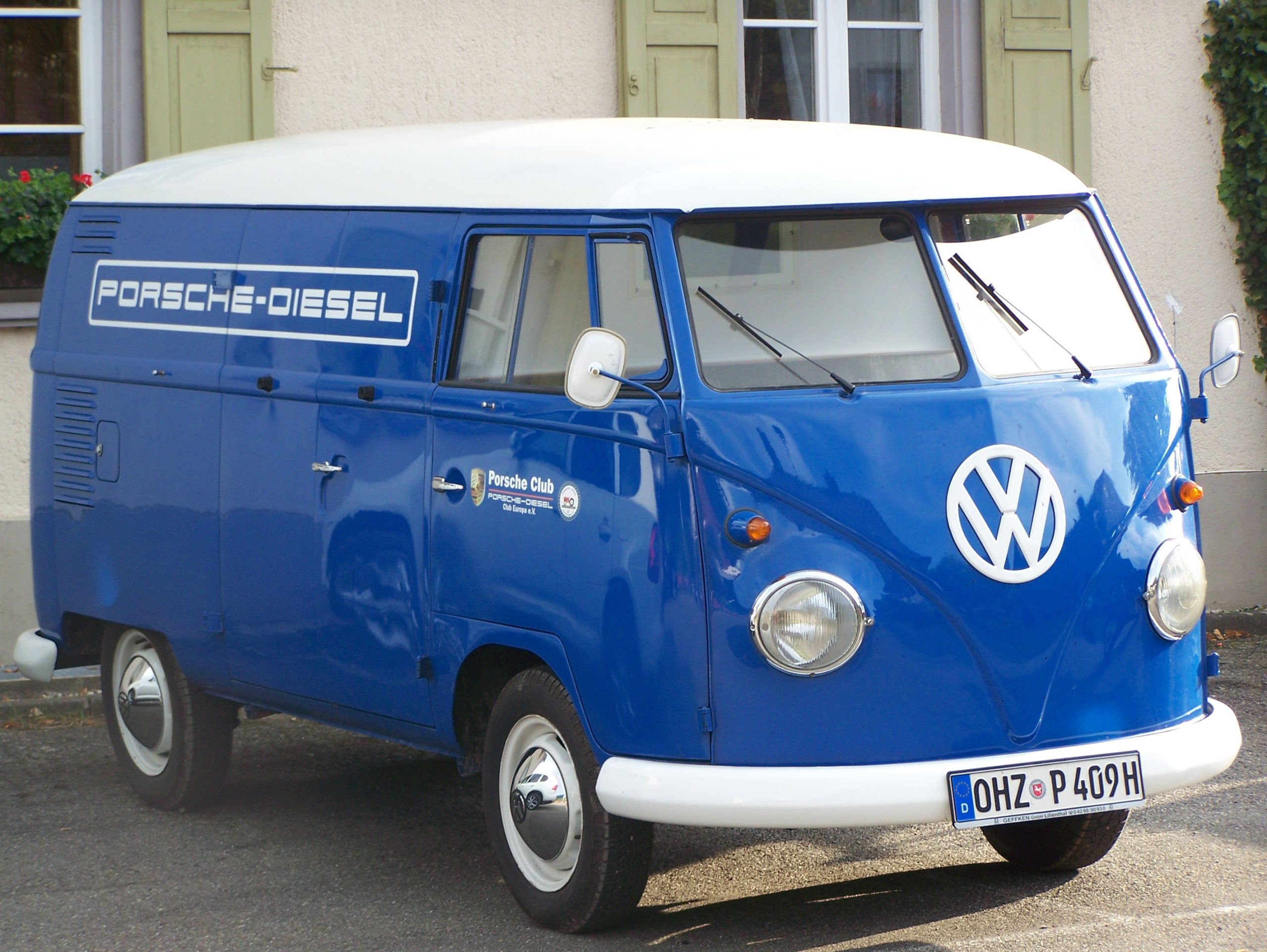
The affordability compared favorably to alternatives. The bus was not the first vehicle embraced by surfers, but it quickly became the poster child for a new generation diving headlong into the surfer lifestyle. Older woodie wagons had been the previous choice but cost considerably more to maintain.
Road trips became a rite of passage for young Californians chasing waves. Trips to Baja became a rite of passage, and parking lots near California’s best surf breaks often looked like impromptu Volkswagen conventions. The bus carried both people and boards for entire summers.
When surfing’s popularity plateaued somewhat, a second California movement absorbed the bus completely. The hippie movement fell in love with the bus because it was cheap to maintain, easy to work on, and big enough to live in. Counterculture communes and road-trippers made it a permanent cultural symbol.
Few cars demonstrate California’s influence on global perception better than this one. A humble German delivery van became, through California beaches and highways, an international symbol of freedom that still sells for premium prices at auction today.
4. Meyers Manx Dune Buggy
The dune buggy did not exist as a category before one Newport Beach garage created it. Bruce Meyers, a surfer, sailor, and boat builder, changed that permanently in the early 1960s.
Bruce Meyers built the first Manx using a monocoque fiberglass shell and Chevrolet pickup truck suspension in his garage in Newport Beach, California, from late 1963 to May 1964. He called it “Old Red.”
The concept was elegantly simple from an engineering standpoint. It featured a unibody shell that fused body, fenders, and frame, retaining just the engine, transmission, and other mechanicals of a Volkswagen Beetle, with no top and no hood. That lightness made it excel off-road.
Bruce Meyers grew up in the early days of surfing and drag racing, inspired by the Pismo Beach dune buggy scene, and used his fiberglass boat-building experience to build the lightweight buggy. Surf culture and boat culture combined directly in this design.
The car sold as a kit rather than a complete vehicle. The body kit was priced around $600, plus a donor Beetle, emphasizing simplicity, affordability, and fun. Buyers could source their own drivetrains.
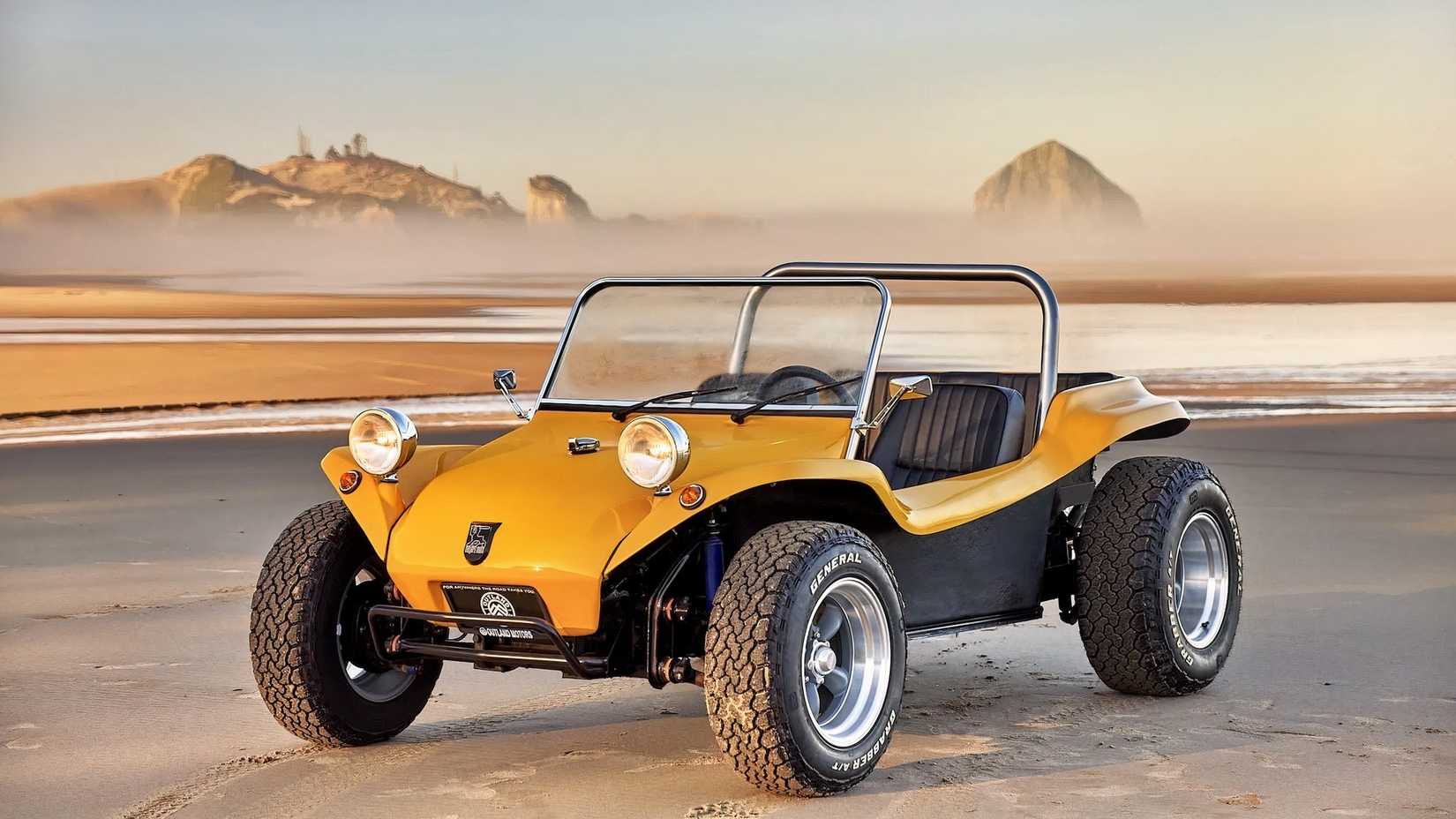
Production ran for roughly seven years total. Approximately 6,000 of the original Meyers Manx dune buggies were produced before Bruce lost a patent court battle to copycat manufacturers. That court loss opened the floodgates for an entire industry.
The scale of imitation was staggering compared to the original run. An estimated quarter of a million copies were made worldwide by other companies once the design became popular. Nearly every dune buggy built afterward owes its shape to this one Newport Beach prototype.
The Manx also dominated early off-road racing almost immediately. It set records in Baja California desert events during the mid-1960s and helped inspire the creation of organized off-road racing series. Off-road motorsport as a category effectively began with this car.
Bruce Meyers stopped production in 1971 after losing his patent case, and the company later revived under new ownership. The original Manx remains a defining symbol of California beach culture, proof that a $600 fiberglass kit built in a garage could permanently reshape an entire automotive category.
5. Shelby Cobra
Carroll Shelby created one of the most formidable sports cars in automotive history inside a small shop in Venice, California. His approach was simple and aggressive. He took a lightweight British roadster and fitted it with a powerful American V8.
Carroll Shelby pulled the straight-six engine from a lightweight British AC Ace roadster, replaced it with a Ford V8, and created the Shelby Cobra between 1962 and 1967. The result redefined what a small sports car could do.
The shop location mattered as much as the engineering. Shelby American assembled 655 small-block Cobras as street and competition sports cars out of their shop located at 1042 Princeton Drive in Venice, California, beginning in the summer of 1962. That address became legendary among enthusiasts.
Total original production was remarkably small. Just 998 original Cobras were assembled from 1961 until 1968, consisting of 655 leaf-spring 289 Cobras and 343 coil-spring 427 Cobras. Scarcity has made surviving examples extraordinarily valuable.
The early cars used modest displacement by later standards. Displacement started at 260 cubic inches, increased to 289 cubic inches by 1962, and then Shelby introduced the 427 Cobra starting in January 1965. That final version earned a fearsome reputation.
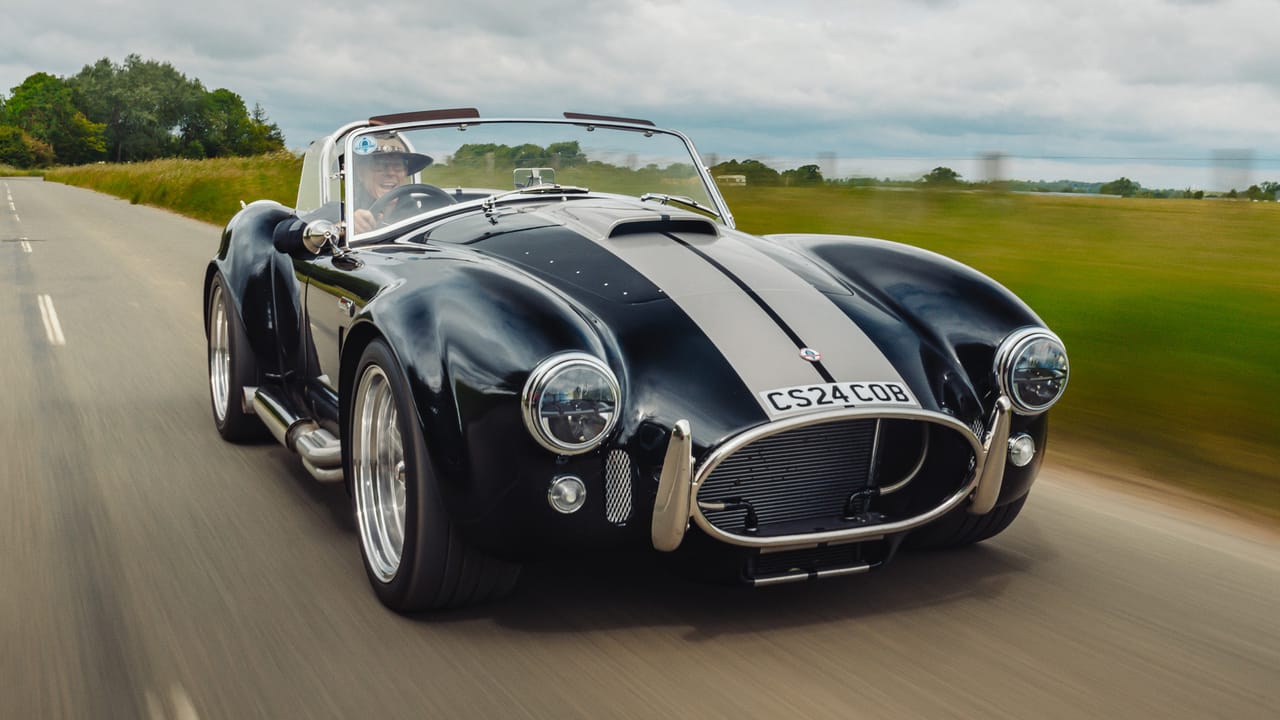
The 427 model delivered brutal performance for its era. The 427 engine produced around 425 horsepower and 640 newton-meters of torque from seven liters of displacement. Few road cars of the 1960s could match that output.
Of the roughly 1,000 originals built, only 160 are genuine 427 versions, making it the rarest and most valuable of the original variants. Auction prices today reflect that scarcity heavily.
Hollywood took notice of the Venice shop early on. Actor and racer Steve McQueen visited Carroll Shelby at the Shelby American shop in Venice, California, in June 1963. The car’s motorsport pedigree only added to its mystique among collectors and racers alike.
The Cobra proved that California’s hot rod philosophy, big power dropped into a light chassis, could compete with Europe’s best sports cars on the world stage. It remains one of the most replicated designs in automotive history because of that legacy.
6. Chevrolet Impala (Lowrider Culture)
No car carries more cultural weight in Chicano car culture than the Chevrolet Impala. Its story starts with a California law meant to stop customization, not encourage it.
Section 24008 of the California Vehicle Code, enacted January 1, 1958, made it illegal to operate any car modified so that any part sat lower than the bottoms of its wheel rims. Builders quickly found a clever workaround.
In 1959, a Mexican-American customizer named Ron Aguirre developed a way of bypassing this law using hydraulic Pesco pumps and valves that allowed him to change ride height at the flick of a switch. That single innovation defined lowrider culture going forward.
The Impala arrived at almost the exact same moment. The following year saw the emergence of the Chevrolet Impala as a favored platform for this new hydraulic customization style. Its long, wide body gave builders room to work.
Between 1960 and 1975, customizers adapted and refined GM X-frames, hydraulics, and airbrushing techniques to create the modern lowrider style. That two-decade period is considered the foundational era of the movement.
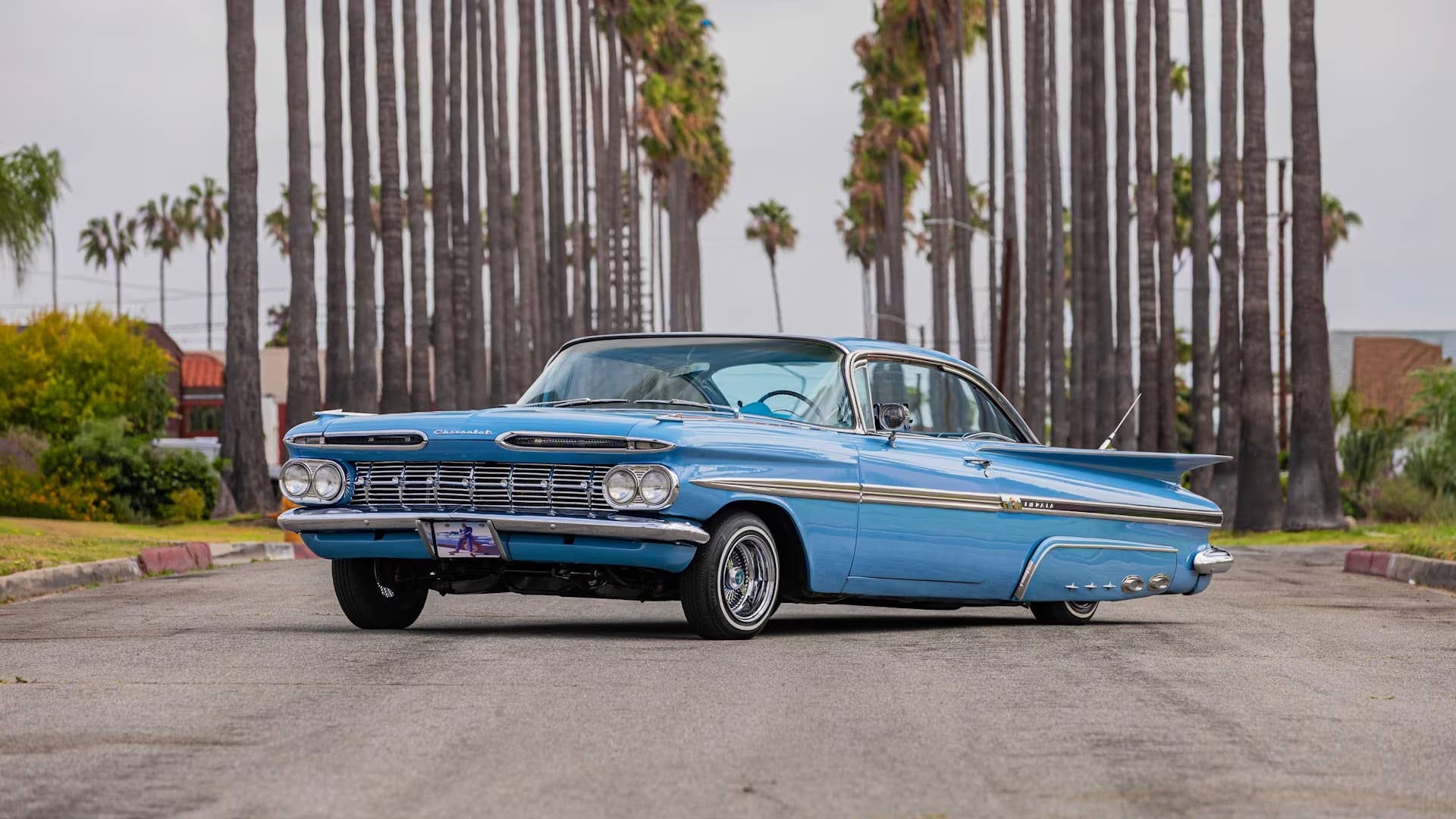
The scene had a specific home base in Los Angeles. A historical cruising route for lowriders ran along Whittier Boulevard in East Los Angeles, which functioned as a meeting place for Chicano youth of the era. Cruising there on weekend nights became a ritual.
Hydraulic systems themselves borrowed from an unlikely industry. Hydraulics were initially taken from the landing gear systems of airplanes before drivers adapted them for suspension control. That repurposed aerospace technology let cars “hop” and “dance” on command.
Individual cars became famous beyond the local scene entirely. The 1964 Impala known as “Gypsy Rose,” owned by Jesse Valadez of the Imperial Car Club, appeared on television and became one of the most recognized lowriders ever built, with an elaborate rose-covered paint scheme.
The Impala lowrider transformed a factory sedan into a rolling piece of Chicano identity and art. Decades later, the style has spread globally, but its hydraulics, its cruising culture, and its favorite canvas all trace back to East Los Angeles streets and a 1958 state law nobody expected to spark a movement.
7. Datsun 240Z
Southern California’s Datsun dealer network created the demand that turned a Japanese sports car into an American phenomenon. The man behind that push was Yutaka Katayama, known to everyone as “Mr. K.”
Yutaka Katayama, president of Nissan Motors USA, aimed the 240Z at the youth-oriented sports car market, drawing inspiration partly from his affinity for the Jaguar XK-E. He pushed hard for a car built specifically for American tastes.
Demand outran supply almost immediately once the car launched. By March of 1970, backorders were running six to eight months at most dealerships on the West Coast. California buyers could not get their hands on the car fast enough.
First-year sales numbers confirmed the car’s instant popularity. Datsun sold 16,215 of these cars in the first model year, at a sticker price of $3,526. That price undercut most European sports car rivals by a wide margin.
Sales continued climbing rapidly after that debut. The 240Z sold over 45,000 units through the 1971 model year and had similar sales in the following two years. Total production of the model reached impressive numbers by the time it was replaced.
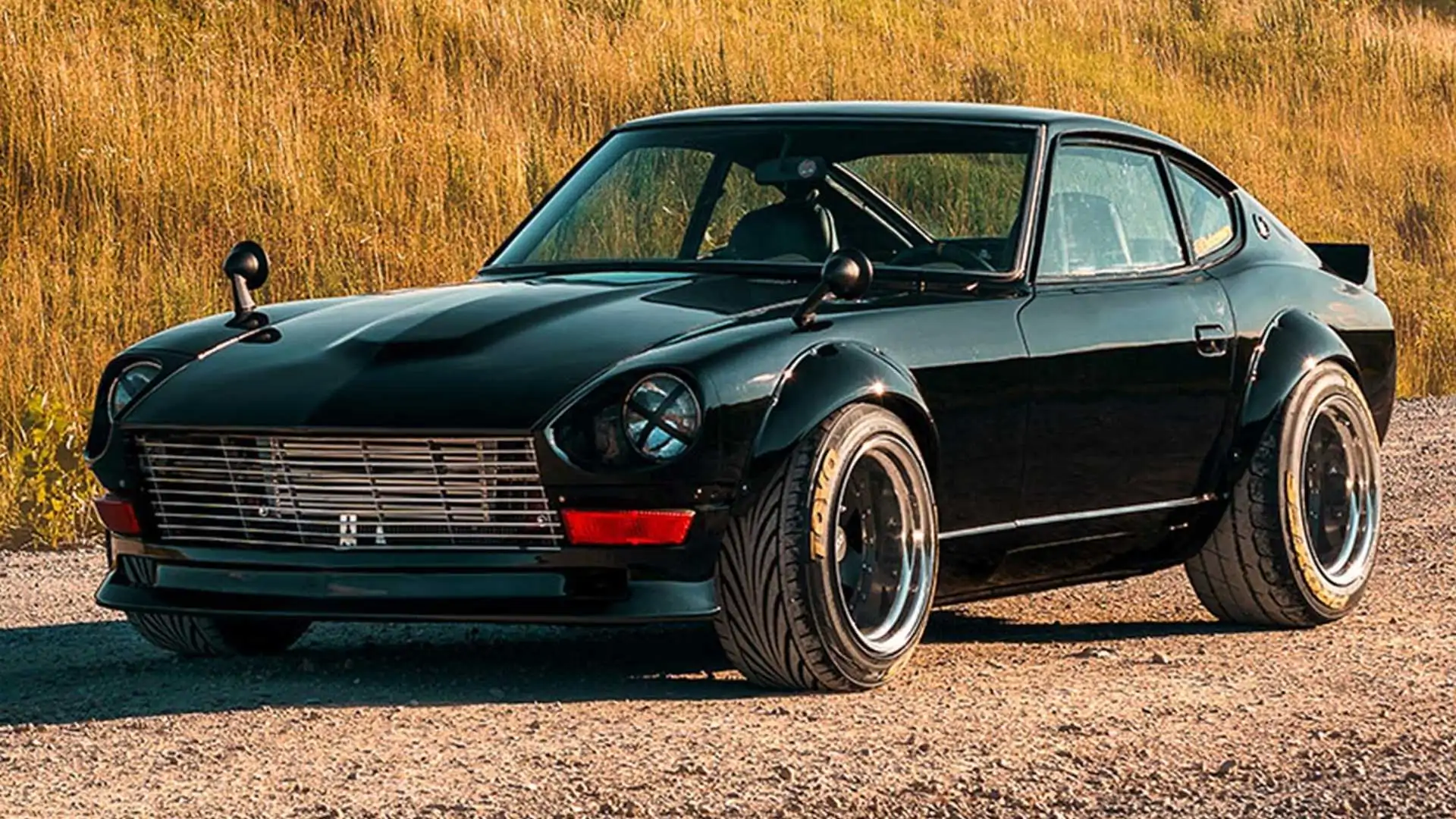
Production for the 240Z from 1969 to 1973 is widely documented at around 168,000 units, with the vast majority exported, especially to the United States. California dealerships led that export demand.
Racing success reinforced the car’s reputation on American soil specifically. Best known in the United States was the distinctive red, white, and blue livery of BRE Racing, run by Peter Brock, whose 240Z racers claimed back-to-back SCCA national championships in 1970 and 1971. Brock Racing Enterprises operated out of Southern California.
The engine under the hood delivered strong performance for its class. It used a 2,393 cc L24 inline-six engine with a cast-iron block, alloy head, and a seven-bearing crankshaft, revving safely to 7,000 rpm. That combination of power, price, and handling was unmatched at the time.
The 240Z proved Japanese manufacturers could build genuine sports cars rather than just economical commuters. California’s dealer network and its enthusiasm for imports gave Datsun the platform to prove that point to the entire country.
8. Honda Civic (Import Tuner Culture)
The final entry on this list did not need a factory performance package to become an icon. Southern California teenagers built that reputation themselves, one modified Civic at a time.
The import scene originated in the early 1990s in Southern California amid waves of Asian immigration, providing young people a space to forge identities and express technological creativity. The Civic became the central platform of that entire movement.
The Honda Civic, particularly the EG generation from 1992 to 1995 and the EK generation from 1996 to 2000, was celebrated for a lightweight chassis weighing around 2,000 pounds that provided an agile foundation for modification. That light weight made cheap performance upgrades highly effective.
Racing happened away from any official track, at first. Racers were interested in cars, deserted streets, and going fast, with Los Angeles in the early 1990s offering an easy place and time for underground competition. Drag racer Frank “Kilos” Papadakis emerged from exactly this scene.
Papadakis would rise to become a legend in drag racing history, shattering front-wheel drive records in his little yellow Hondas and proving that these underestimated tuner cars had real performance potential. His success helped legitimize an entire genre of modified imports.
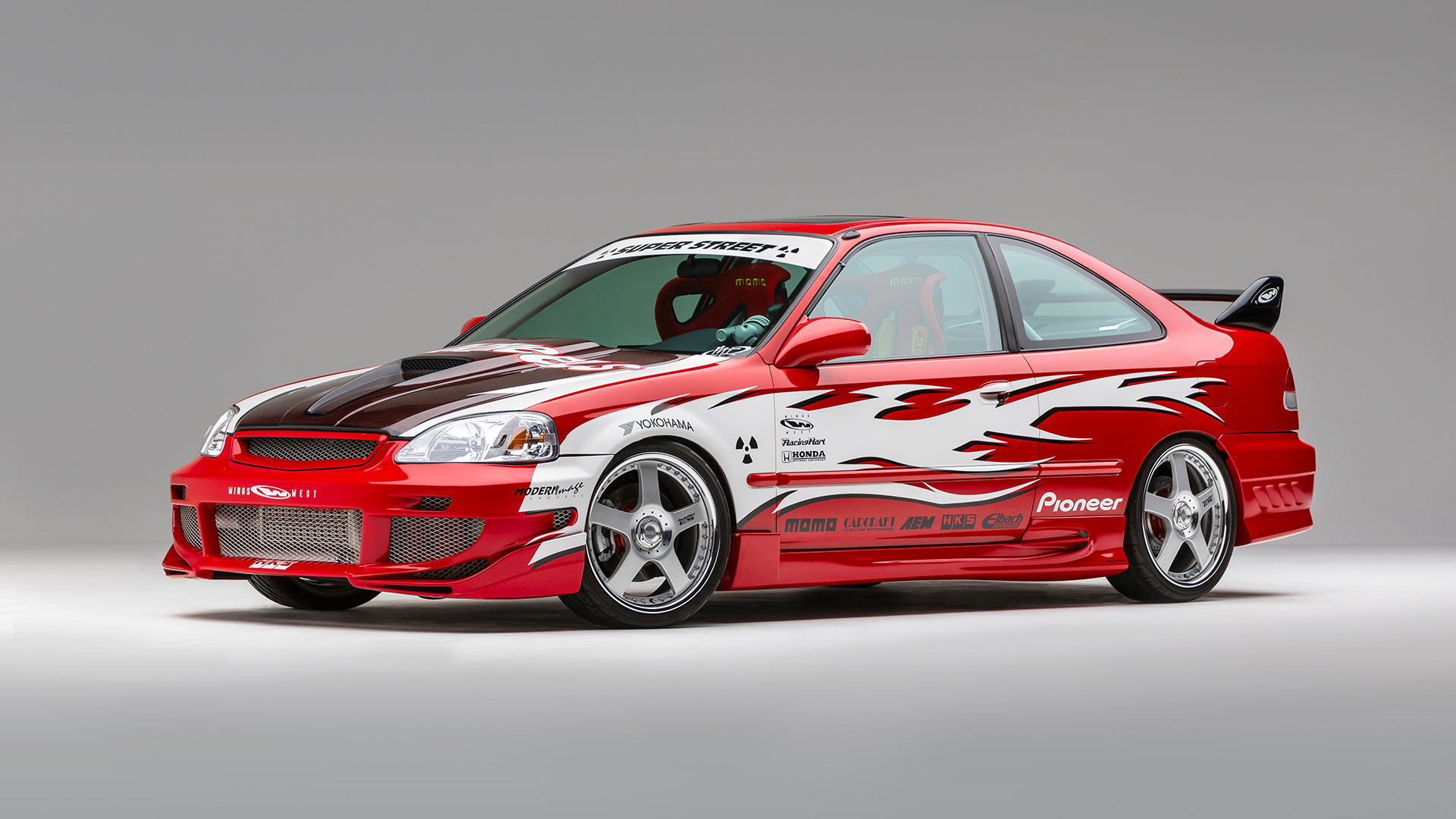
Hollywood eventually noticed what was happening in these parking lots and industrial streets. The filmmakers behind The Fast and the Furious knew it would be a mistake to make a movie about tuner culture without acknowledging the Honda Civic’s domination of the scene in the 1990s. Seven Civics were sourced for the original 2001 film alone.
The car’s mainstream sales numbers were massive on their own, independent of any tuner reputation. The Civic became one of America’s most consistent compact sellers over subsequent decades. It eventually peaked near 377,000 annual units sold in the United States by 2017, a scale few tuner-adjacent cars ever reach.
Hot rodders stripped down Fords on the dry lakes near Muroc. Surfers needed something cheap to haul boards to the beach. Chicano car clubs in East L.A. turned Impalas into rolling art with hydraulics. Shop owners in Venice bolted V8s into British roadsters. Each of these movements left a permanent mark on car culture worldwide.
