
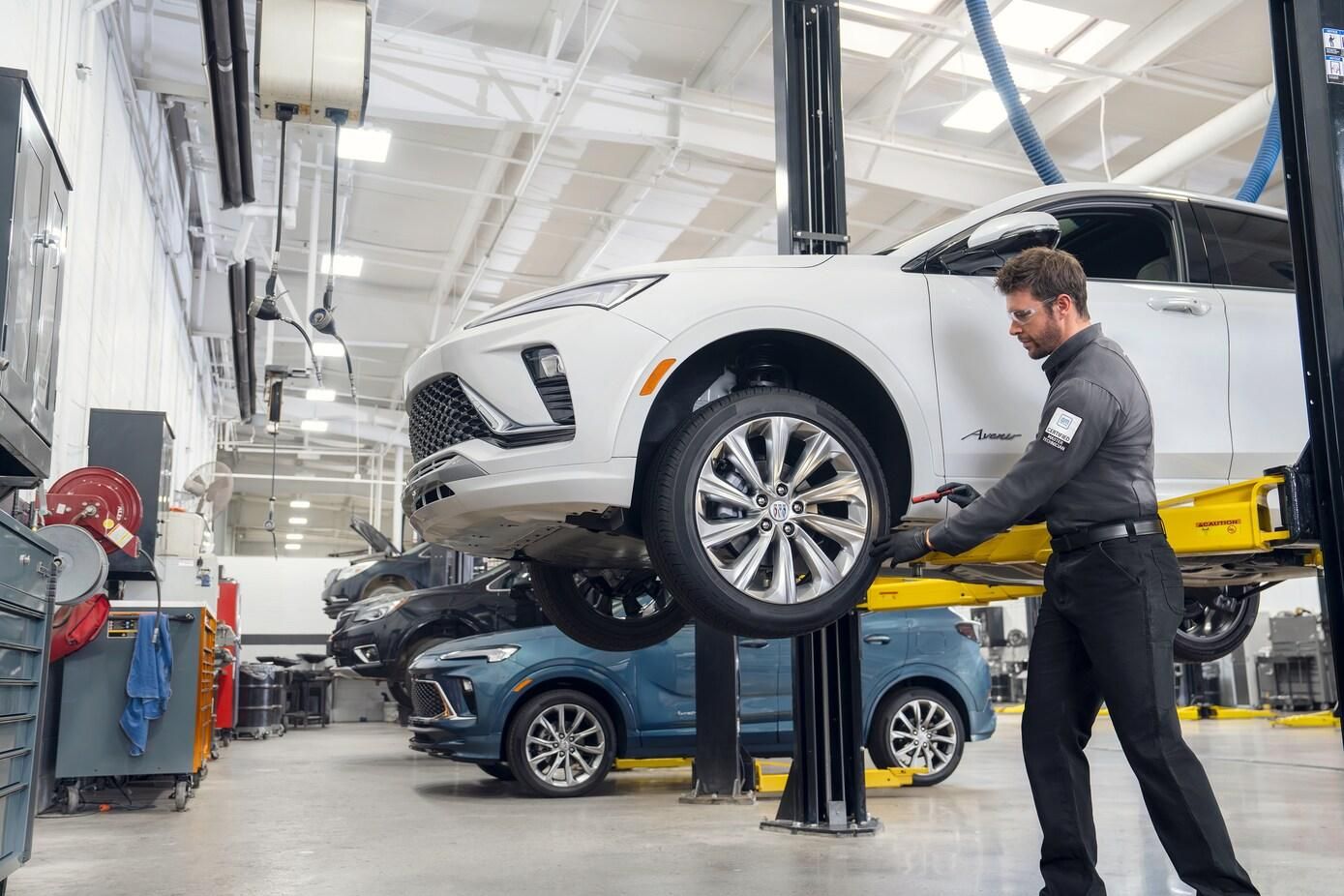
When a new car needs a repair under factory warranty, the customer never sees a bill. Behind that seamless experience is a payment system most drivers never think about.
The automaker, not the customer, funds every part and every labor hour. But the dealer does not simply invoice the manufacturer for whatever it wants.
Instead, warranty payments follow rigid formulas built around labor time guides, parts markup schedules, and state franchise laws. These formulas determine exactly how many dollars flow from manufacturer to dealer for each repair order.
Nationally, warranty labor and parts reimbursement together account for more than $32 billion in annual dealership revenue, spread across roughly 57 million warranty repair orders a year. That is a massive, largely invisible slice of the auto industry.
This article breaks down how that money is calculated, why dealers often say it falls short, and what the data shows about the real gap between customer-pay rates and warranty reimbursement rates. It also covers the legal fights now playing out state by state over who controls that formula.
How Warranty Labor Rates Are Calculated
Automakers do not pay dealers a flat national labor rate. Instead, the manufacturer pays the same hourly labor rate the dealer normally charges its own retail customers.
This is required by state franchise law, not manufacturer generosity. Automakers are legally directed to send all warranty repair work to franchised dealers and pay that dealer’s standard hourly rate.
To calculate the actual dollar payout, manufacturers combine that hourly rate with a labor time guide. This guide is a lengthy manufacturer-issued document listing the number of hours typically required to complete each specific type of repair.
Multiply the time guide hours by the dealer’s approved rate, and that produces the labor reimbursement for a given repair order. On paper, this system sounds simple and fair.
In practice, the rate itself is contested constantly. The rate a manufacturer actually uses in a reimbursement review is not the dealer’s posted “door rate,” but an effective retail rate pulled from a sample of the dealer’s own customer-pay repair orders.
That effective rate is almost always lower than what customers see posted in the service department. The gap exists because the effective rate averages in discounted work, maintenance specials, and other lower-priced jobs mixed with full-price repairs.
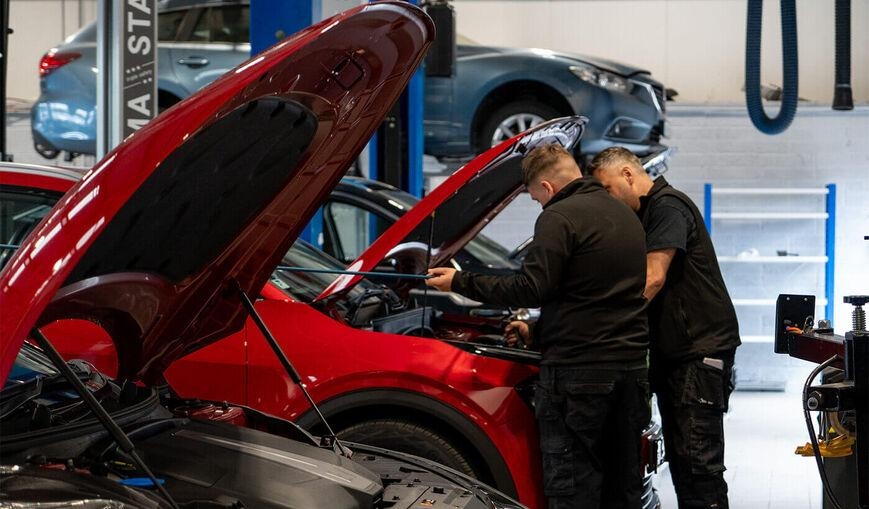
Real numbers illustrate the scale of this gap. NADA’s 2025 data puts the average customer mechanical labor rate across franchised dealerships at $186 per hour, while many dealers’ warranty reimbursement rates sit well below that figure.
Once a rate is approved, it does not move on its own. Warranty rates stay fixed at the level of the dealer’s last approved submission, even as retail rates continue climbing with market conditions and rising operating costs.
This is why dealers must periodically resubmit paperwork to raise their warranty rate. Most state laws now spell out exactly how that submission process must work.
Minnesota’s statute is a representative example. Under Minnesota law, compensation for warranty labor must equal the dealer’s effective nonwarranty labor rate multiplied by the same time guide the dealer uses for nonwarranty customer-paid repair orders.
New Mexico uses nearly identical language. New Mexico law requires that compensation for a recall or warranty repair never fall below the rates the dealer charges retail customers for the same nonwarranty service.
The result is a slow-moving negotiation cycle that repeats every year at thousands of dealerships. Dealers gather retail data, submit it, wait for approval, and start the process again when costs rise further.
Parts Reimbursement and the Markup Formula
Labor is only half of the warranty payment equation. The other half is parts, and manufacturers use a very different formula to price those out. Instead of matching full retail parts pricing, most manufacturers apply a fixed markup over the dealer’s wholesale cost. Manufacturers typically reimburse warranty parts at the dealer’s cost plus a 40 percent markup.
That baseline shows up across multiple industry sources as the default figure. Dealerships nationwide have long received only a roughly 40 percent markup, or an MSRP-based price, when reimbursed for warranty parts, and neither figure reflects a true retail rate.
That flat 40 percent number is not the legal ceiling, however. It is simply the default rate manufacturers apply until a dealer proves it should be higher.
Most states now give dealers a legal path to challenge that default. Forty states currently have auto dealer warranty reimbursement laws requiring that parts and labor be reimbursed at a genuine retail rate rather than a flat markup.
The math for establishing that retail rate is spelled out in statute. A dealer’s retail parts rate is calculated by taking total parts sales across a submitted batch of repair orders, dividing by the dealer’s total cost to purchase those same parts, subtracting one, and multiplying by one hundred.
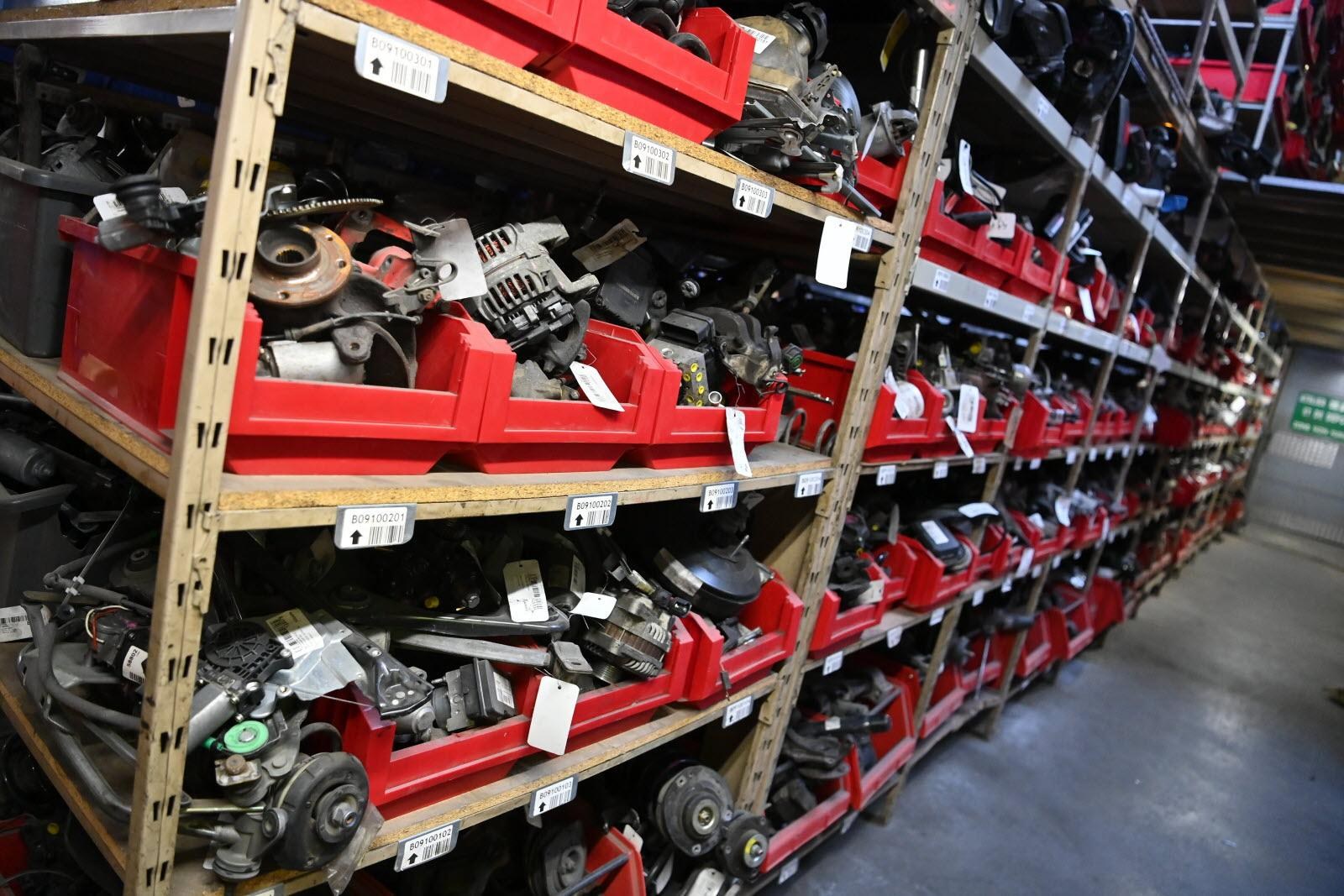
Once that percentage is approved, it applies to every part used in future warranty repairs. The manufacturer must then pay the dealer whatever it paid for the part, plus that established markup percentage applied to the part’s fair wholesale value.
Fair wholesale value is determined by taking the highest of three possible amounts. These include the price the dealer actually paid for the part, the part’s cost under the manufacturer’s current price schedule, or the listed cost of a substantially identical part under that same schedule.
Margins on warranty parts still trail what dealers earn on ordinary customer-pay work. A well-run parts department typically earns 35 to 45 percent gross margin on customer-pay parts, but only 25 to 35 percent on warranty parts, and 20 to 30 percent on internal shop parts.
That gap between customer-pay and warranty margins is exactly why dealers pursue rate increase petitions. Some dealers have successfully petitioned manufacturers for higher parts reimbursement through formal warranty markup programs, mirroring the same process used for labor rate negotiations.
Third-party consultants have built entire businesses around this gap. One consulting firm claims dealers can push reimbursement well above the industry default rate.
Their pitch centers on the spread between typical and achievable markups. While manufacturers typically reimburse at cost plus 40 percent, one warranty consulting firm claims it can help dealers secure reimbursement as high as cost plus 90 percent, adding $75,000 to $125,000 or more in annual profit.
Together, these rules create a parts reimbursement system built on documentation. Dealers who track their retail parts pricing carefully are the ones who capture higher markups over time.
The State Law Battle and Who Actually Profits
Warranty reimbursement is not just an accounting formula. It is also an active political and legal battleground between dealer associations and manufacturers.
Dealer trade groups argue current reimbursement still shortchanges service departments relative to their real costs. Manufacturer trade groups argue the opposite, that dealers are already earning outsized margins.
New York offers a clear snapshot of that fight. New York auto dealers earned a 78 percent gross profit on warranty labor payments from automakers in 2023, according to figures cited by the manufacturers’ trade association.
Proposed legislation there would push reimbursement even higher. Supporters of pending New York bills estimate the changes would force automakers to pay state dealers an additional $900 million annually.
Broken down per vehicle, that number is significant. That proposed increase averages roughly $1,180 per vehicle sold in New York, or about $1 million extra for each of the state’s 858 new-car dealerships.
The manufacturers’ association frames this as a windfall rather than a fairness correction. The manufacturers’ trade group characterizes the proposed increase as a windfall for dealership owners rather than for the technicians who actually perform the repair work.
Similar fights are unfolding well beyond New York. A growing number of state dealer associations are lobbying state legislatures to close what they call a long-standing gap between customer-pay rates and warranty reimbursement, pushing automakers into a defensive posture.
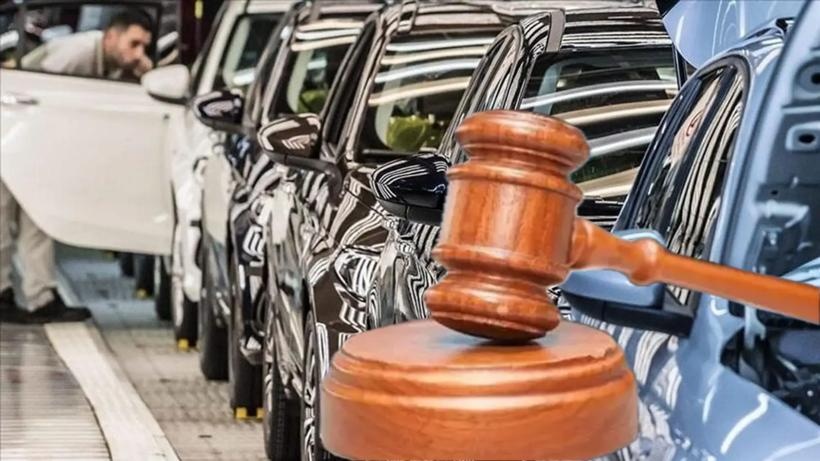
Texas is another active front in this legislative push. A 2025 Texas Senate bill was introduced specifically to address dealer complaints about the lack of a clear parts reimbursement formula, offsetting surcharge fees, unfair specialty parts pricing, and missing compensation for customer-requested over-the-air software updates.
That bill followed direct talks between the affected parties. Texas manufacturers, distributors, and dealers reportedly met multiple times attempting to resolve these reimbursement disputes before the legislation was filed.
For dealership technicians, warranty work is often less lucrative than customer-pay jobs, even when the dealership’s own reimbursement rate looks reasonable. Technicians frequently receive a flat rate for warranty jobs that is lower than what they would earn performing the same repair as customer-pay work.
Standardization is part of the reason for that gap. Warranty labor typically pays technicians less than customer-pay work because it relies on standardized repair times and reimbursement rates set entirely by the manufacturer, regardless of how long the actual repair takes.
That gap is exactly what fuels the ongoing state-by-state legislative fights, and it explains why so many dealerships now treat warranty rate submissions as a recurring, revenue-generating exercise rather than a one-time paperwork task.
