
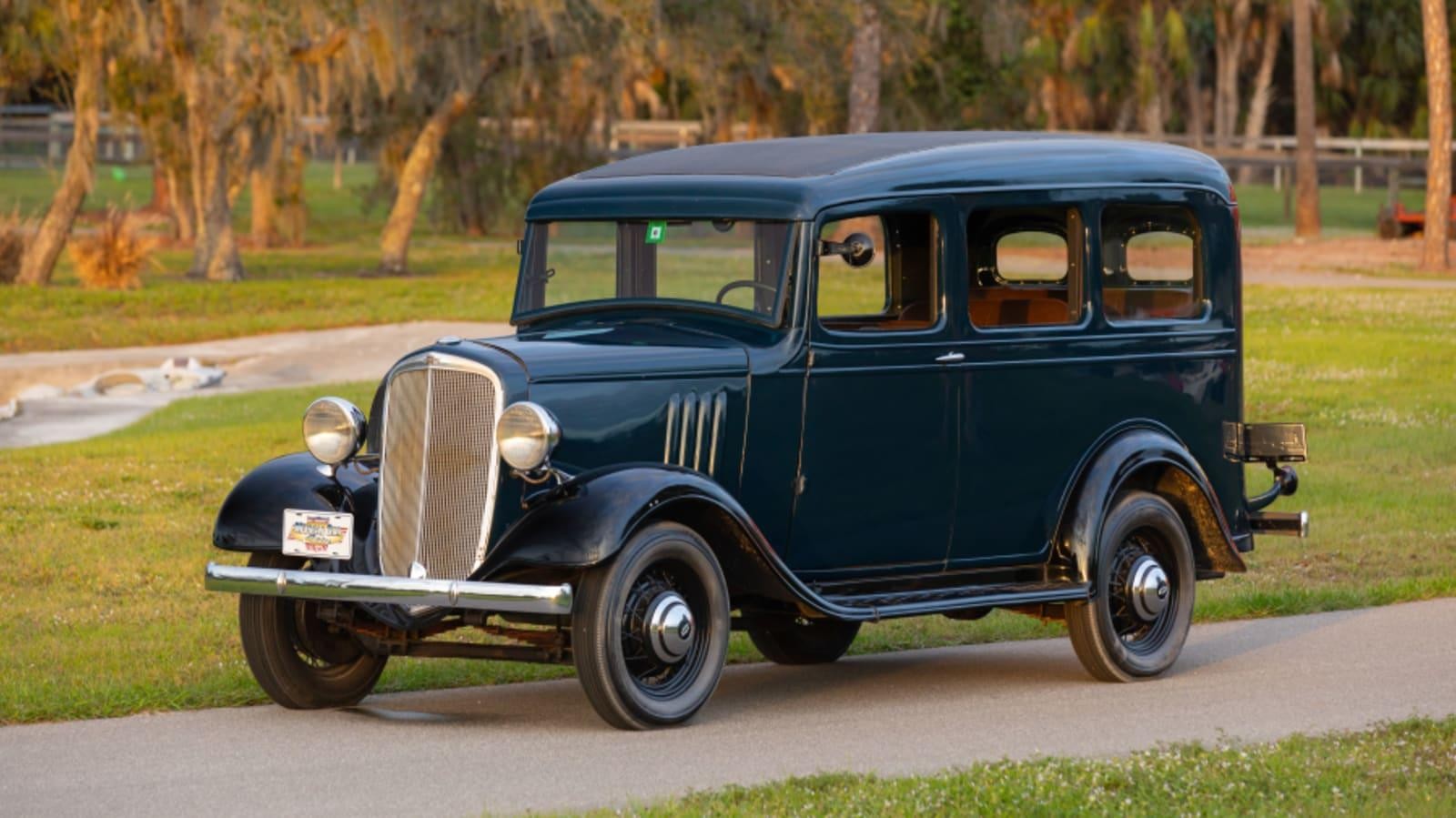
Few names in American manufacturing have survived nine decades without interruption. The Chevrolet Suburban is one of them. It first appeared as the Suburban Carryall in late 1934, launching as a 1935 model.
Chevrolet’s first real step into the SUV market occurred on December 15, 1934, as a 1935 model, and it was the first all-steel, factory-built station wagon on a truck platform.
That single decision to mount a steel wagon body on a commercial truck chassis created a vehicle category that didn’t exist before it. The 1935 Suburban Carryall was the first truck-based wagon of its kind, using an all-steel wagon body on a commercial chassis, and it found favor with commercial customers before private buyers embraced it too.
Nearly 90 years after its debut, the nameplate remains available at dealerships, continues to ride on a truck-based platform, and outsells many of its competitors. This article examines the numbers behind that longevity, including its production history, major generational changes, and recent sales performance, using documented figures rather than relying on nostalgia.
A Nameplate Built on Continuous Production Since 1935
The Suburban’s record isn’t a marketing claim; it’s a documented industry fact. As it turned 75 years old, GM’s Chevrolet Suburban had already become the world’s longest-running nameplate, despite being sold only in the United States.
By 2019, the streak had reached 85 unbroken years. Chevrolet marked the Suburban as the longest-running automotive nameplate in the world, reaching 85 years of continuous production since its 1935 introduction, and the first vehicle ever to hit that mark.
Curators outside Chevrolet have echoed the same point. Petersen Automotive Museum curator Leslie Kendall noted that while other manufacturers used the Suburban name at various points, Chevrolet’s version has stood the test of time as the forerunner of the modern SUV.
By its 90th year, historians tracked the badge through twelve distinct design generations. After twelve generations and 90 years of production, the Suburban had been refined into one of the most recognized, popular, and feature-rich SUVs on the market.
The early years were humble by comparison. The first generation ran from 1935 to 1940 on a half-ton chassis, with a signature two-door body style that stayed in production through 1967, powered by Chevrolet’s “Stovebolt” inline-six rated at 60 horsepower.
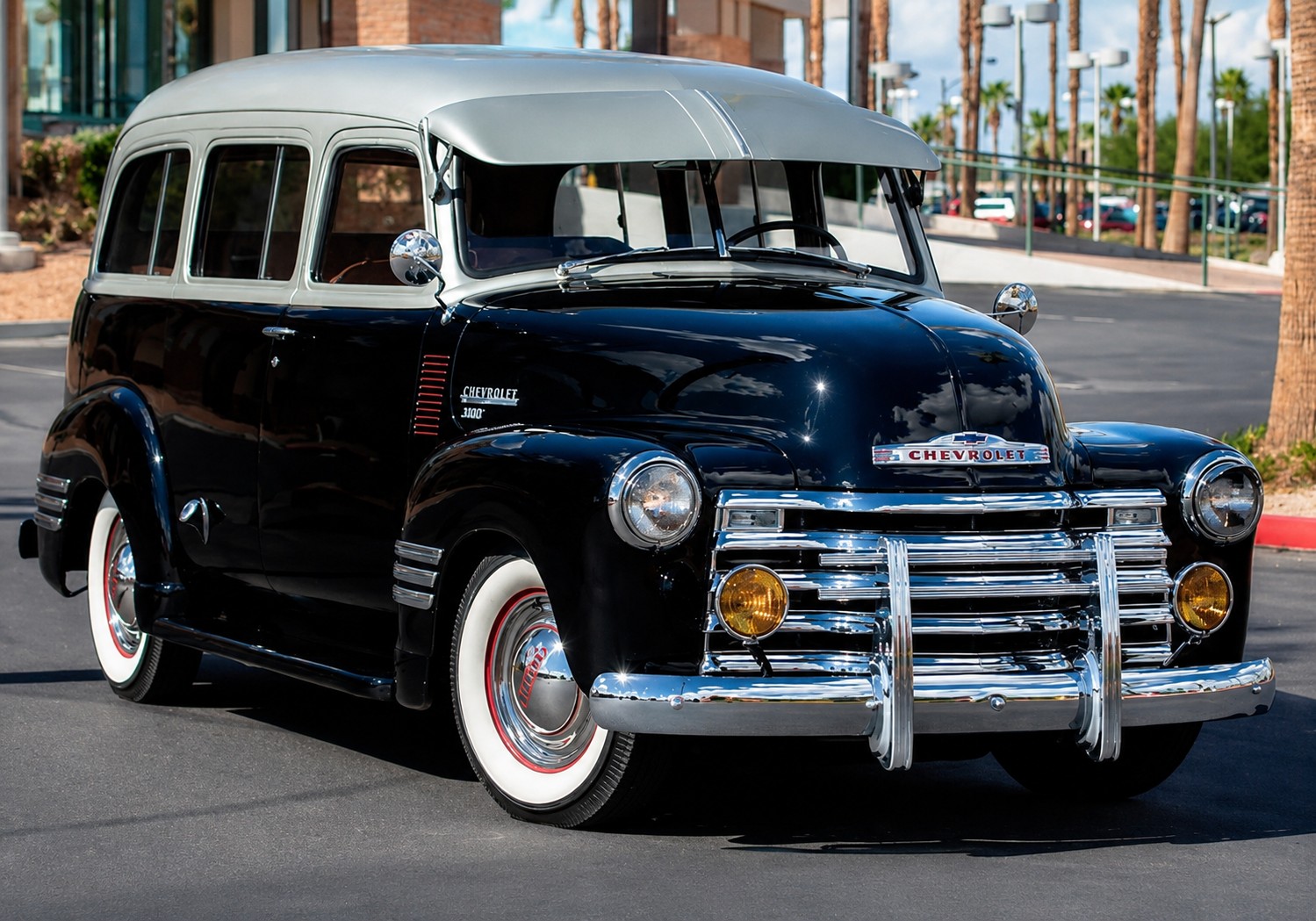
Design language shifted quickly. By 1937, new Art Deco exterior styling cues had already been introduced to the lineup. Interior comfort took decades to catch up with capability. The Suburban didn’t become truly family-friendly until the 1967 model year, when deep padded seats, better air conditioning, a larger cabin, and an easy-access third door arrived.
Four-wheel drive, now standard-adjacent for the segment, wasn’t part of the original formula. After the fourth-generation Suburban ended production in 1959, the larger and more comfort-focused fifth generation introduced an optional four-wheel-drive layout, borrowed from Chevrolet’s K-Series pickup.
Even small mechanical refinements were logged year by year. In 1952, Chevrolet improved the side window seals, which had previously been attached to the sliding glass rather than the stationary glass.
The badge didn’t stay exclusive to Chevrolet for long. GMC followed with its own Carryall Suburban starting in the 1937 model year, and continued using the Suburban name on its version until 1999, its final year with that badge.
Reference sources summarize the broader arc plainly. The Chevrolet Suburban is the longest-lived continuous automobile nameplate still in production, dating to 1935, and for most of its recent history it has shared its underlying platform with the Chevrolet pickup truck line, including the C/K series.
That platform-sharing lineage extended across GM’s brands. The nameplate has been produced under the Chevrolet, Holden, and GMC marques, with the GMC version eventually rebranded as the Yukon XL, and it remains one of General Motors’ historically most profitable products.
Mainstream adoption arrived later than the vehicle’s invention. The Suburban grew steadily more popular through the post-war decades, but it didn’t hit true mainstream status until the early 1990s, when the broader SUV boom took hold.
The shape most people recognize today took even longer to emerge. It wasn’t until the 1960s that traditional SUV design elements began appearing on the Suburban, and not until the early 1980s that it resembled the format that eventually became the modern model.
Its origin story also carries a name detail many owners don’t know. The first-generation Suburban’s full factory name was the Chevrolet Carryall Suburban, a name meant to signal its ability to haul an entire family along with their gear.
Cultural historians treat the streak as more than an automotive footnote. The nameplate is older than rock music, predates World War II, and has outlived the home telephone as a continuously produced product.
Chevrolet itself has framed the vehicle’s origin as a response to real commercial demand rather than a styling exercise. Executives noted that customers required something more than existing options, prompting Chevrolet to test an all-steel wagon body on a commercial chassis in the mid-1930s, research that led directly to the 1935 Suburban Carryall launch as the first heavy-duty, truck-based wagon of its kind.
Sales Data That Backs the Staying Power
Longevity alone wouldn’t matter if the Suburban weren’t still selling. Recent quarterly figures show it is. Full-year 2024 U.S. sales came in strong compared to the year before. Chevrolet sold 44,400 Suburban units in the United States in 2024.
The following year saw a modest pullback. In 2025, Chevrolet sold 42,543 Suburban units, a decline of 1,857 units, or roughly 4.18 percent year over year.
Quarter-by-quarter data tells a more detailed story. In Q1 2024, Suburban sales fell more than 30 percent to 9,684 units, down from 13,932 units in Q1 2023.
The second quarter of 2024 showed a similar dip. Suburban sales decreased nearly 29 percent to 11,779 units in Q2 2024, down from 16,661 units the year before.
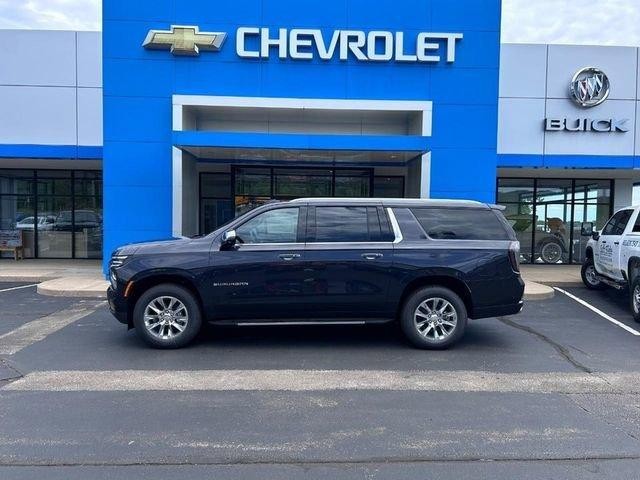
Q3 2024 continued the softer trend before the rebound began. Suburban sales fell over 25 percent to 9,049 units in Q3 2024, compared with 12,083 units in Q3 2023.
Then momentum reversed sharply in the year’s final quarter. Suburban sales jumped nearly 37 percent to 13,886 units in Q4 2024, up from 10,144 units in Q4 2023.
2025 opened with an even stronger surge for the nameplate. Combined Tahoe and Suburban sales in Q2 2025 rose 26 percent versus Q2 2024, with the Suburban alone climbing nearly 39 percent, moving from 11,179 units in Q2 2024 to 16,343 units in Q2 2025.
That pushed the model’s half-year pace well ahead of the prior year. Combined Tahoe and Suburban sales for the first half of 2025 reached 90,032 units, compared to 69,906 units over the same period in 2024.
The fourth quarter of 2025 kept that stronger trajectory going for the Suburban specifically. Suburban sales rose more than 16 percent to 16,140 units in Q4 2025, up from 13,886 units in Q4 2024, even as combined Tahoe and Suburban sales dipped 5.5 percent because Tahoe volume fell nearly 15 percent.
International numbers, while smaller, moved in the Suburban’s favor too. Canadian Suburban deliveries rose 73 percent to 862 units in Q4 2025, and Mexican deliveries increased 60 percent to 355 units.
Segment share data shows just how dominant the Tahoe-Suburban pairing has become. The four GM full-size SUV nameplates Tahoe, Suburban, Yukon, and Yukon XL combined for 58,347 deliveries in Q2 2024 alone, a 54 percent share of the entire full-size SUV segment.
Individual model comparisons back this up further. In Q3 2024, the Tahoe alone outsold both the regular and extended-length Ford Expedition combined.
Why the Nameplate Still Leads the Segment Today
Modern Suburban buyers get a lineup built around three drivetrain choices, each tied to a specific trim tier. Engine options scale with trim level and buyer needs.
The current Suburban offers a 5.3-liter EcoTec3 V8 on LS and LT trims, a 6.2-liter EcoTec3 V8 or 3.0-liter diesel inline-six on RST, Z71, and Premier trims, and the 6.2-liter V8 as standard with the diesel six as an option on the top High Country trim.
Fuel economy remains a trade-off for the size and capability offered. The most powerful four-wheel-drive gas variant, weighing up to 6,051 pounds, is rated at only 16 mpg combined according to Fuel Economy.gov.
Pricing spans a wide range depending on trim and options. A recent model-year Suburban started at roughly $52,900 MSRP and reached about $76,200 fully loaded, with the base configuration producing 355 horsepower and 383 lb-ft of torque.
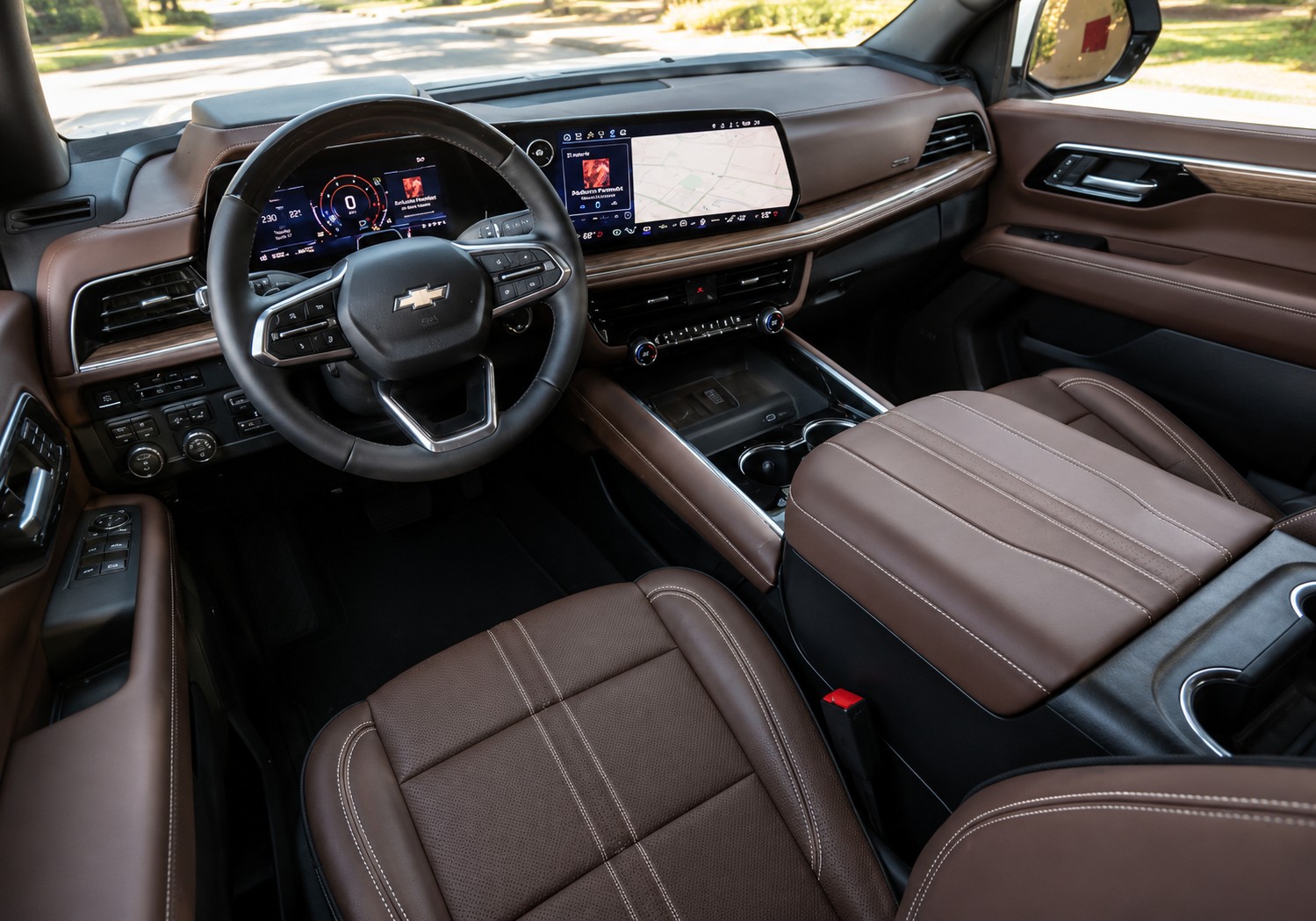
Executives frame the vehicle’s staying power around unmatched interior and cargo flexibility rather than novelty. Chevrolet’s marketing vice president said the Suburban created the sport utility vehicle category by offering an unprecedented combination of passenger comfort and cargo capacity, earning trust from families, law enforcement, and pop culture alike.
The vehicle’s real-world roles have always stretched beyond the family driveway. Over its history, the Suburban has served everything from family road trips to dignitary protection, plus recurring appearances in television and film.
Nine decades, twelve generations, and a sales chart that still leads its segment tell a consistent story. The Chevrolet Suburban didn’t just survive the changing automotive market; the data shows it kept shaping it, one continuous production run at a time.
