
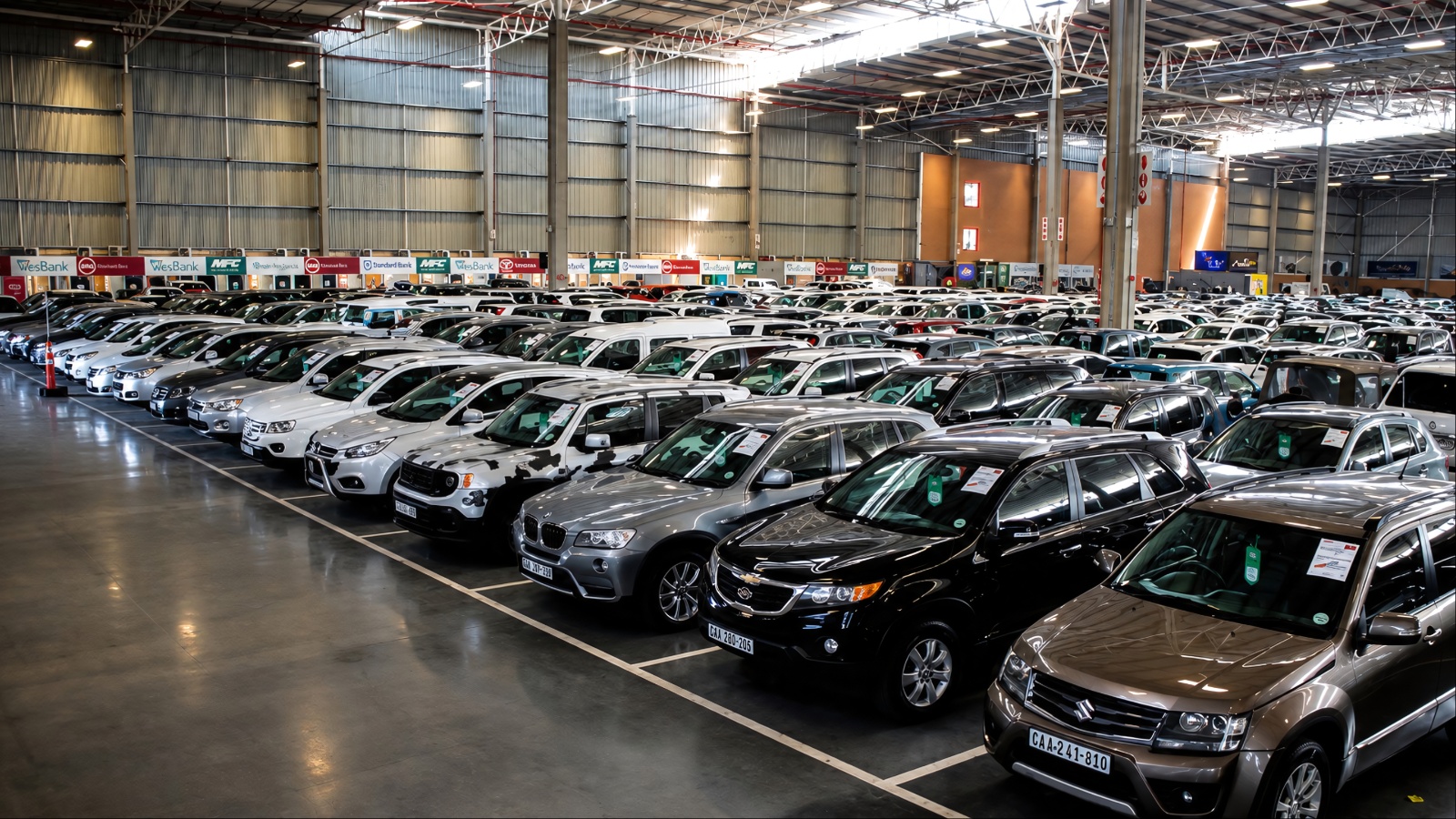
When a car reaches a dealer’s lot, the sticker price rarely reflects what the dealer actually paid to get it there. Behind every “wholesale” purchase sits a stack of costs most buyers never see. The hammer price at auction is only the starting point of a much larger equation.
Dealers who buy at auctions like Manheim, ADESA, Copart, or IAA pay a buyer fee on top of the winning bid. Manheim does not publish a single universal fee schedule, since fees are location- and account-specific. Industry guidance still gives a workable range for planning purposes. The standard estimate is to budget roughly $400 to $700 in fees per vehicle.
But the buyer fee is just the first line item. Transportation, storage, floor plan interest, and reconditioning all stack on top before a car is truly “landed” and ready for resale. This piece breaks down each cost category using current industry data, so the real math behind a wholesale purchase becomes clear.
Auction Buyer Fees and the Hammer Price Gap
The hammer price is what a dealer bids and wins, but it is never the full invoice. Manheim’s buy and sell fees are categorized by vehicle type, covering cars and light commercial vehicles, salvage vehicles, and industrial vehicles.
These fees also scale with sale price. Public auction buyer fees follow a sliding scale from $150 to $350, then rise to 4.5 percent above $9,000, capped at $450.
Dealer accounts work differently and are far less transparent. Dealer accounts use volume-tiered fees that are not published uniformly, and public auctions can add location-specific premiums of up to $300 at some yards.
Volume matters a lot here. Higher-volume buyers earn lower buyer fees as their annual purchase volume increases, since Manheim treats fees as account-specific rather than fixed.
This unpredictability is a known frustration in the industry. Dealers describe Manheim fees as opaque and variable, often including surcharges and charitable add-ons that are hard to predict in advance.
Most independent dealers cope by budgeting a flat estimate. Many dealers simply plan for roughly $500 per unit and treat the uncertainty as a cost of doing business.
Salvage and total-loss platforms carry a different fee structure entirely. On a cheap salvage car, total fees typically land around 20 to 30 percent of the hammer price once buyer fees, gate fees, transport, and storage are added together.
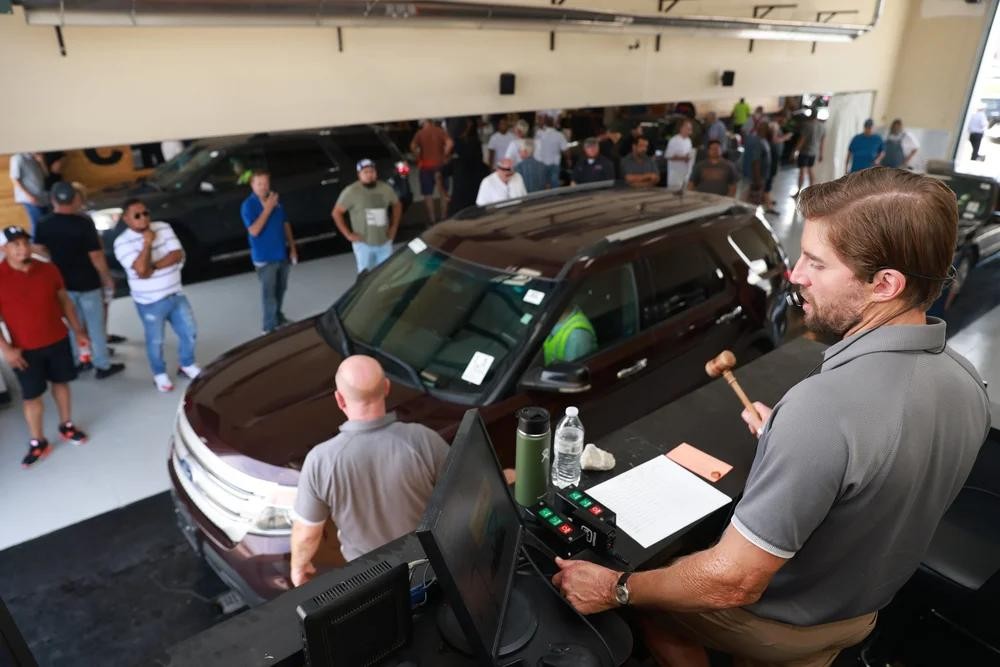
A car that looks like a bargain at the gavel often is not one once the invoice is complete. A vehicle that seems like a $4,800 steal can become a $5,600 all-in cost once every fee is layered on.
Broader industry benchmarks confirm this pattern at scale. Buyer fees at major platforms like Manheim and ADESA typically range from $300 to $1,500 per unit, depending on the vehicle’s sale price, plus additional charges for condition reports, arbitration, and digital lane access.
Some 2026 estimates run even higher for total fee load. Auto auction buyer fees in 2026 average roughly $1,000 to $1,500 per unit once every associated charge is counted.
Digital bidding adds its own layer of cost on top of the standard buy fee. Buying through simulcast or online lanes usually adds its own separate fee line item beyond the standard buyer fee.
There are also buyer-friendly protections that carry a price tag. Manheim’s Return Advantage program charges a $95 fee at purchase, and if the dealer returns the vehicle, an additional 5 percent fee applies in exchange for a full refund of the purchase price and buy fee.
Arbitration policy also shifts periodically and affects dealer risk. The National Auto Auction Association updates its arbitration guidelines annually to keep the wholesale marketplace more consistent and transparent.
The bottom line is that the buyer fee alone can range from a few hundred dollars to well over a thousand. It depends heavily on vehicle price, platform, and dealer account tier.
Transportation, Storage, and Floor Plan Interest
Once a dealer wins a car, moving it home is rarely free or predictable. Most dealer moves cost between $0.85 and $2.35 per mile depending on distance and haul type.
Short regional moves cost noticeably more per mile than long-haul runs. A typical intra-region move under 1,000 miles averages around $2.35 per mile, while cross-country moves drop to roughly $0.85 per mile.
Most dealer purchases fall into the shorter, pricier bracket. Nearly 80 percent of all vehicles on major transport platforms travel under 1,000 miles, placing most dealer moves in the $1.82 to $2.35 per mile range.
Fuel prices have made 2026 an especially expensive year for transport. Diesel prices surged above $5 per gallon nationally following the Iran conflict and Strait of Hormuz disruption in February 2026.
This has pushed rates well above historical norms. Current transport pricing sits roughly 30 percent above the pre-2026 baseline once fuel costs and insurance premiums of 1 to 1.5 percent of vehicle value are included.
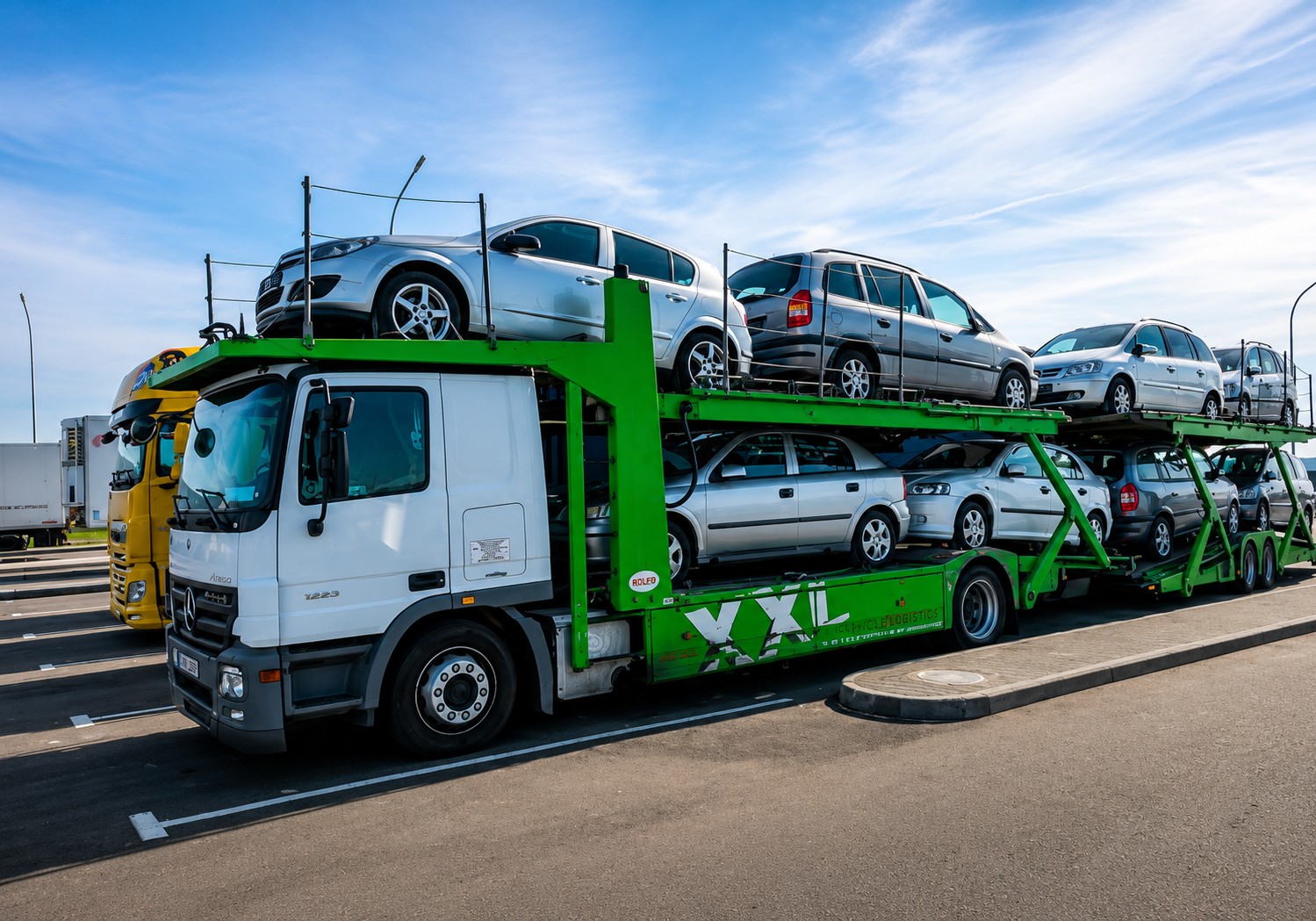
Brokers also take a meaningful cut of every transport quote. Most dealers move auction cars through a broker, and brokers typically keep 20 to 30 percent of the quoted price, meaning roughly $213 of a typical $850 quote never reaches the carrier.
Consolidating shipments helps offset some of this cost. Shipping three or more vehicles together drops the per-unit transport cost by roughly 30 percent compared to shipping individually.
Delays are not free either, since floor plan interest starts accruing immediately. Interest expense begins the moment the hammer falls at auction, often well before the vehicle physically reaches the dealer’s lot.
The math on this is concrete and easy to model. A $90,000 vehicle financed on a 7.3 percent floor plan accrues interest daily, and a 12-day broker delivery timeline can cost an extra $216 in interest alone.
Faster logistics platforms claim meaningful savings here. Using a direct load-matching platform instead of a broker can cut delivery time to about 4 days, reducing that same interest cost to roughly $72.
Storage fees pile on if a vehicle sits at the auction lot too long. Average auction storage across major U.S. operators ranges from $10 to $25 per day after a grace period, which is often seven days or less.
Some estimates put storage even higher depending on the facility. Auction storage fees can run from $10 to $75 per day depending on the location and vehicle type.
Combined, transport and logistics can rival the buyer fee in size. Logistics premiums running 15 to 25 percent of hammer price mean a $20,000 unit can carry $3,000 to $5,000 in transport costs alone.
Reconditioning, Total Landed Cost, and the Wholesale-Retail Gap
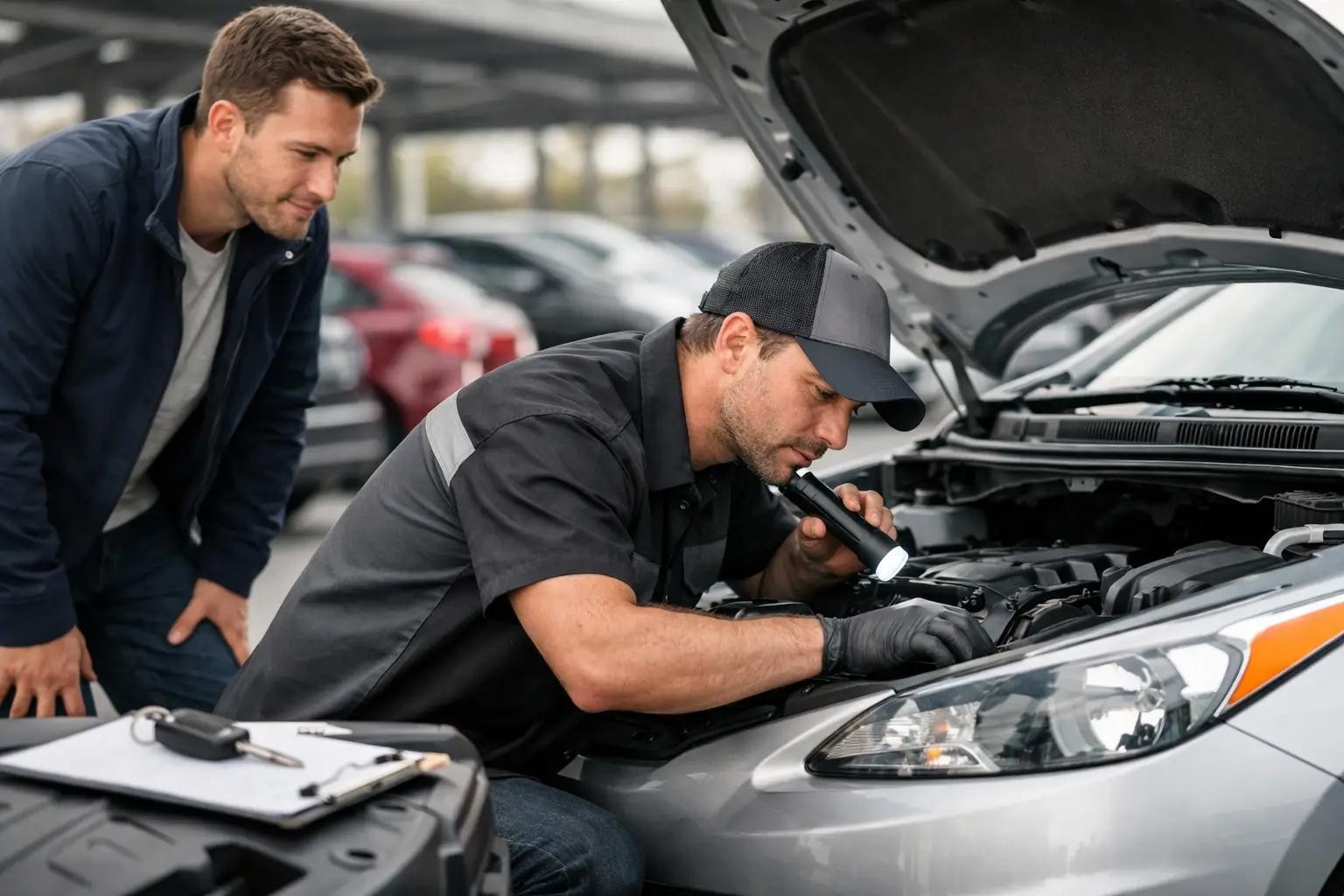
A car rarely leaves the auction ready for a customer to drive. Most units need cleaning, minor repairs, or safety checks before they hit the lot. Reconditioning spend is one of the most consistent added costs in the process. Auction-purchased vehicles require an average of $500 to $1,500 in reconditioning before they are retail-ready.
Repair labor costs have also risen steadily in recent years. Automotive repair service costs have risen more than 18 percent since 2020, according to Bureau of Labor Statistics producer price data.
Other sources put the industry-average recon figure slightly lower but in the same range. The industry-average reconditioning spend runs $800 to $1,200 per unit, on top of transport and buyer fees.
When every cost category is added together, the full picture becomes far larger than the hammer price alone. A $20,000 unit’s true landed cost can reach $25,000 to $28,000 once transport, reconditioning, and floor plan carrying costs during a typical 7 to 14 day prep window are included.
That total-cost framing matters more than headline buyer fees. Total landed cost including transport and reconditioning commonly exceeds $2,500 per unit in 2026.
Title and administrative work adds its own layer of hidden expense too. Title transfer costs, temporary tag fees, and dealer documentation fees vary by state and add up quickly at volume.
Even after the car is retail-ready, marketing costs continue to accrue. Digital advertising on platforms like AutoTrader and Cars.com runs $500 to $2,500 per month for a small dealer lot.
All of this explains why the final sticker price sits well above what the dealer actually paid at auction. Dealers typically pay 25 to 40 percent less at auction than the price they eventually list the vehicle for on the lot.
That markup is not pure profit; it covers every cost outlined above. Buyer fees, transport, storage, floor plan interest, and reconditioning all have to be recovered before any margin exists.
Supply conditions in 2026 have added further pressure to wholesale costs. The off-lease supply pool has contracted sharply, falling from more than 5 million units annually before 2026 to closer to 2 million, driven by reduced lease originations during the 2022 to 2023 new-vehicle shortage.
The “price a dealer pays” is never one number. It is a layered total built from the winning bid, the buyer fee, transport, storage, floor plan interest, and reconditioning combined. Understanding each layer explains why wholesale and retail prices sit so far apart, and why experienced buyers calculate total landed cost before they ever raise a paddle.
