
Henry Martyn Leland spent his whole career chasing precision. He measured parts in thousandths of an inch when most machinists still worked by eye.
That obsession built two of America’s most respected luxury brands. First Cadillac, then Lincoln, both carried his fingerprints. Leland was already 74 years old when he founded Lincoln Motor Company in 1917. Most men that age were retired or slowing down.
He wasn’t. He walked away from Cadillac over a wartime dispute and started over from nothing. Lincoln began as a wartime engine builder, not a car company. It only became a luxury automaker after the armistice ended the fighting.
The postwar economy turned against him almost immediately. A deep recession crushed sales and buried Lincoln in debt. By 1922, the company Leland built was bankrupt. Henry Ford bought it at auction for eight million dollars.
Ford let Leland stay on at first. That arrangement lasted less than five months before it fell apart completely. What followed was a bitter, well-documented split between two of Detroit’s most stubborn men. This is the story of how it happened, backed by the historical record.
The Vermont Machinist Who Built Cadillac
Leland was born in Vermont in 1843, the youngest of eight children on a farm. He apprenticed as a machinist before the Civil War even started. During the war, he worked as a toolmaker at a federal arsenal. That job sharpened his obsession with precision and interchangeable parts.
He carried those skills to Detroit in 1890. By then he was already 47, an age when most careers were winding down, not beginning. He ran a machine shop called Leland and Faulconer, supplying engines and parts to early carmakers. His reputation for exact tolerances spread quickly through the industry.
In 1902, stockholders of the failed Henry Ford Company brought Leland in as a consultant. That company had just lost its namesake founder, a young engineer named Henry Ford.
Leland’s evaluation led to a reorganization rather than a shutdown. The company was renamed Cadillac, after the French nobleman who founded Detroit.
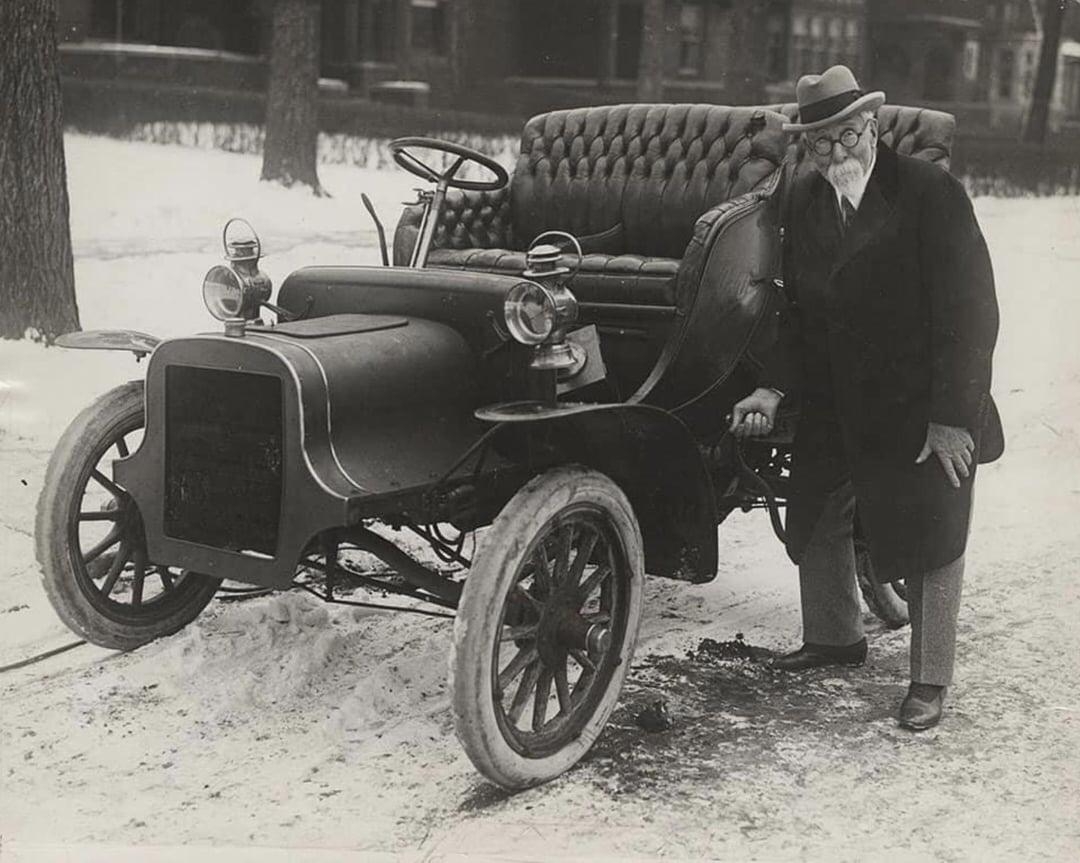
Under Leland, Cadillac became known for parts interchangeability long before that was standard practice. Three Cadillacs were once disassembled and rebuilt from mixed parts in England to prove the point.
That demonstration won Cadillac international recognition for engineering discipline. It also cemented Leland’s reputation as one of the industry’s most exacting minds.
Leland sold Cadillac to General Motors in 1909 for roughly 4.5 million dollars. He stayed on as an executive under GM’s founder, William Durant. For the next eight years, he continued refining Cadillac’s engineering. He helped develop the electric self-starter alongside engineer Charles Kettering during this period.
The self-starter eliminated the dangerous hand crank that had injured many early drivers. It became one of the most important safety advances of the era.
Everything changed when America moved toward entering World War I. Leland wanted Cadillac to build Liberty aircraft engines for the Allied war effort.
Durant refused. He was a committed pacifist and did not want GM manufacturing military materiel. Leland saw this as a matter of national duty, not business strategy. He and his son Wilfred resigned from Cadillac in protest over the decision.
At 74 years old, most men would have called that a fitting end to a long career. Leland instead gathered investors and started an entirely new company.
He named it Lincoln, after Abraham Lincoln, the first president he had ever voted for in 1864. It was a personal tribute, not just a brand name. By the end of August 1917, Lincoln Motor Company had secured over ten million dollars in federal contracts. The goal was building V12 Liberty aircraft engines for the war.
Leland recruited many of his former Cadillac engineers to join the new venture. Wilfred handled the Washington side, securing government approval and funding.
Lincoln fulfilled its wartime purpose, producing thousands of Liberty engines before the armistice. That contract gave the company its initial financial footing and technical staff.
Lincoln Motor Company and the Postwar Collapse
Once the war ended in late 1918, Leland faced a hard pivot. His military contracts were drying up fast, and Lincoln needed a peacetime product. He and Wilfred decided to reinvent Lincoln as a luxury automaker. The first Lincoln automobile, the Model L, entered production in 1920.
The car reflected everything Leland valued as an engineer. It used a V8 engine influenced by the wartime Liberty engine’s design. Mechanically, the Model L was excellent. Reviewers and engineers respected its build quality and its precision, much like early Cadillacs had been respected.
But the car launched into terrible timing. A severe postwar recession hit the American economy just as Lincoln needed buyers. Worse, the Model L’s styling was conservative to the point of looking outdated. Wealthy buyers wanted flair and modern design, not just mechanical soundness.
Leland was a superb engineer but a weaker businessman when it came to style and marketing. He prioritized tolerances and durability over the aesthetic appeal luxury customers expected.
Sales stayed sluggish through 1920 and into 1921. The company burned through capital faster than it could bring in revenue from new car sales. By late 1921, Lincoln Motor Company was deep in financial trouble. Estimates placed the company’s asset value near sixteen million dollars, yet it could not meet its obligations.
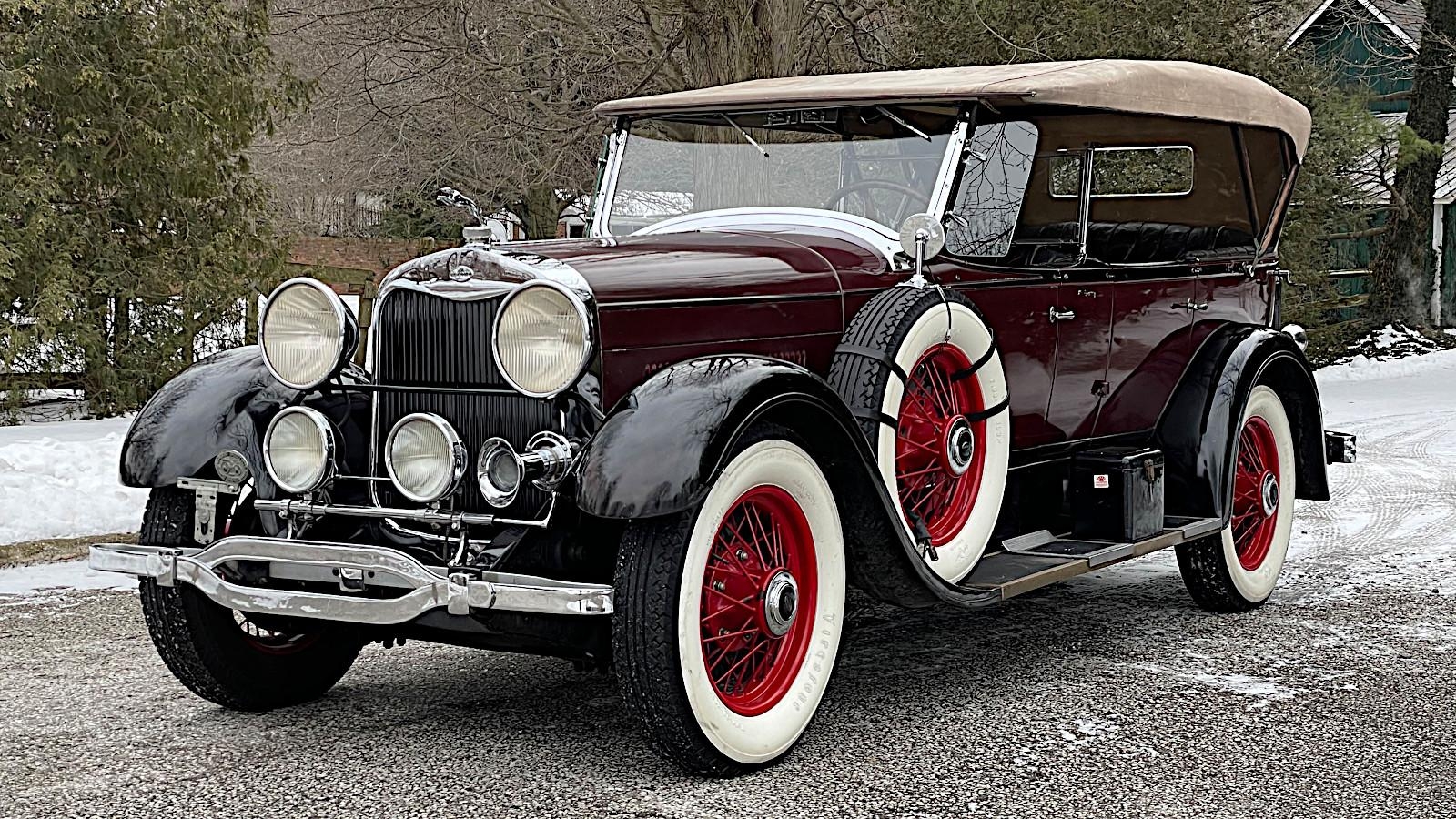
The company slipped into receivership, a legal process for insolvent firms. A bankruptcy sale was scheduled for early 1922 to settle Lincoln’s debts.
This was the moment Henry Ford entered the picture. Ford and Leland had a complicated history stretching back two decades. Ford’s second car company had failed in 1901, and Leland had been the consultant who helped reorganize its remains into Cadillac. Some accounts suggest Ford resented how that episode played out.
When Lincoln went up for sale, Ford saw an opportunity. He first offered five million dollars, well below the company’s estimated worth. The presiding judge rejected that lowball bid as inadequate for the assets involved. Ford was forced to raise his offer to be taken seriously.
He eventually agreed to pay eight million dollars for the company. On February 4, 1922, the sale was finalized, and Lincoln became part of Ford Motor Company.
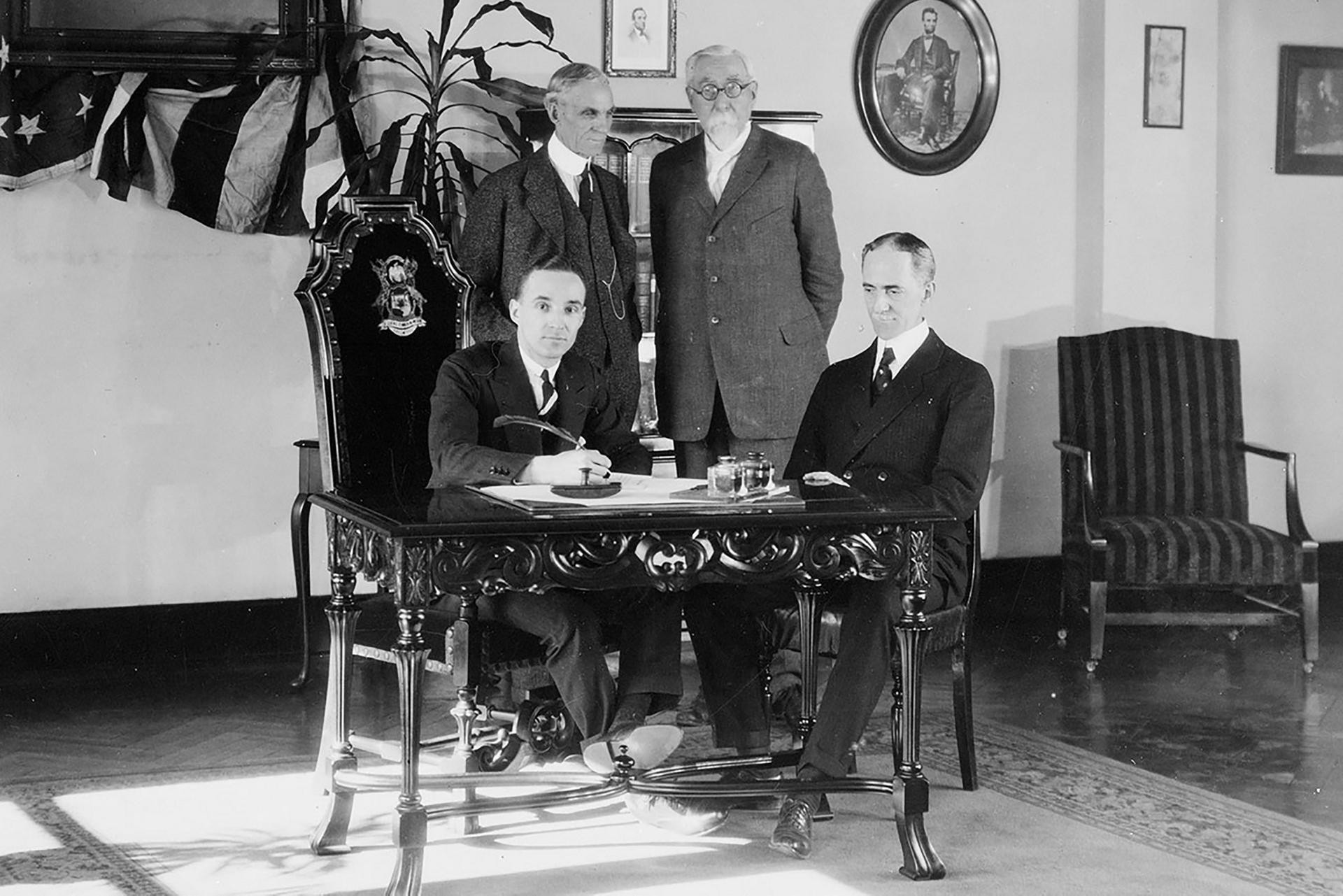
Notably, Ford’s bid was the only one submitted at the sale. No other buyer stepped forward to compete for the struggling automaker. Photographs from the signing show both father-son pairs together. Henry Leland and Wilfred stood beside Henry Ford and his son Edsel as papers were exchanged.
Under the original purchase agreement, Leland was allowed to stay on as an operating executive. Wilfred remained his assistant, running day-to-day affairs at the Lincoln plant.
For a brief period, it looked like a peaceful transition was possible. Orders for new Lincolns even picked up once buyers learned Ford now backed the brand.
Ford’s Acquisition and the Ouster That Followed
The peace did not last. Ford employees began showing up at the Lincoln plant almost immediately after the deal closed. They were there, officially, to learn Lincoln’s production methods. Edsel Ford in particular became deeply involved in overseeing operations at the factory.
Tension built quickly between the incoming Ford team and the existing Leland staff. Two very different management cultures were now sharing the same buildings.
Fewer than five months after the sale closed, the break finally came. Ernest Liebold, one of Henry Ford’s top lieutenants, arrived at the Lincoln plant with a demand.
He asked for Wilfred Leland’s resignation, giving no specific reason for the request. When Henry Leland learned what was happening to his son, he resigned as well.
The date was June 10, 1922. Some accounts describe the Lelands being escorted out by Ford security personnel that day. Henry Ford installed his son Edsel as Lincoln’s new president immediately afterward. Edsel reportedly said he wanted to build the best car, not just the most popular one.
For Henry Leland, the exit was devastating. He was 79 years old and had just lost the second company he built from nothing. He did not accept the outcome quietly. Leland filed a lawsuit against Ford Motor Company seeking six million dollars in damages.
The case dragged on for years through the courts. Ford’s legal team fought it all the way to the Michigan Supreme Court, delaying any resolution.
By 1931, Leland had exhausted both his money and his legal options. He ultimately abandoned the fight, effectively admitting defeat after nearly a decade of litigation.
He died the following year, in March 1932, at the age of 89. He had spent his final years watching two of his creations thrive under other men’s names.
Under Edsel Ford’s direction, Lincoln evolved in ways Leland likely never would have pursued. Design and styling took priority alongside engineering, a shift the original founder had resisted.
His story remains one of the more overlooked chapters in American automotive history. It is a reminder that even the industry’s most respected engineers were not immune to the business politics of Detroit’s early era.
