
Small SUVs have become a favorite in the U.S. because they combine the seating position and cargo flexibility of an SUV with the manageable running costs of a smaller vehicle. But fuel economy is only half the story.
A genuinely inexpensive SUV to own should also use widely available service parts, avoid excessive maintenance costs, and have a powertrain with a strong track record. The Honda CR-V and Mazda CX-5 are two familiar benchmarks, but several other compact crossovers deserve attention.
Here are eight U.S.-market choices that balance fuel consumption, practical dimensions, straightforward powertrains, and the potential for reasonable long-term running expenses.
1. Honda CR-V
The Honda CR-V has earned its reputation as one of America’s most practical compact SUVs by combining useful space with a powertrain designed for everyday efficiency. For 2025, the standard gasoline CR-V uses a 1.5-liter turbocharged four-cylinder producing 190 horsepower and 179 lb-ft of torque.
Honda pairs it with a continuously variable transmission, while front-wheel drive is standard on the LX and all-wheel drive is available.
Fuel economy depends on configuration, but the 2025 CR-V LX with front-wheel drive is rated at 28 mpg city and 34 mpg highway, according to Toyota’s direct comparison with the Honda. That puts the CR-V in a useful efficiency range without requiring a hybrid powertrain.
The CR-V also benefits from its enormous presence in the American market. That matters when discussing parts costs. A vehicle sold in large numbers generally has a broad ecosystem of replacement parts, independent repair shops, aftermarket suppliers, and technicians familiar with its mechanical systems.
That does not guarantee cheap repairs, but it can make routine ownership less complicated than maintaining a rare model.
Its dimensions also strike a useful balance. The 2025 CR-V measures 184.8 inches long and 73.5 inches wide, giving it significantly more interior and cargo space than many subcompact SUVs while remaining manageable in parking lots.
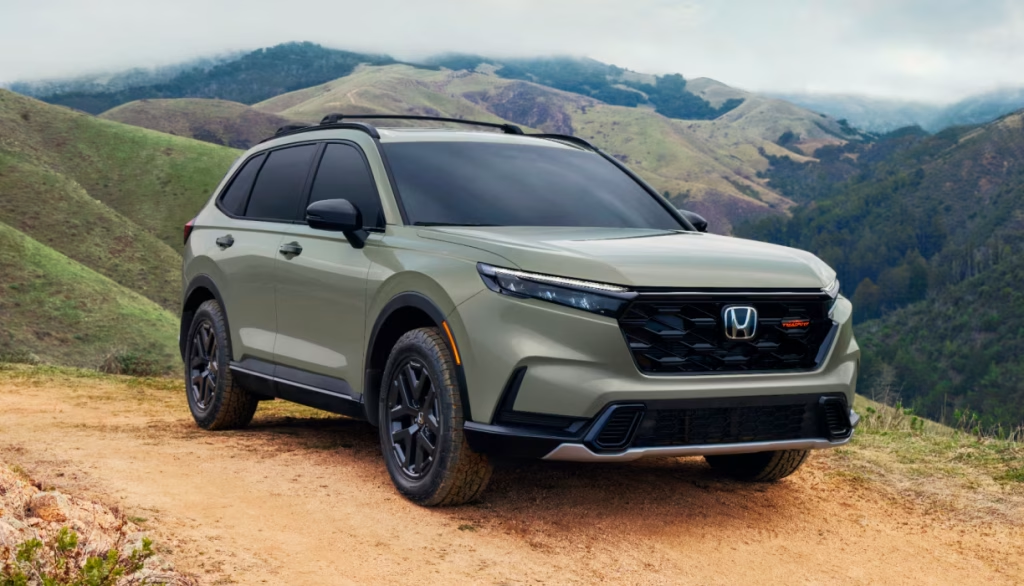
Buyers interested in reducing fuel expenses even further can choose one of the CR-V’s hybrid versions. However, the gasoline model remains attractive for shoppers who prioritize a conventional engine and straightforward day-to-day operation.
The CR-V’s biggest advantage is its versatility. It can serve as a commuter, family vehicle, road-trip machine, or light-duty cargo hauler without demanding the fuel consumption of a larger SUV.
2. Mazda CX-5
The Mazda CX-5 takes a slightly different approach to affordable SUV ownership. Rather than chasing the largest engine or maximum cargo capacity, Mazda has focused on a compact package with a naturally aspirated four-cylinder engine and standard all-wheel drive for the U.S. market.
For 2025, Mazda retained the 2.5-liter Skyactiv-G four-cylinder, producing 187 horsepower and 186 lb-ft of torque.
The standard CX-5 2.5 S is rated at up to 26 mpg city, 30 mpg highway, and 28 mpg combined, according to Mazda. It uses a six-speed automatic transmission and accepts regular 87-octane gasoline.
That combination can appeal to owners who prefer a conventional powertrain over a turbocharged engine. The naturally aspirated 2.5-liter does not produce sports-car levels of acceleration, but it delivers enough output for normal commuting, highway travel, and everyday cargo duties.
Parts availability is another practical consideration. The CX-5 has been a major part of Mazda’s U.S. lineup for years, meaning routine service components such as filters, brake parts and other wear items are widely familiar to repair shops.
Availability can vary by location and part, so “cheap on parts” should never be interpreted as a guarantee that every repair will be inexpensive.
The CX-5 also distinguishes itself with standard all-wheel drive. Mazda made AWD standard across the 2025 U.S. lineup, giving every version additional traction capability without requiring the buyer to step into a larger SUV.
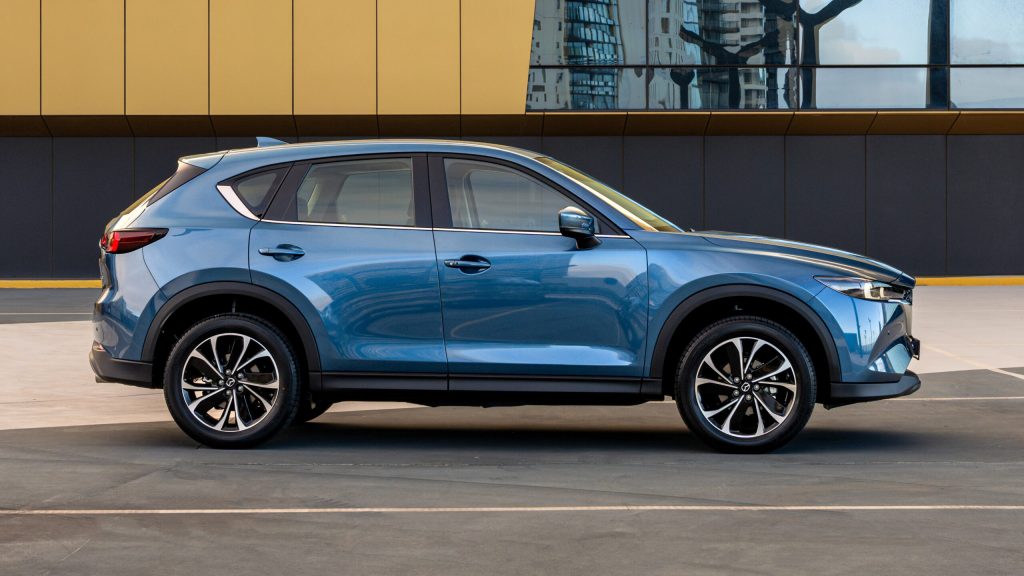
For drivers who value responsive handling as much as practicality, the CX-5 is particularly appealing. Its steering and chassis give it a more engaging character than many economy-focused crossovers.
It is not the most fuel-efficient SUV here, but its combination of a proven four-cylinder layout, regular gasoline requirement, standard AWD, and established U.S. parts network makes it a sensible long-term candidate.
3. Toyota RAV4
The Toyota RAV4 belongs on a running-cost shortlist because it combines respectable fuel economy with a powertrain that has become extremely common in the American market.
For 2025, the gasoline RAV4 uses a 2.5-liter four-cylinder producing 203 horsepower and 184 lb-ft of torque. Toyota pairs it with an eight-speed automatic transmission in the gasoline model.
The front-wheel-drive version returns 27 mpg city and 35 mpg highway, with a 30 mpg combined EPA rating. That makes the RAV4 reasonably efficient without requiring hybrid technology.
Toyota also offers hybrid and plug-in hybrid versions, but the conventional gasoline model is the simpler comparison for buyers specifically concerned with traditional parts and service.
Another advantage that is easy to overlook is the RAV4’s popularity. It has been a familiar sight on American roads for years, which means independent repair shops are generally well acquainted with the platform. Replacement parts are also widely available through the aftermarket, making routine repairs and maintenance easier to handle.
Availability and pricing still vary by part and location, but a high-volume model generally gives owners more choices when service is required.
The RAV4 measures 180.9 inches long and 73.0 inches wide, making it noticeably easier to maneuver than many larger SUVs. It also provides 37.6 cubic feet of cargo room behind the rear seats and 69.8 cubic feet with them folded, according to Toyota’s specifications.
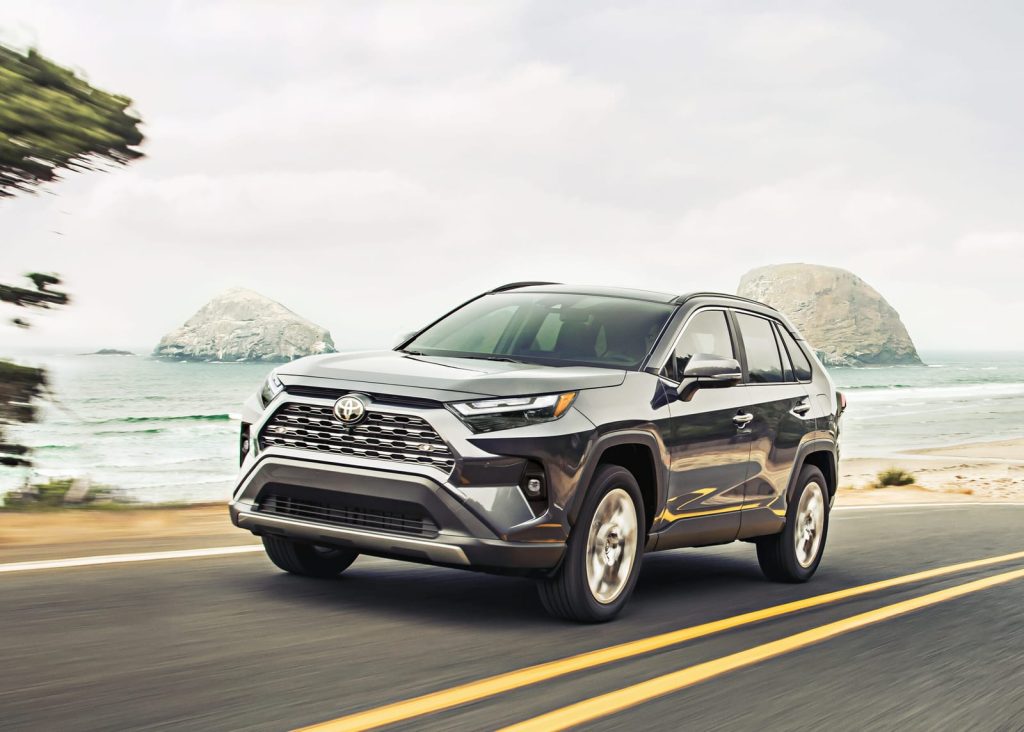
For drivers who spend much of their week commuting, the 30-mpg combined rating is especially relevant. Fuel savings accumulate gradually, so a difference of only a few miles per gallon can become meaningful over thousands of miles.
The RAV4’s combination of mainstream mechanical components, strong U.S. sales presence, reasonable fuel economy, and useful cargo capacity makes it one of the easiest compact SUVs to justify for cost-conscious ownership.
4. Hyundai Tucson
The Hyundai Tucson brings a different ownership proposition to this list. Its strongest argument is not class-leading fuel economy but a combination of a conventional four-cylinder engine, competitive efficiency, broad U.S. availability, and a relatively straightforward mechanical package.
For 2025, the standard Tucson uses a 2.5-liter four-cylinder engine producing 187 horsepower and 178 lb-ft of torque. Hyundai pairs it with an eight-speed automatic transmission, while front-wheel drive is standard and HTRAC all-wheel drive is available.
Fuel consumption is reasonable for a compact SUV of this size. Hyundai lists the front-drive version at 25 mpg city, 33 mpg highway, and 28 mpg combined. Choosing AWD lowers the ratings to 24 mpg city, 30 mpg highway, and 26 mpg combined.
The Tucson’s dimensions help explain its practicality. Hyundai lists a length of 182.7 inches and a width of 73.4 inches without the side mirrors. Its wheelbase measures 108.5 inches, providing useful cabin space without making the SUV exceptionally difficult to maneuver.
Parts costs should always be judged by the specific repair rather than by brand reputation alone. Nevertheless, the Tucson’s large presence in the U.S. market means owners are not dealing with a niche vehicle that requires specialized components for every routine service. Common maintenance items are familiar territory for many independent shops.
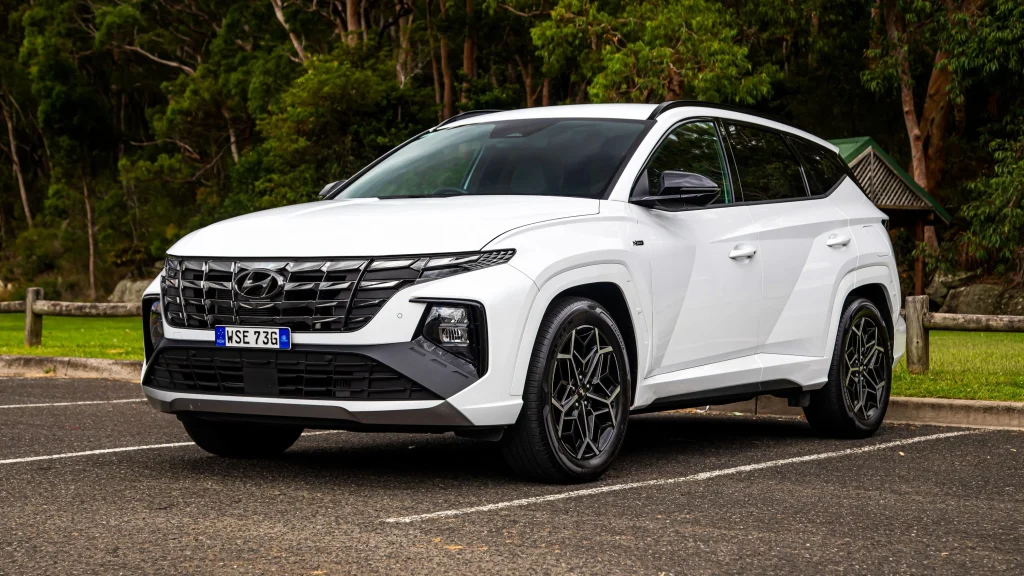
Hyundai also gives buyers another route if fuel consumption is the priority. The 2025 Tucson Hybrid uses a 1.6-liter turbocharged engine and electric motor, producing 231 combined horsepower, while the plug-in hybrid produces 268 combined horsepower.
For someone who wants a conventional gasoline SUV, however, the standard Tucson remains the simpler proposition. It delivers enough power for everyday driving, respectable highway economy, and practical dimensions without moving into a larger, heavier SUV category.
5. Subaru Forester
The Subaru Forester earns a place here by taking a practical approach to compact SUV ownership. Every 2025 Forester uses a naturally aspirated four-cylinder engine, and Subaru includes symmetrical all-wheel drive as standard equipment rather than making it an expensive upgrade.
That gives the Forester a useful advantage for buyers who want extra traction without moving into a larger SUV.
Power comes from a 2.5-liter horizontally opposed four-cylinder producing 180 horsepower and 178 lb-ft of torque. Subaru pairs it with a Lineartronic continuously variable transmission. The engine is naturally aspirated, so there is no turbocharger adding another major component to the powertrain.
Fuel economy remains competitive for a standard AWD compact SUV. Subaru rates the 2025 Forester at up to 26 mpg city and 33 mpg highway, depending on trim. The Wilderness version is less efficient because of its more rugged equipment and tires.
The Forester’s dimensions also make it especially useful for everyday life. It measures 183.3 inches long and 72.0 inches wide, while its tall roofline creates an upright cabin with generous visibility. Subaru lists 29.6 cubic feet of cargo space behind the rear seats and 74.2 cubic feet with the rear seats folded.
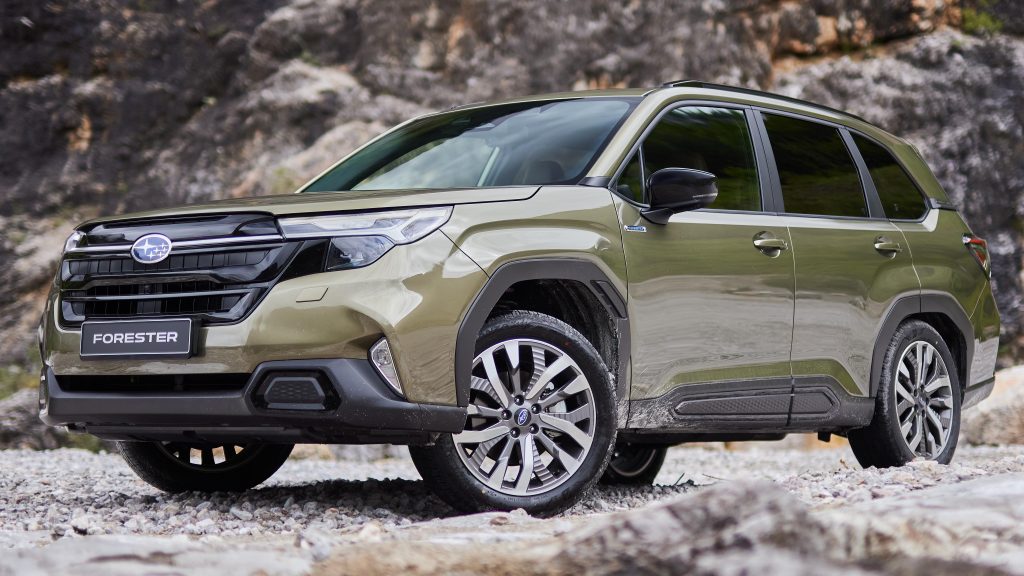
Parts availability is helped by Subaru’s large U.S. customer base. Common service items are readily supported by dealerships and independent repair facilities, although actual repair pricing depends heavily on the job, location, and parts selected.
The Forester also makes a compelling case for buyers who spend time on rougher roads. Its standard AWD and 8.7 inches of ground clearance give it more capability than many front-wheel-drive-oriented compact crossovers.
It is not the fastest SUV in its class, and its 180-hp engine favors smooth everyday driving rather than rapid acceleration. Yet for someone evaluating fuel consumption, serviceability, and practical utility together, the Forester offers a well-rounded package.
6. Chevrolet Equinox
The Chevrolet Equinox approaches the affordable-running-cost formula with a compact footprint, a turbocharged four-cylinder, and the enormous service network associated with one of America’s largest automakers.
The redesigned 2025 Equinox uses a 1.5-liter turbocharged four-cylinder engine making 175 horsepower and 203 lb-ft of torque. Front-wheel-drive models use a continuously variable transmission, while all-wheel-drive versions receive an eight-speed automatic.
Fuel economy varies with drivetrain and wheel configuration. Chevrolet lists the front-wheel-drive Equinox at up to 26 mpg city and 31 mpg highway, while all-wheel-drive versions can return up to 24 mpg city and 29 mpg highway.
The Equinox’s engine has another notable advantage. It produces 203 lb-ft of torque from a relatively small displacement, giving the SUV useful low-end pulling power without the need for a larger engine. For everyday commuting, that means the engine can move the vehicle through traffic without having to work especially hard.
Chevrolet’s widespread dealer network is another consideration for parts and servicing. General Motors vehicles are supported throughout the United States, and Equinox components are available through dealerships and independent suppliers.
That does not mean every component will be inexpensive, but shoppers have numerous avenues for routine maintenance and replacement parts.
The Equinox is also reasonably sized for a family crossover. Its 190.5-inch length makes it longer than several rivals here, but its SUV proportions provide useful passenger and cargo capacity.
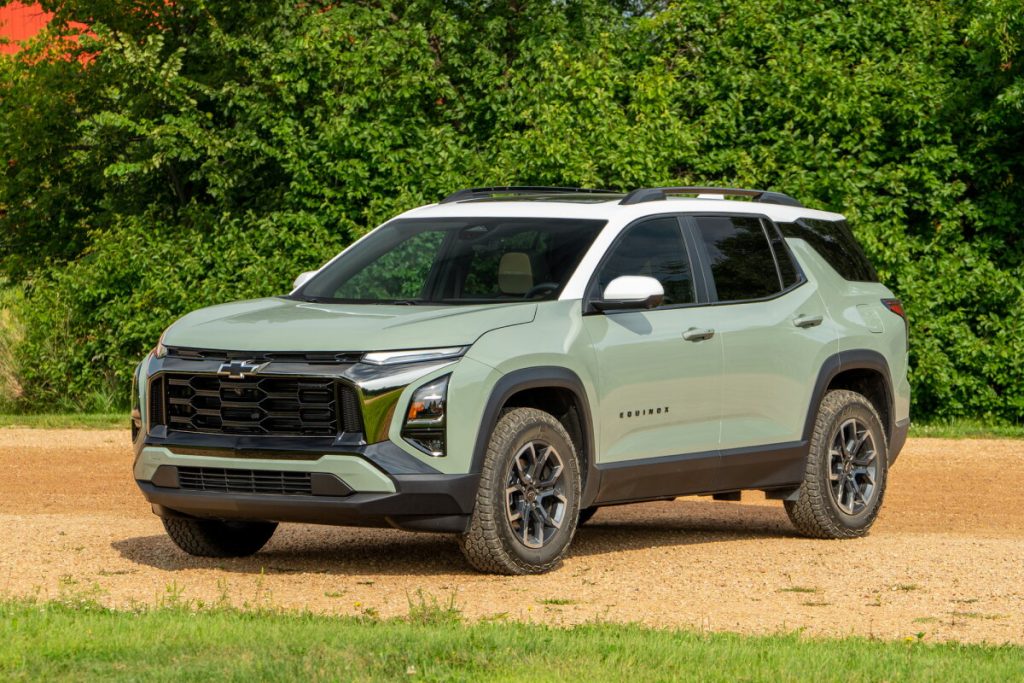
For someone who wants a conventional gasoline crossover without paying for a hybrid system, the Equinox offers a familiar mechanical layout and competitive highway fuel economy.
Its turbocharged engine also gives the Equinox a different character from naturally aspirated competitors. Instead of relying on displacement for torque, it uses forced induction to provide stronger pulling power from a smaller engine.
That combination makes the Equinox a practical candidate for buyers who want reasonable fuel consumption while retaining the convenience of a mainstream American service network.
7. Honda HR-V
The Honda HR-V makes a strong case for drivers who want the upright seating position of an SUV without stepping into the size, weight, and fuel demands of a larger crossover. The U.S.-market HR-V uses a 2.0-liter four-cylinder engine producing 158 horsepower and 138 lb-ft of torque.
Honda pairs it with a continuously variable transmission, and buyers can choose between front-wheel drive and all-wheel drive.
Fuel economy is respectable rather than spectacular. Honda rates the front-wheel-drive HR-V at 26 mpg city, 32 mpg highway, and 28 mpg combined. All-wheel-drive versions return 25 mpg city, 30 mpg highway, and 27 mpg combined.
The engine uses regular unleaded gasoline, so owners do not need premium fuel for normal operation.
Where the HR-V becomes particularly attractive is its size. Honda lists the SUV at 179.8 inches long and 72.4 inches wide, dimensions that make it substantially easier to place in tight parking spaces than many larger compact SUVs. Ground clearance is also useful at up to 7.3 inches, depending on trim.
The mechanical layout is relatively conventional. There is no turbocharger and no complicated multi-engine hybrid system in the standard model. That simplicity can be useful for owners who prioritize familiar servicing, although actual repair bills still depend on the specific component, labor rates, mileage, and repair facility.
Honda’s enormous U.S. vehicle population also means the HR-V is supported by an established dealer and independent repair network. Common maintenance items are not difficult to source, while technicians are familiar with Honda’s powertrains.
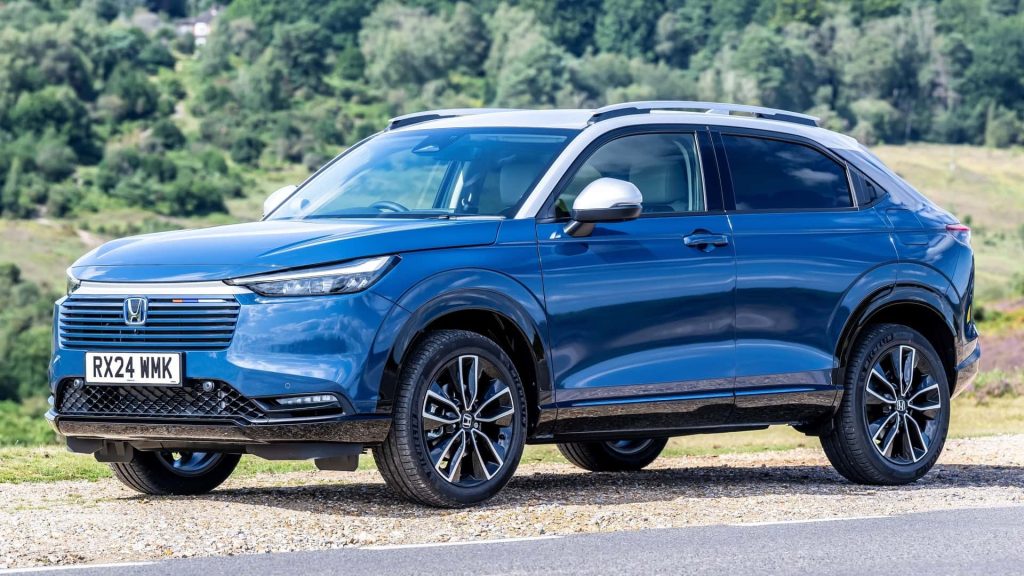
The HR-V is not the quickest SUV in this group, but speed is hardly its mission. Its appeal comes from giving buyers a compact footprint, useful cargo flexibility, regular gasoline operation, respectable highway mileage, and a well-established mechanical platform.
For drivers who spend much of their time commuting through crowded American cities, that combination can make the HR-V an appealing alternative to heavier SUVs that consume more fuel and occupy more road space.
8. Toyota Corolla Cross
The Toyota Corolla Cross is a relatively new addition to Toyota’s U.S. crossover lineup, but its formula is familiar. It combines compact dimensions with a conventional four-cylinder engine and fuel economy that remains competitive with other small SUVs.
The gasoline version uses Toyota’s 2.0-liter Dynamic Force four-cylinder, producing 169 horsepower. A continuously variable transmission with a physical first gear sends power to the front wheels, while all-wheel drive is available. Toyota estimates up to 32 mpg combined for front-wheel-drive gasoline models and 30 mpg combined for AWD versions.
Those numbers give the Corolla Cross a useful advantage for drivers who rack up substantial mileage. The front-drive version is rated at 31 mpg city and 33 mpg highway, while AWD drops to 29 mpg city and 32 mpg highway.
The Corolla Cross also offers something that many small crossovers lack. Buyers can choose a hybrid model that combines a 2.0-liter engine with Toyota’s fifth-generation hybrid system. For 2025, the Corolla Cross Hybrid produces 196 net combined horsepower and achieves an estimated 42 mpg combined. It also comes with electronic on-demand all-wheel drive as standard equipment.
That gives shoppers two very different paths. Someone focused on straightforward gasoline ownership can choose the conventional version, while a high-mileage driver can spend more upfront for substantially better fuel economy with the hybrid.
The gasoline Corolla Cross starts at just above $24,000 for the 2025 model, according to Toyota’s U.S. pricing information, while the hybrid begins below $29,000.
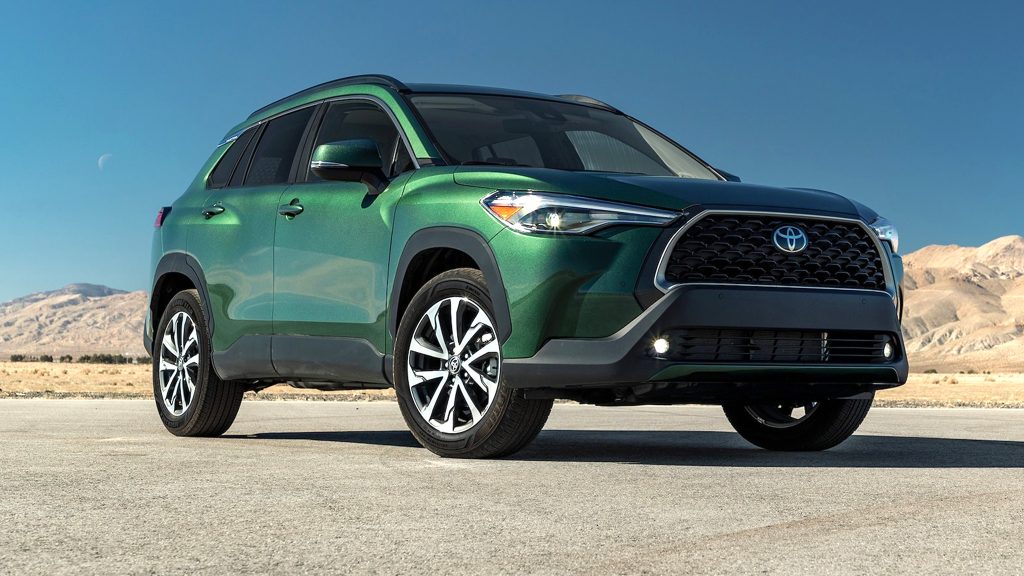
Toyota’s enormous American service footprint is another consideration. The Corolla Cross shares its basic engine family with other Toyota products, and routine maintenance components are supported through a large dealer and independent repair ecosystem.
Its compact dimensions, efficient powertrain choices, standard five-passenger seating, and available AWD make it particularly well suited to buyers who want SUV practicality without moving into a larger and potentially more expensive vehicle.
