

Buying a used car often comes with one lingering question. How can you know it will not break down shortly after you buy it? Certified pre-owned programs are designed to address that concern by offering a warranty and a vehicle inspection.
But that reassurance costs money, and the real issue is whether the premium is actually worth paying. This isn’t a matter of opinion or dealer marketing copy. There is real data on pricing, reliability, and warranty economics that can settle the question with numbers instead of gut feeling.
Across the industry, CPO premiums typically run $1,000 to $3,000 more than a comparable non-certified used car of the same year and mileage. Meanwhile, Consumer Reports found that CPO vehicles have roughly 14 percent fewer problems than non-certified used cars, based on a dataset of more than 300,000 vehicles surveyed in 2024.
This article looks at the decision from three angles. It examines what the premium actually provides, whether the reliability and warranty coverage justify the added cost, and which buyers are most likely to benefit from paying it.
What the CPO Premium Actually Buys You
The first thing to understand is that “CPO premium” isn’t one fixed number. It varies enormously by brand and market segment. Kelley Blue Book data has shown average CPO markups as low as a few hundred dollars for value brands and well over $2,000 for luxury brands.
Mercedes-Benz carried the highest average premium at $2,327 above non-CPO pricing, followed by BMW at $1,805 and Land Rover at $1,723. Mainstream brands sit much lower on this scale. Ford’s CPO premium averaged $785, and Toyota’s averaged $679, while Hyundai’s CPO cars listed only about $352 above non-certified equivalents.
More recent industry-wide figures tell a similar story. The average CPO price premium over a non-certified unit runs $1,700 to $1,800 as of 2026. That gap isn’t arbitrary. It corresponds to specific, itemized things a buyer receives that a standard used-car purchase does not include.
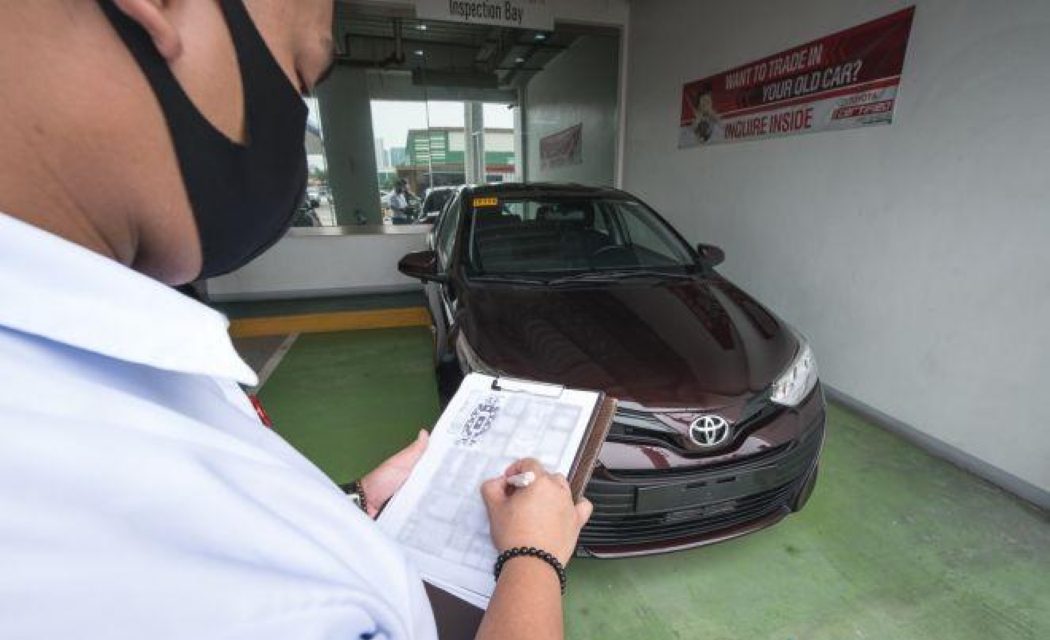
Every CPO vehicle goes through a multi-point mechanical inspection before it’s allowed to carry the certified badge. These inspections typically run 100 to 200 checkpoints covering the engine, transmission, brakes, and safety systems.
On top of the inspection, buyers get an extended warranty layered on top of whatever coverage remains from the factory. This CPO warranty usually kicks in once the original new-car warranty expires, adding roughly one to two years and several thousand extra miles of protection.
Perks vary by brand but often go beyond the mechanical coverage. Programs commonly include roadside assistance, loaner vehicles during repairs, and sometimes free scheduled maintenance.
Lexus is a good example of a top-tier program. Its L/Certified plan offers bumper-to-bumper coverage for up to six years with no deductible or mileage limit, plus a free service loaner for up to five days.
Lexus also throws in travel protection. The brand reimburses up to $850 in travel interruption costs if a warrantable issue occurs more than 100 miles from a dealer.
Not every brand matches that generosity, and buyers should never assume otherwise. Coverage terms, deductibles, and transferability differ significantly across manufacturers.
Hyundai’s program is a useful contrast on the mainstream side. It carries a $50 deductible per covered repair and is not transferable to a subsequent owner, which limits its resale advantage compared to a program like Kia’s, even though it’s ranked as a top CPO warranty.
Eligibility rules also shape what “certified” actually means before you even look at price. Most programs restrict certification to vehicles roughly five to six years old with mileage commonly capped around 60,000 miles.
That age and mileage ceiling matters because it screens out higher-risk vehicles automatically. You’re not just paying for a badge, you’re paying to shrink the pool of cars you might get.
There’s also a caution buyers need to keep in mind here. Dealer “certified” labels do not always equal genuine factory CPO coverage, so it’s worth verifying the actual program owner and warranty administrator.
In short, the premium buys inspection rigor, extended coverage, and program perks, but the value of each varies a lot by brand. That variation is exactly why the next question, whether it’s worth the money, depends on the math, not the marketing.
Does the Data Actually Support Paying the Premium?
This is where the decision gets genuinely data-driven rather than emotional. Consumer Reports ran the numbers and reached a fairly direct conclusion. Their long-standing advice used to favor buying a reliable non-certified used car after independent inspection.
But their 2024 analysis of over 300,000 vehicles across model years 2000 to 2023 concluded that paying the CPO premium is often a wise choice for many shoppers.
Their auto data analytics lead put it plainly. “Buying a CPO car is often worth the added cost for the increased reliability,” while cautioning that some models remain unreliable whether certified or not. That caveat matters enormously. Certification does not fix a fundamentally troublesome model, it just verifies condition and adds a warranty net.
Consumer Reports even found cases where CPO beats buying new outright. A CPO 2022 or 2023 BMW X3 can offer higher reliability and a lower problem rate than a brand-new Ford Escape Hybrid for similar money.
Now compare that reliability data against the actual cost math of alternative coverage. Third-party extended warranties are the natural substitute people consider instead of CPO. Those third-party plans aren’t cheap either. They typically cost between $800 and $2,000 per year, sometimes more for premium models.
Run that forward, and the arithmetic becomes clear fairly fast. On a typical family sedan or SUV, you’ll have spent more on a third-party extended warranty after about a year and a half than you would have paid as the CPO premium upfront.
There’s another structural advantage CPO warranties usually hold over aftermarket ones. Most CPO warranties don’t require a deductible, while most third-party extended warranties do.
That’s a real financial difference, not a minor detail. A zero-deductible repair structure removes the surprise cost that often makes extended warranties feel less valuable than advertised. Still, it isn’t a one-sided picture. Some analyses show scenarios where a well-chosen third-party warranty can beat CPO on raw dollars.
One cost comparison modeled a 2020 Toyota Camry with 55,000 miles. In that case, a roughly $2,800 CPO premium compared against a $1,200 to $2,000 third-party warranty, netting the buyer around $1,200 in savings by skipping CPO while still getting solid coverage.
There’s a service-cost catch worth flagging in that comparison, though. CPO warranty repairs are often locked into dealership service, where labor rates run 20 to 40 percent higher than independent shops, even with a zero deductible.
Third-party plans frequently allow more shop flexibility. That flexibility can mean lower labor costs at an independent mechanic, offsetting some of CPO’s deductible advantage.
Put together, the numbers support CPO as the statistically safer bet for most shoppers, especially on mainstream and near-luxury vehicles where the premium is modest relative to the coverage received.
Who Should Actually Pay the Premium and Who Shouldn’t
Even with the data leaning toward CPO, it isn’t the right call for everyone. The decision depends on buyer behavior as much as vehicle economics.
One clear guideline exists from people who actually sell these cars for a living. For buyers planning to keep a vehicle two to four years, CPO is generally considered worth the premium.
That ownership-length detail matters because warranty value compounds the longer you’re exposed to potential repair costs. A short hold period simply doesn’t let the coverage pay for itself.
CPO also makes the most sense for people without mechanical expertise or a trusted independent mechanic. Buyers who are mechanically knowledgeable or have a trusted mechanic for pre-purchase inspection may find the CPO premium less valuable.

On the flip side, TrueCar’s breakdown lines up with that same logic. People who want the lowest possible price and are comfortable accepting higher risk are natural non-CPO buyers.
There’s also a model-specific dimension that overrides almost everything else. For vehicles already known for outstanding reliability, a non-CPO purchase can be more economical, especially if the buyer maintains a repair reserve fund.
That supply crunch hit specific brands hard. Toyota’s CPO sales fell 13 percent, and Honda’s fell 11 percent in 2024, even as CPO interest stayed steady.
Tighter supply can mean thinner selection and sometimes steeper premiums on the models still available. That’s worth factoring in if you’re shopping a specific make with historically tight CPO inventory.
Buyers who plan to sell within a year or two, know a trusted mechanic, or are buying a historically bulletproof model can often skip the premium safely. In that case, the money is better saved for a repair fund instead.
