
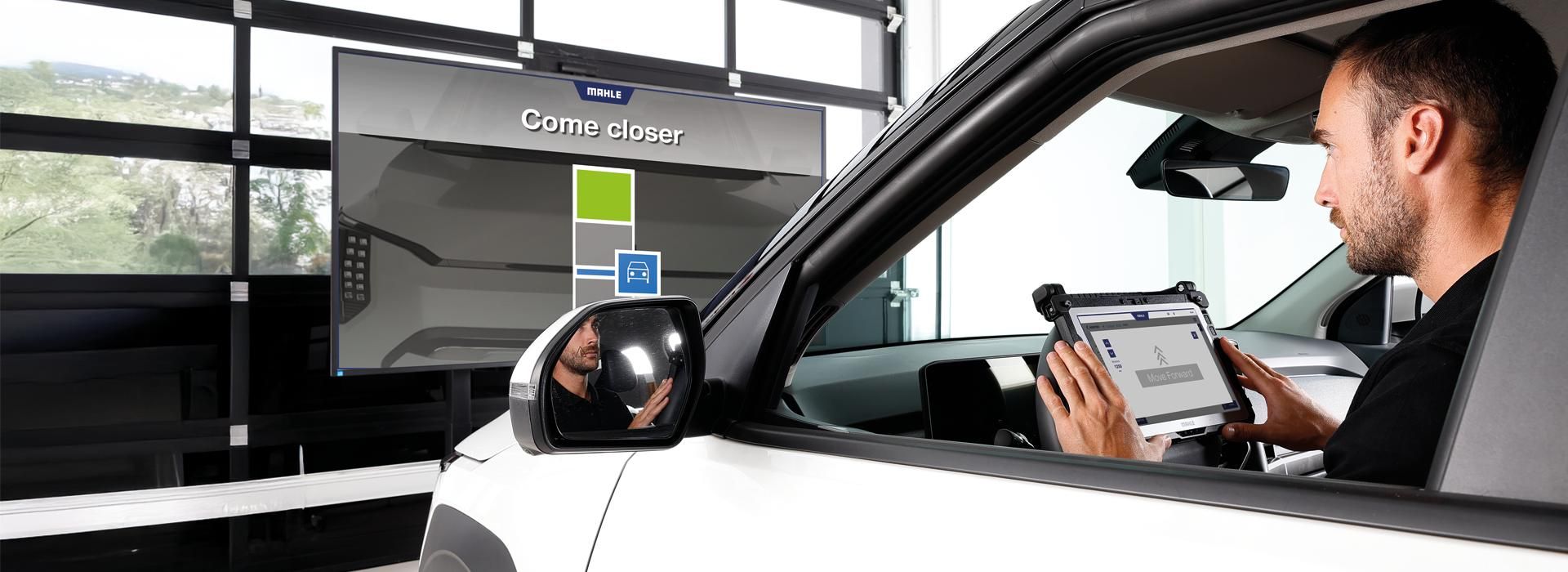
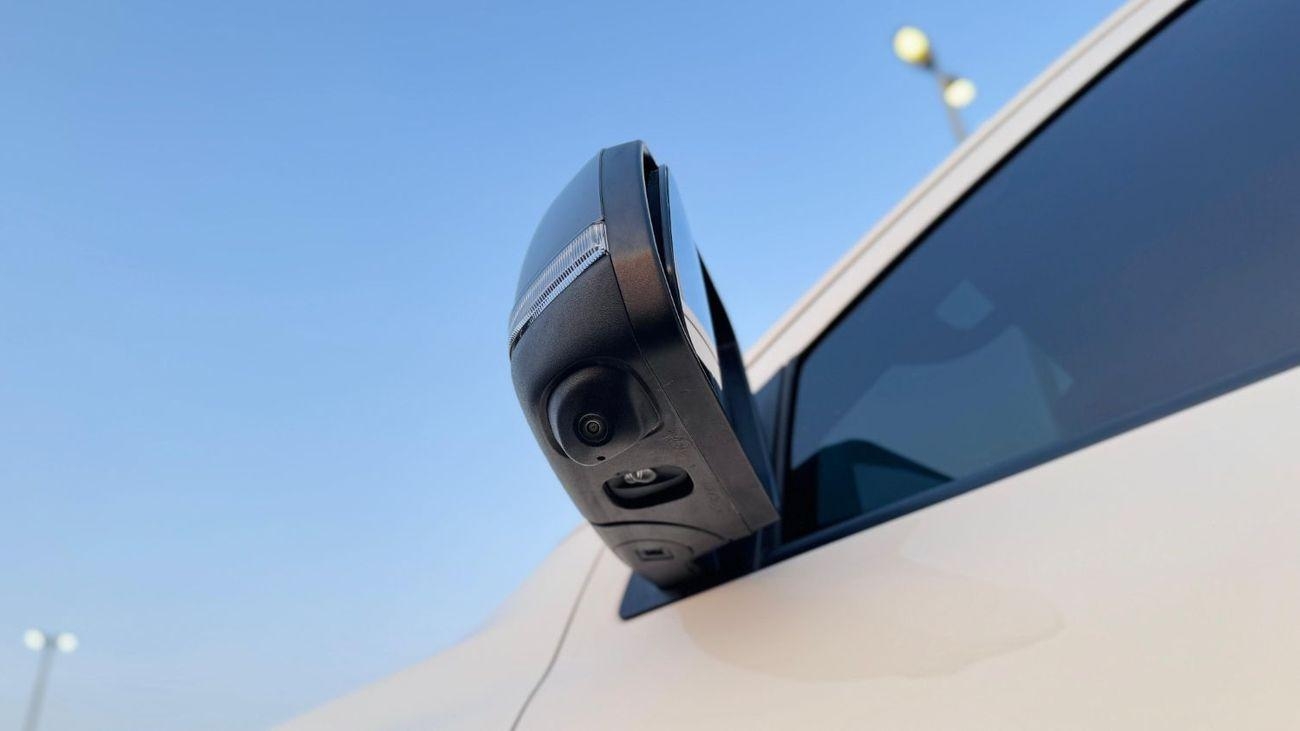
Side mirrors used to be simple. A hinge, a bracket, and a piece of glass. Today’s mirrors carry cameras, radar links, and blind-spot sensors. That electronics package changes the economics of a “simple” repair completely.
AAA’s 2023 repair-cost study found that when a side mirror is replaced on a modern vehicle, the ADAS camera inside that mirror assembly accounts for an average of 70.8% of the total repair bill, or $1,067 out of $1,540. The physical mirror itself is often the cheapest line item on the invoice.
Calibration, the process of re-aiming a camera or sensor to factory spec, is billed separately from the part. Industry pricing guides put standalone mirror-camera calibration between $150 and $800, depending on whether it’s a simple static aim or a full dynamic road-test procedure.
That means the labor of pointing a camera correctly can cost more than the camera-equipped mirror it sits inside. Below are eight real-world mirror categories where that math plays out, backed by published repair-cost data.
1. Generic Aftermarket Power-Fold Mirror with Blind-Spot Camera
Economy and mid-size sedans increasingly ship with a camera-assisted blind-spot mirror as a mid-trim option. The mirror housing itself is not exotic.
An aftermarket or OEM-equivalent power-fold mirror with an integrated camera typically runs $150 to $350 for the part. That’s a modest number by modern standards.
The problem shows up after installation. Because the camera feeds a lane-change warning system tied to the vehicle’s CAN bus, it can’t simply be plugged in and left alone.
Shops must run a static or dynamic calibration to re-align the camera’s reference point. Published pricing guides put a single-camera calibration at $150 to $300 on its own.
When the mirror sits at the lower end of its price band, and the calibration sits at the higher end, calibration alone can match or exceed the part cost. Add diagnostic time for confirming CAN bus coding, which one repair breakdown lists at another $75 to $150, and the labor bill pulls further ahead.
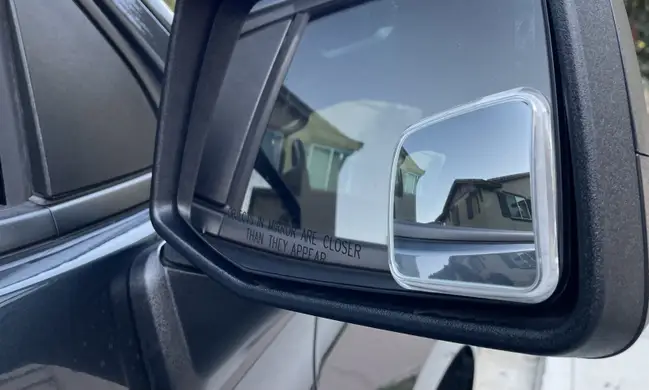
This is the scenario technicians describe as “easily overlooked on estimates.” A customer sees a mirror quoted at $200 and assumes that’s the ceiling.
They don’t see the calibration line until the final invoice. Because the base mirror is inexpensive, this is one of the clearest examples of calibration outweighing the part itself.
Independent shops without in-house targets often sublet this step to a specialist, adding a markup on top of the base calibration fee. That sublet fee alone can rival what the mirror costs.
The lesson from this category is structural, not brand-specific. Any vehicle where the camera is genuinely cheap but the calibration procedure is standardized and labor-heavy will produce this exact cost inversion.
2. Honda and Acura Camera-Mirror Systems
Honda popularized mirror-mounted cameras years before blind-spot radar became standard across the industry. That legacy tech still shows up in used and certified pre-owned inventory.
The mirror housing on these models is a passenger-side unit with an embedded lens, not a full sensor suite. Part costs for the housing typically land in the $150 to $300 range on the used and aftermarket market.
Later Honda and Acura models pair that camera with a broader driver-assist suite, including lane-keeping and forward collision systems. When any mirror-mounted component is replaced, technicians are instructed to verify camera alignment against the OEM procedure.
That verification isn’t optional if the vehicle also carries forward radar or windshield camera systems that share calibration targets. A shop running a full multi-system calibration check, rather than a single-camera aim, bills accordingly.
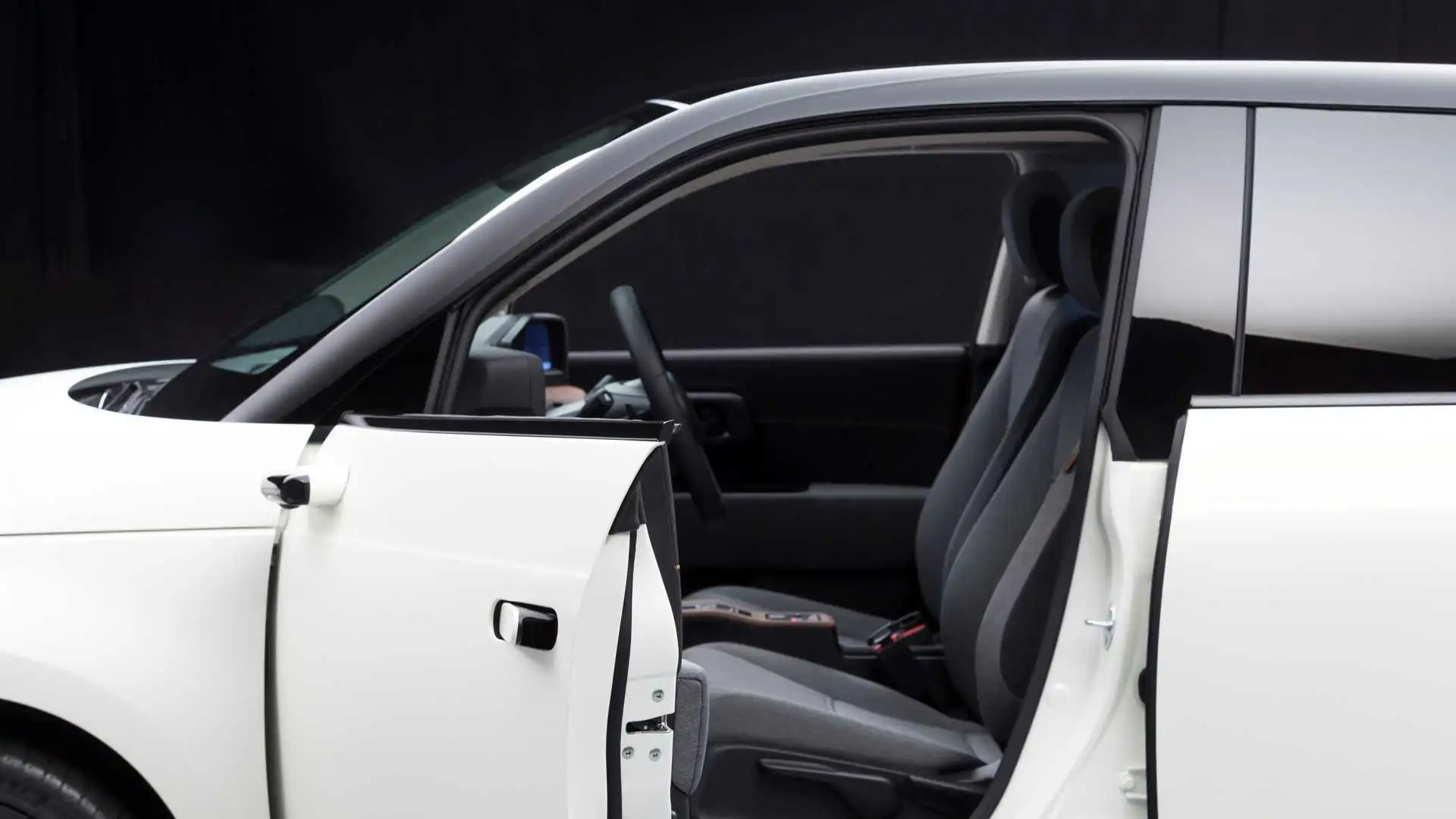
Published shop pricing for multi-system calibration sits between $400 and $800, according to recent industry cost breakdowns. That range alone can double or triple the price of the mirror housing being replaced.
Even a single-camera-only calibration, at $150 to $300, sits close to or above the part cost when the mirror itself is sourced used or aftermarket. Owners searching for a cheap fix often find the mirror online for under $150, only to discover the calibration invoice at the shop is higher.
This mismatch is common enough that several repair-cost guides specifically flag mirror-camera jobs as “easily overlooked” line items. The part price advertised online rarely includes the labor required to make the camera functional again.
Because Honda’s system has been in production long enough to have a mature aftermarket parts market, this is one of the more visible examples of the cost inversion for everyday drivers, not just luxury buyers.
3. BMW 3 Series (G20) Mirror with Blind Spot Detection and Side Camera
BMW’s current-generation 3 Series pairs blind-spot detection with a side-view camera built into the mirror housing. This is one of the better-documented examples of the calibration-exceeds-part problem.
A published cost breakdown for a G20-chassis 3 Series with this configuration lists a total expected repair range of $1,500 to $2,000. That figure includes the mirror, paint matching, and calibration together.
Separately, BMW mirror part pricing guides put the mirror assembly itself, before paint and labor, around $500 to $850 depending on trim. Higher-spec M Sport housings with aerodynamic covers push toward the top of that range.
Subtracting the part cost from the total repair estimate leaves a substantial gap attributable to calibration, paint matching, and labor. Shops specifically call out calibration as requiring “sophisticated targets and road testing,” which is billed as a distinct line item.
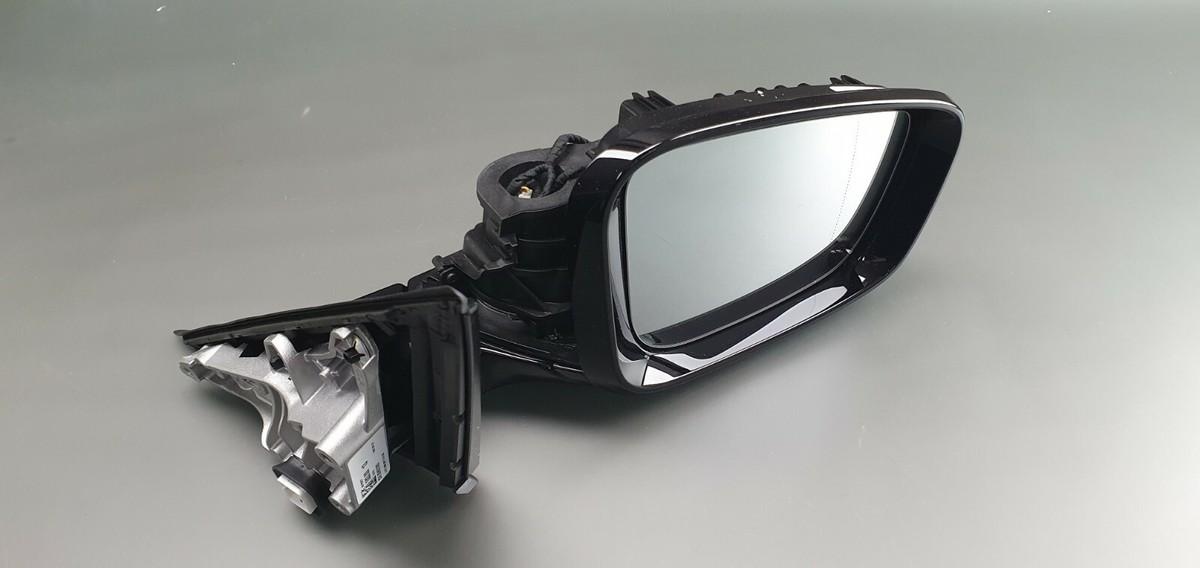
Independent shops often can’t perform this calibration at all. One BMW-focused repair guide notes that independent shops “generally charge less than dealerships but may not offer calibration services needed for camera-equipped mirrors.”
That forces many owners back to the dealership specifically for the calibration step, even if they source a cheaper aftermarket mirror elsewhere. Dealership calibration labor is billed at a premium over independent shop rates.
When a customer buys a lower-cost aftermarket mirror to save money and then pays dealership rates purely for calibration, the calibration invoice can exceed what they spent on the part. This is a direct, documented example of the pattern the mirror industry has started warning customers about.
The added detail here is that skipping calibration doesn’t just risk a warning light. It can silently disable blind-spot detection while showing no dashboard fault at all.
4. Mercedes-Benz Mirror with 360-Degree Surround Camera
Mercedes-Benz integrates surround-view camera lenses into the mirror housings on many current SUV and sedan trims. This system stitches four camera feeds into a single top-down parking view.
Published data on a 2021 Mercedes-AMG C43 puts the replacement cost of a single mirror at $1,340. That figure is frequently cited as one of the most expensive single-mirror repairs on the market.
Within that total, the physical mirror glass and housing are only part of the bill. The surround-view system requires each camera to be recalibrated relative to the other three, not just aimed on its own.
Multi-camera surround systems fall into the higher end of industry calibration pricing, which puts radar, blind-spot, and 360-degree camera calibration jobs “at the higher end of the range due to the level of precision involved,” according to shop pricing guides.
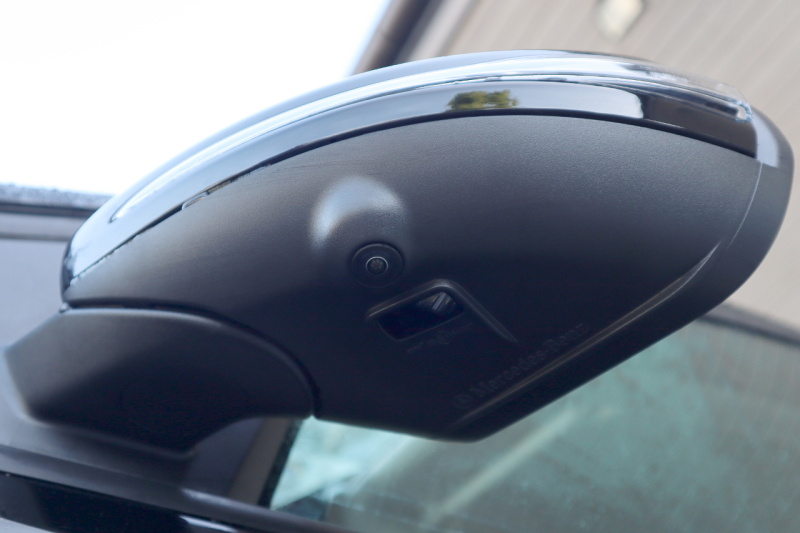
That precision requirement means static calibration with target boards, level-floor requirements, and controlled lighting, none of which is a quick shop-floor job. Technicians need dedicated space and training specifically for this procedure.
When a lower-cost aftermarket mirror housing is available for a few hundred dollars, but the surround-view recalibration alone runs several hundred more, the labor line becomes the dominant cost. This is especially true because a single mirror housing failure can force recalibration of the entire four-camera array, not just the one lens.
Mercedes technicians and independent ADAS specialists both note that mismatched calibration across the four cameras produces visible stitching errors in the parking display, a defect that isn’t always obvious until the customer is already parking in a tight space.
For owners, the practical outcome is that a routine mirror knock in a parking lot can trigger a system-wide recalibration bill that dwarfs the physical repair.
5. Tesla Model 3 and Model Y Mirror with Autopilot Camera
Tesla’s side mirrors integrate a forward-and-rear-facing camera used by the Autopilot and Full Self-Driving camera suite. Owner repair records give some of the clearest real-world numbers available.
One documented Tesla service center repair listed the complete mirror assembly, camera included, at $535 for the part with one hour of labor billed at $75. That’s a relatively contained total for a like-for-like swap.
Other owners report considerably higher bills. A separate case cited an estimate of $1,400 for a single passenger-side mirror, with another owner reporting $900 total, split as $630 for the part and the remainder in labor.
The spread between these figures illustrates how variable Tesla mirror-camera pricing can be depending on location, whether it’s a certified body shop, and whether high-voltage disconnection procedures are required during the service.
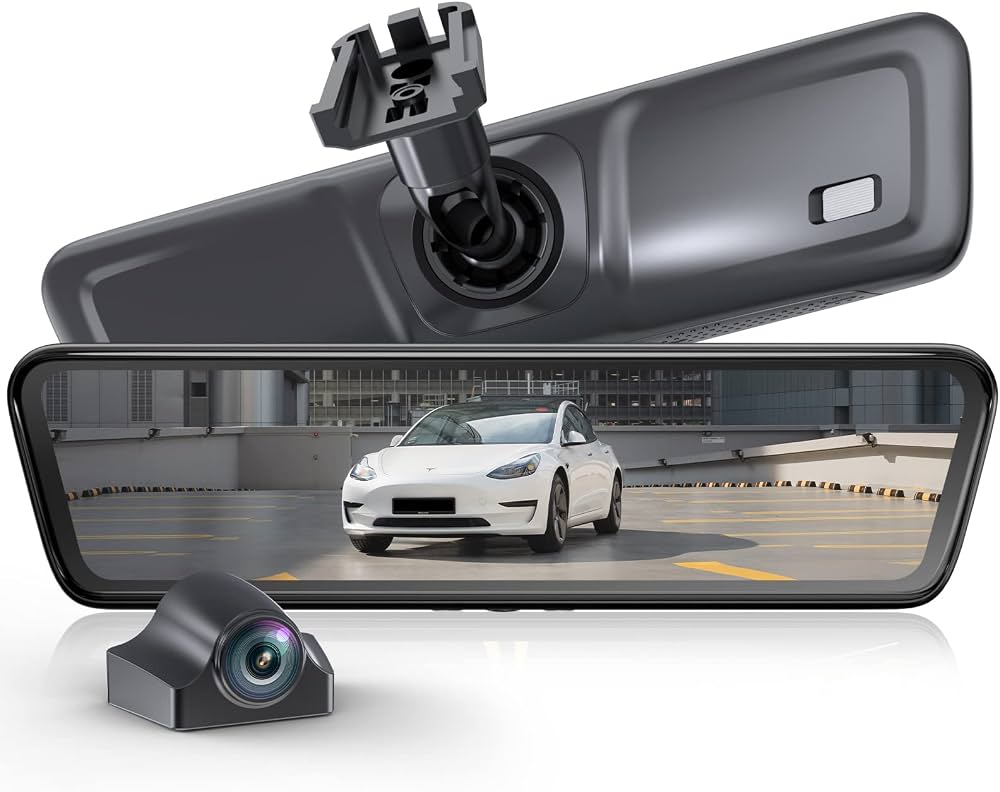
Tesla’s camera system doesn’t always require a separate dealer-style calibration appointment the way traditional automakers do, since much of the alignment is handled through over-the-air software verification. But when a physical recalibration or camera reseating is required, that labor is billed at Tesla’s standard shop rate.
In cases where the mirror part itself is sourced at the lower end, around $500 to $630, and the labor and verification process pushes total cost toward $900 to $1,400, the labor and calibration portion is doing most of the financial lifting.
Given Tesla’s heavy reliance on camera-based rather than radar-based sensing, any inaccuracy in mirror camera positioning has an outsized effect on Autopilot performance. This raises the stakes for getting the calibration right, even when it isn’t labeled as a traditional “calibration” line item on the invoice.
6. Land Rover and Range Rover Surround Camera Mirror
Land Rover and Range Rover models equip their mirror housings with wide-angle lenses feeding the vehicle’s surround-camera and off-road visibility systems. These are positioned as premium features tied to the brand’s off-road marketing.
Because Land Rover mirrors already carry heating elements, auto-dimming glass, memory positioning, and puddle lamps before the camera is even added, the base mirror part is expensive on its own, often exceeding $1,000 before labor on certain trims.
What separates this category is the calibration complexity layered on top. Off-road-oriented surround view systems often need to account for ride height changes, suspension travel, and terrain-response modes, none of which apply to a standard passenger car’s parking camera.
Static calibration procedures for this kind of system fall squarely into the higher end of published industry pricing, and multi-system calibration jobs, which is effectively what a full surround-camera recalibration is, run $400 to $800 according to current shop pricing guides.
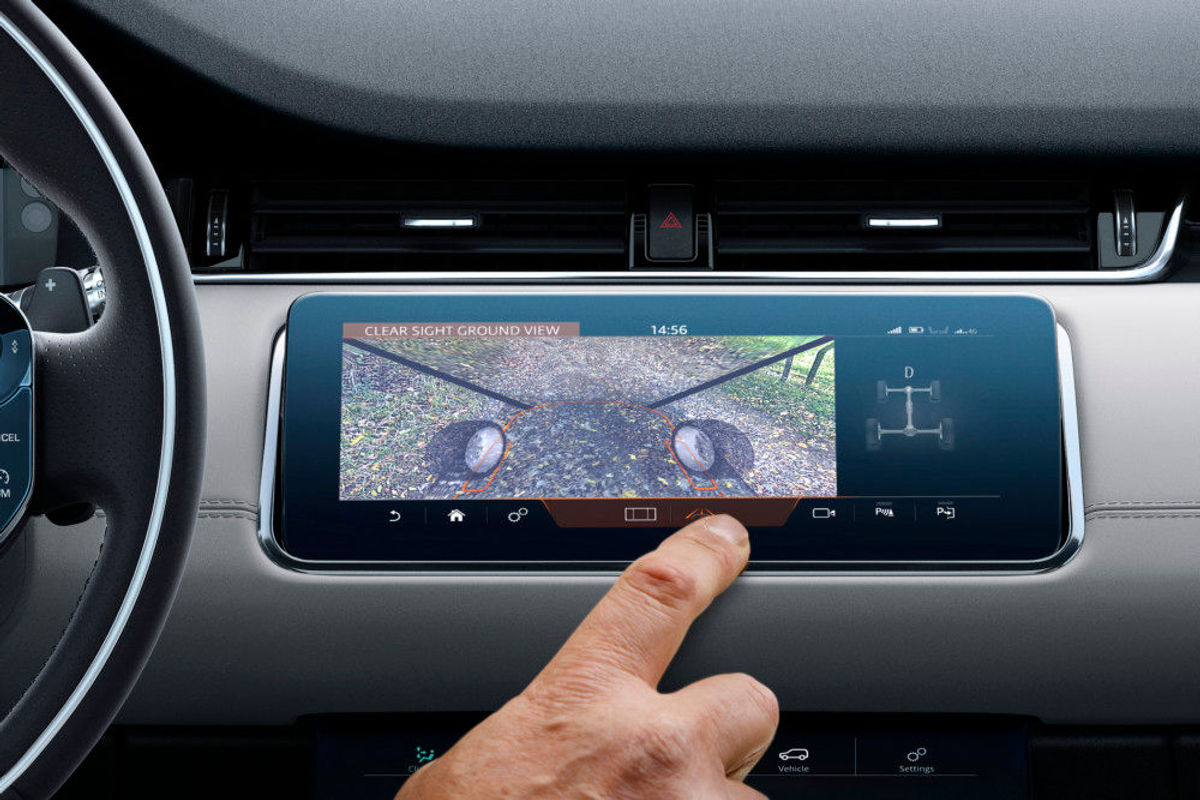
Because Land Rover’s surround system typically links the mirror cameras with front, rear, and undercarriage-facing cameras, a single mirror replacement can trigger a full-vehicle camera recalibration rather than an isolated one-camera aim.
That full-system approach pushes the labor bill toward the top of the calibration pricing range, and in cases where a lower-cost aftermarket mirror housing is used instead of a full OEM unit, the calibration cost alone can approach or exceed what the aftermarket part costs.
Owners researching Land Rover repair costs consistently find that independent shops without off-road-specific calibration targets can’t complete this job at all, forcing a return to the dealership network and its associated labor rates.
7. Kia and Hyundai Blind-Spot View Monitor Mirror Camera
Kia and Hyundai’s Blind-Spot View Monitor, or BVM, places a camera inside the side mirror housing that streams a live feed to the instrument cluster whenever the turn signal is activated. It was one of the features specifically named in a mirror-technology patent filed with Kia for future autonomous applications.
Because this system is relatively new across the mainstream Kia and Hyundai lineup, mirror housing part costs are still moderate compared to German luxury equivalents, generally falling in the same power-mirror-with-electronics band cited across the industry at $50 to $800 depending on trim level.
The camera itself doesn’t perform blind-spot detection the way radar-based systems do. It’s a visual aid layered onto a car’s existing blind-spot radar sensors, which are typically mounted in the rear bumper corners rather than the mirror itself.
That distinction matters for calibration. The bumper-mounted radar sensors require their own recalibration after any rear-corner repair, priced by shop guides at $200 to $350, entirely separate from the mirror-mounted camera itself.
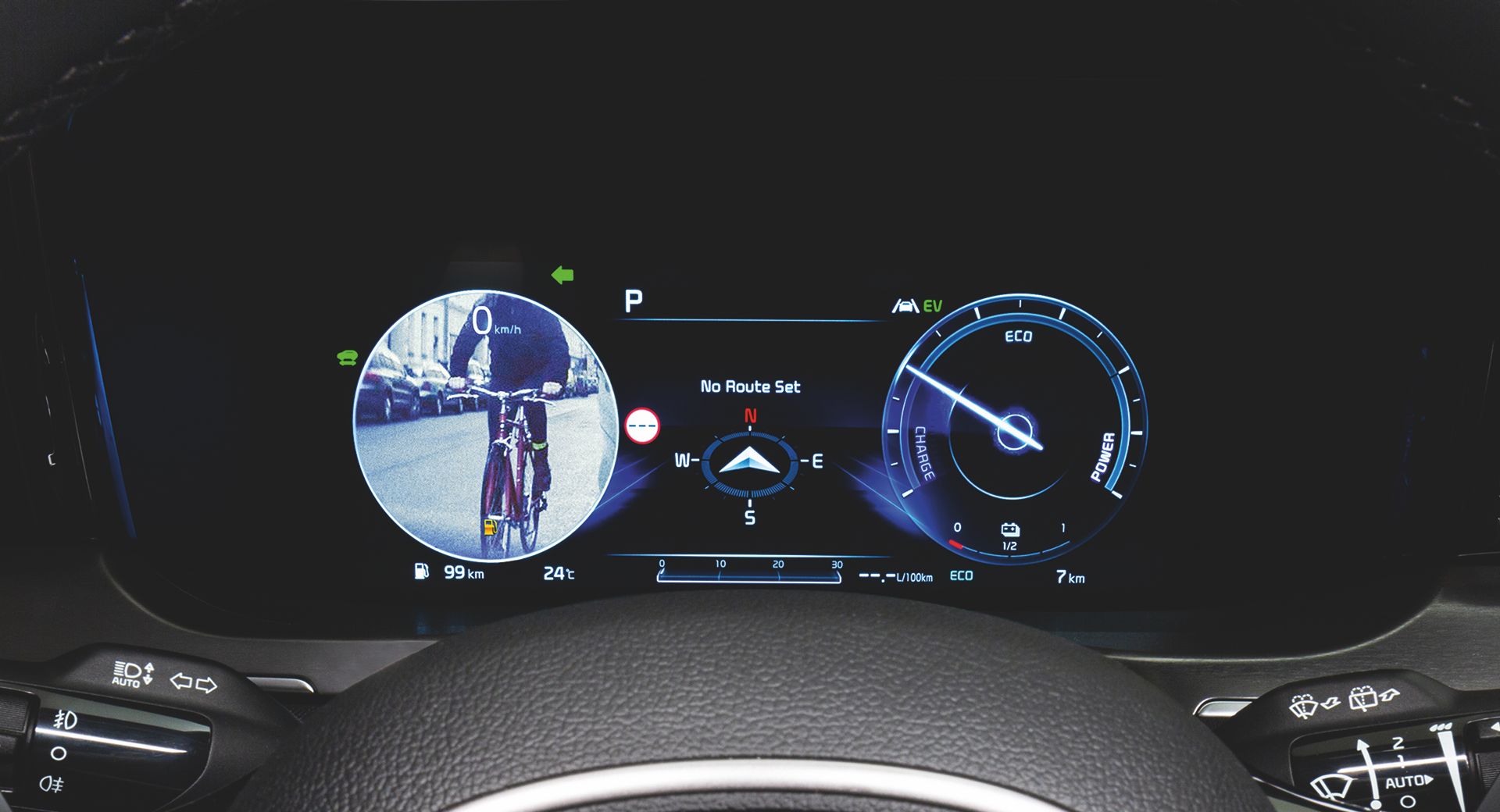
When a technician replaces the mirror alone after minor accident damage, the camera inside typically only needs a basic position verification rather than a full target-based calibration, keeping that portion of the bill lower than some competitors’ systems.
But if the same repair event also involved rear bumper work, which is common in the kind of low-speed collisions that damage mirrors, the blind-spot radar recalibration gets added to the invoice as a second, separate charge.
Combined, the mirror-camera check plus the required radar recalibration can land in a similar range to, or above, the mirror part cost itself, particularly on lower trims where the physical mirror is priced toward the bottom of the electronics-equipped mirror band.
This makes Kia and Hyundai BVM-equipped mirrors a useful example of how a seemingly single repair event can quietly split into two separate calibration charges.
8. Ford Mirror with BLIS Camera on SUV and Truck Trims
Ford’s Blind Spot Information System, known as BLIS, has expanded from radar-only detection to camera-assisted versions on several SUV and truck trims, with a lens integrated into the mirror housing.
Ford mirror part pricing for these camera-equipped units generally sits in the mid-range of the industry, comparable to the $150 to $800 band cited across general power-mirror-with-electronics pricing guides, depending on whether heating, memory, and turn-signal integration are also included.
Trucks and SUVs are particularly relevant here because they’re more frequently involved in the kind of low-speed parking lot and loading-dock contact that damages mirrors without triggering a full collision claim.
In those minor-damage scenarios, insurance adjusters and shops increasingly separate the mirror part cost from the calibration line explicitly, since AAA’s research found calibration and camera costs contribute disproportionately to even minor repair estimates.
A forward-facing camera calibration after related glass or bracket work is priced at $250 to $500 according to recent shop cost breakdowns, and that range applies to mirror-camera systems using similar aiming procedures.
When a Ford truck or SUV mirror is sourced through an aftermarket supplier at the lower end of the pricing band, and the calibration is billed at the mid-to-upper end of the $250 to $500 range, the labor line again outpaces the part.
Shops emphasize that skipping this step doesn’t necessarily throw a dashboard warning light. A misaligned mirror camera can simply underperform silently, a risk explicitly flagged in current ADAS calibration guides as one of the least visible consequences of a rushed repair.
For fleet operators running multiple Ford trucks, this repeated pattern across a fleet turns what looks like a minor per-vehicle cost gap into a meaningful recurring line item, which is why several fleet-focused repair guides now recommend budgeting for calibration as a standing maintenance cost rather than an occasional surprise.
