
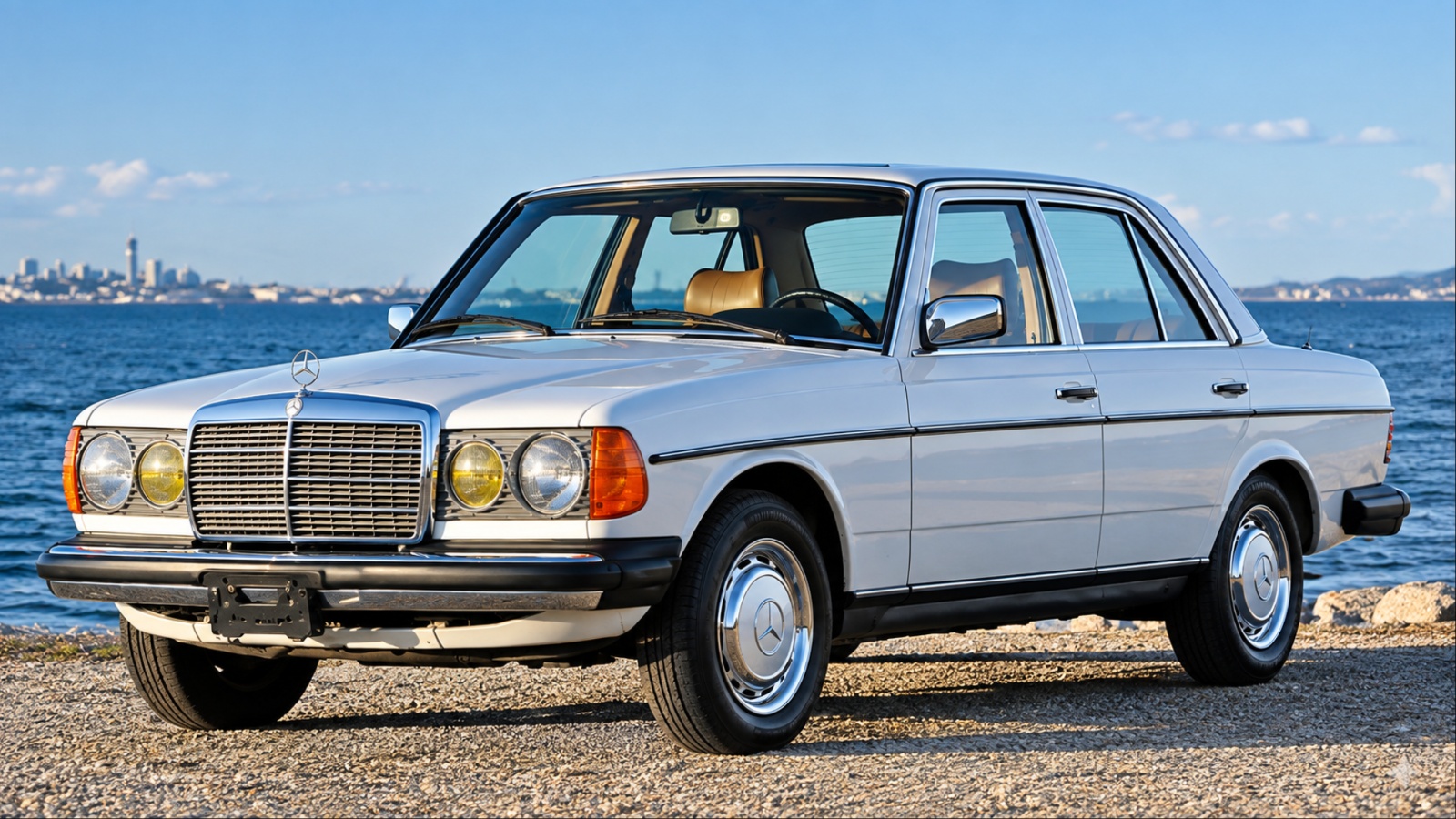
Few automotive longevity stories sound believable even after the numbers are checked. One of the most remarkable involves a 1976 Mercedes-Benz 240D that spent more than two decades working as a taxi in Greece and accumulated approximately 4.6 million kilometers, or about 2.86 million miles.
The driver was Gregorios Sachinidis of Thessaloniki, Greece, who bought the used Mercedes in 1981 and continued operating it as a taxi until 2004. By the time he retired the car, its odometer had reached a figure that would be extraordinary even for a commercial truck, let alone a passenger sedan.
Mercedes-Benz eventually accepted the car into its museum collection in Stuttgart. Contemporary Mercedes material described the 240D as having the highest known mileage of any Mercedes-Benz vehicle at the time, turning an old taxi into an unofficial durability benchmark for the brand.
But there is one important detail that is often overlooked when the story is repeated. The car did not cover all 2.86 million miles on a single engine.
That makes the achievement no less impressive, but it changes what the record actually demonstrates.
The 240D Was Built for Longevity, Not Speed.
The car was a late-production example of Mercedes-Benz’s W115 “Stroke Eight” 240D. Mercedes-Benz’s own Classic USA parts catalog identifies the 1973–1976 240D as part of the Series 115 and lists its four-cylinder diesel at 65 horsepower. The model could be ordered with either a four-speed manual or four-speed automatic transmission.
That output sounds tiny by modern standards. But the 240D’s purpose was not to accelerate quickly. Its naturally aspirated diesel engine was designed around durability, simplicity, and economical operation.
It belonged to an era when Mercedes-Benz diesel passenger cars had already developed a reputation for surviving the punishing schedules of professional drivers.
The engine was also mechanically far less complicated than a modern diesel. There was no turbocharger, common-rail injection, diesel particulate filter, selective catalytic reduction system, or sophisticated network of electronic engine controls. That simplicity mattered when the vehicle was being used as a commercial taxi.
Sachinidis purchased the Mercedes in 1981, when it already had approximately 220,000 kilometers on the odometer. He then put it to work in Thessaloniki, using it extensively for taxi service and long-distance journeys.
Contemporary accounts say the car remained in service until July 2004, meaning Sachinidis accumulated millions of additional kilometers during roughly 23 years of ownership.
The car’s working environment was unusually demanding. It wasn’t simply driven to work and back. Reports describe the taxi making long journeys across Greece and into neighboring countries.
Sachinidis also used it for trips involving the Balkans, including journeys connected with humanitarian work during the war in the former Yugoslavia. That kind of use explains how the odometer could accumulate such an extraordinary figure.
A private owner driving 10,000 or 15,000 miles annually would need generations of ownership to approach it. A professional taxi operating almost continuously can accumulate hundreds of thousands of miles much faster.
The record therefore reflects two things at once. It shows a remarkably durable vehicle and an exceptionally intensive operating schedule.
2.86 Million Miles Did Not Come From One Engine
This is perhaps the most important qualification to the story. The 240D’s legendary mileage is a record for the vehicle, not evidence that one original engine survived 2.86 million miles without replacement.
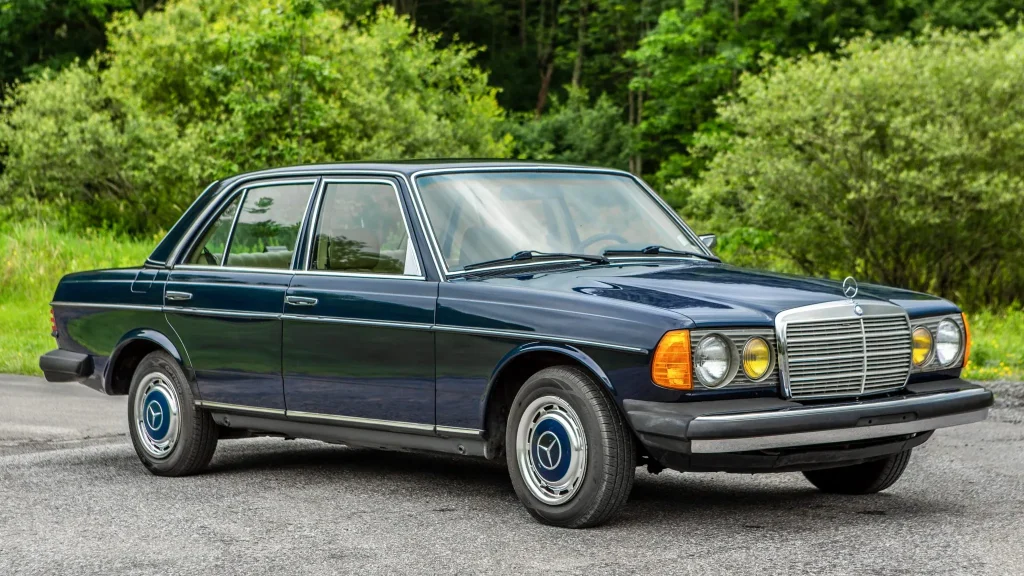
Historical Mercedes material says Sachinidis used replacement engines during the car’s working life. A Mercedes Driver magazine account states that the car had accumulated 2,858,307 miles when donated and that Sachinidis had used four engines during his ownership, rotating the powerplants.
Another historical account says he had access to replacement engines and changed them repeatedly during the vehicle’s working life. German automotive reporting from 2004 stated that two replacement engines were used and exchanged multiple times, while other accounts describe the car as having gone through four engines.
The exact description varies between historical accounts, but the central point is consistent: the chassis and vehicle accumulated roughly 4.6 million kilometers, while multiple engines contributed to that total.
That actually makes the story more useful as a measure of vehicle durability. A taxi isn’t just an engine. It includes the transmission, suspension, steering, brakes, body, electrical equipment, interior, and countless other components. Keeping an automobile operational for millions of kilometers requires maintaining all of those systems.
The 240D, therefore, wasn’t simply a miraculous engine that never wore out. It was a vehicle that could remain economically useful through extensive maintenance and component replacement.
That distinction is important when comparing the Mercedes with modern cars. It would be misleading to say that a modern Mercedes, Toyota, or diesel pickup should automatically be expected to run 2.86 million miles because this 240D did.
The operating conditions, maintenance practices, vehicle design, and replacement of major components were all unusual.
What the car demonstrated was something different. A well-built vehicle can remain serviceable for an extraordinary length of time when its owner is willing to maintain and repair it. This is particularly relevant to commercial vehicles.
Taxi operators historically placed enormous value on durability because downtime meant lost income. A vehicle that could remain on the road through repeated repairs could be more profitable than constantly replacing it.
The 240D’s modest performance may have helped, too. A naturally aspirated 65-hp diesel was not being pushed to produce the power levels expected from modern turbocharged engines. Mercedes-Benz’s specifications confirm just how conservative the basic mechanical package was.
Why the 240D Became a Mercedes Durability Benchmark
When Sachinidis eventually retired the taxi in 2004, the achievement had become too significant for Mercedes-Benz to ignore.
The company accepted the vehicle into the Mercedes-Benz Museum in Stuttgart, preserving it as a tangible example of the extreme mileage that one of its passenger cars had accumulated. Contemporary reporting described the 4.6-million-kilometer 240D as the Mercedes with the highest known mileage at the time.
The museum placement transformed the taxi from an unusually high-mileage used car into part of Mercedes-Benz history. It also helped cement the reputation of the older Mercedes diesel models among enthusiasts.
The 240D belonged to a period when Mercedes-Benz engineering emphasized robust mechanical construction and long service life. The company still supports these older cars through its Classic program; Mercedes-Benz Classic USA continues to list genuine parts for the W115 240D, including components for the four-cylinder diesel models.
But the real lesson isn’t that every 1970s Mercedes was destined to run for three million miles. It is that maintenance and operating conditions matter enormously when discussing automotive longevity.
Sachinidis bought the car with significant mileage already accumulated. He then used it professionally for more than two decades and kept replacing major components as necessary. The vehicle wasn’t preserved in a garage. It was continuously worked on.
That makes the story more impressive, not less. A car that covers 2.86 million miles while being driven occasionally would be interesting. A taxi that accumulates that distance through years of commercial service is something entirely different.
It also explains why the 240D remains a useful benchmark when discussions turn to durable vehicles. The number provides a dramatic example of what can happen when a fundamentally robust mechanical design is combined with relentless maintenance and an owner who considers repair preferable to replacement.
There is another reason the story continues to resonate. Modern cars are significantly more powerful, faster, safer, and more technologically advanced than a 1976 240D. But additional technology also means additional components and systems that can eventually require repair. The old Mercedes had fewer electronic systems and a much simpler powertrain.
That doesn’t make the 240D objectively better than a modern vehicle. It makes it an excellent example of a different engineering philosophy.
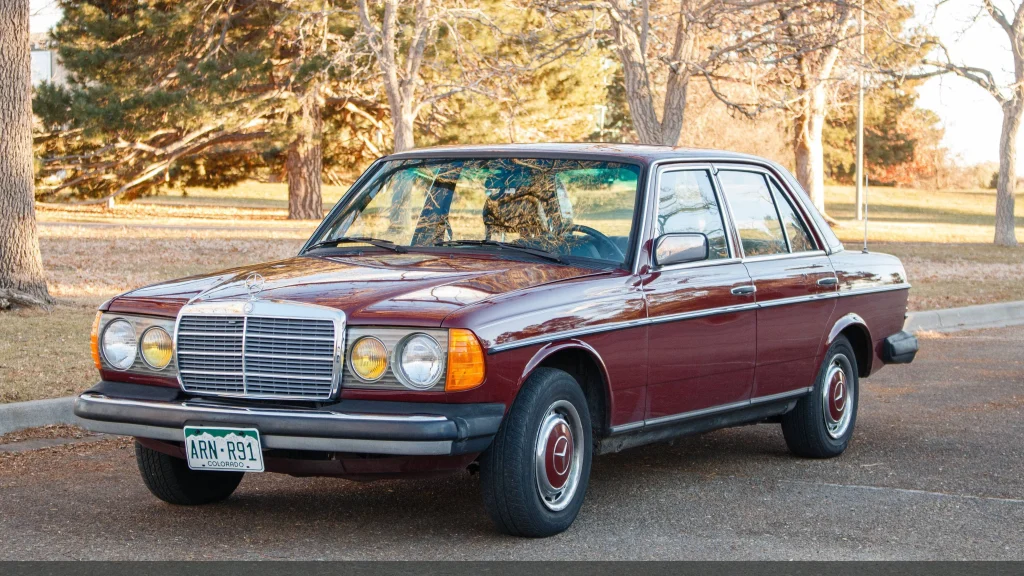
The 4.6 million-kilometer figure, roughly 2.86 million miles, is best understood as a vehicle-longevity record, not an engine-life record. Multiple engines contributed to the total, and the car required decades of professional use and maintenance to reach it.
Still, the underlying achievement remains extraordinary. Gregorios Sachinidis took a used 1976 Mercedes-Benz 240D, put it into some of the hardest service a passenger car can experience, and kept it working for roughly 23 years before handing it over to Mercedes-Benz.
The odometer eventually reached 4.6 million kilometers. That is about 115 trips around the Earth at the equator.
And perhaps the most remarkable part is that Mercedes-Benz did not treat the car as merely an old taxi that had reached the end of its useful life. The company preserved it because the vehicle had become evidence of something the brand wanted to associate with its engineering. It represented extraordinary longevity.
The 240D did not prove that every car can run nearly three million miles. It proved that, under the right combination of robust engineering, intensive maintenance, and relentless use, a passenger car can remain in service for a distance almost unimaginable by normal ownership standards.
