
Imagine owning an invention capable of generating money from almost every car sold, yet choosing to let competitors use it for free. That might sound like a poor business decision until you discover what Volvo did with the three-point seatbelt. In 1959, Volvo introduced the design developed by engineer Nils Bohlin, then allowed other automakers to use the patented technology without paying licensing fees.
That decision helped transform a Volvo invention into a safety standard used by millions. The frequently repeated claim that the patent was “worth billions” is better understood as its huge potential commercial value, rather than a documented billion-dollar royalty payment Volvo chose to forgo.
A Simple Idea That Changed Car Safety
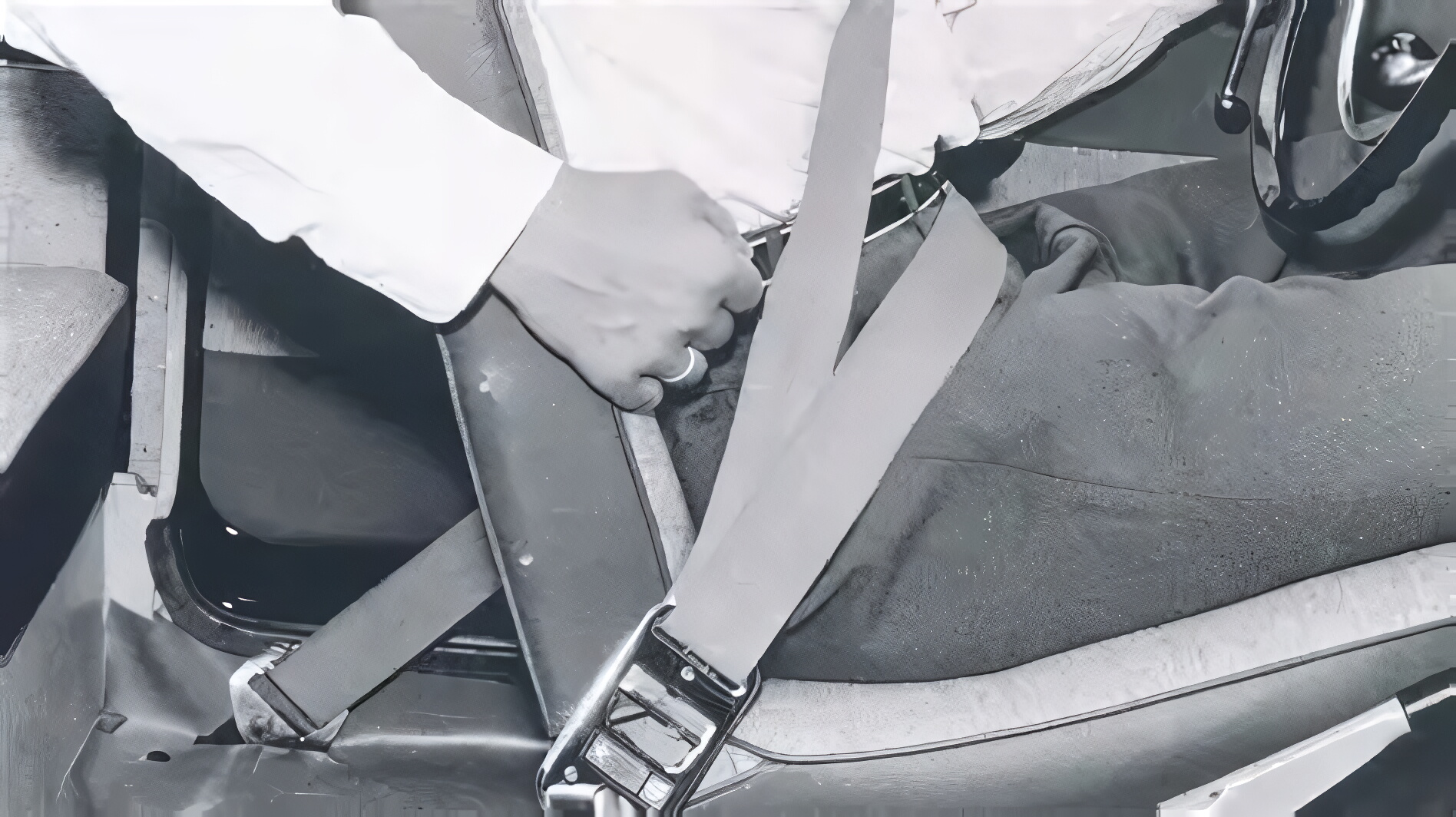
Before Bohlin’s design, seatbelts could be awkward, uncomfortable, or poorly positioned. Some systems relied on a lap strap alone, leaving the upper body with little protection during a crash. Bohlin approached the problem differently.
He wanted a restraint that held both the upper and lower body securely while remaining easy enough for ordinary drivers and passengers to use with one hand.
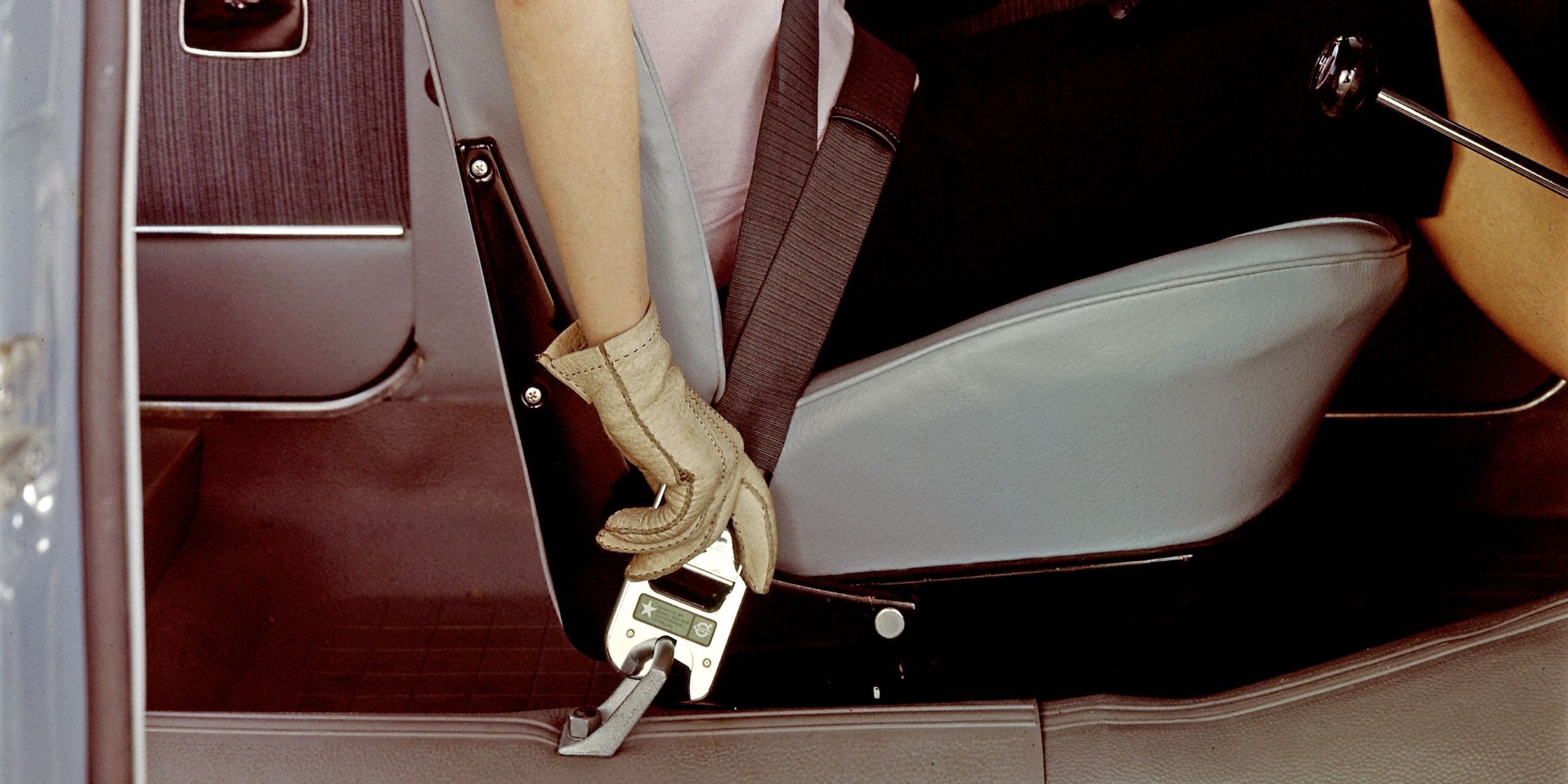
His answer was the three-point seat belt. One section runs diagonally across the chest, another secures the hips, and both are attached to a carefully positioned anchoring system designed to keep the occupant properly restrained.
The belt forms a V shape when viewed from the front. During a collision, that arrangement helps distribute forces across stronger areas of the body instead of concentrating them in one vulnerable spot.
The engineering may look obvious today, but that is part of what makes the story so remarkable. A good safety invention does not need to look futuristic. It needs to work when seconds matter.
Volvo began fitting the three-point belt as standard equipment in its cars in 1959, helping move the idea from an engineering drawing into everyday use.
Why Volvo Did Not Keep the Patent Locked Away
Here is where the story becomes unusual. Volvo had patented Bohlin’s design. That meant the company had a legal tool that could have been used to control its commercial use.
Instead, Volvo chose to make the patent available to other automakers free of charge. The company has described this as an open patent, created so other manufacturers could use the design without paying royalties.
The reasoning was simple. A seat belt can only protect someone if it is installed in the vehicle they are riding in. Keeping the technology exclusive might have helped Volvo sell more cars, but it would have limited how many people could benefit from the invention.
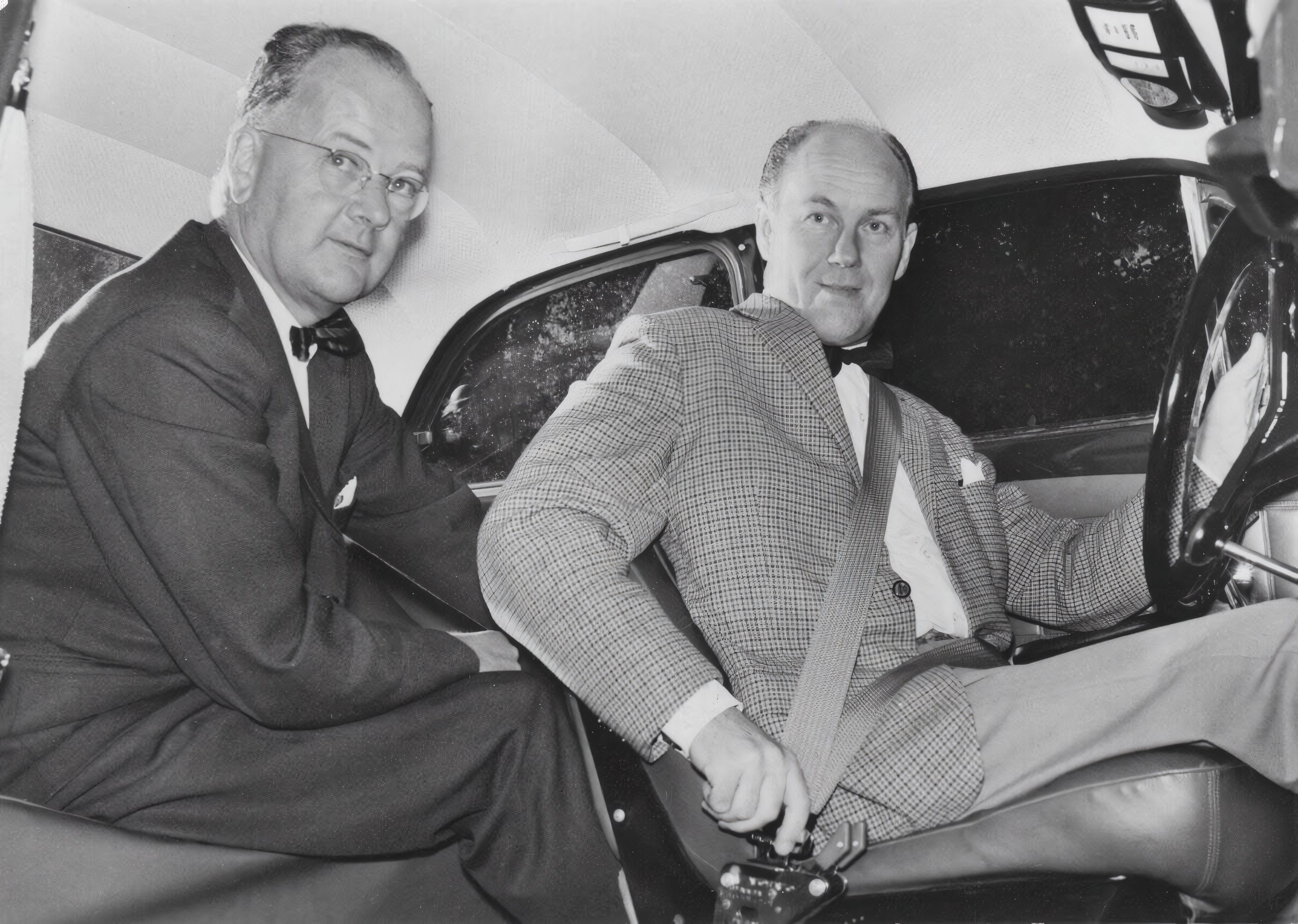
There was a human reason behind Volvo’s safety focus, too. Gunnar Engellau, Volvo’s president at the time, had lost a relative in a traffic accident, with shortcomings in an earlier belt design playing a role in the tragedy. He brought Bohlin to Volvo and backed work on a safer restraint.
Volvo faced a decision that would make any finance department hesitate. The company could protect its valuable patent and profit from licensing it, or make the design widely available and allow competitors to build safer cars. Volvo chose the latter, putting broader public safety ahead of potential financial gain.
The “Billions” Claim Needs Some Context
The headline sounds dramatic, but there is an important detail worth clearing up. There is no reliable record showing that Volvo had a guaranteed multibillion-dollar royalty contract sitting on the table and simply rejected it.
The value was hypothetical. Forbes illustrated the possible commercial value by imagining a $10 royalty on every car produced in 1978. With more than 40 million vehicles produced that year, that simple calculation would have produced about $400 million for that year alone.
Other modern accounts describe the potential as billions because the three-point belt eventually became common across the auto industry. That estimate reflects decades of possible licensing income rather than money that Volvo actually lost from a signed deal.
That distinction does not make the decision less impressive. It makes the story more interesting. Volvo knowingly gave up the opportunity to control a technology that could have generated substantial income for many years. The company instead treated safety as something that should spread as quickly as possible.
The patent itself confirms the technical history. Nils Bohlin is listed as the inventor of the safety belt patent assigned to Volvo, with the U.S. application filed in 1959 and the patent granted in 1962.
Millions of Lives Became the Real Return
Money provides an easy way to measure a patent. Lives saved are harder to put on a spreadsheet. Volvo says the three-point belt has been credited with saving at least one million lives. Its historical record also points to millions of injuries being prevented or made less severe.
Bohlin’s own research added evidence behind the design. A study covering 28,000 crashes and 37,511 people examined the relationship between belt use and fatal injuries. The findings helped support the case that the three-point system offered strong protection across a broad range of crashes. FForbes
Then came adoption. The design spread beyond Volvo because other manufacturers could use it without paying a licensing fee. As more vehicles adopted three-point belts, more drivers and passengers had access to the same basic protection.
There is something quietly powerful about that chain of events. One engineer solved a practical problem. One automaker chose not to restrict the solution.
Other companies adopted it. Governments later strengthened seatbelt requirements. Drivers gradually accepted buckling up as a normal part of getting into a car.
The result was not just a successful product feature. It became a basic expectation for vehicle safety.
What Volvo Really Gained by Giving It Away
Volvo may have given up potential licensing revenue, but the company gained something that advertising alone cannot easily buy. The decision helped establish a lasting reputation for safety, with the three-point seat belt becoming one of the clearest examples of Volvo putting that principle into action.
That does not mean the decision was simply a marketing trick. The historical record shows that Volvo made the patent available to competitors specifically to encourage wider adoption and improve road safety.
There is also a useful business lesson here. Sometimes a company can benefit from making an invention widespread ratherohlin’s seatbelt is a perfect example.
The patent’s legal protection eventually expired, but the association between Volvo and vehicle safety remained. The company continued developing safety technology, including systems for than keeping it exclusive.
When a product or technology becomes closely connected with a company’s identity, the reputation created by that invention can have value long after the patent itself expires. Bohlin’s seatbelt is a perfect example.
The patent’s legal protection eventually expired, but the association between Volvo and vehicle safety remained. The company continued developing safety technology, including systems for side-impact protection, while the three-point belt became standard equipment across the auto industry.
A patent can make money. A life-saving invention can do something far bigger. Volvo had the rare opportunity to choose between protecting a commercial advantage and helping a safety idea reach as many people as possible. It chose the latter, and decades later, millions of people still benefit every time they hear that familiar click.
